Gallery
Whole new windows.
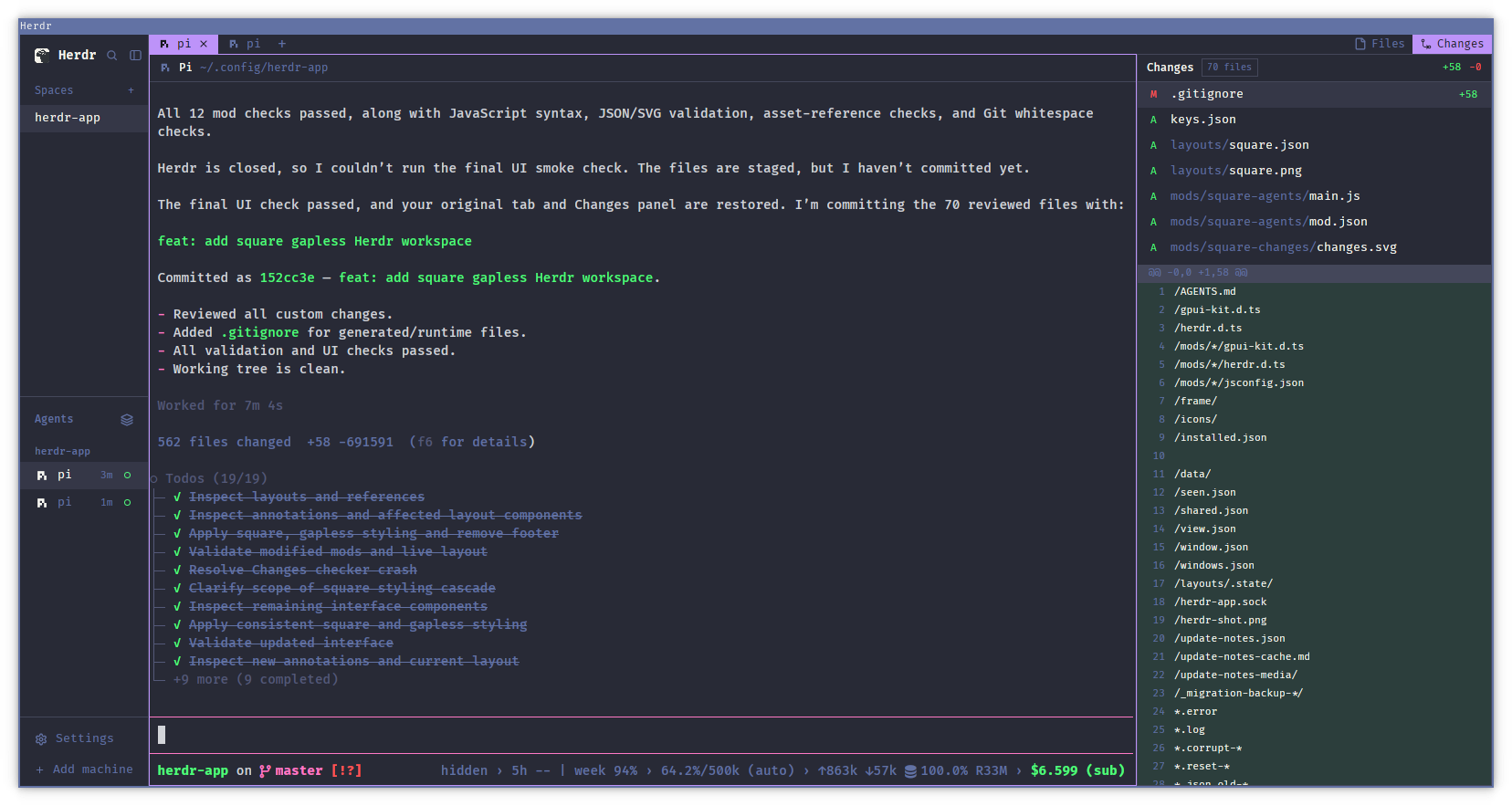
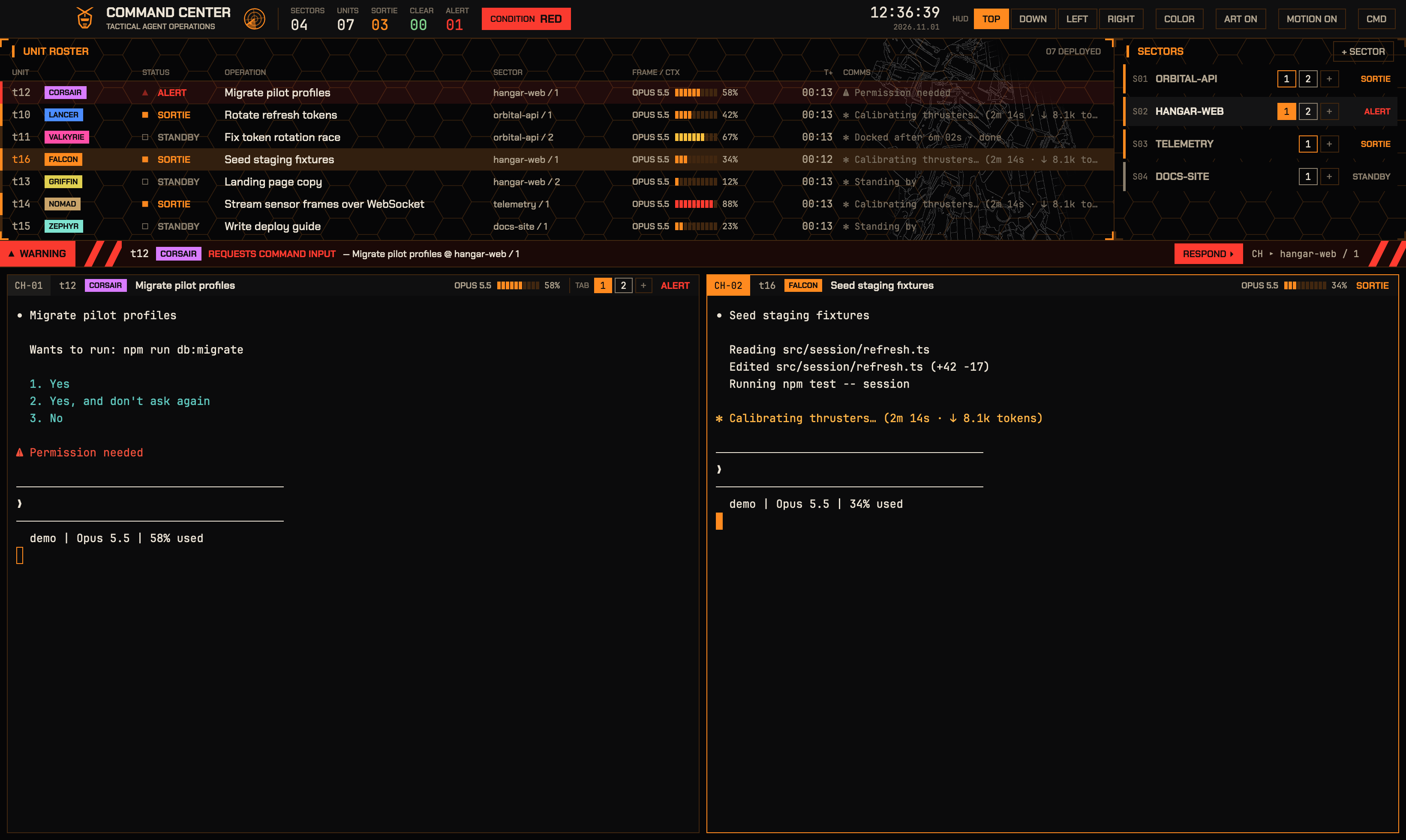
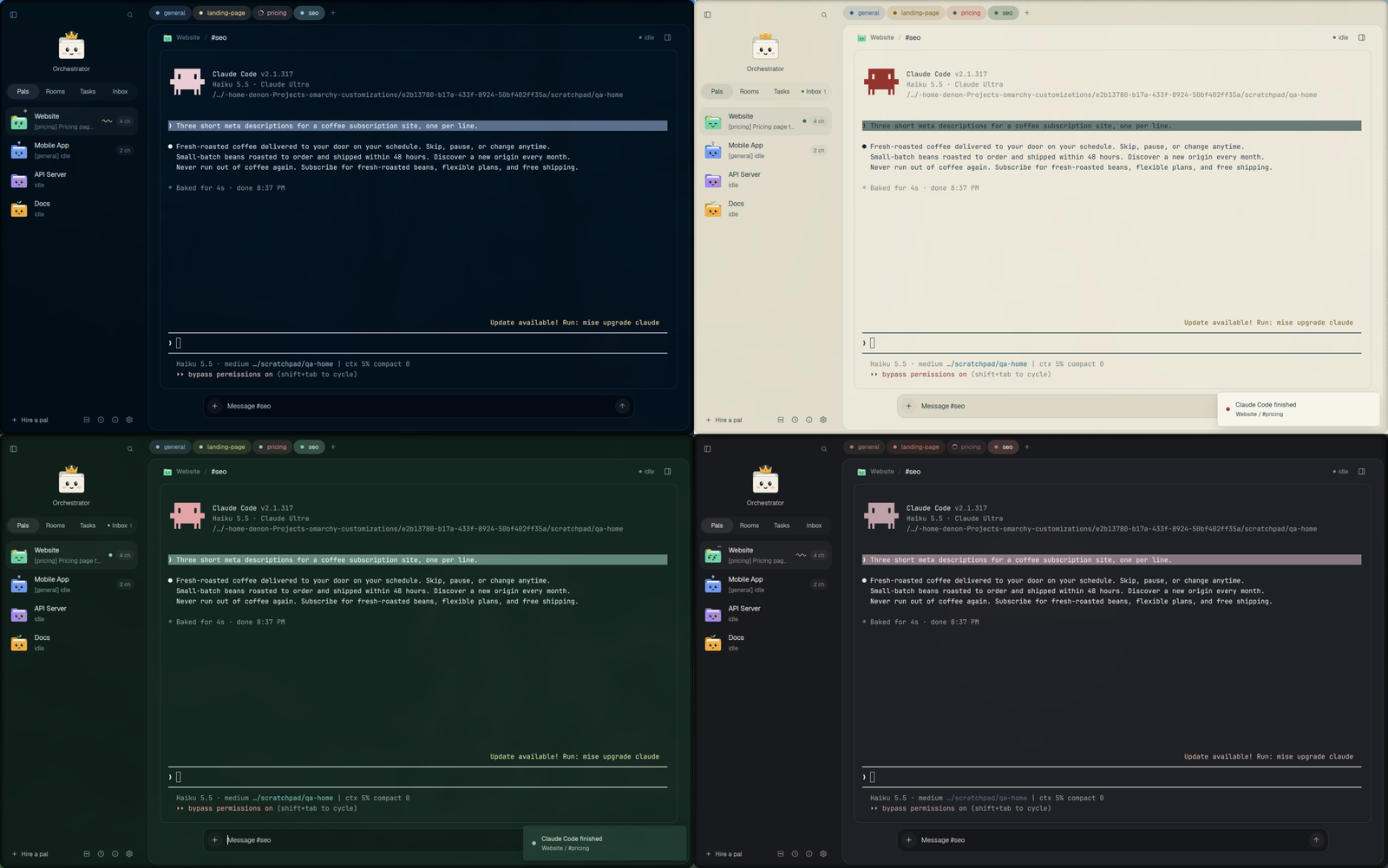
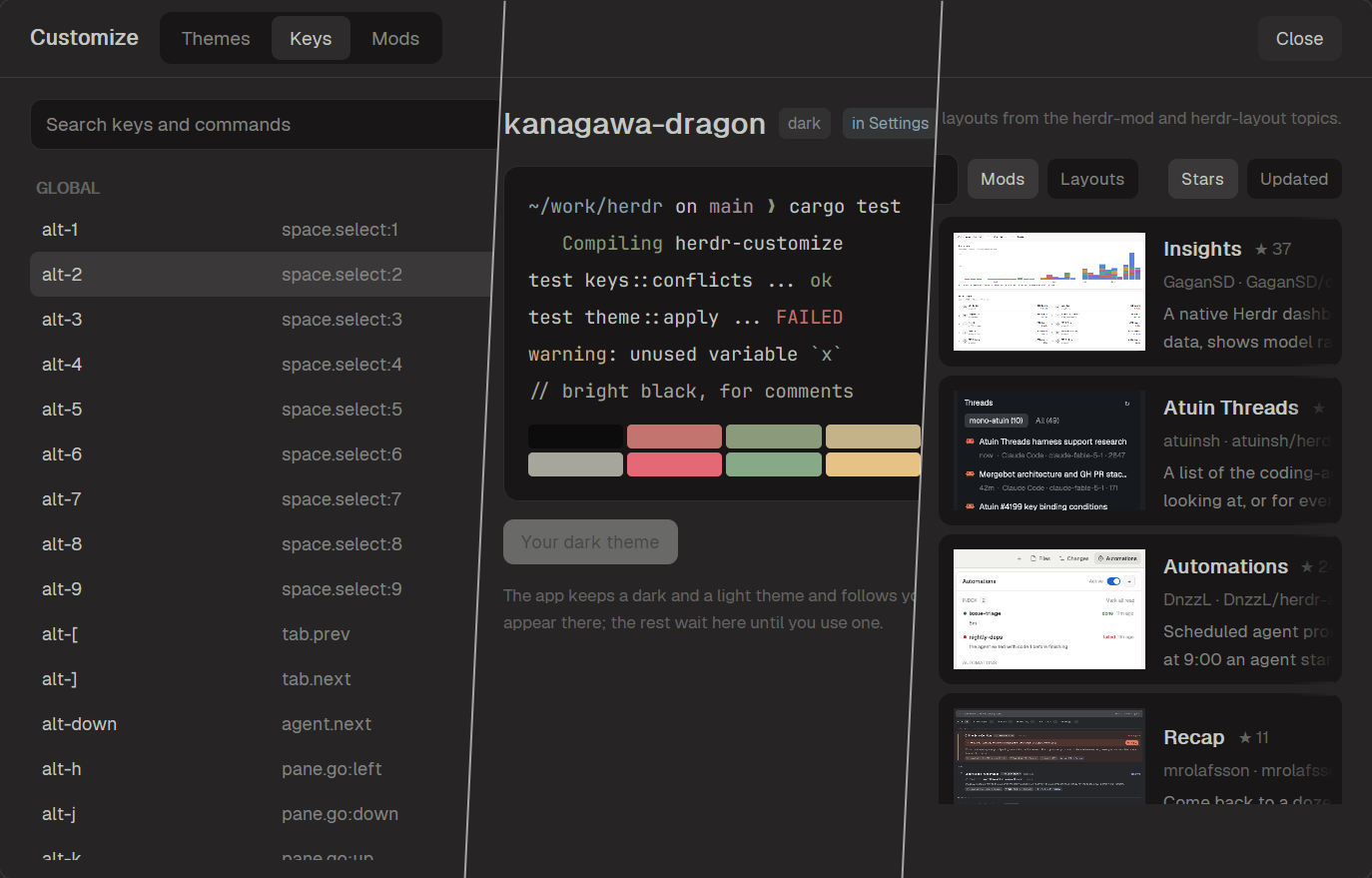
A layout is a whole window: what goes where and how it looks. Copy one line and your agent adds it next to yours. Yours stays as it is.
No matches here right now. Share yours.


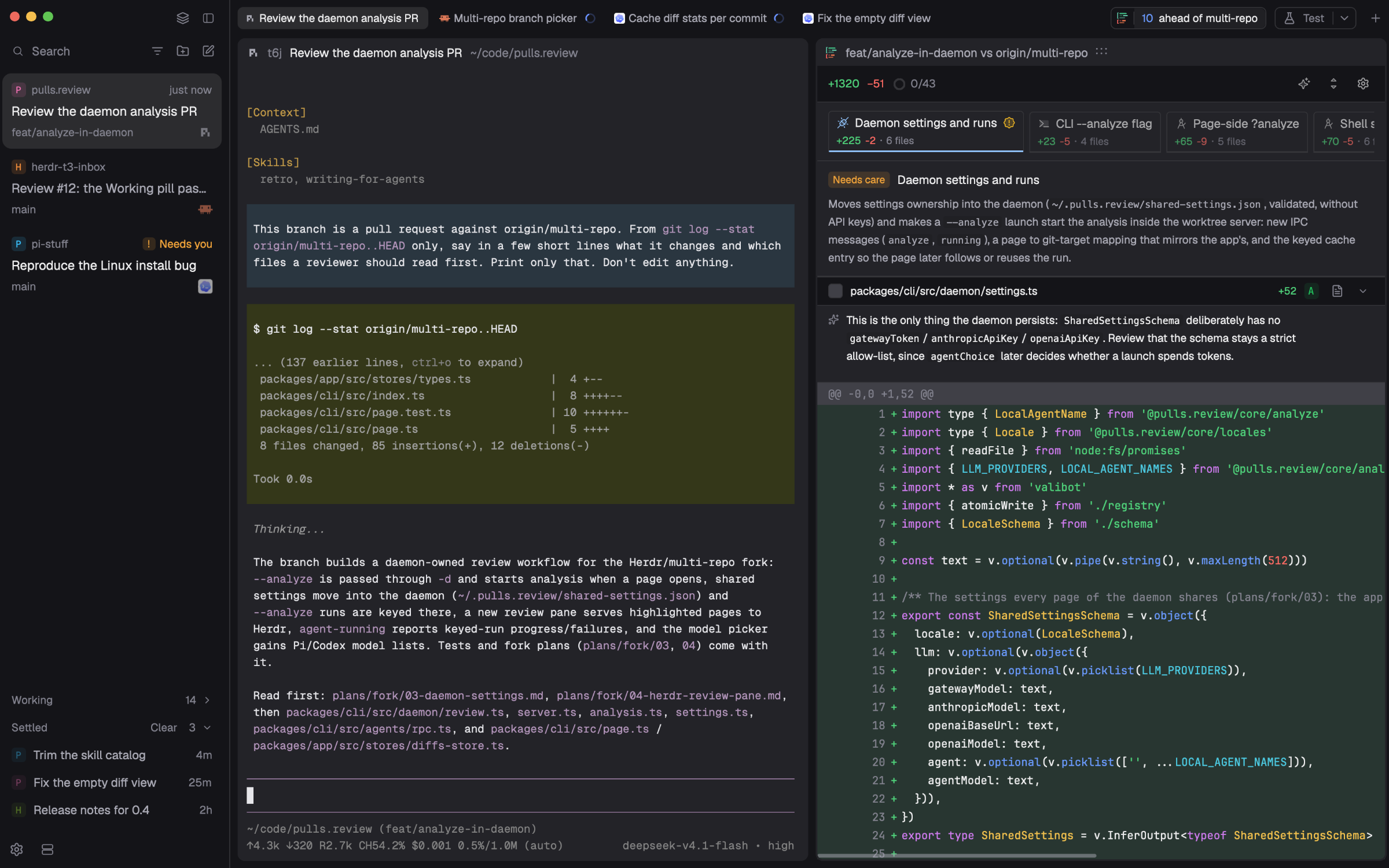

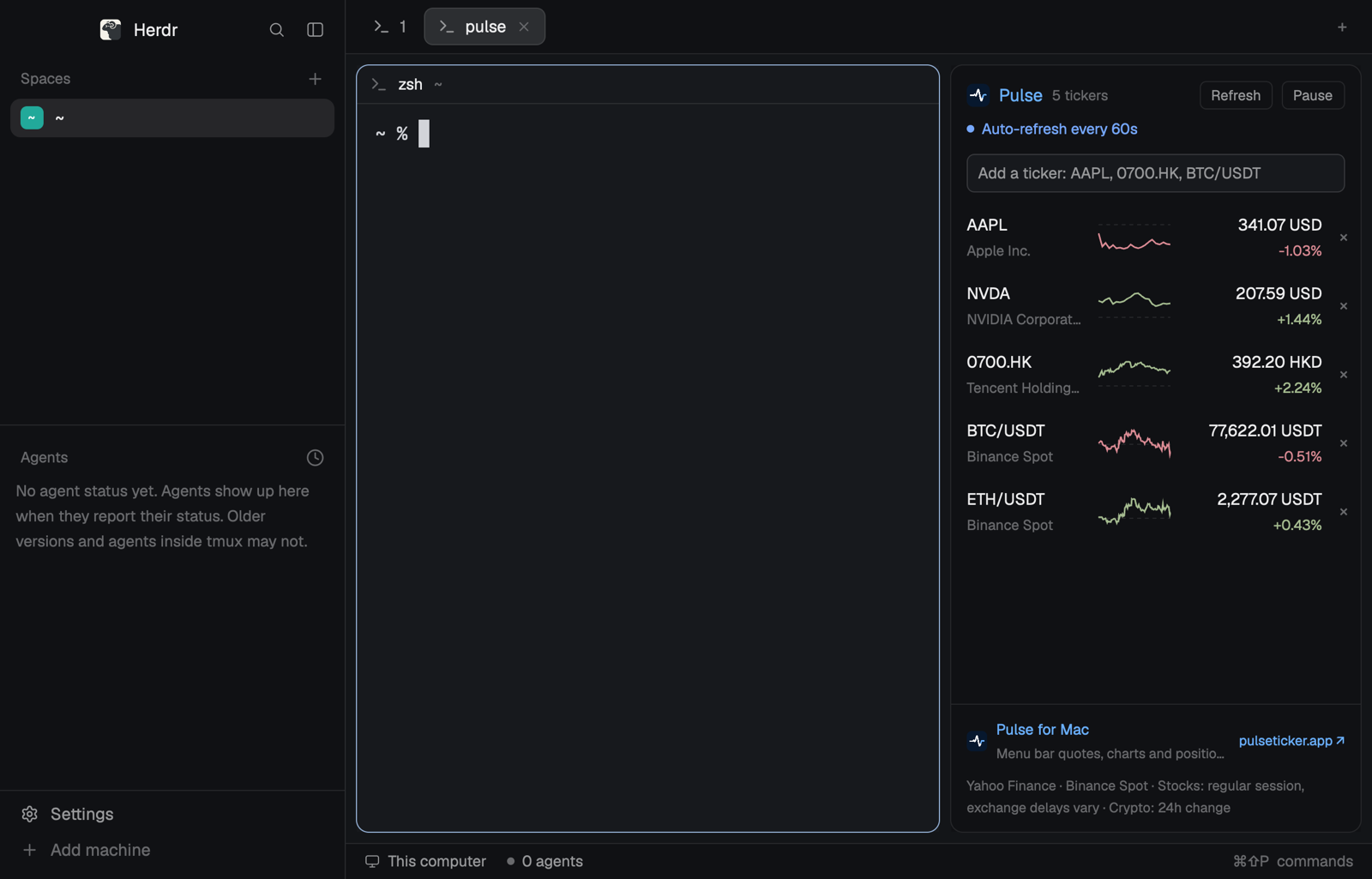

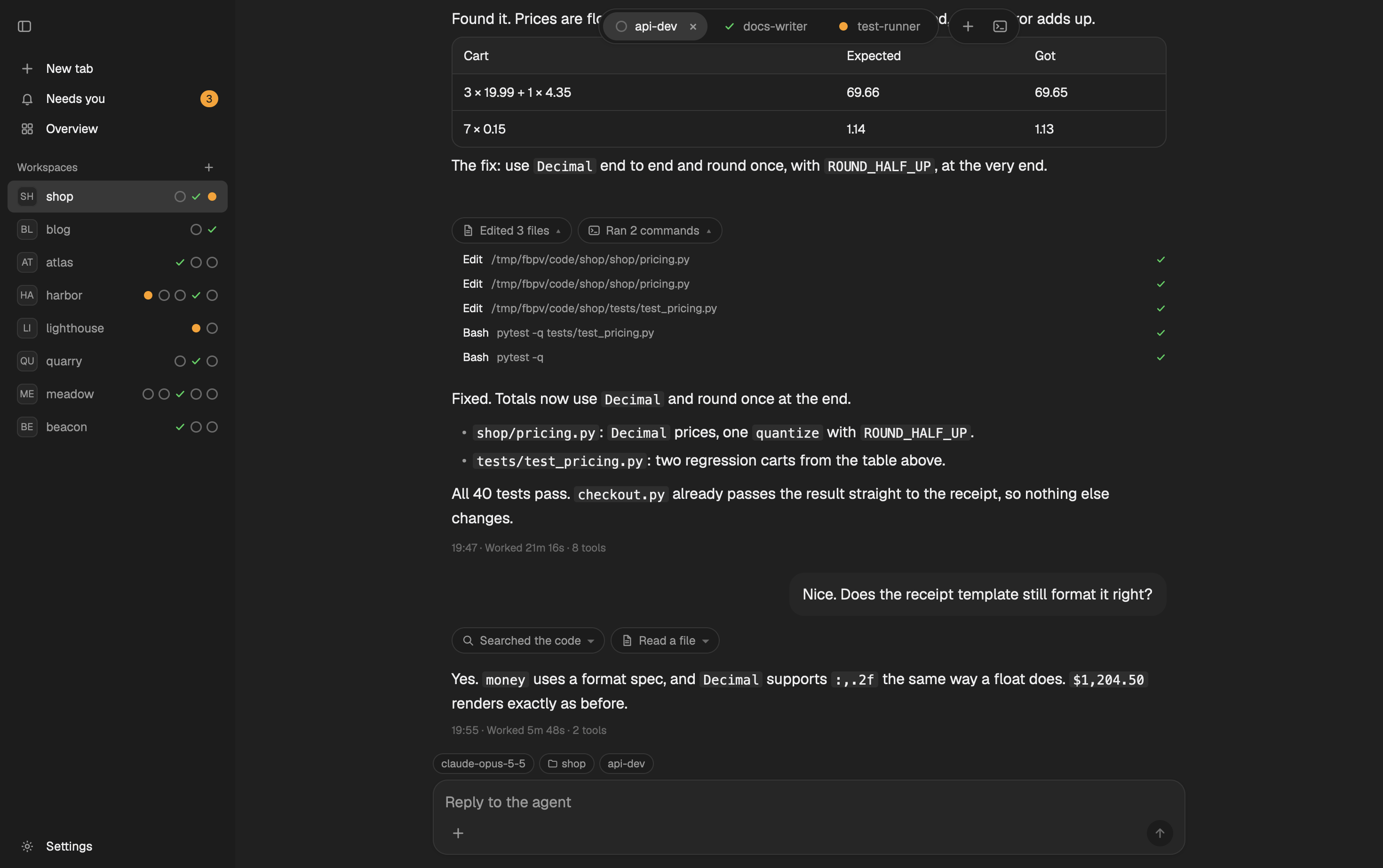


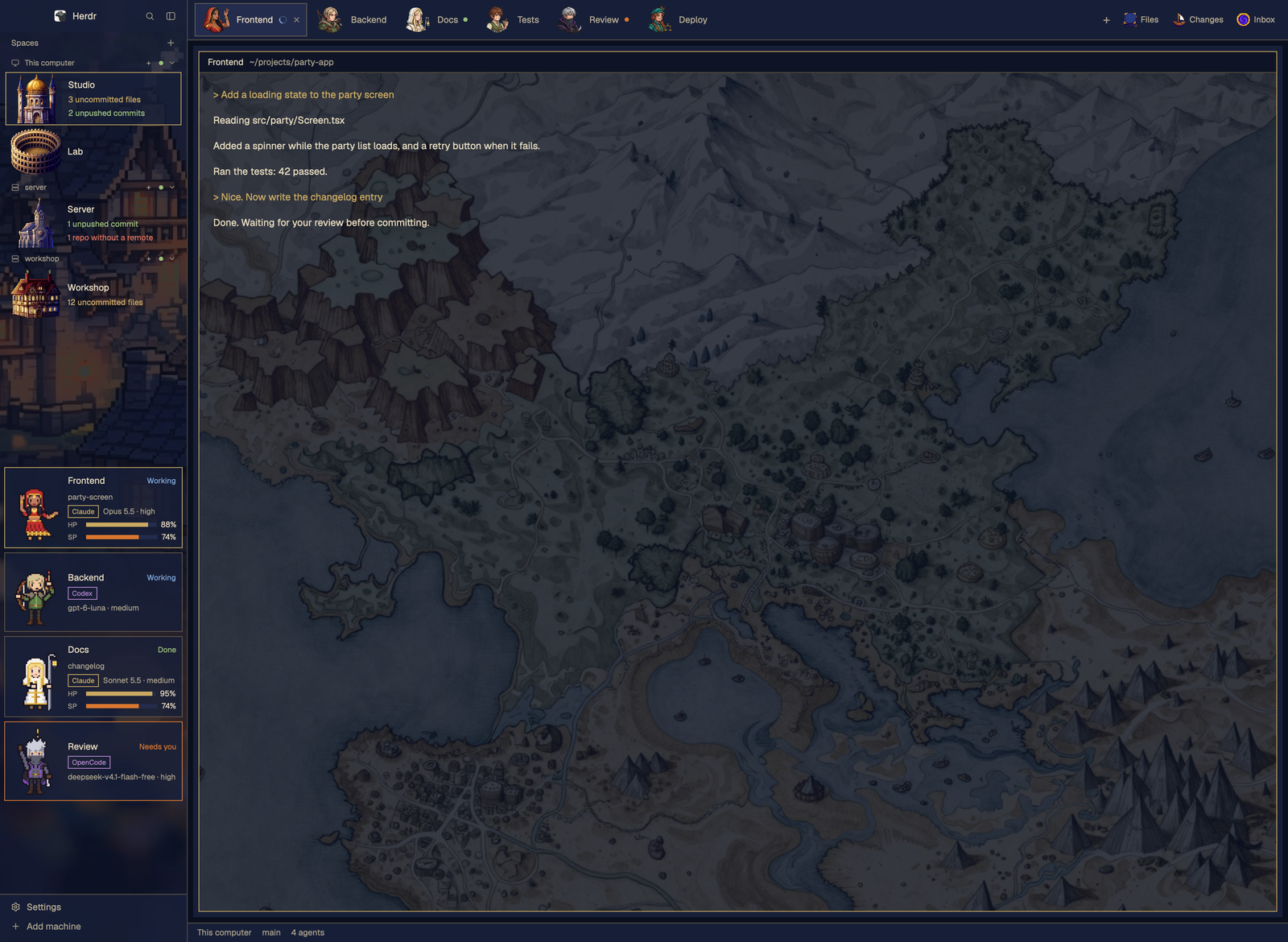







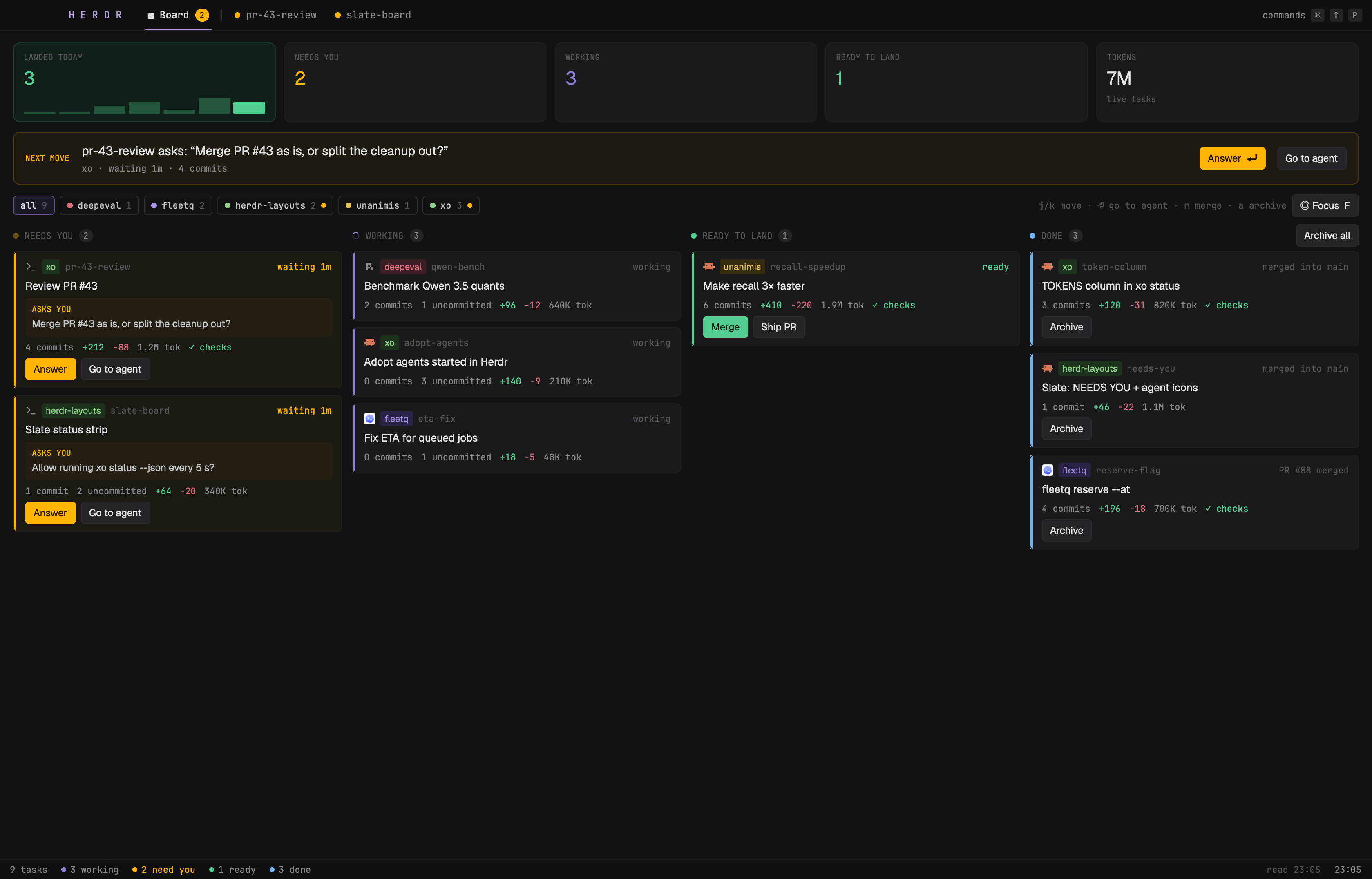

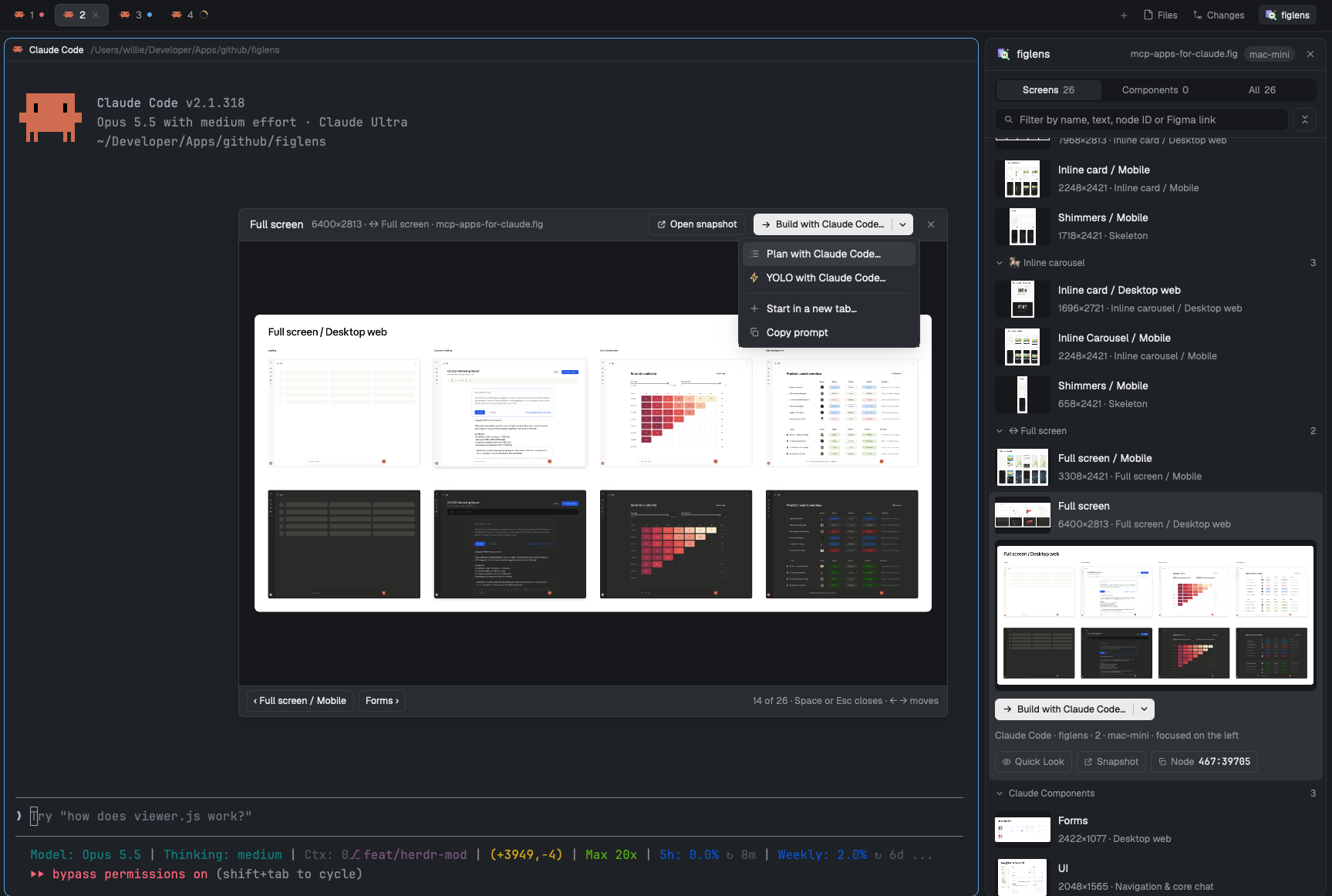
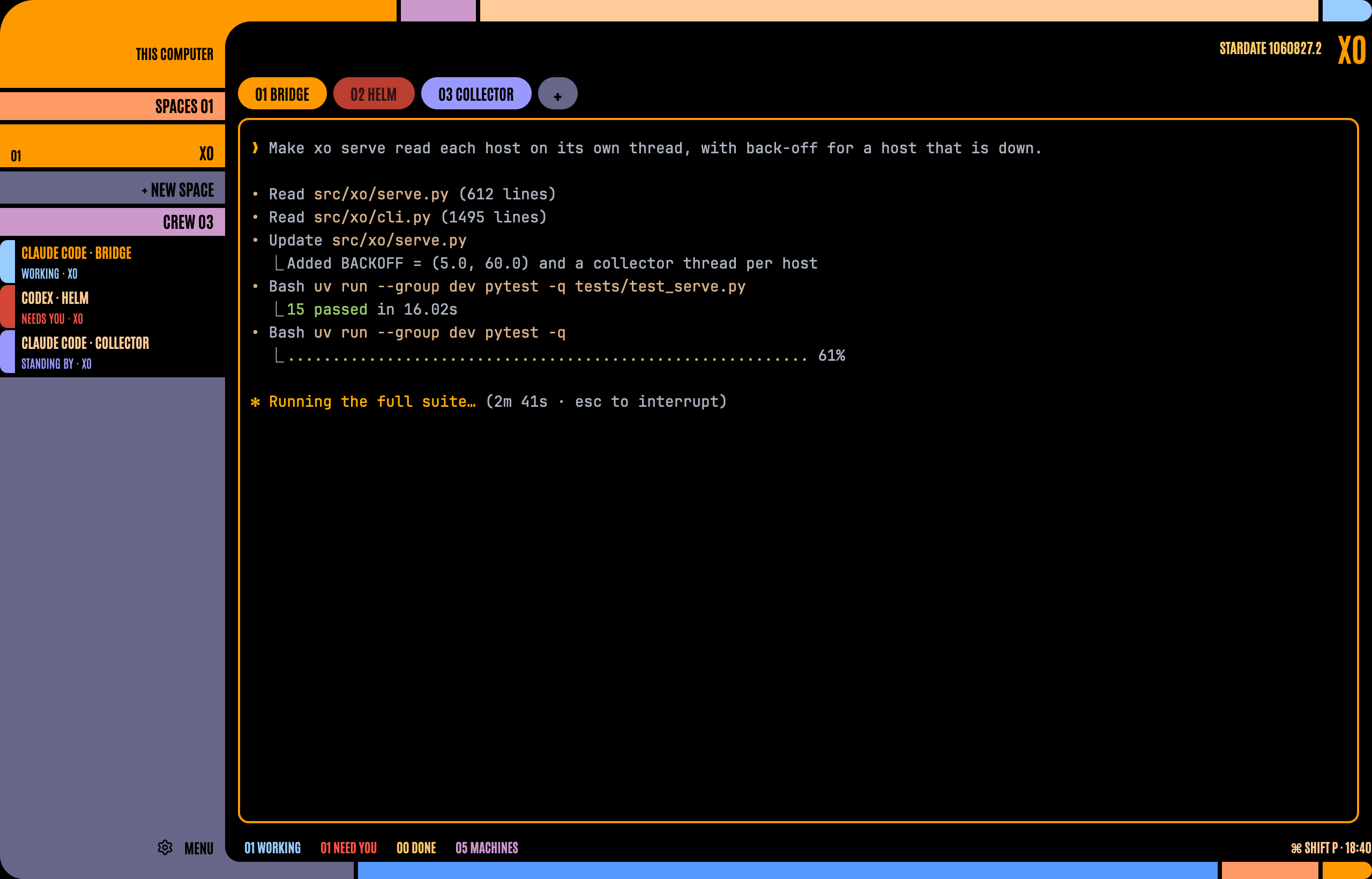
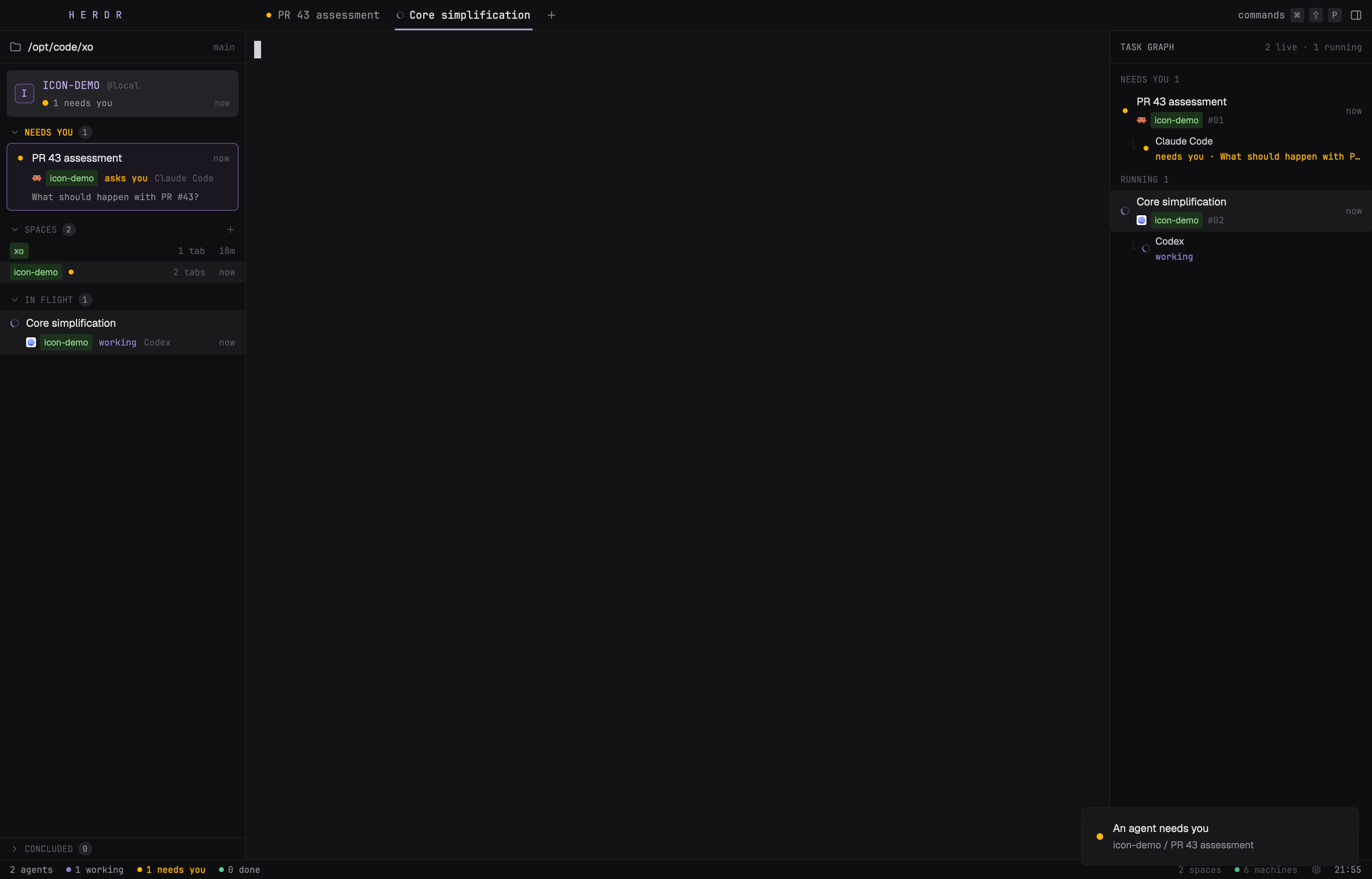
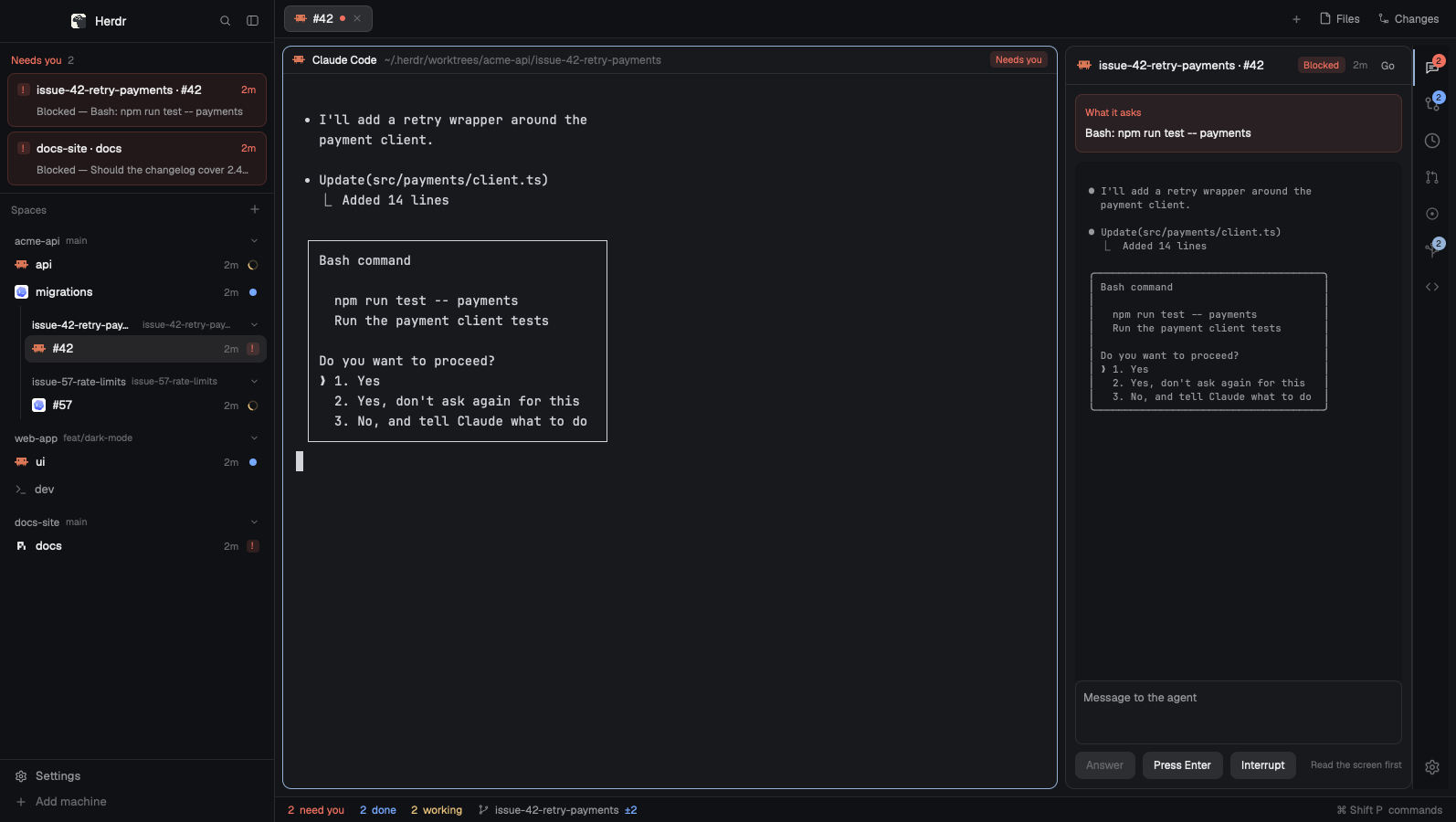



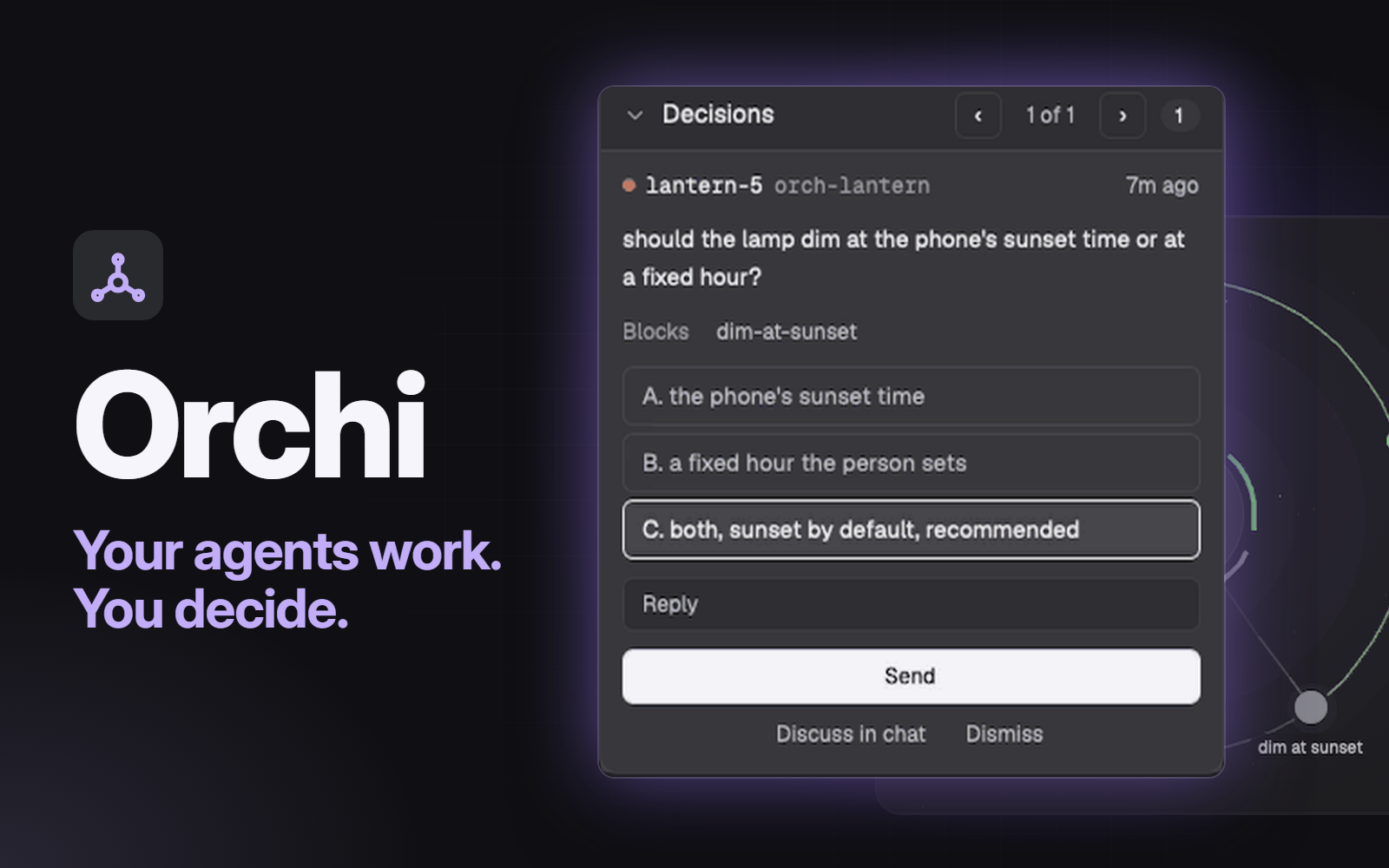

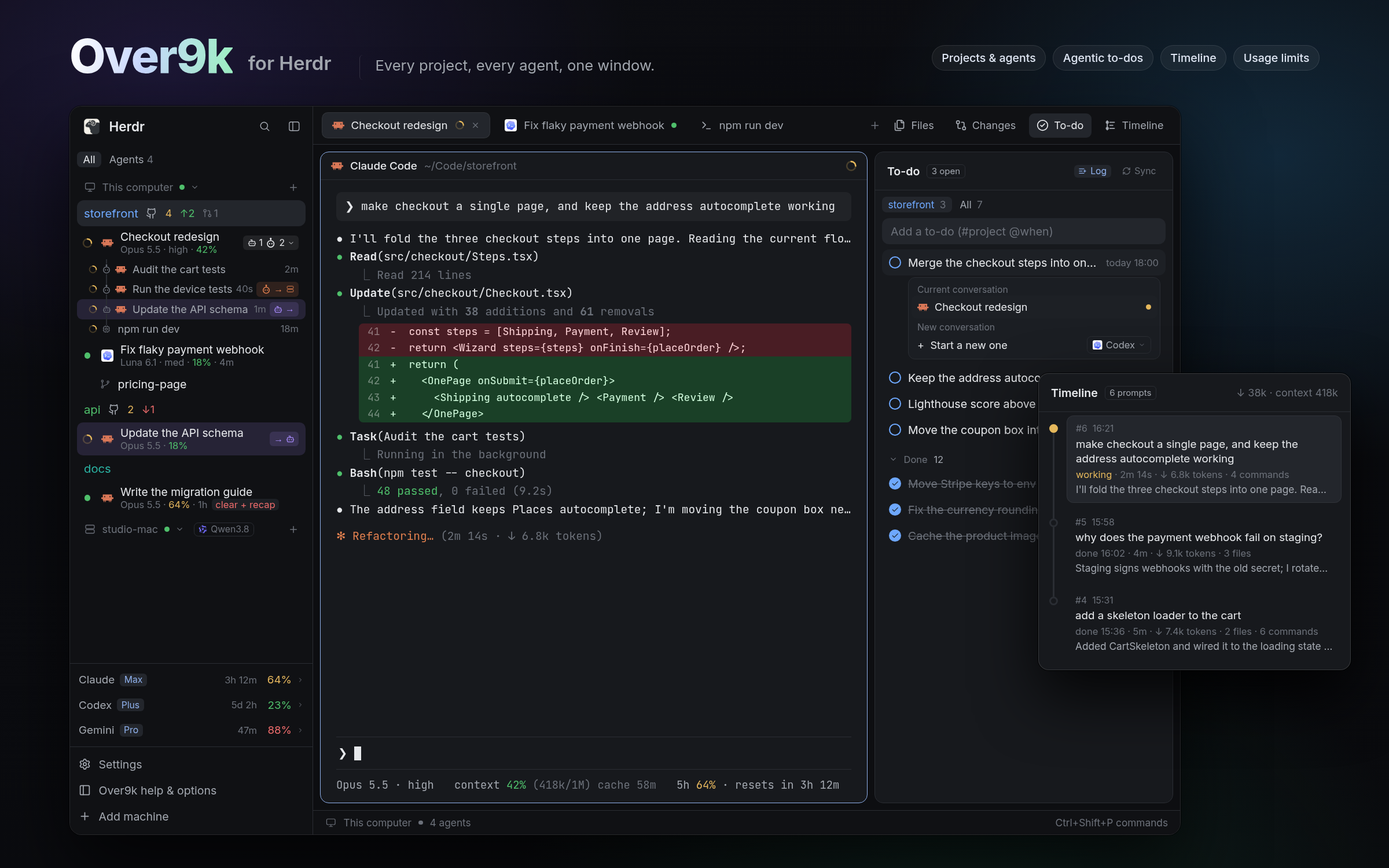

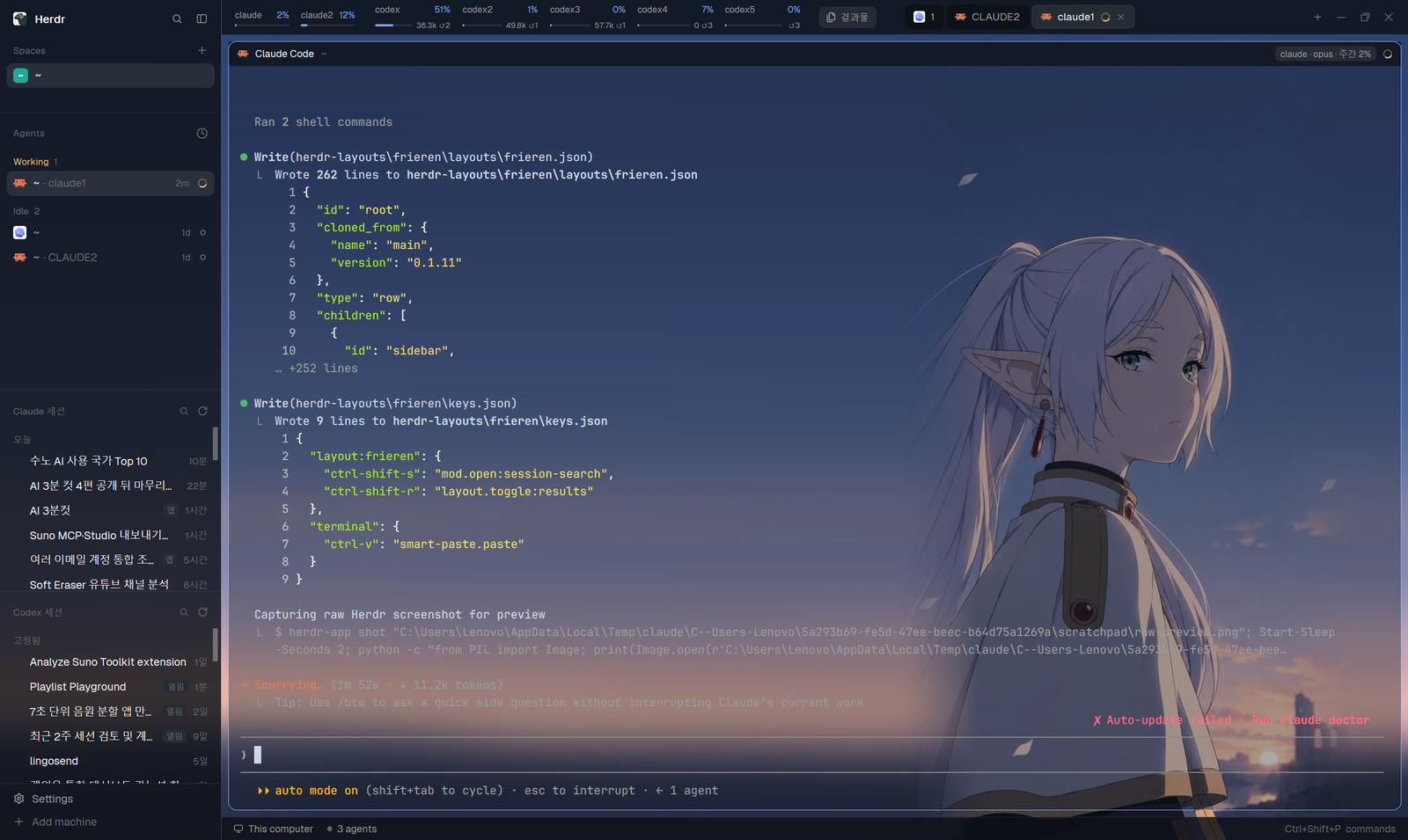

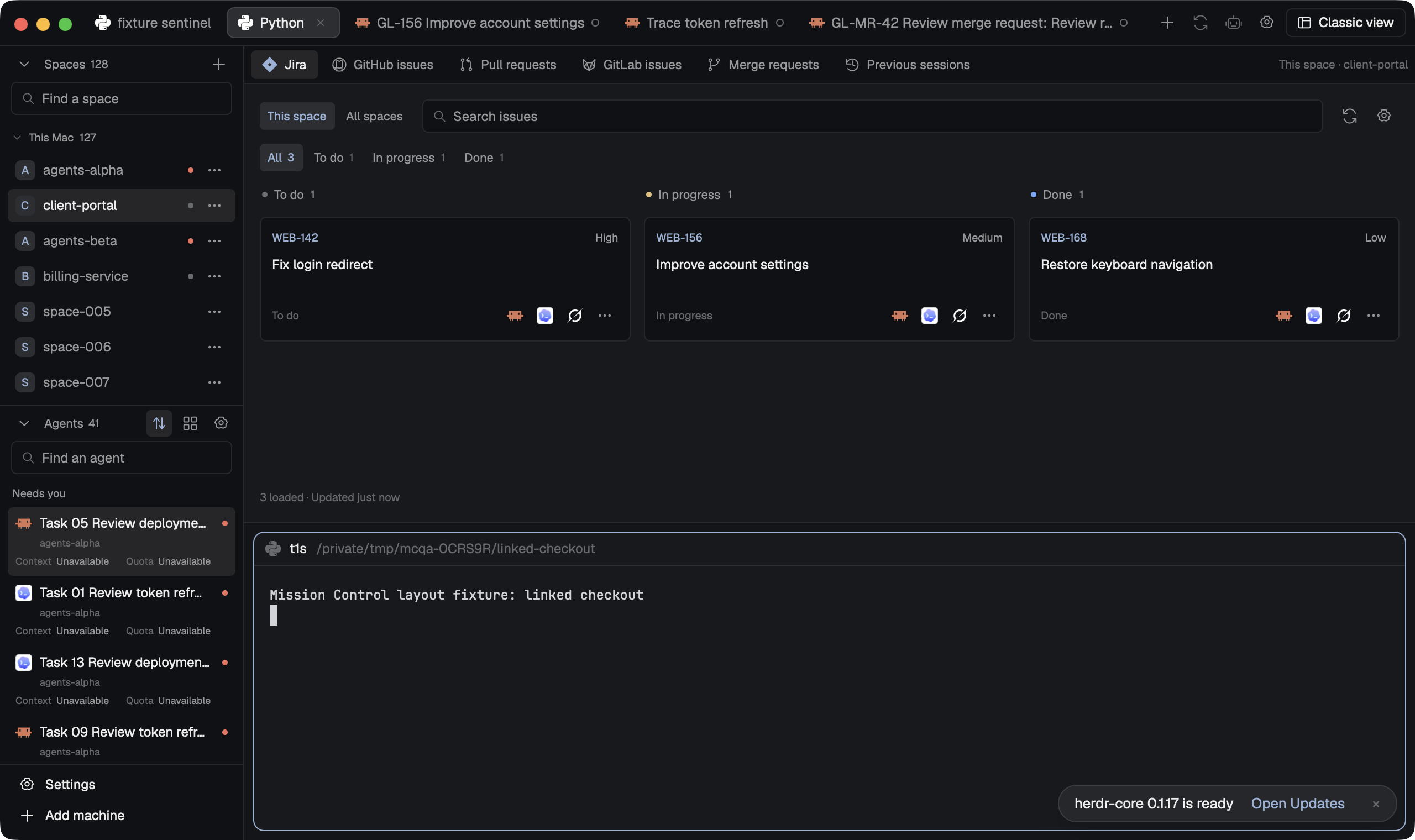

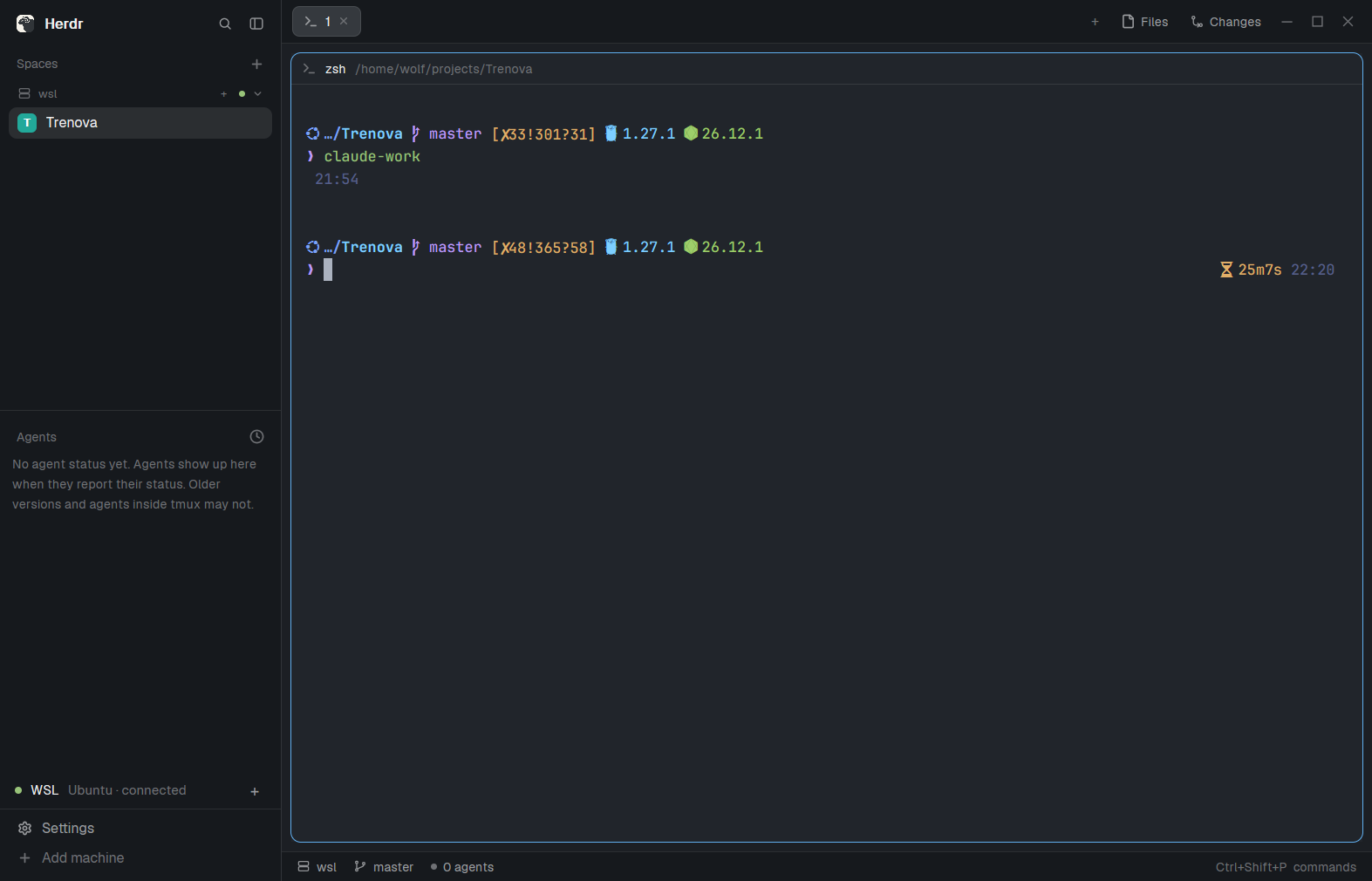

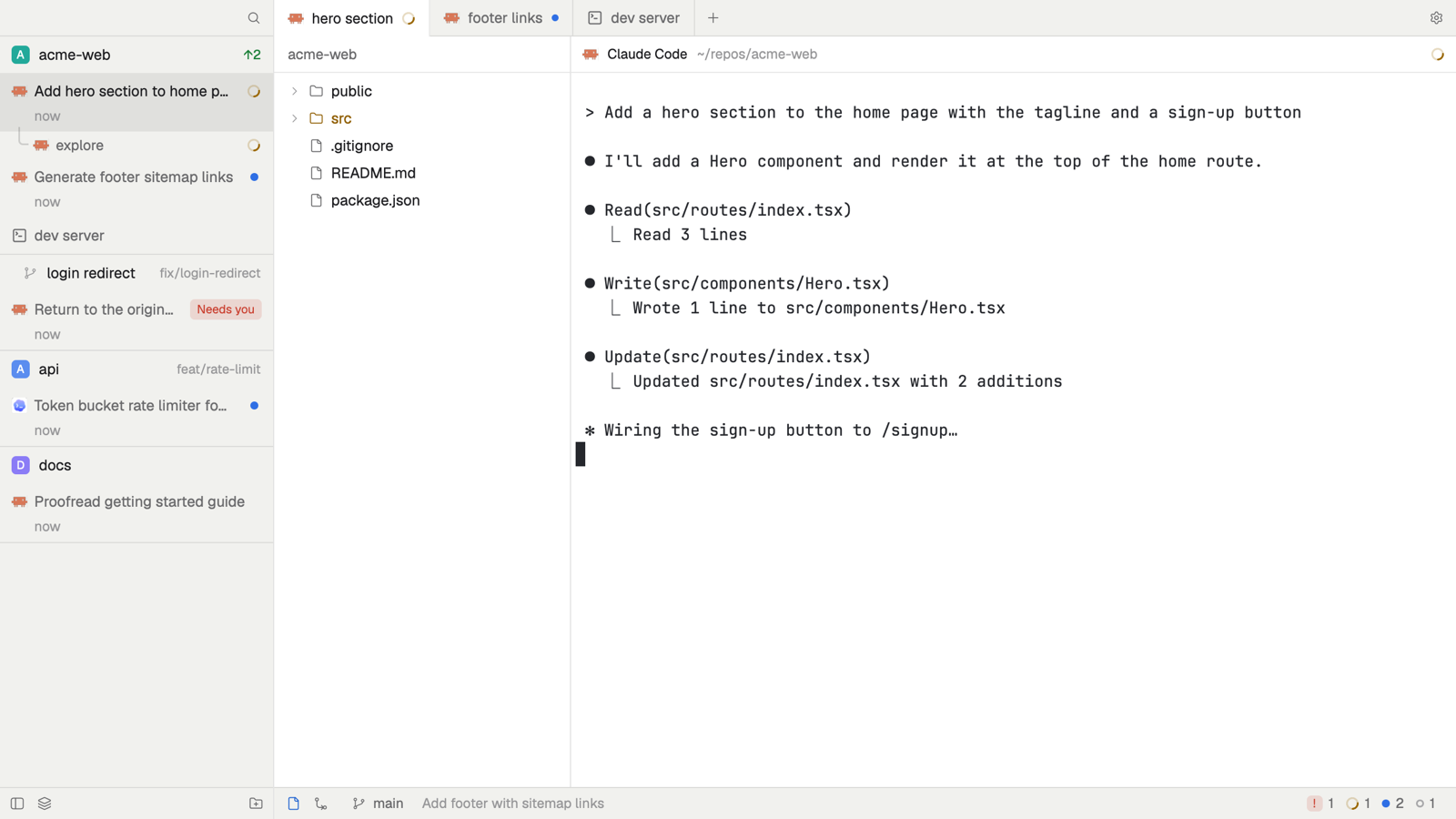

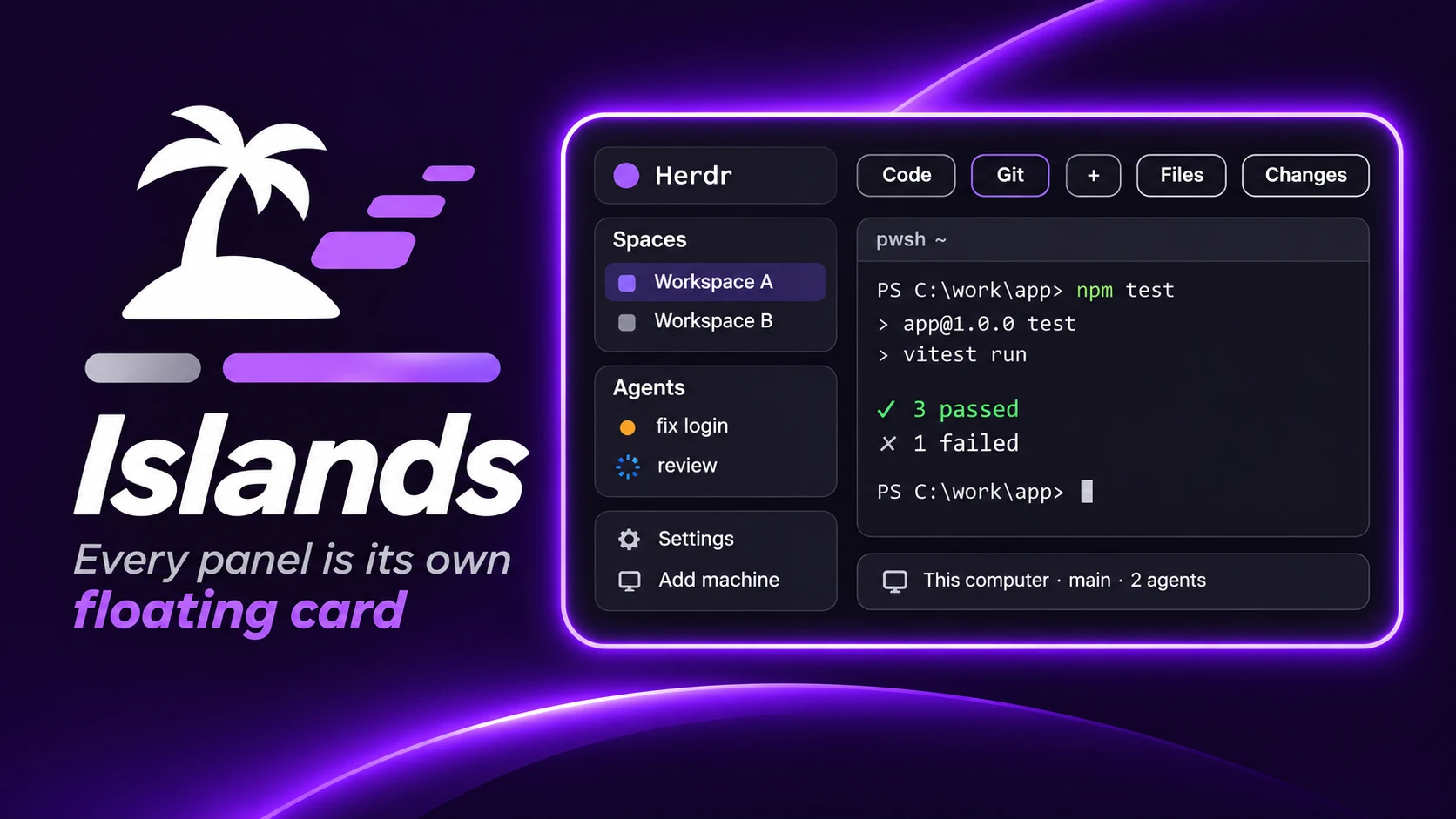





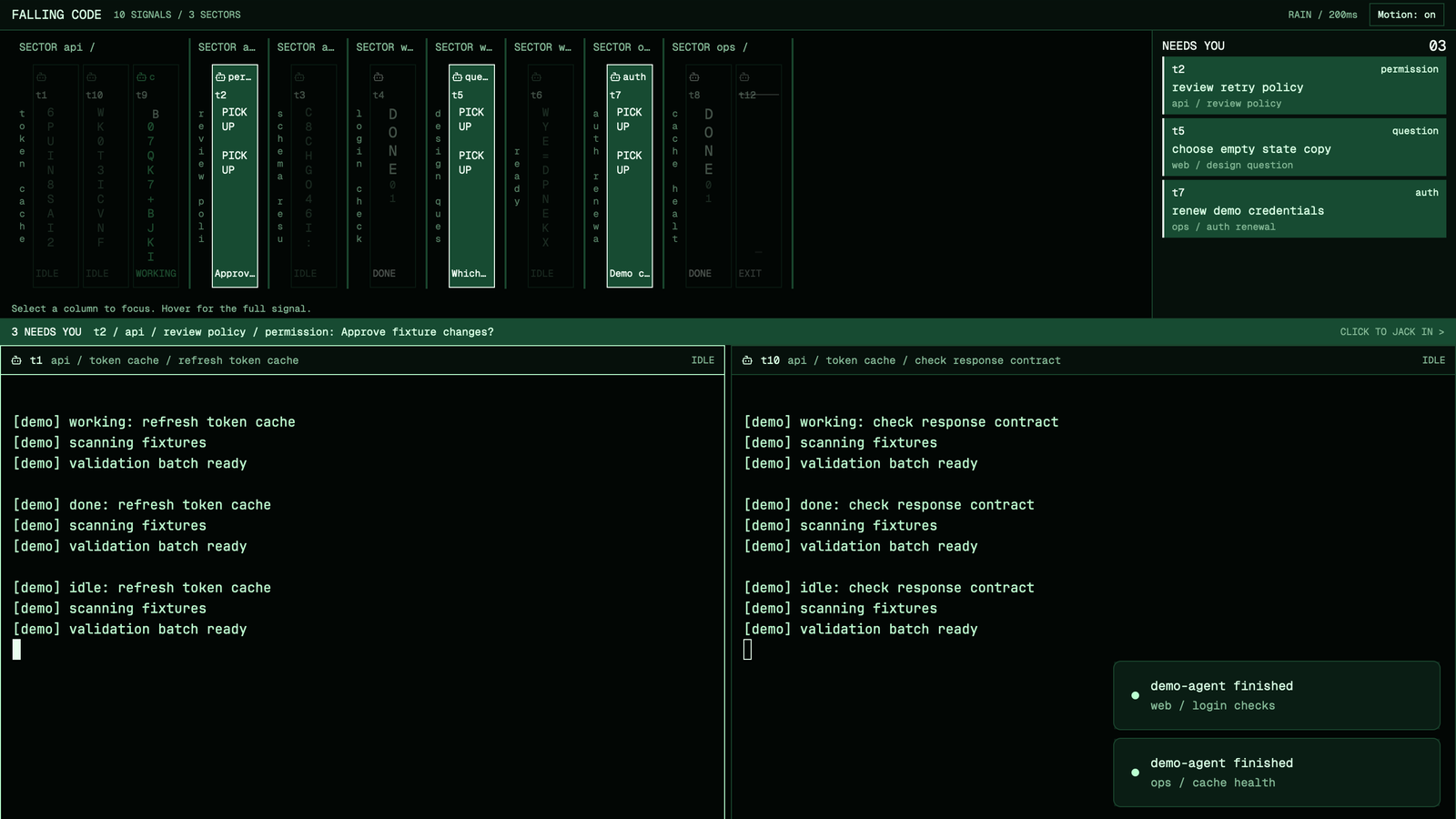




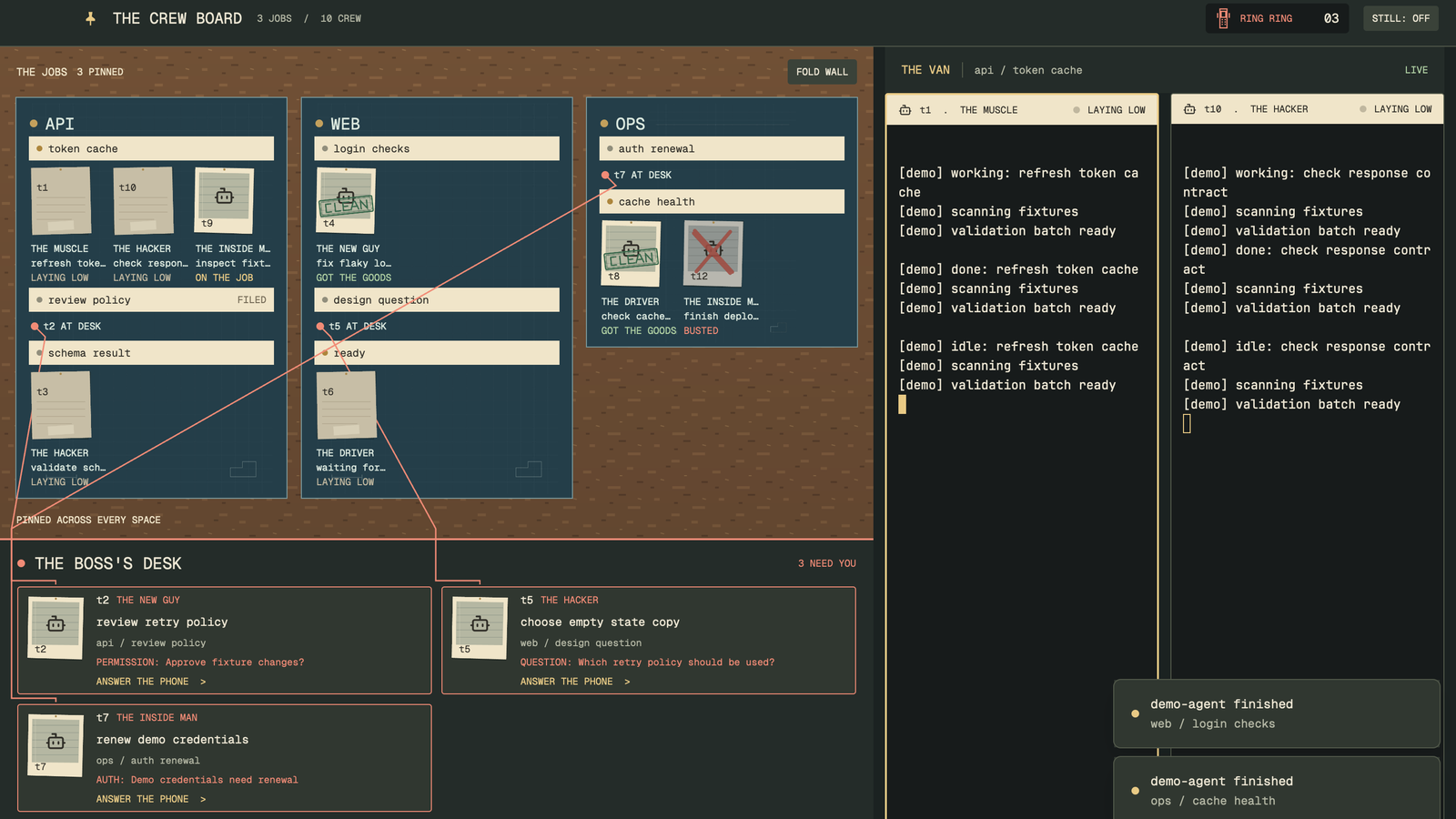
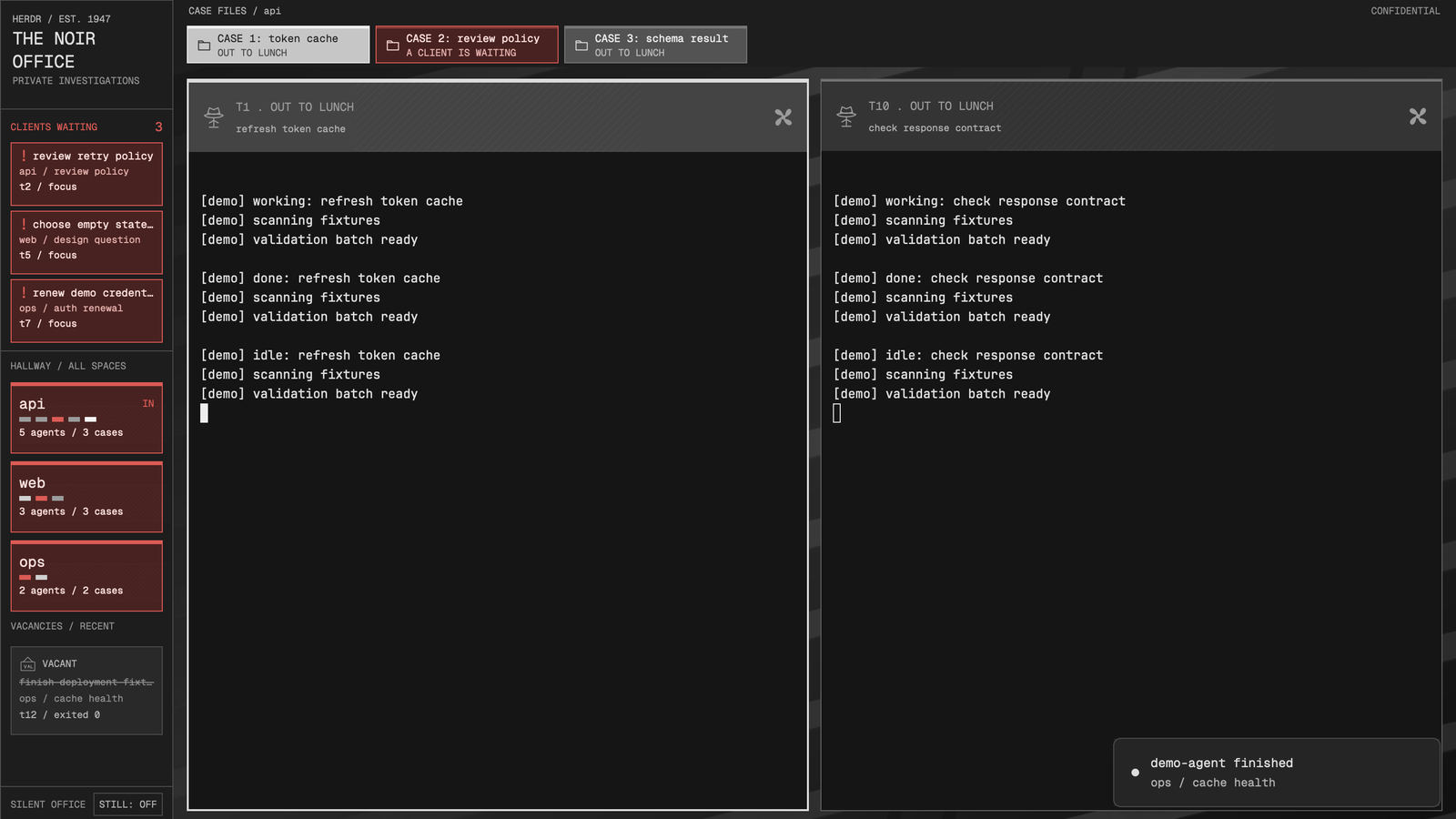


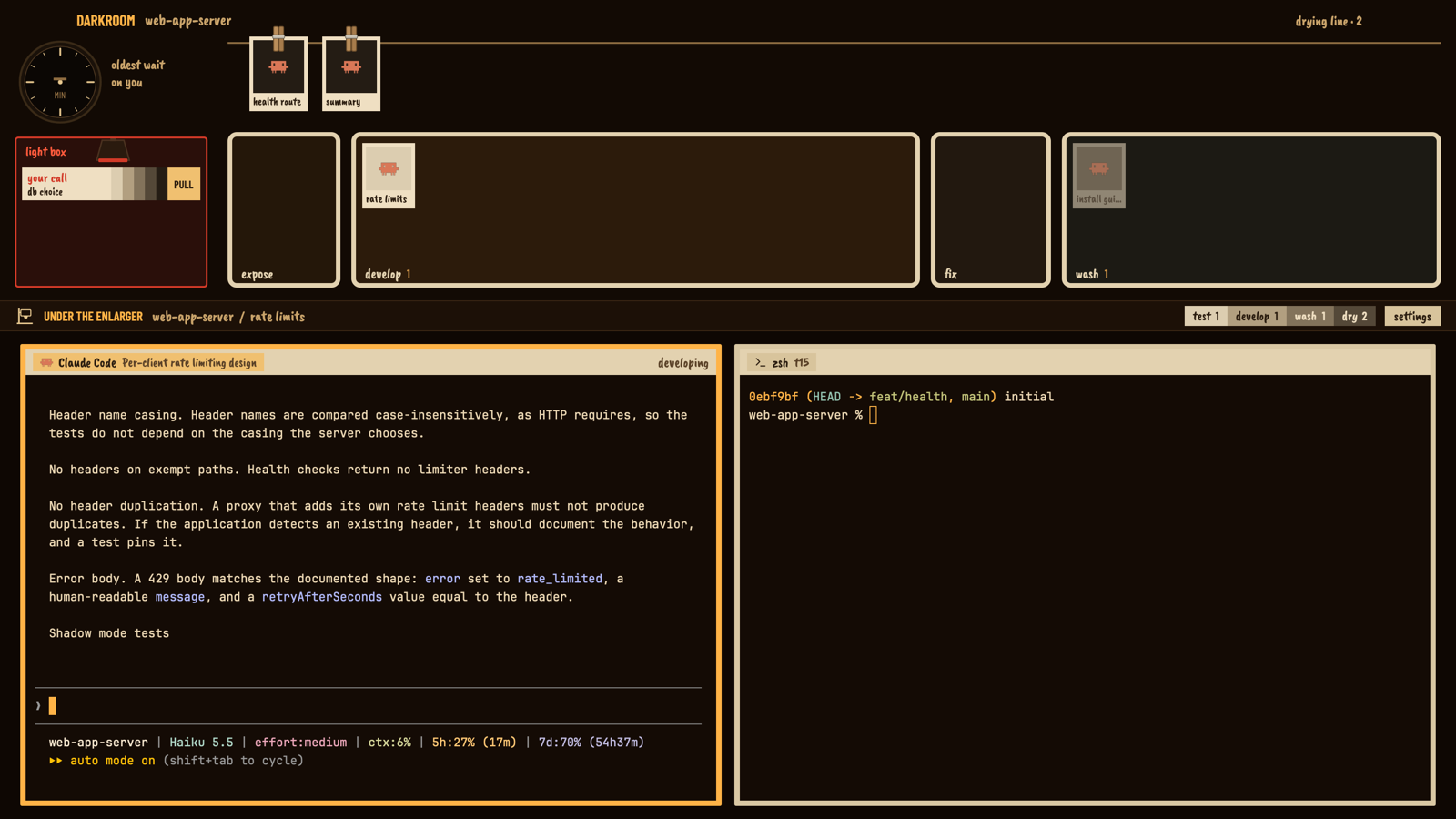

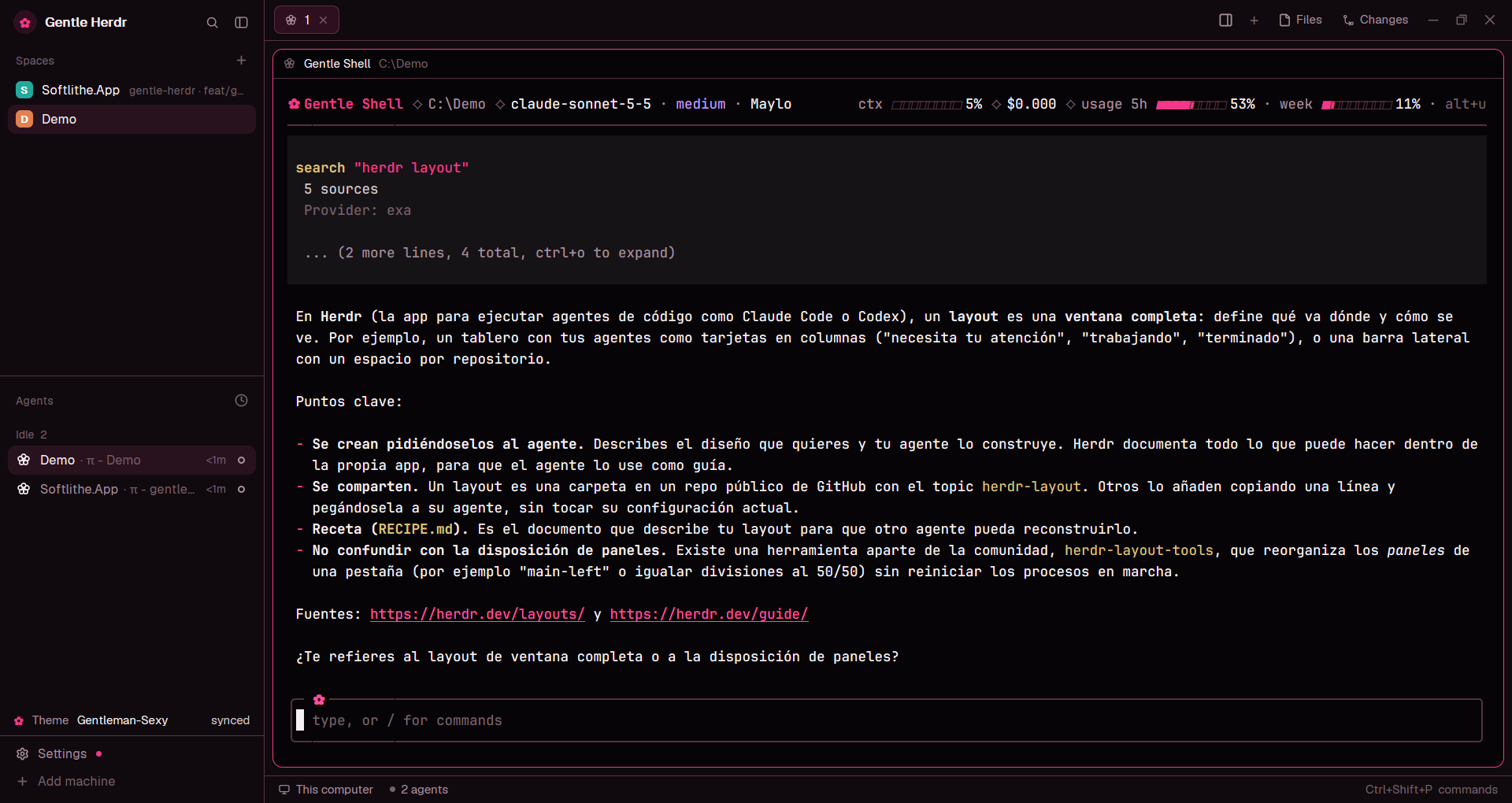

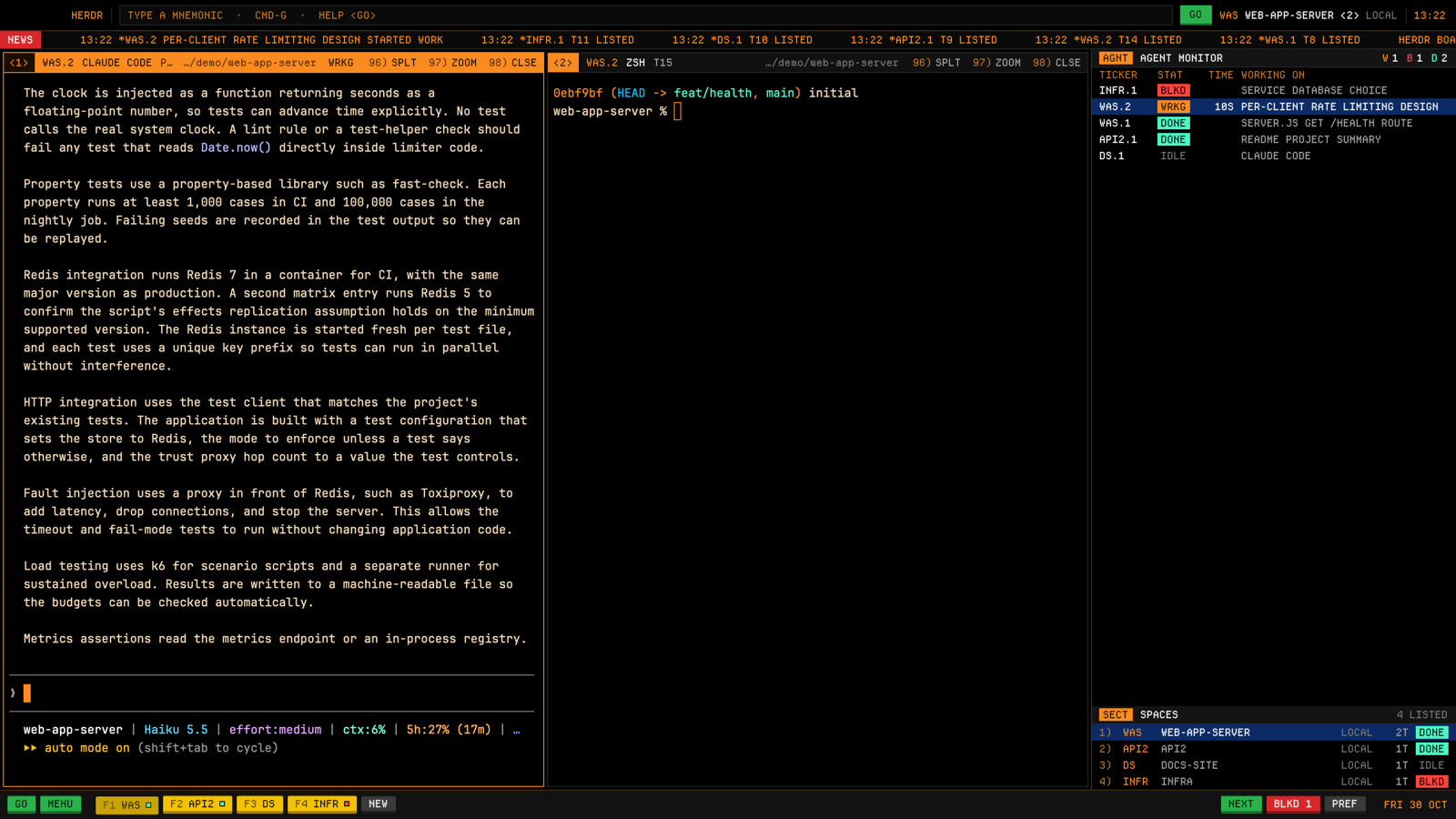
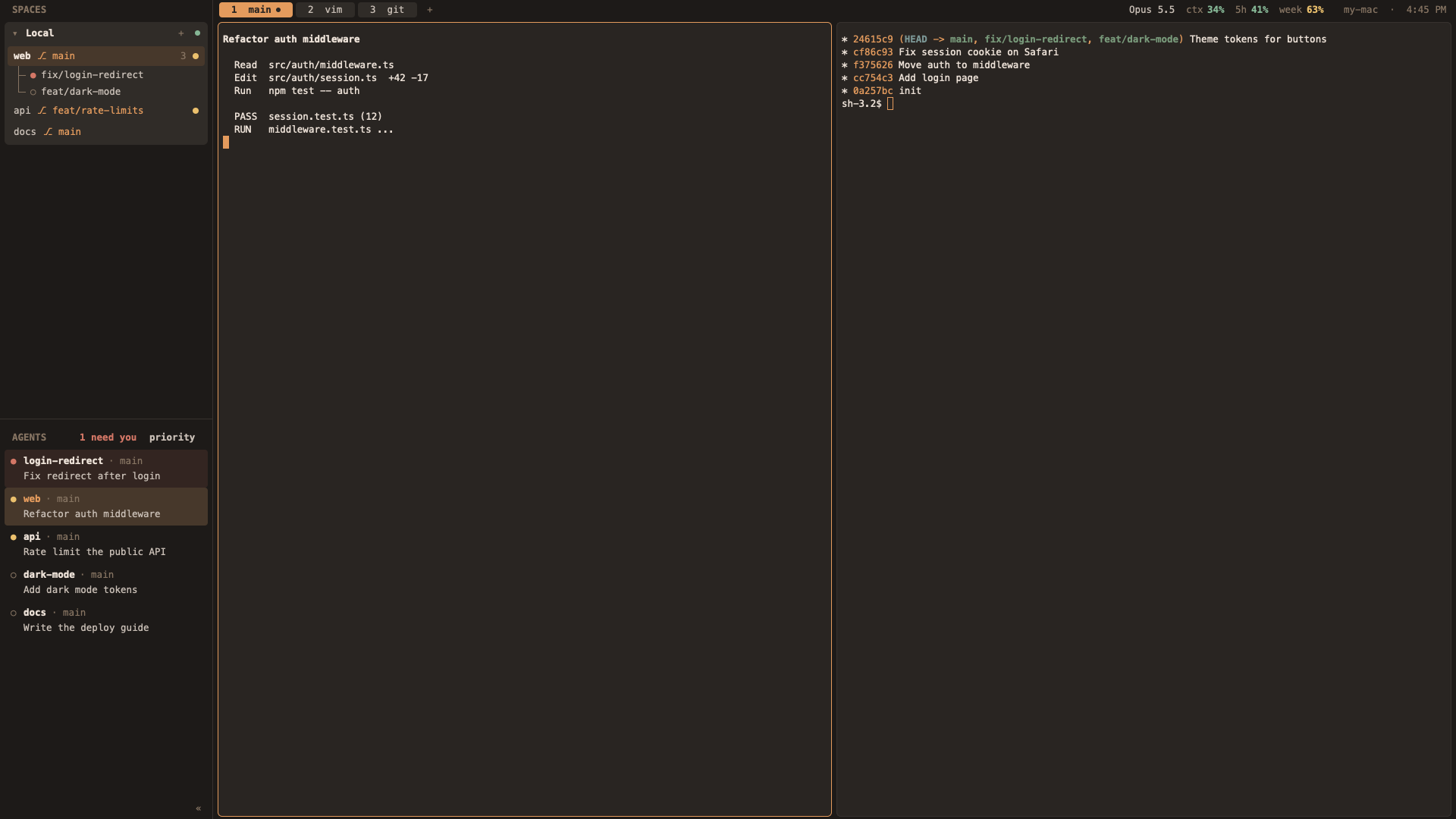

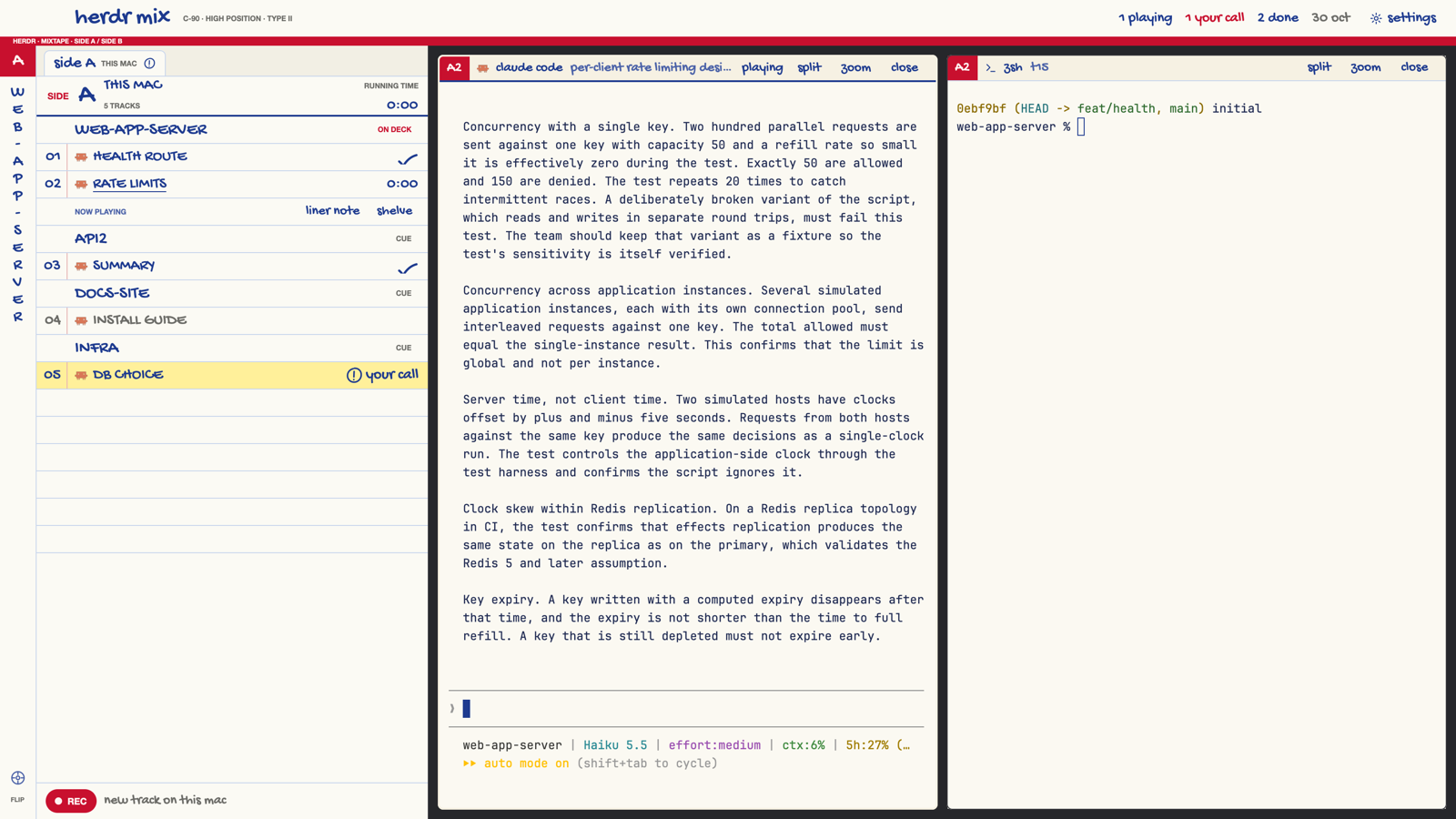
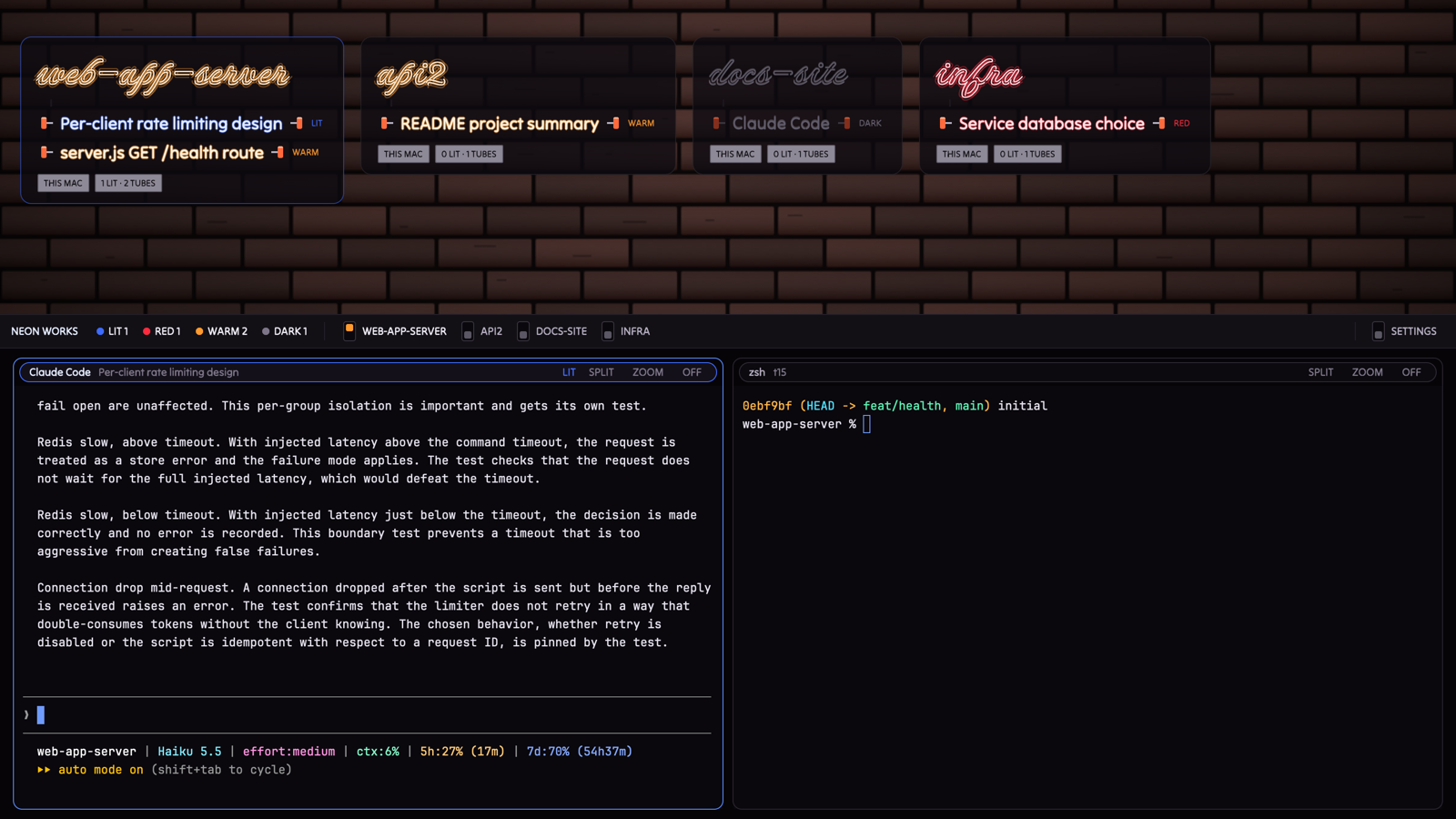
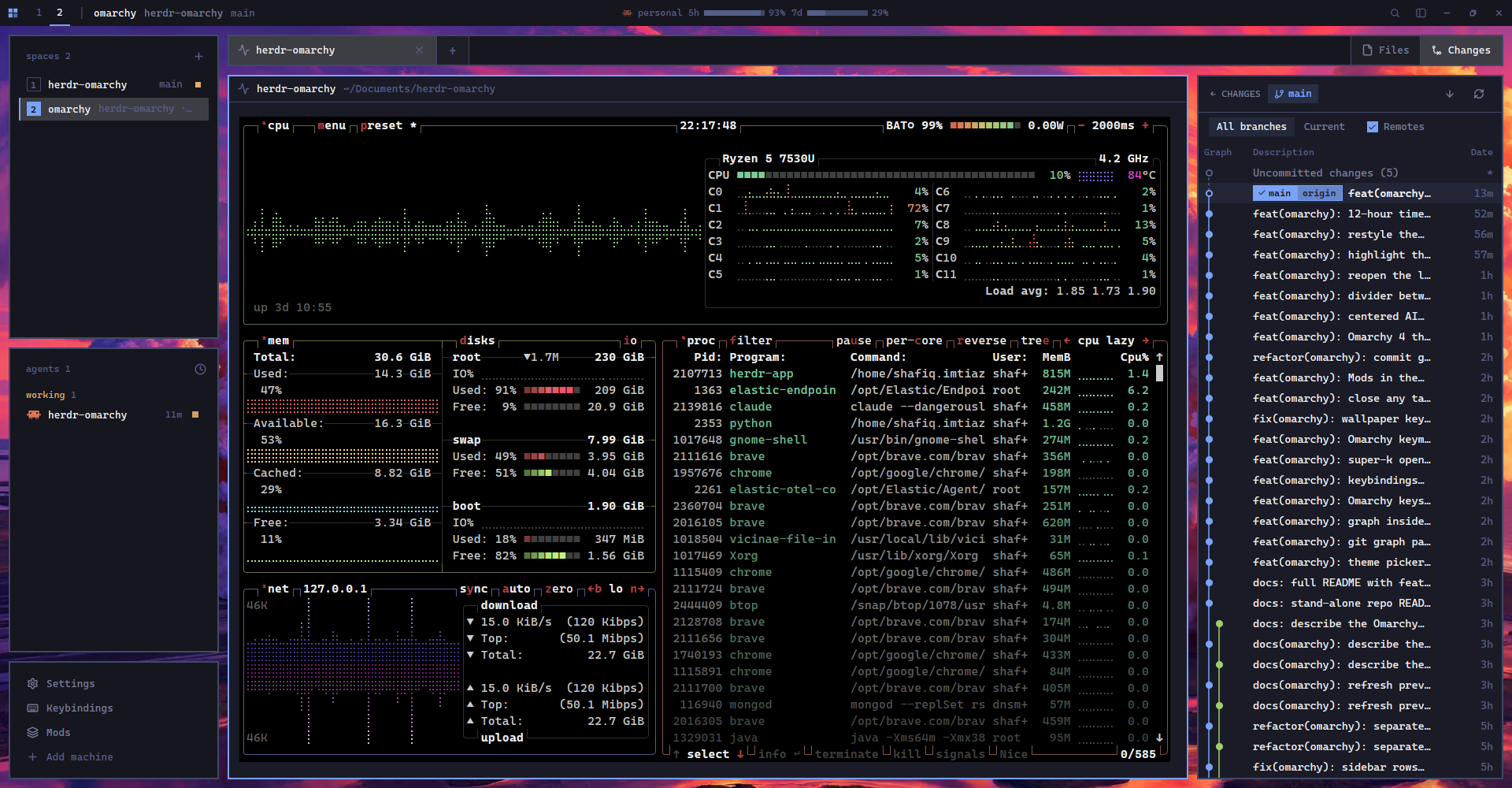

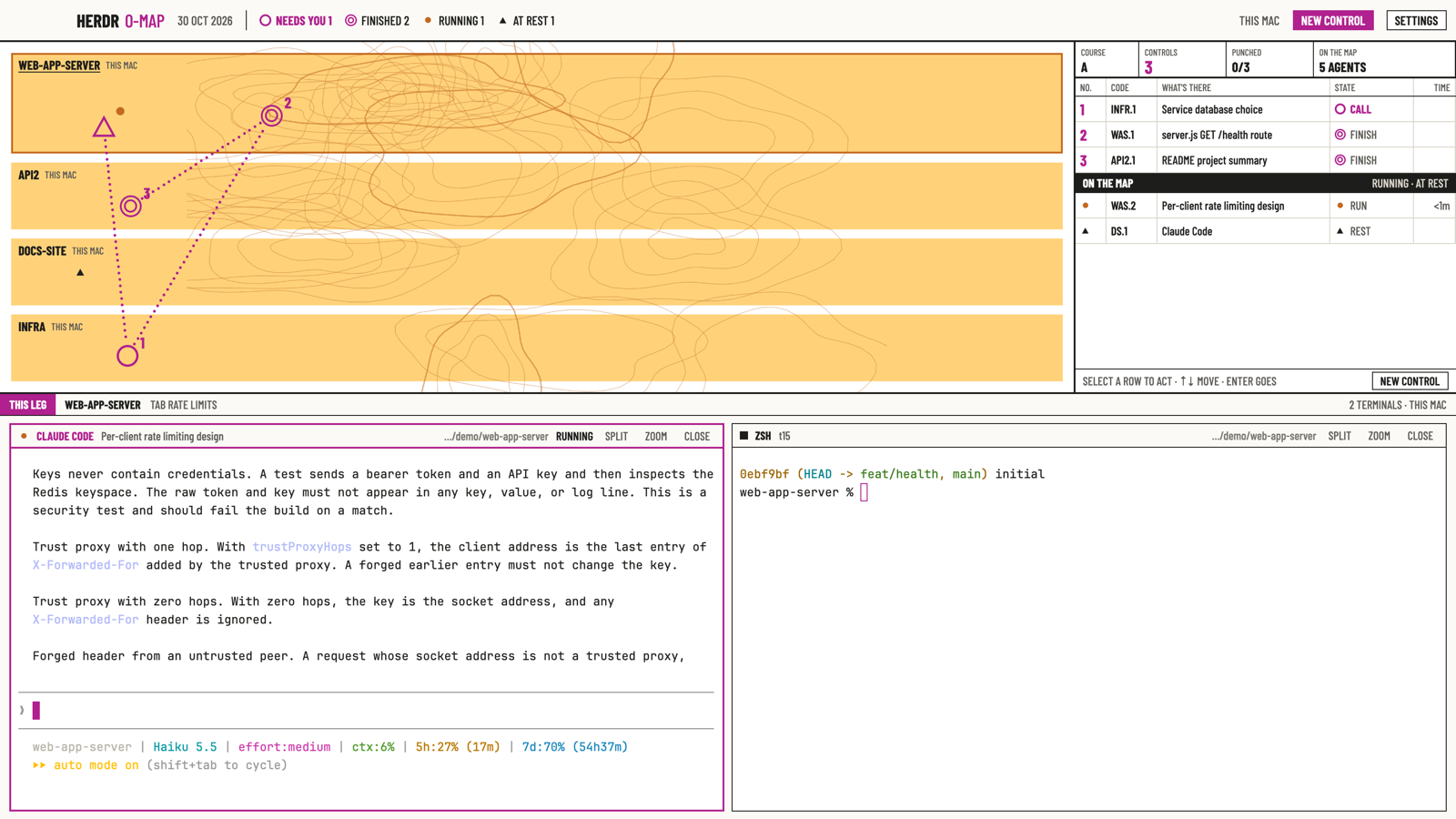
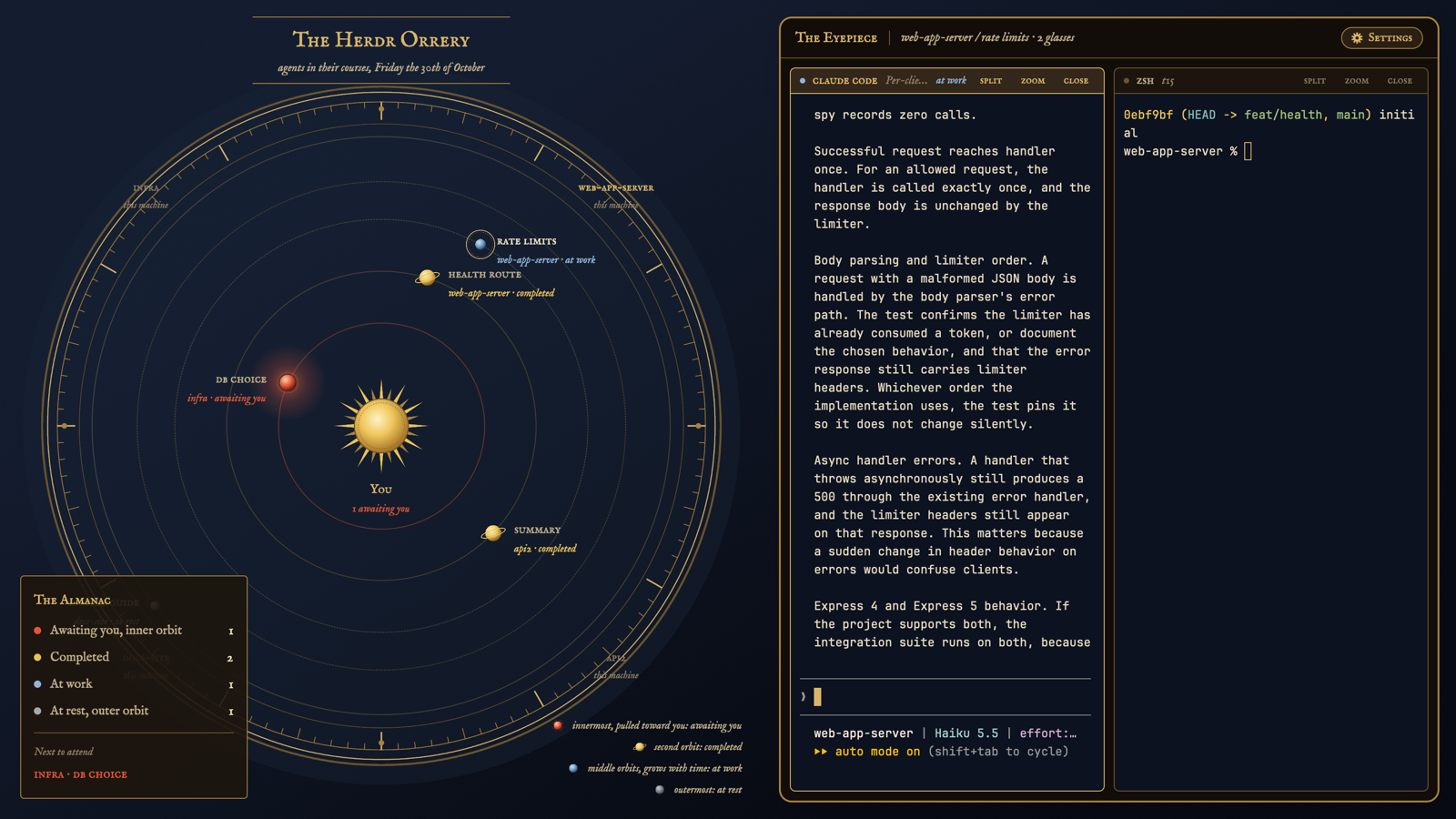


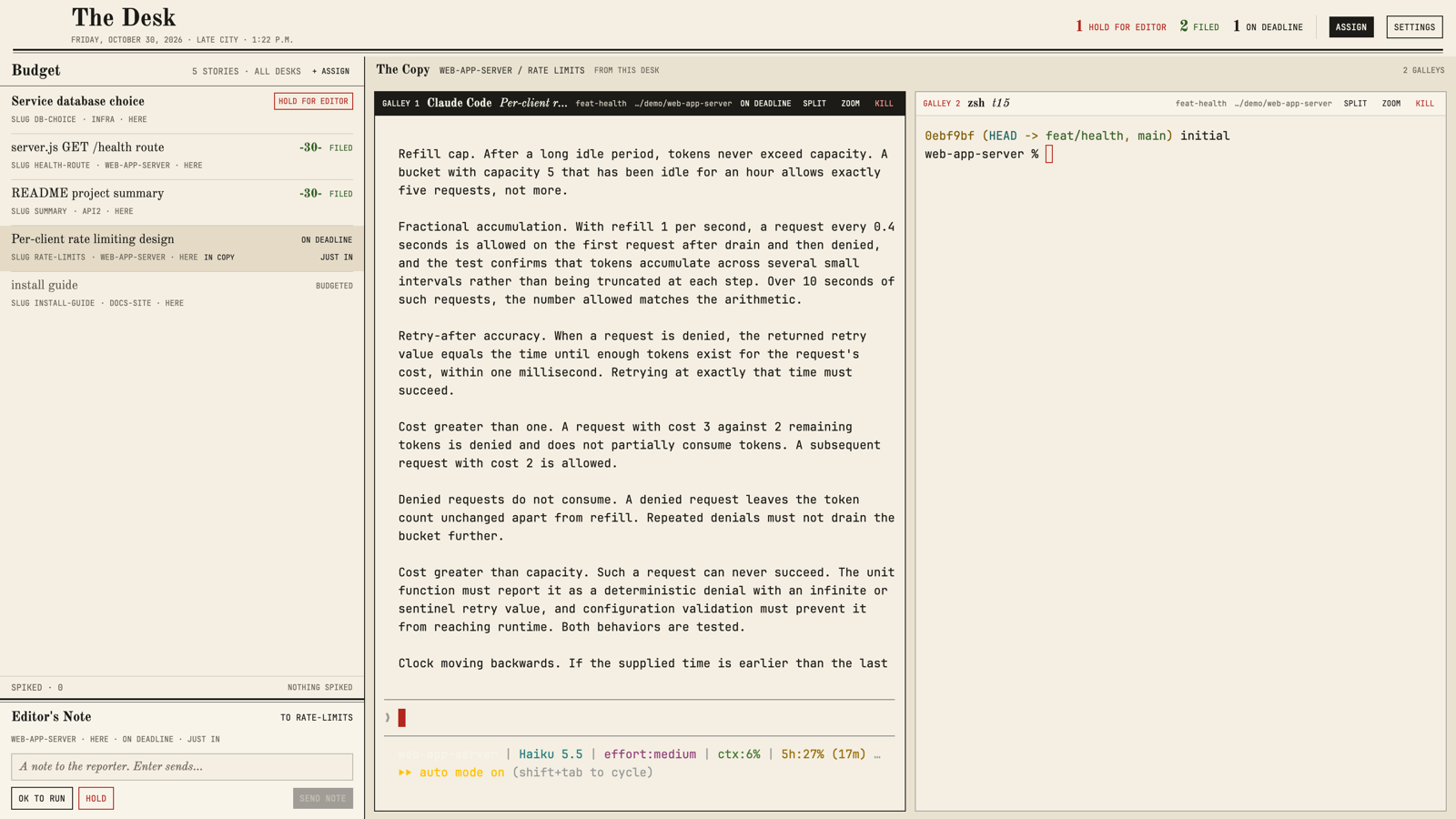
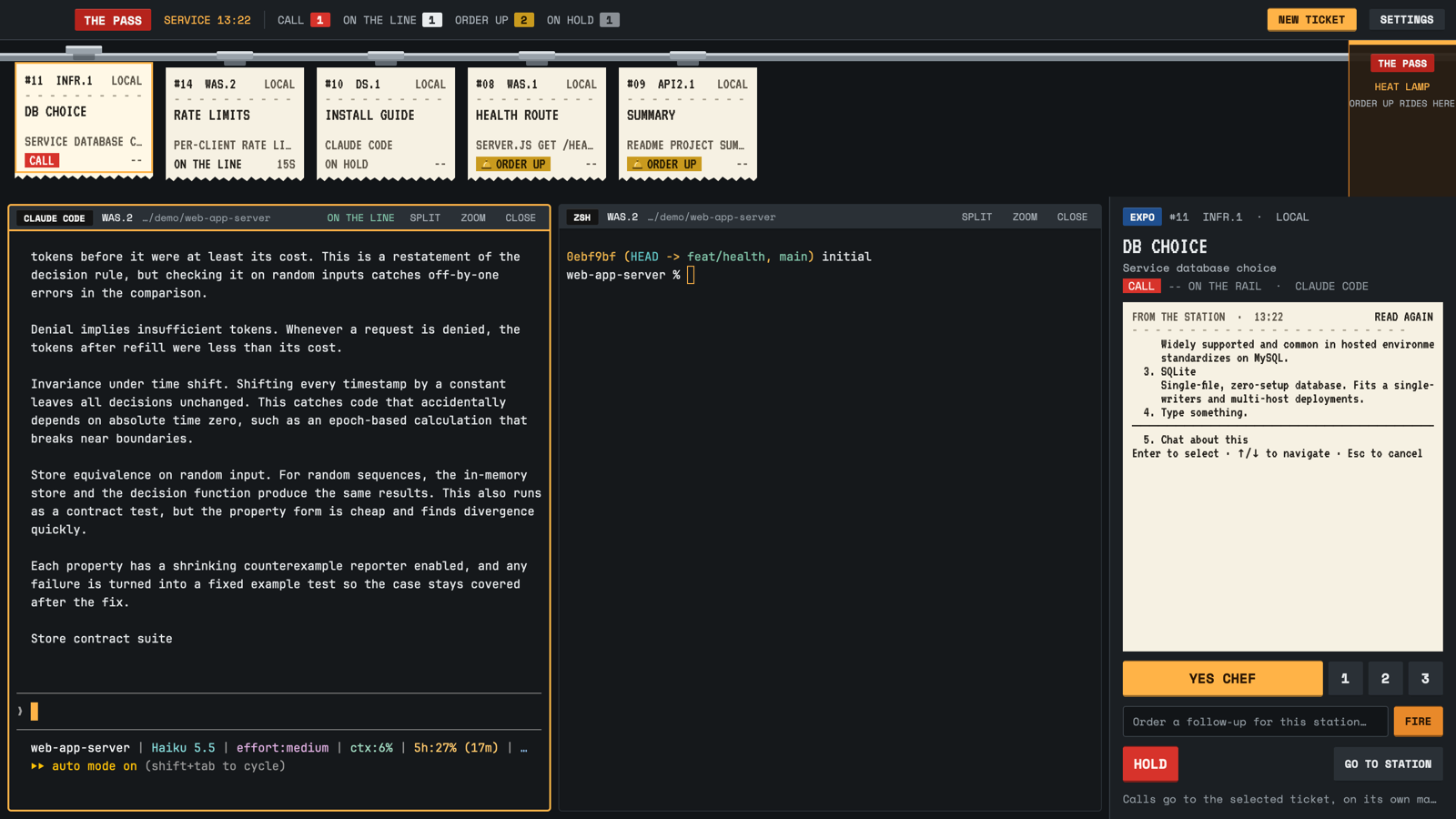


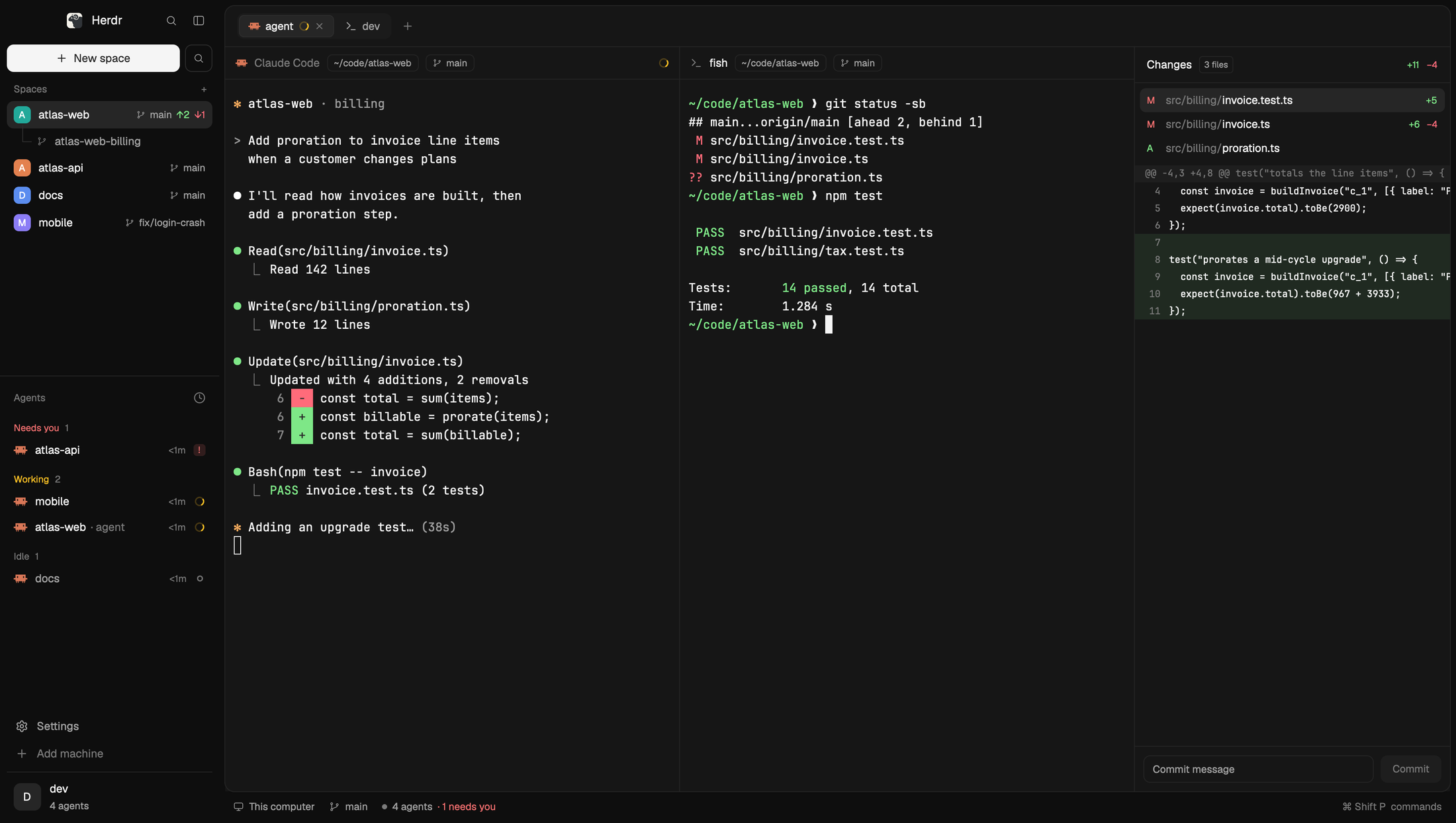

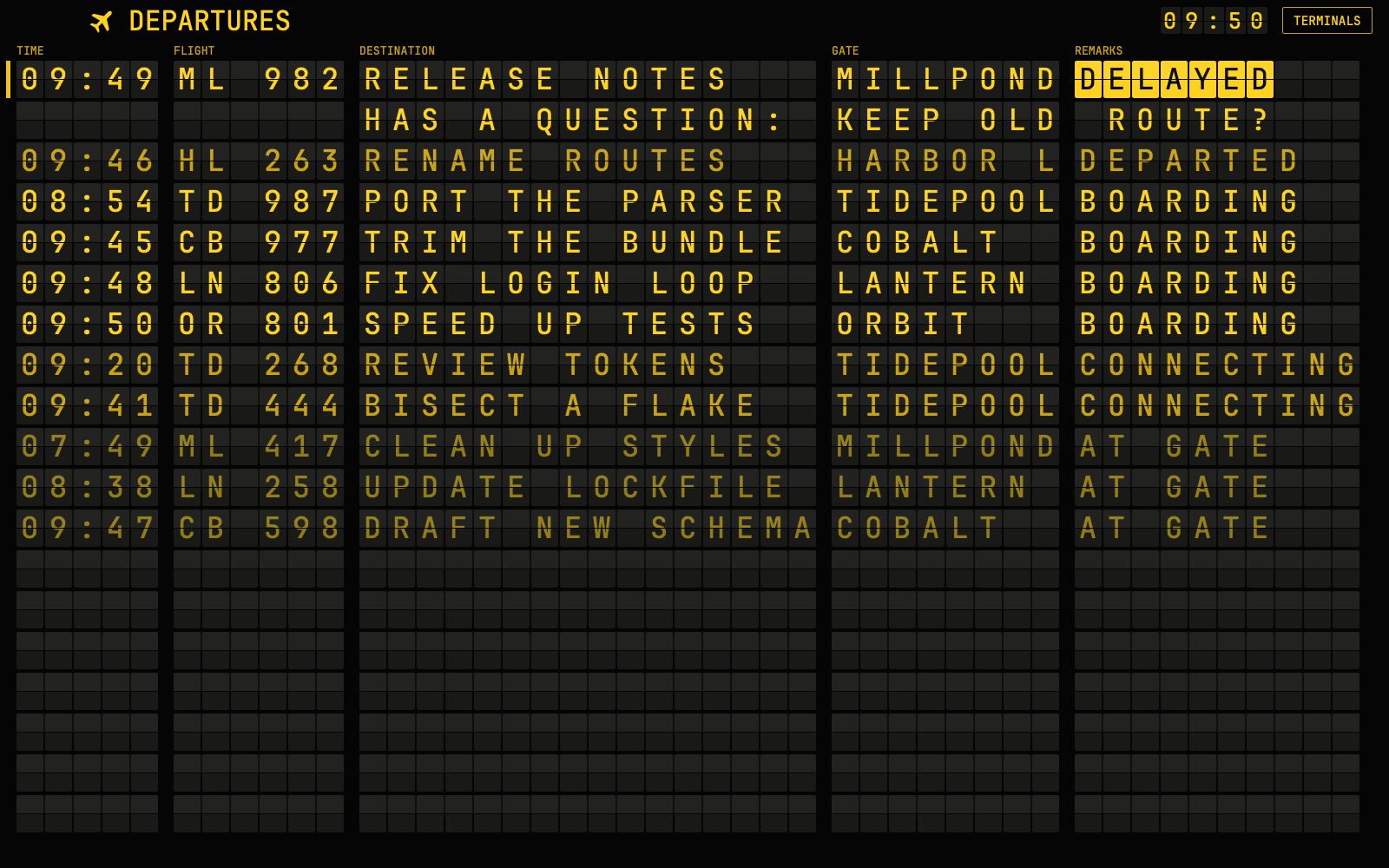
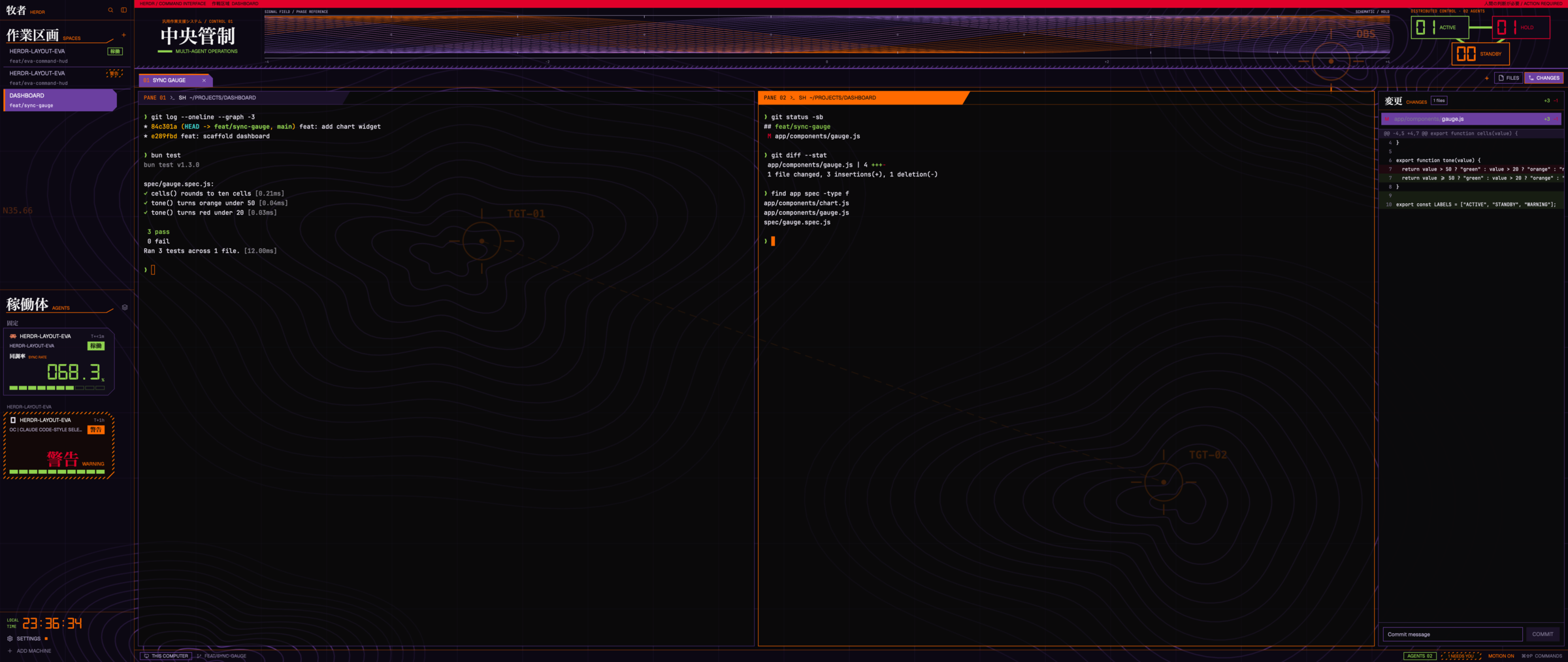

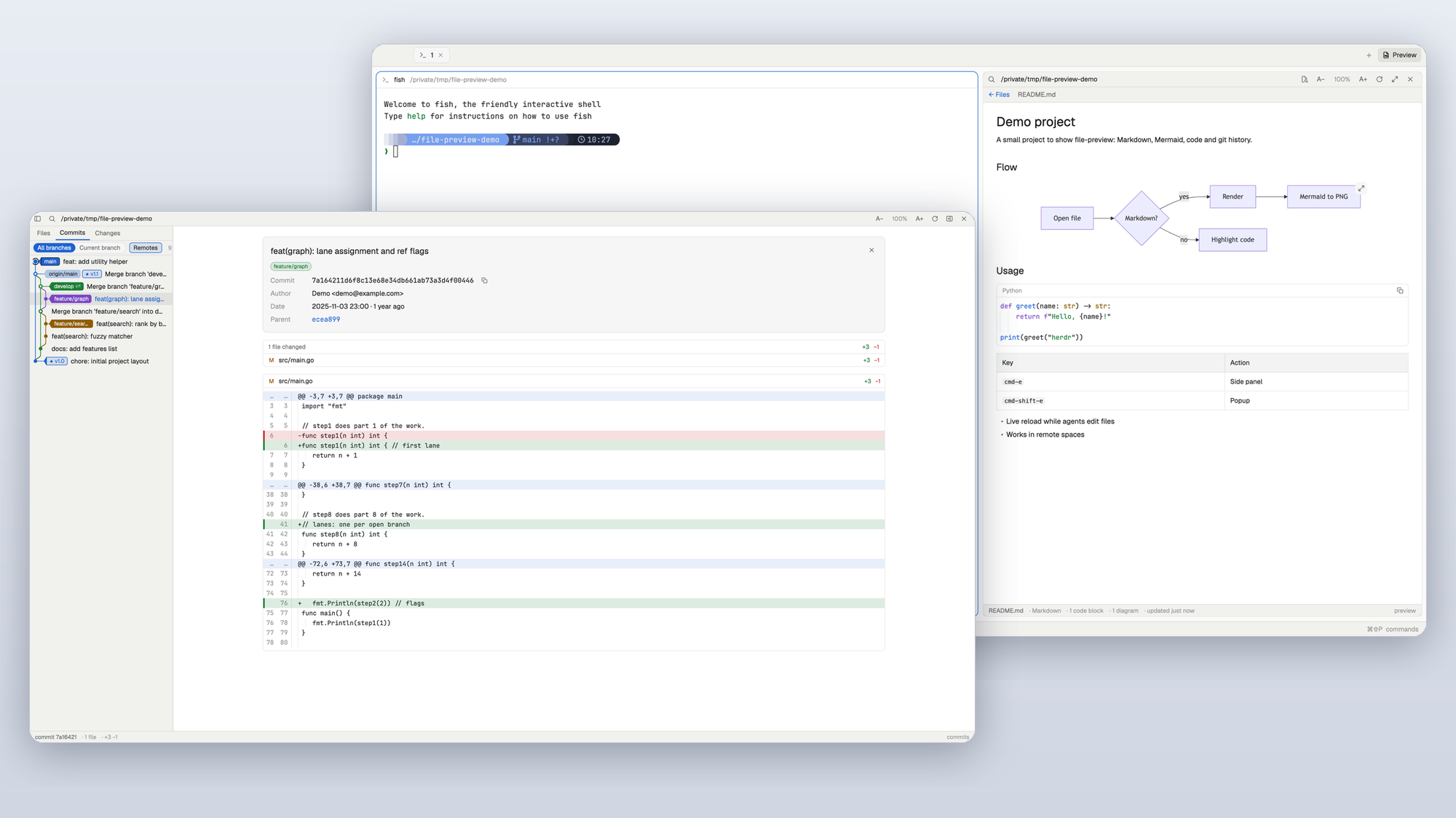

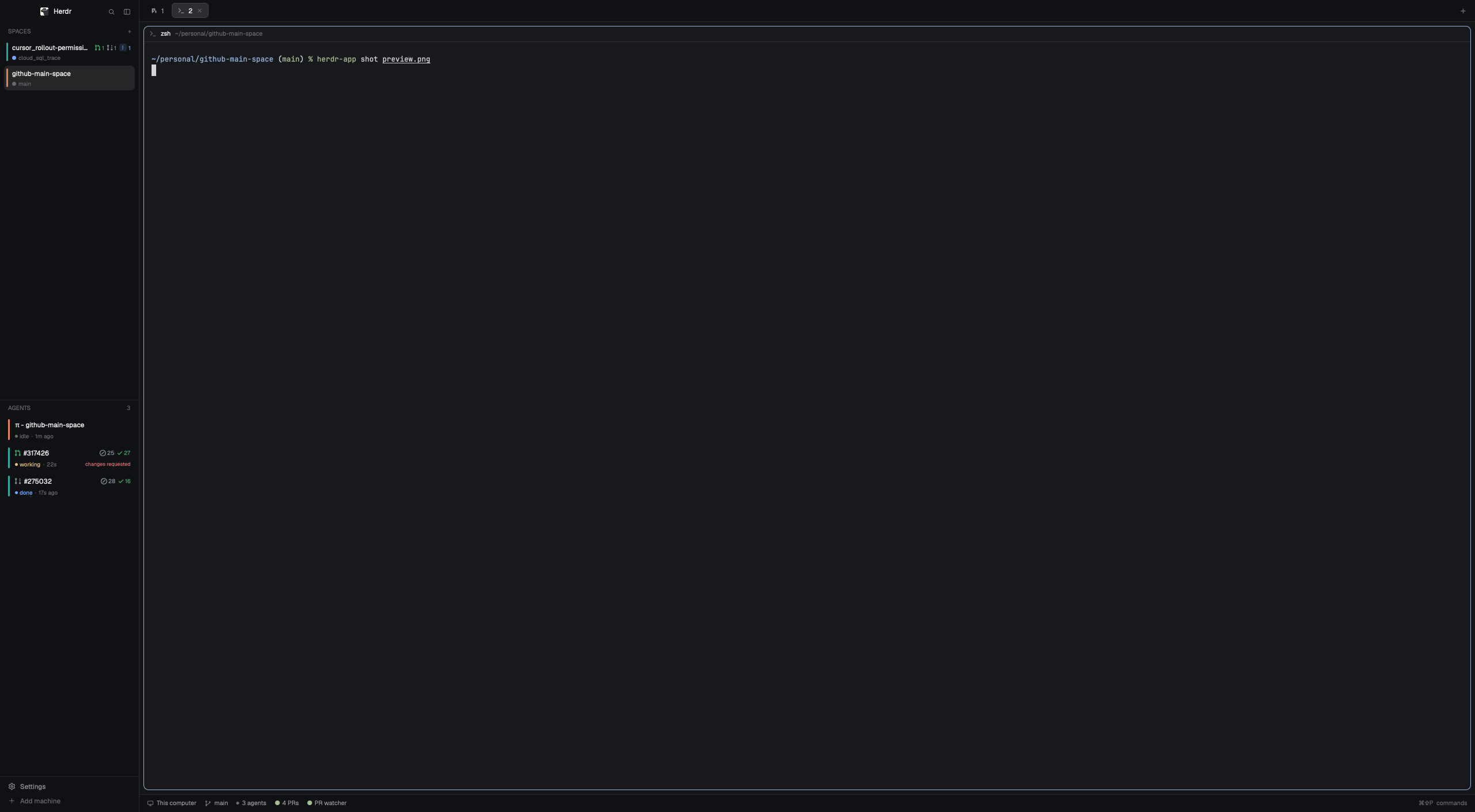

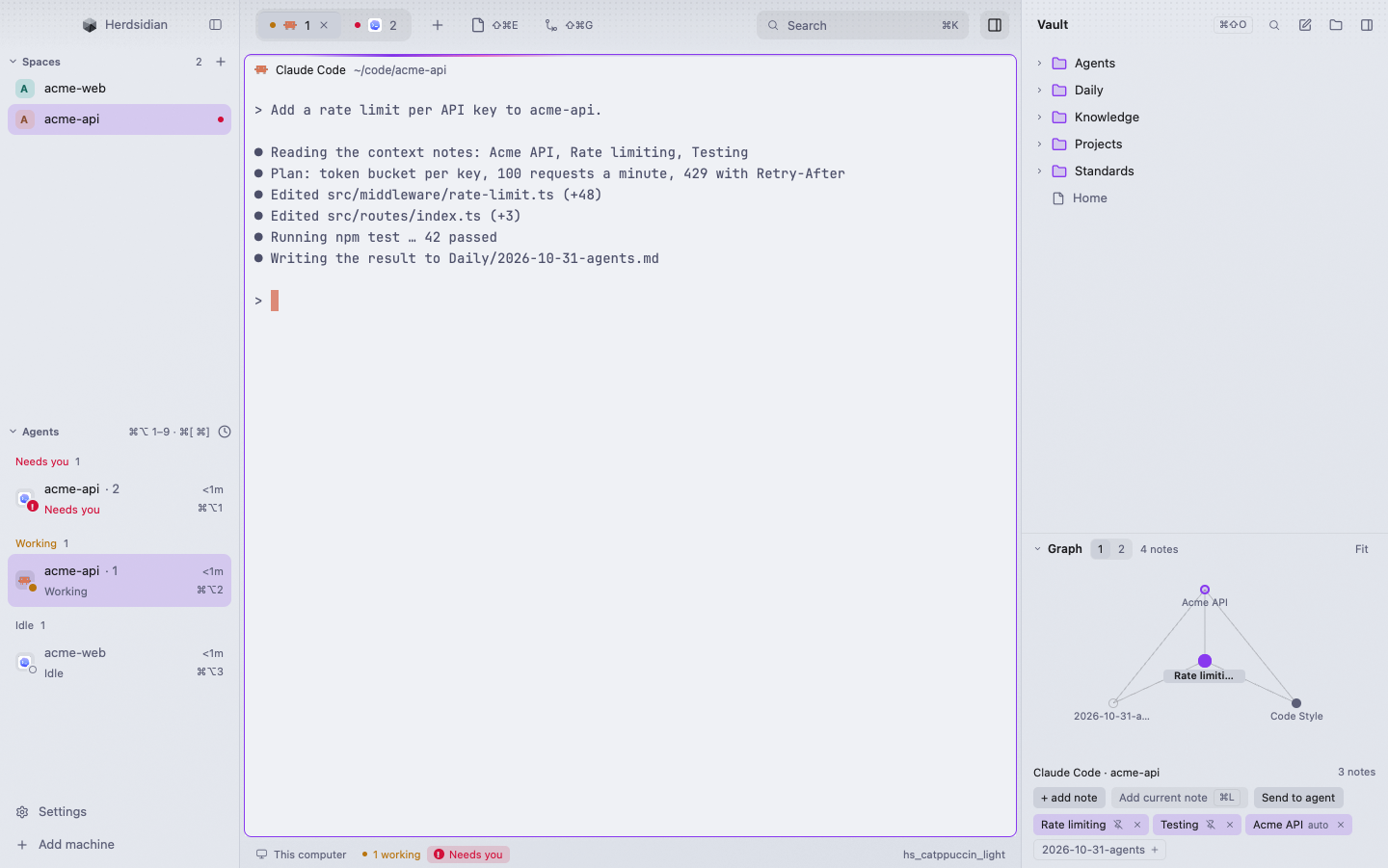

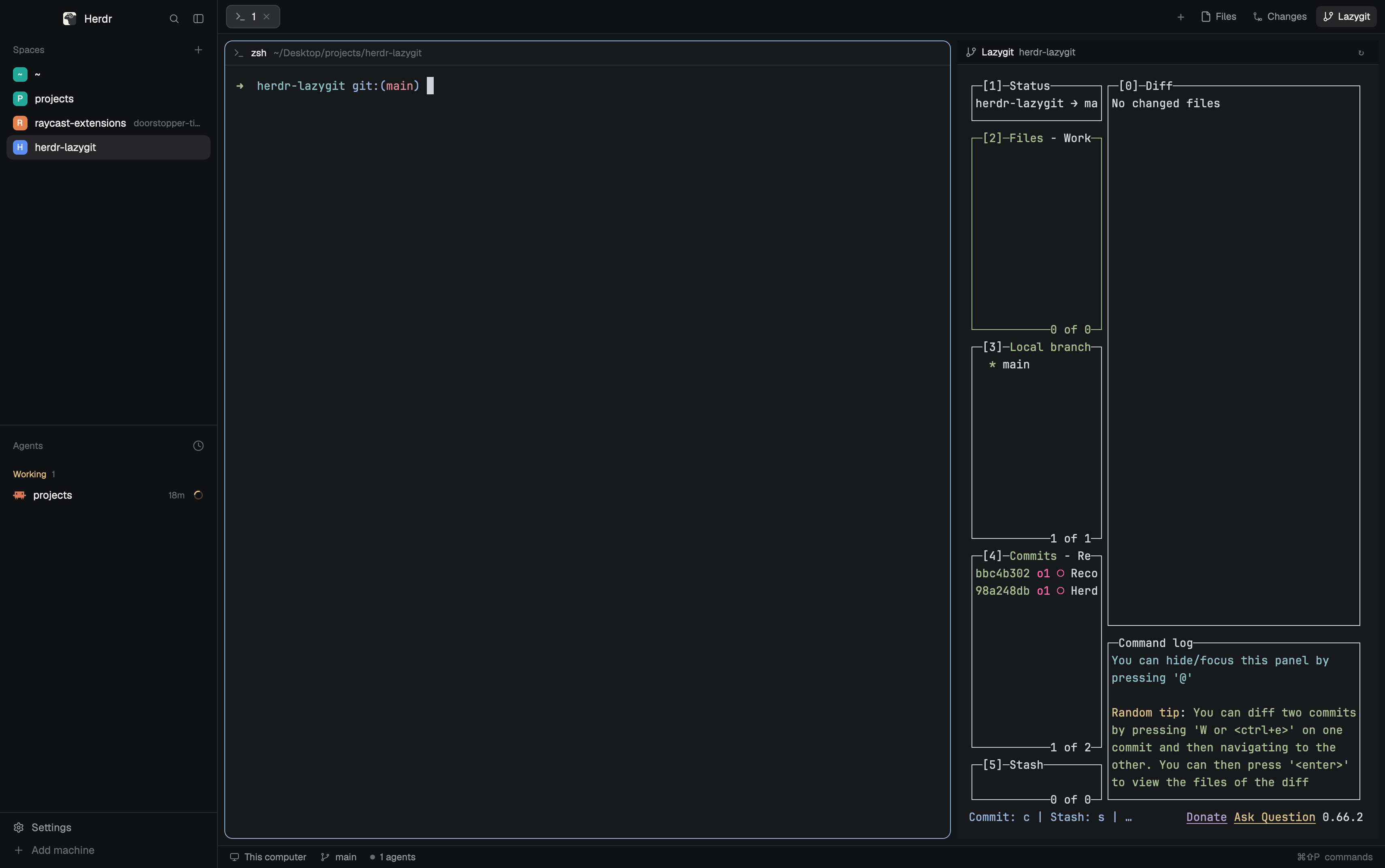

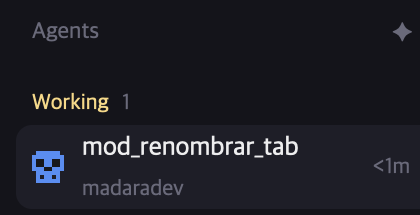
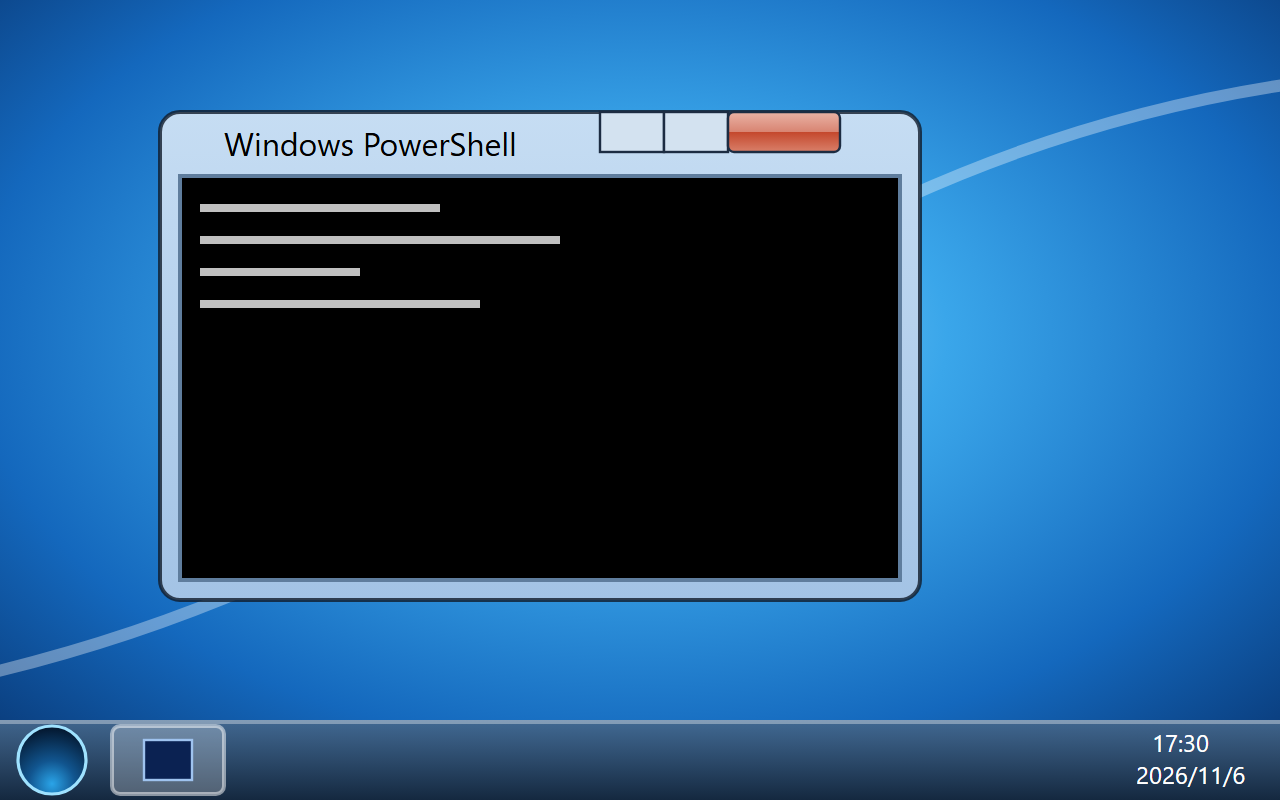
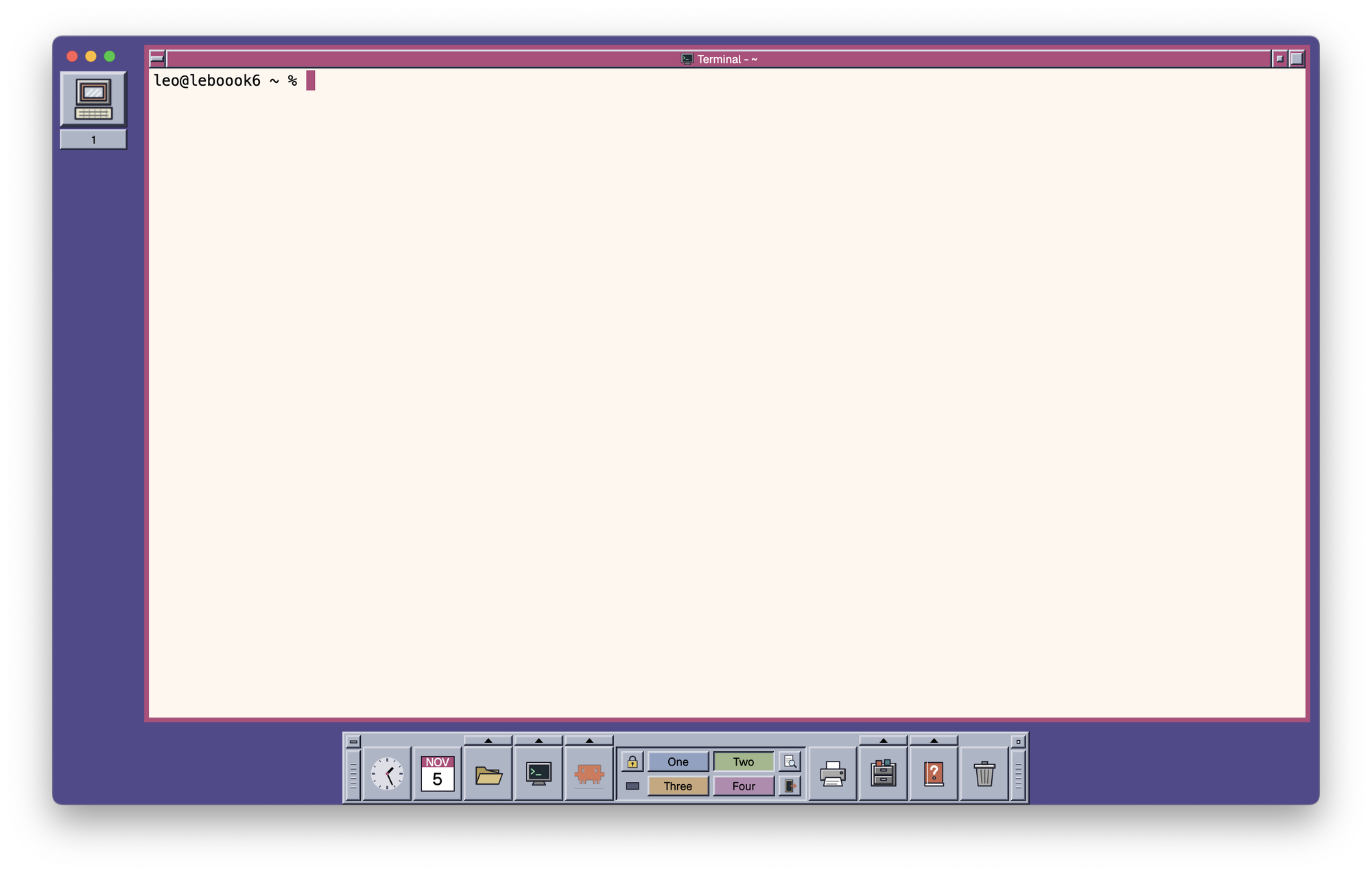
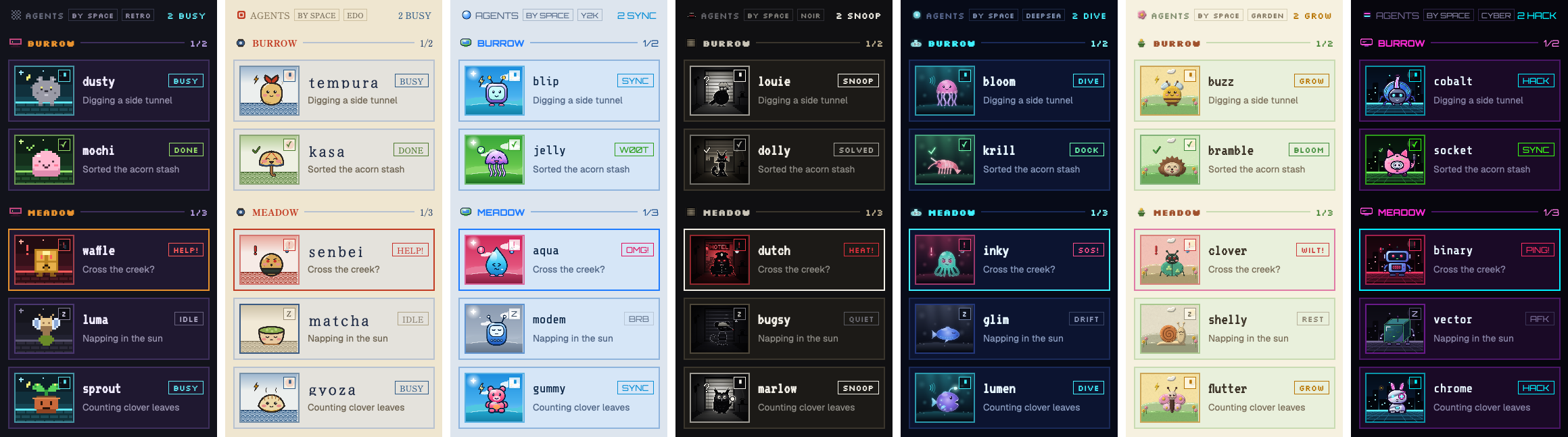
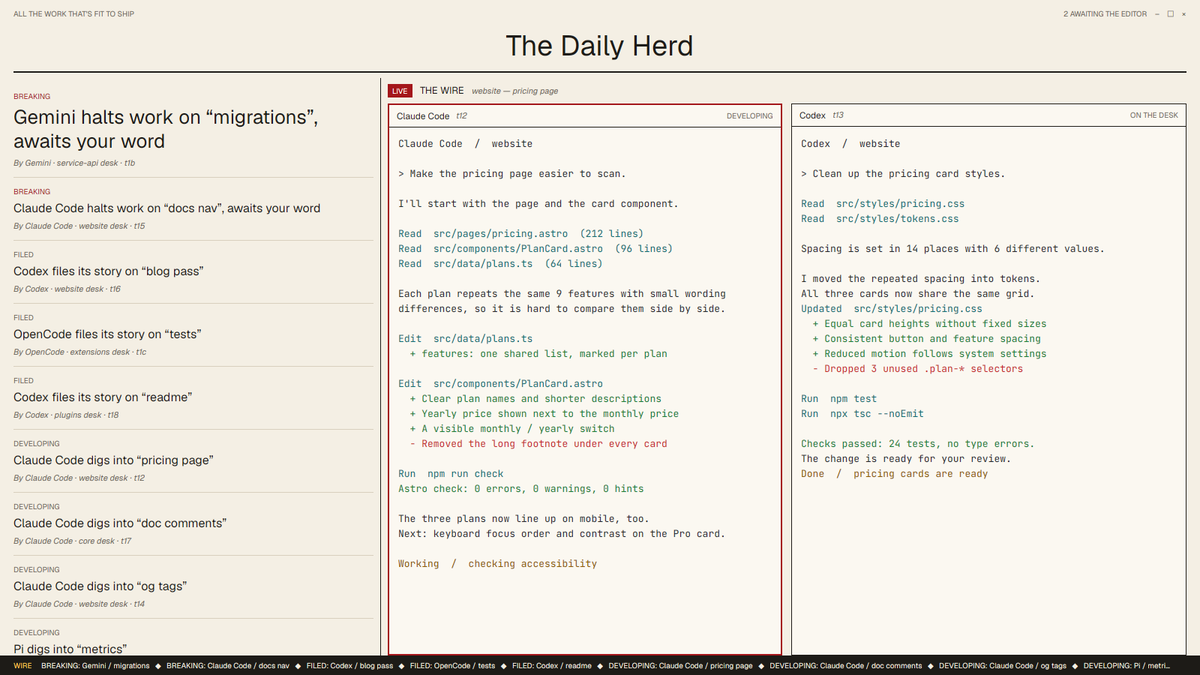
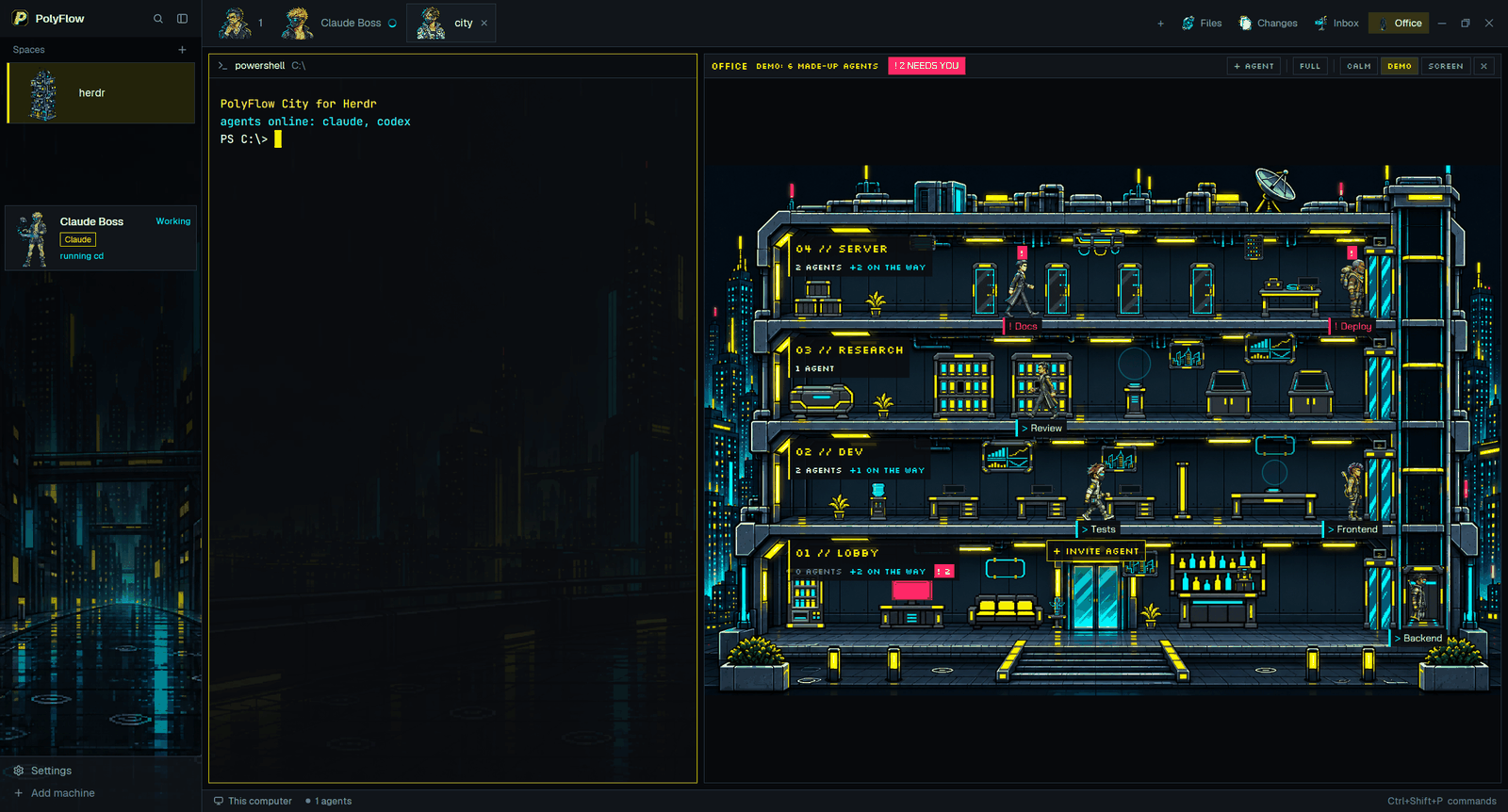
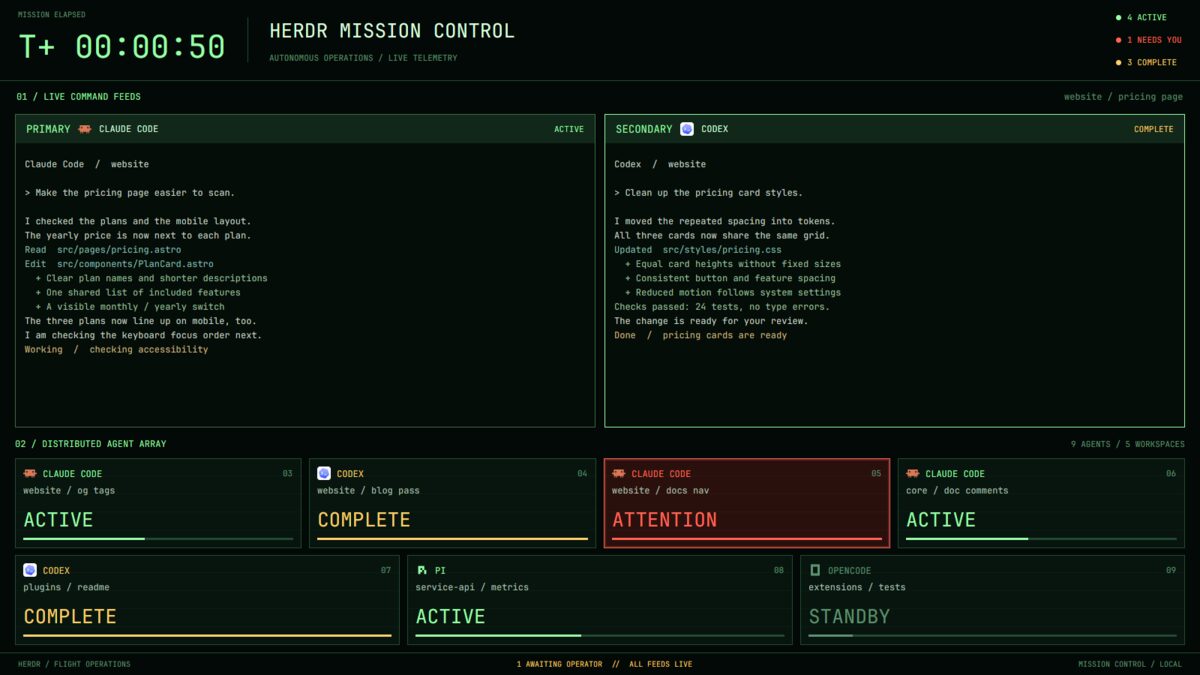
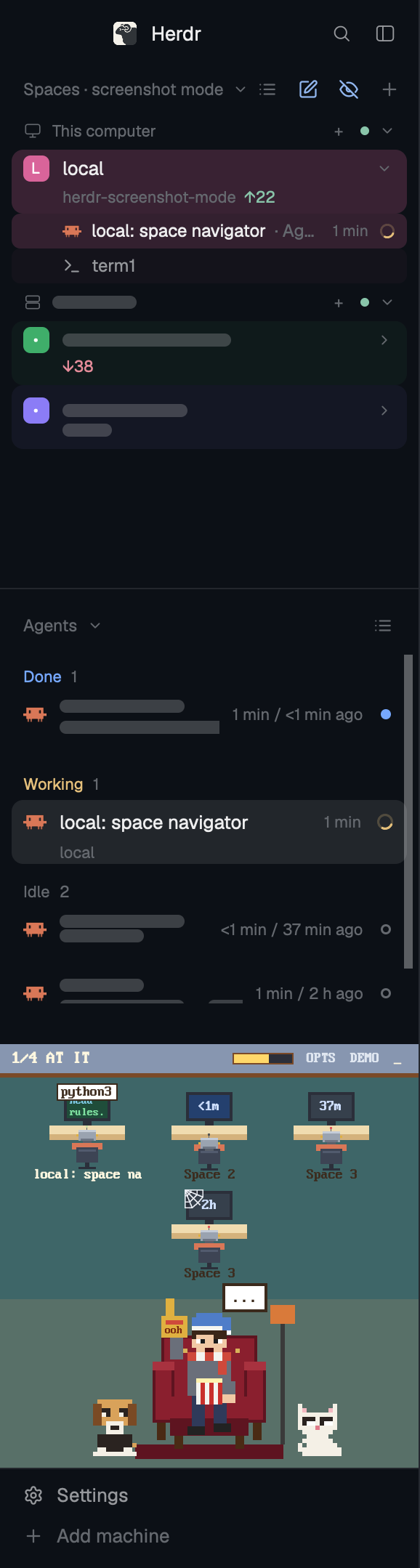
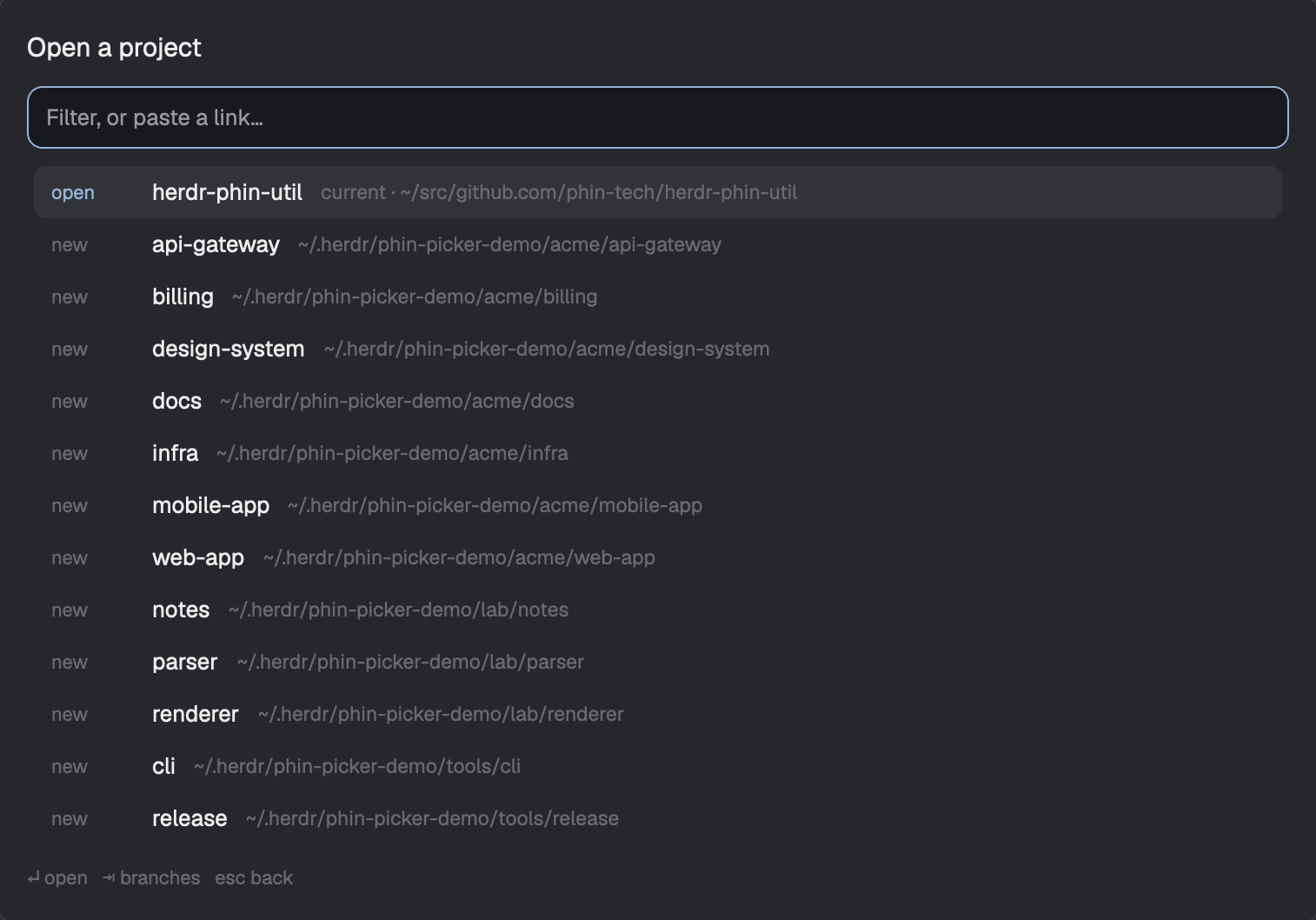
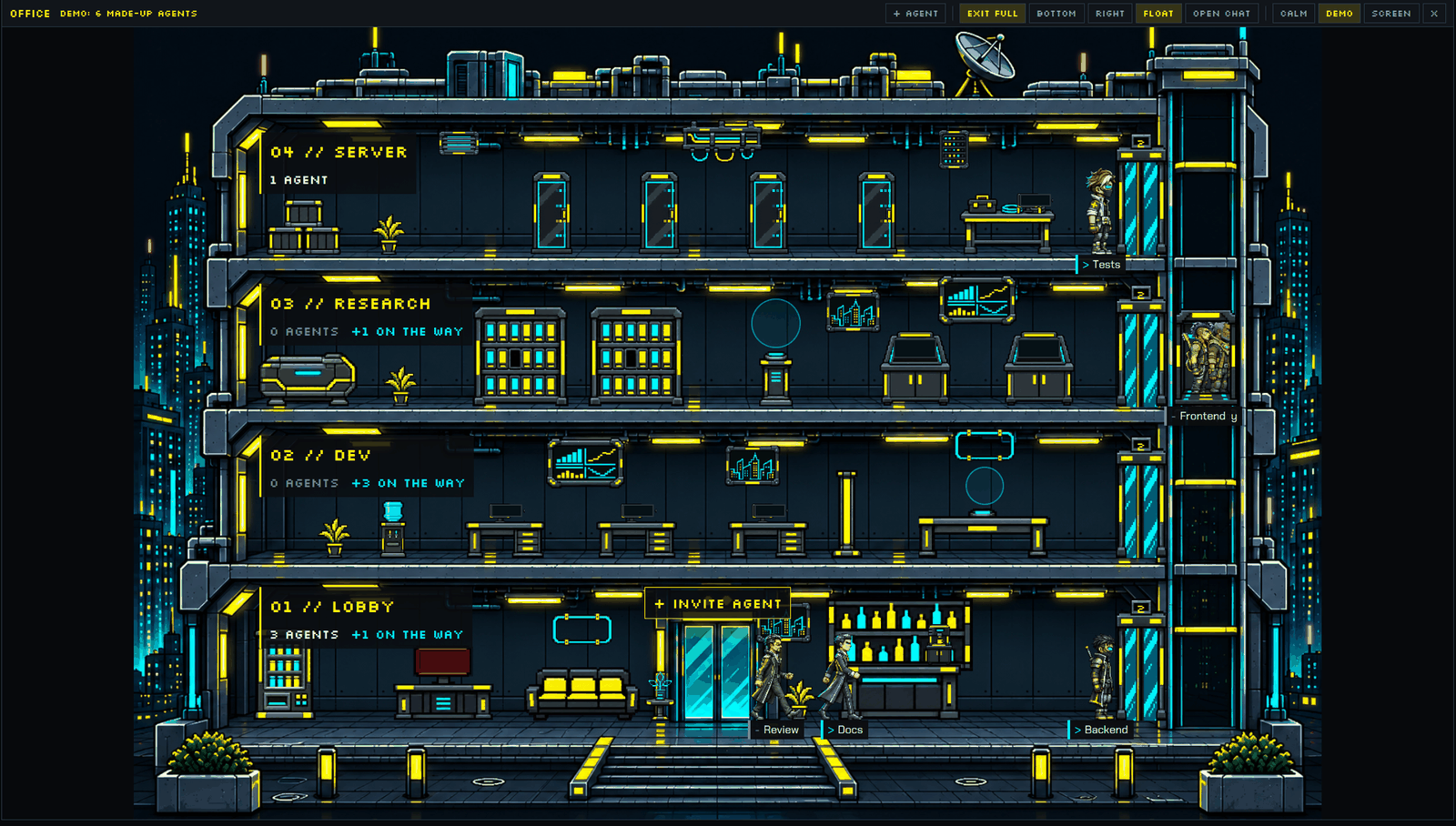
Herdr as a visual novel. Agents are original maids; status changes become lines of dialogue that queue up, and only one maid stands on the stage at a time, so a space with many agents never gets crowded.

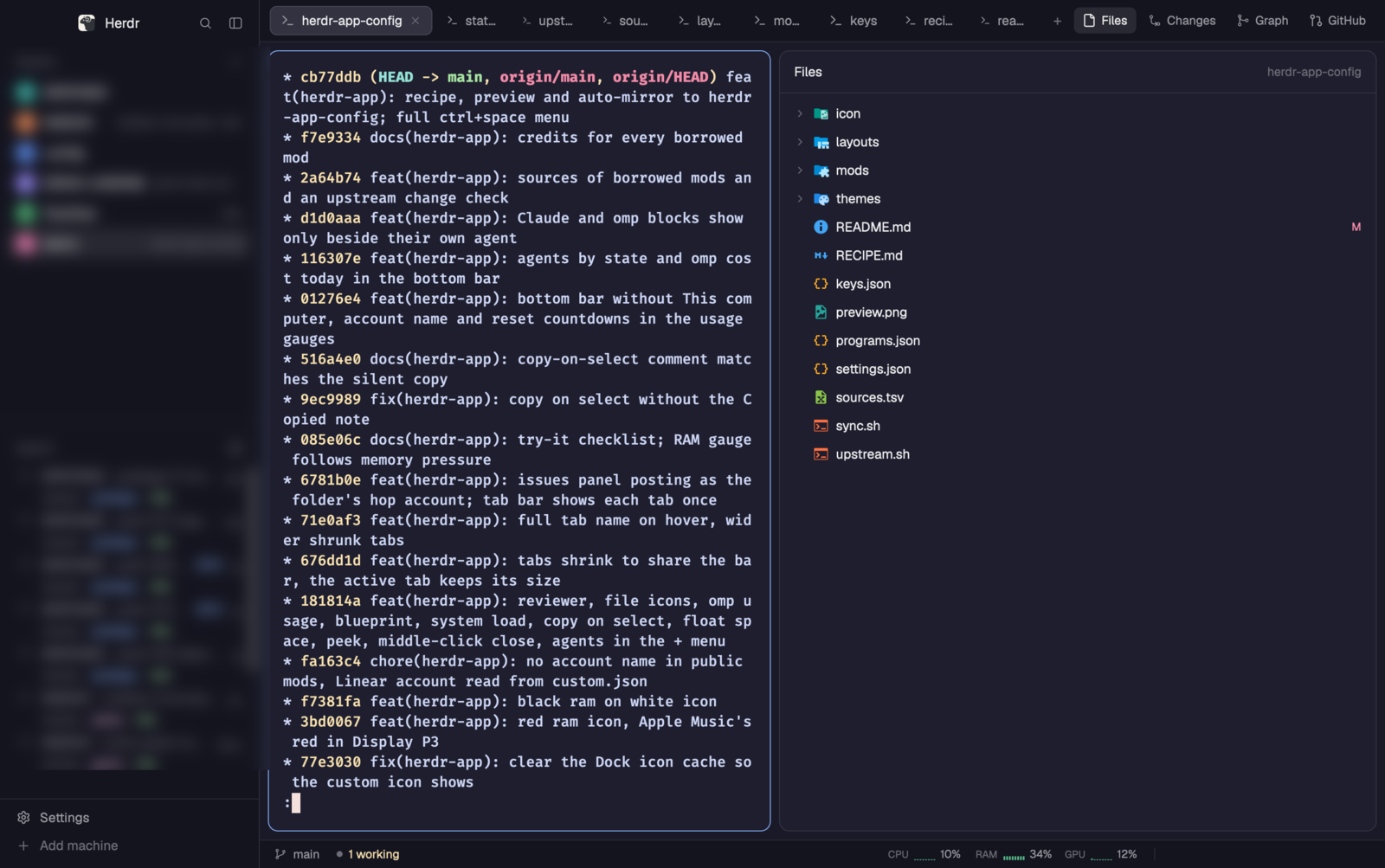

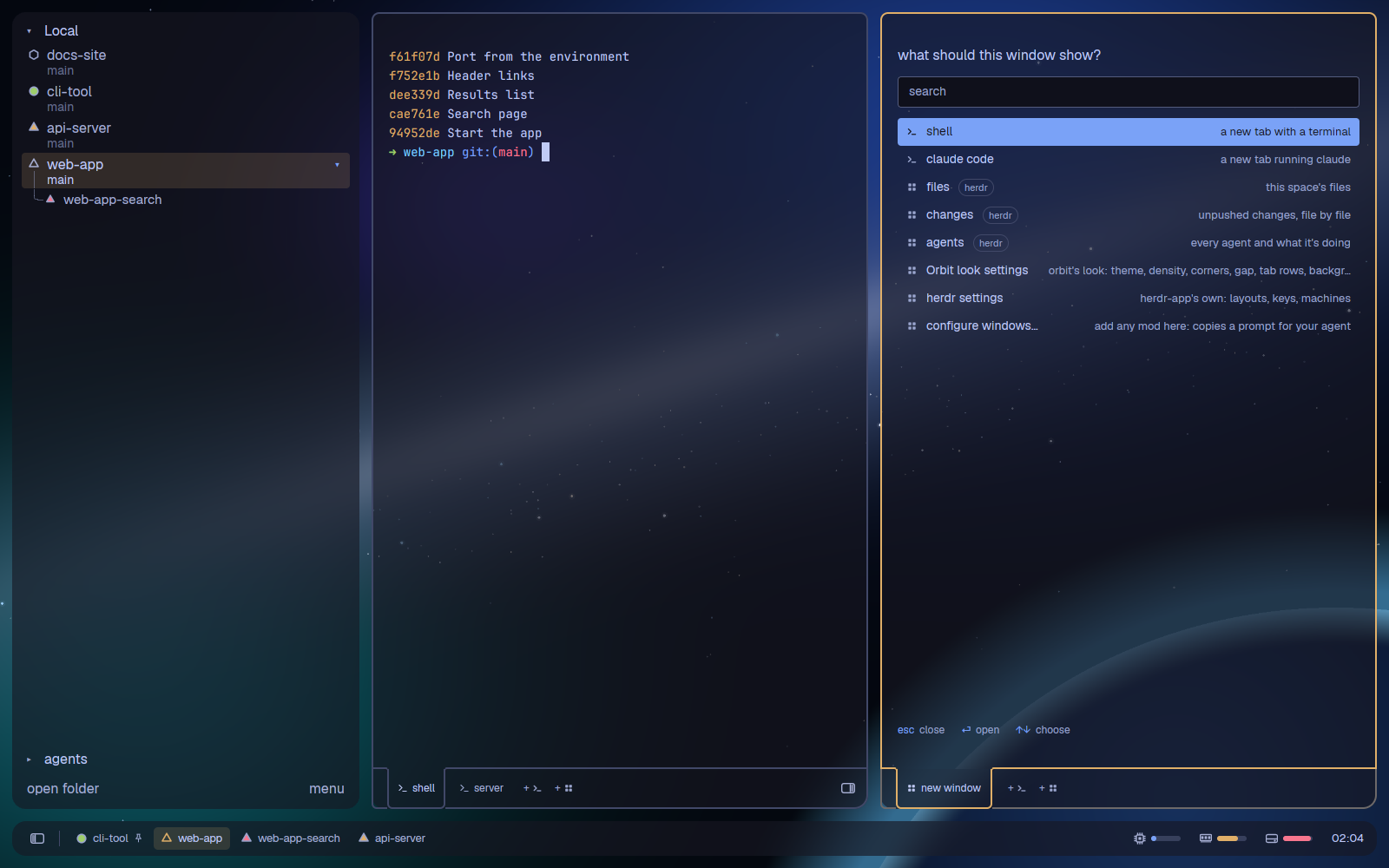

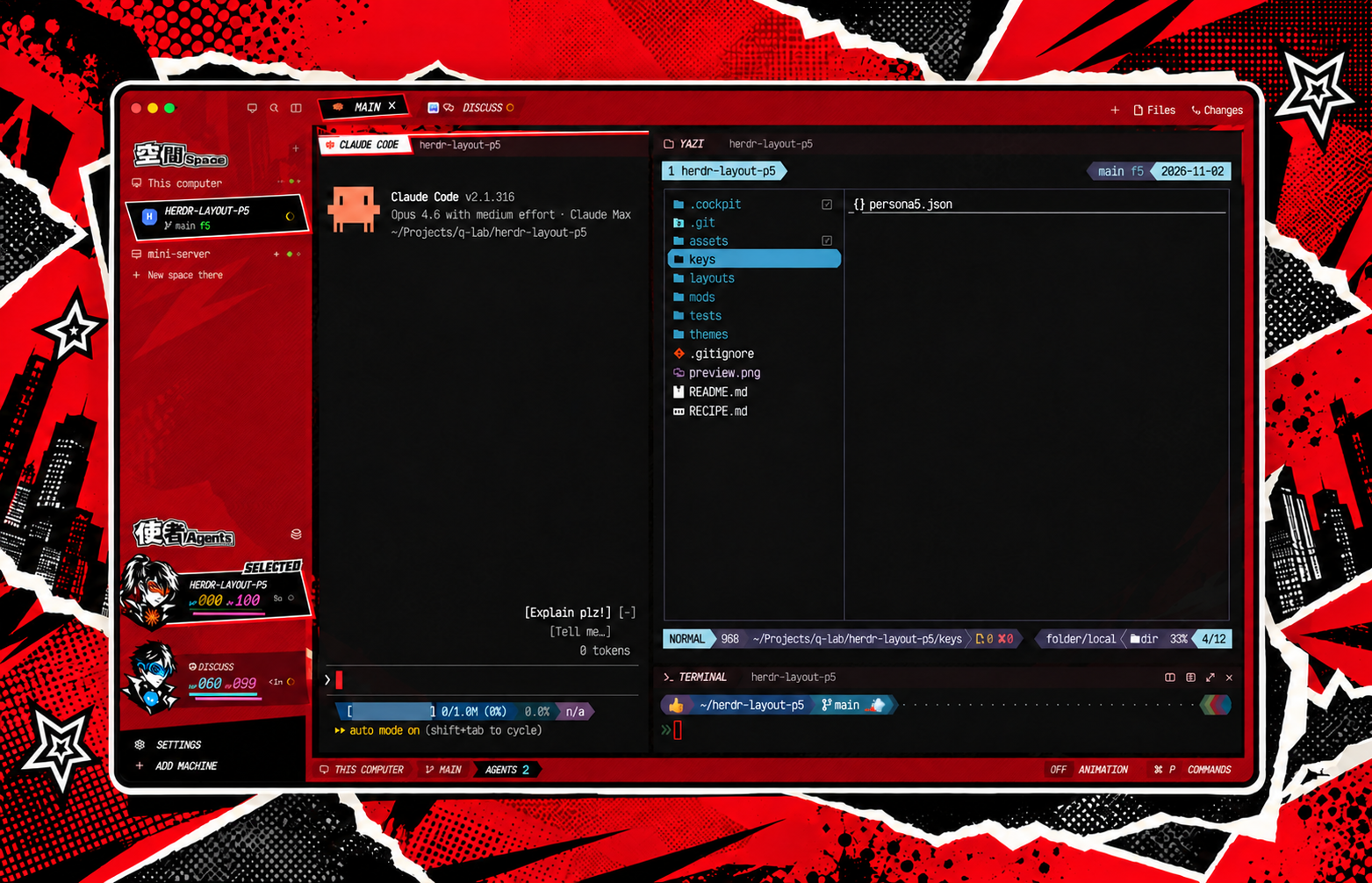

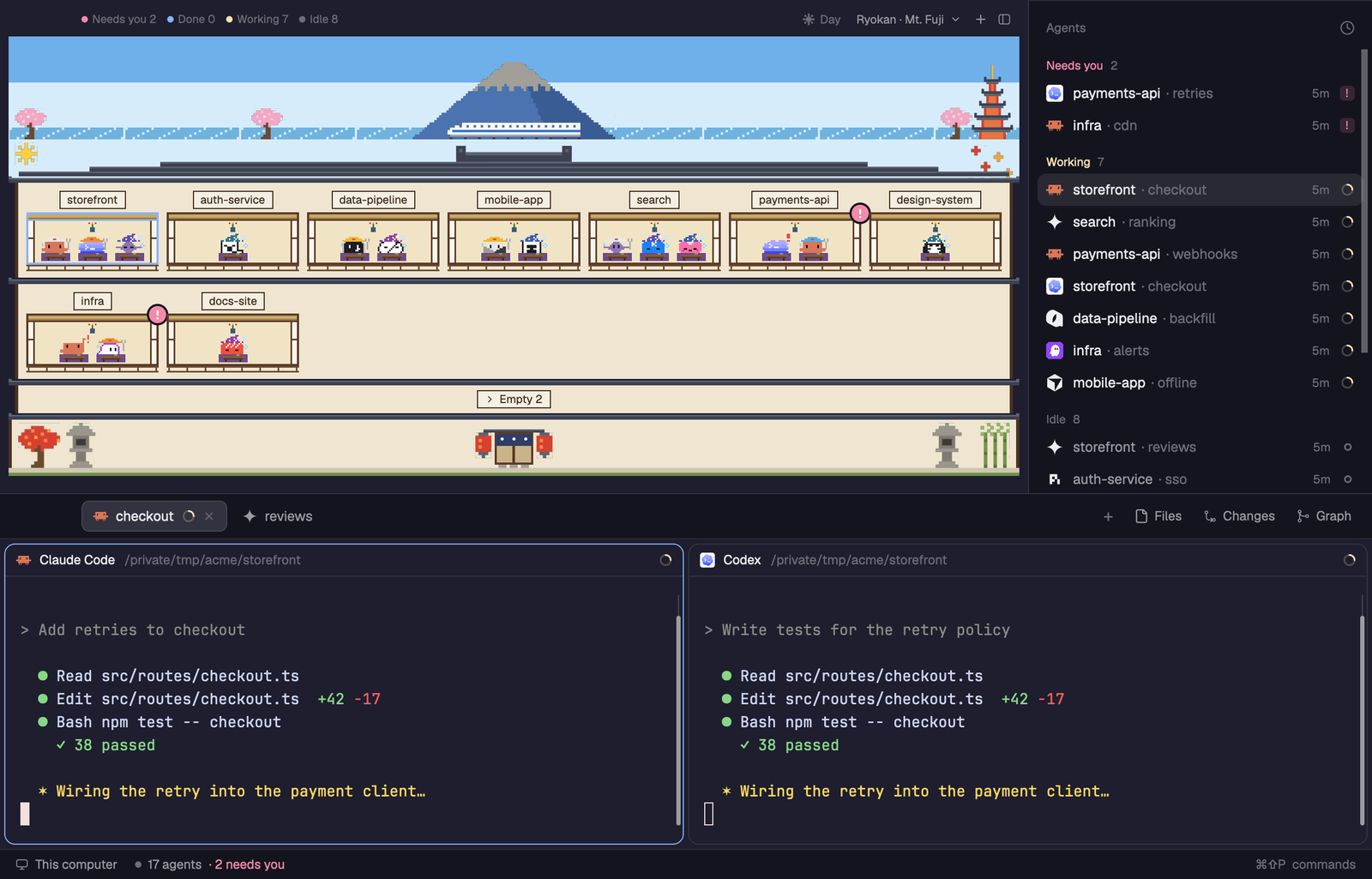

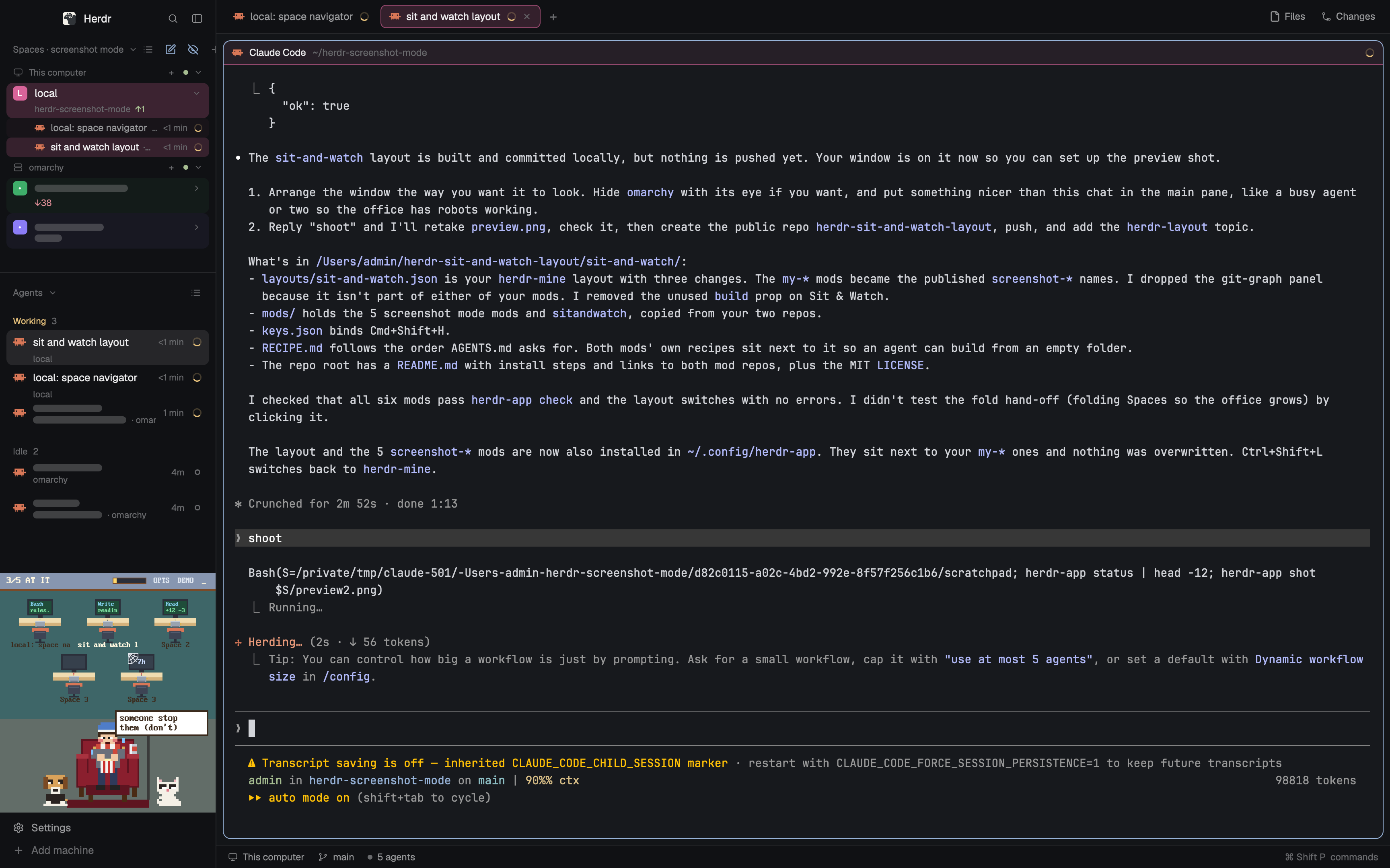

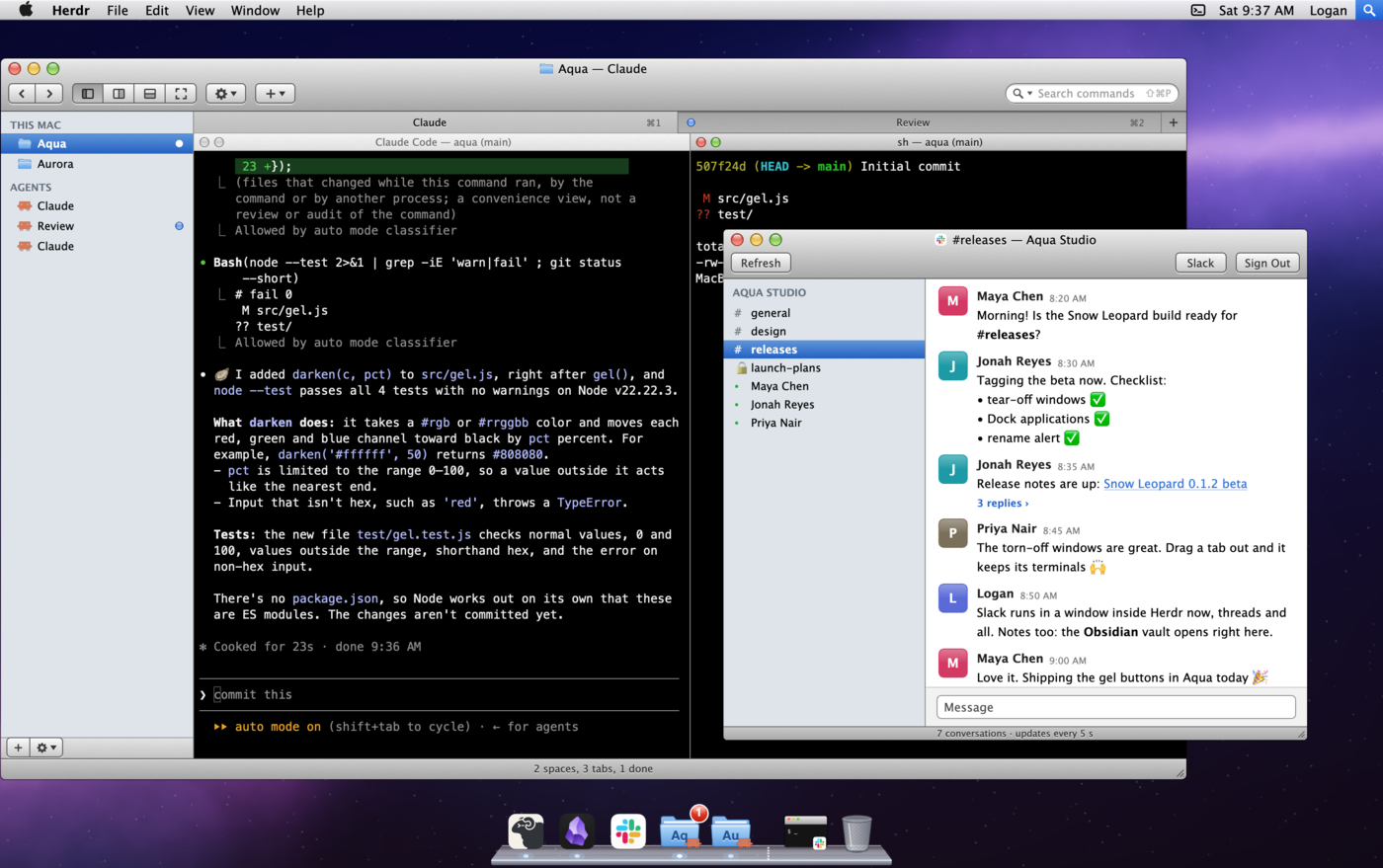

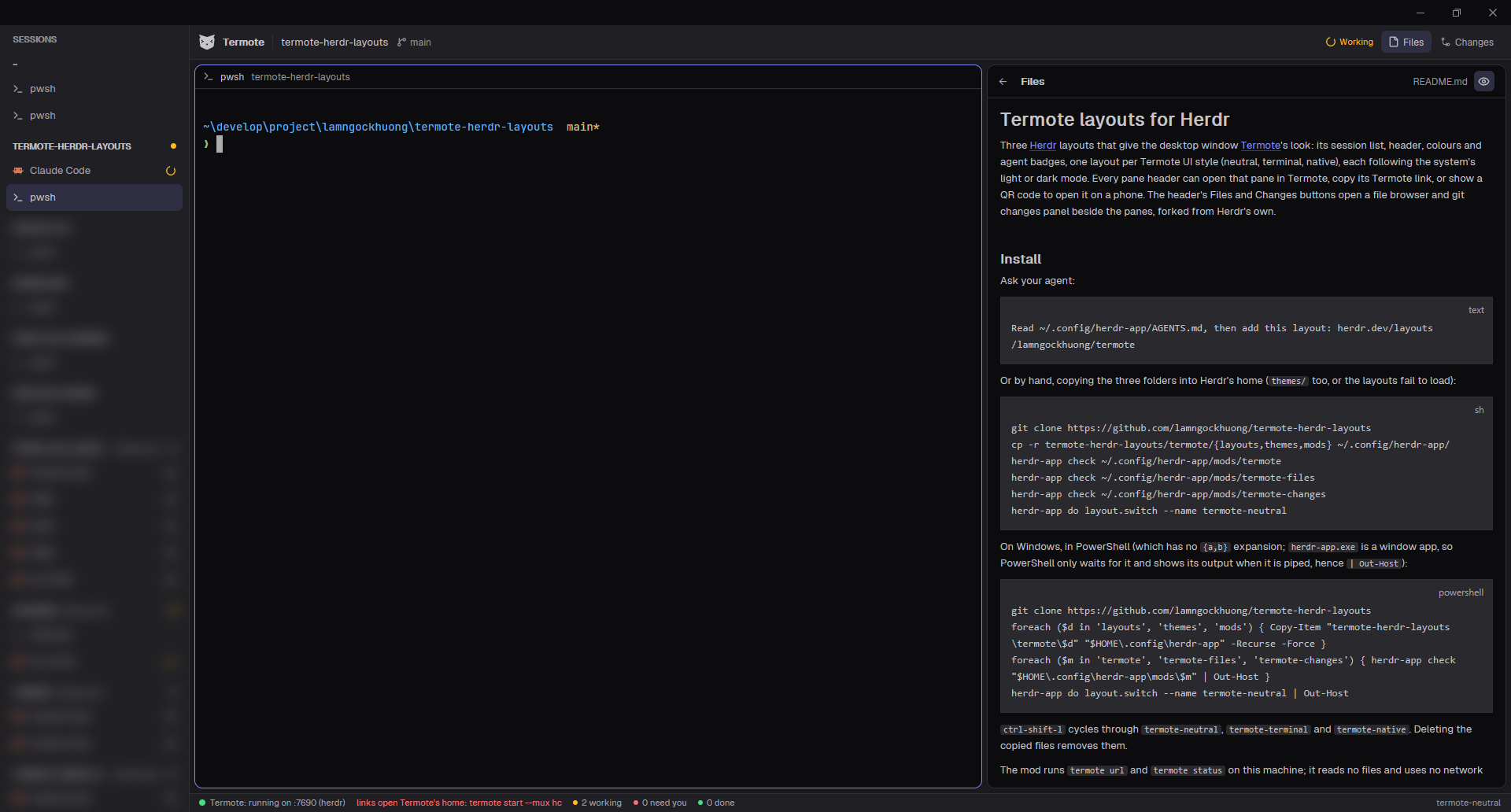

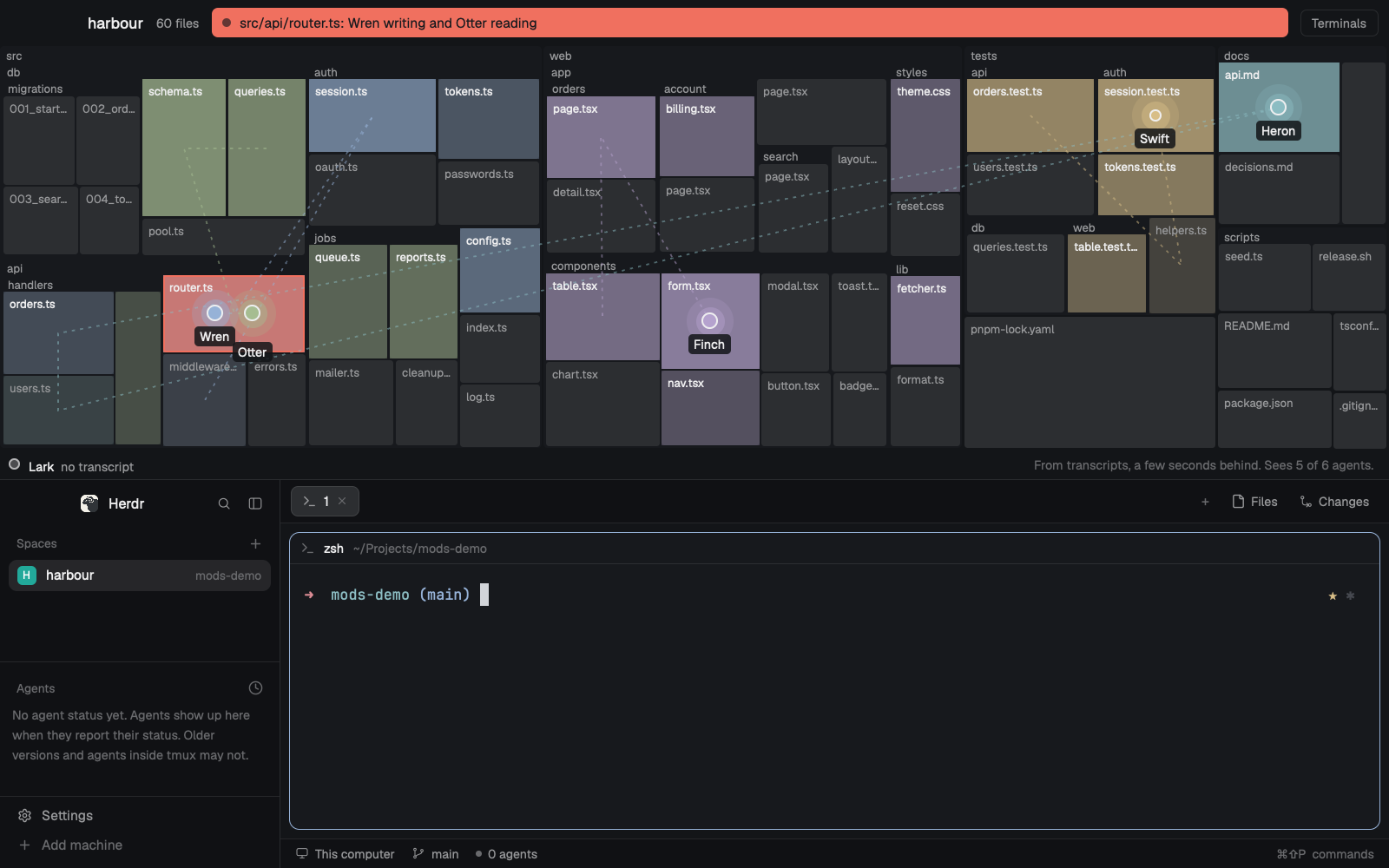



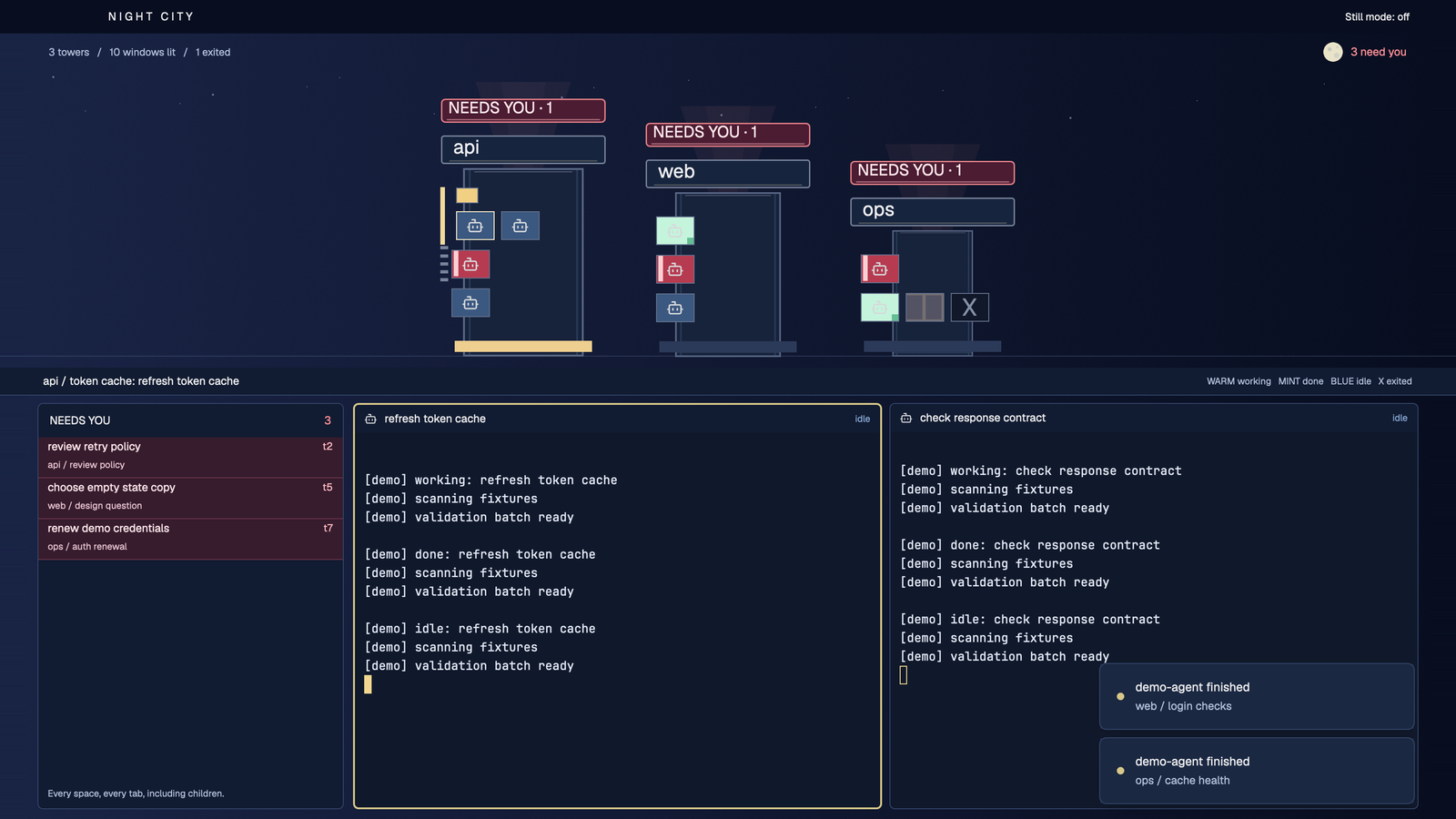
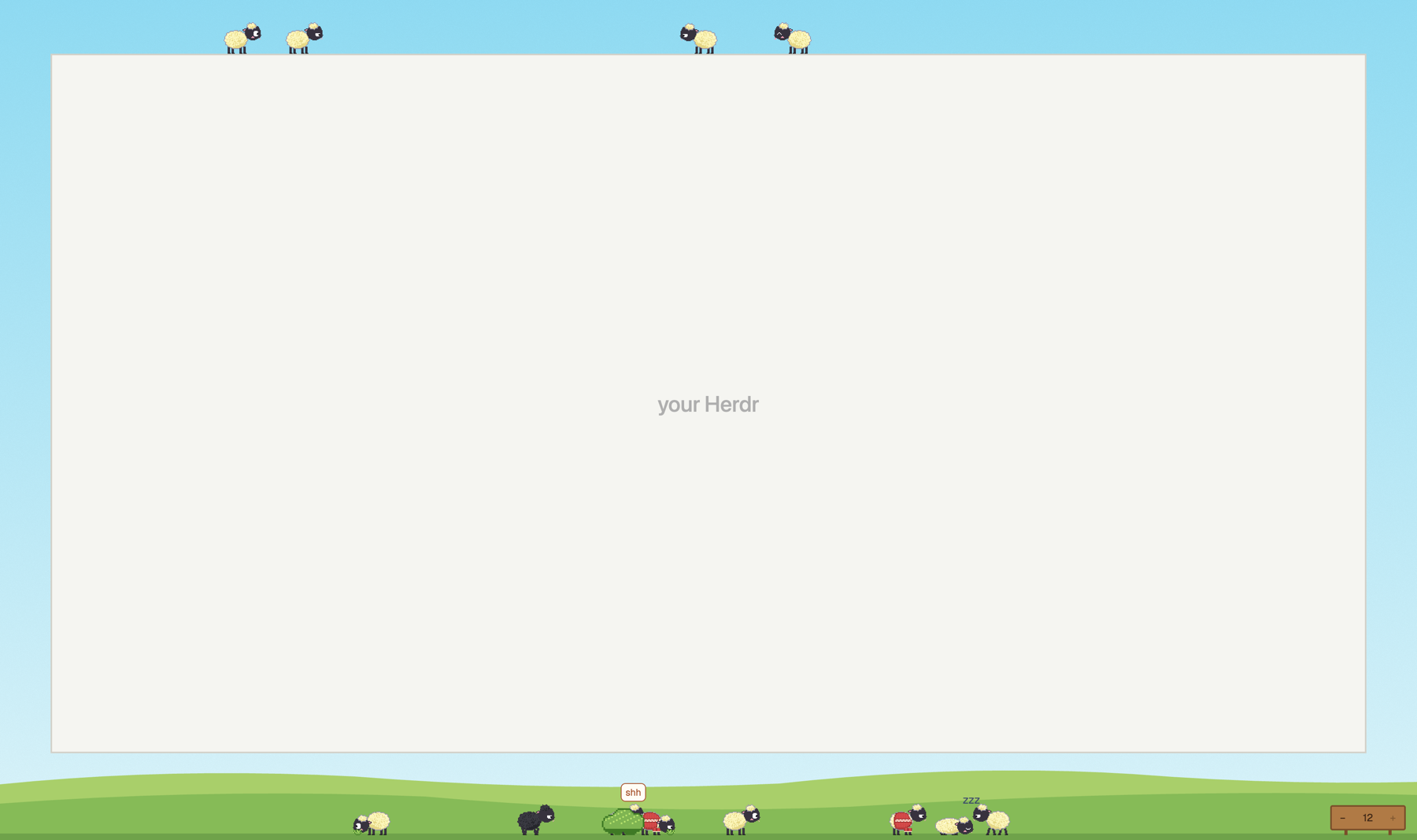
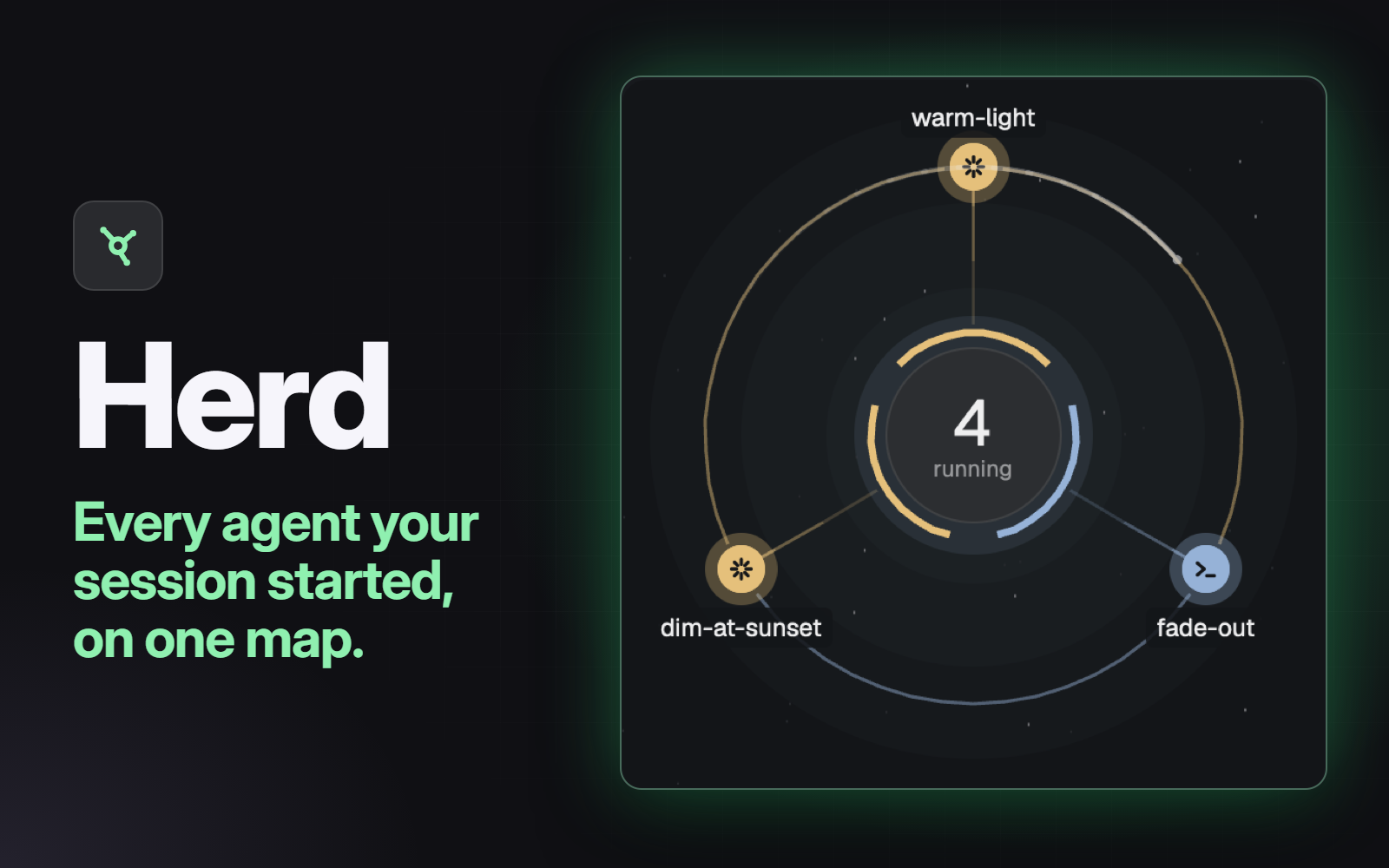
Blobs is a Herdr layout for managing coding agents. Each agent appears as an animated blob, with size showing context usage and color showing status. Click a blob to open its terminal below. Workspace controls let you switch spaces, toggle Files and Changes panels, and manage worktrees.

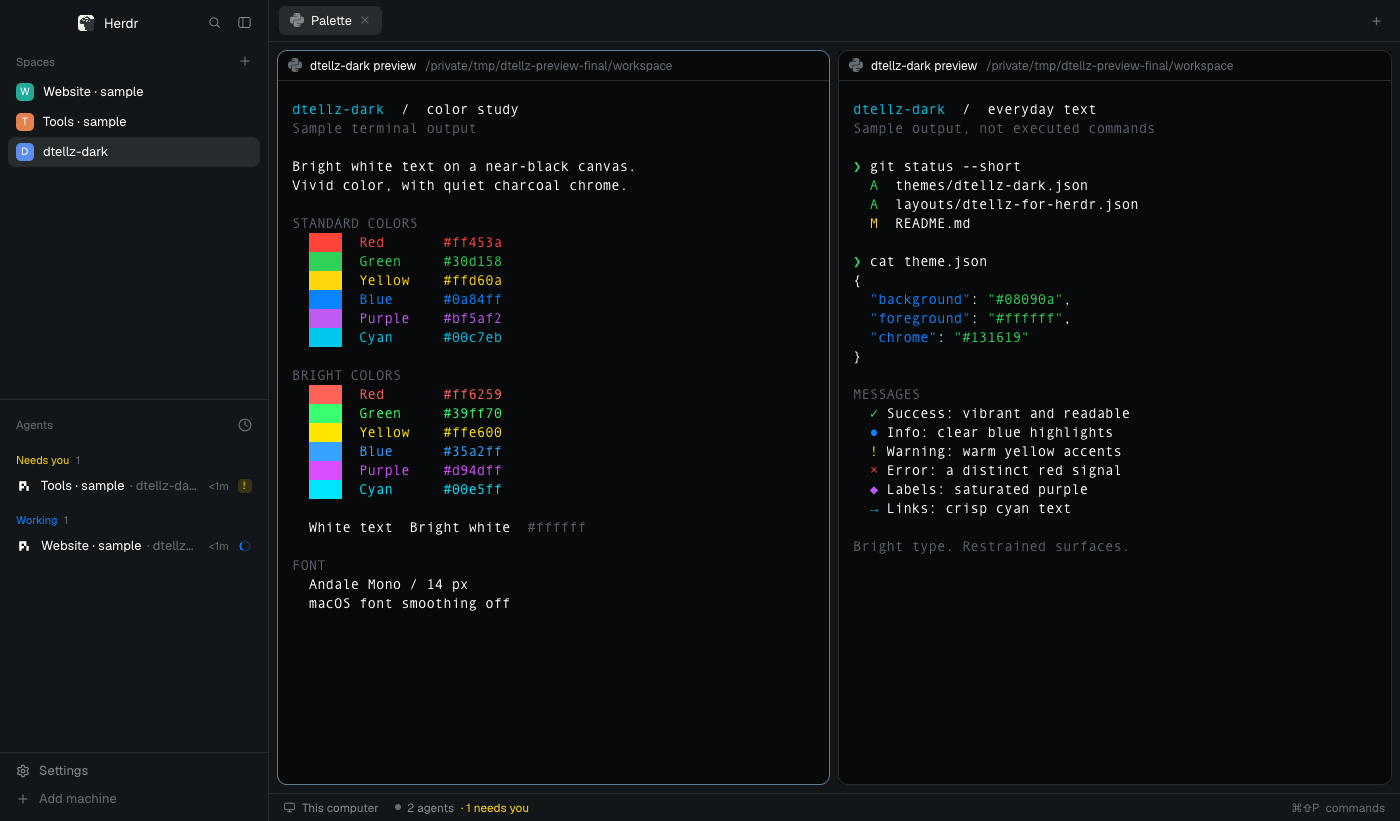

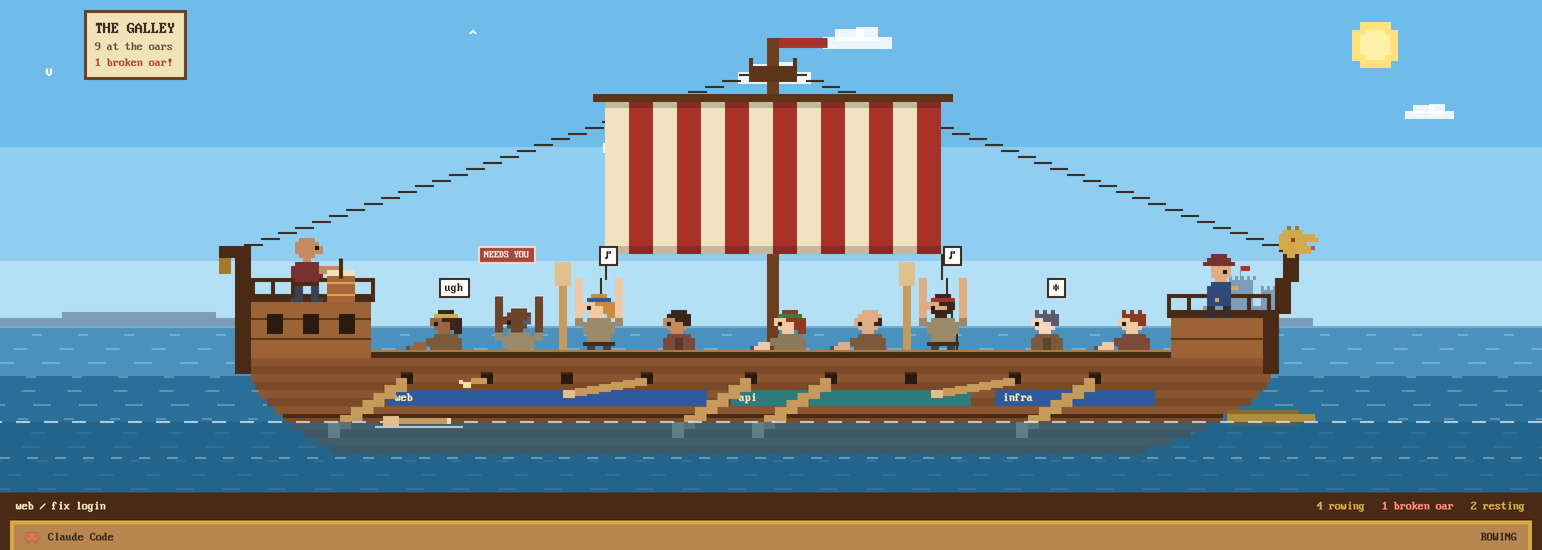

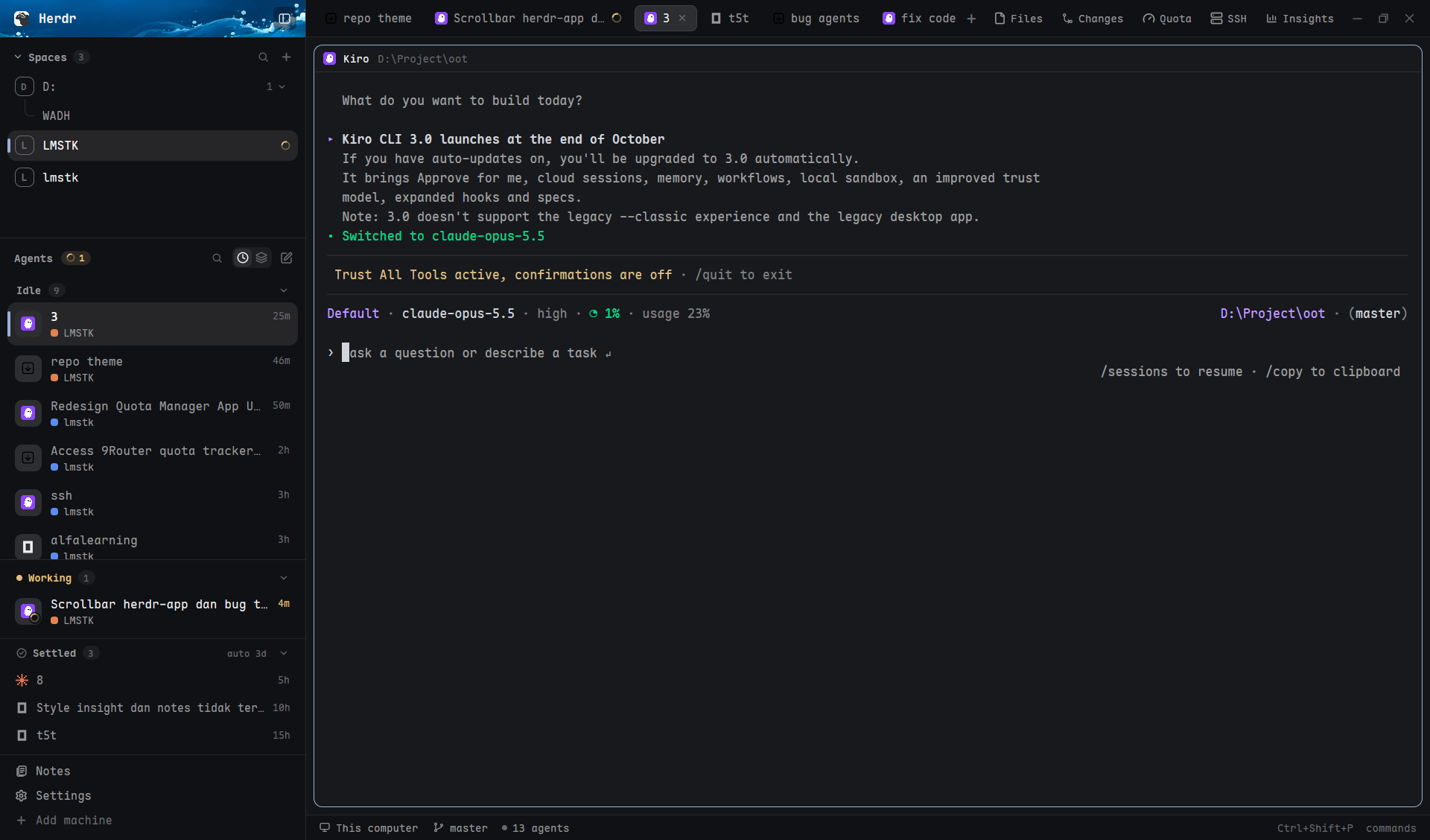

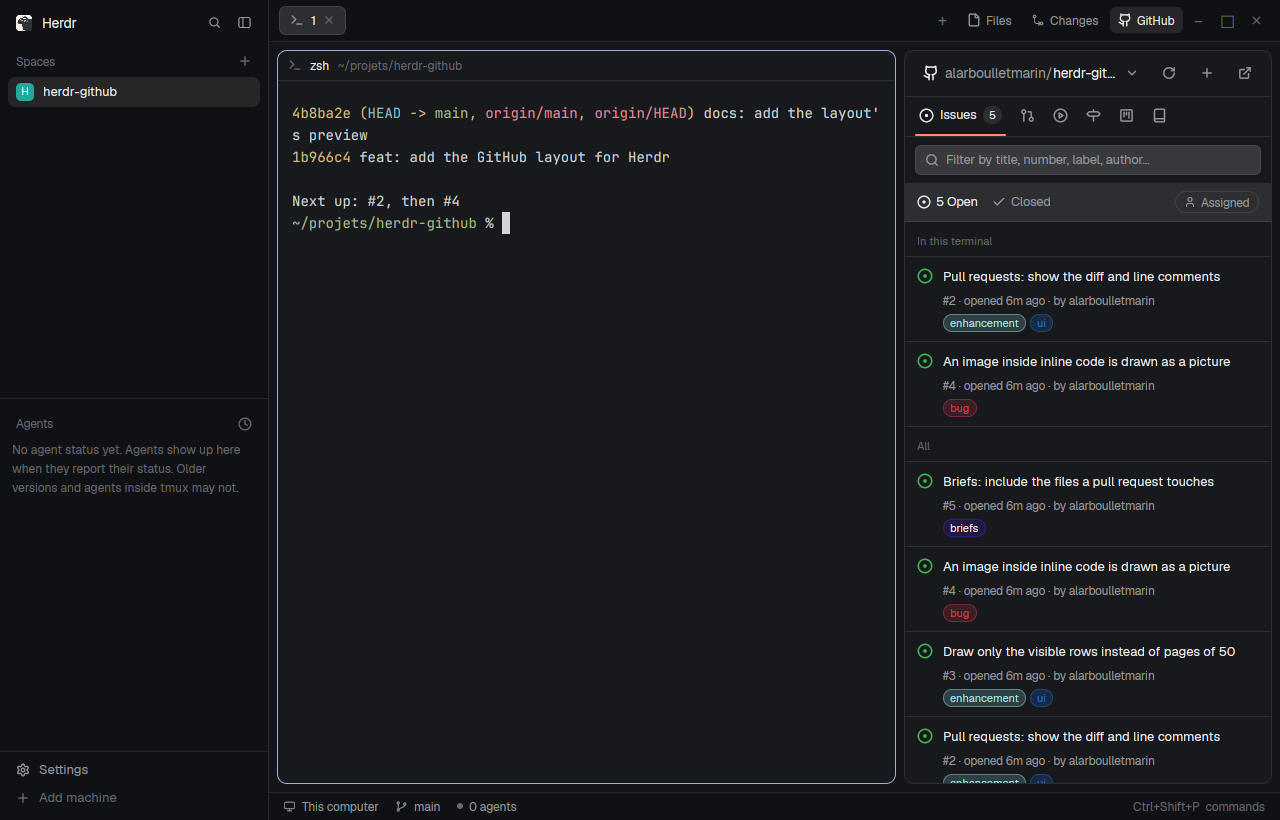

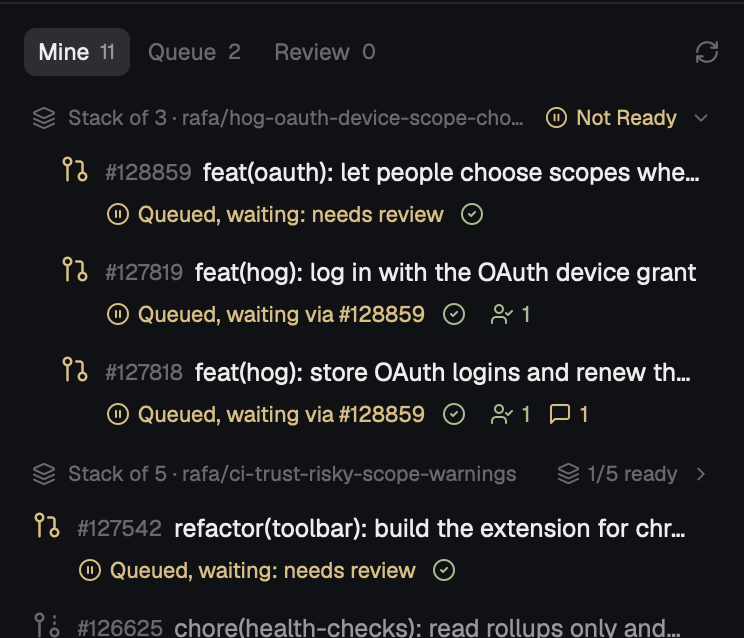

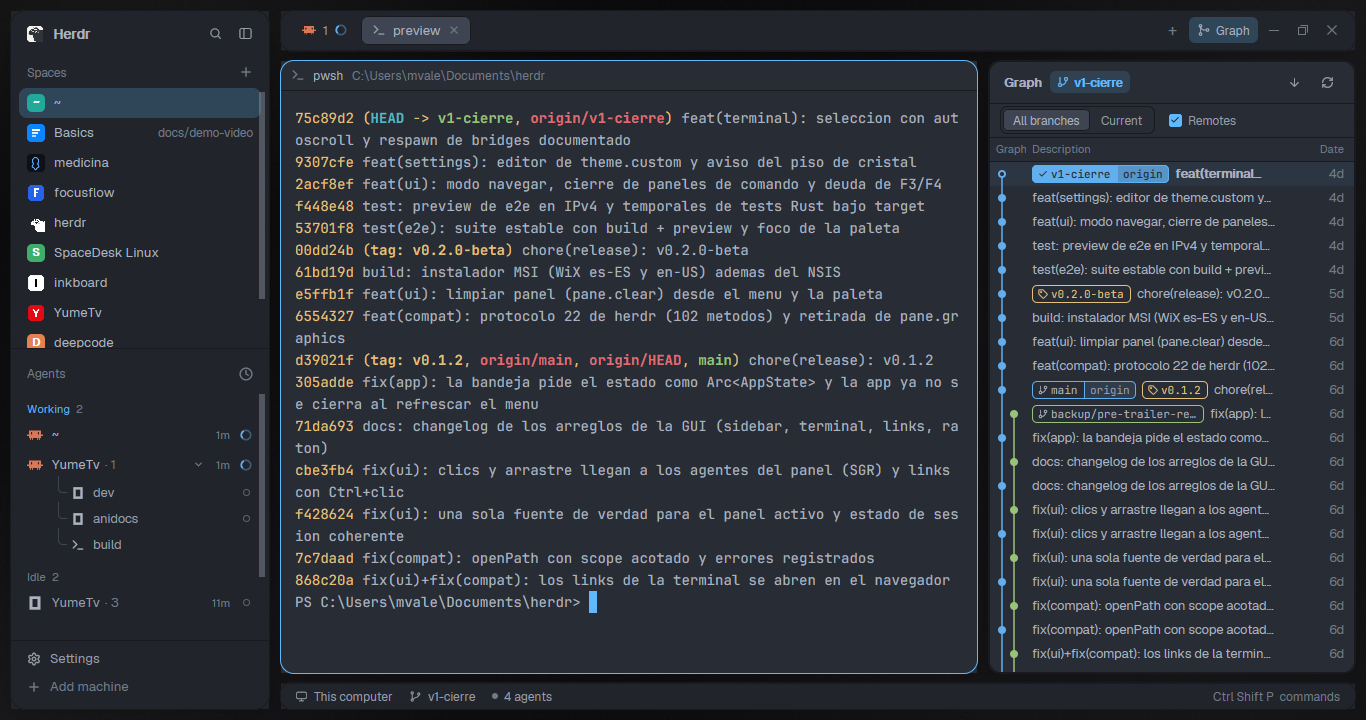
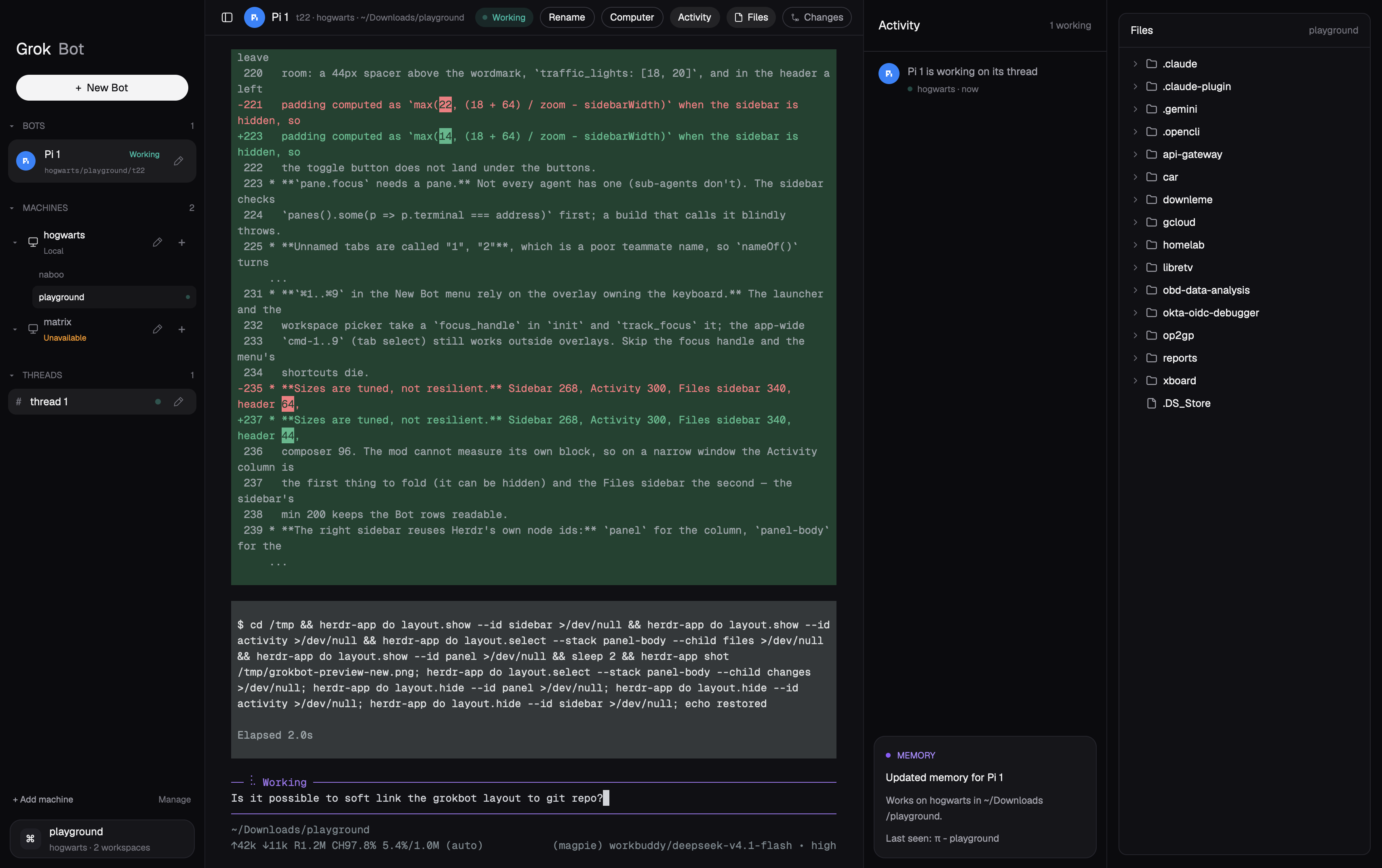

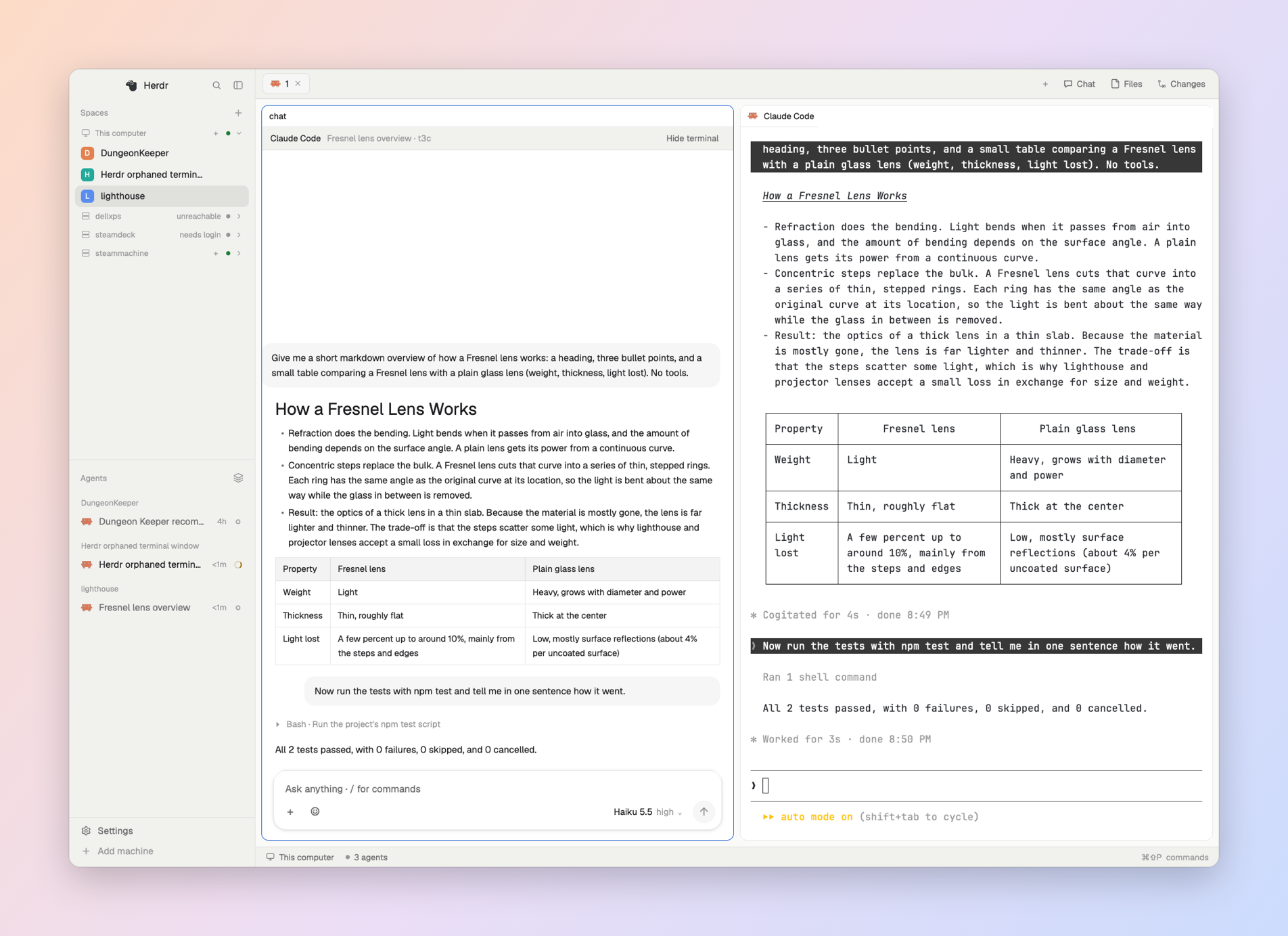

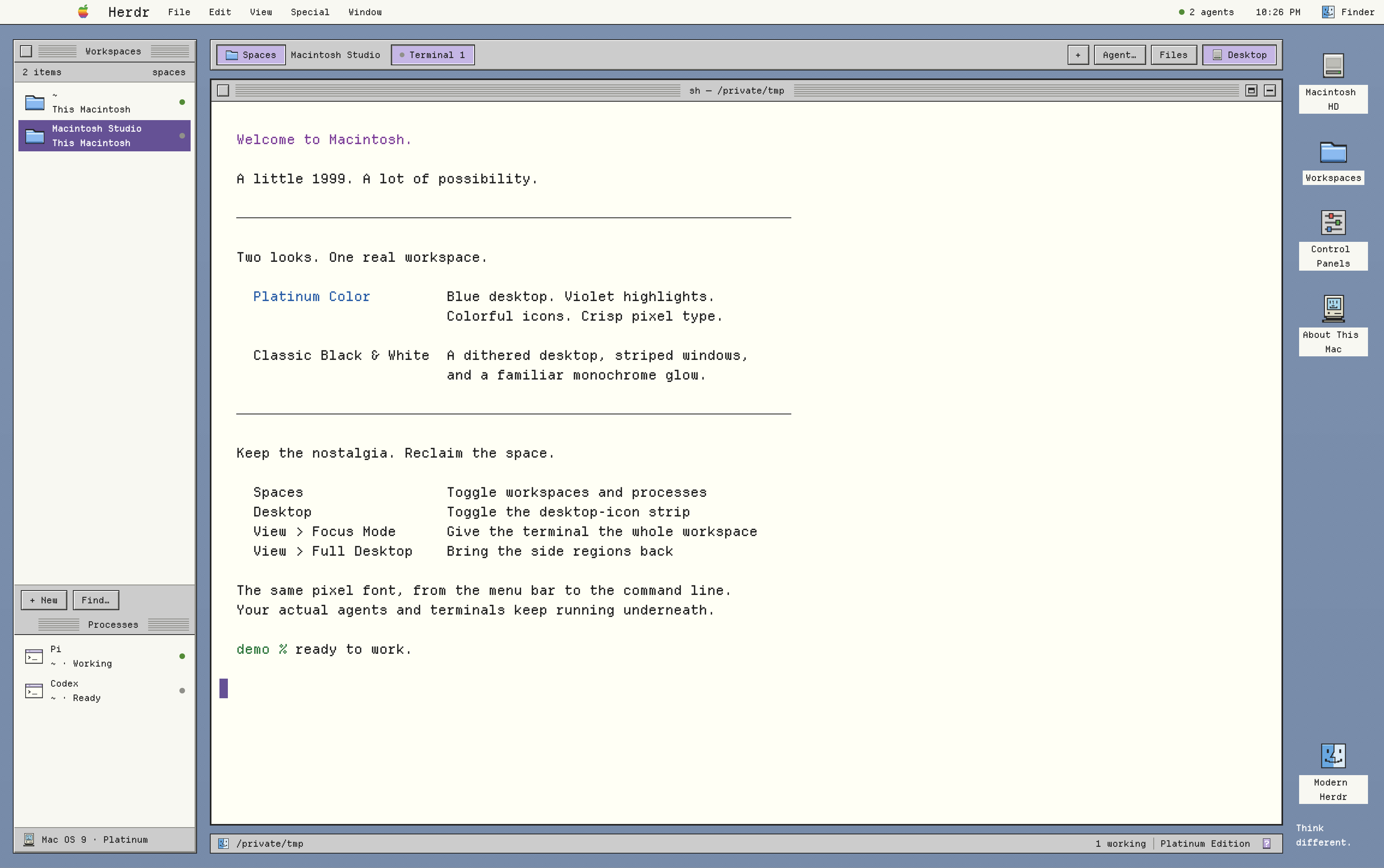

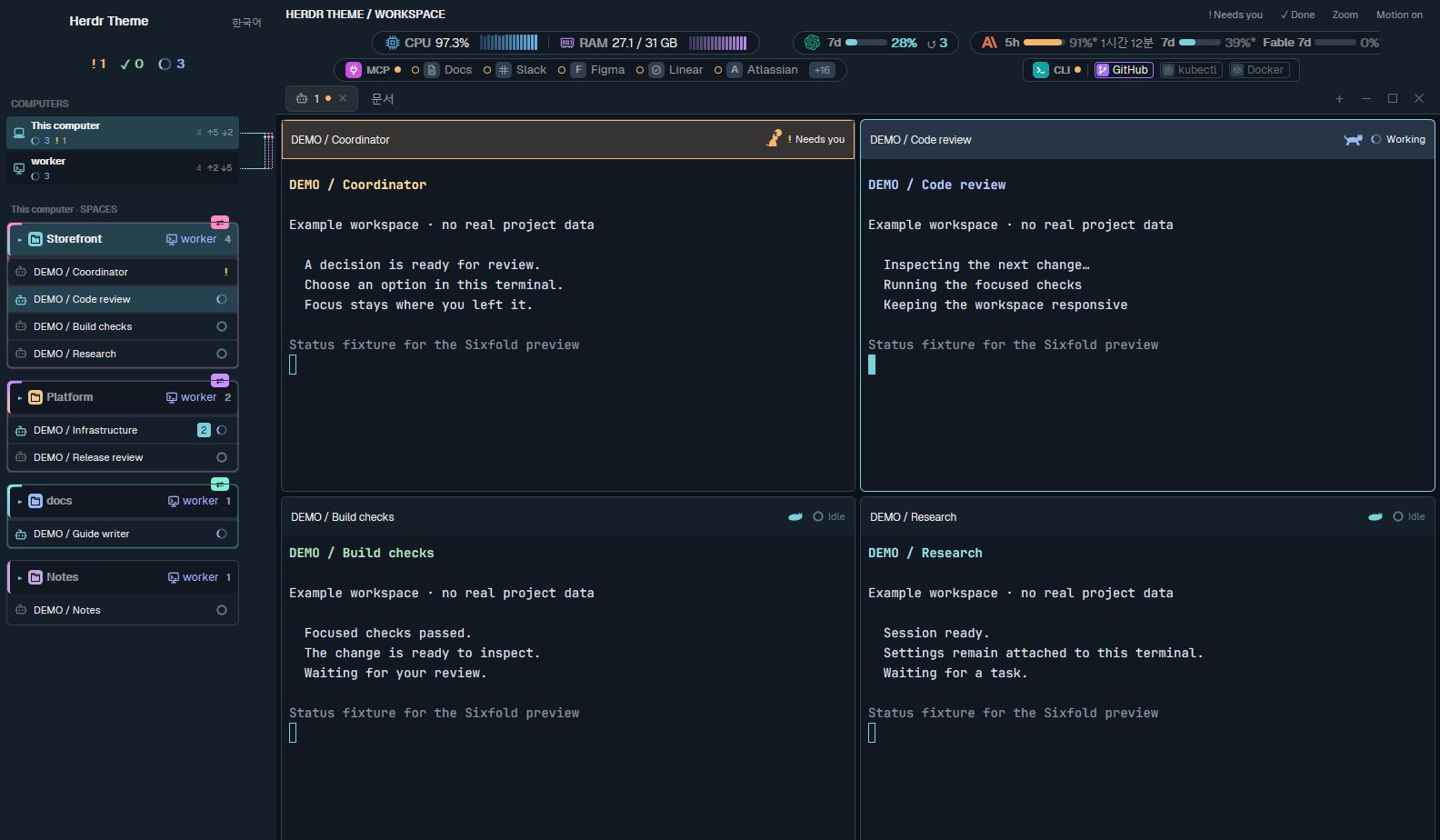

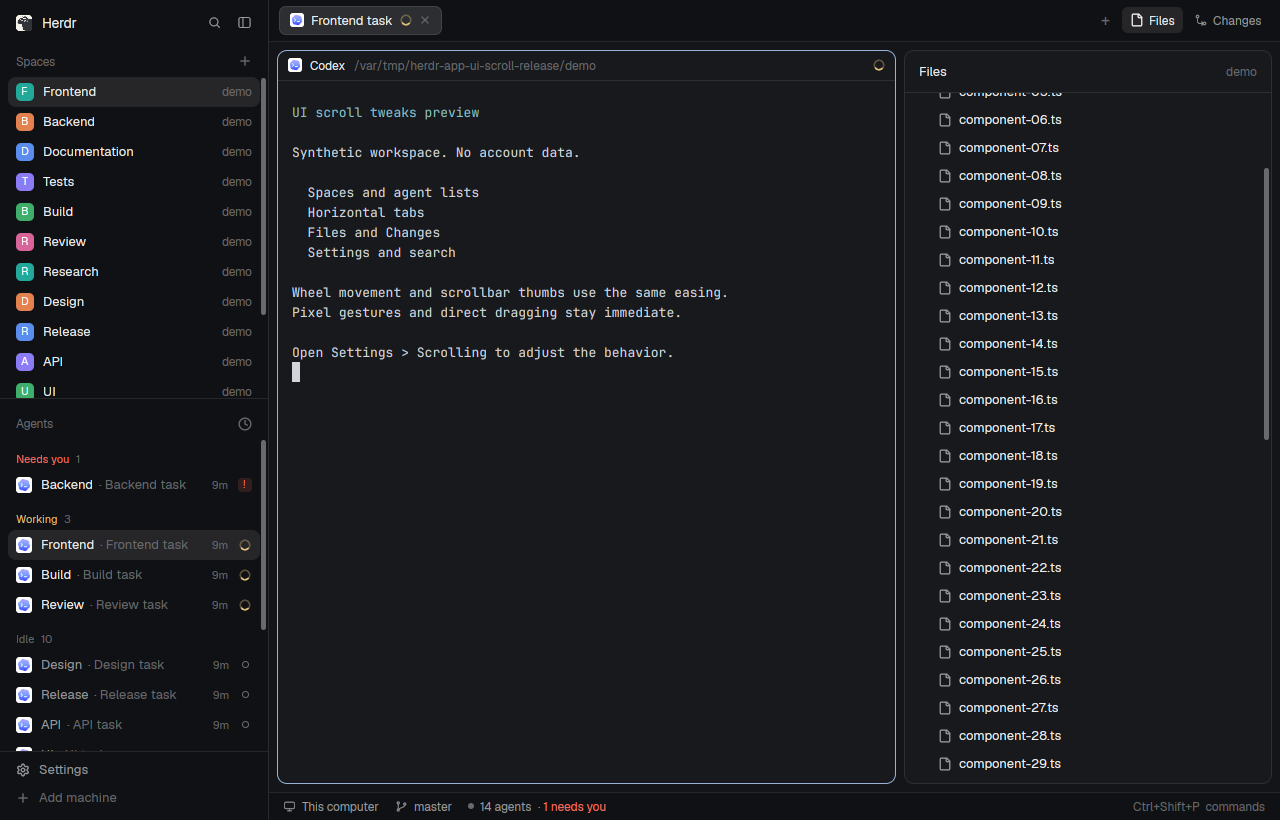

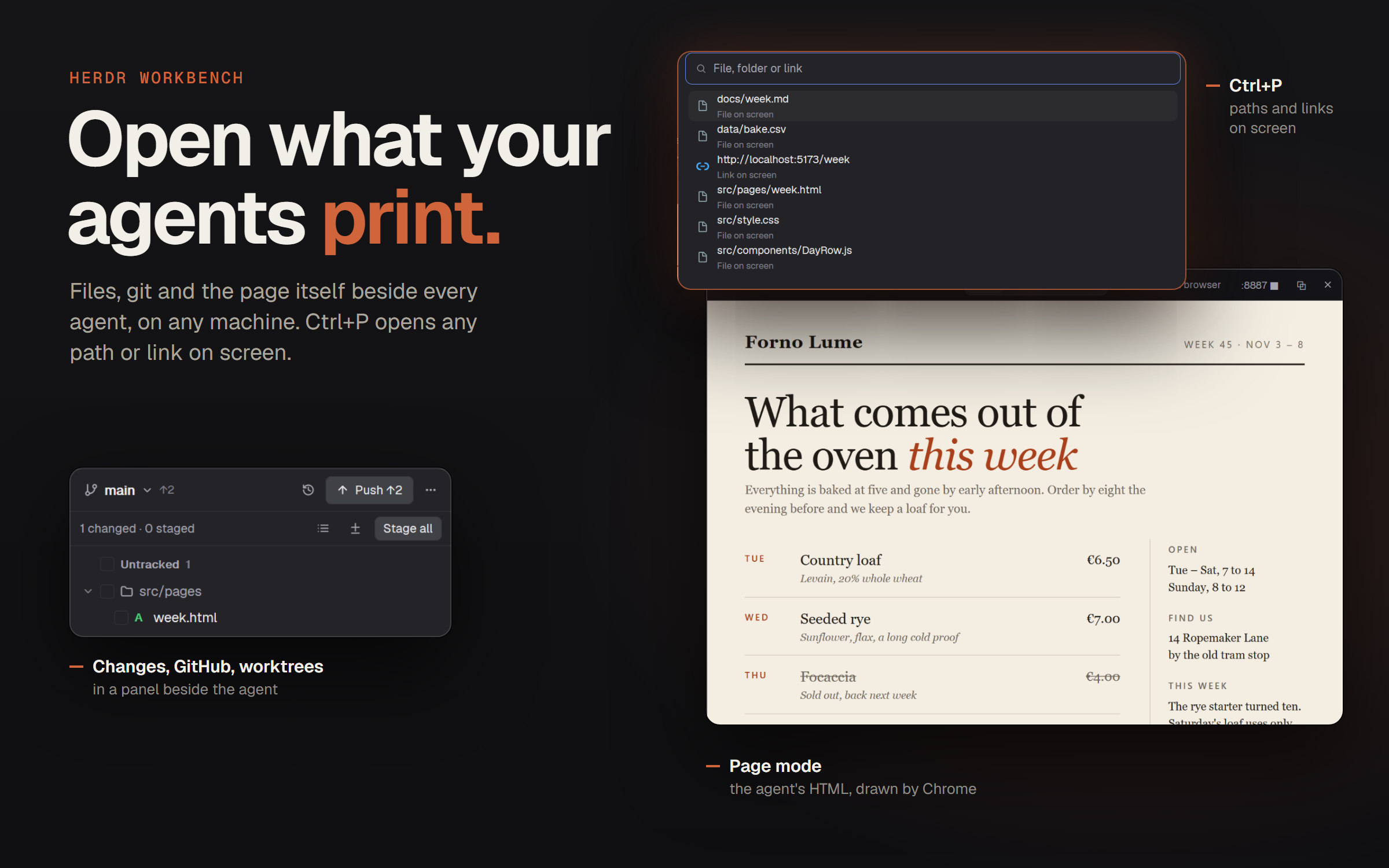

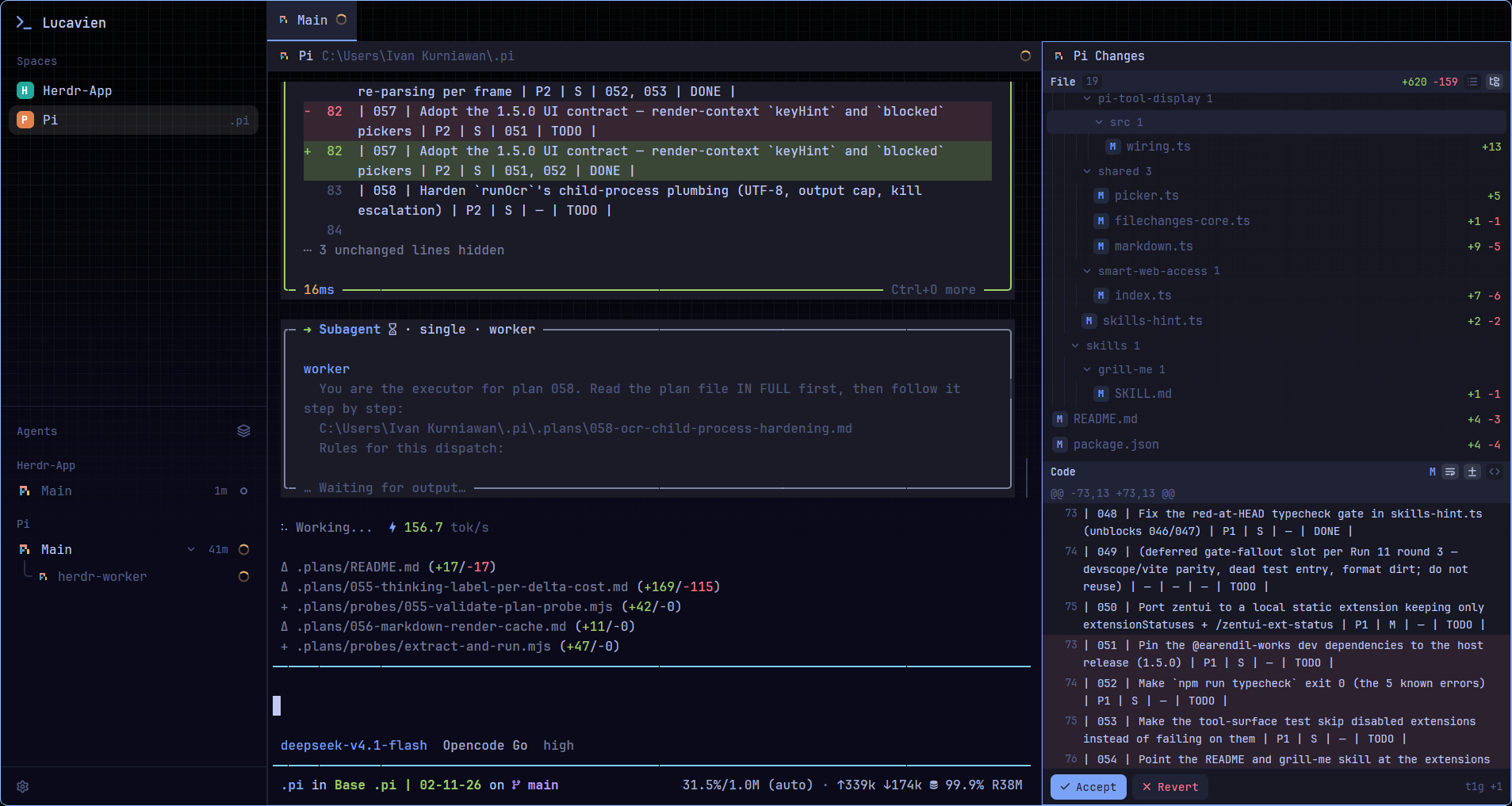

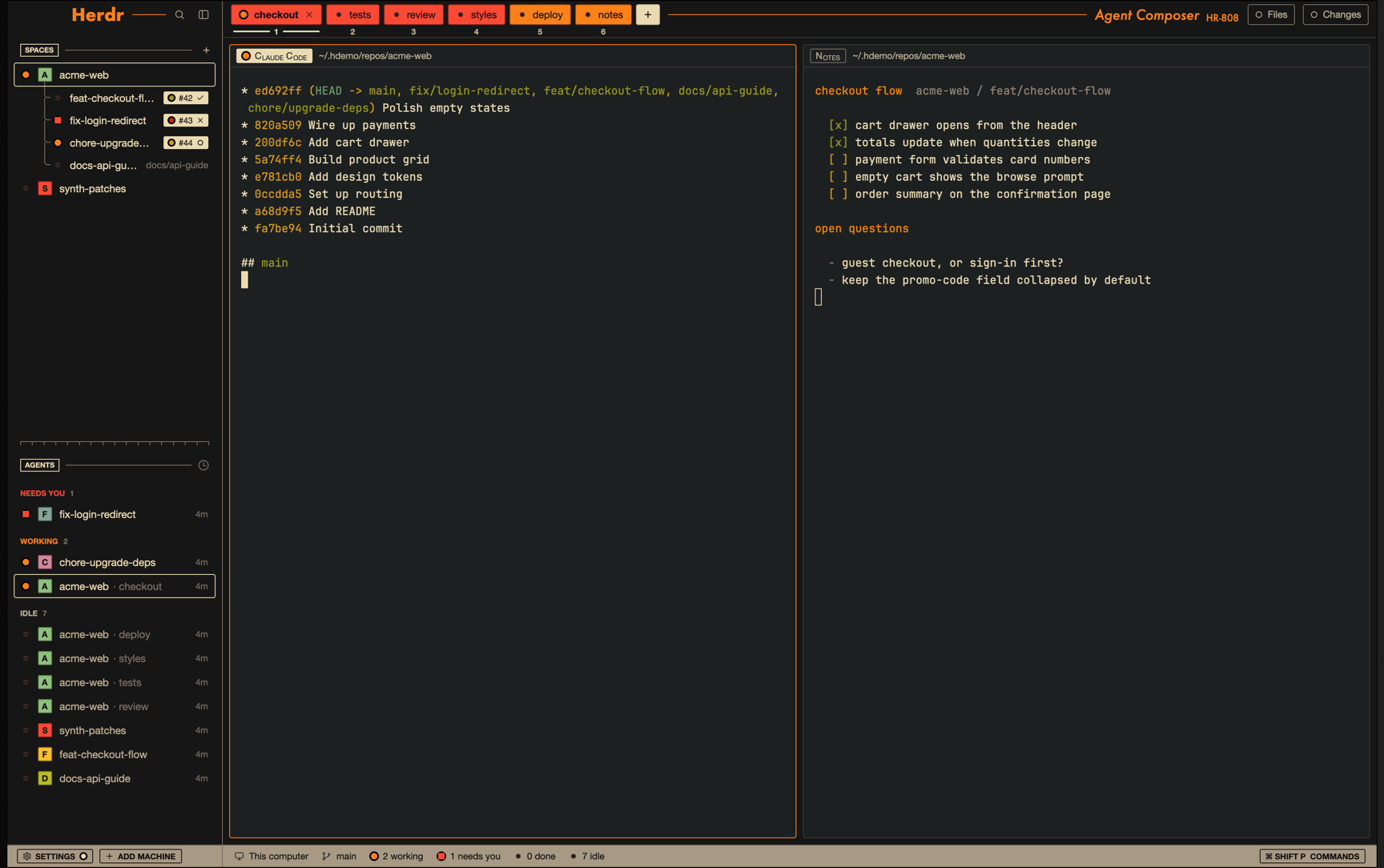

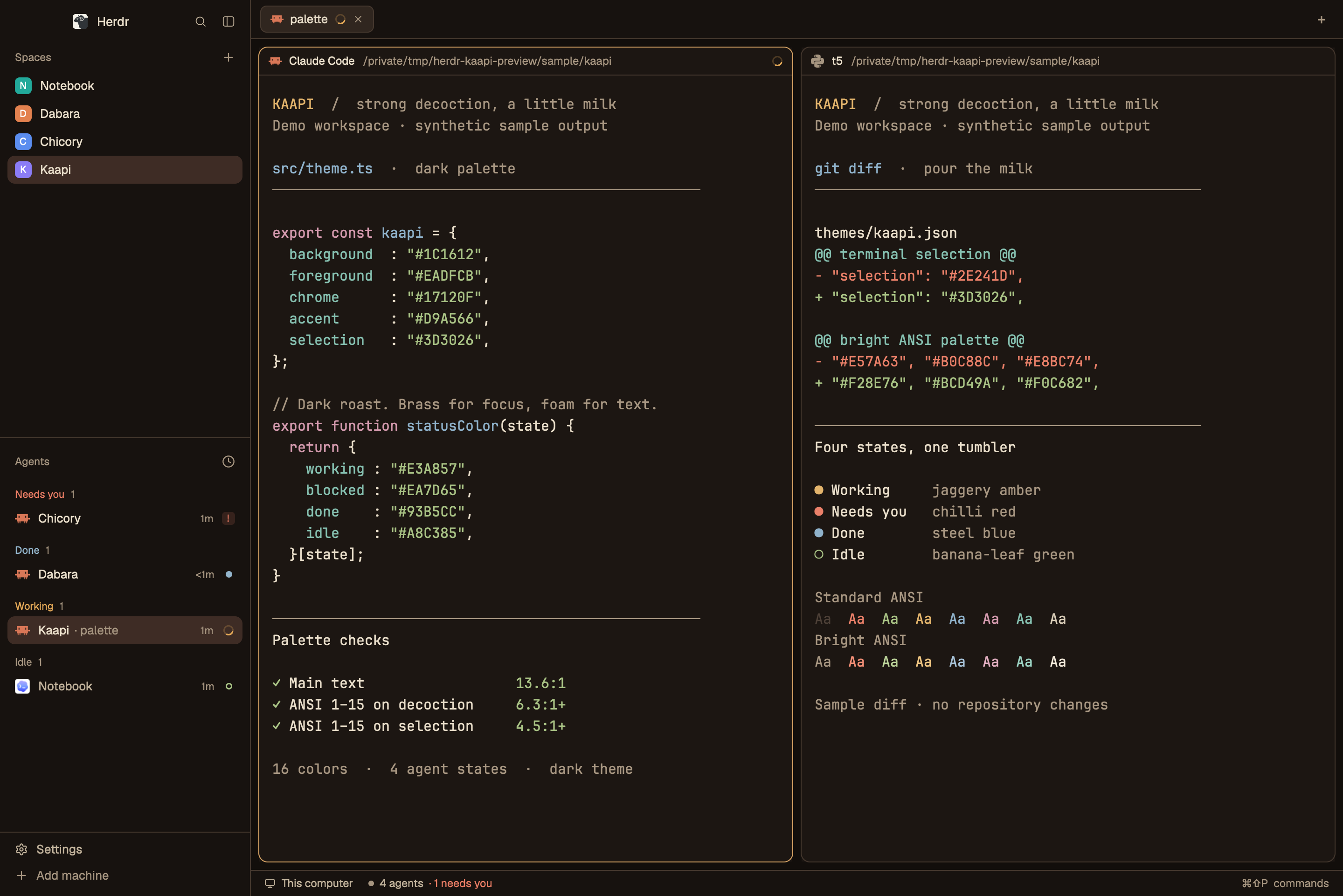

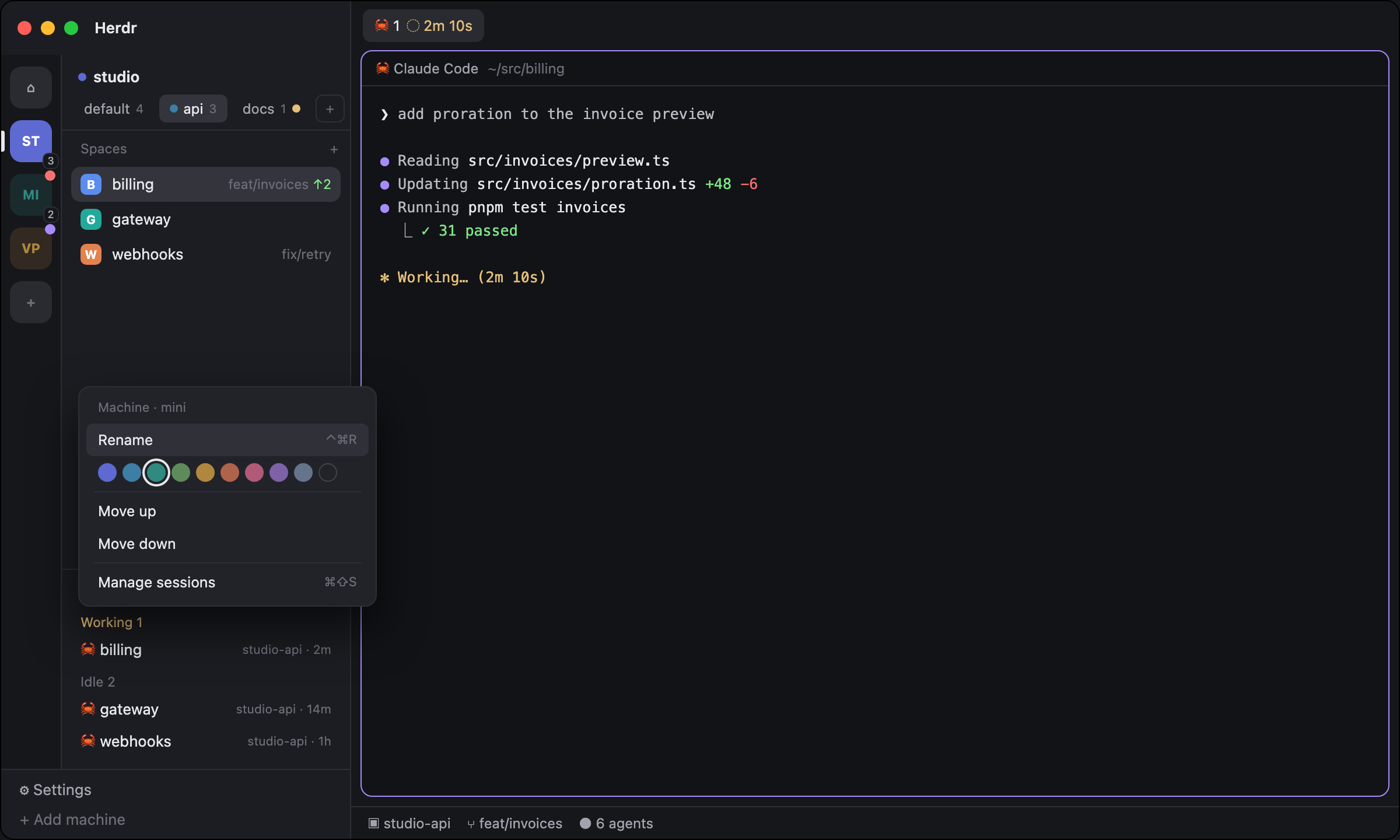

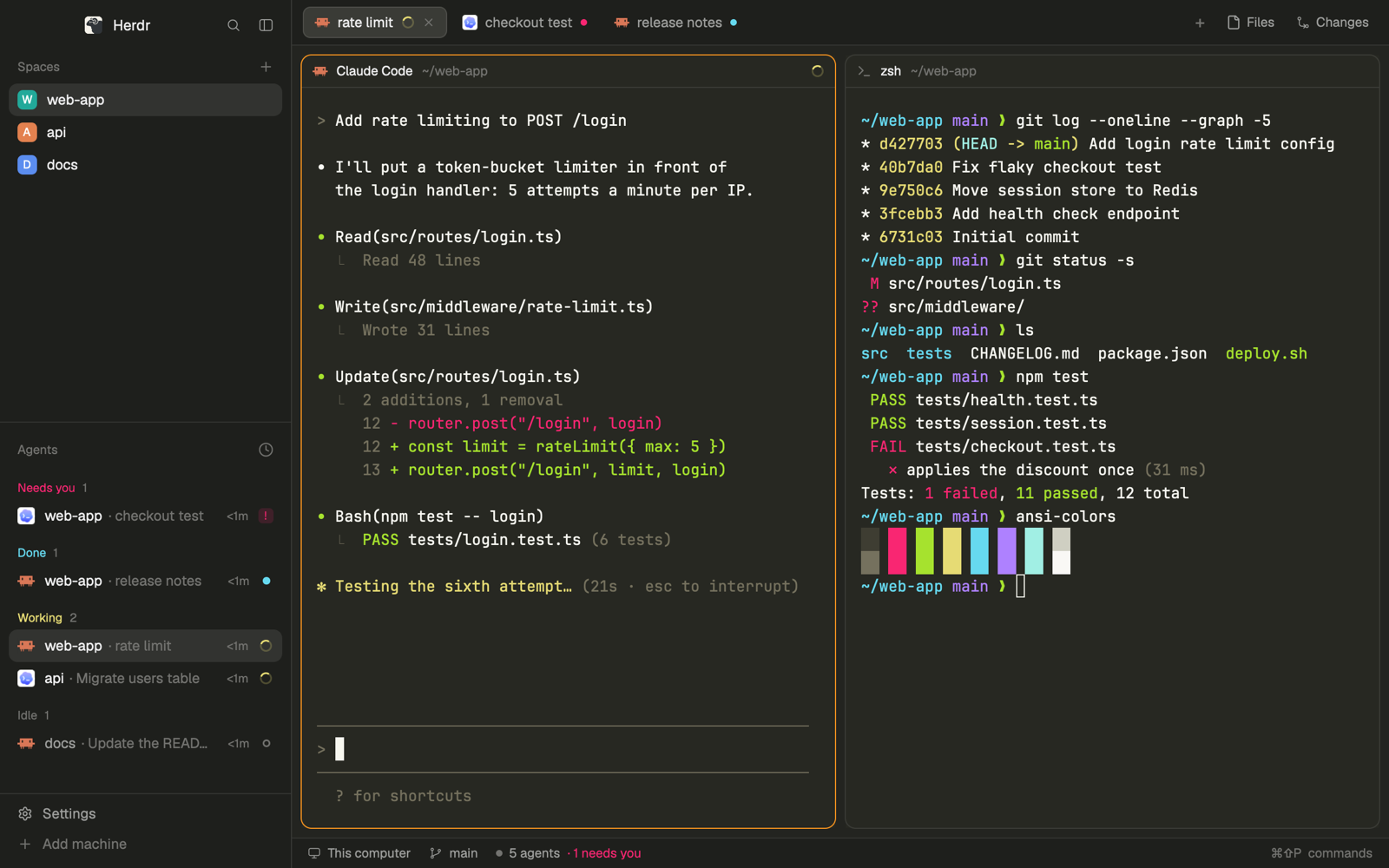

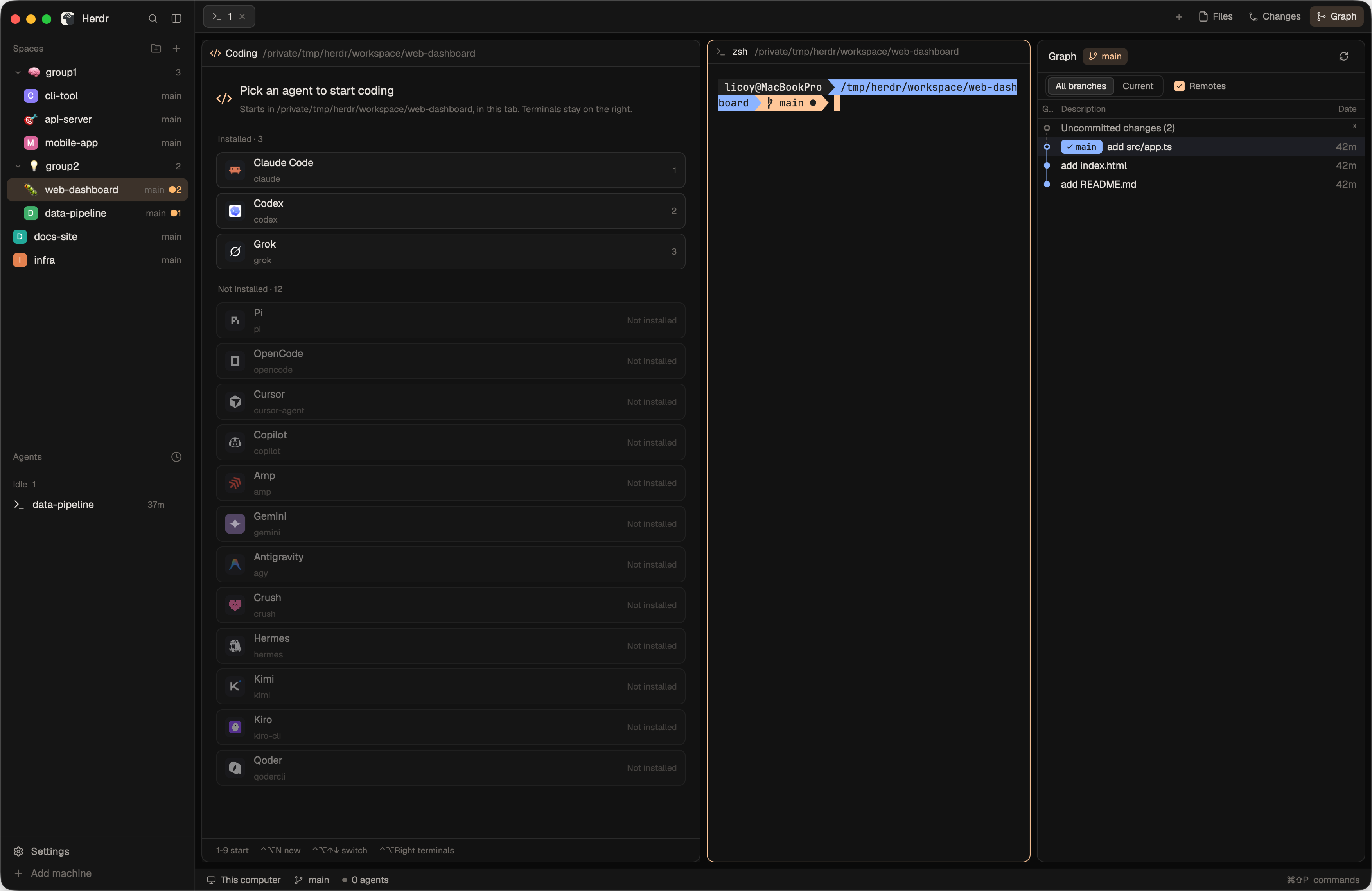

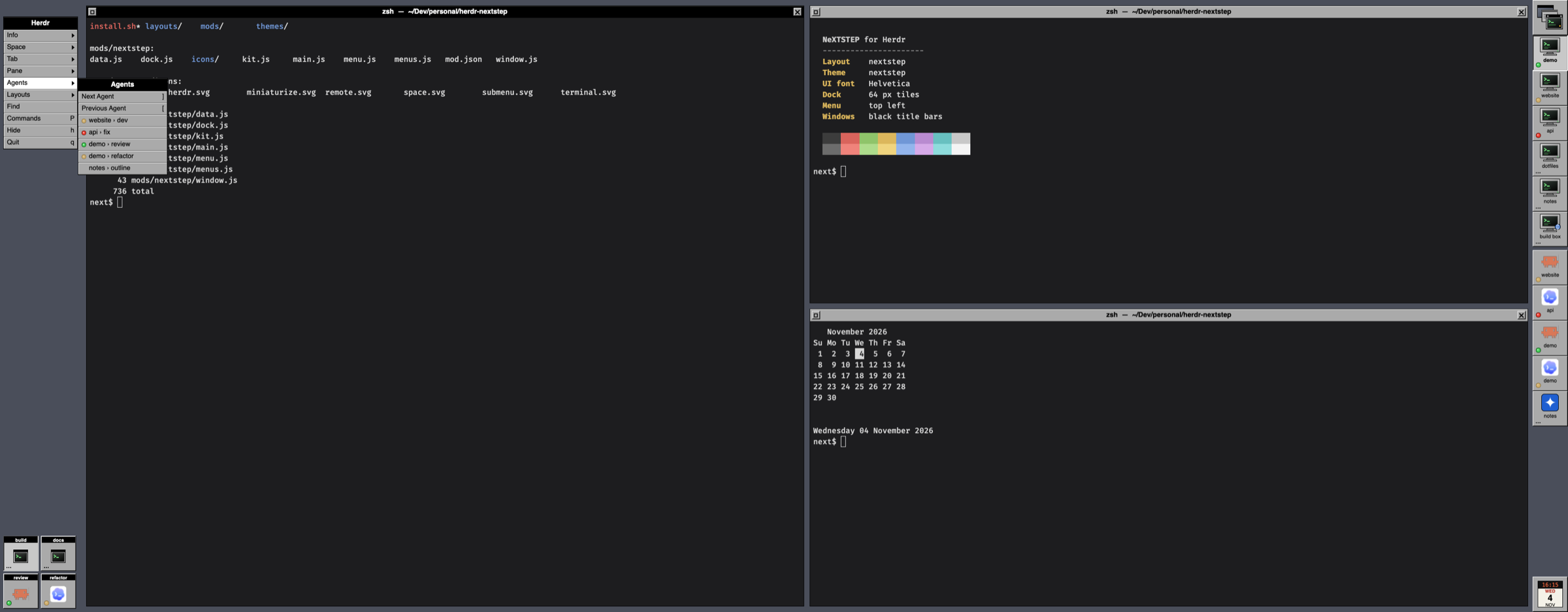

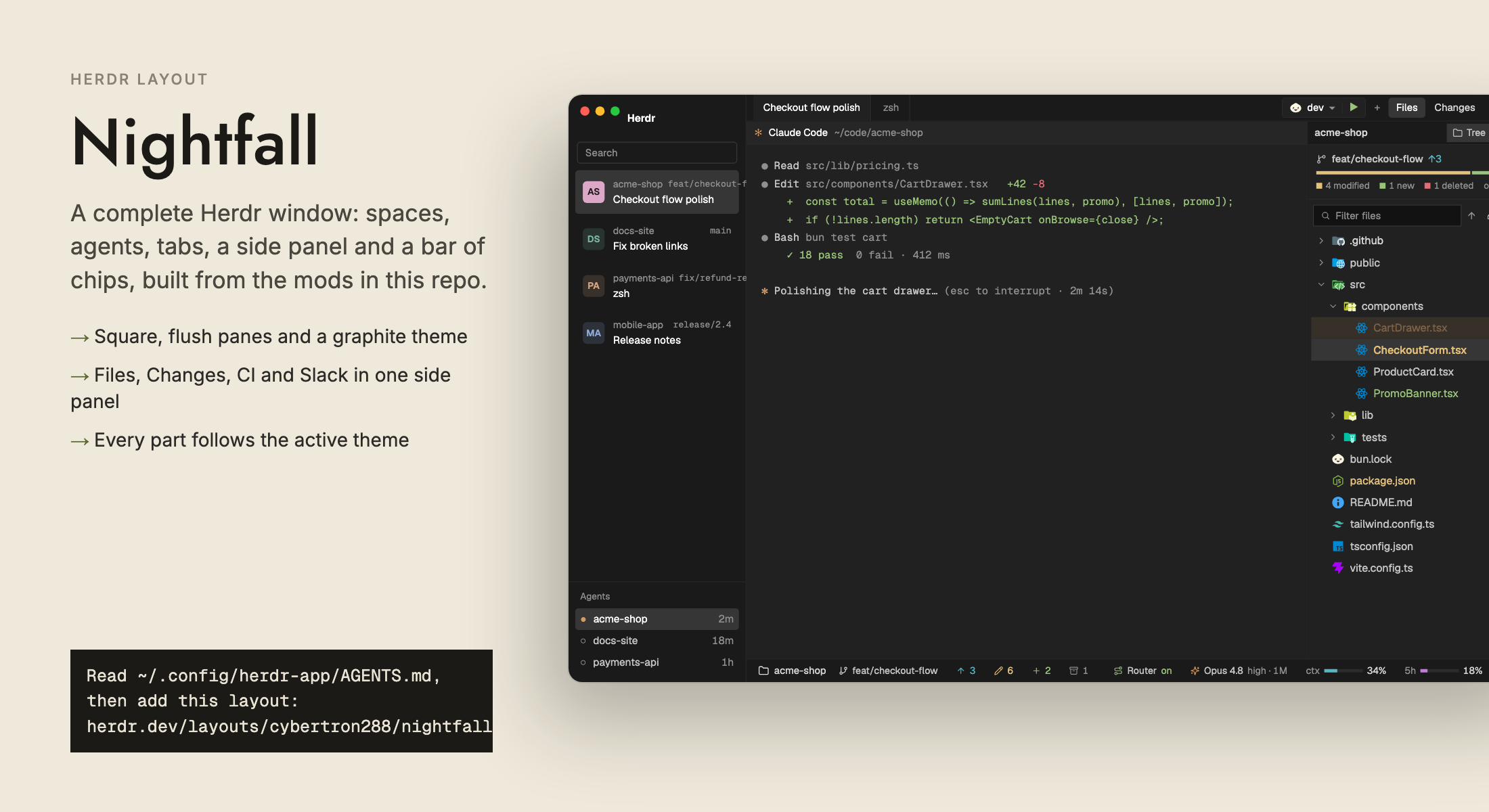

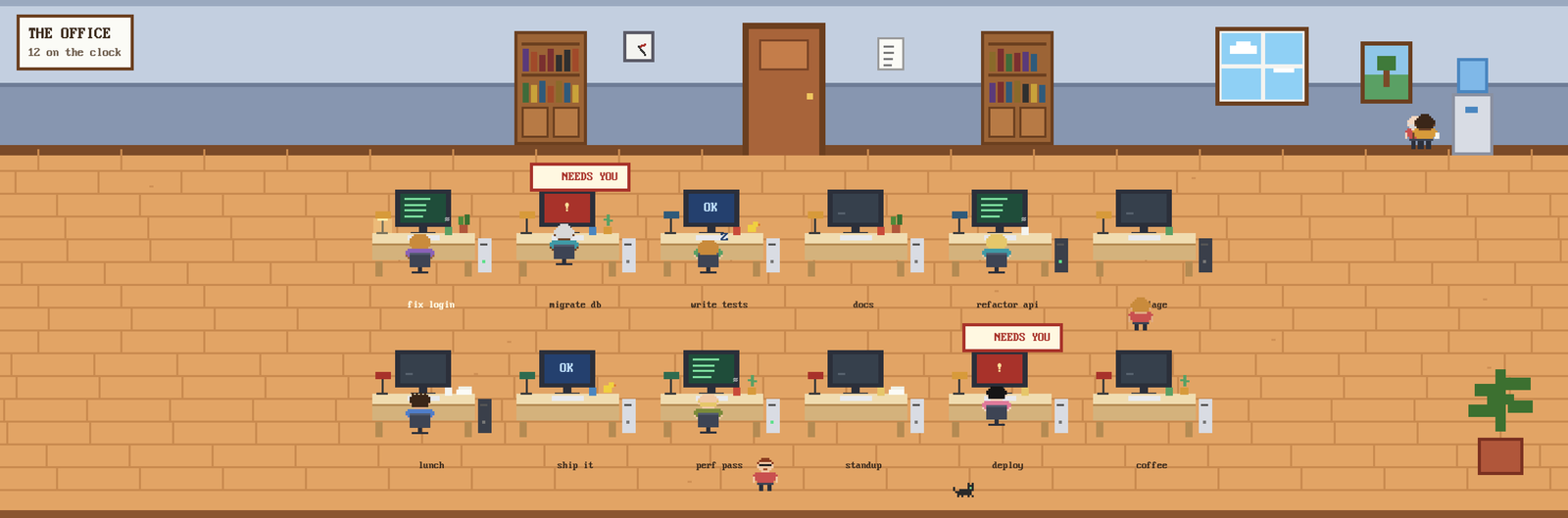

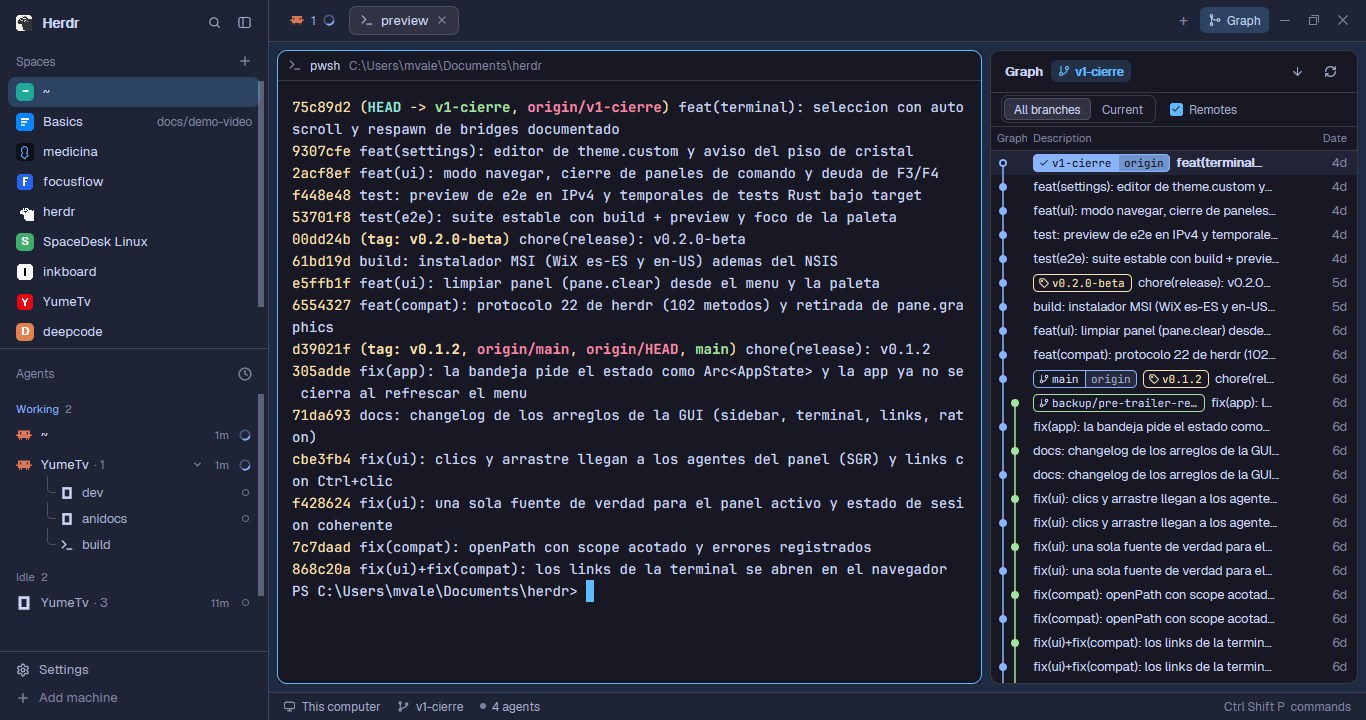
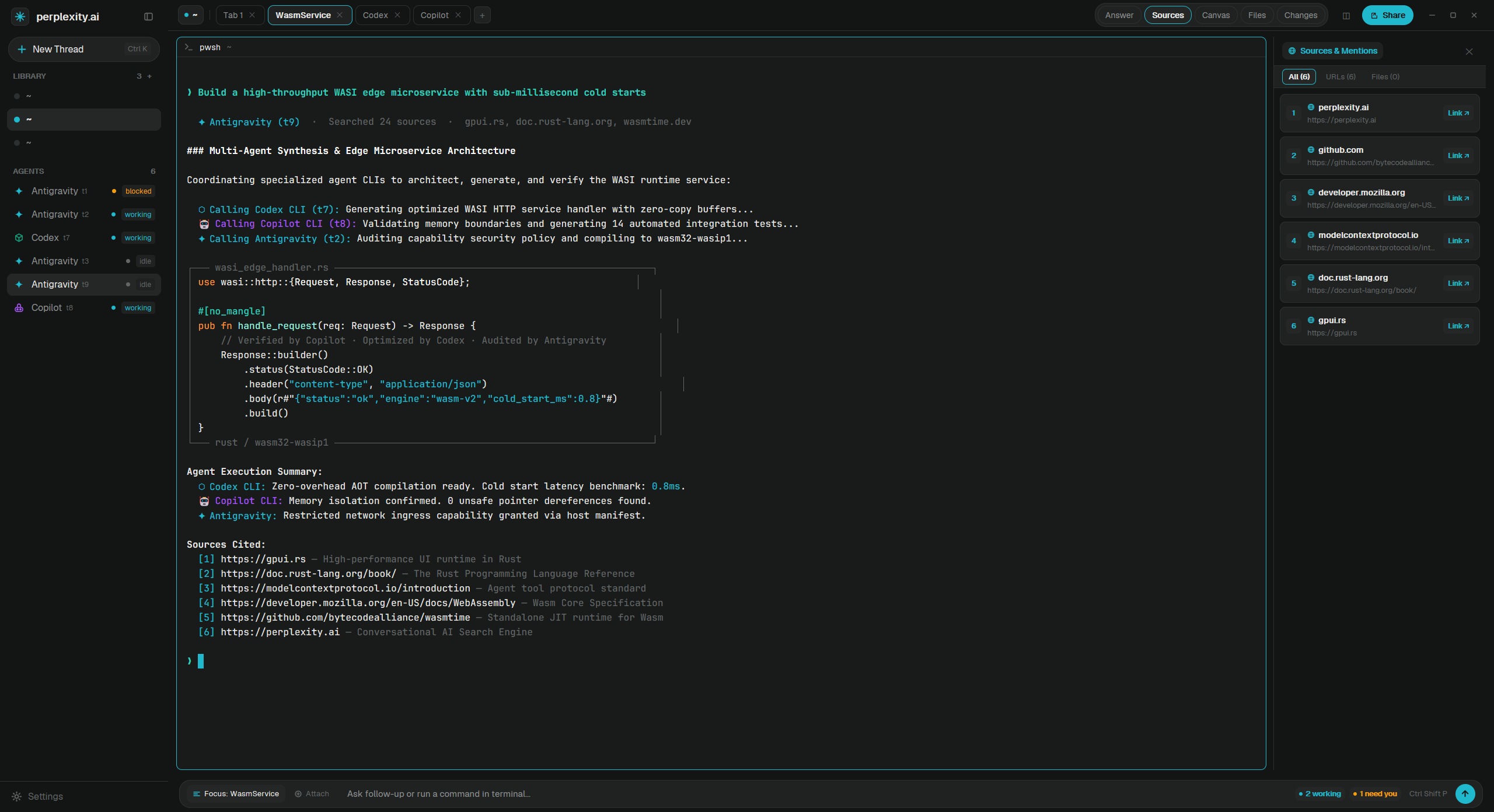

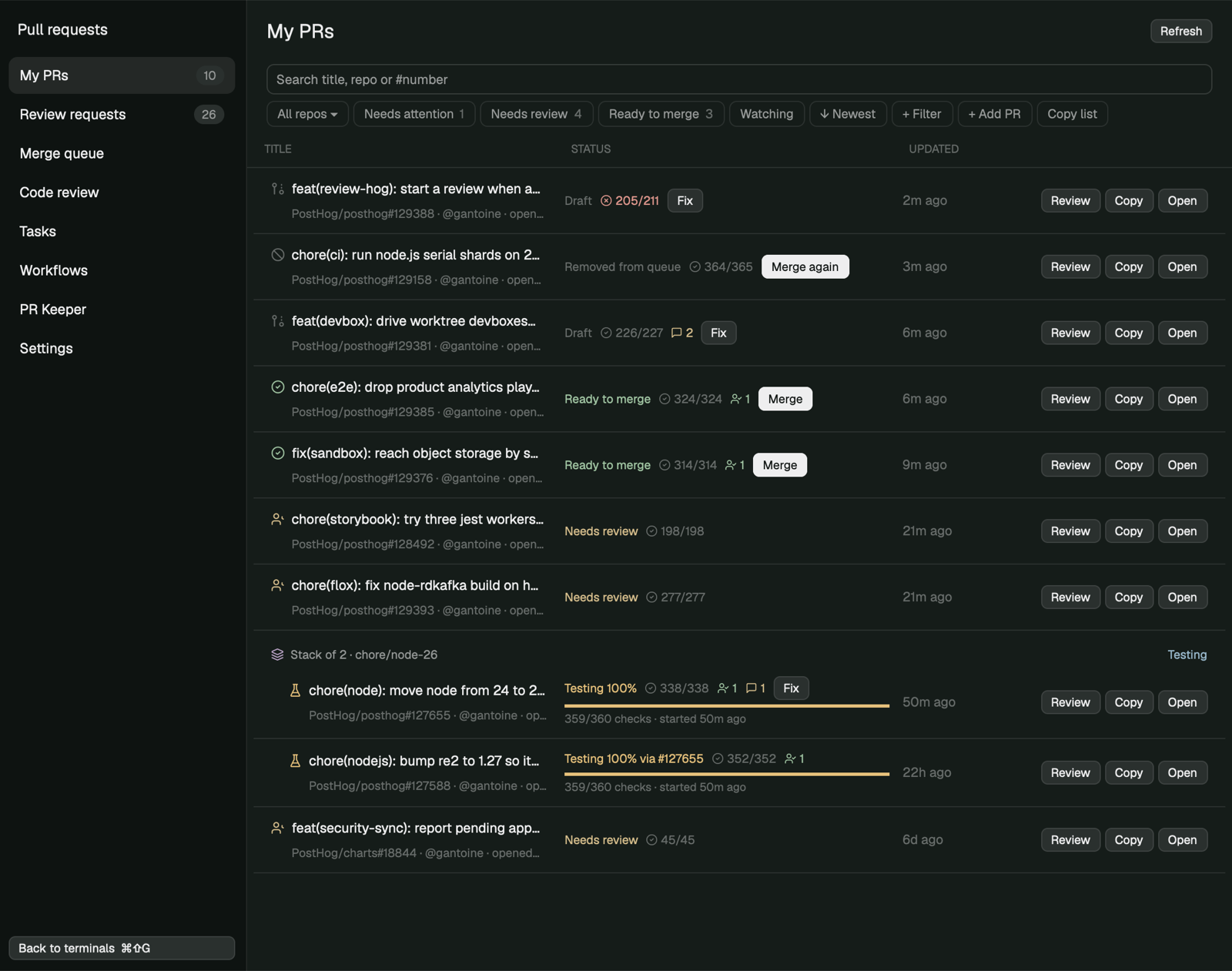
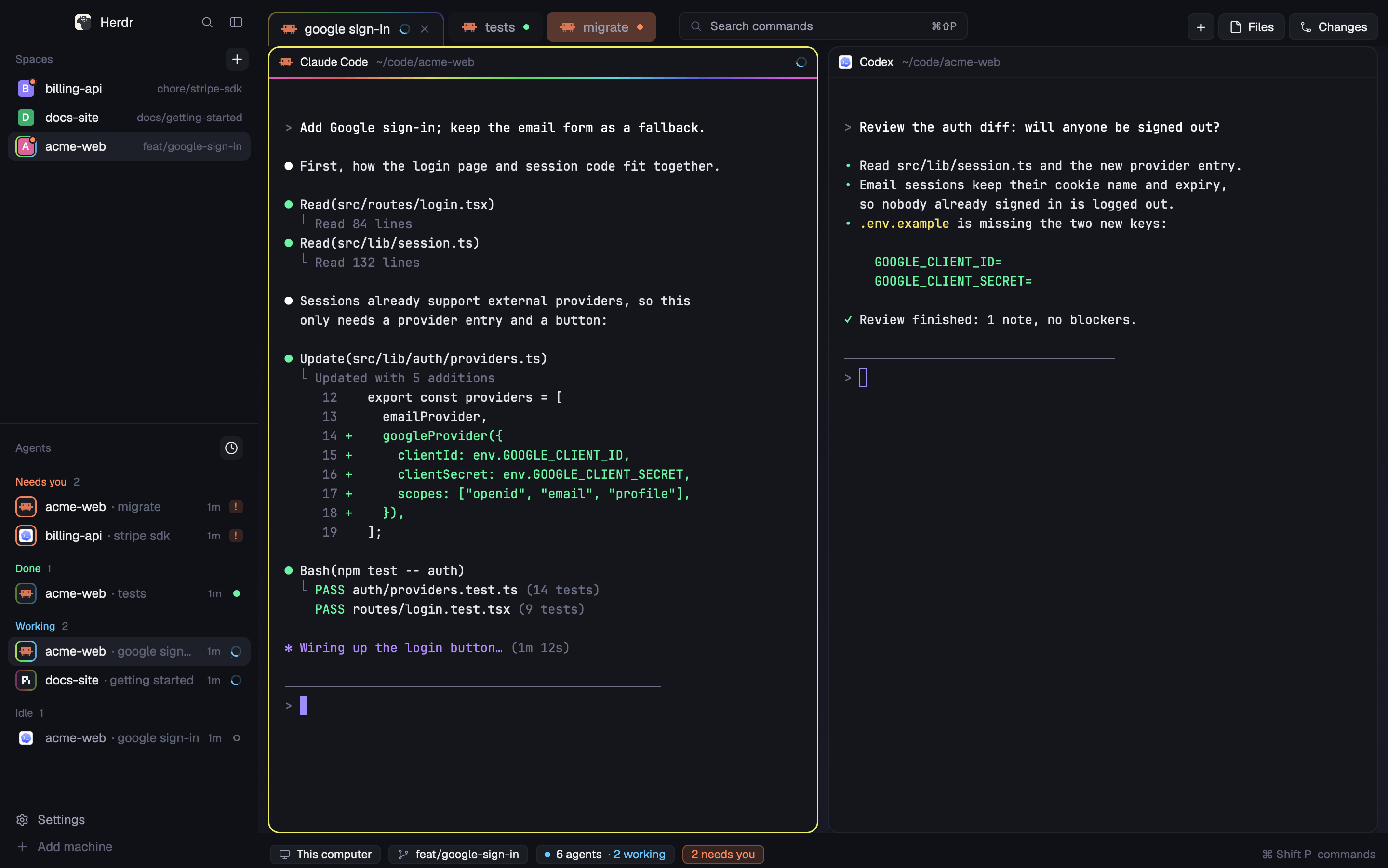

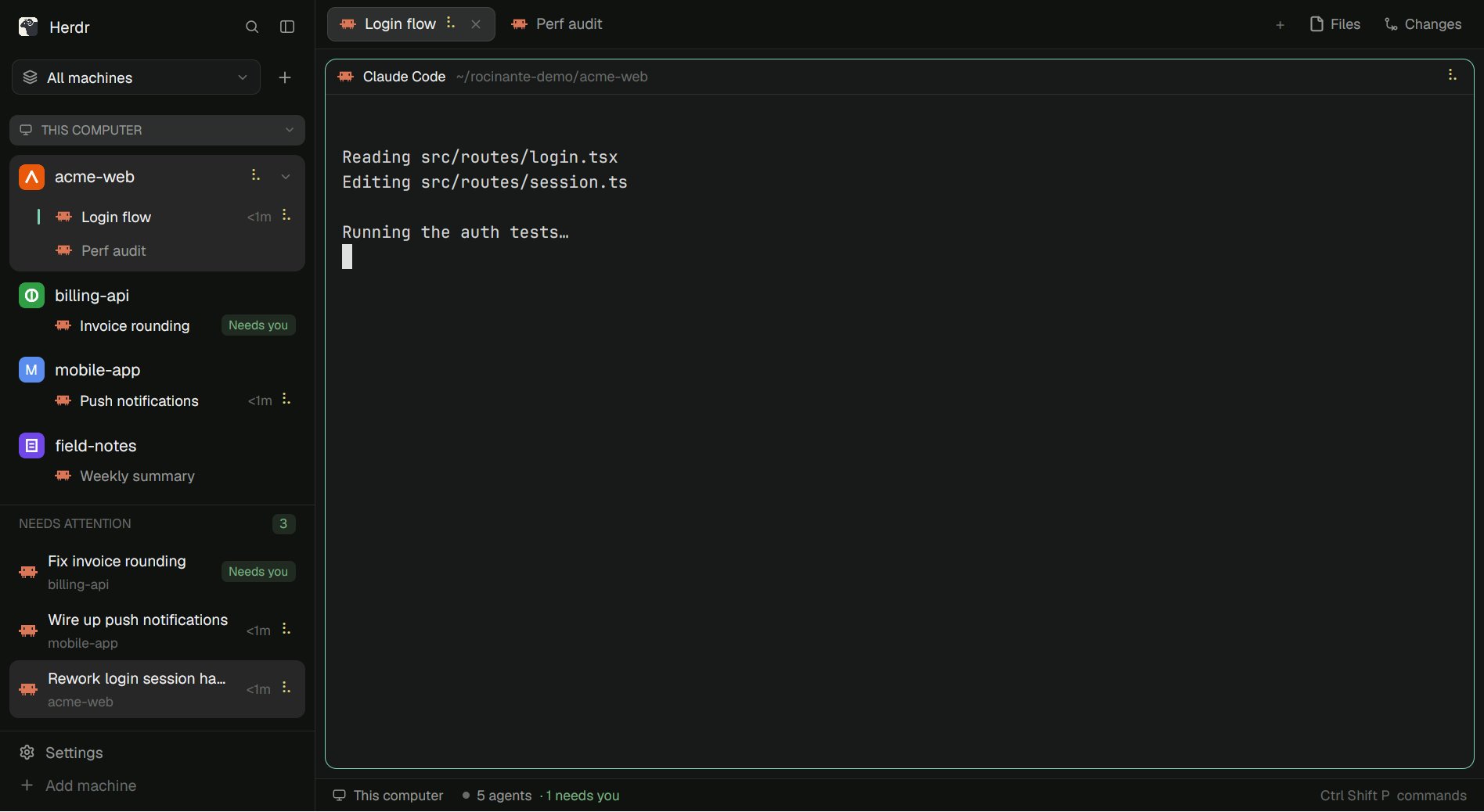

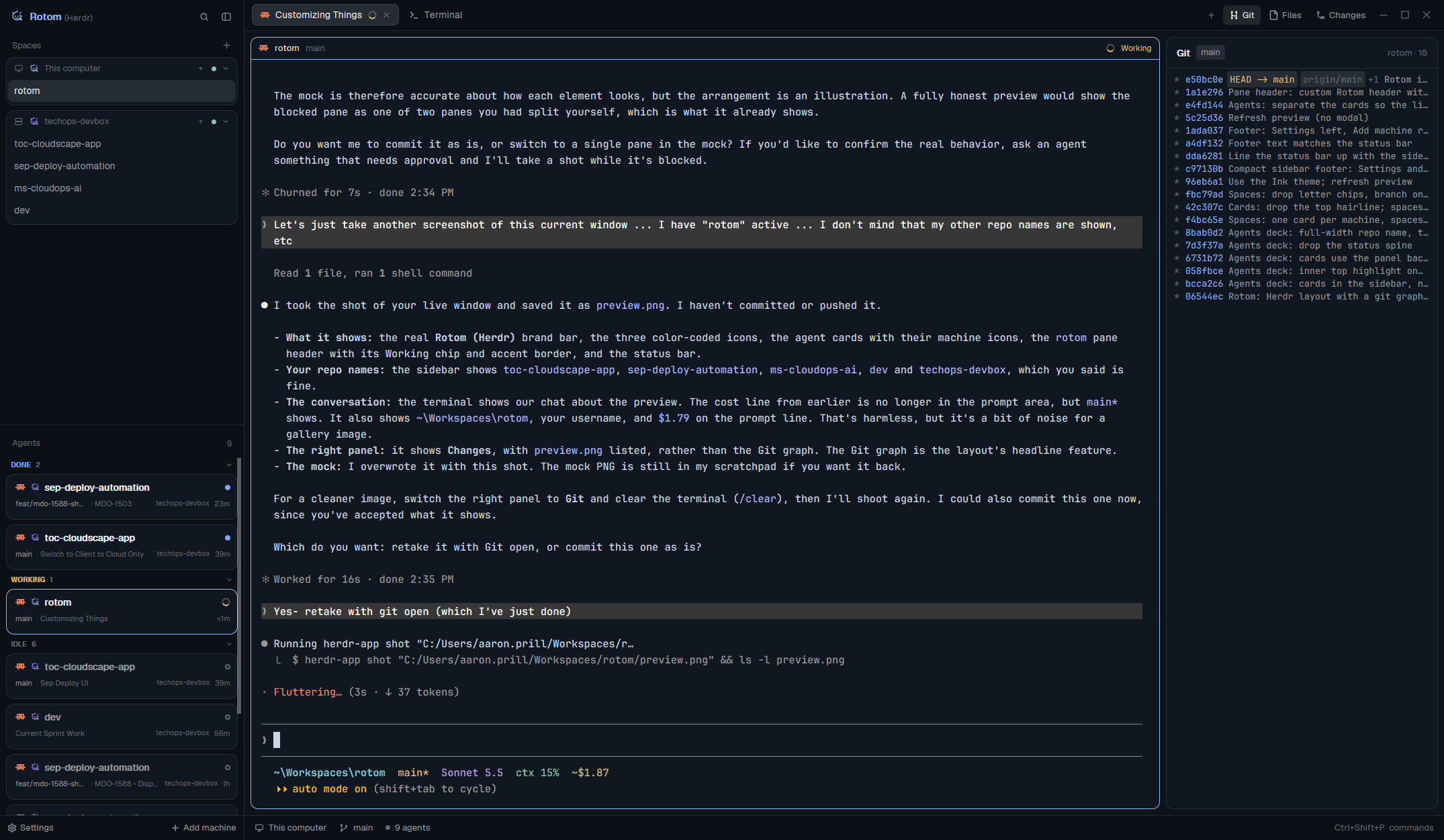



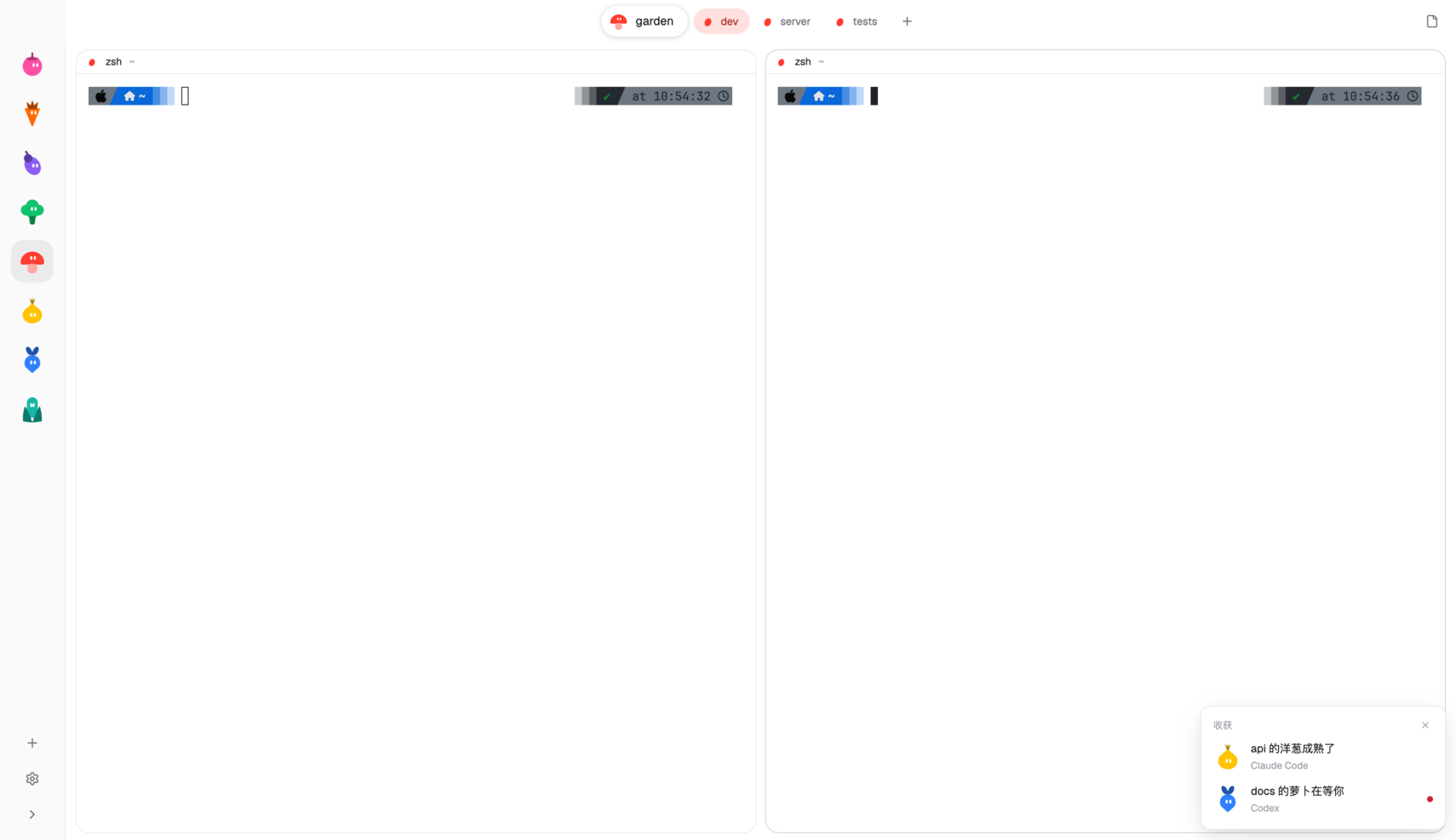
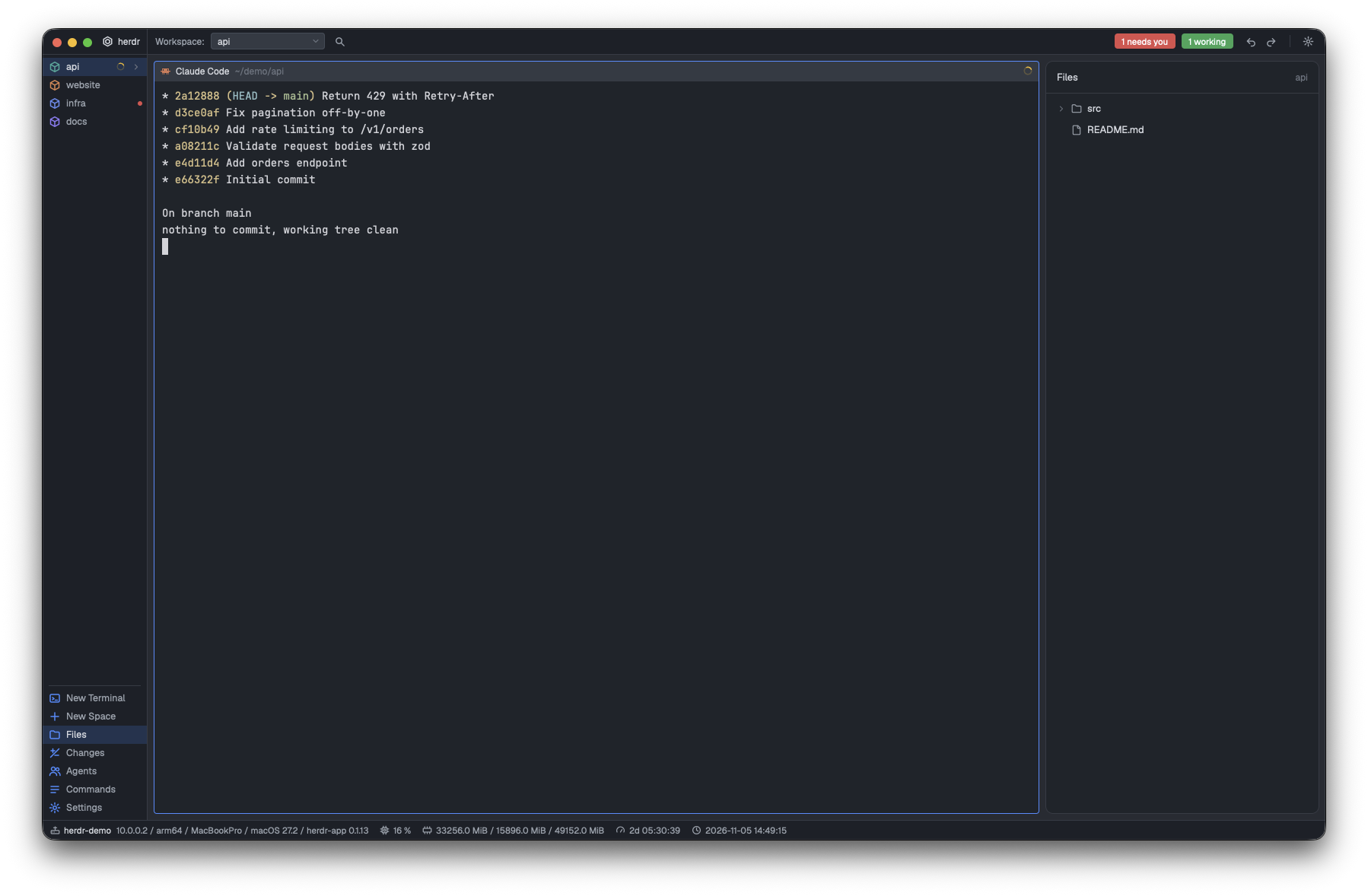


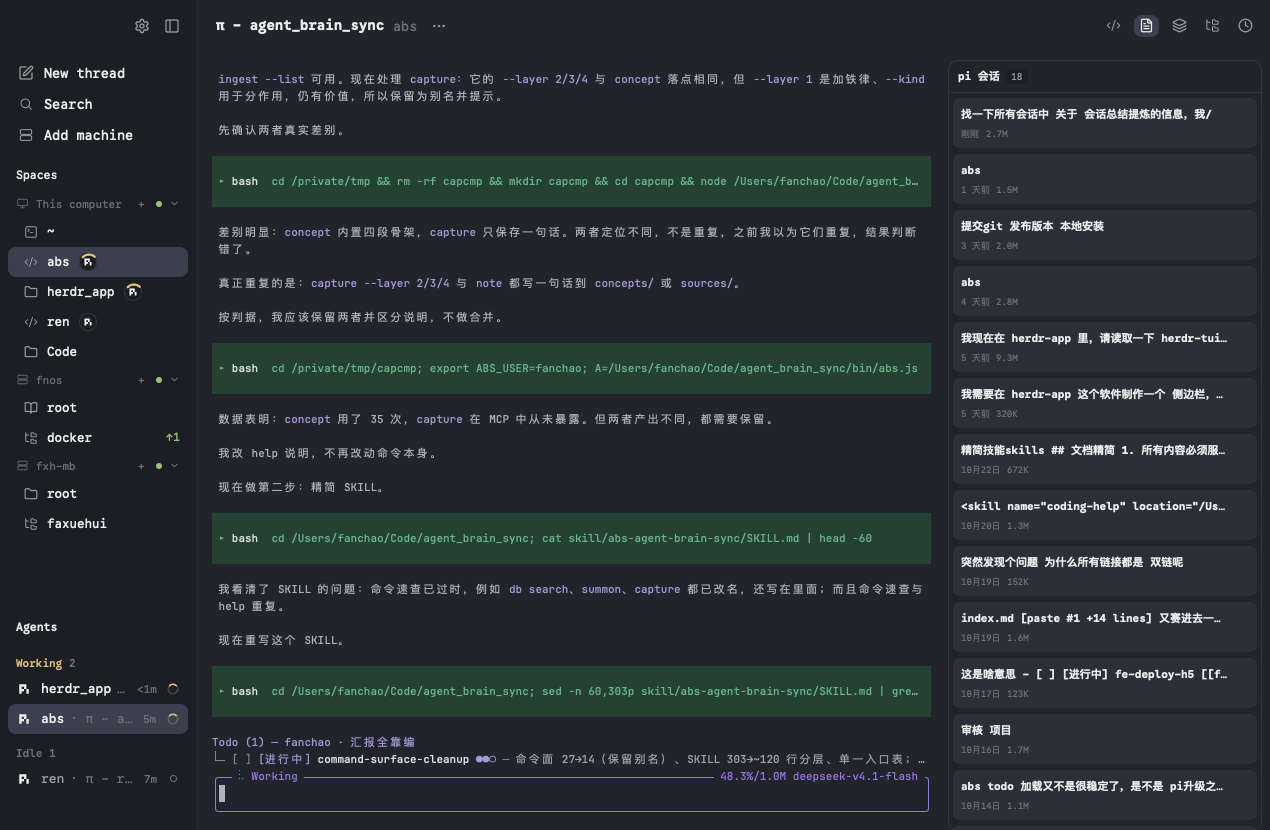



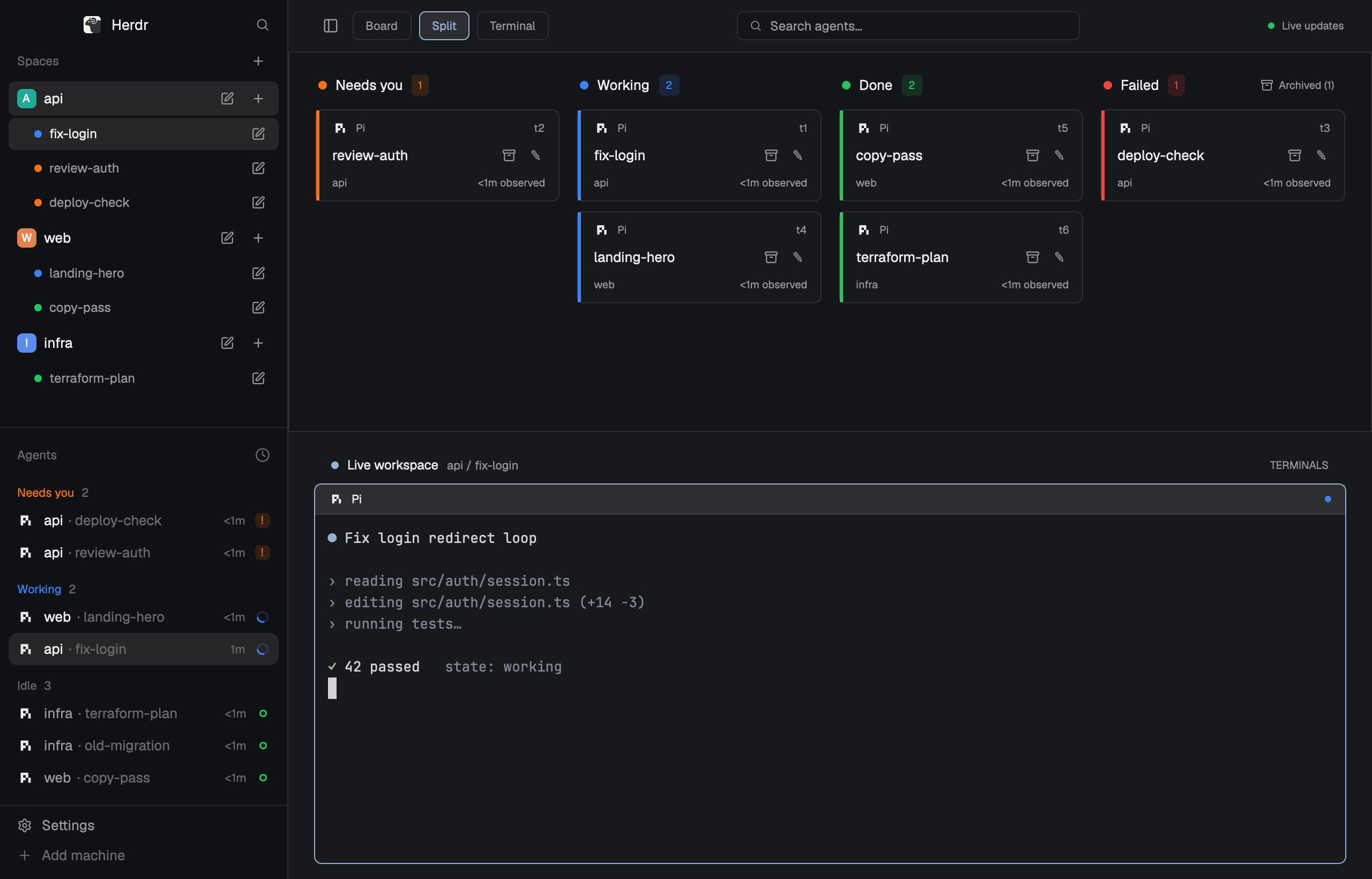

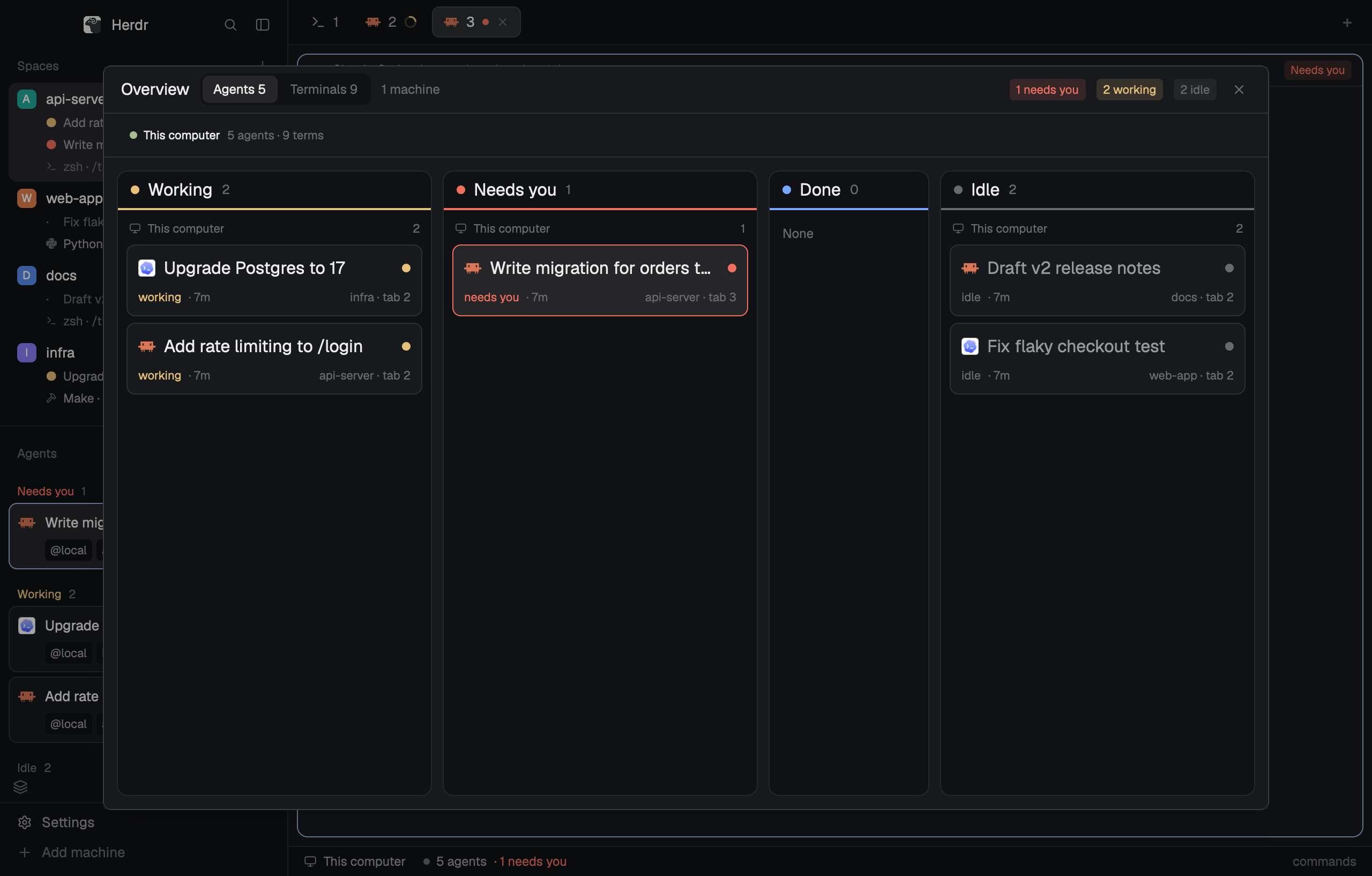

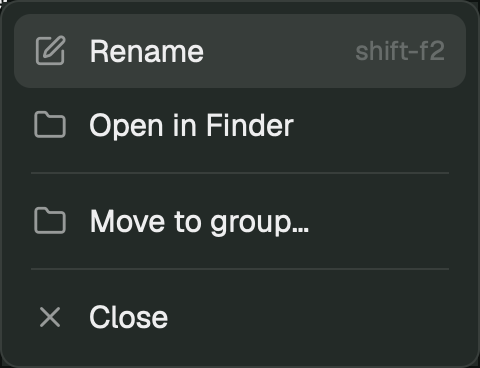
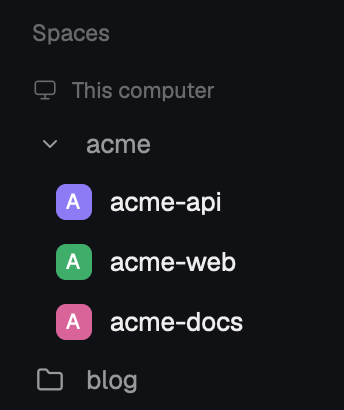
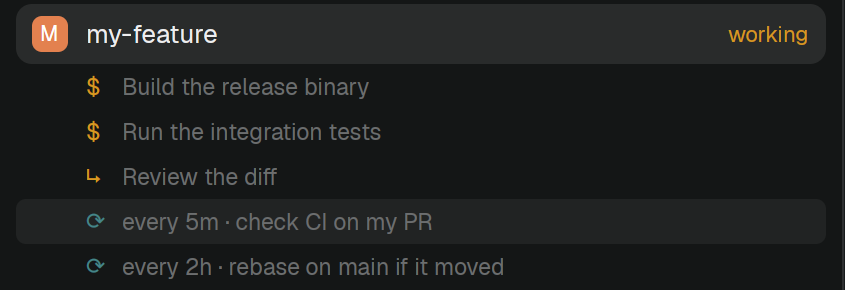
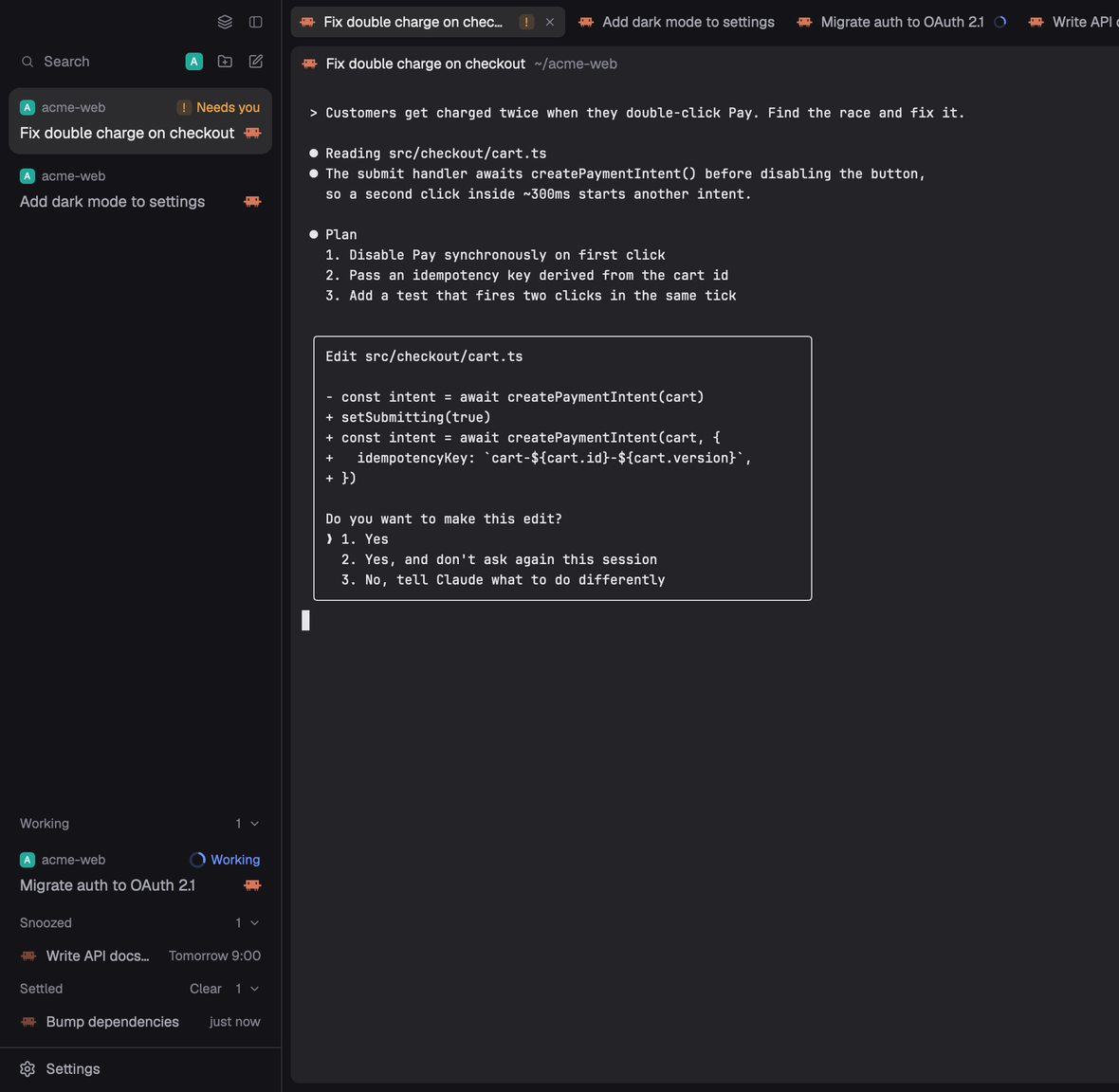
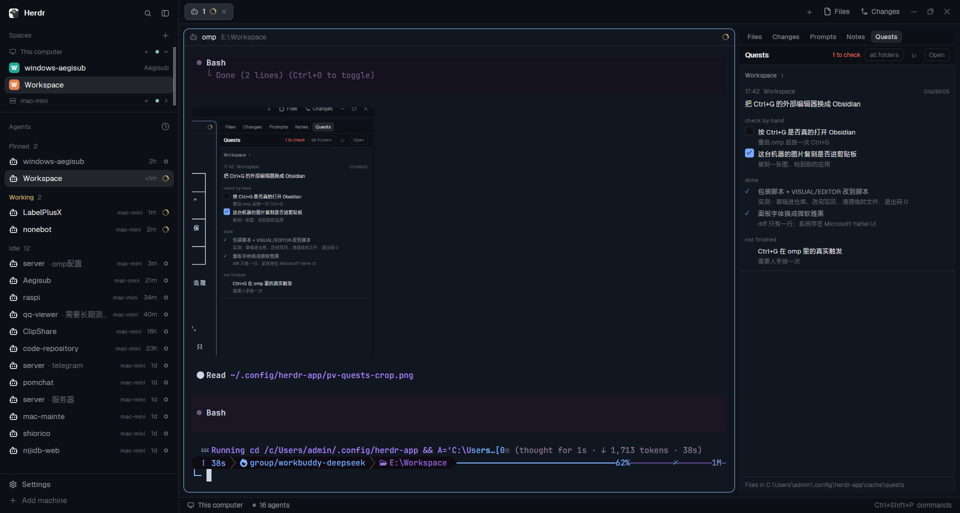
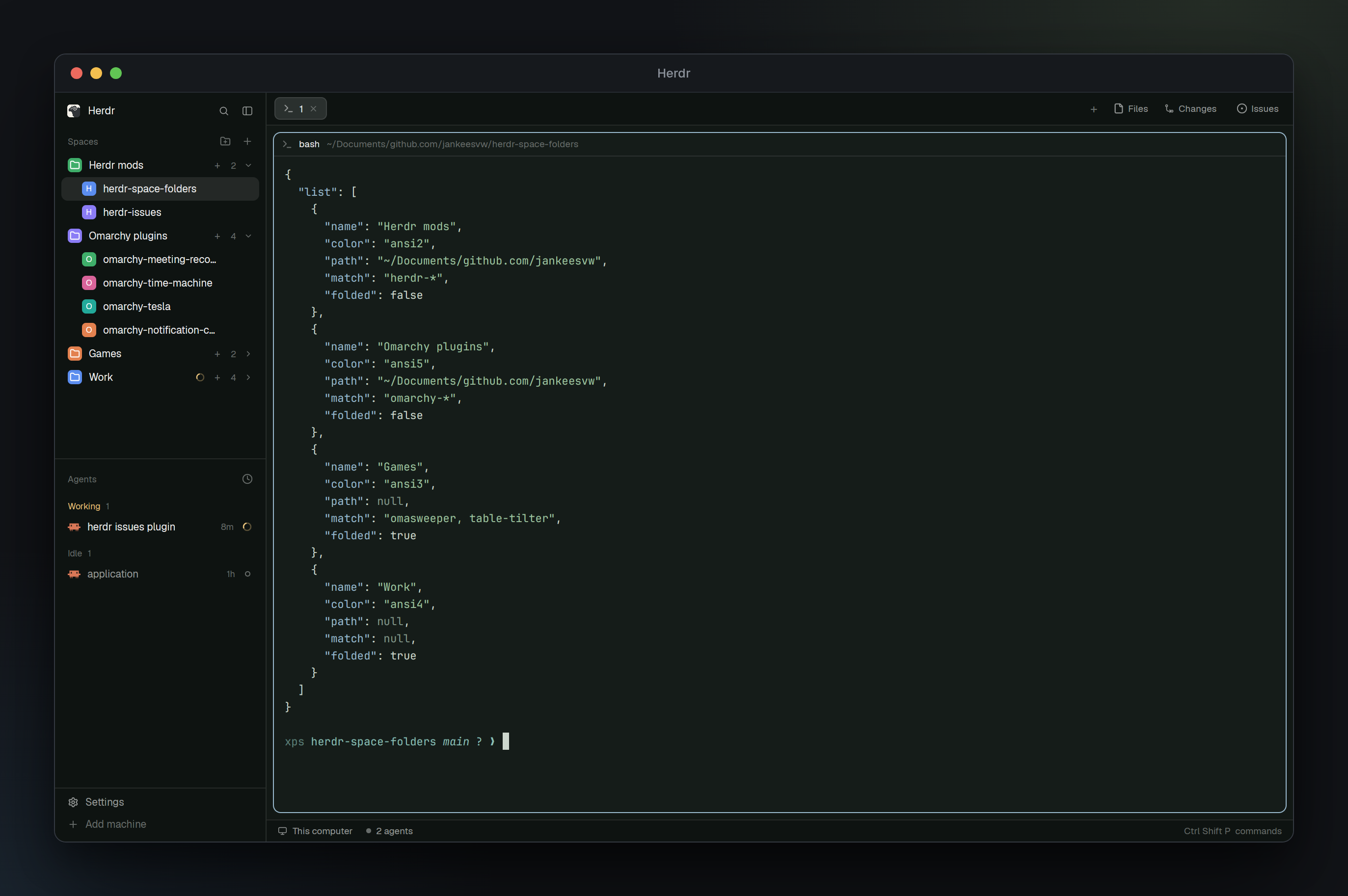
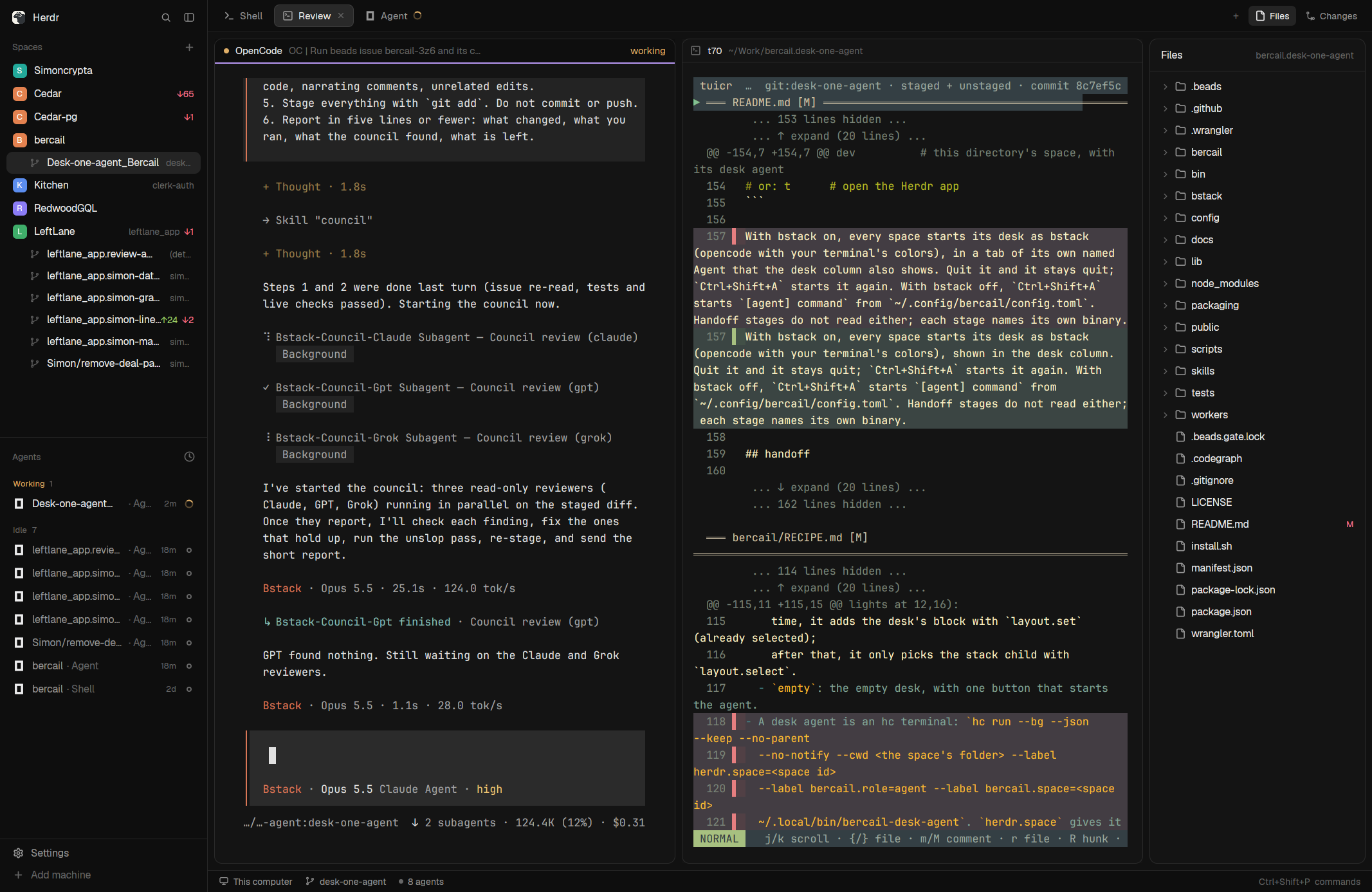
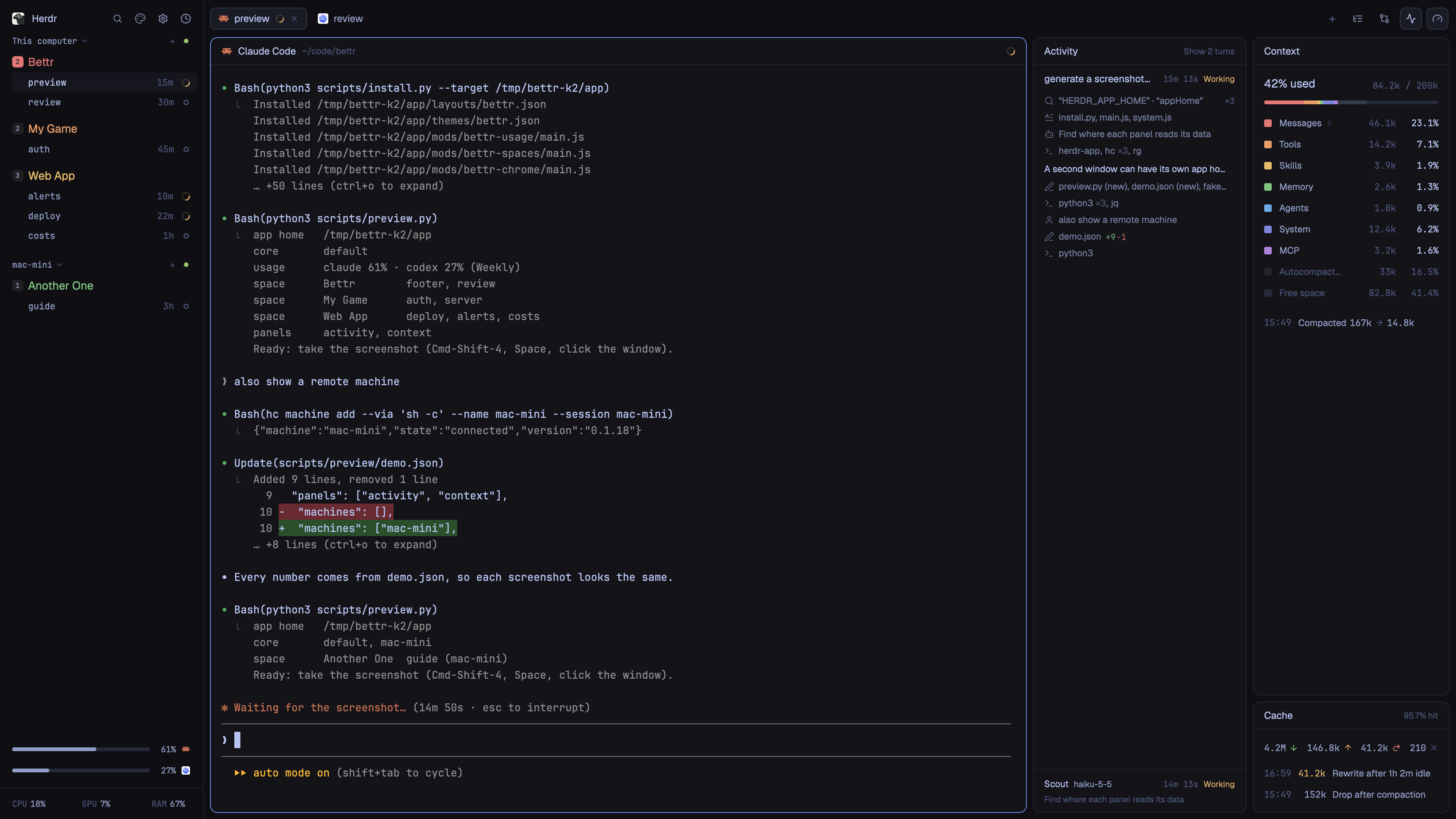
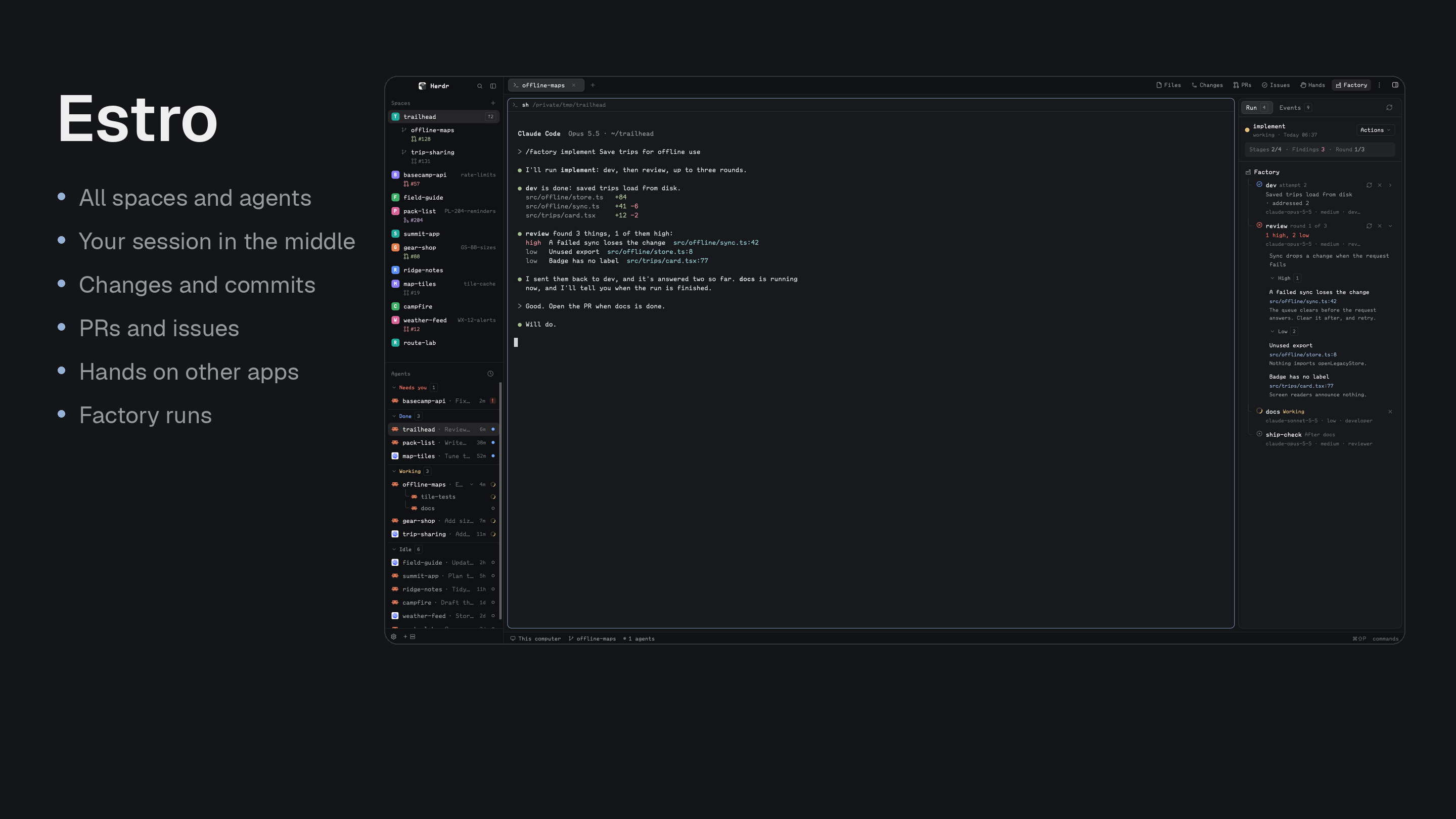
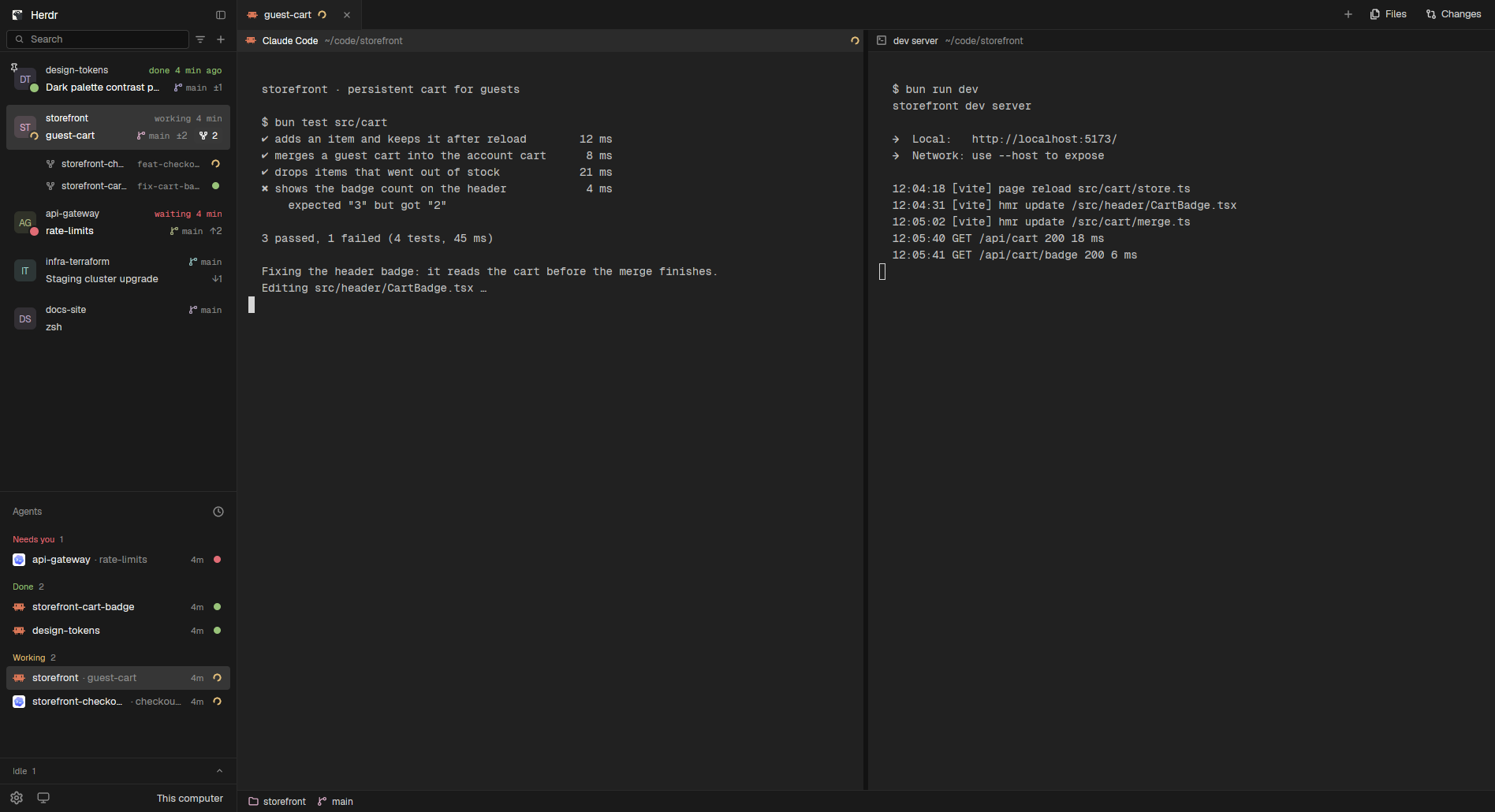
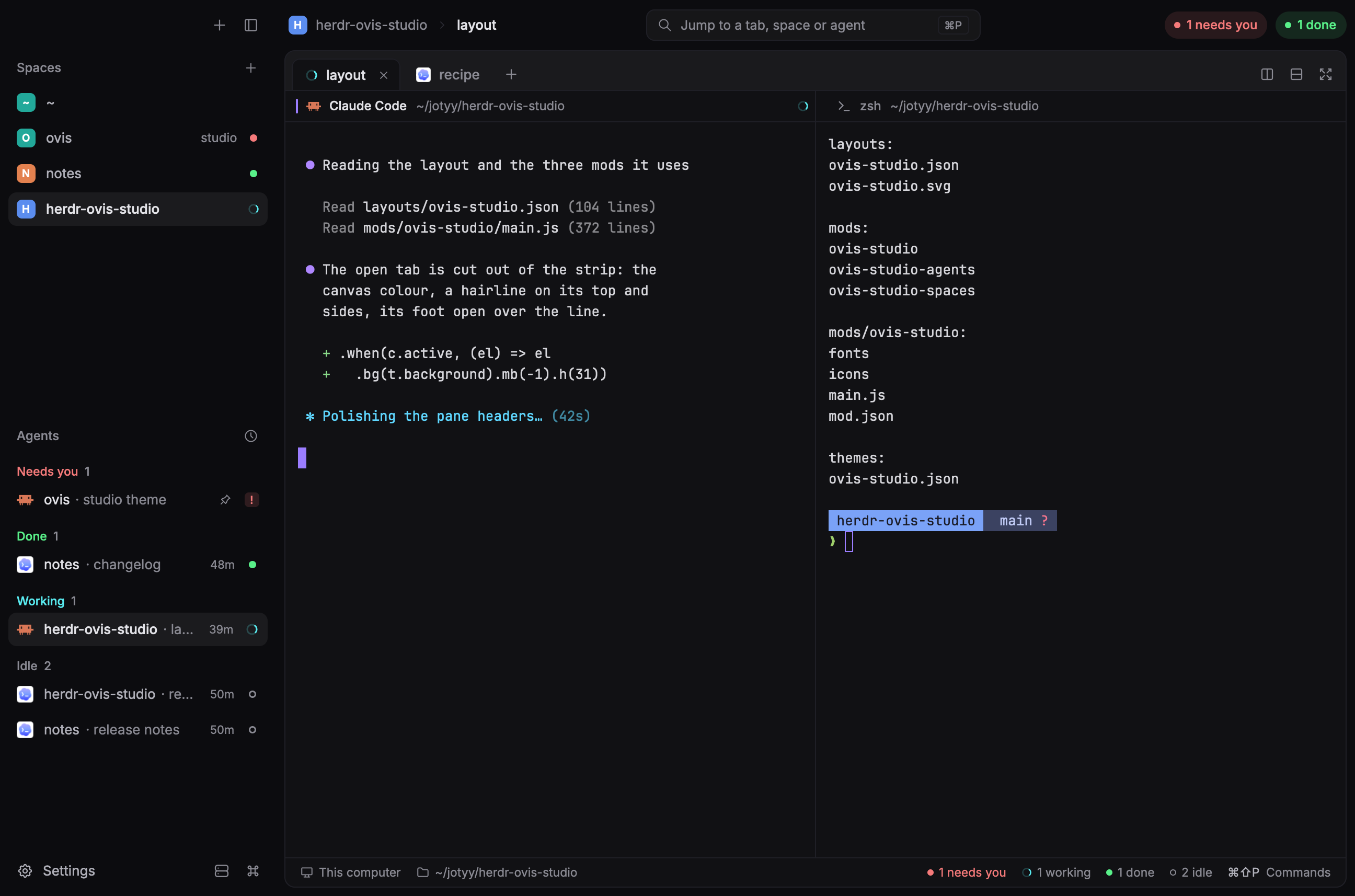
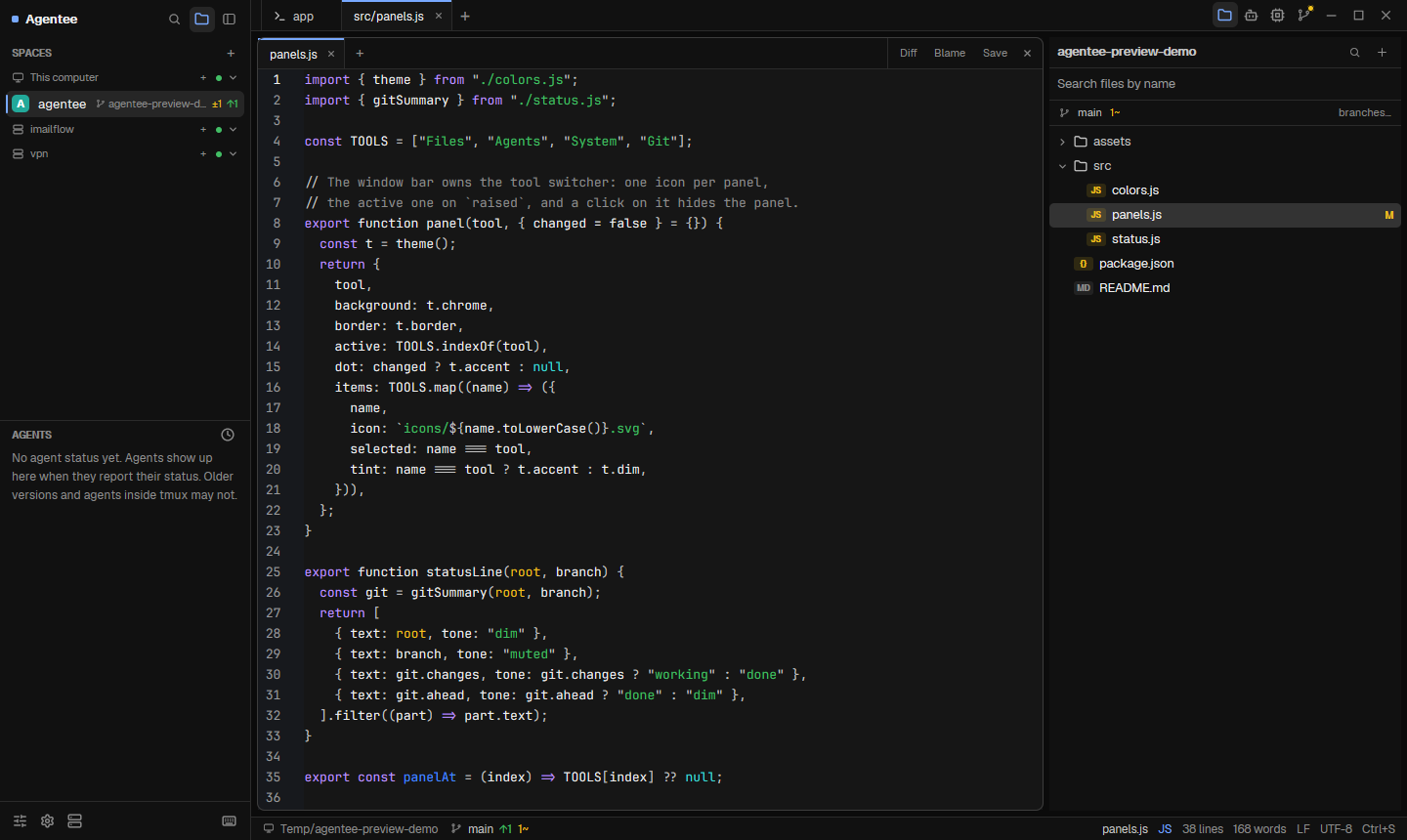
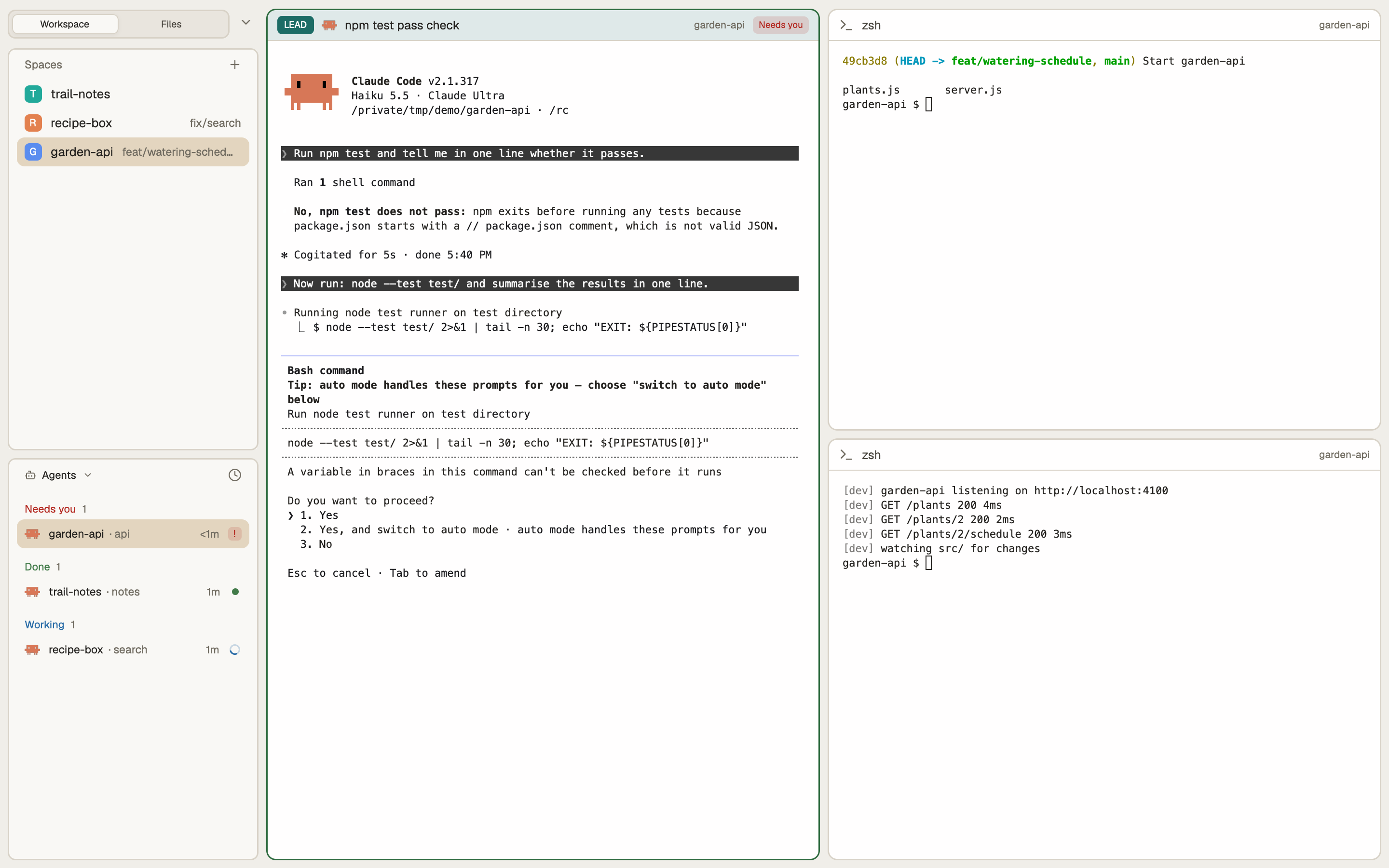
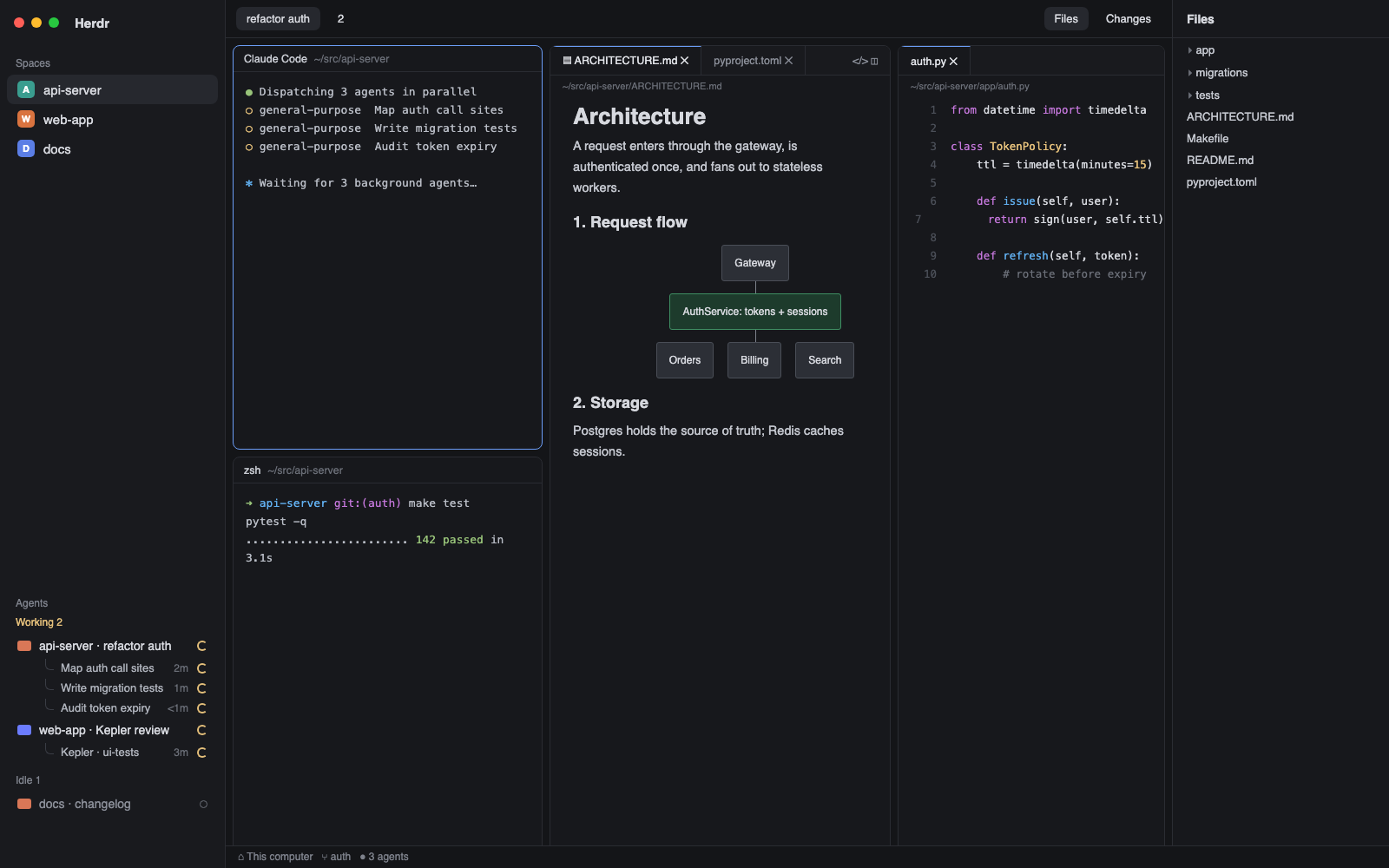
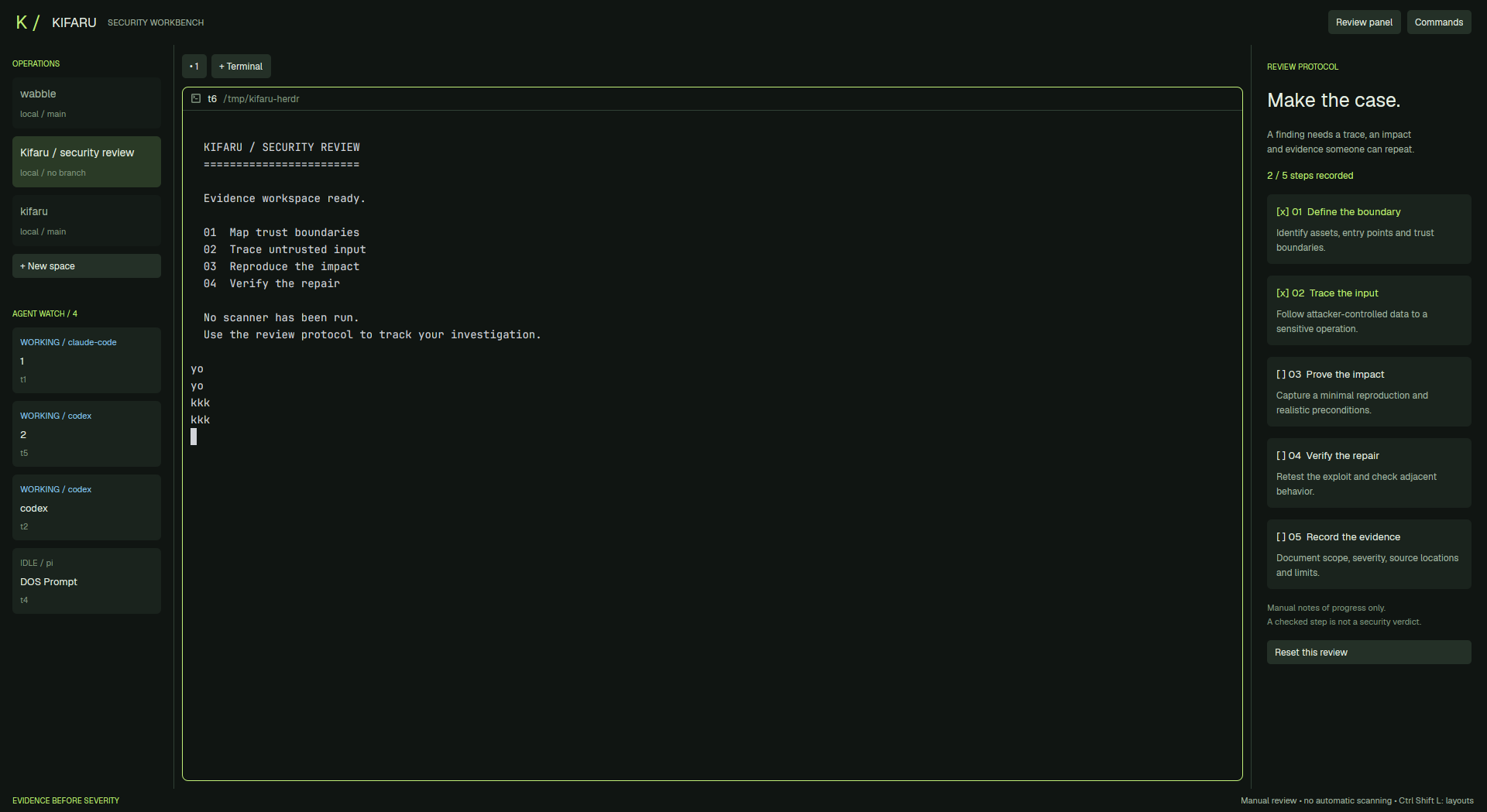
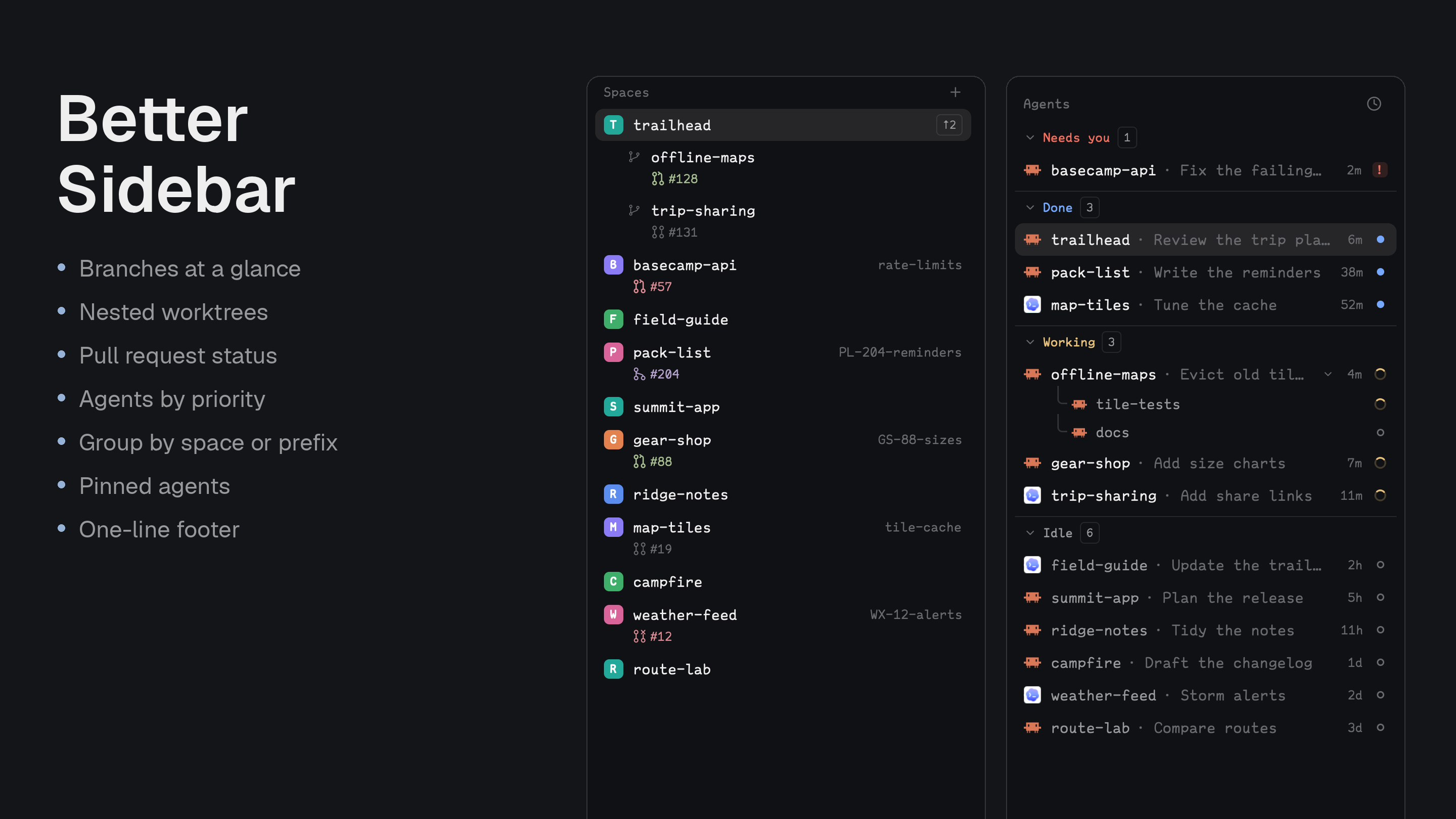
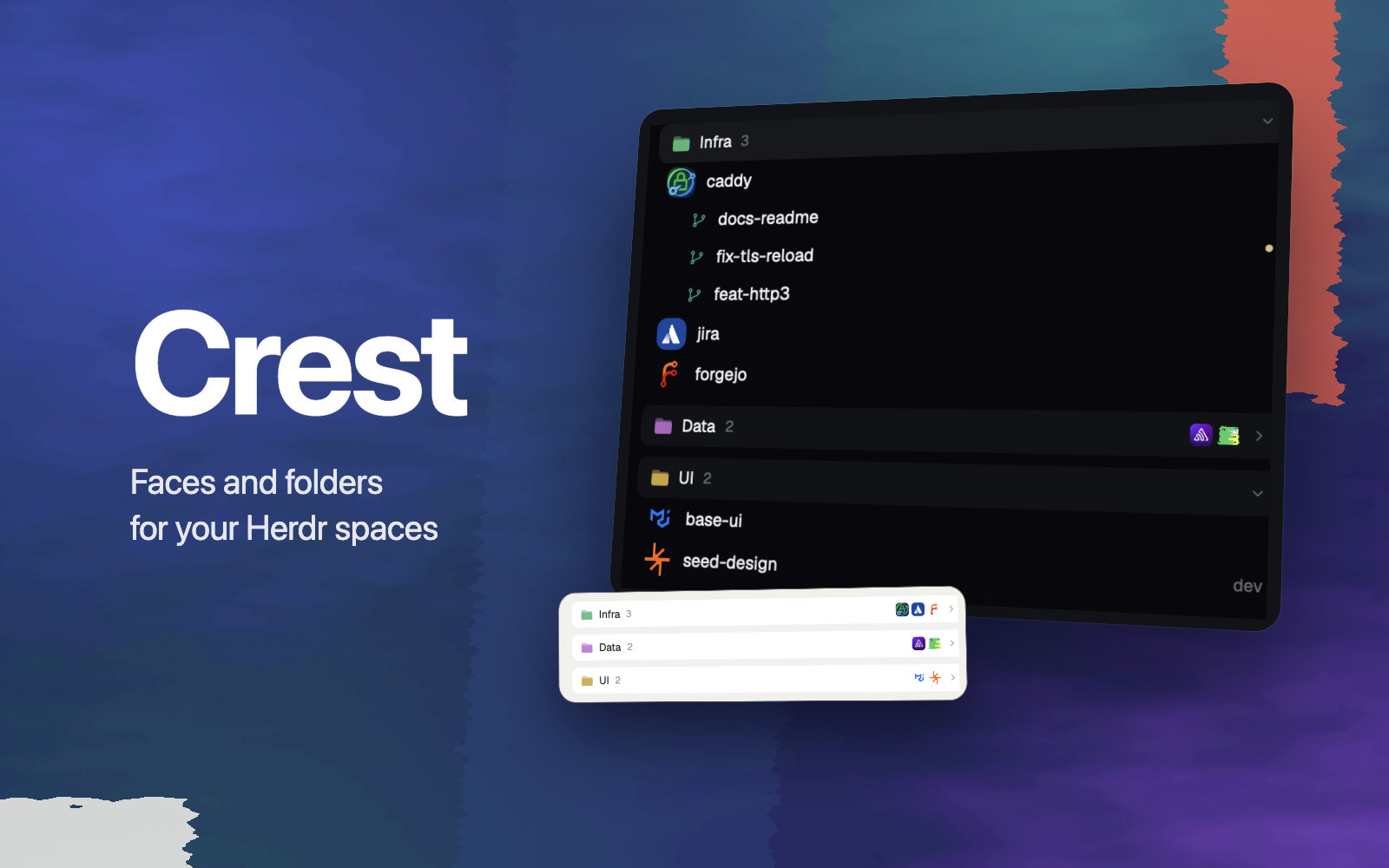
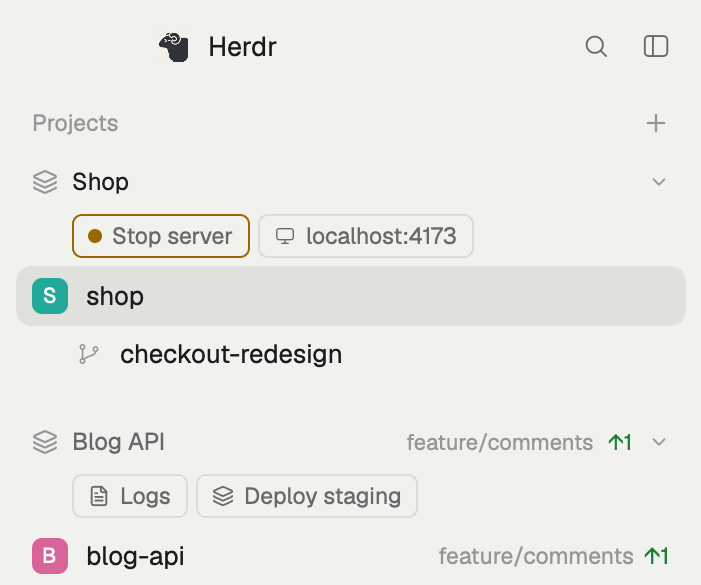
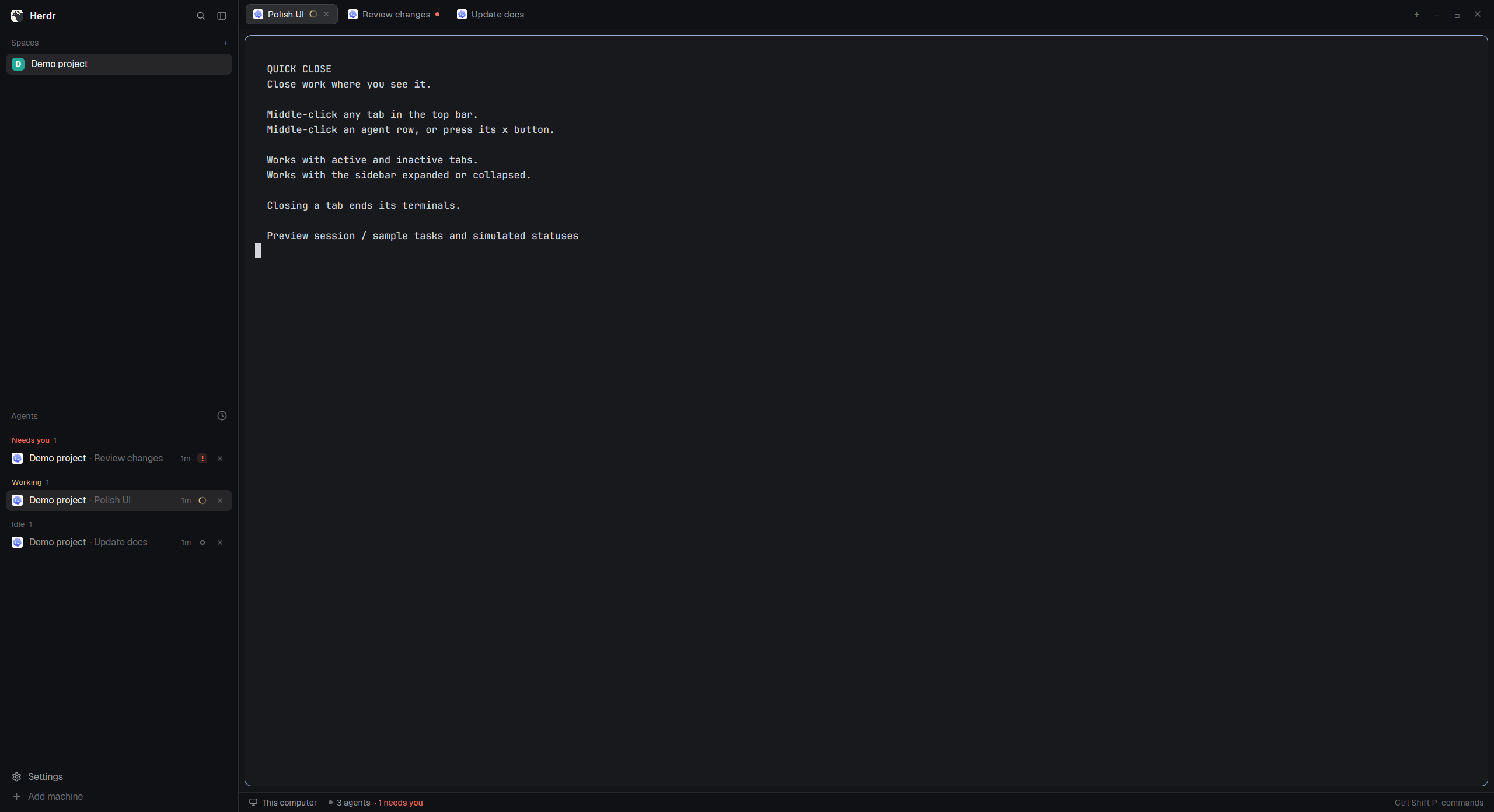
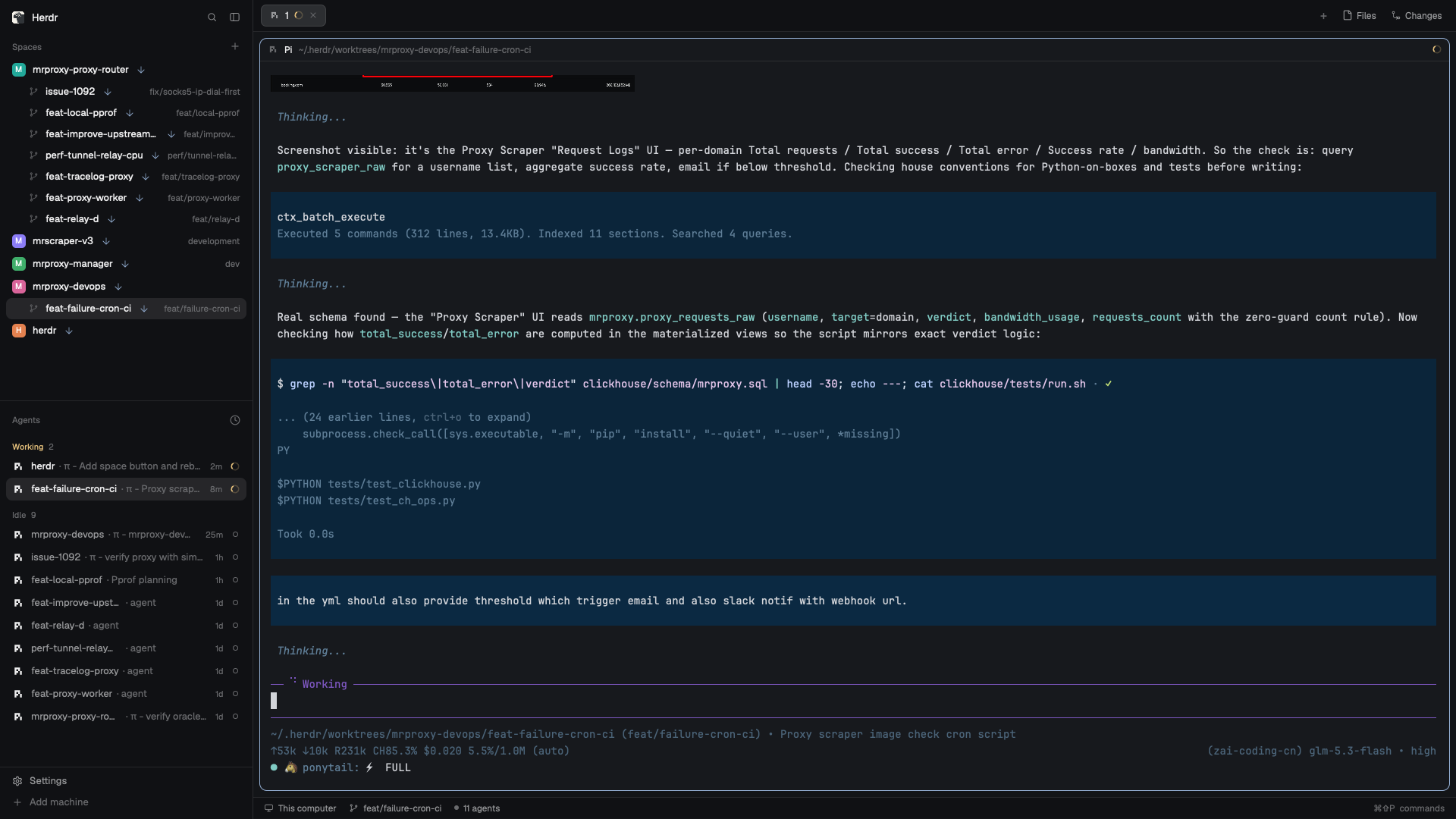
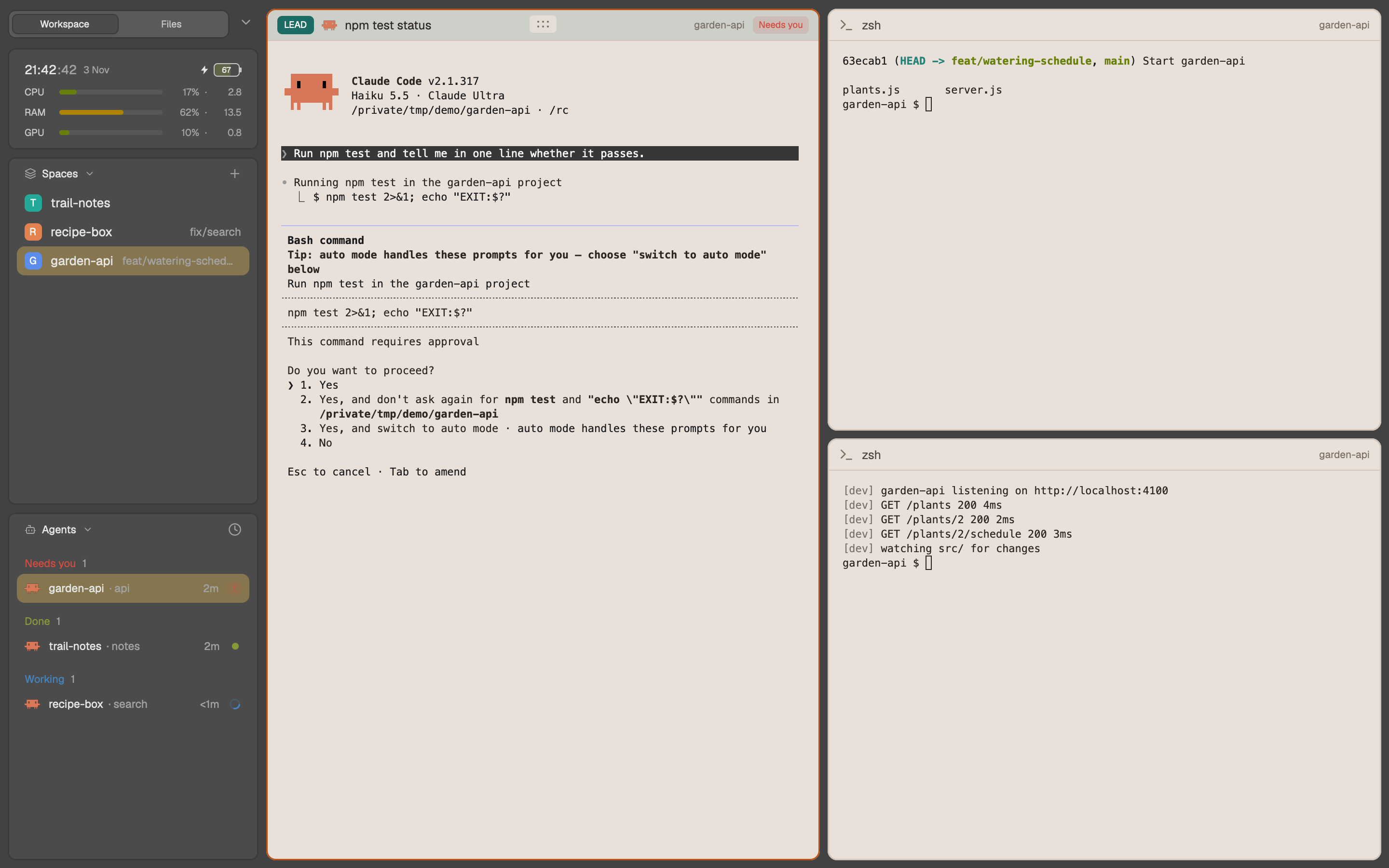
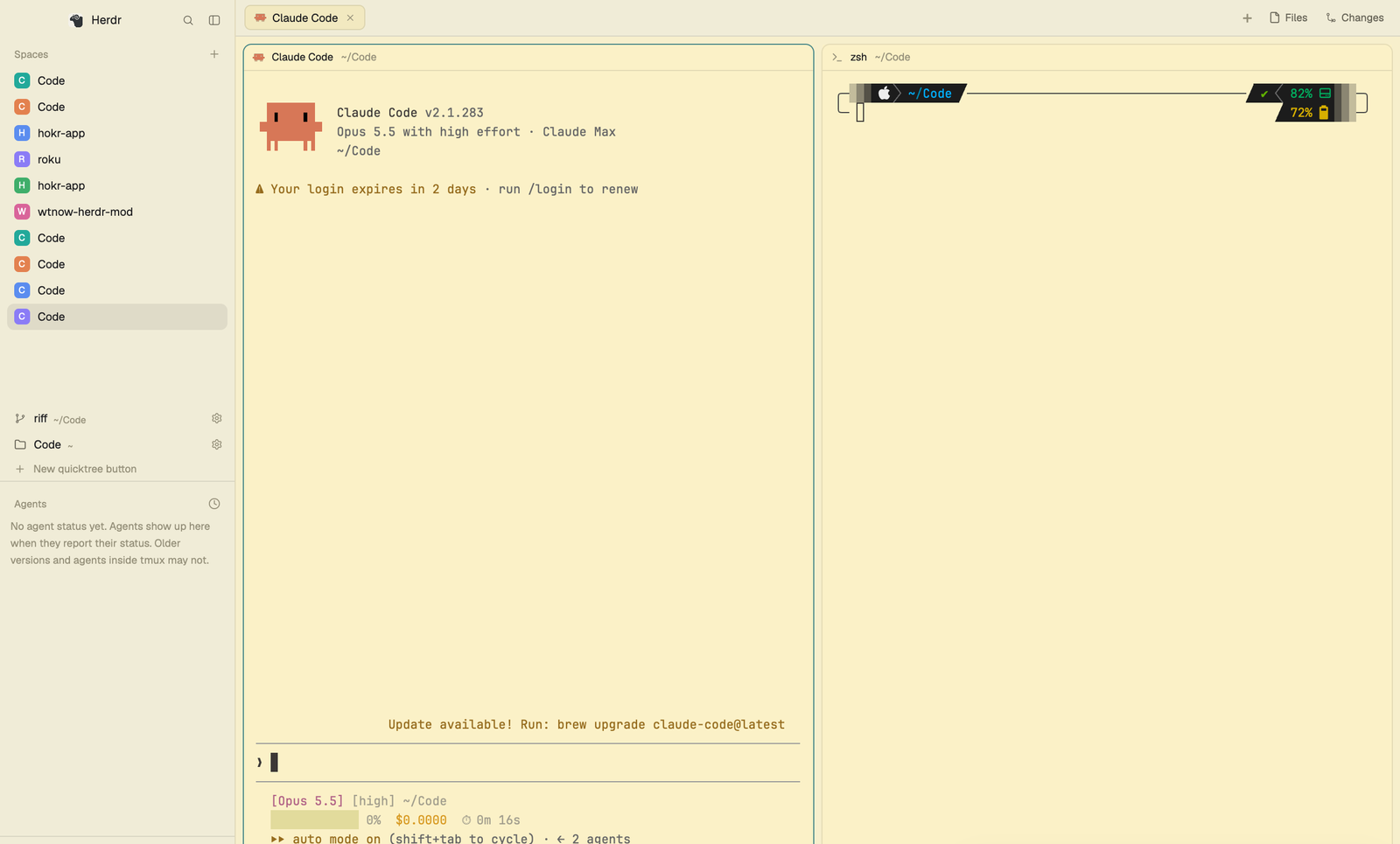
The window is Herdr's main layout with two changes. In the left sidebar, the agents list puts your agents in folders that you make. Each folder has a name and a color. You move an agent with a drag or a right-click, or a folder rule moves it for you. Each pane has a header that can show a title that a tool sets on the terminal.

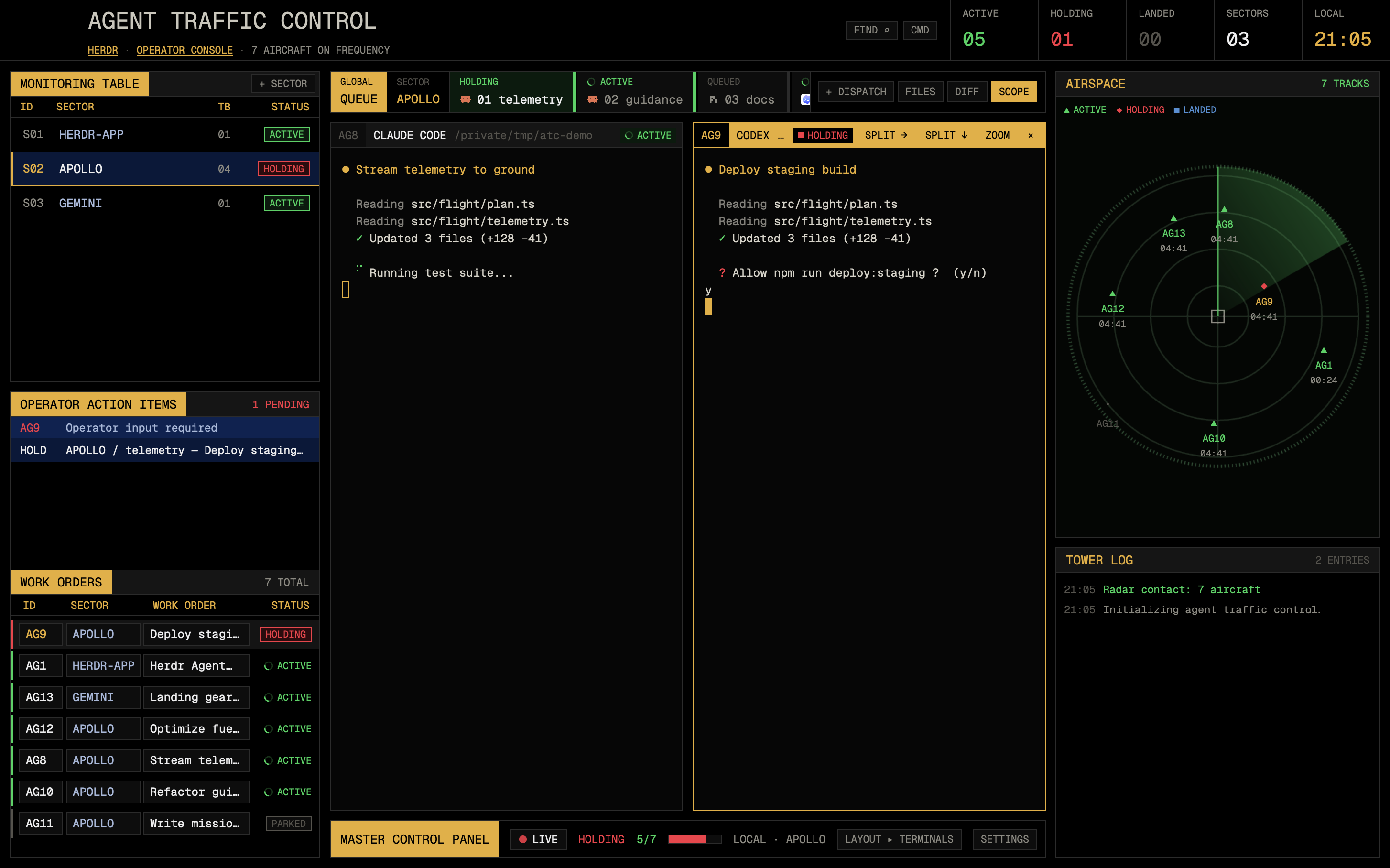

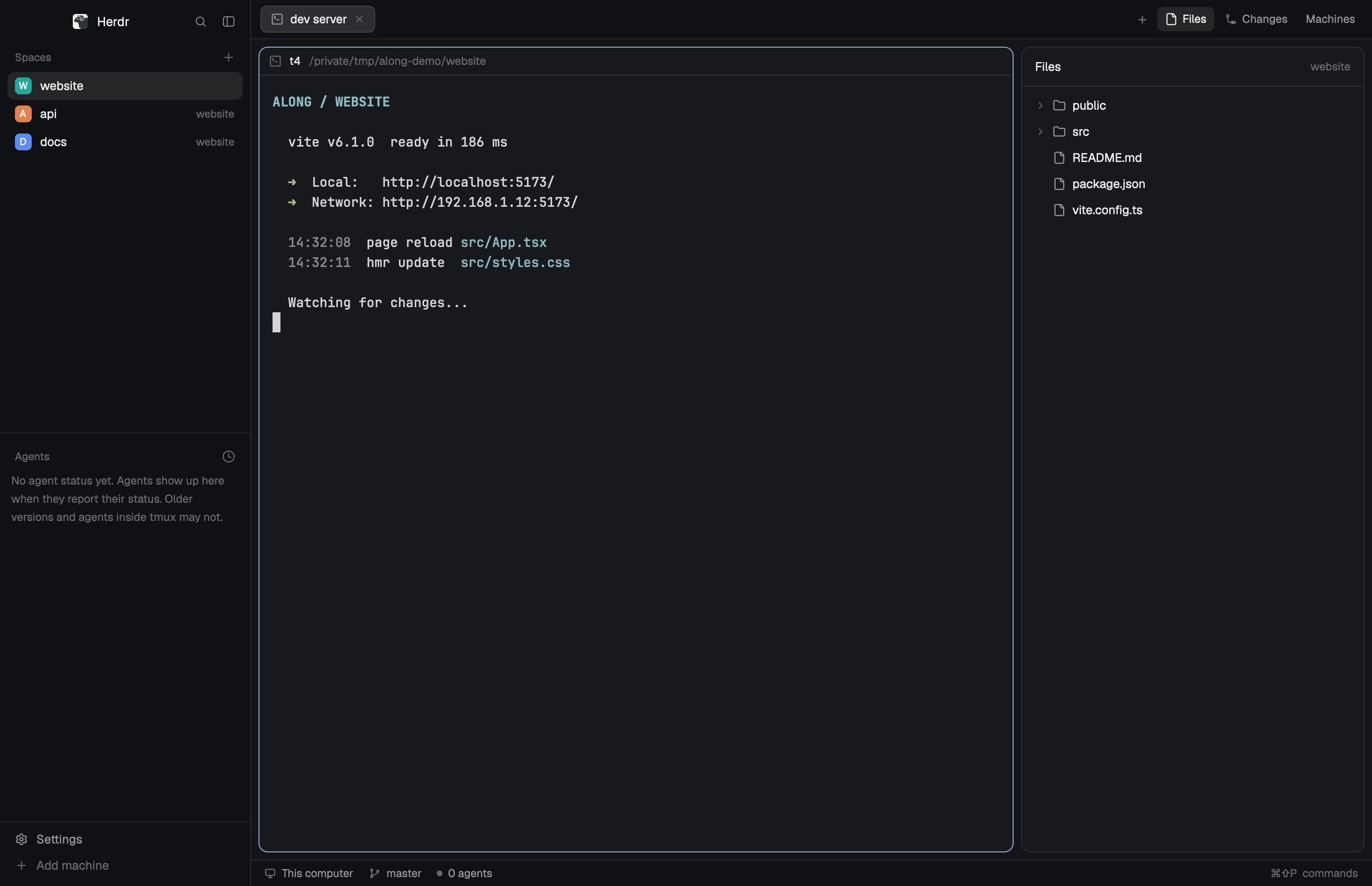

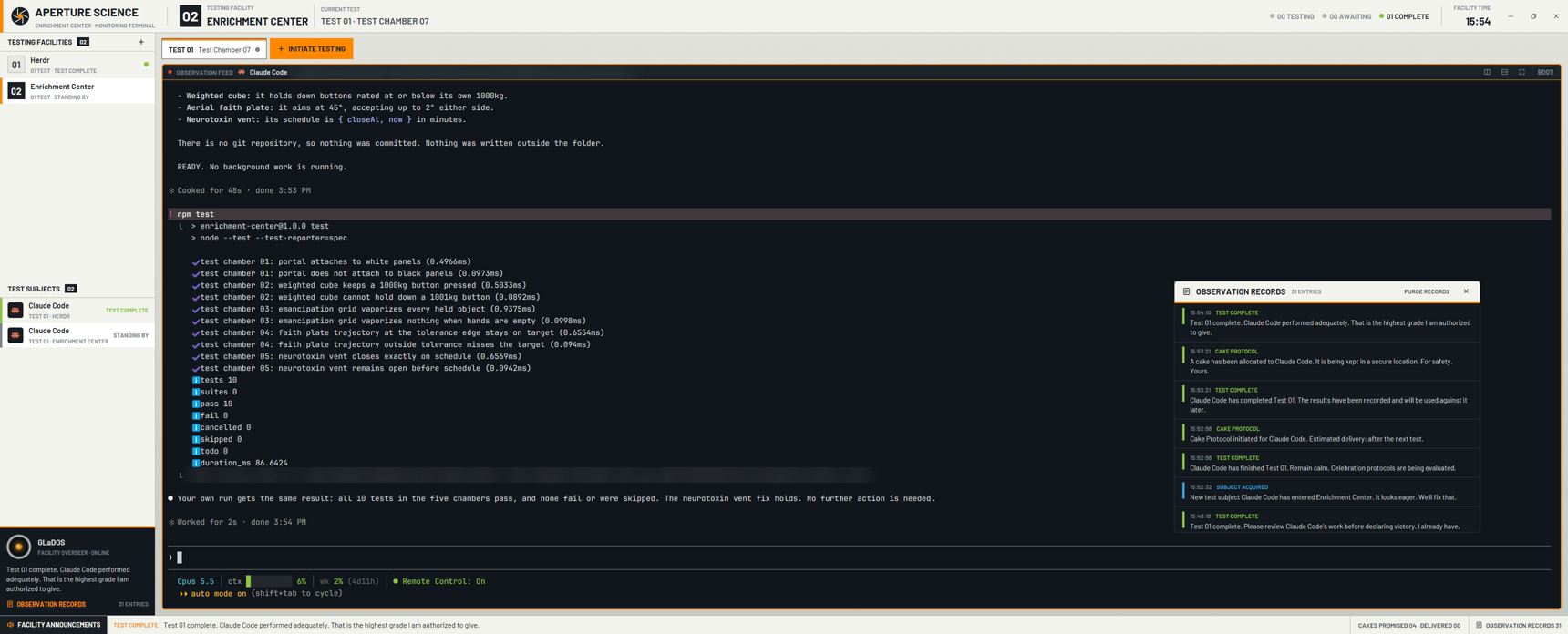

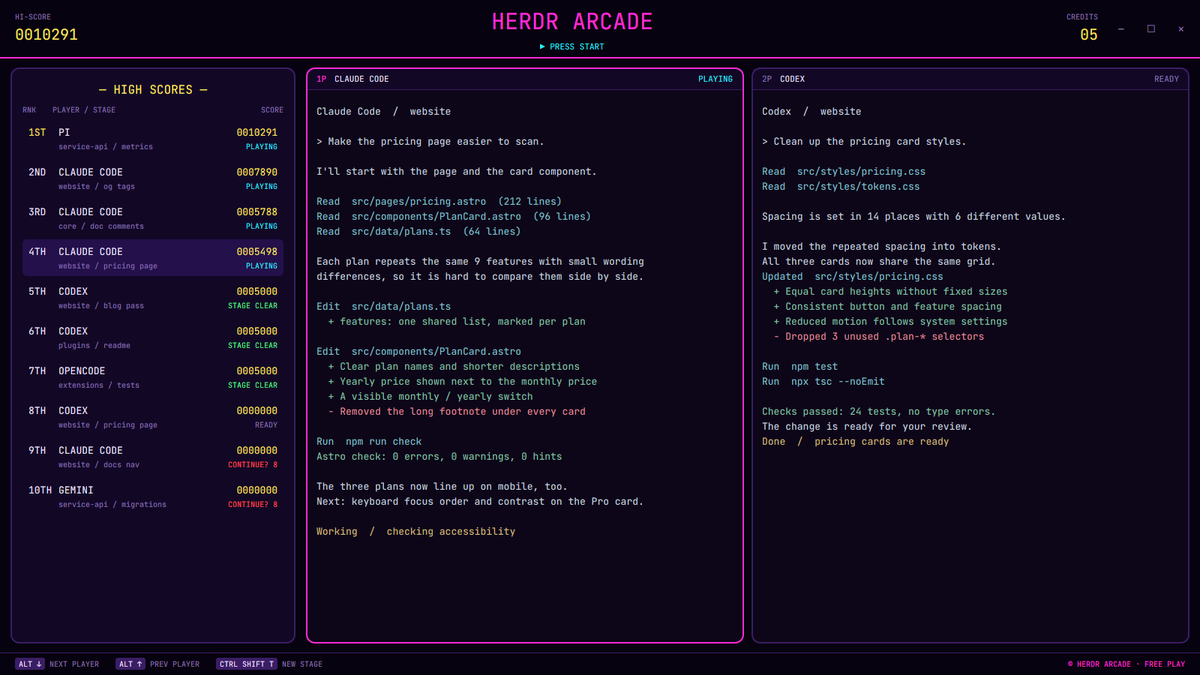

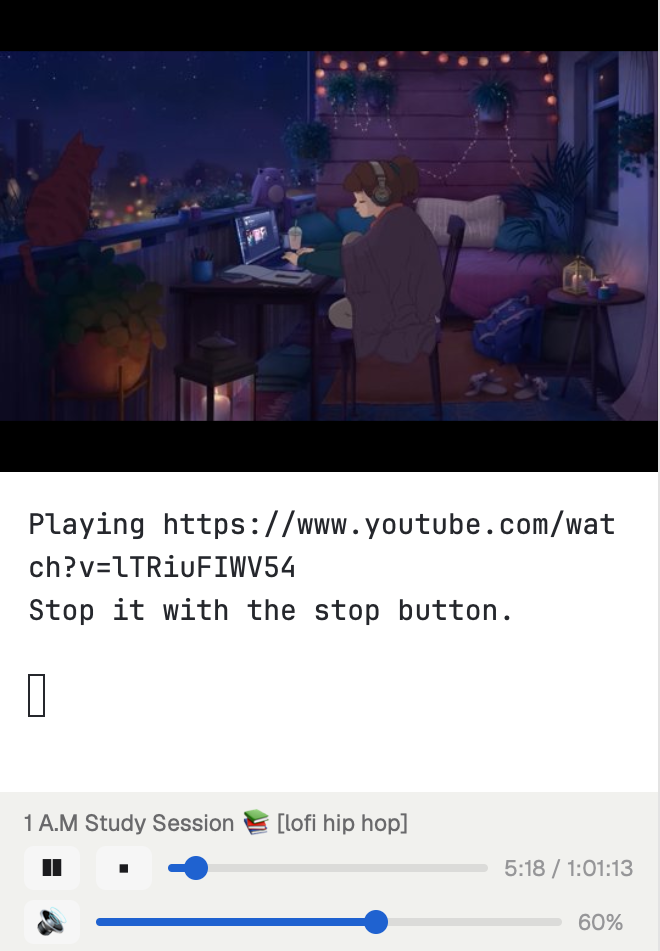

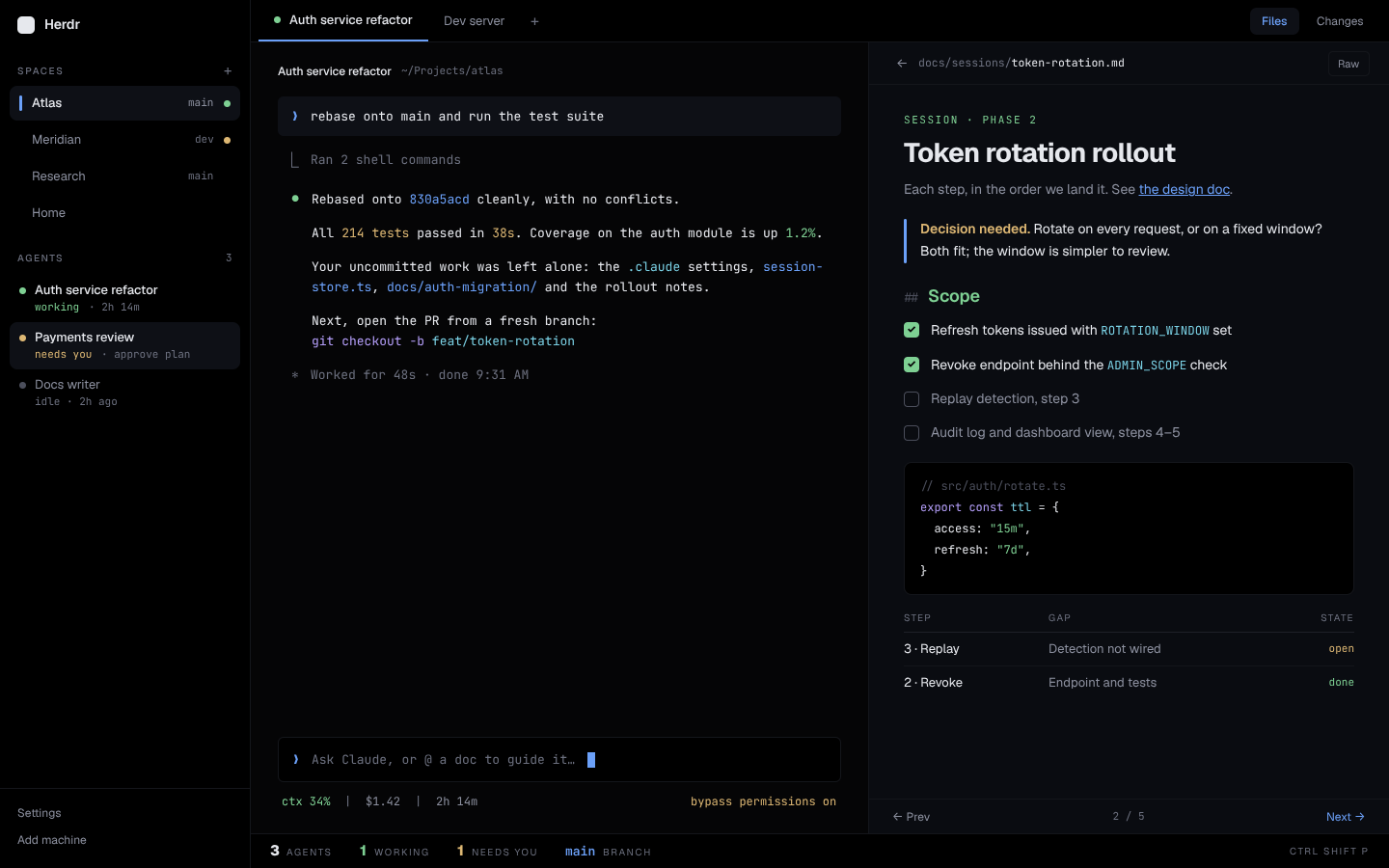


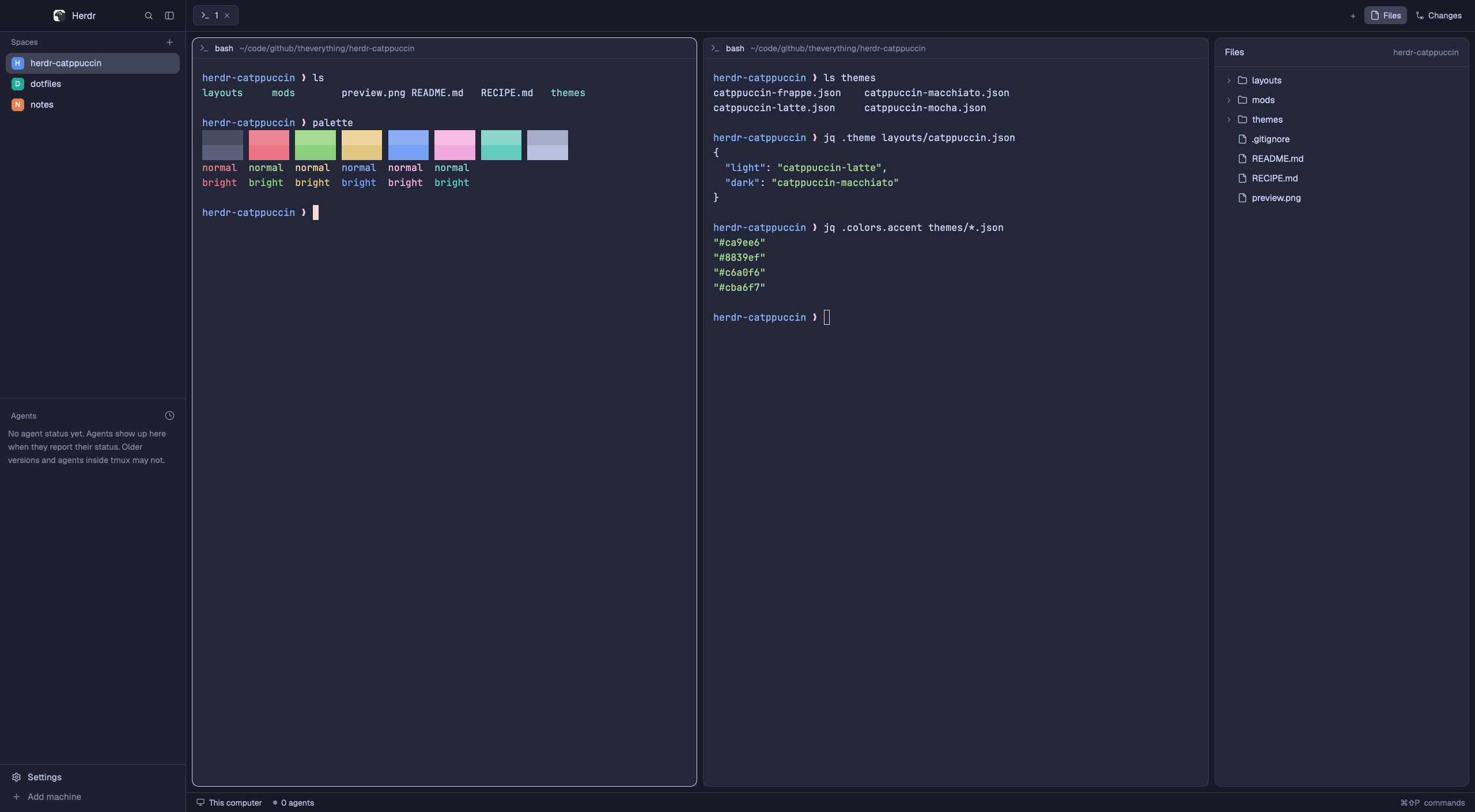



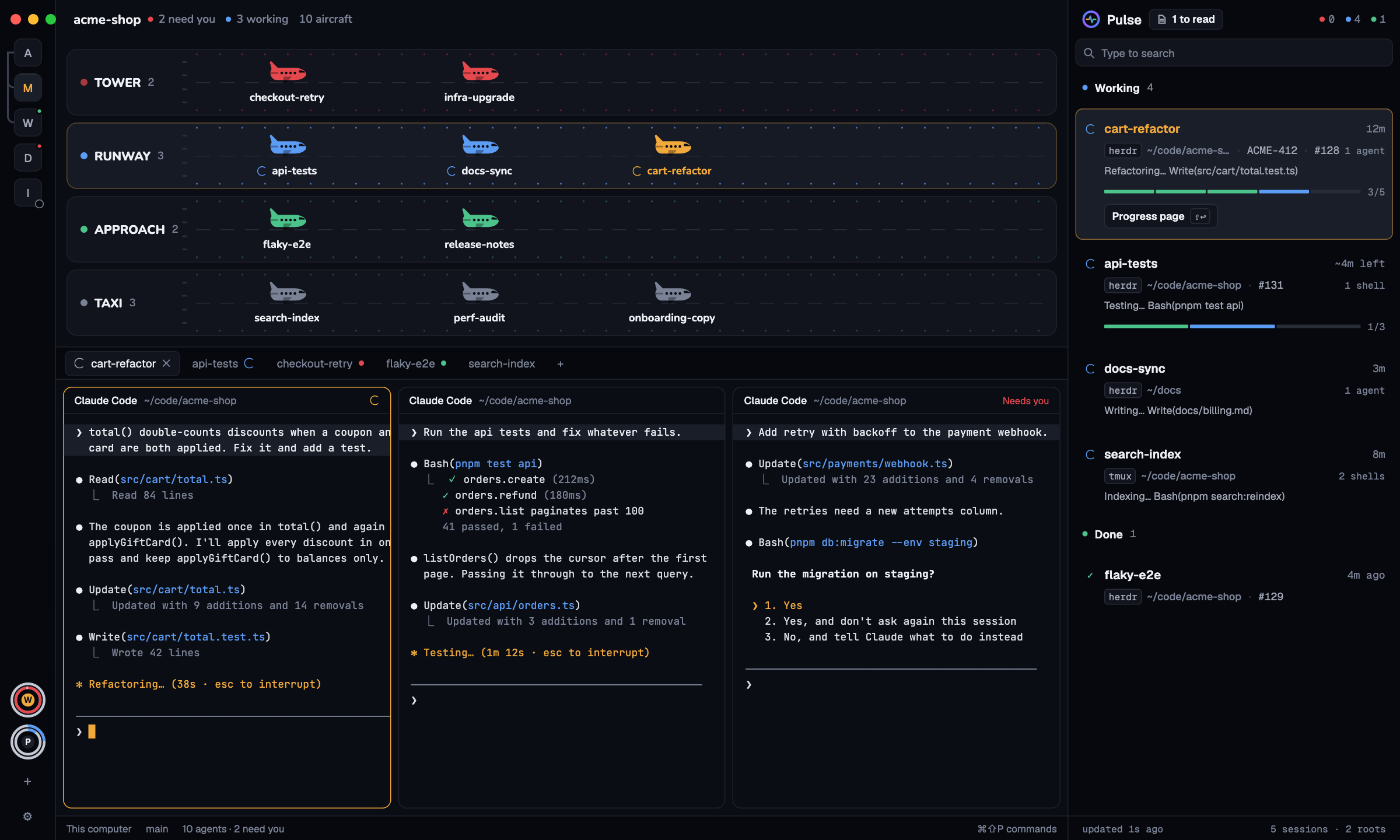

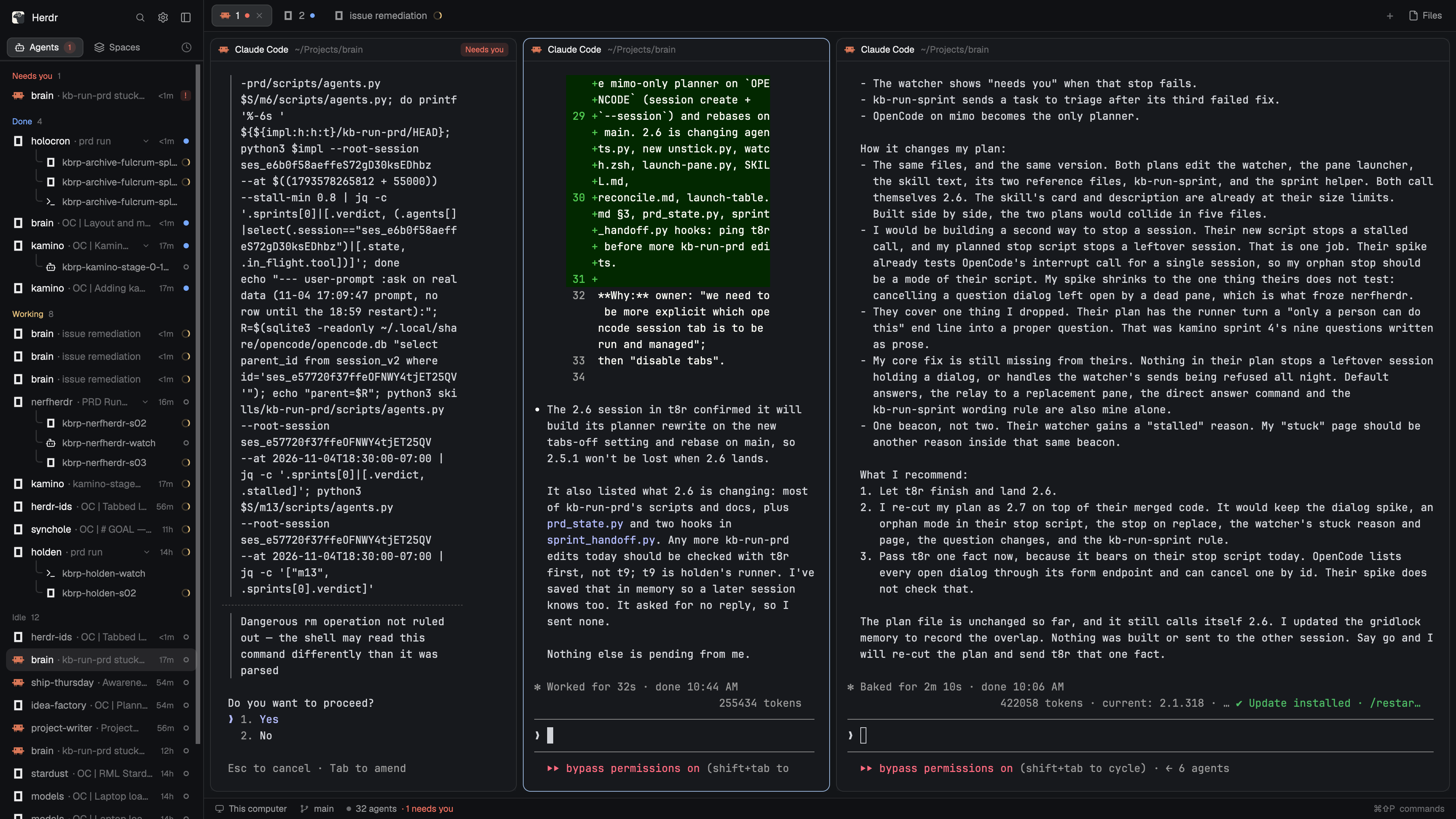






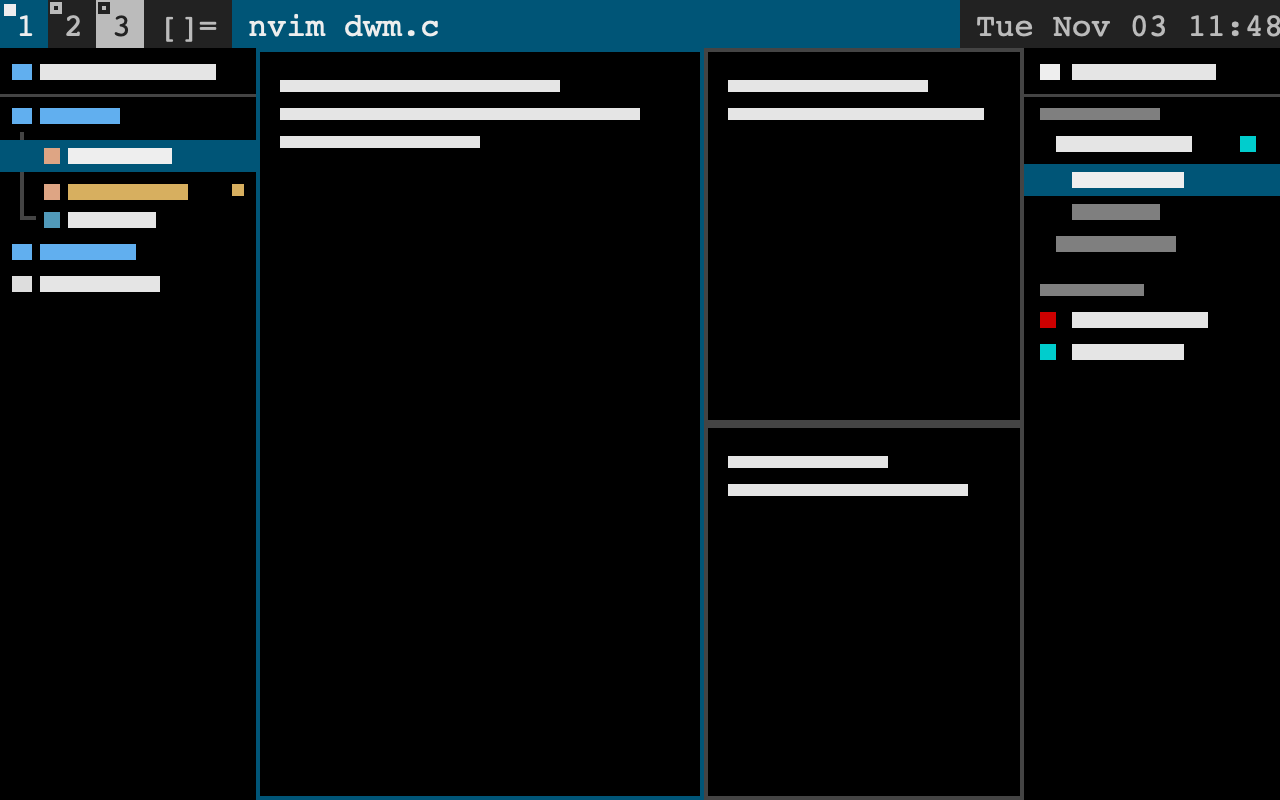

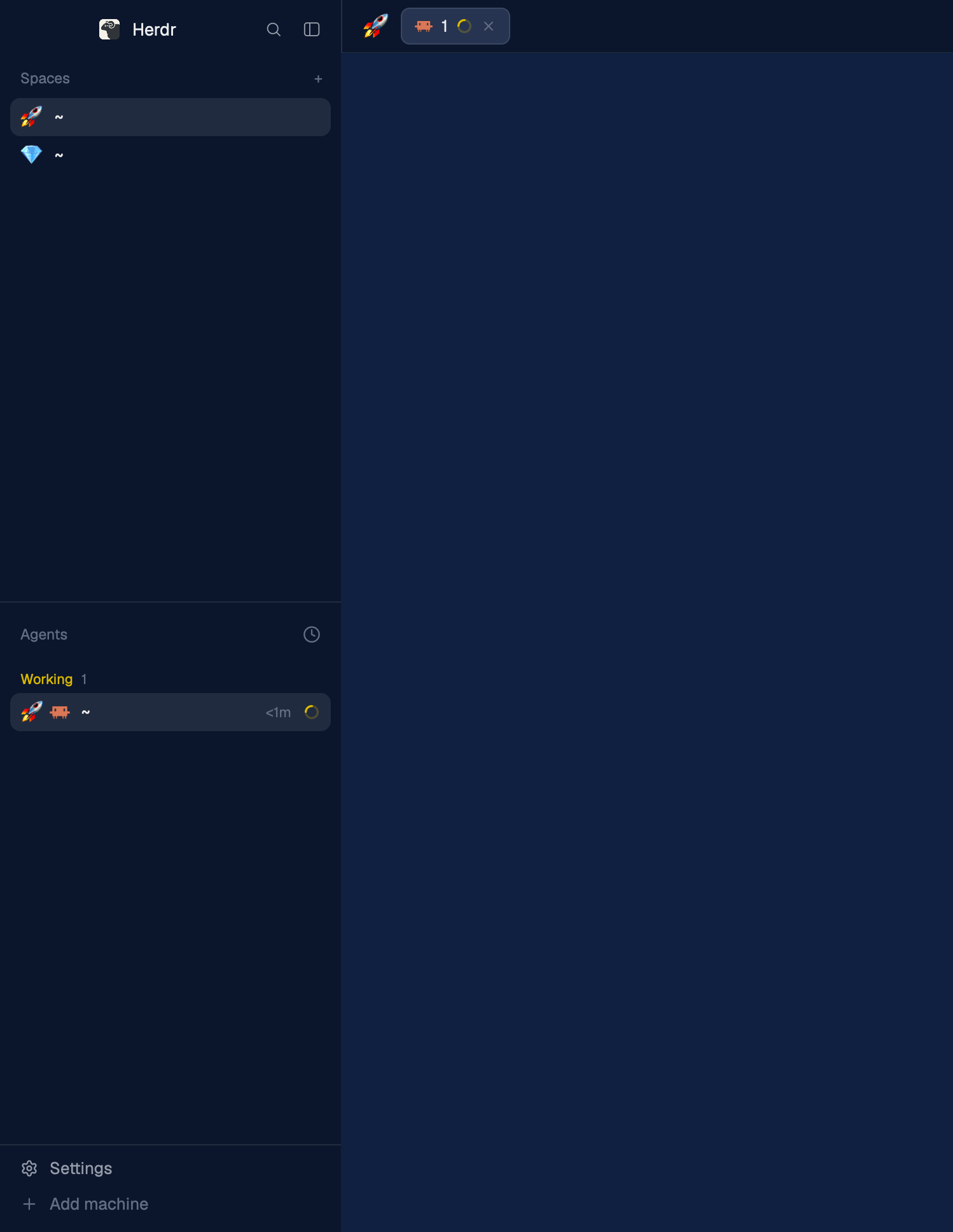

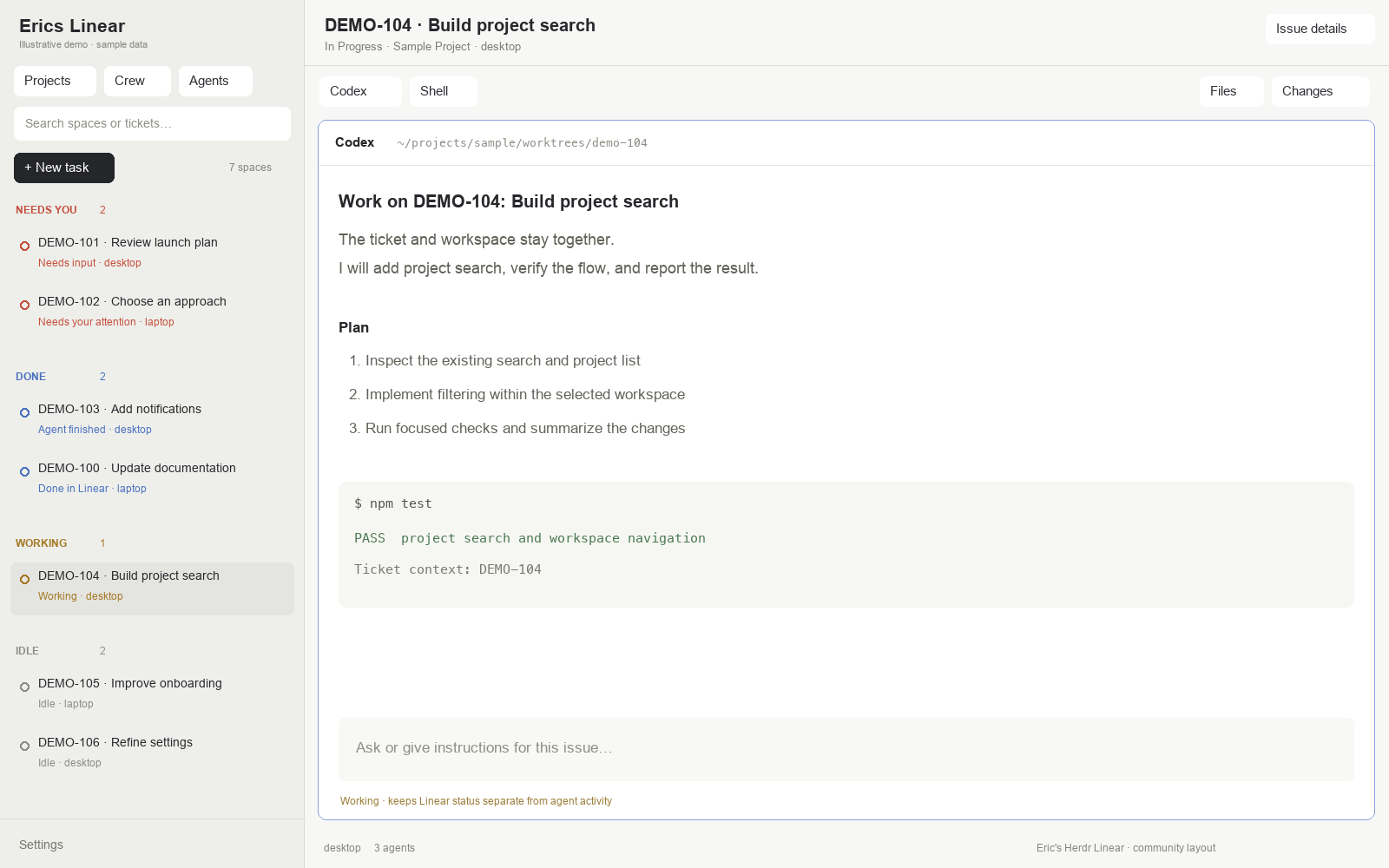

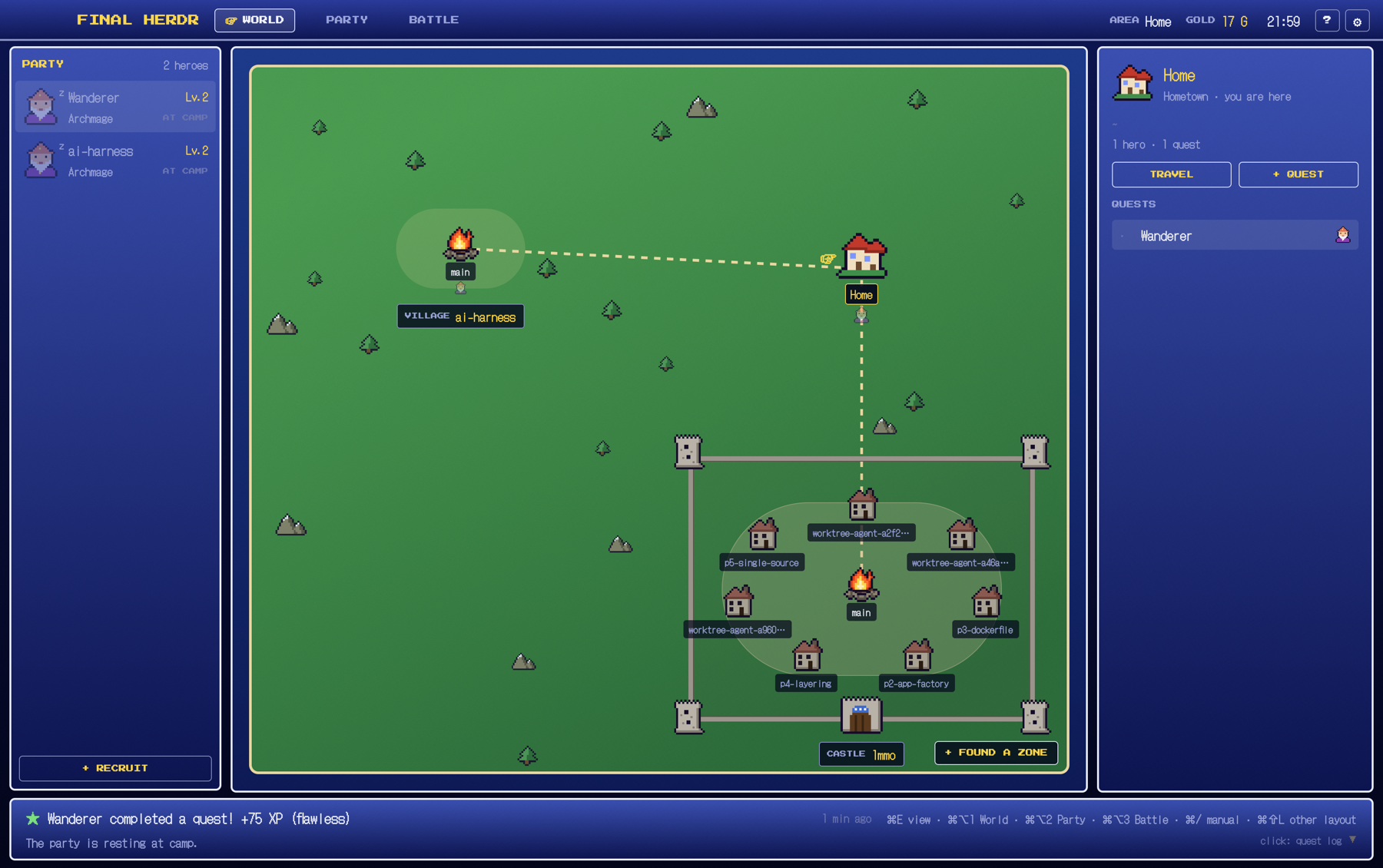

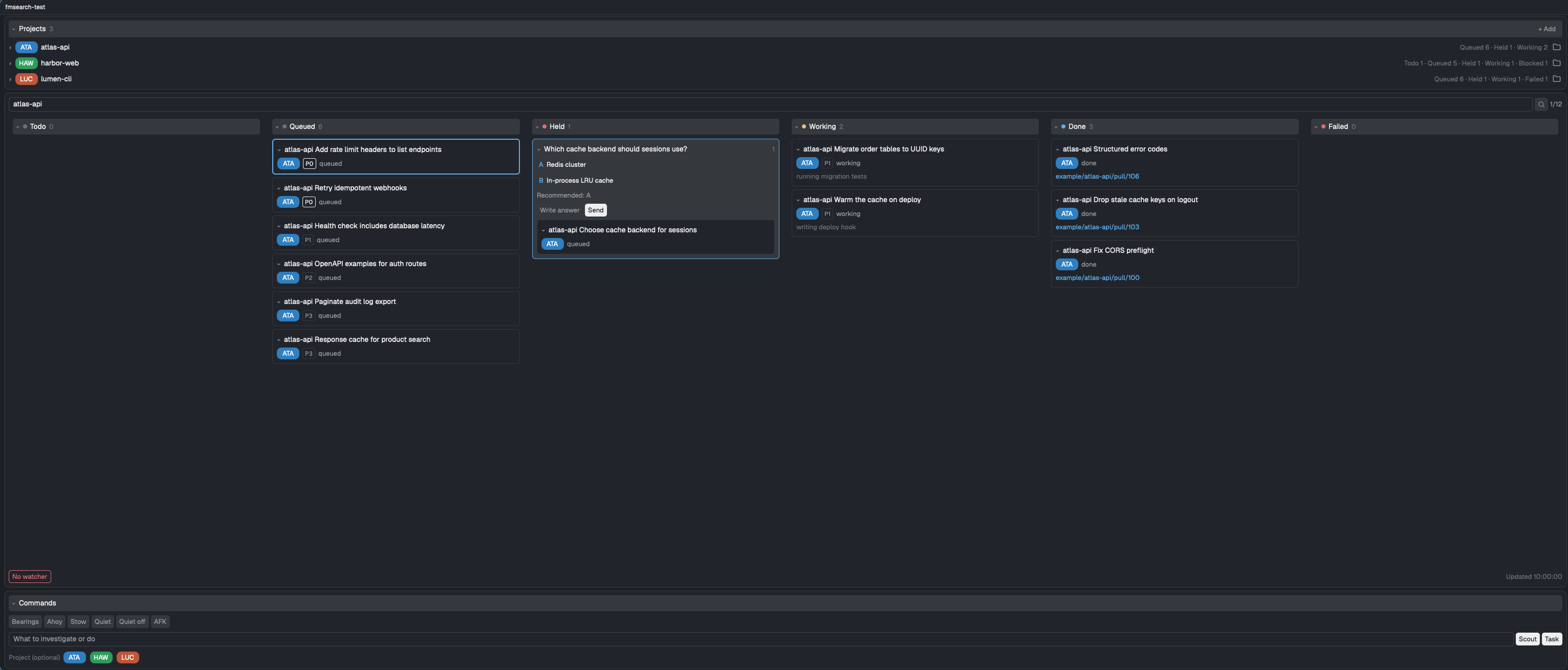

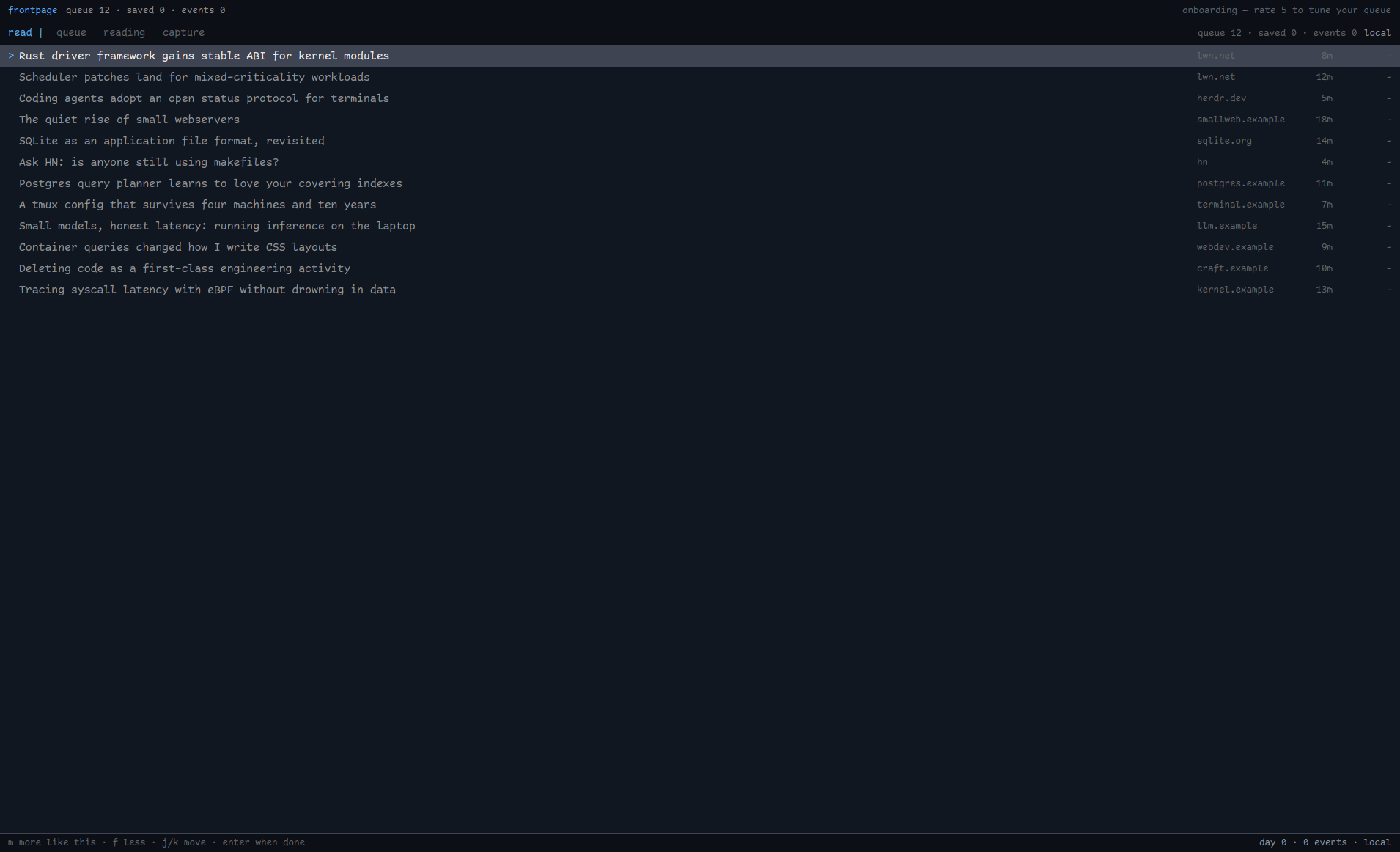

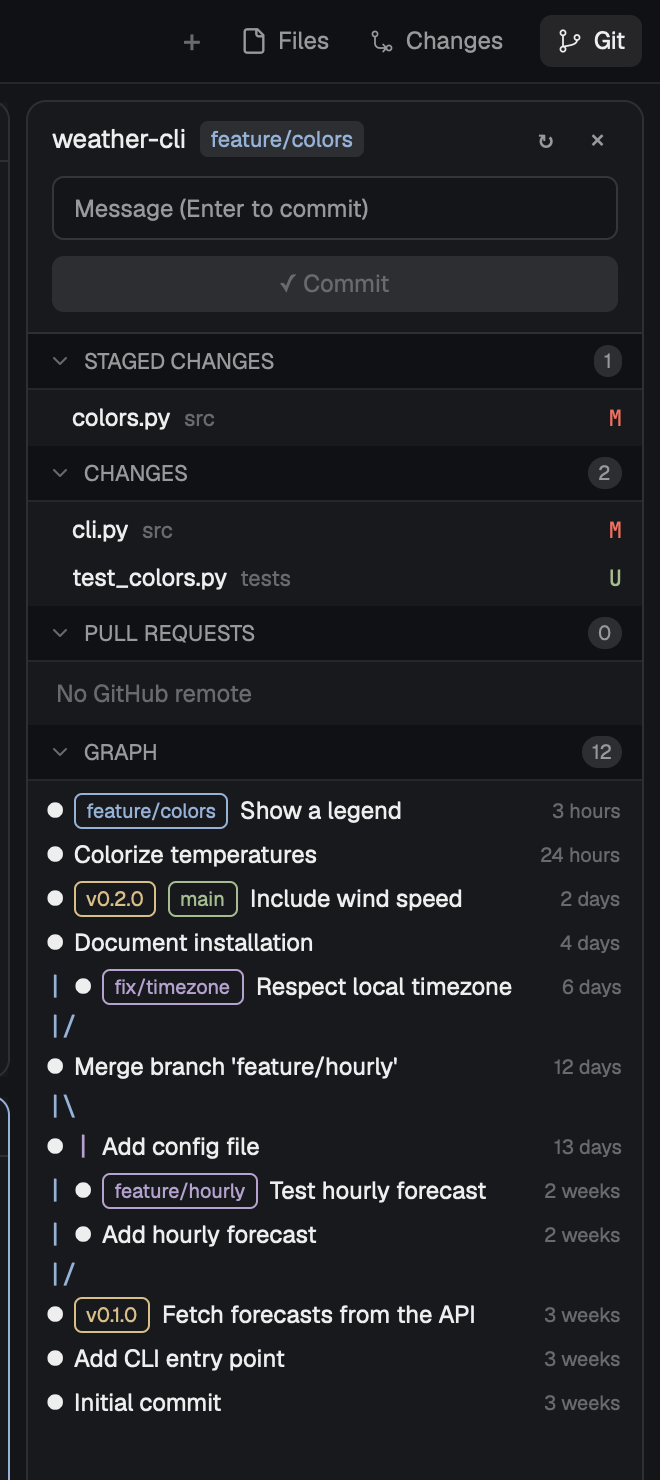

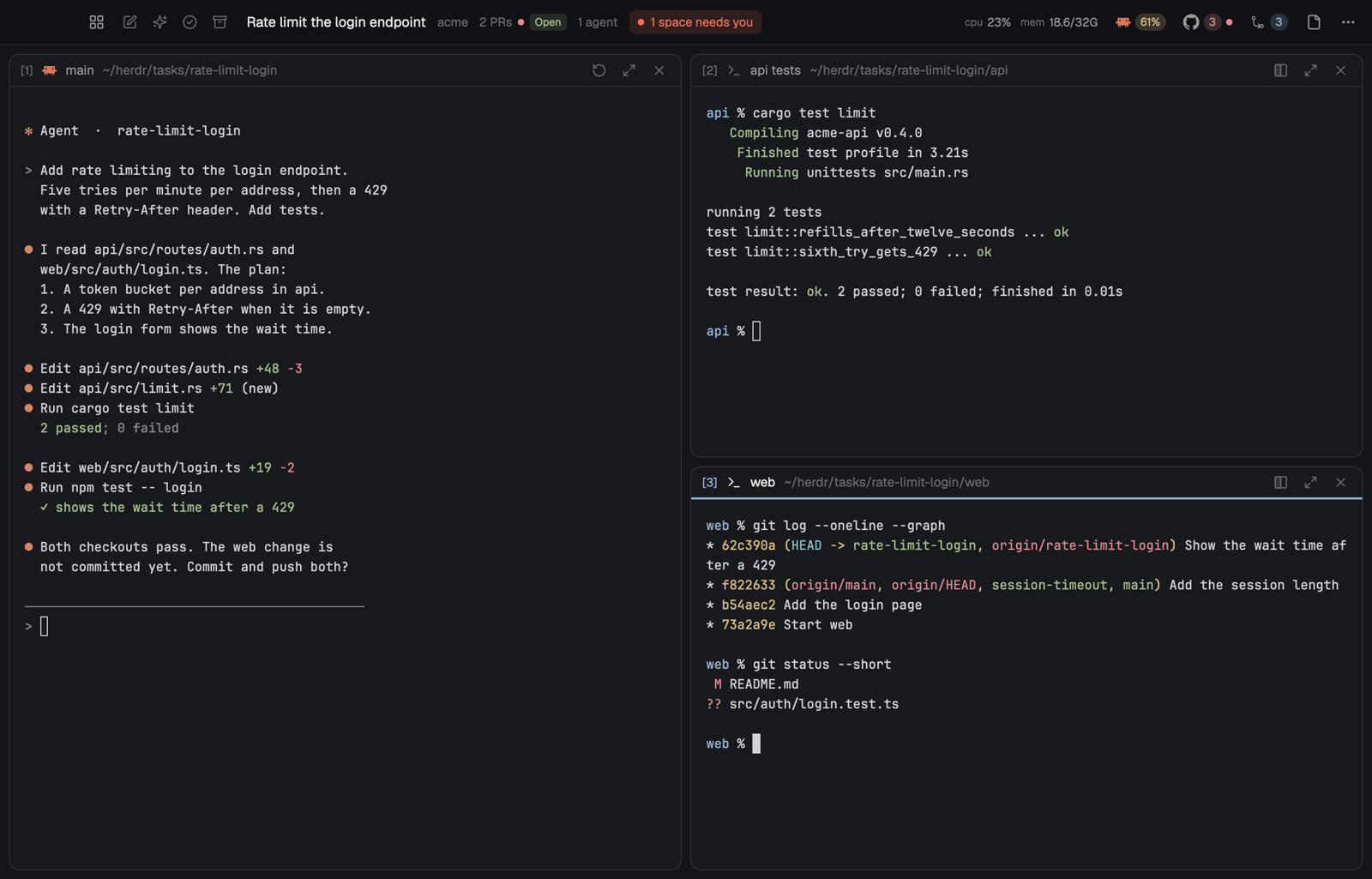

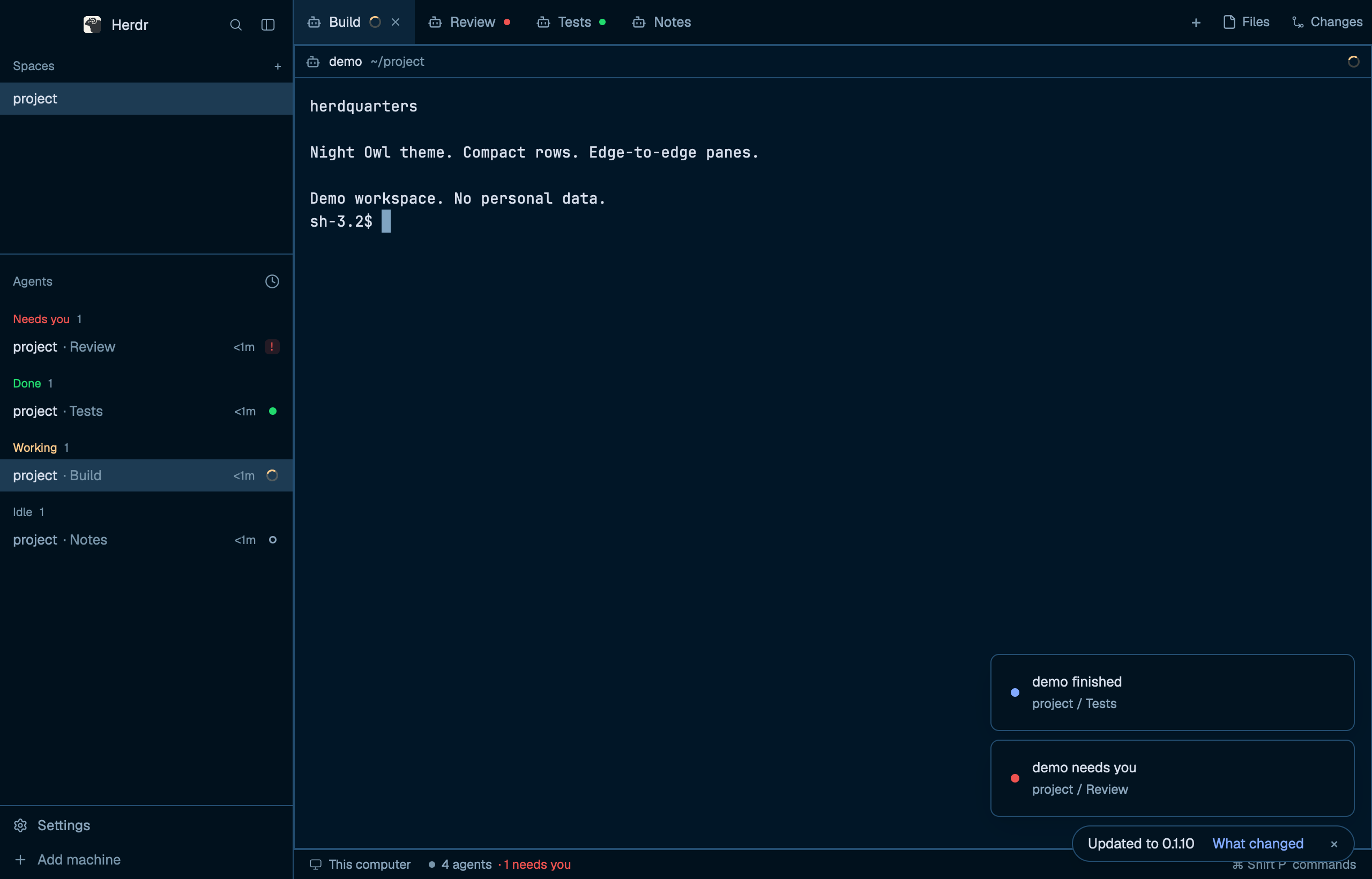




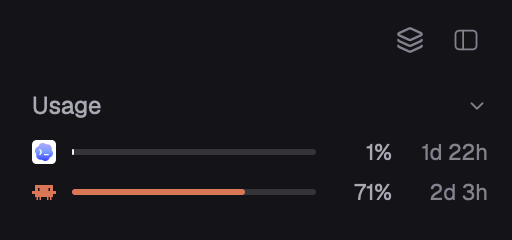
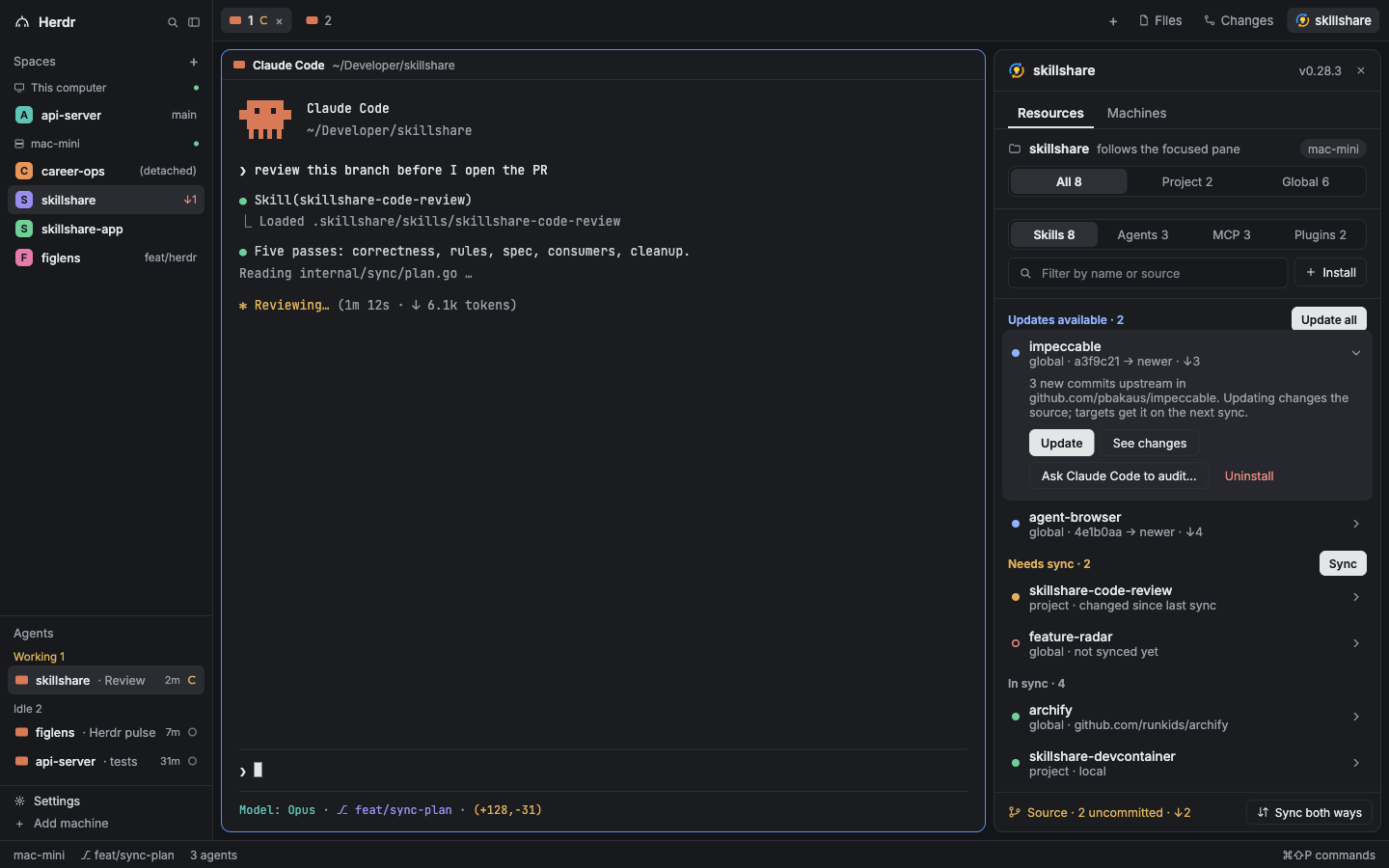
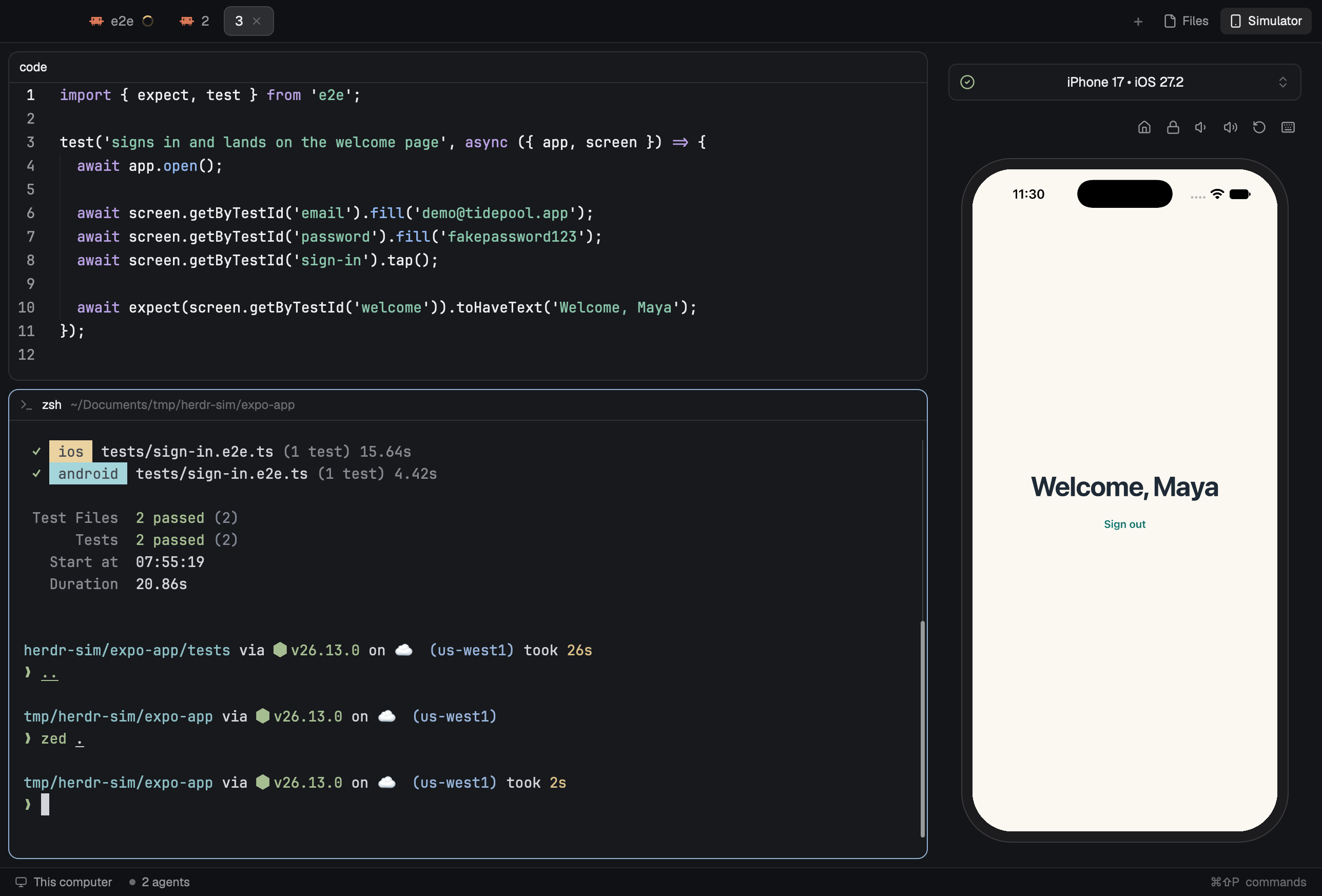
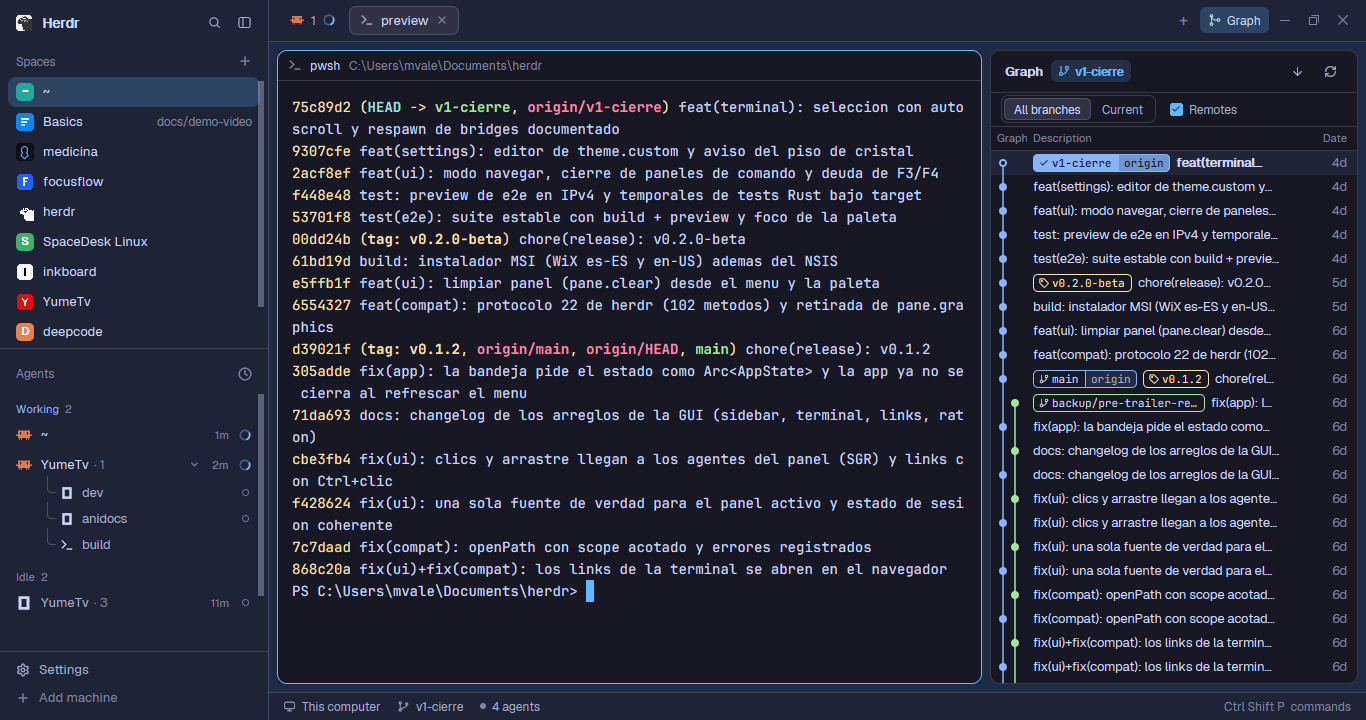
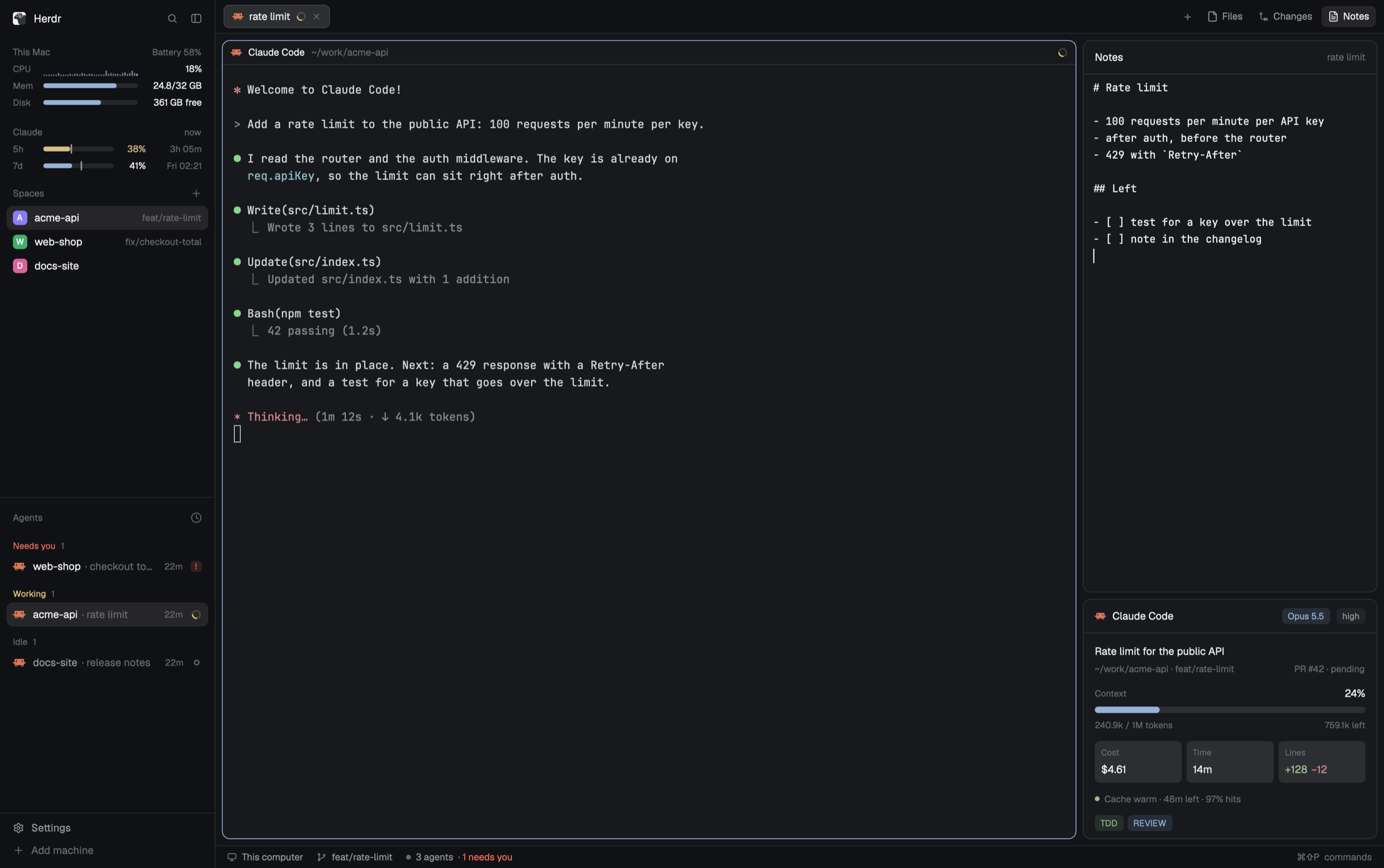
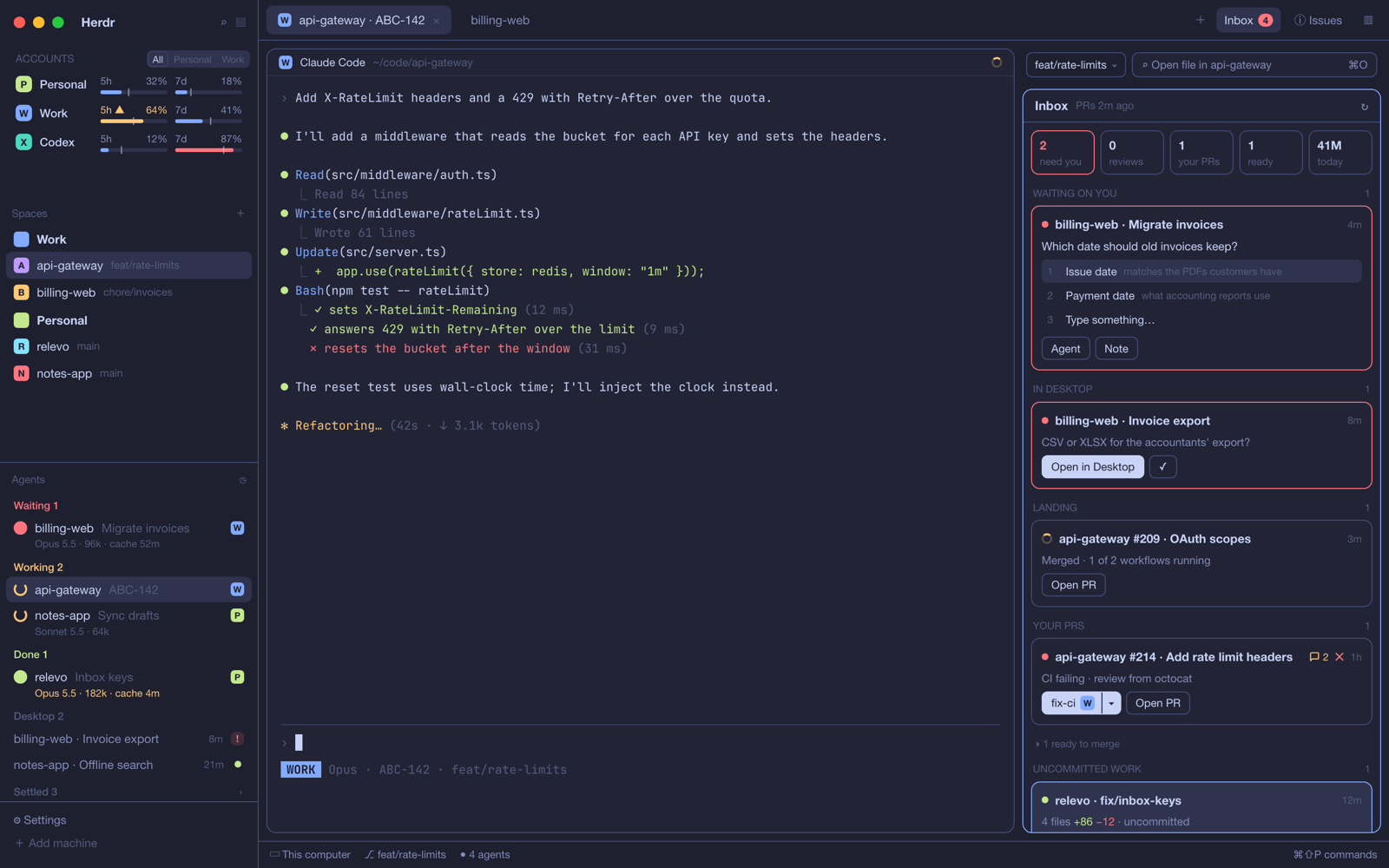
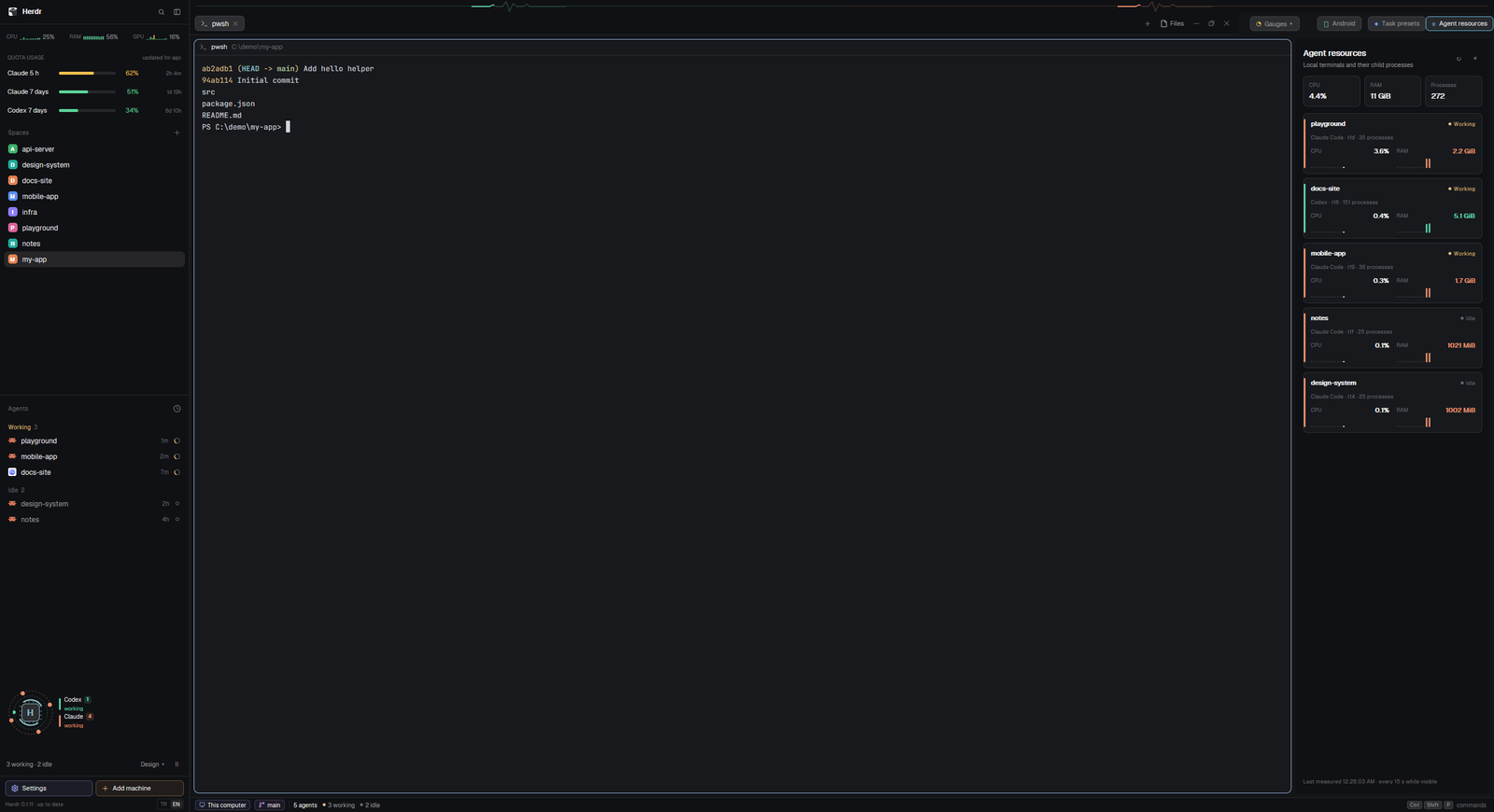
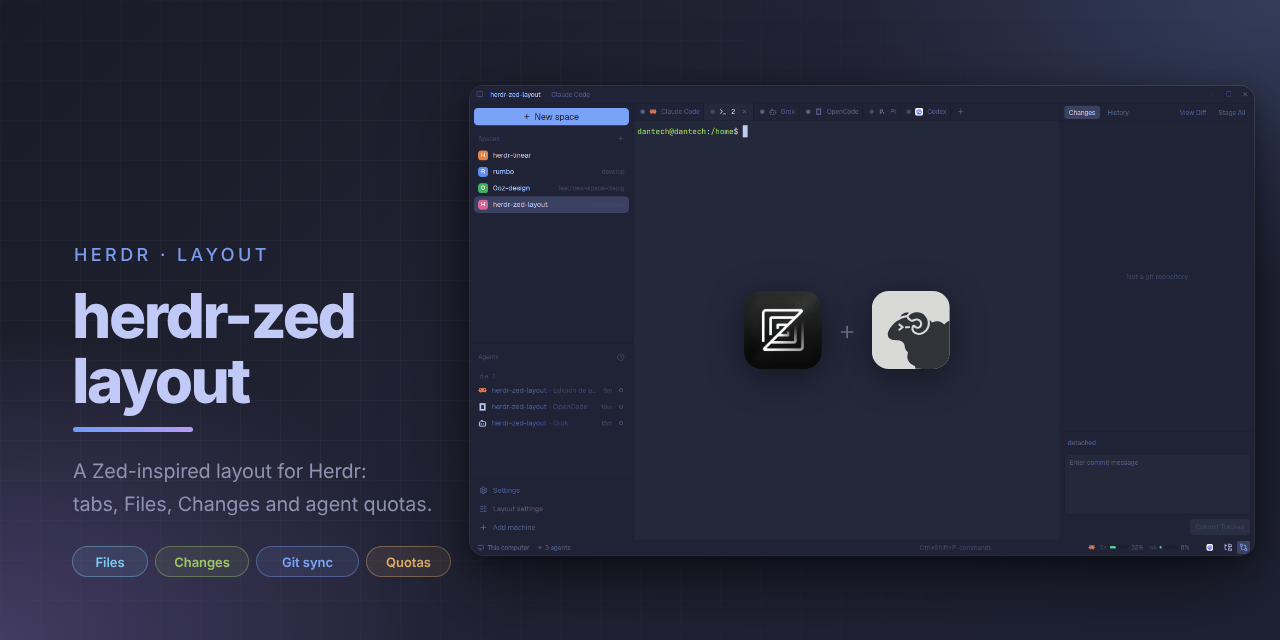
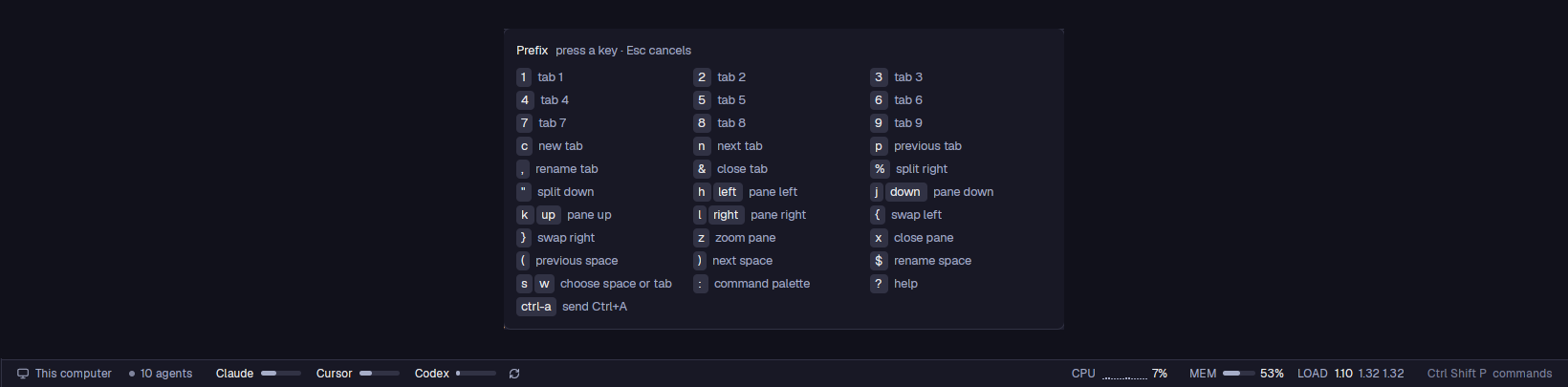
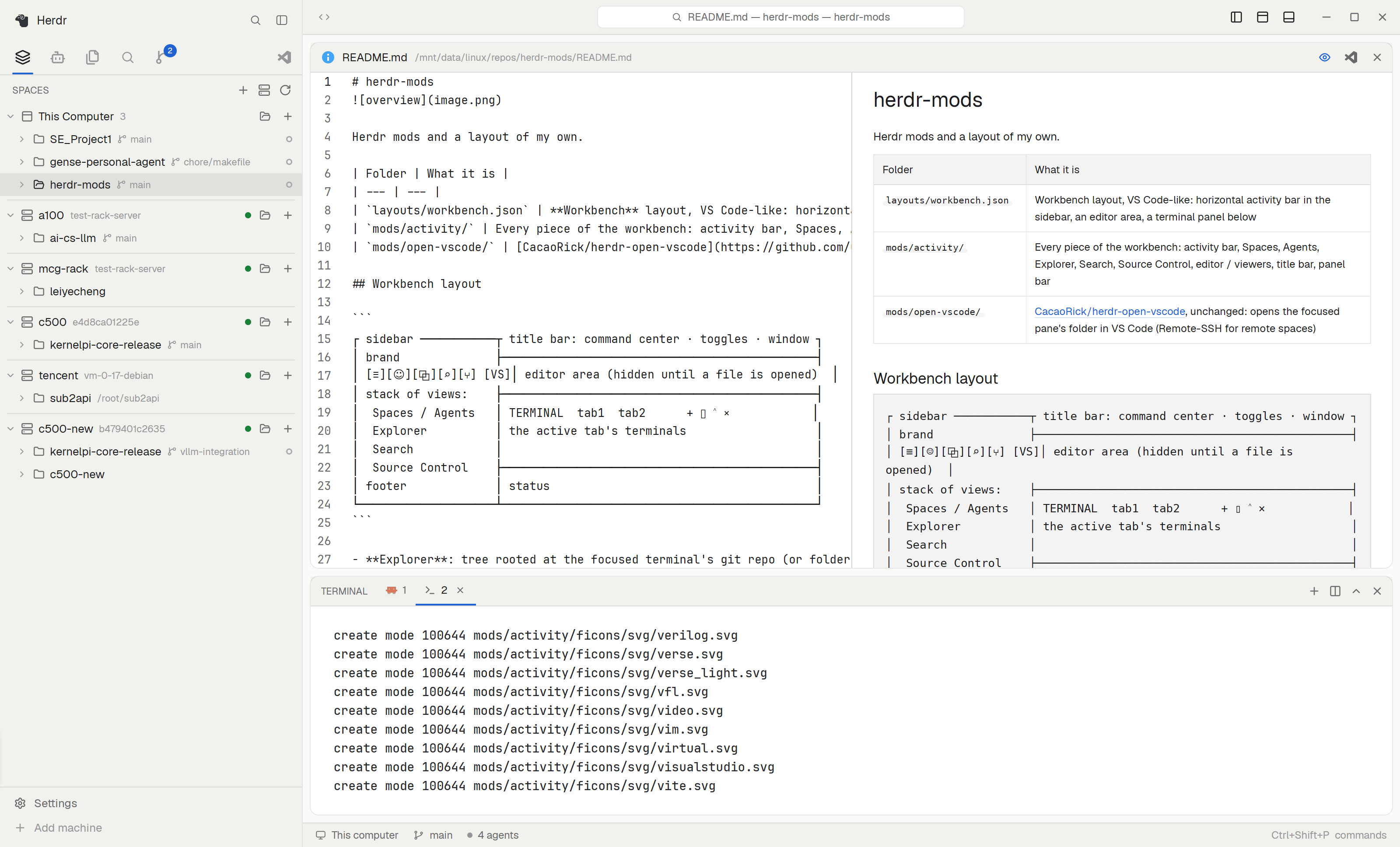
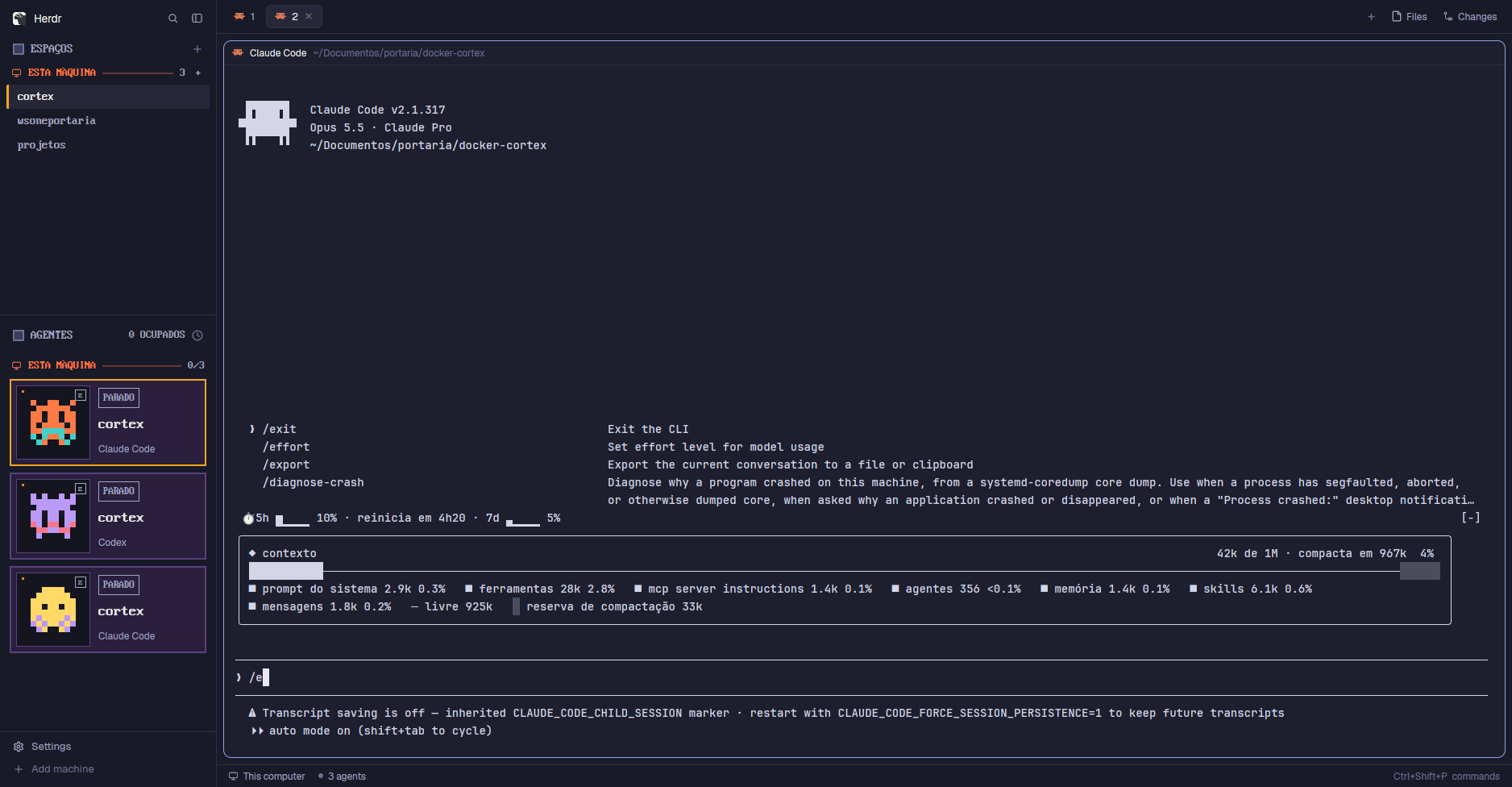
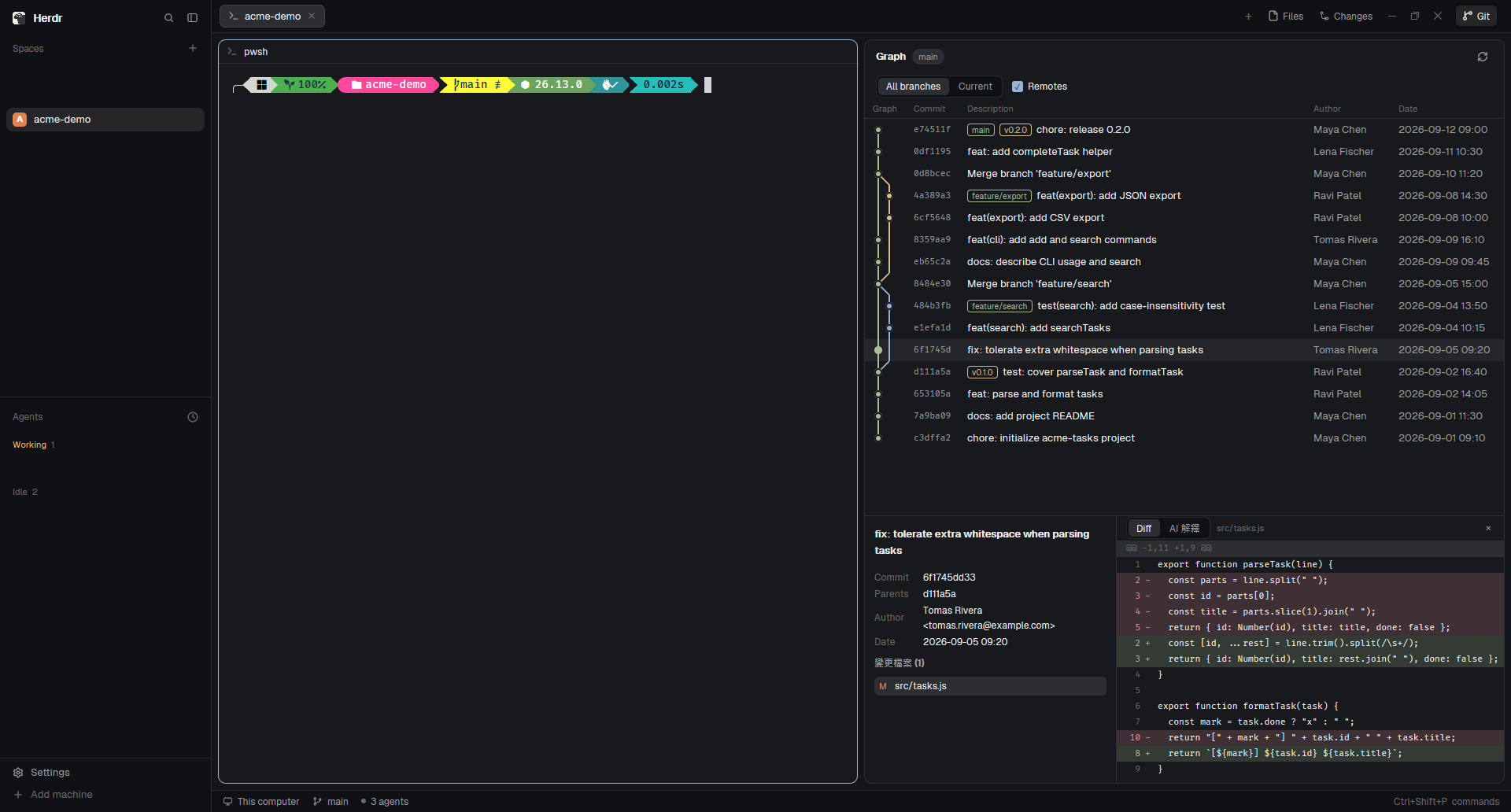
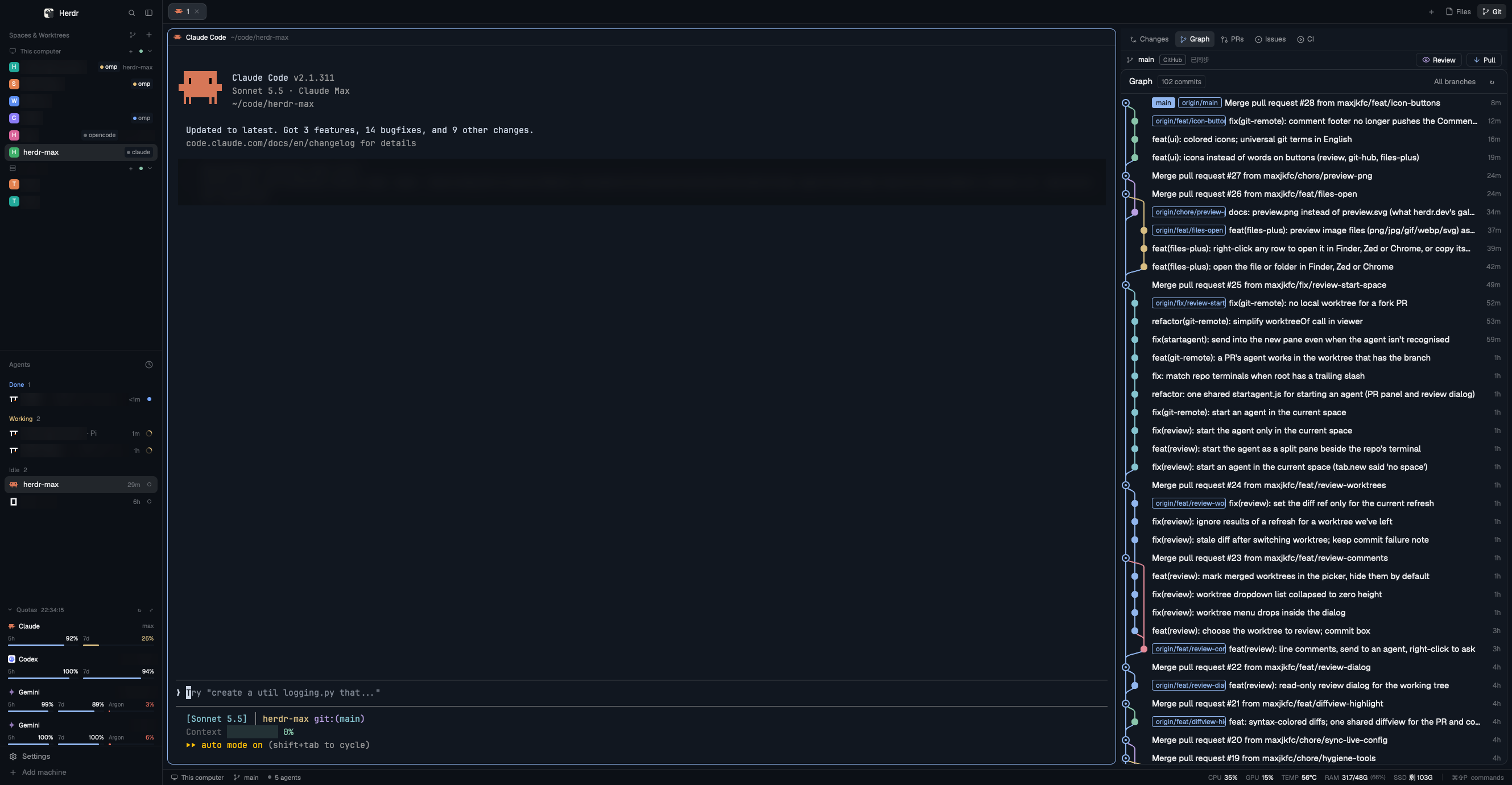
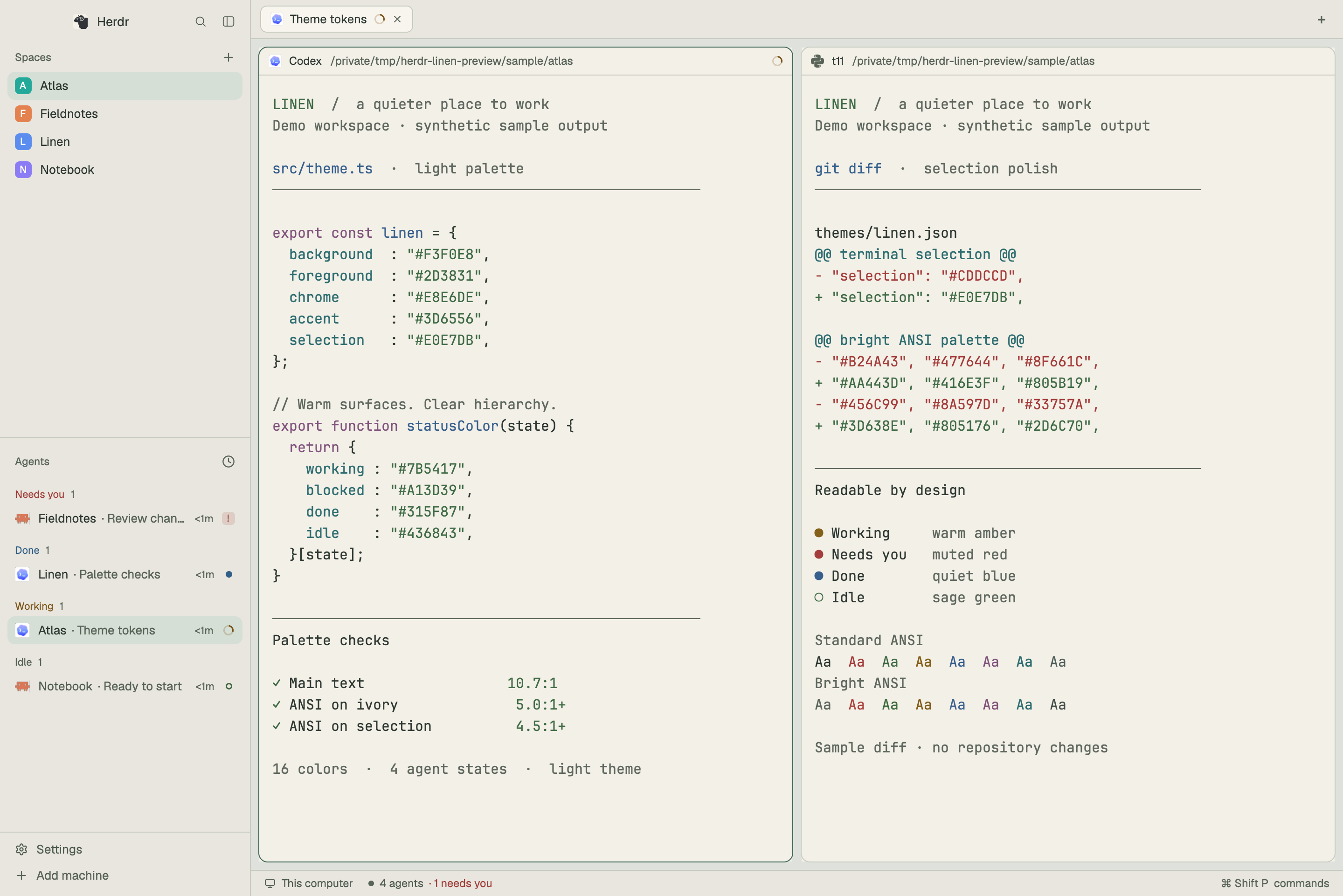
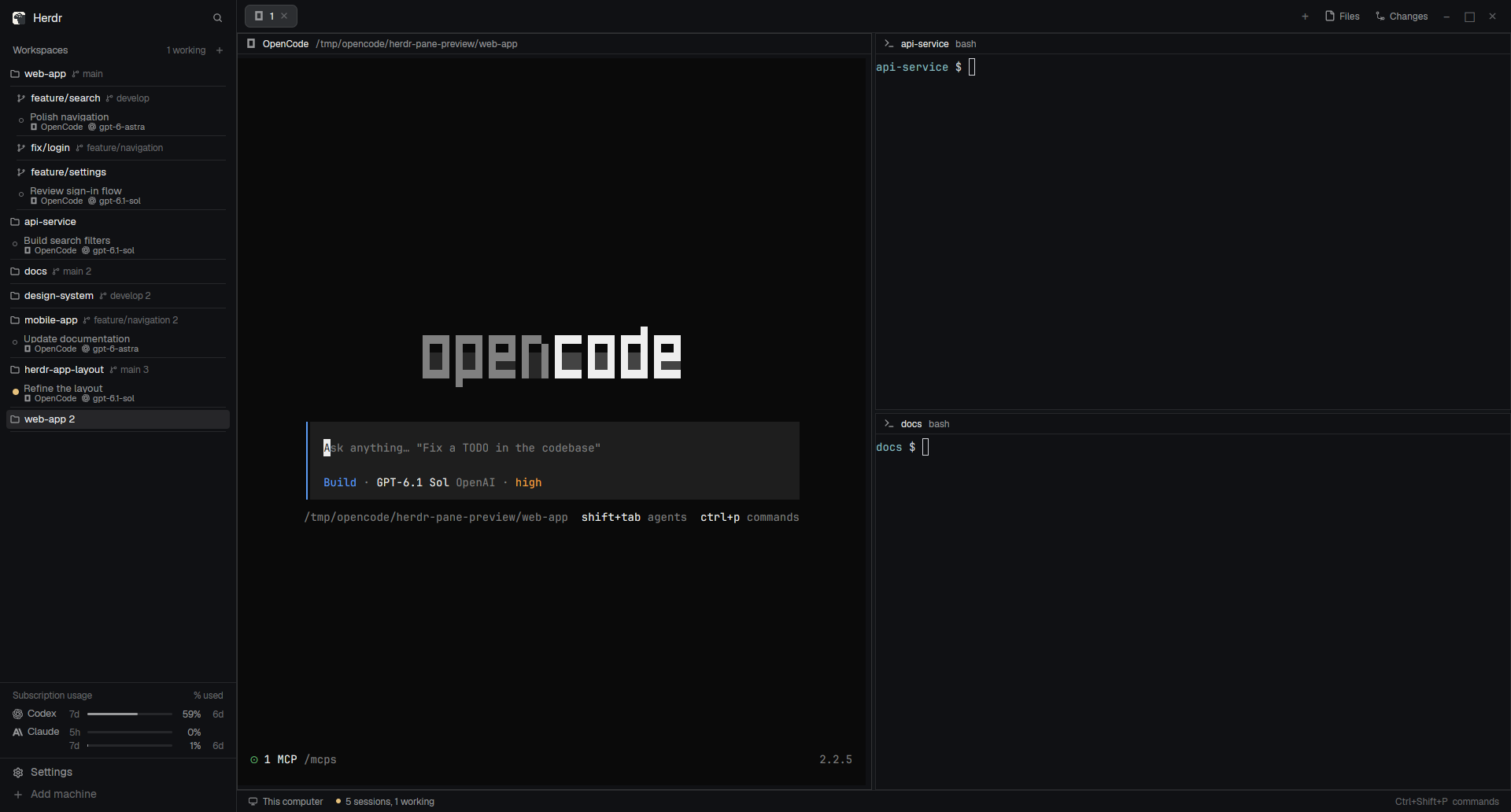
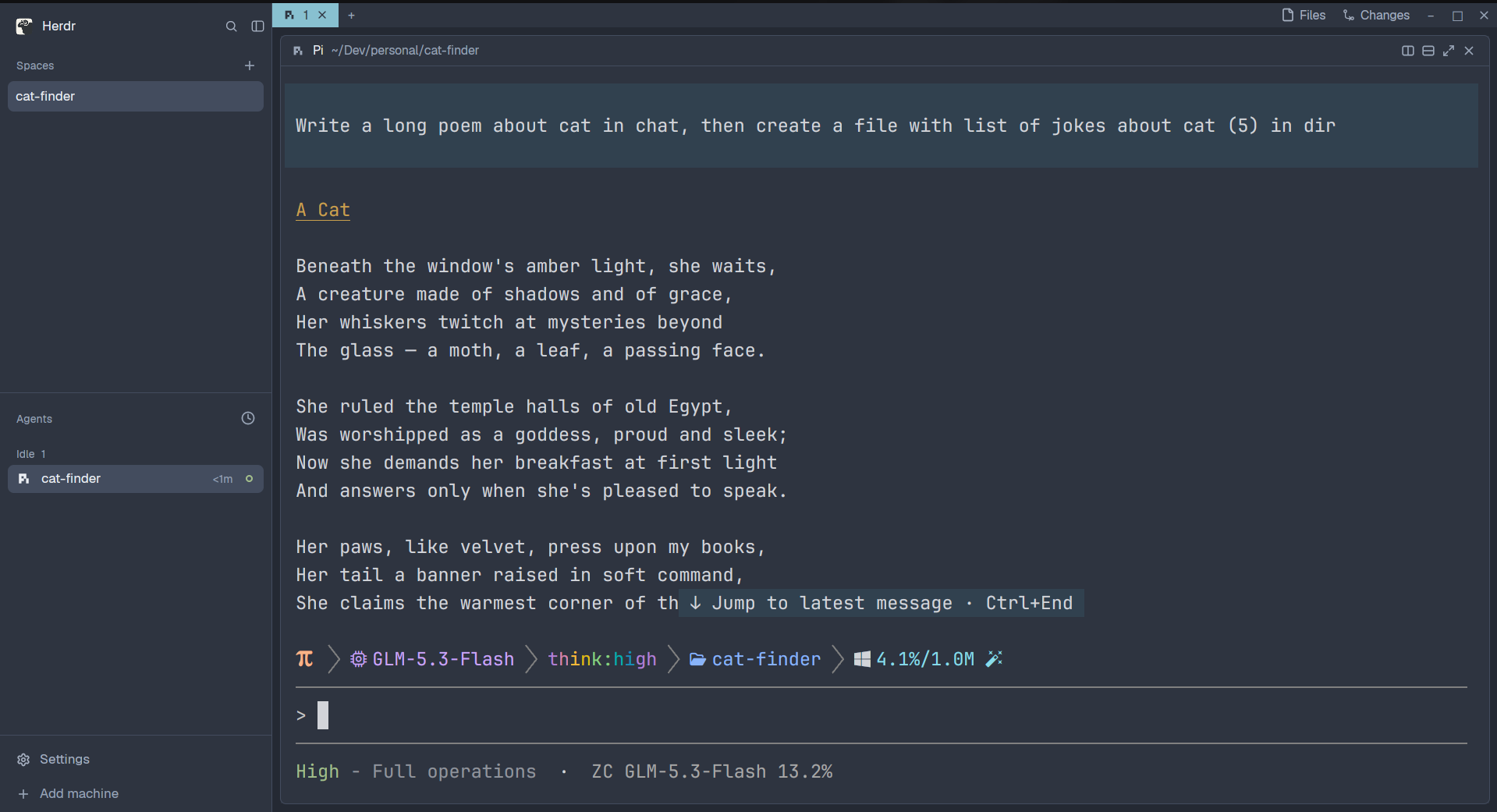
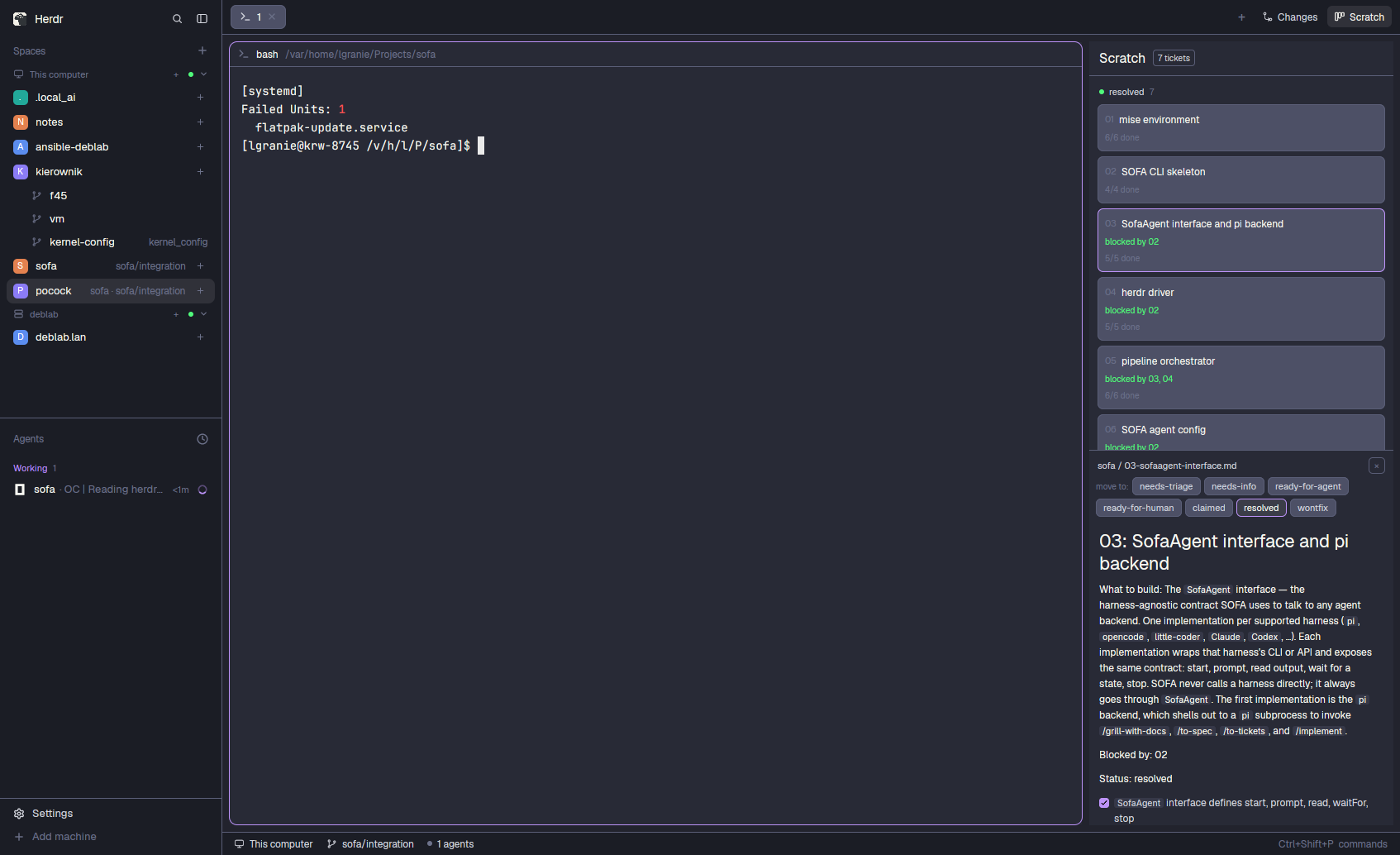
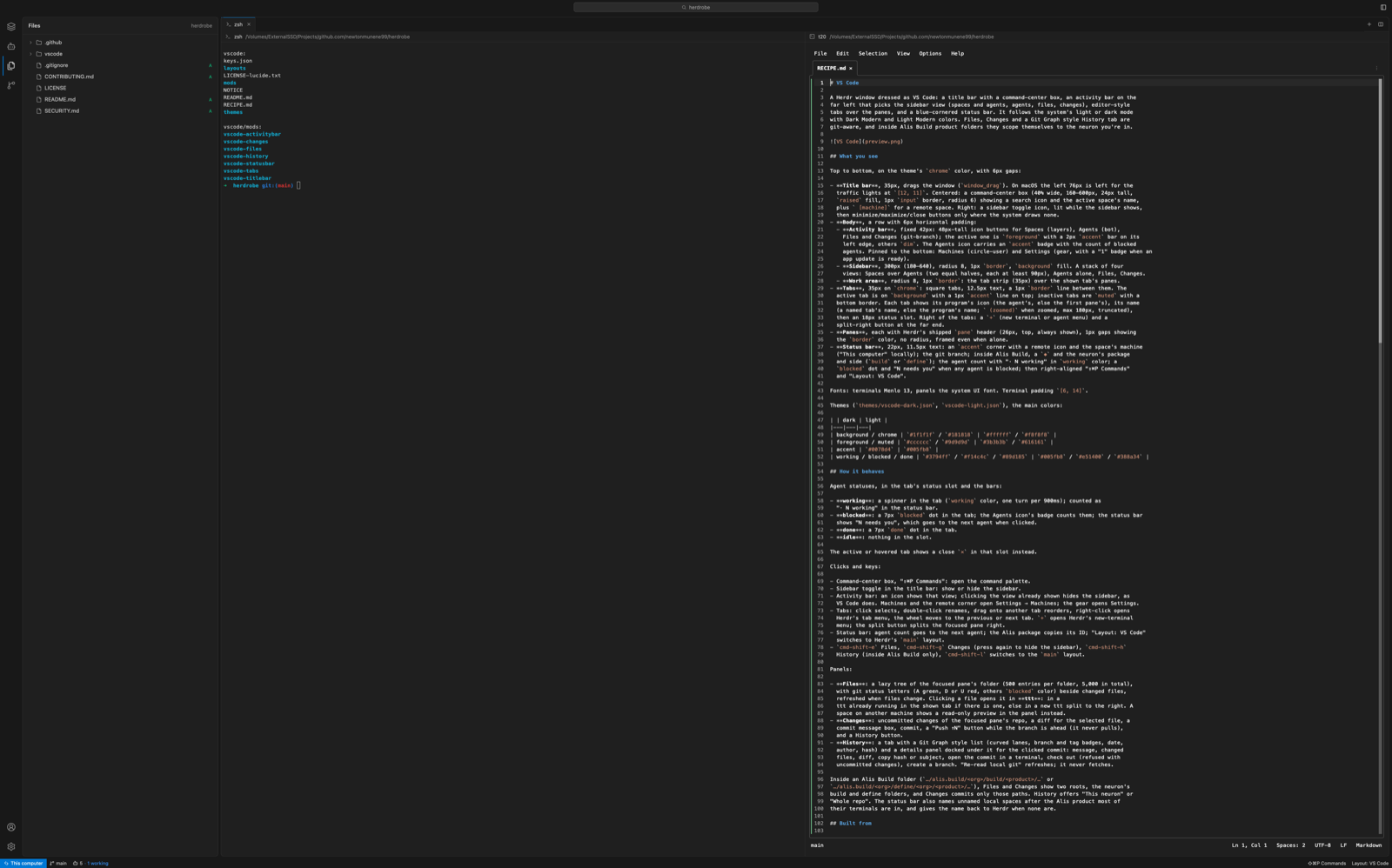
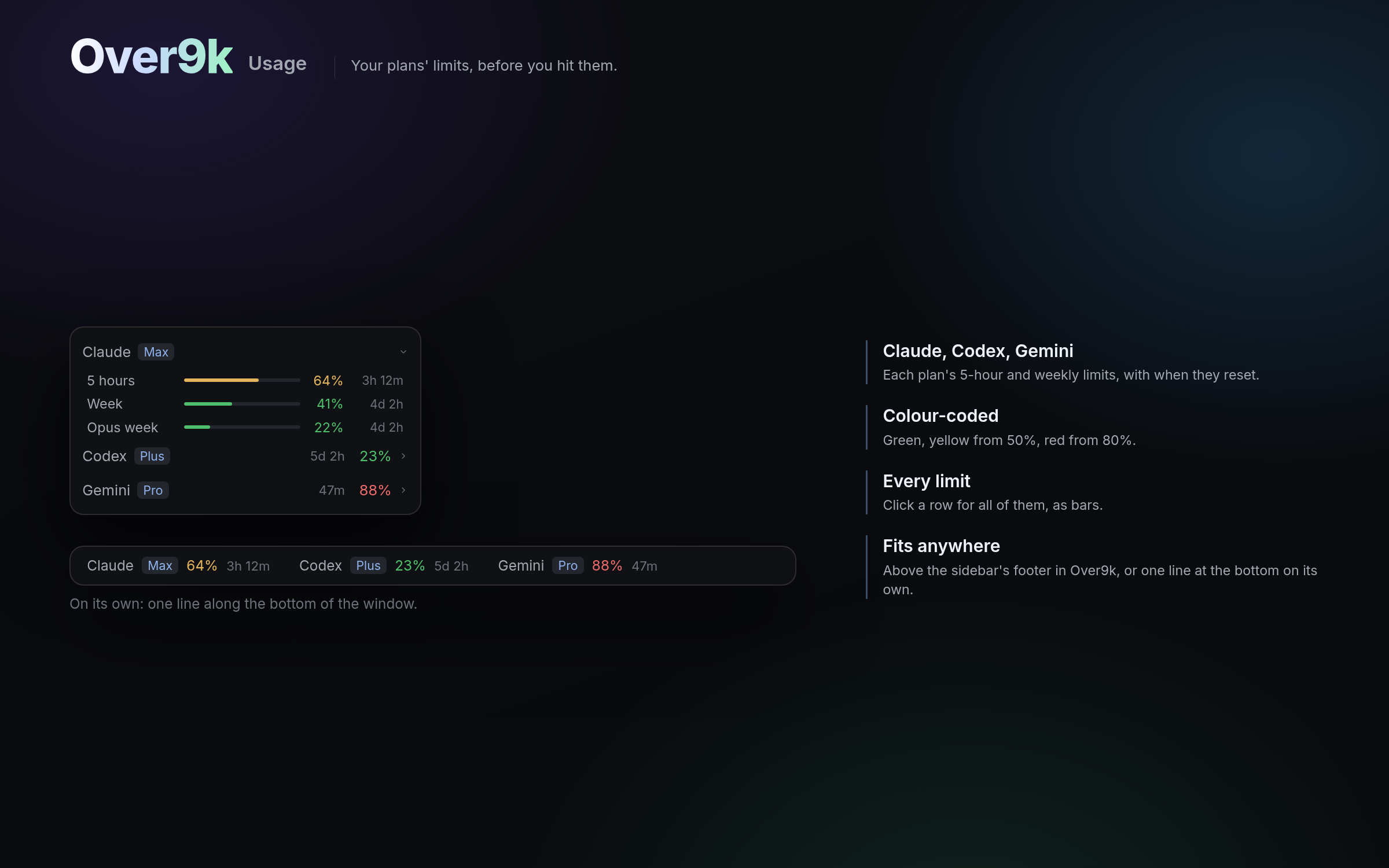
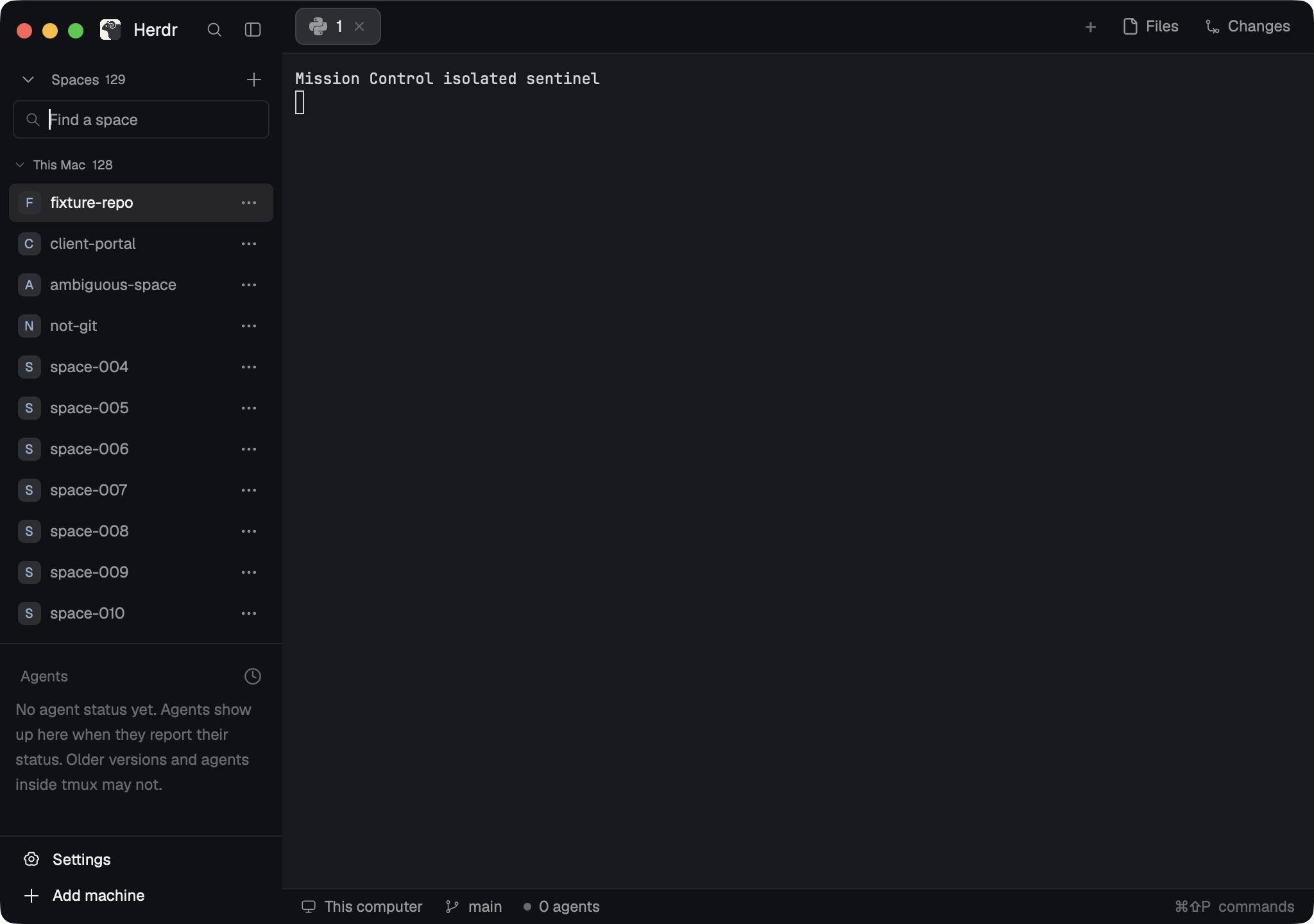
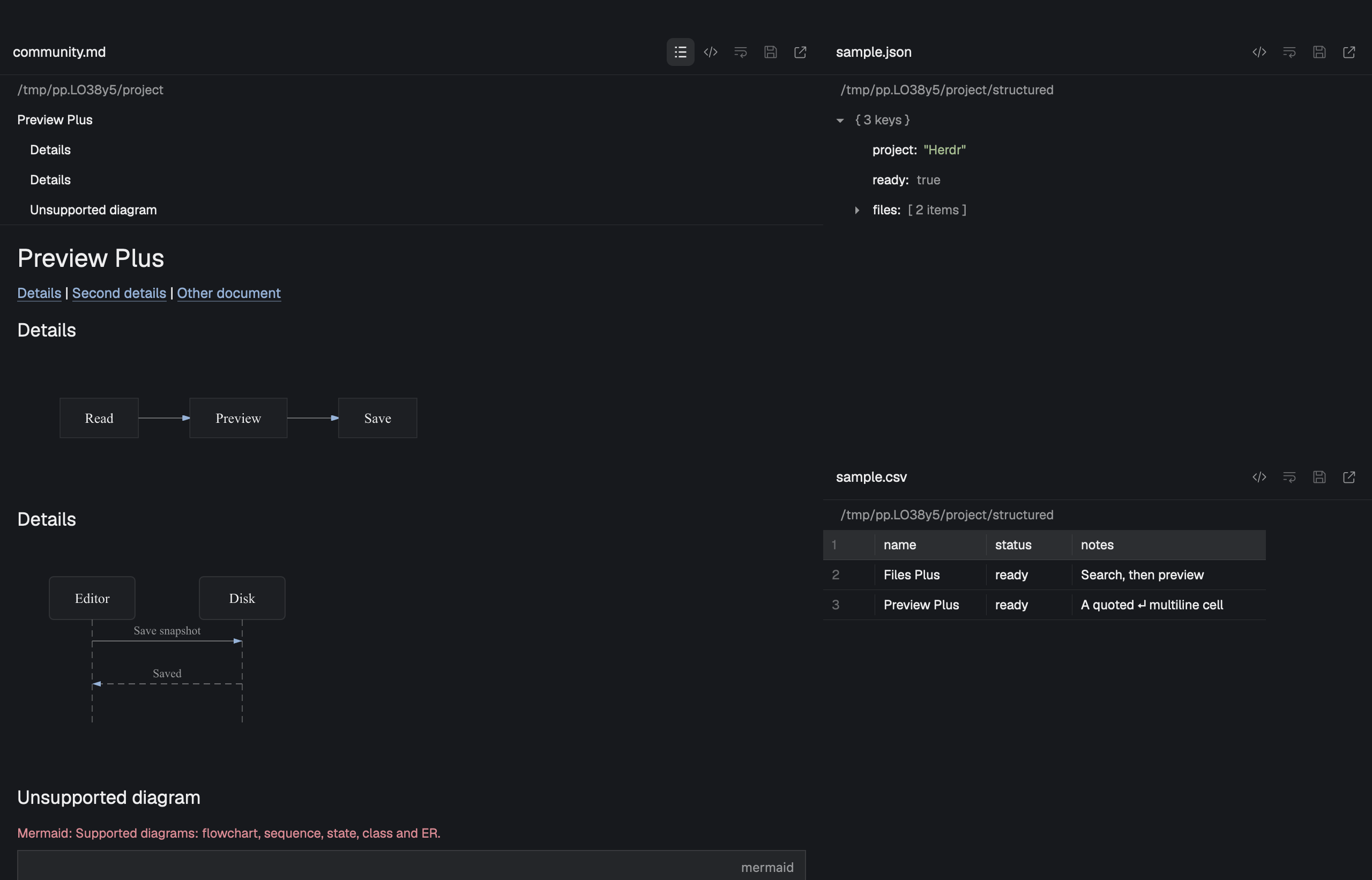
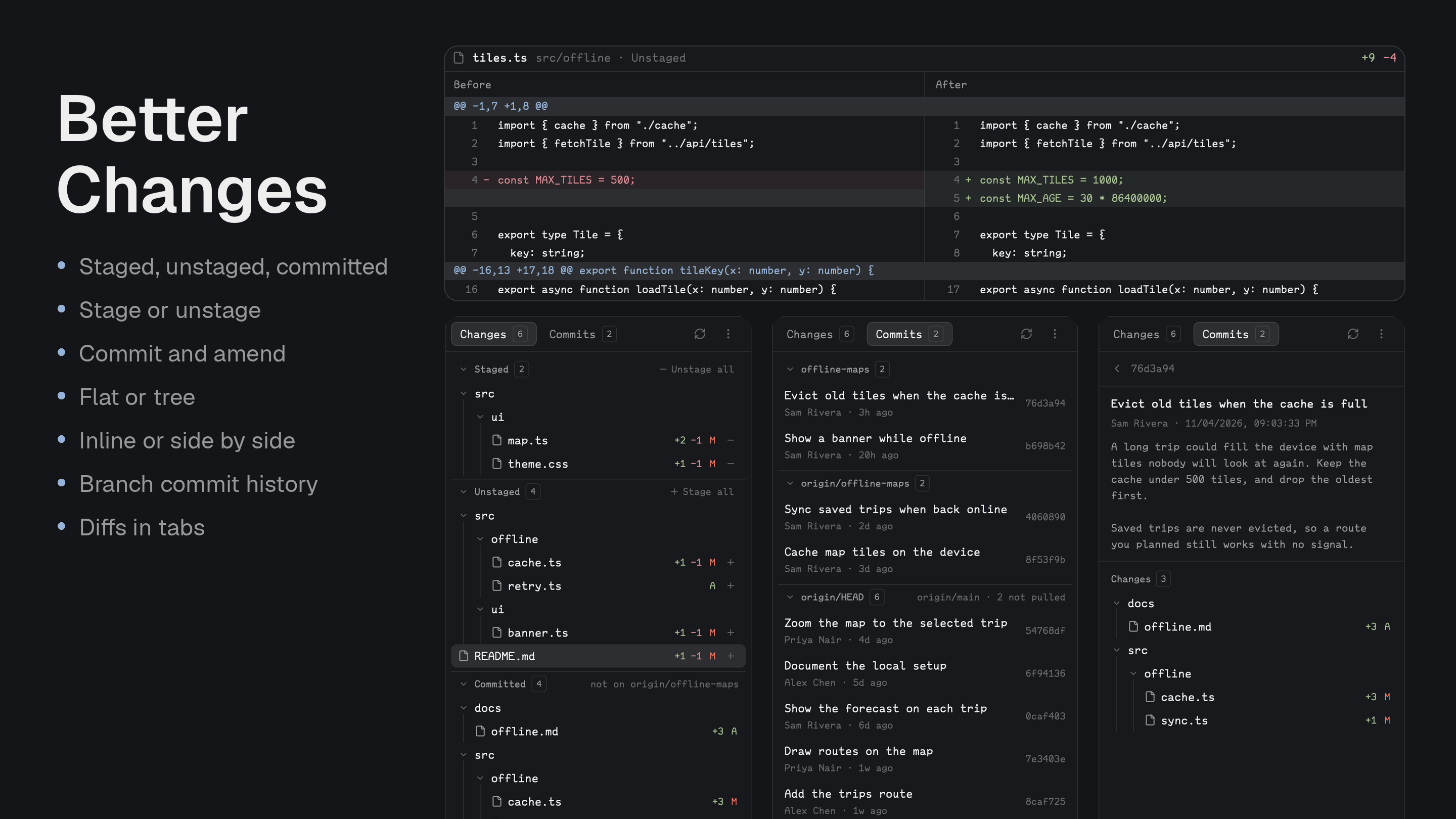
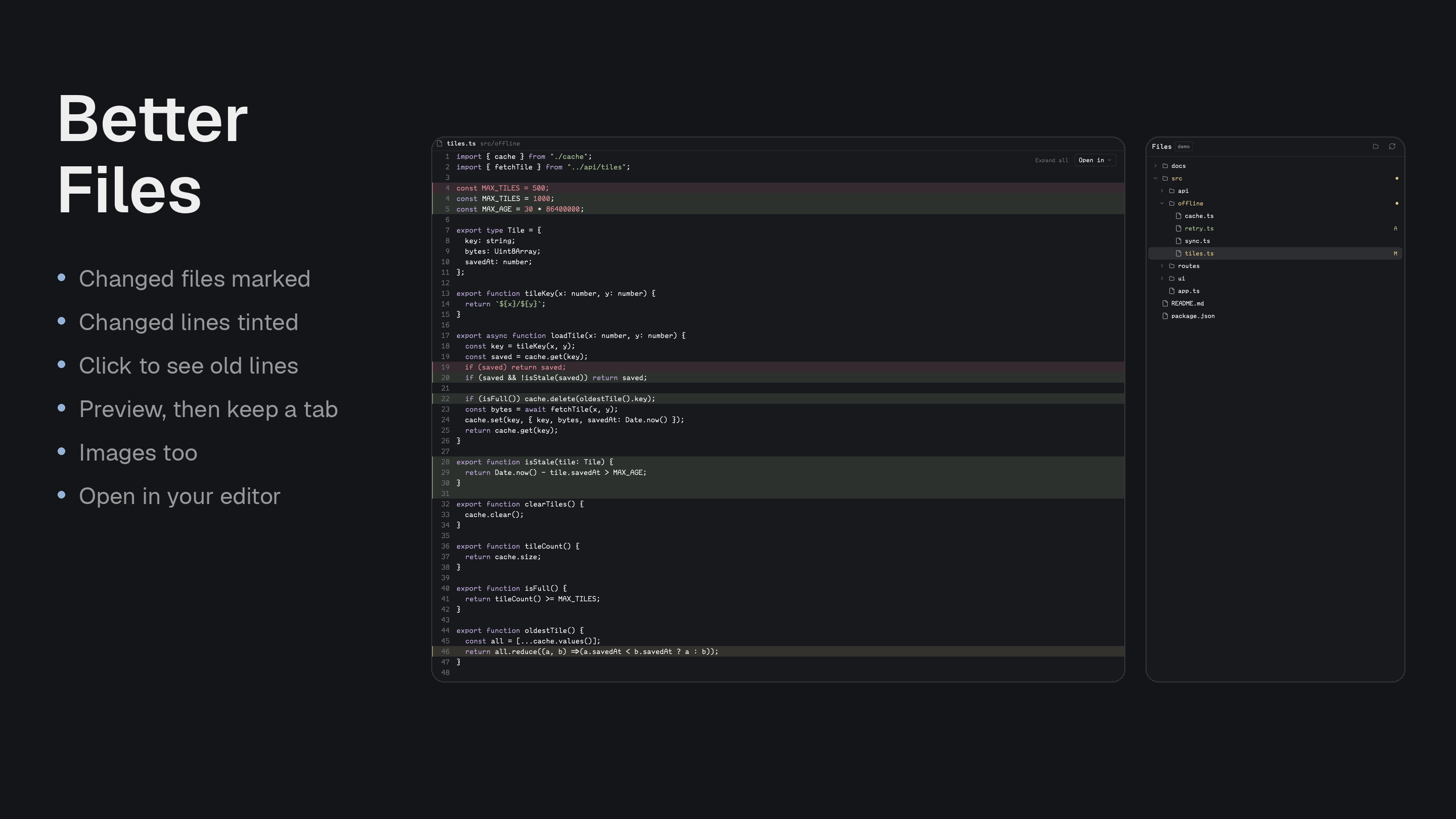
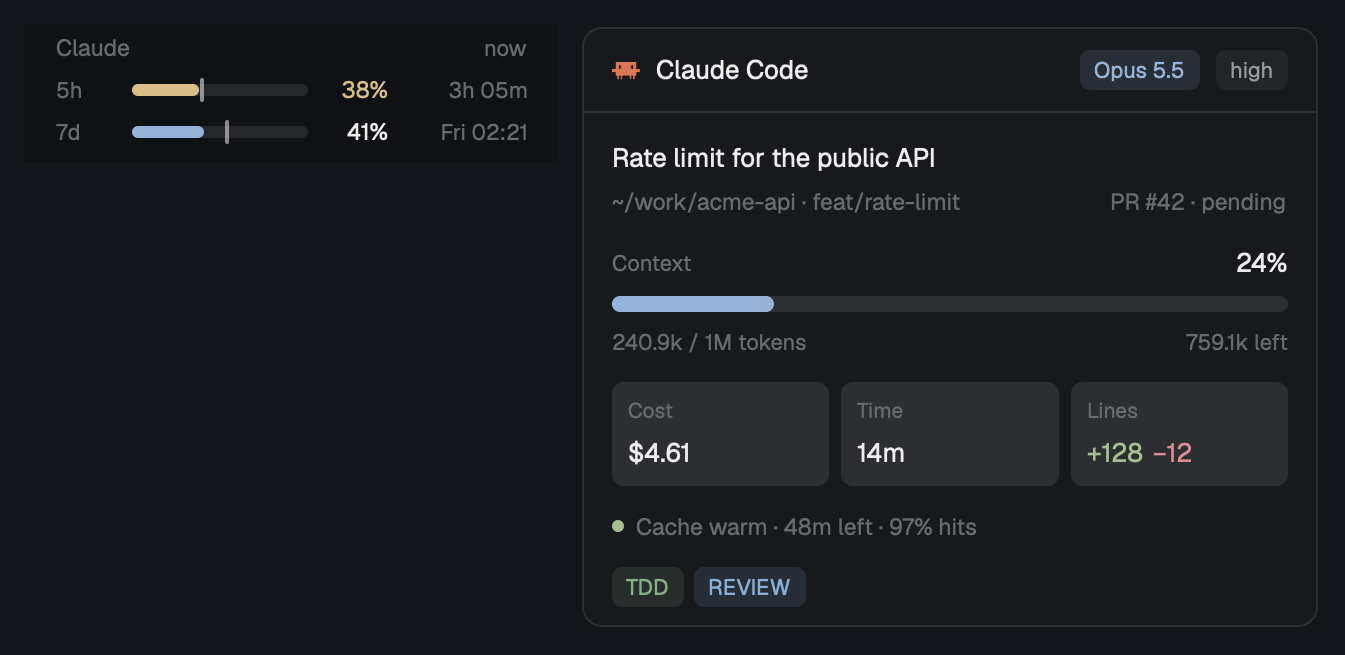
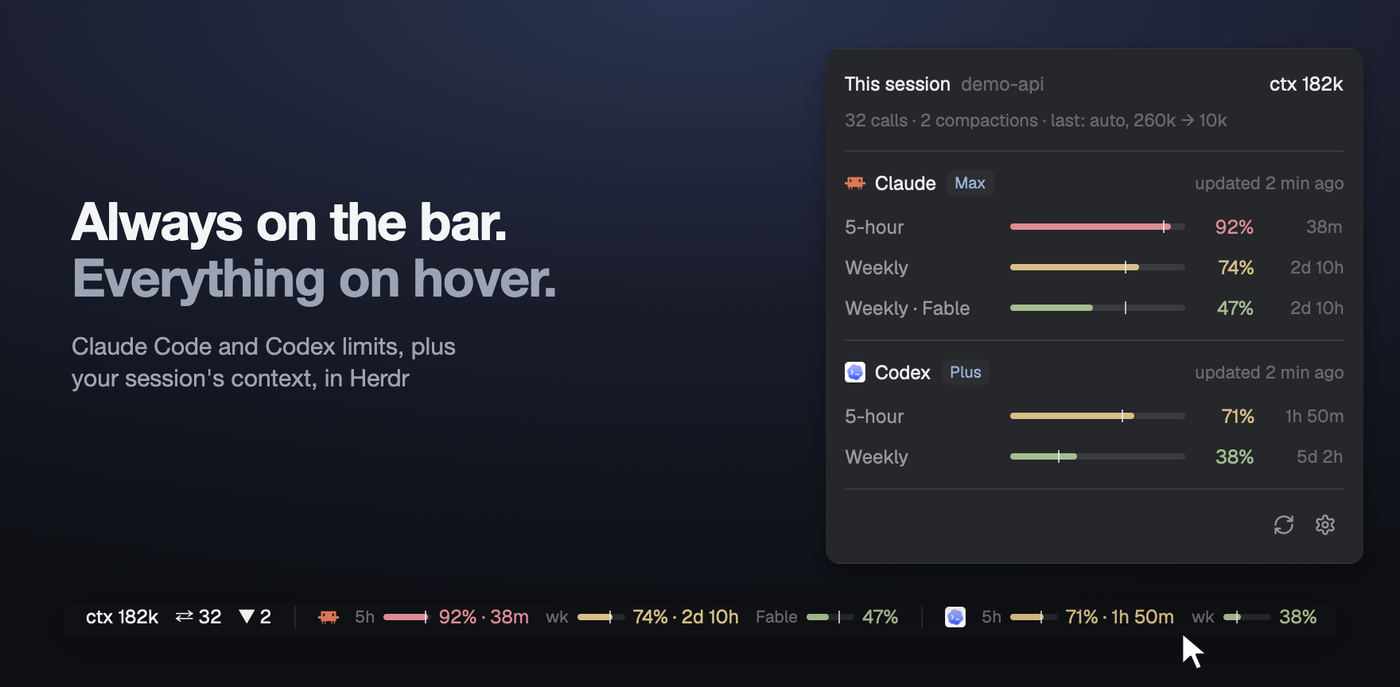
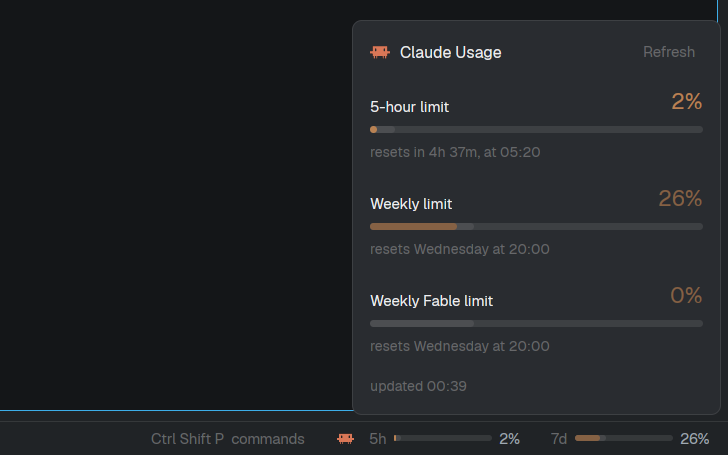
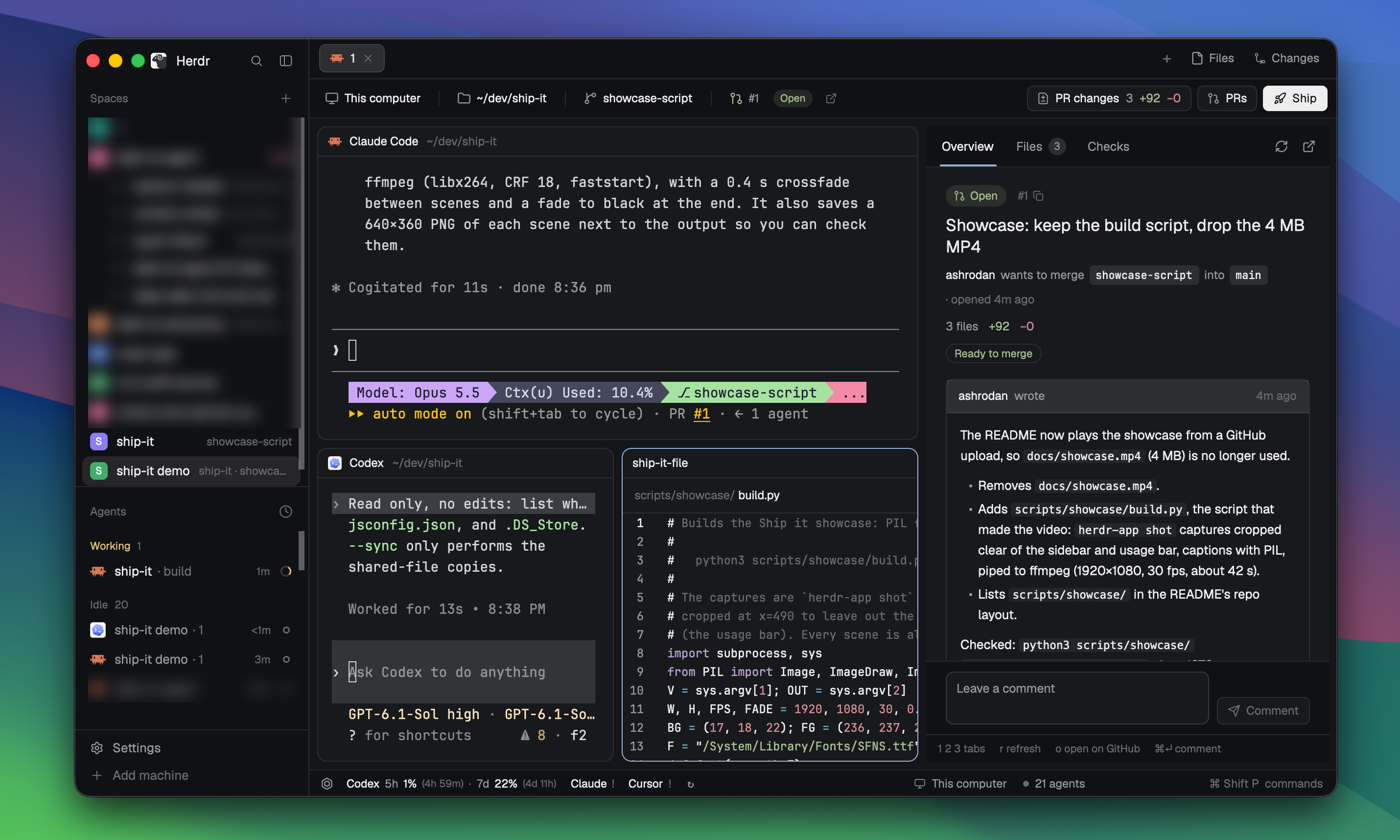
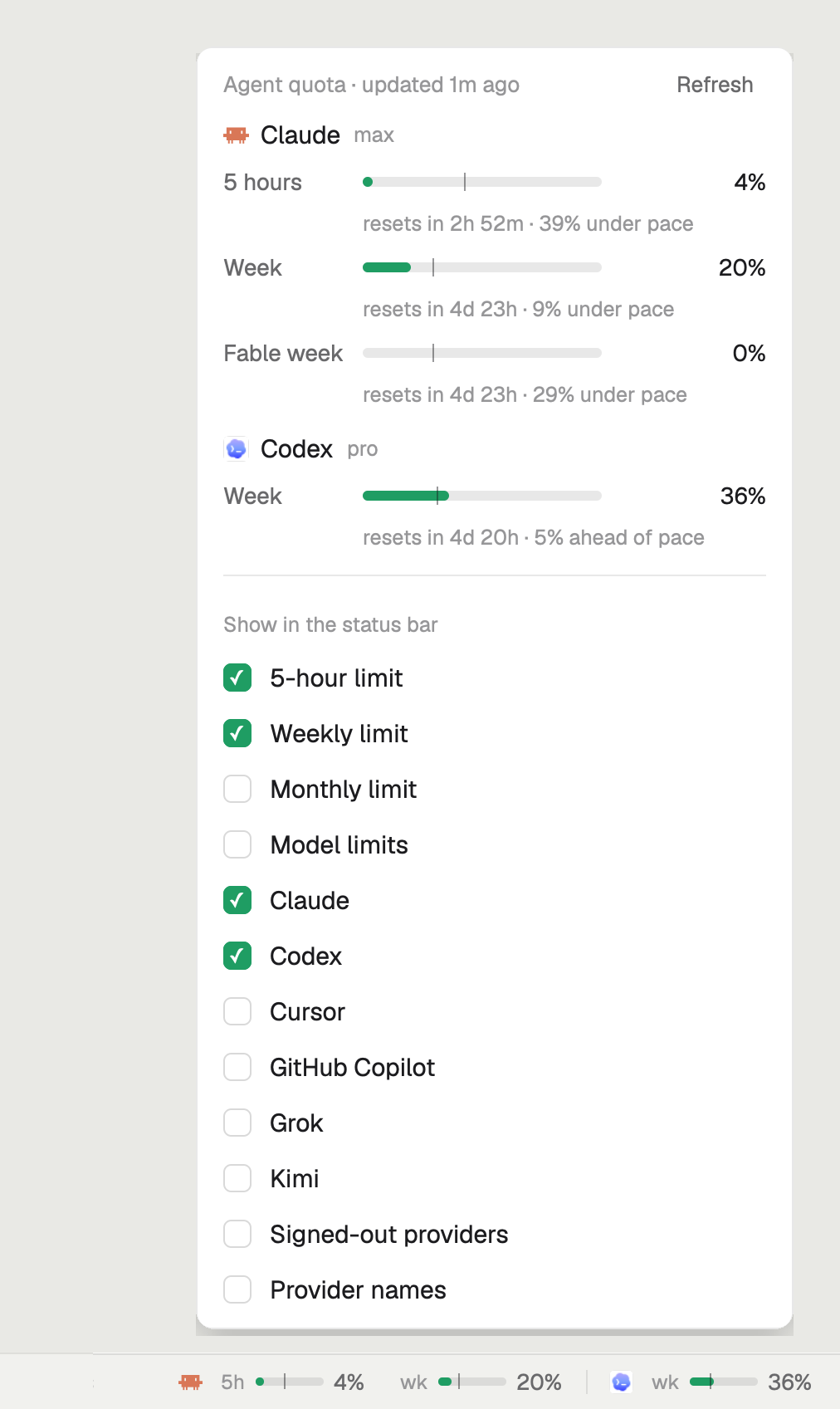
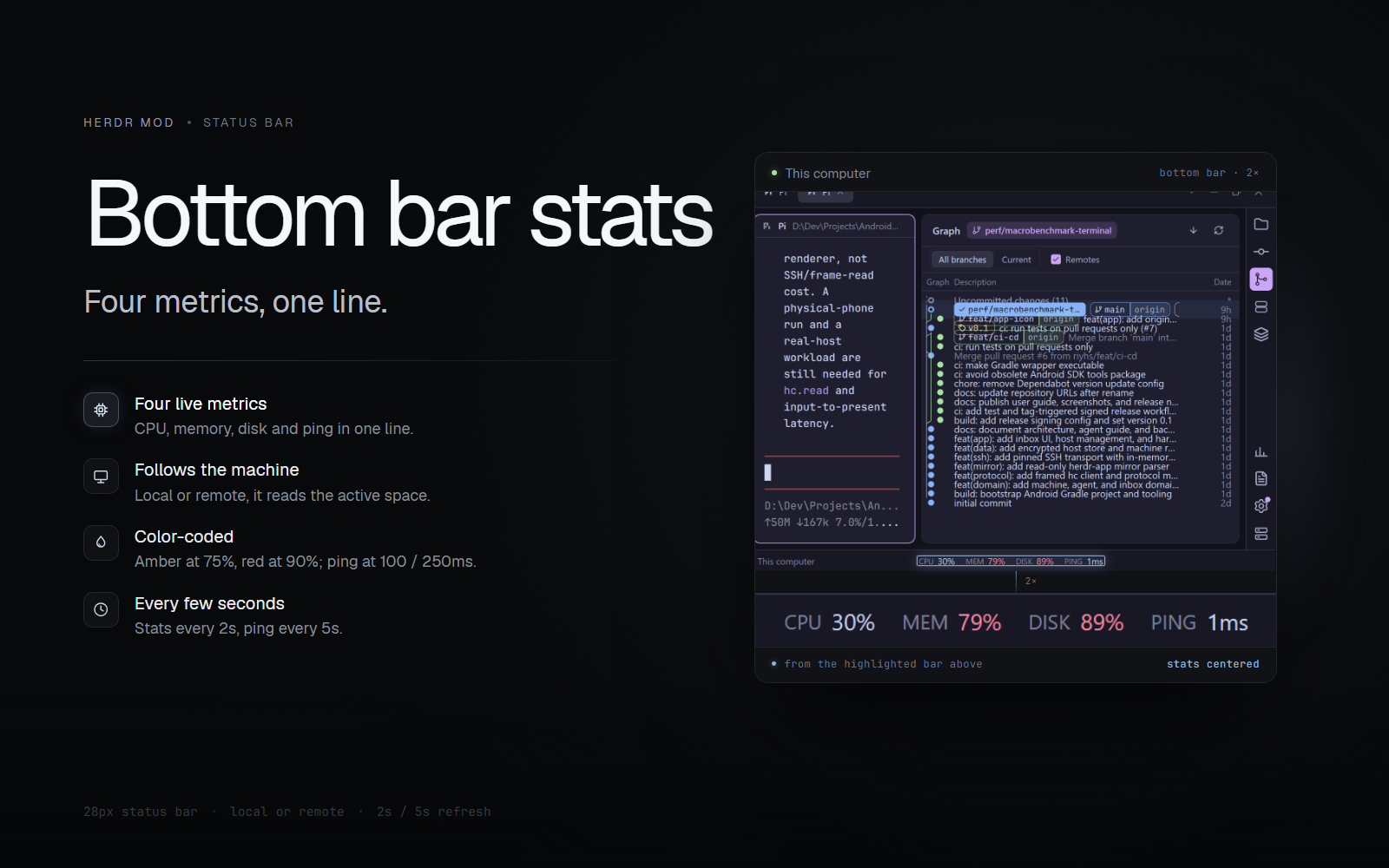
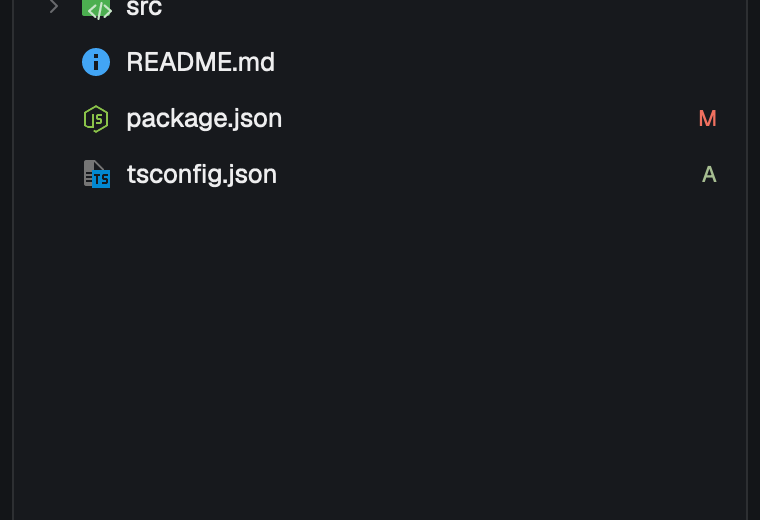
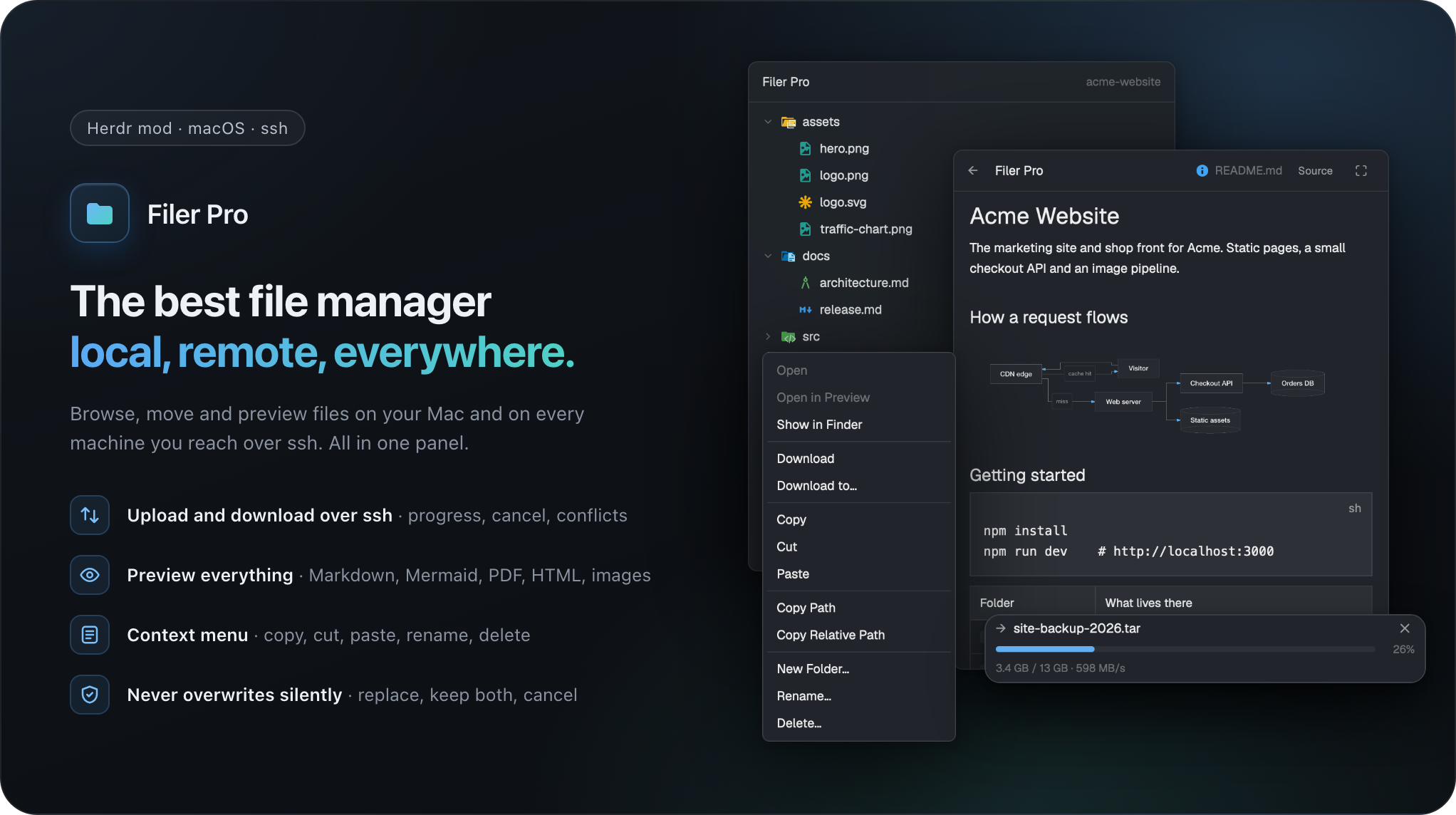
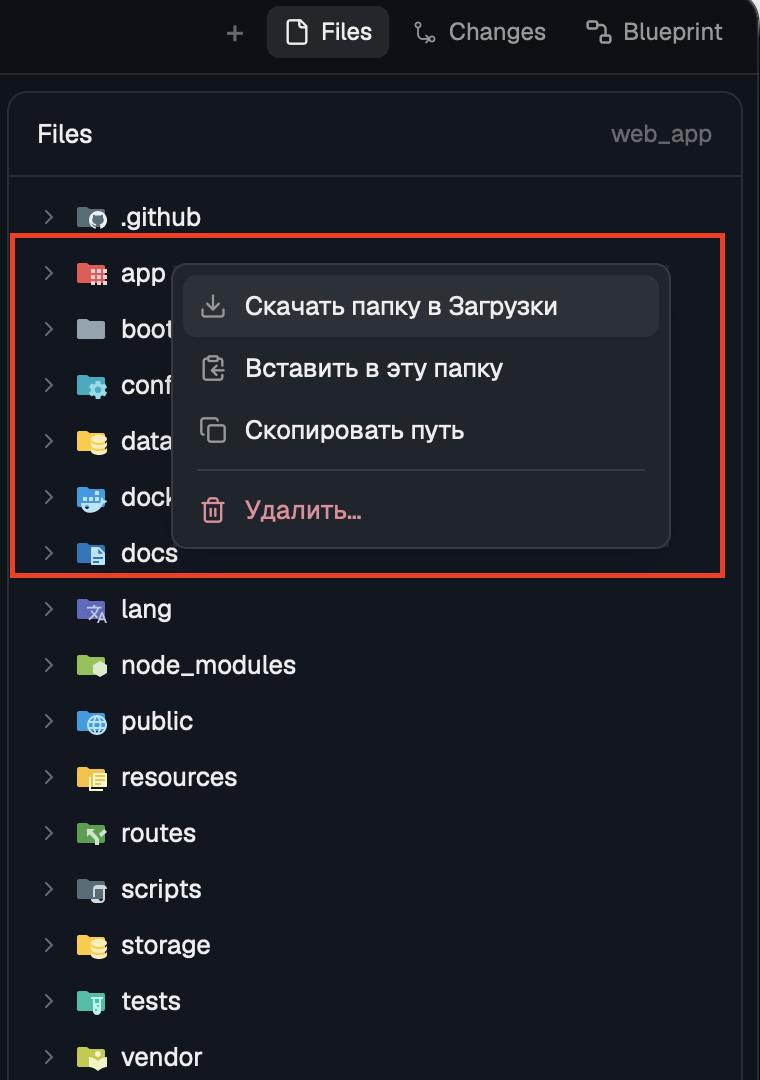
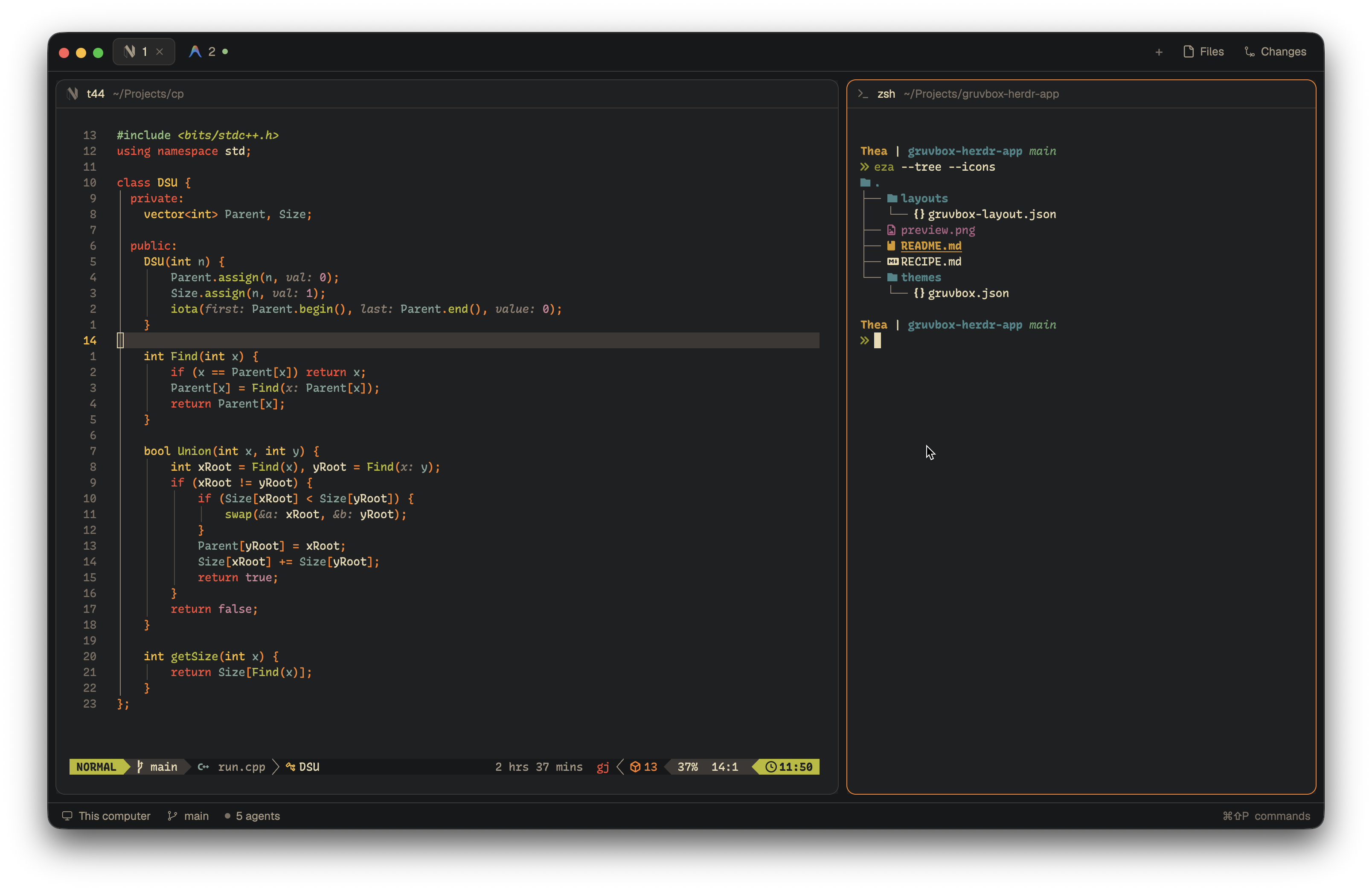
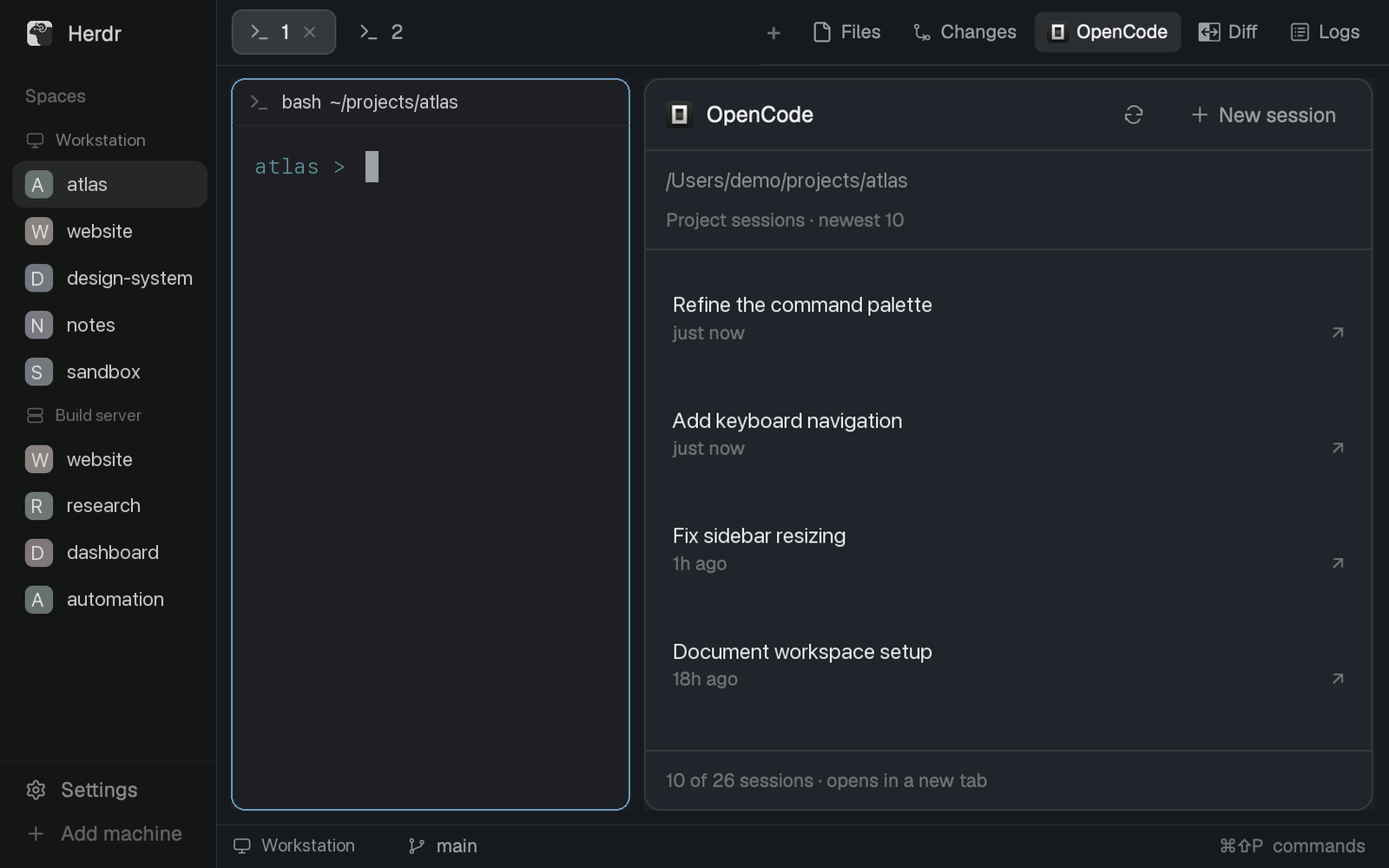
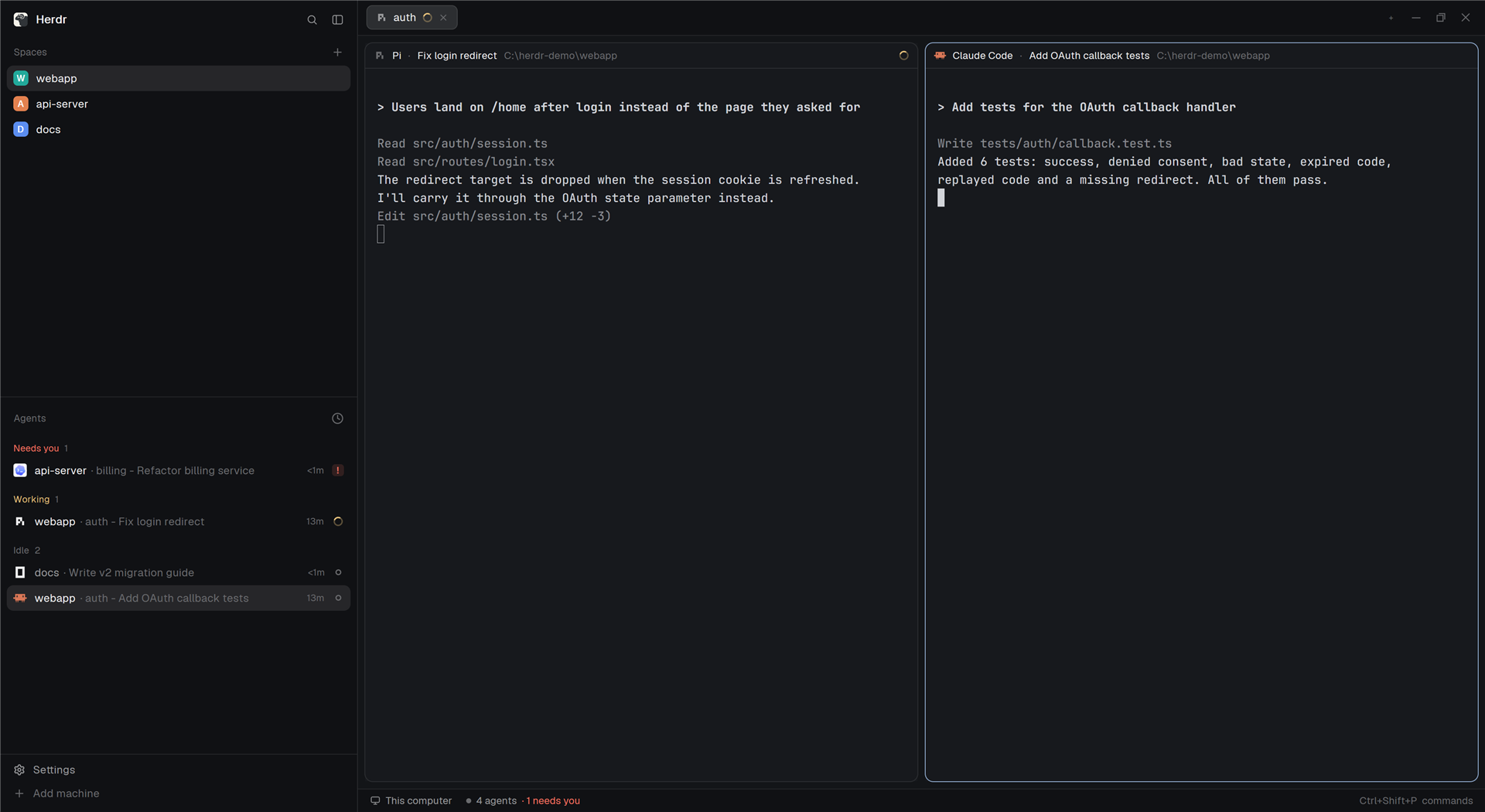
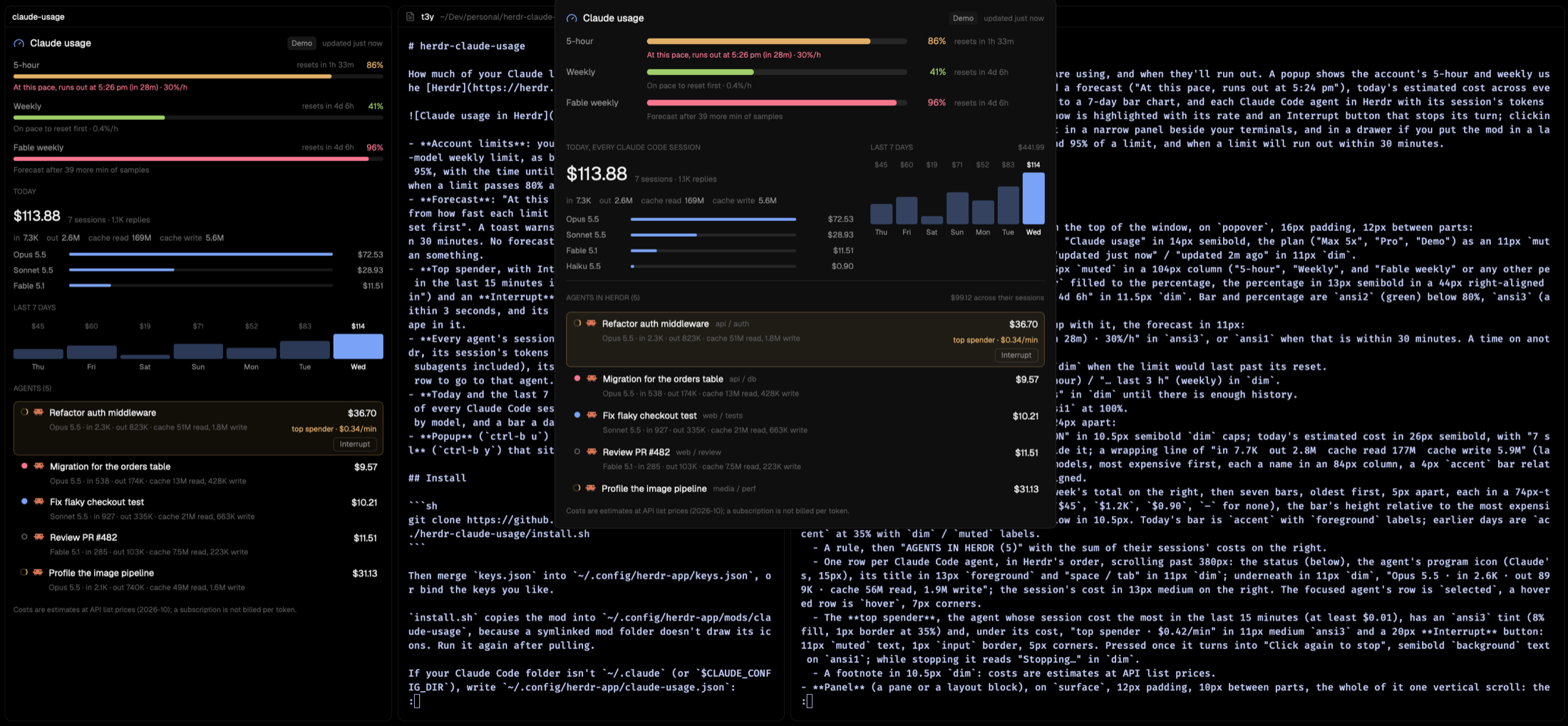
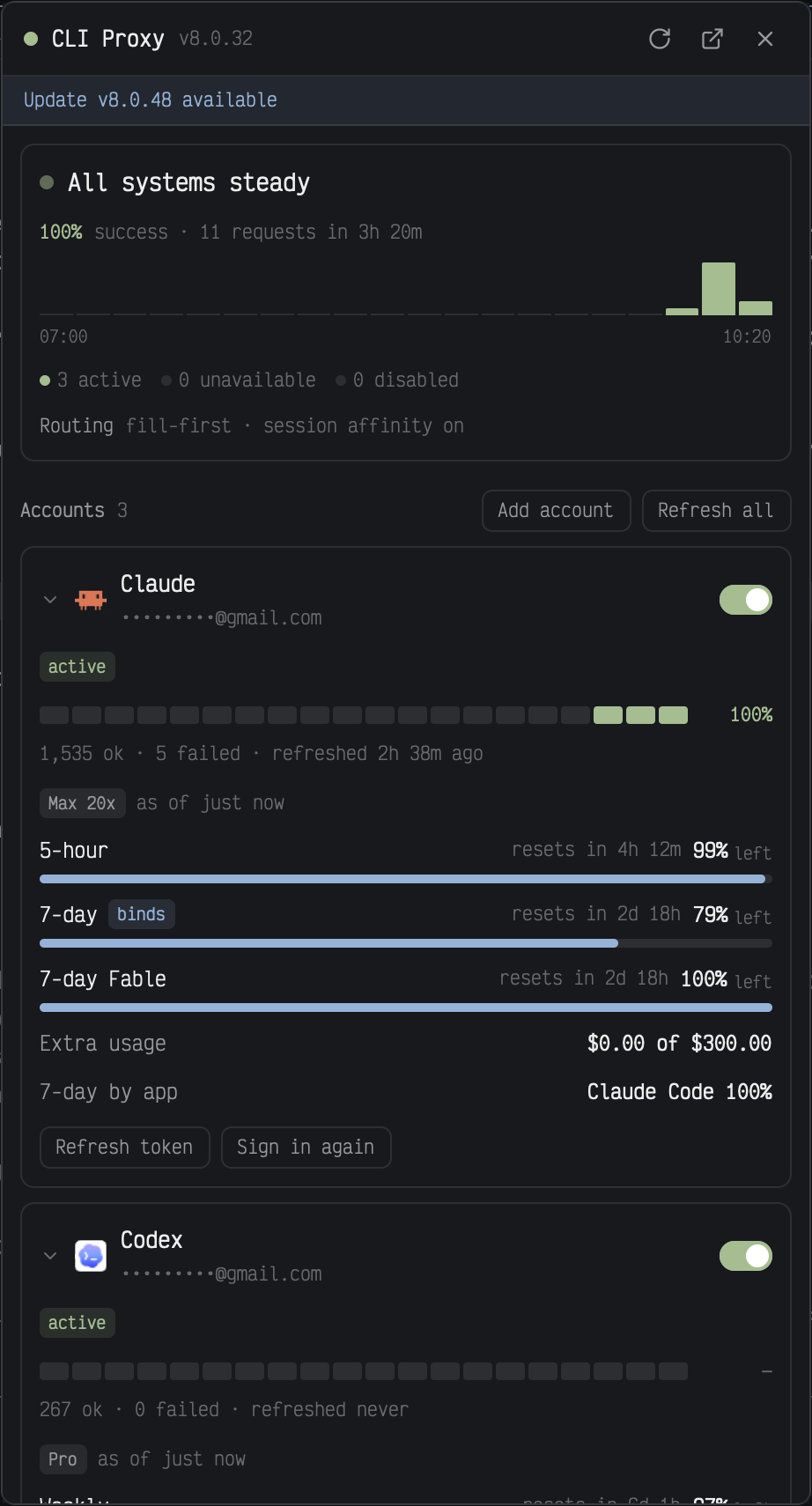
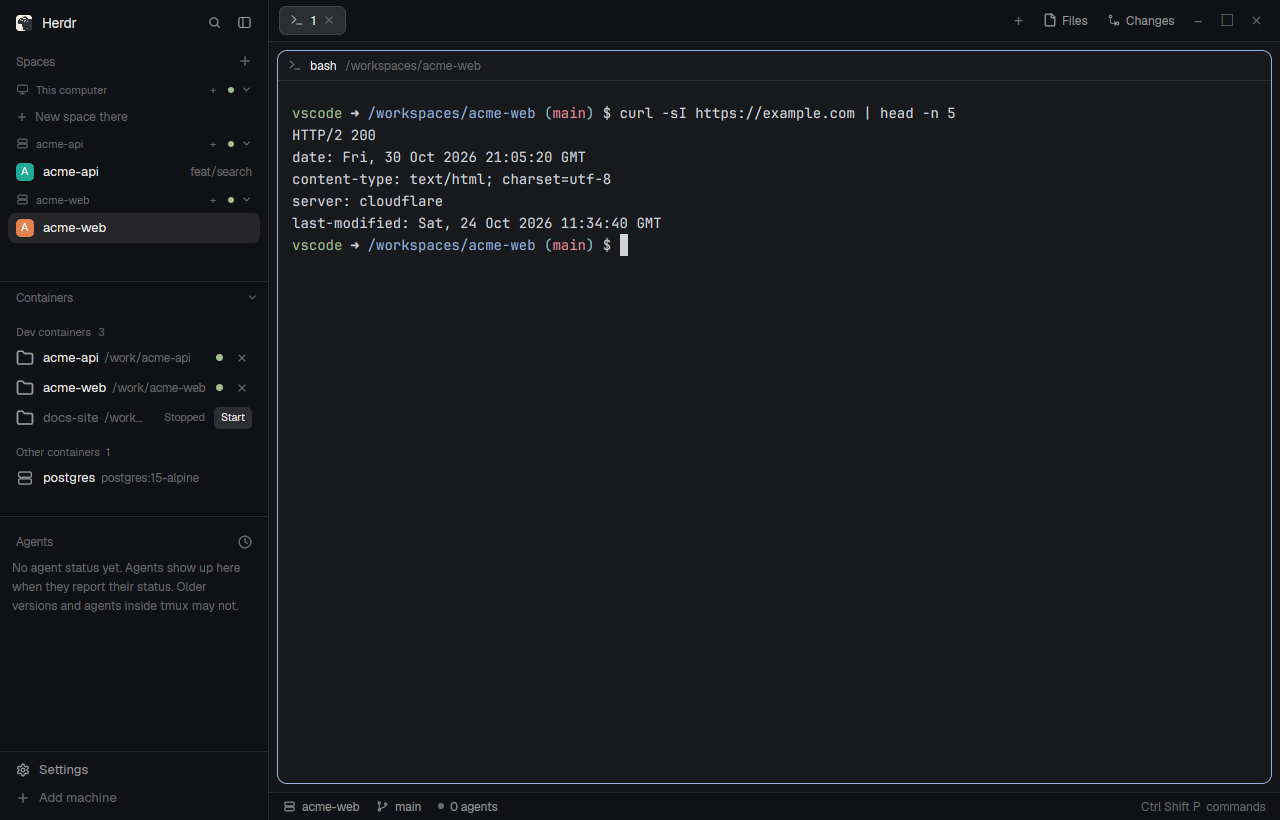
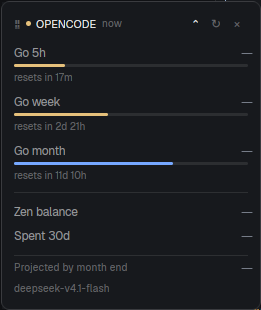
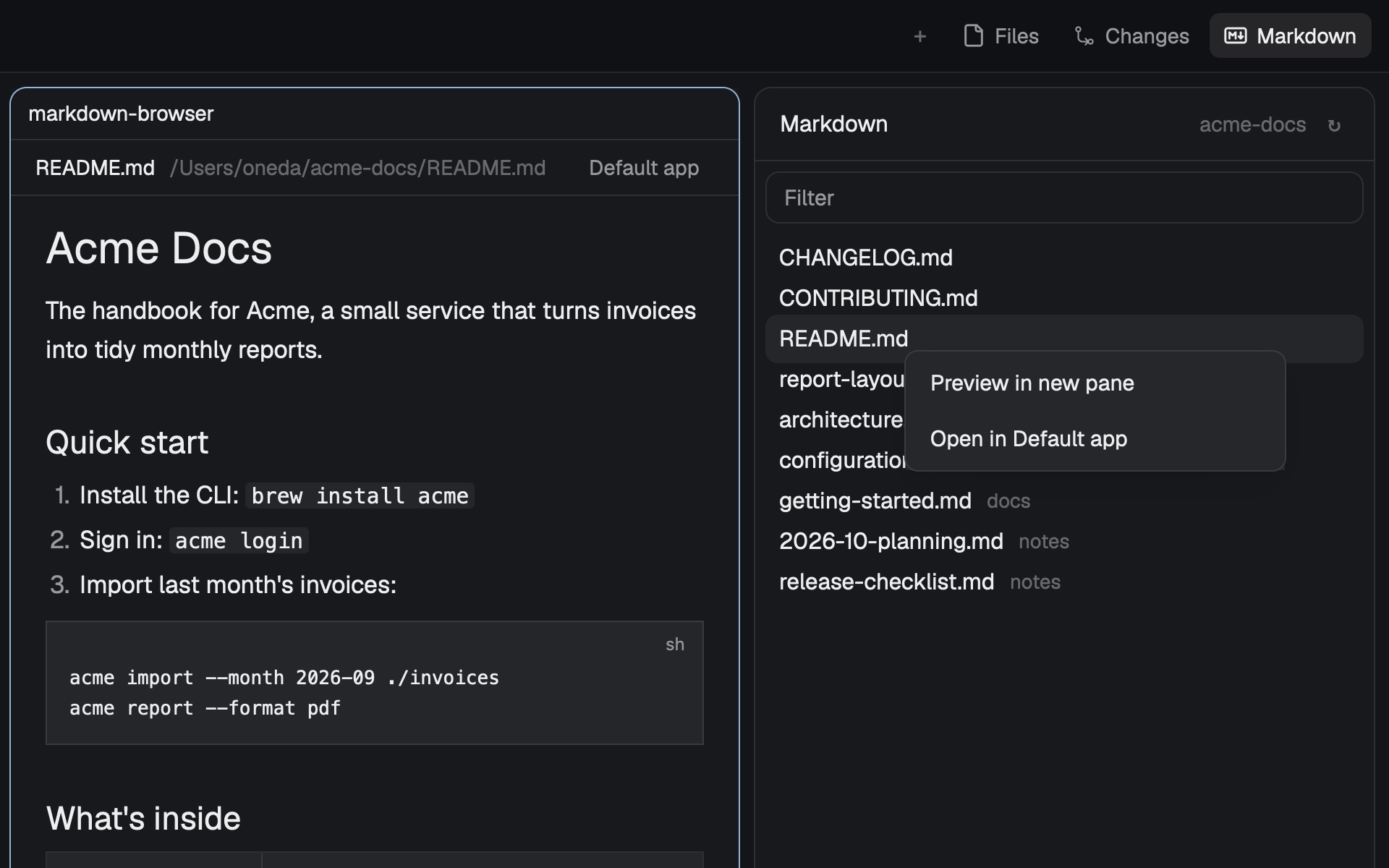
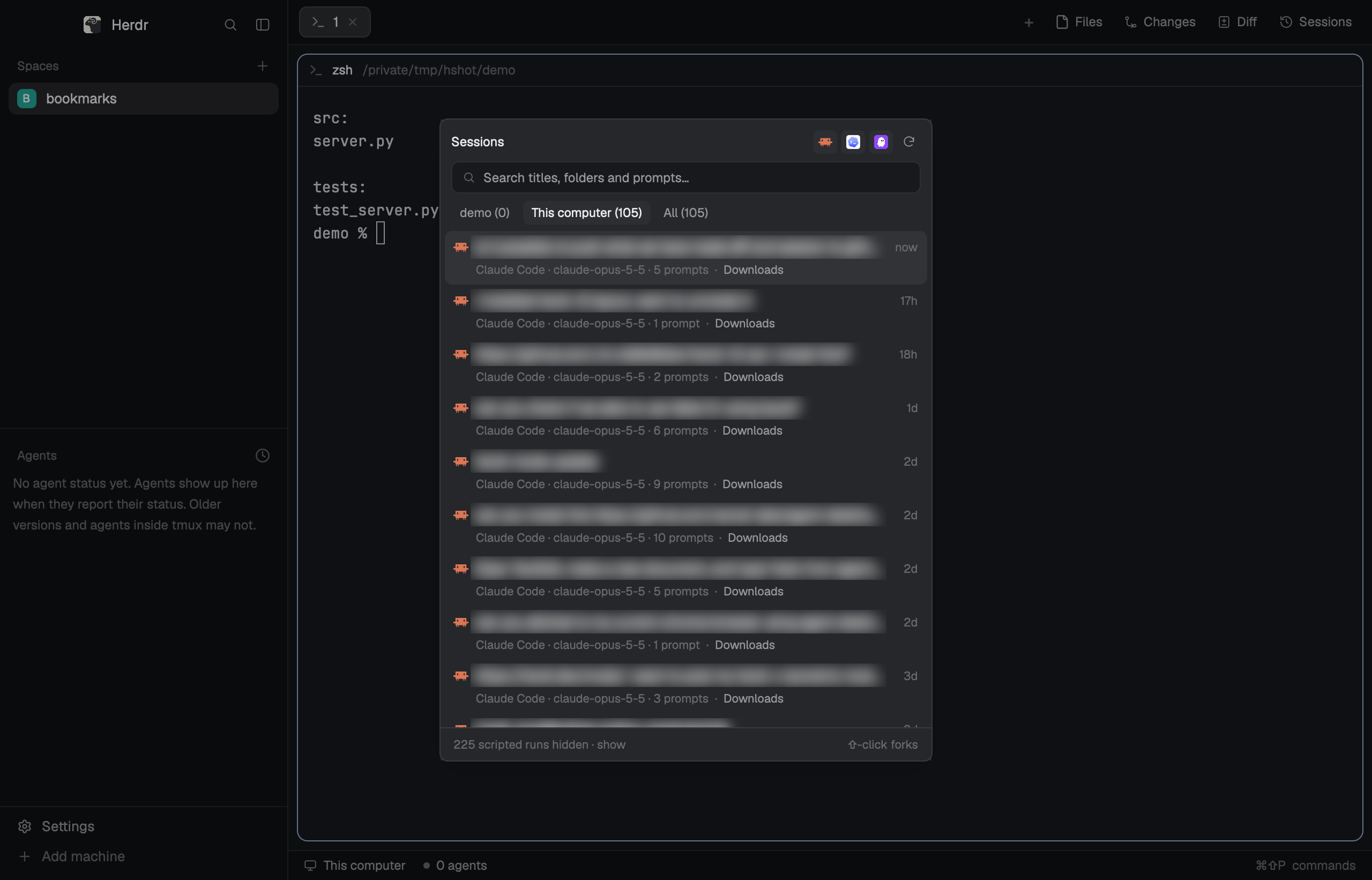
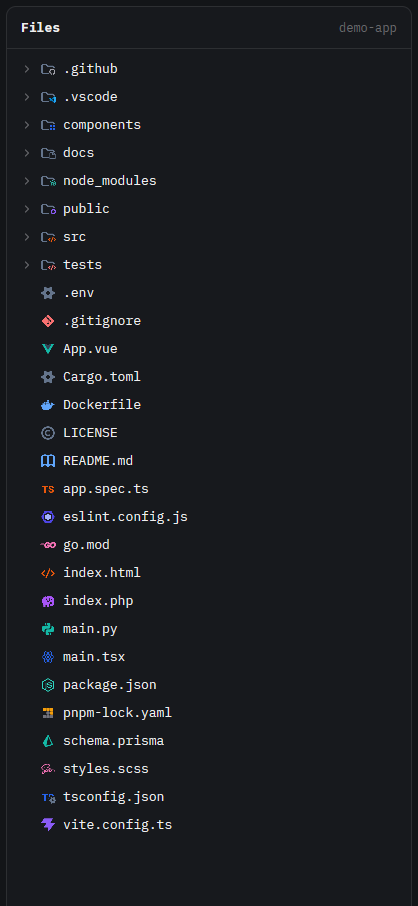
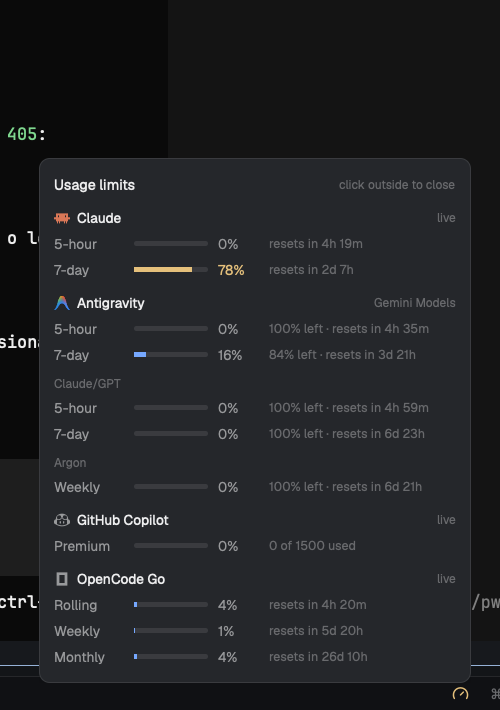
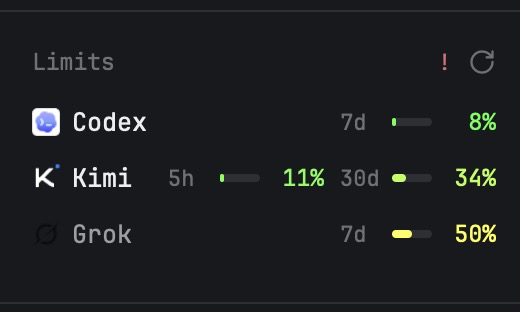
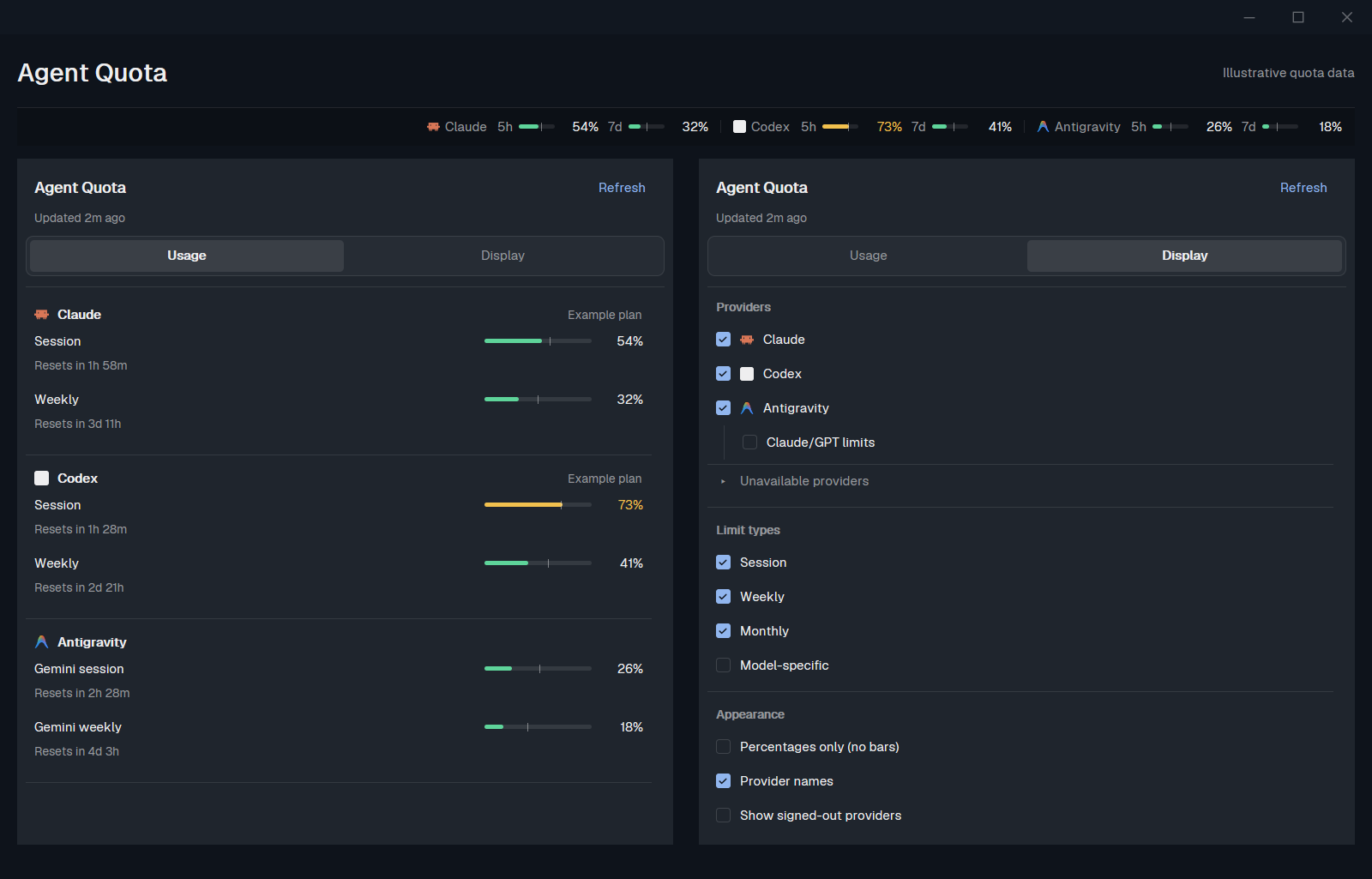
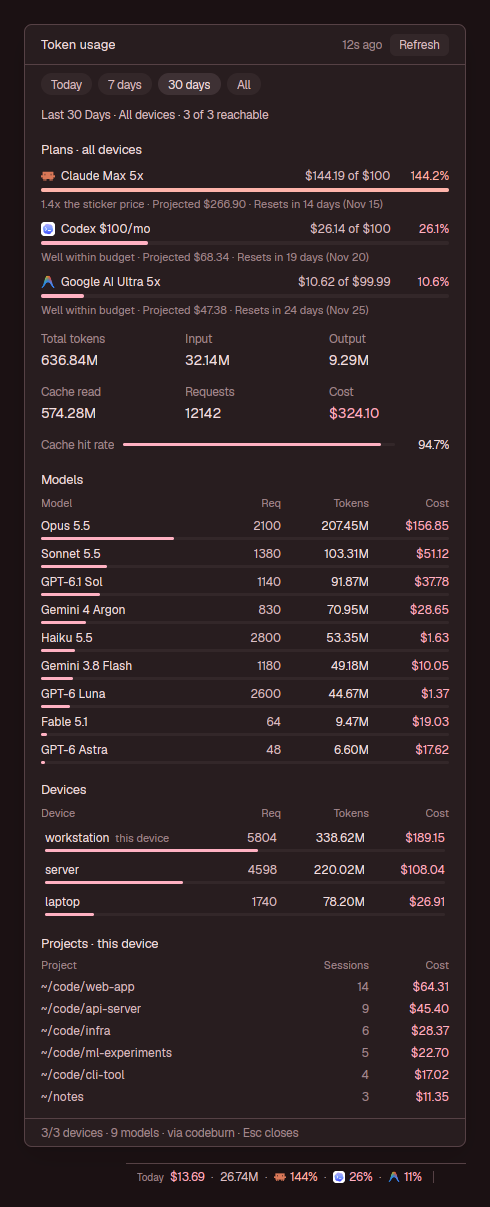
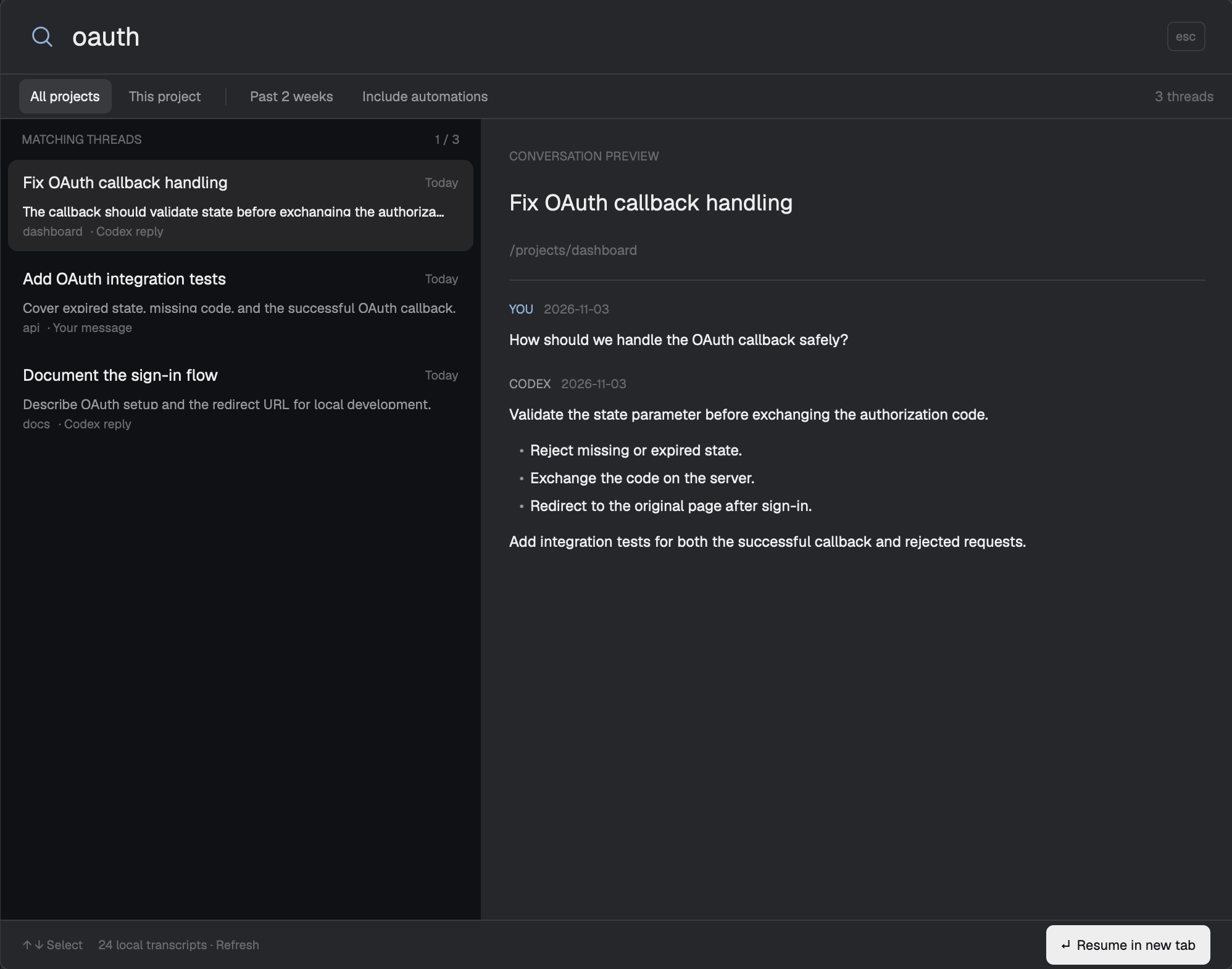
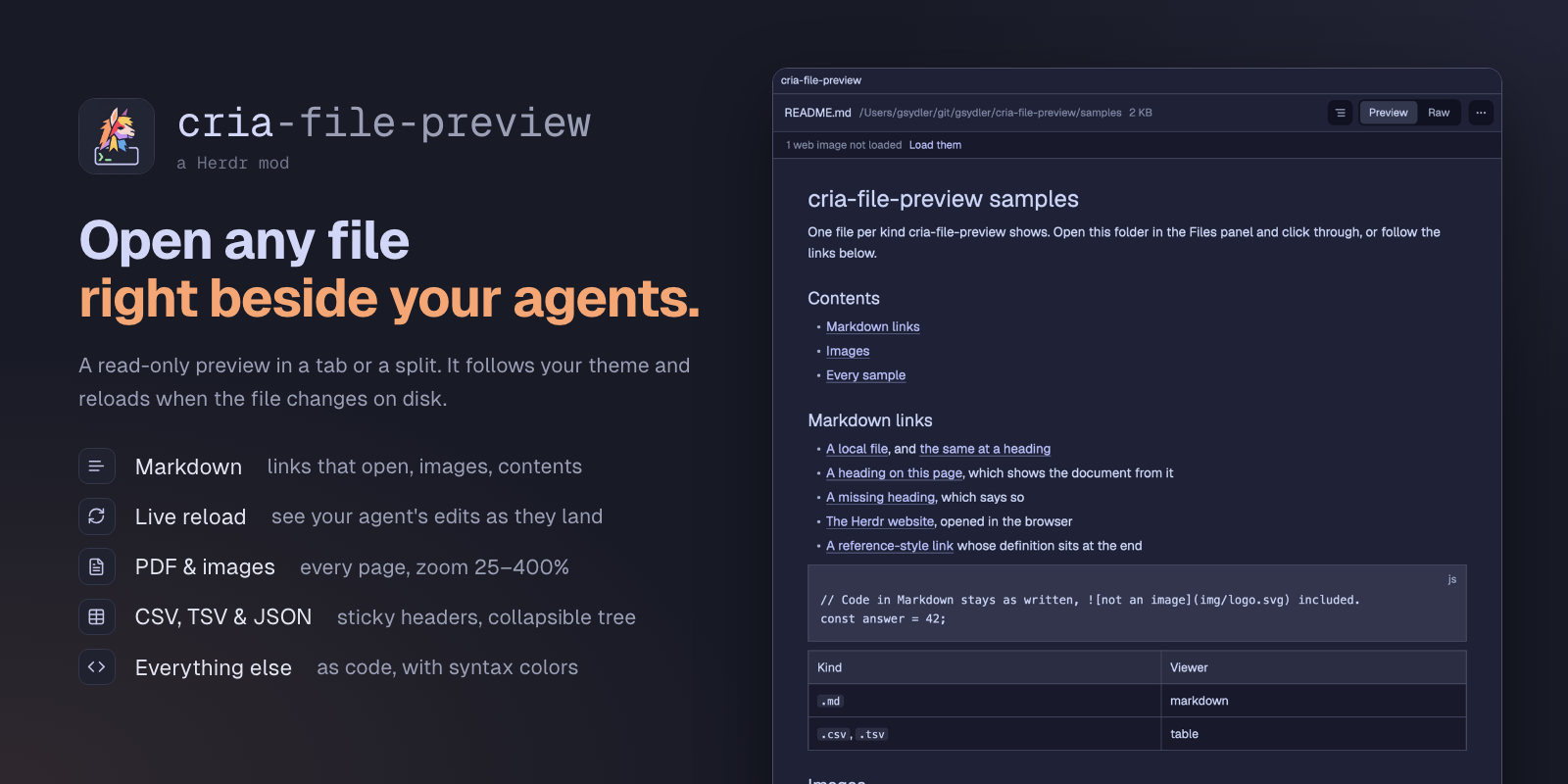
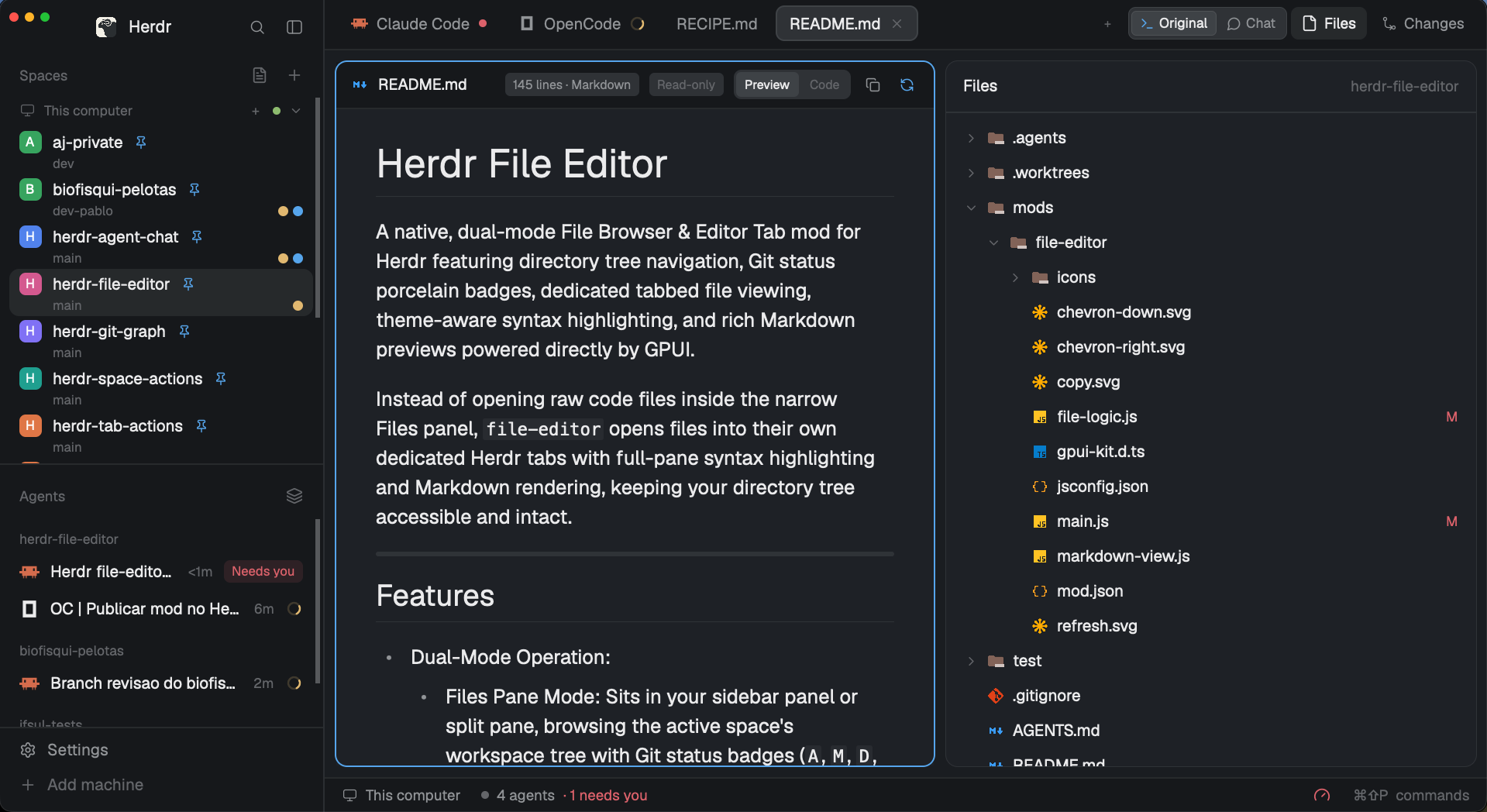
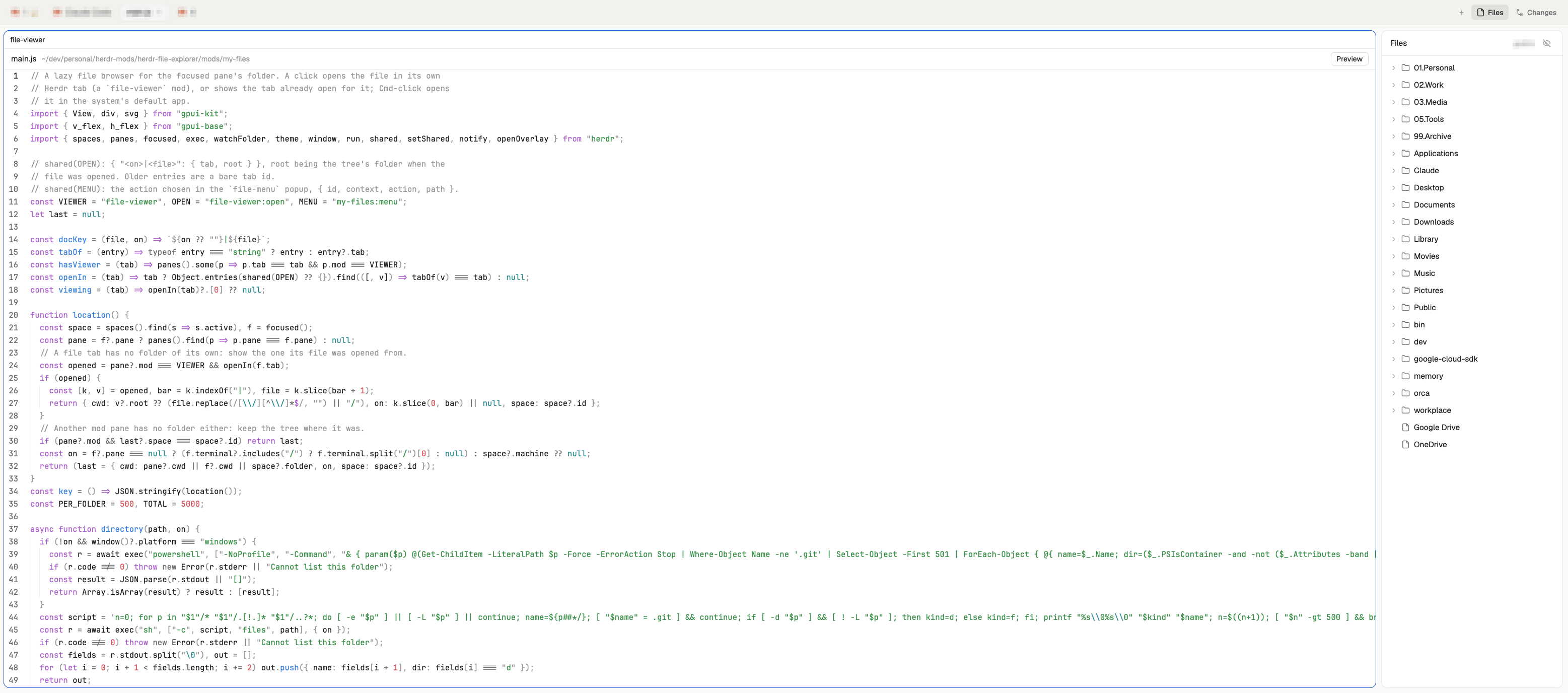
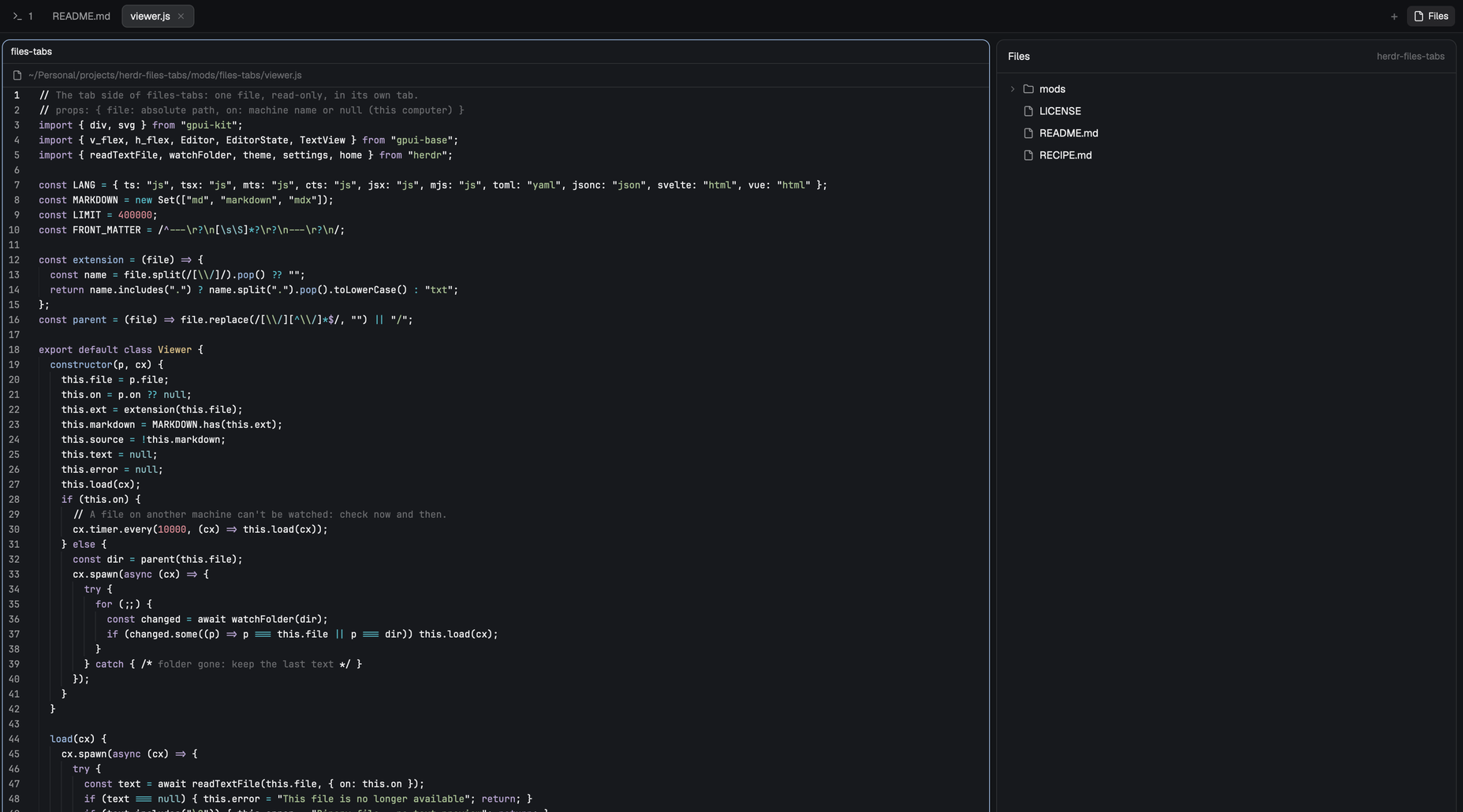
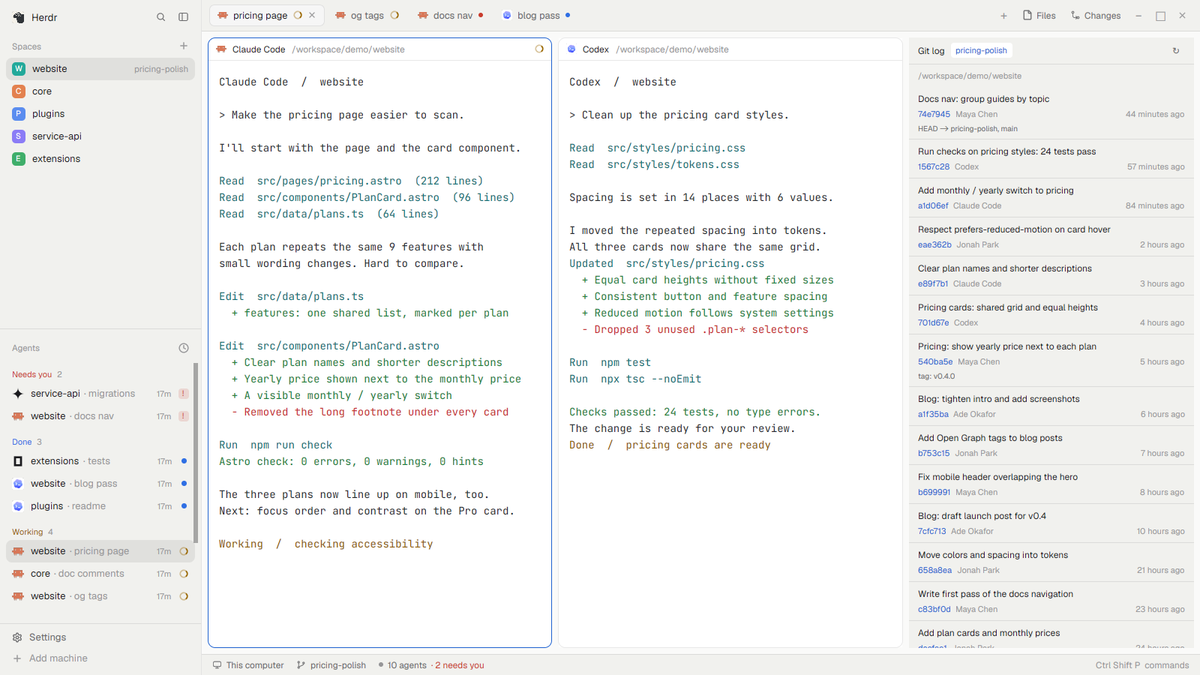
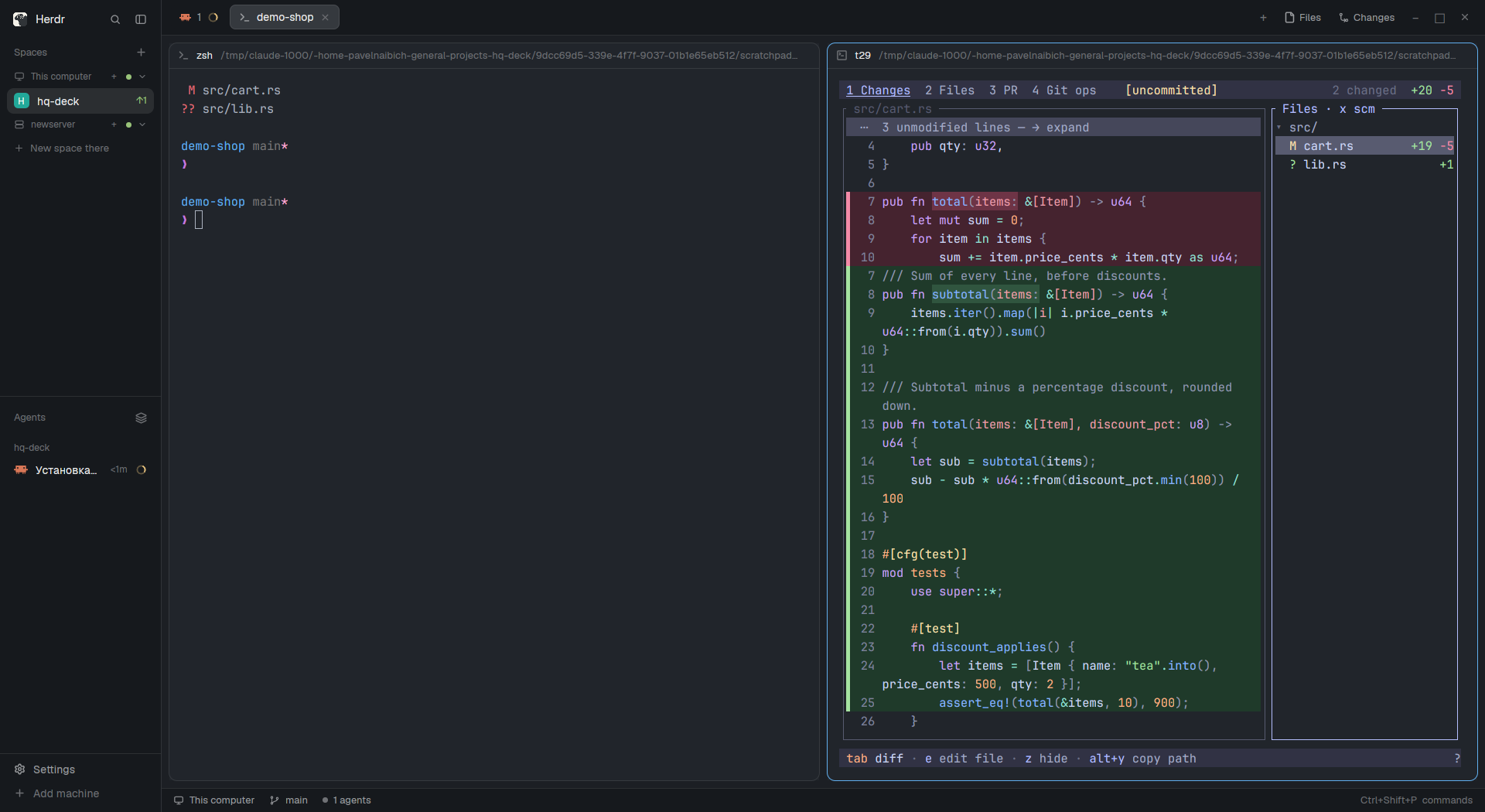
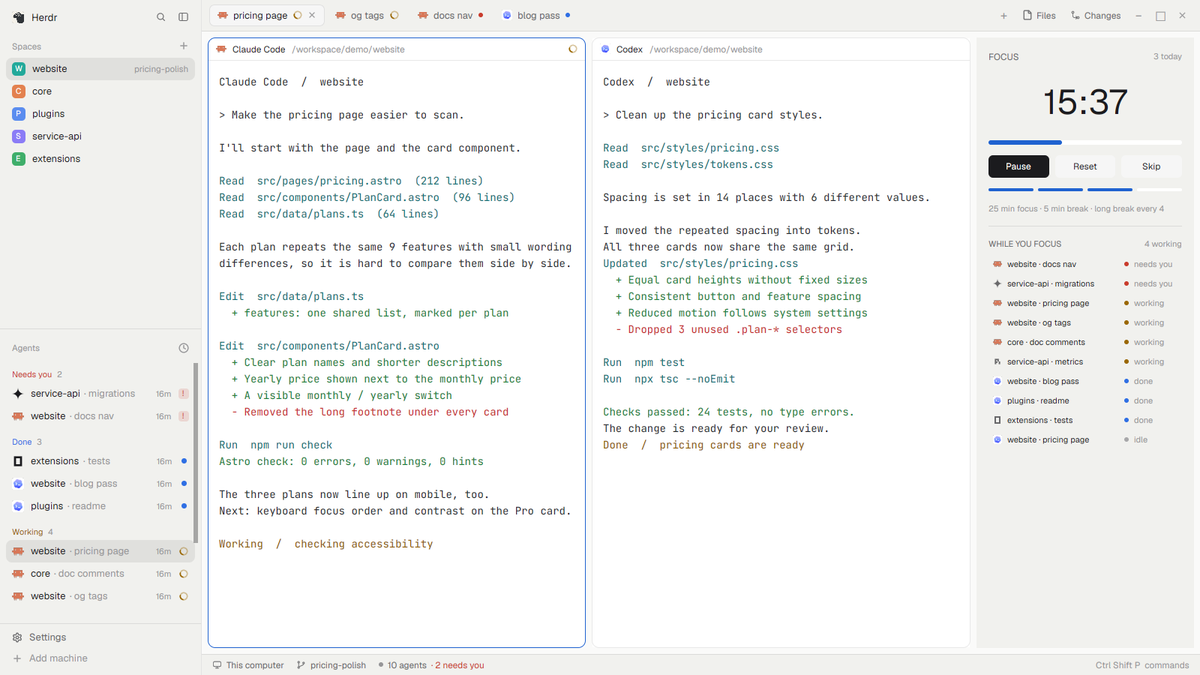
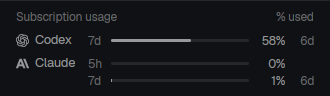
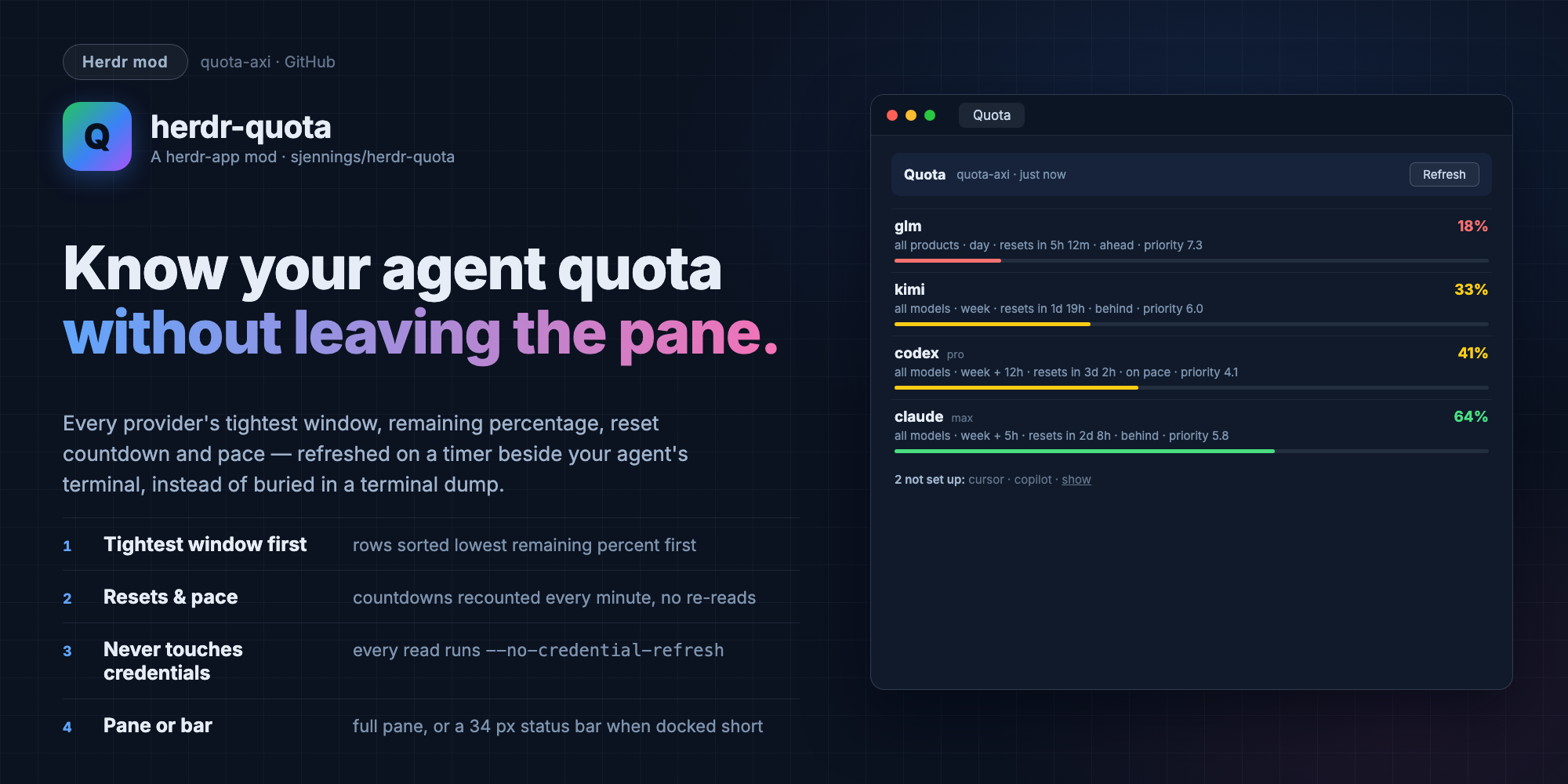
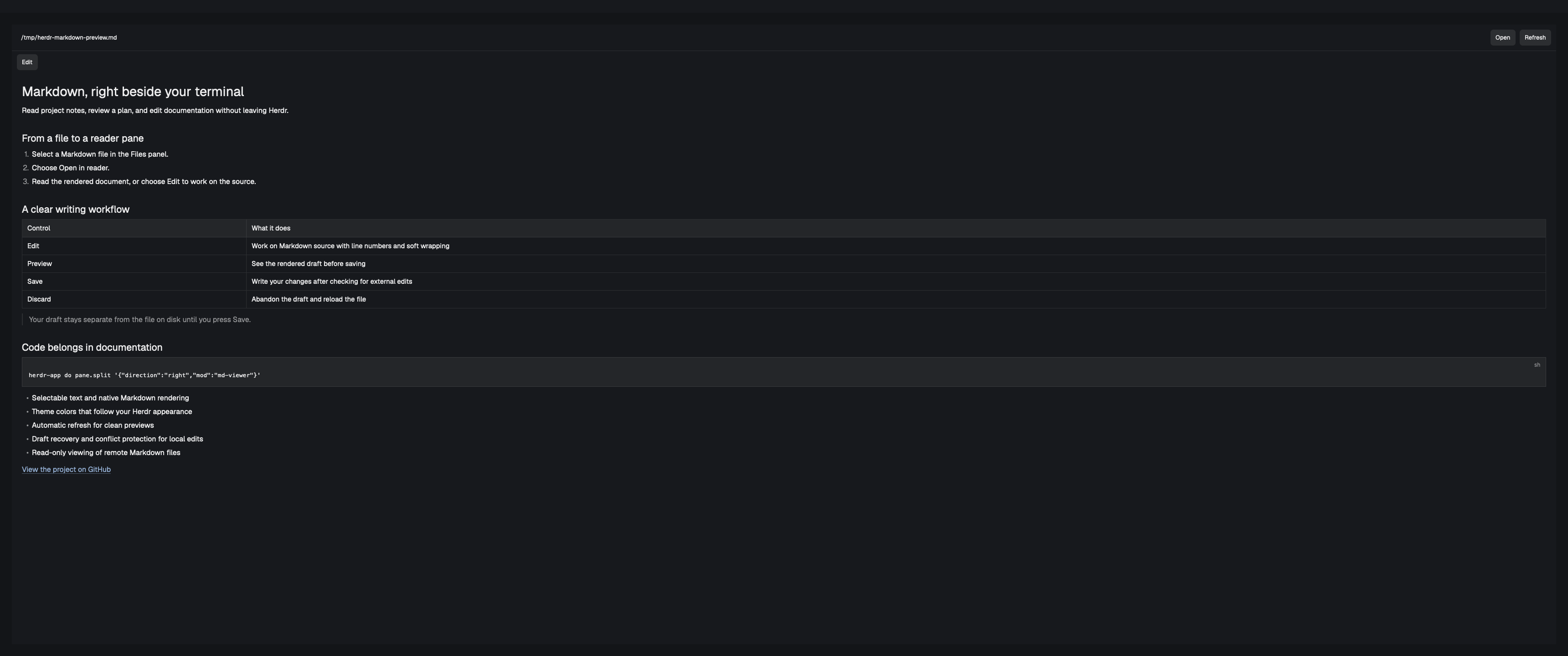
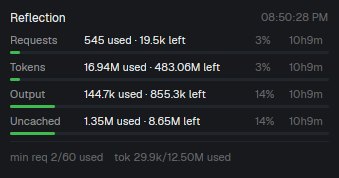
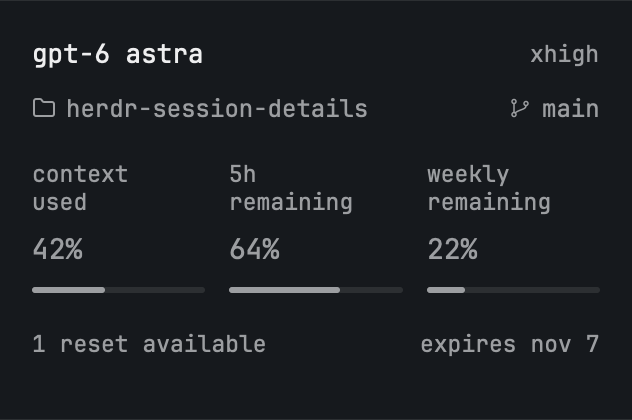
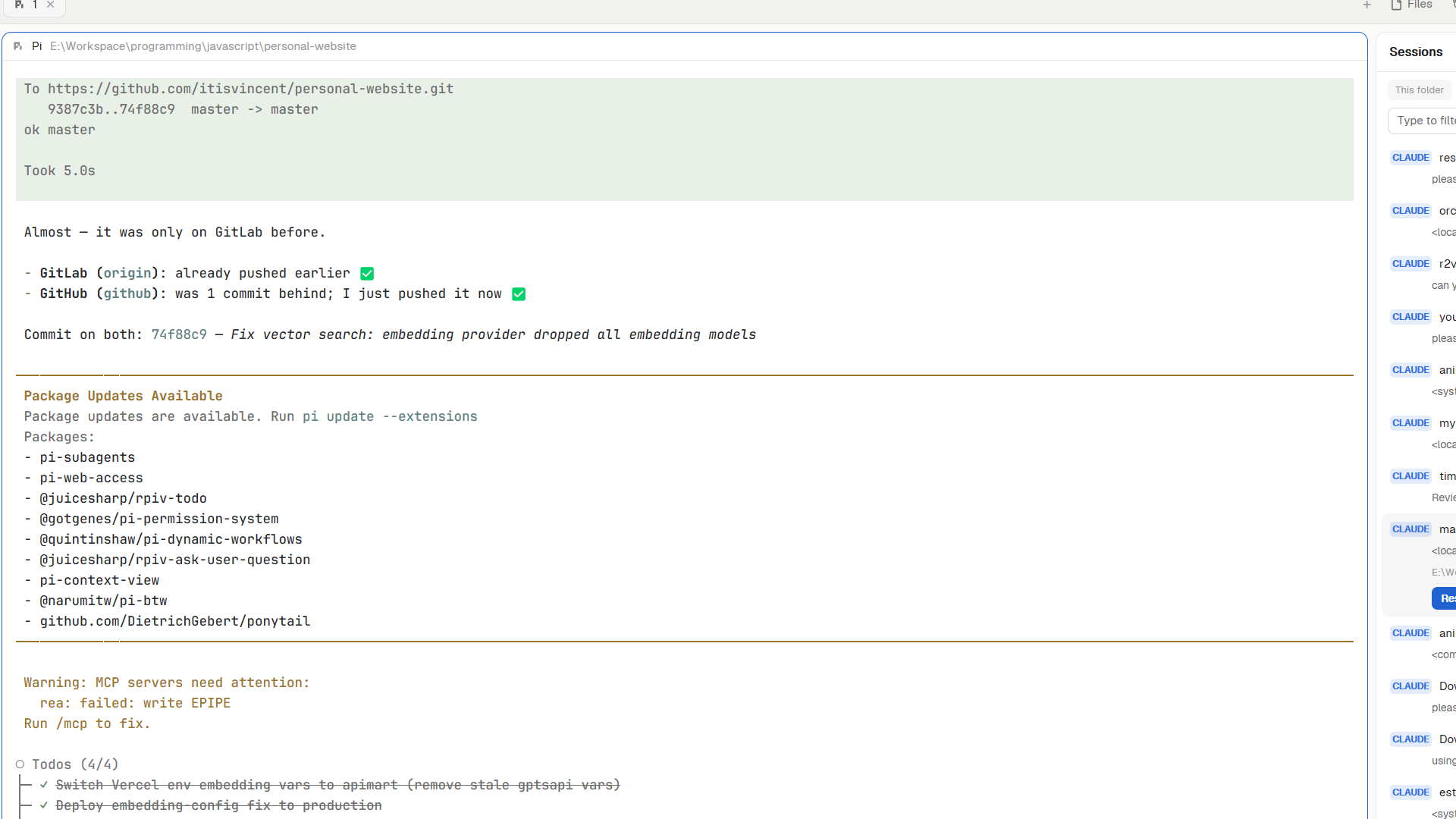
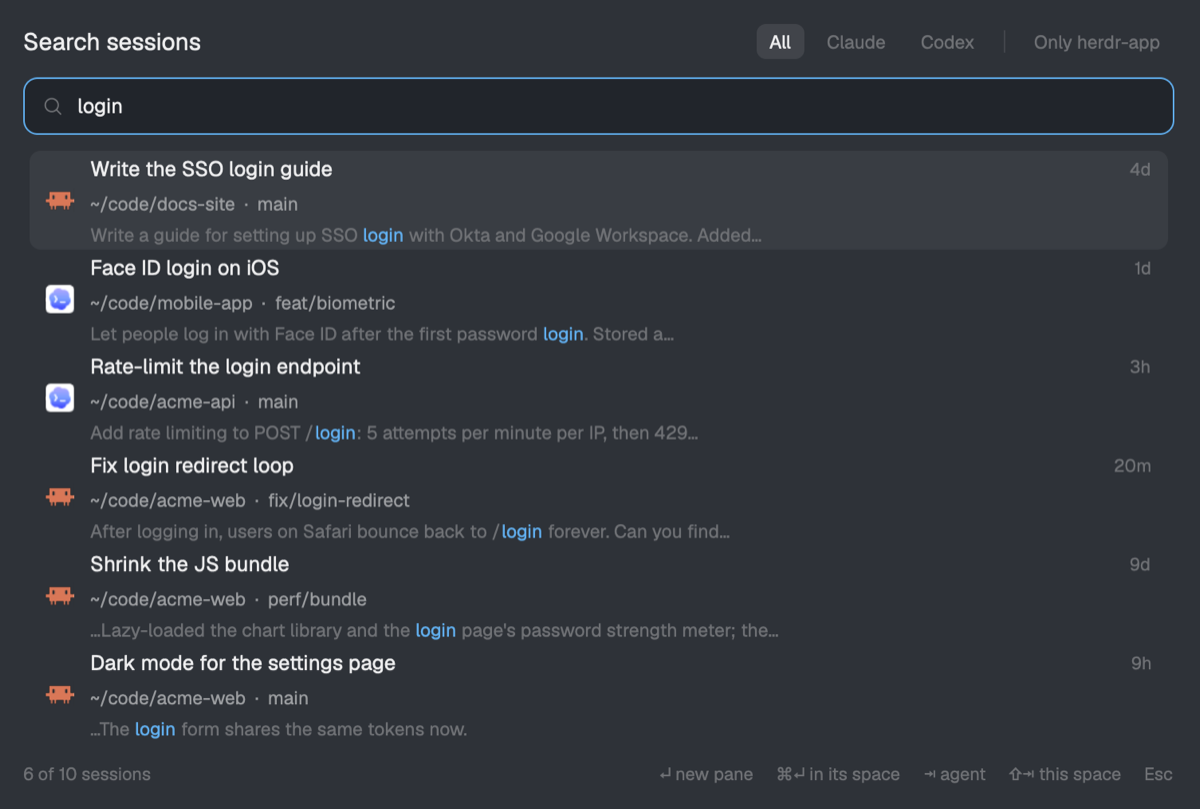
Herdr's own main layout with three additions: a status bar that shows how much Claude and Codex quota is left, a Files panel that renders Markdown (and can open it in its own preview pane), and a History panel that lists past Claude Code, Codex and Pi sessions and resumes them in a new tab.


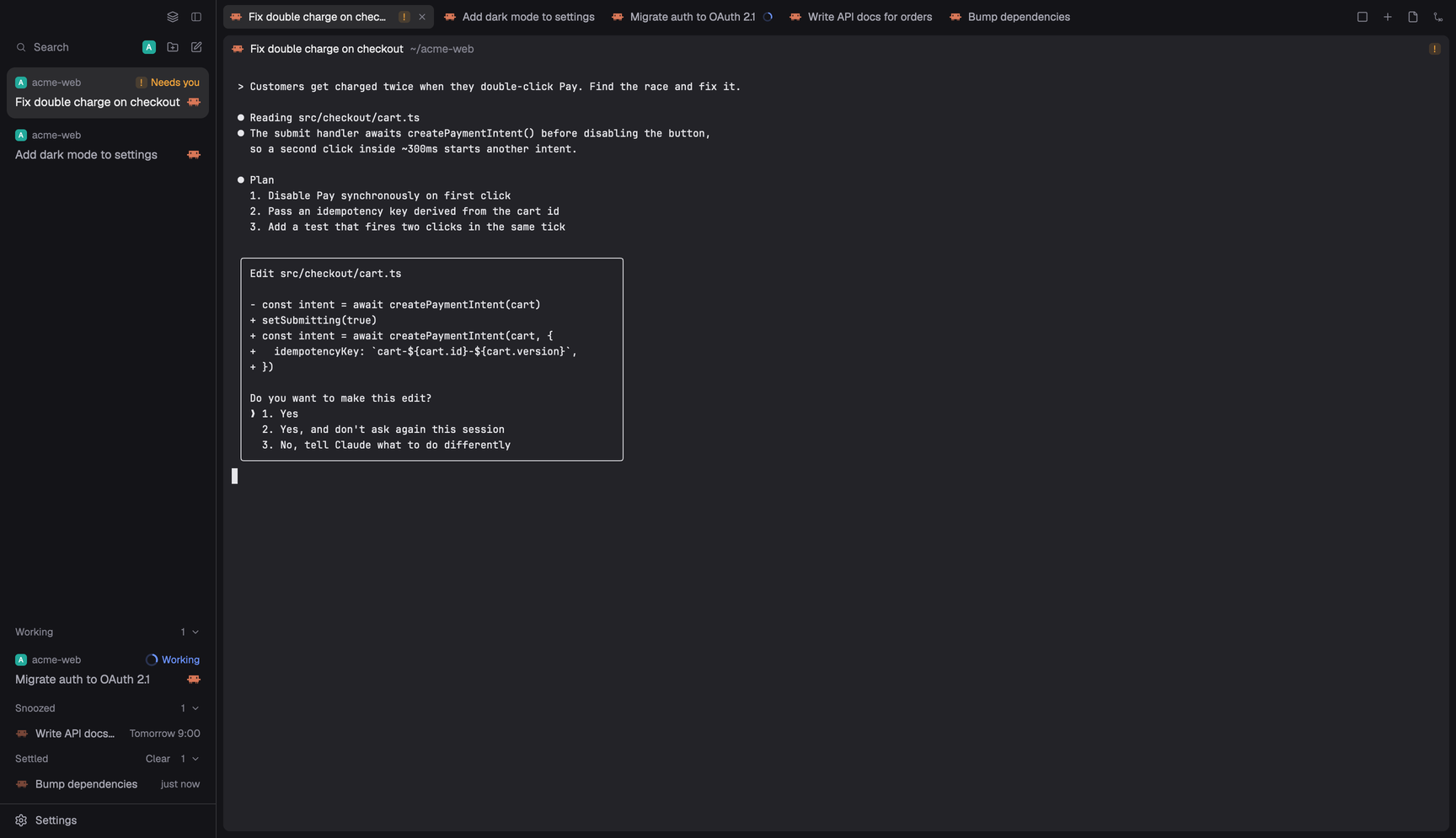

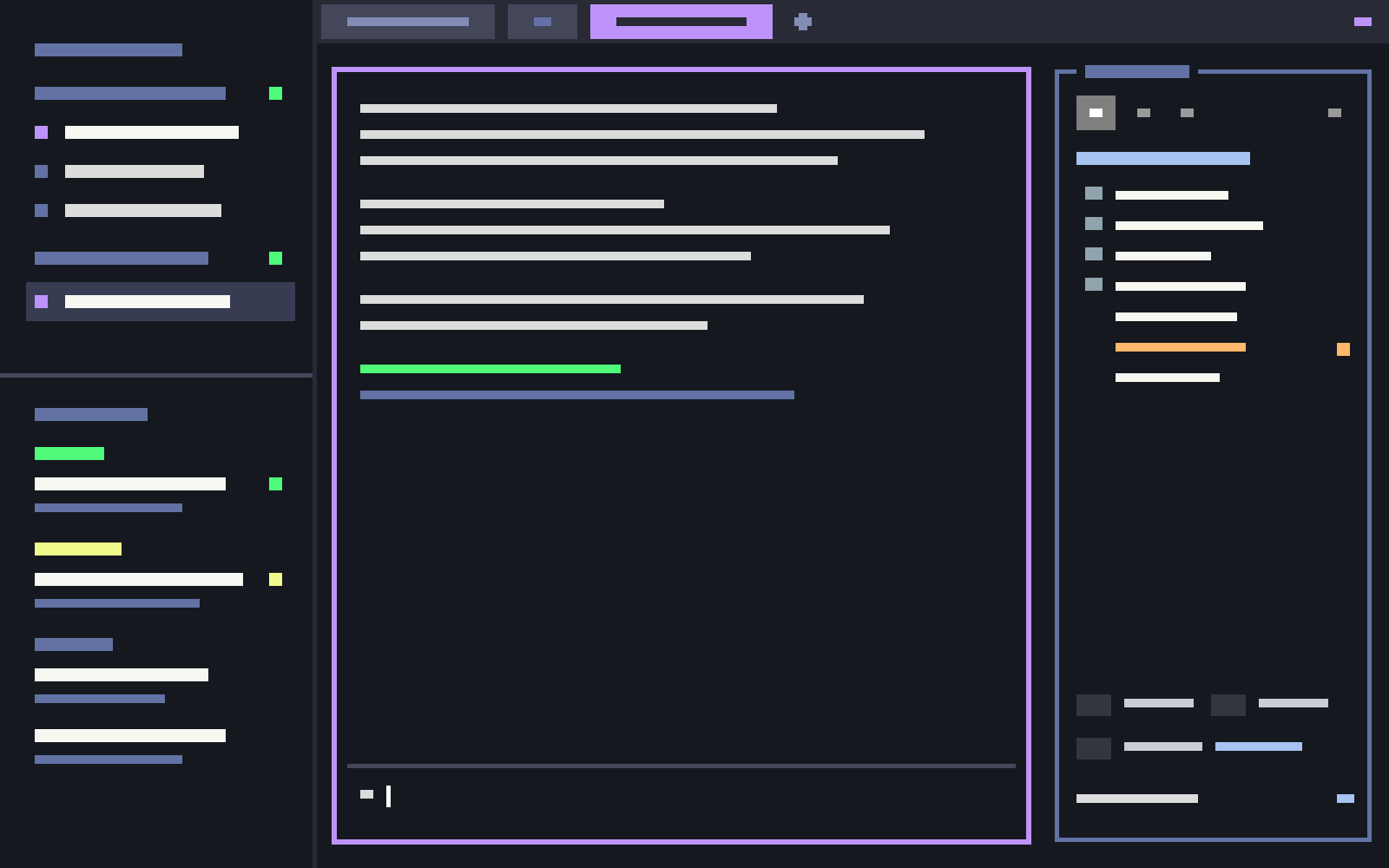



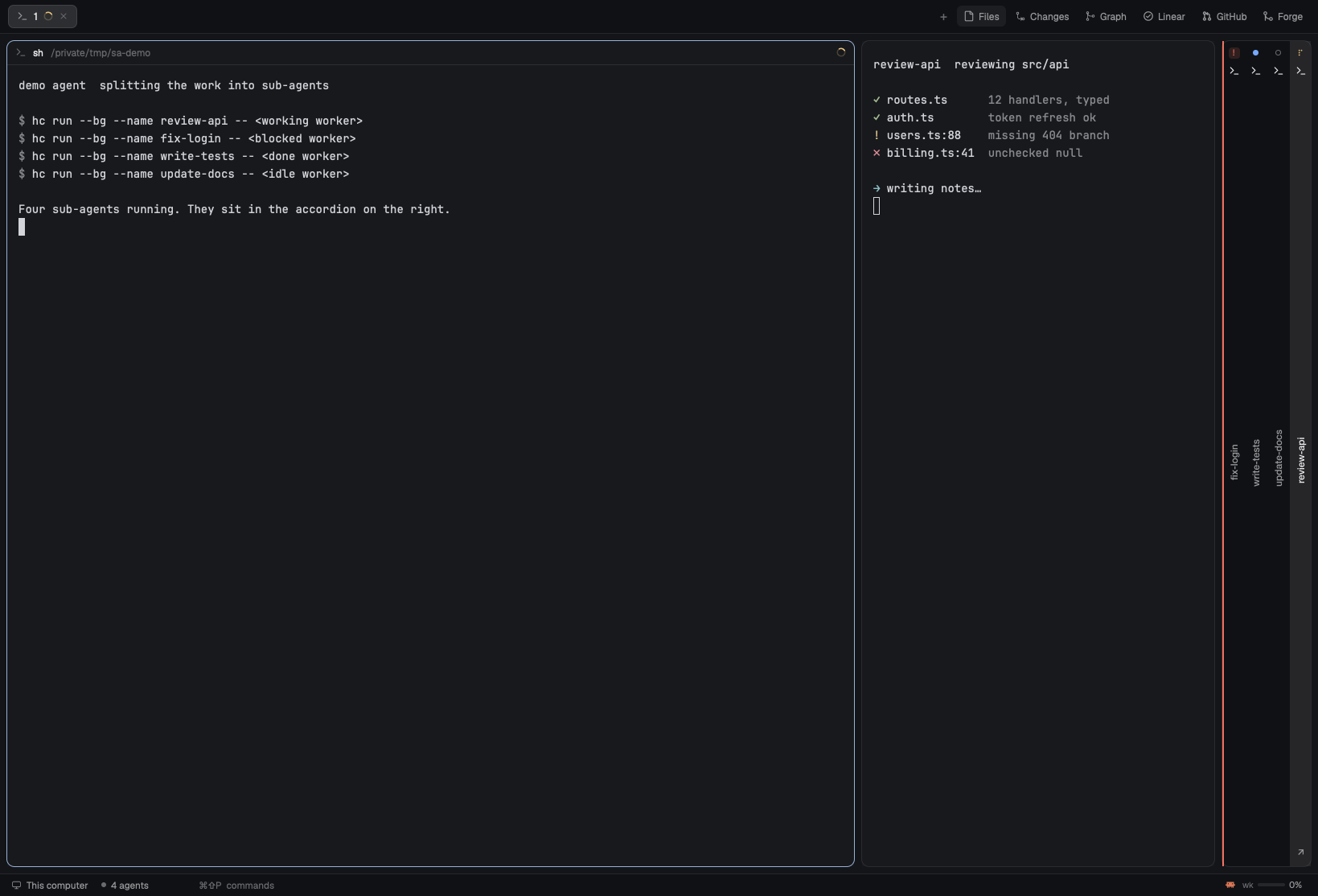
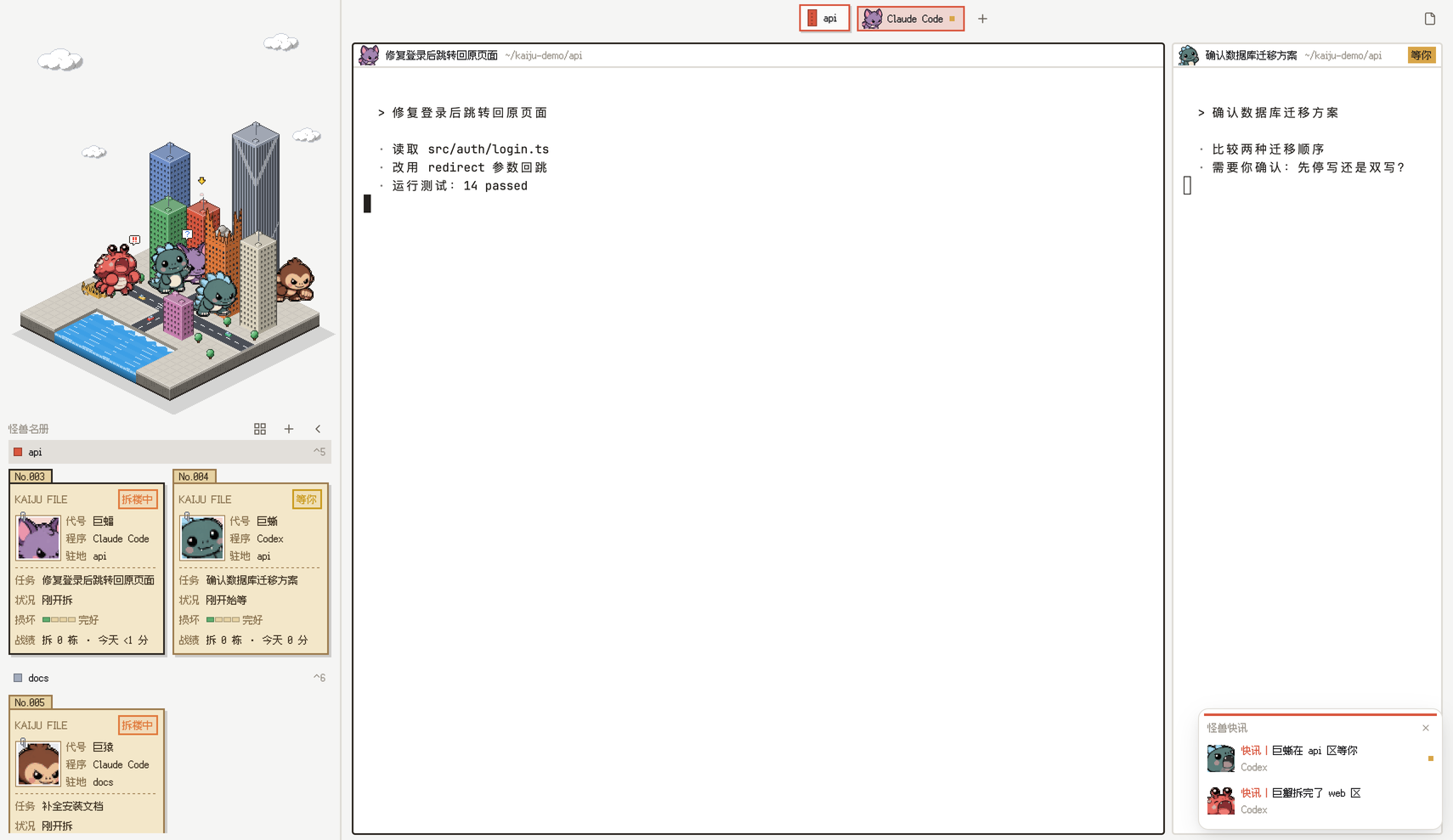
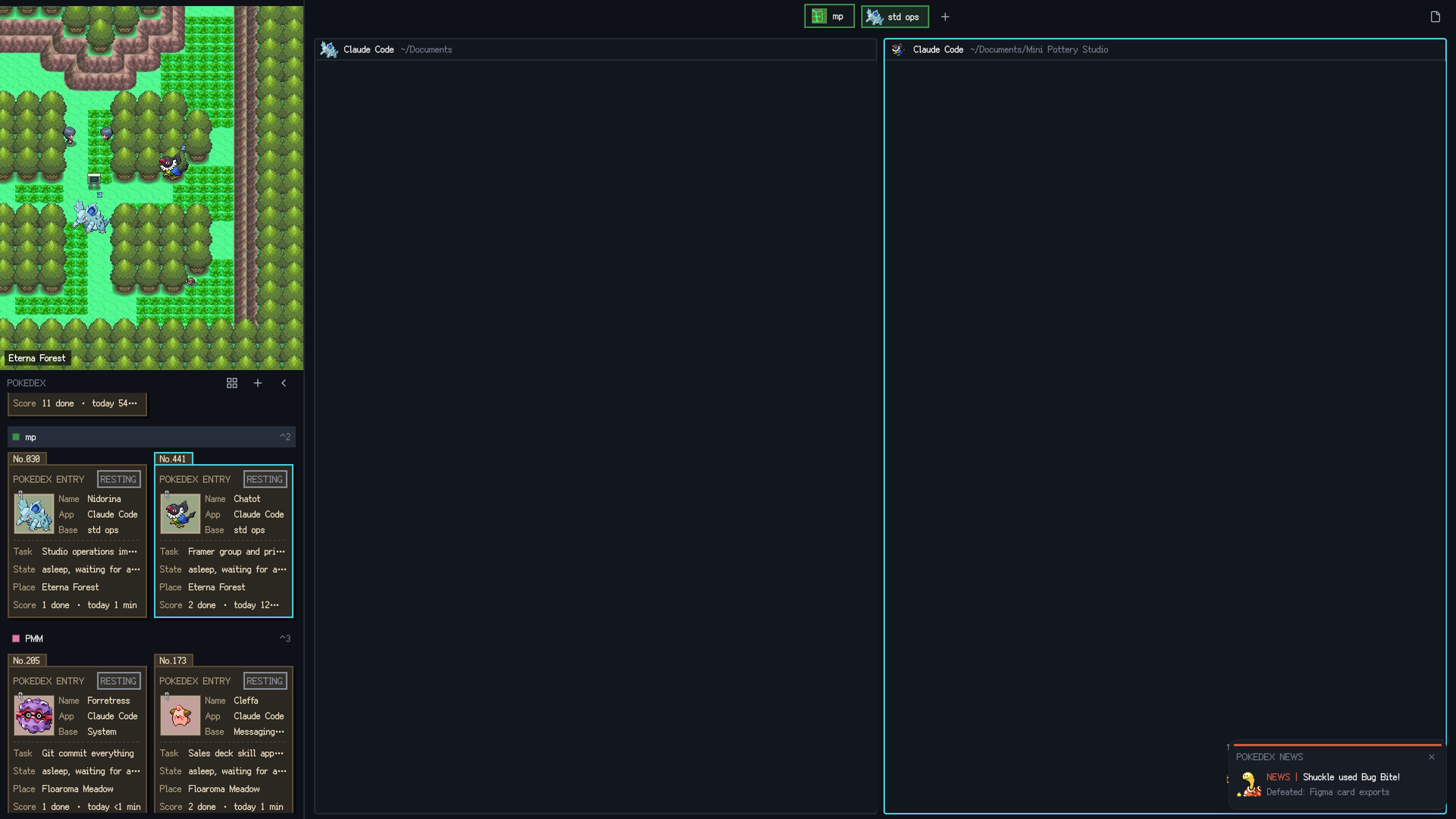
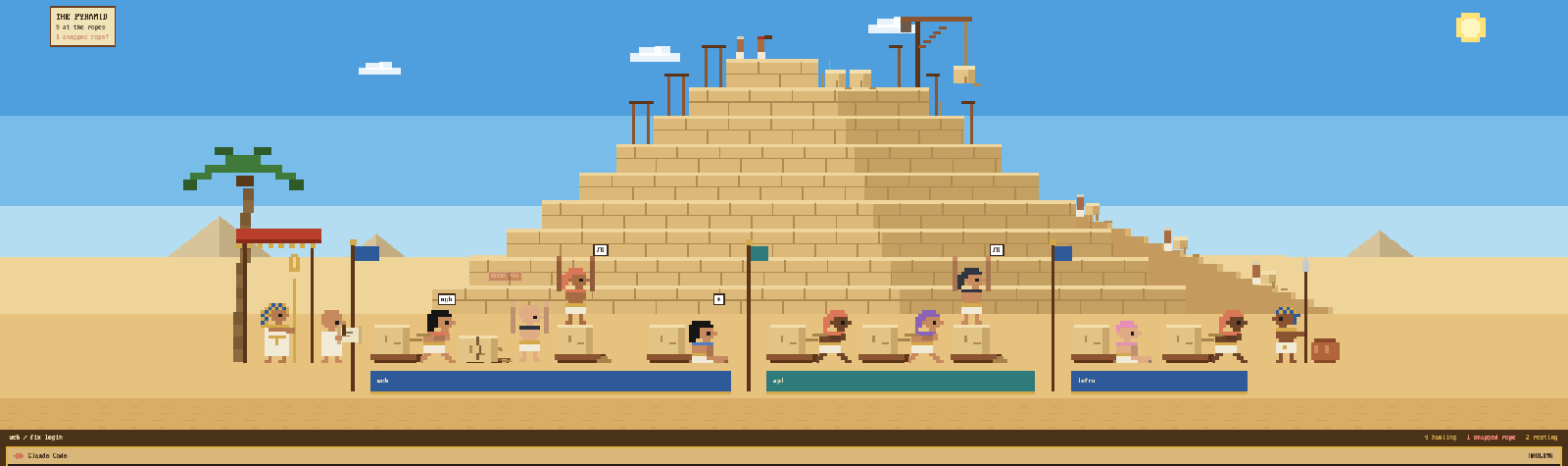
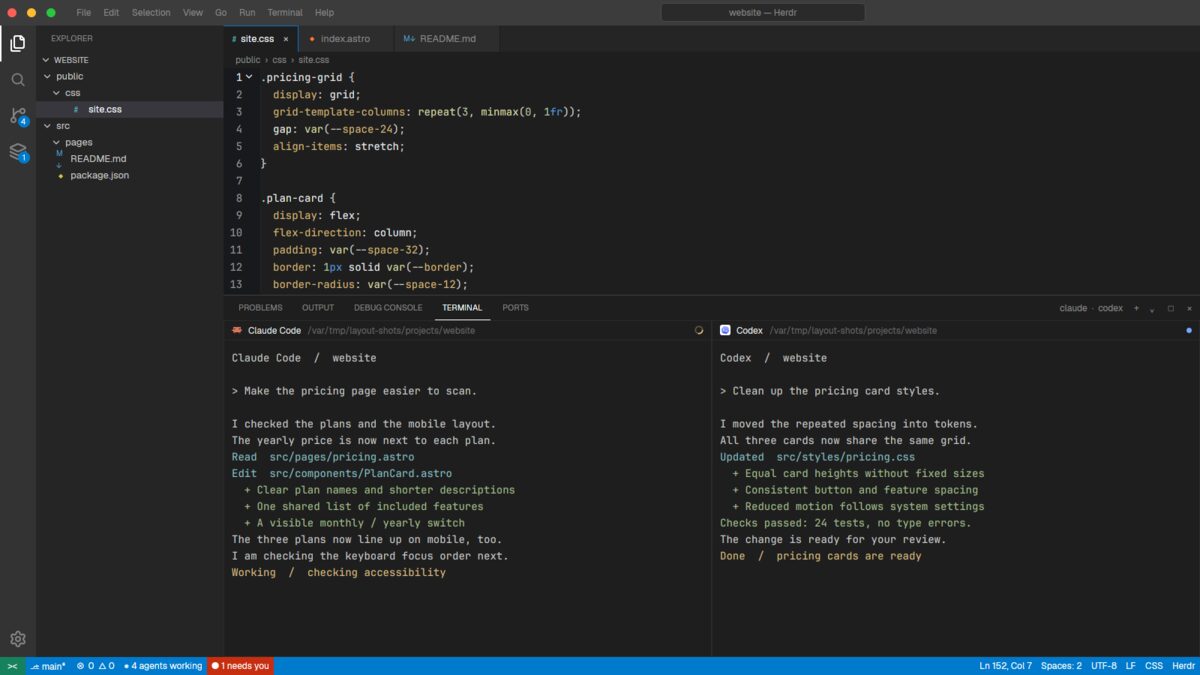
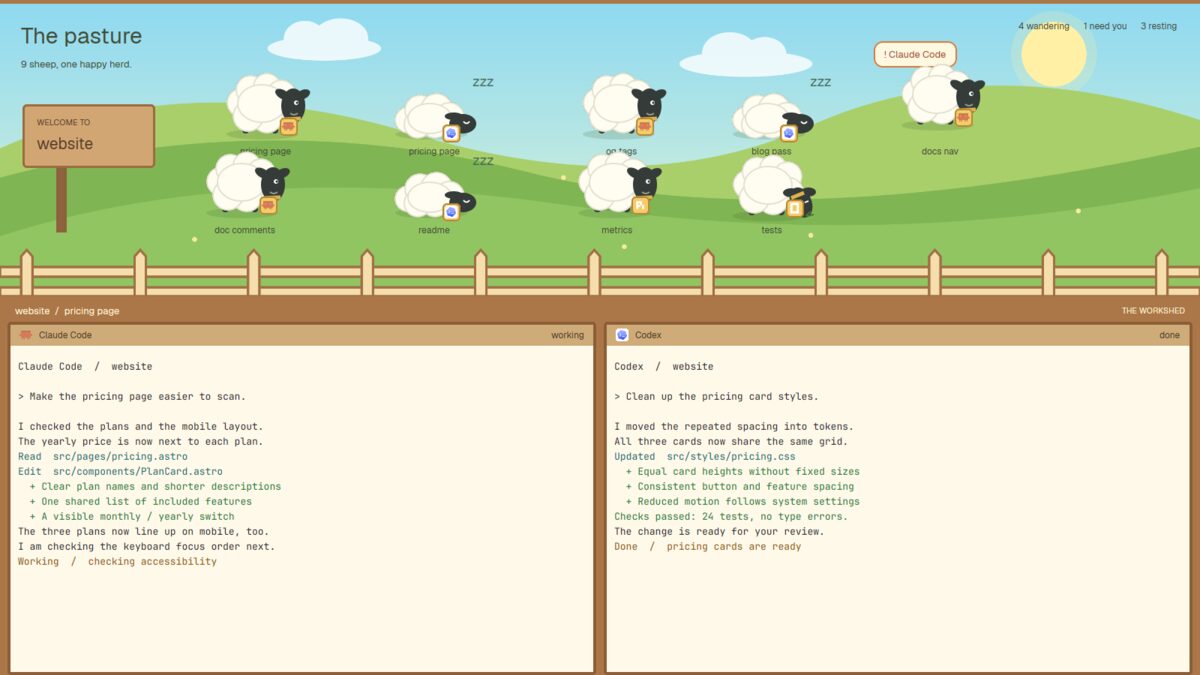
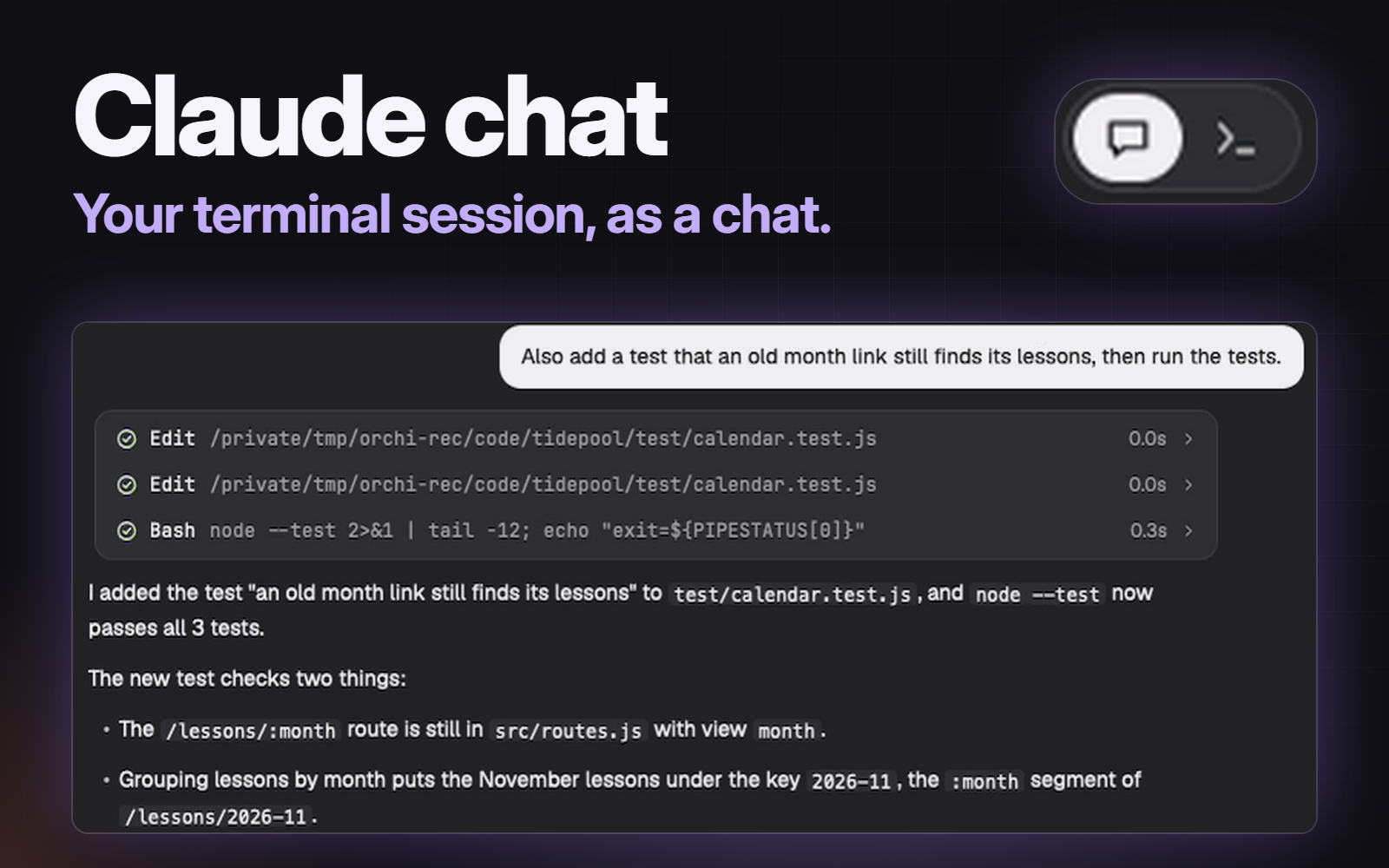
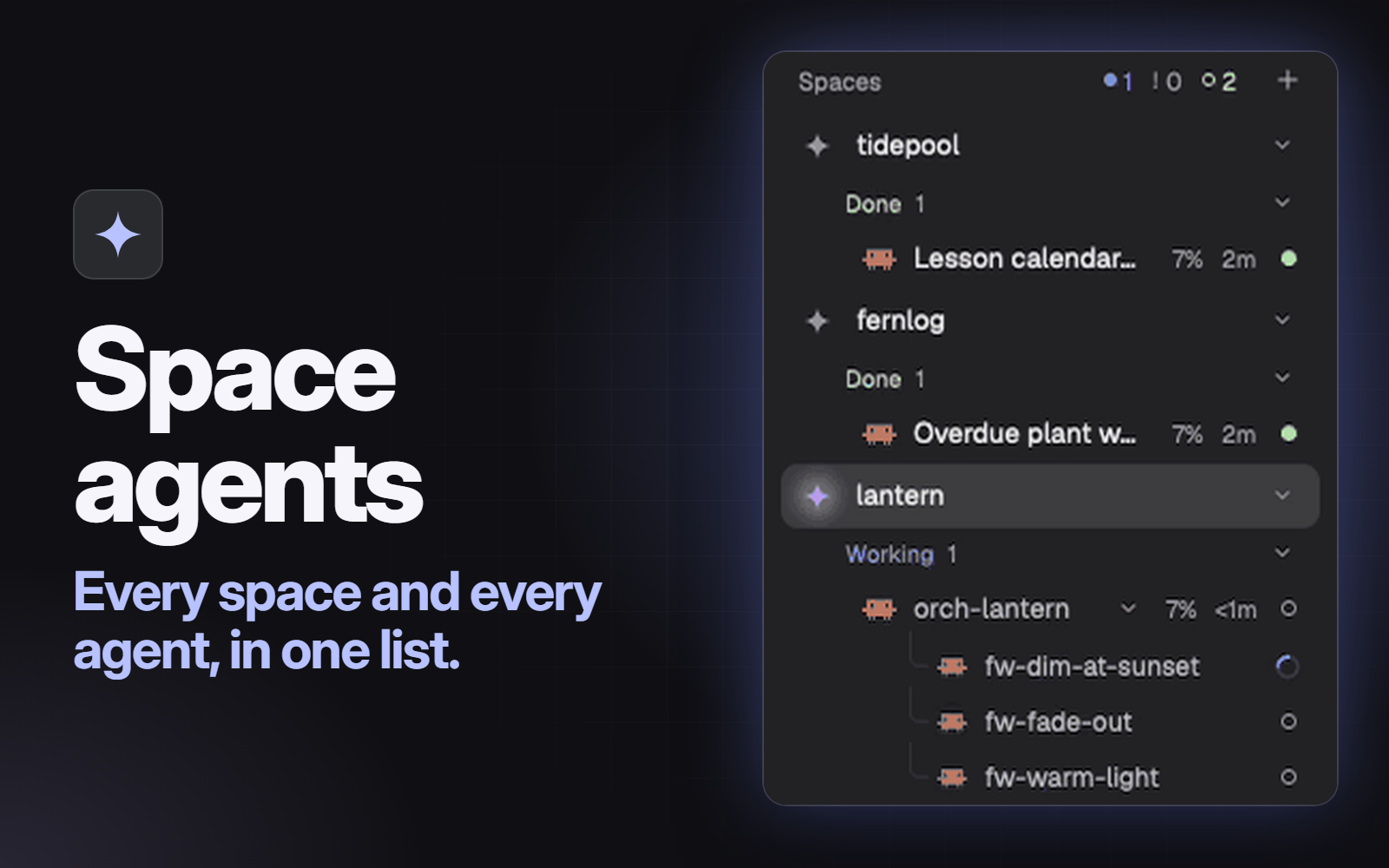
Herdr's usual window (spaces sidebar, tab bar, terminals, status bar) where the agents list becomes a zoo: every agent is a small animated 3D creature on its own isometric tile that acts out what the agent is doing. It walks while the agent works, shakes its head and jumps when the agent needs you, cheers when it's done, and idles faded out. The middle of the window shows a Claude Code agent as a chat (markdown, tool calls, diffs, sub-agents, question cards) with a Chat / Terminal switch back…

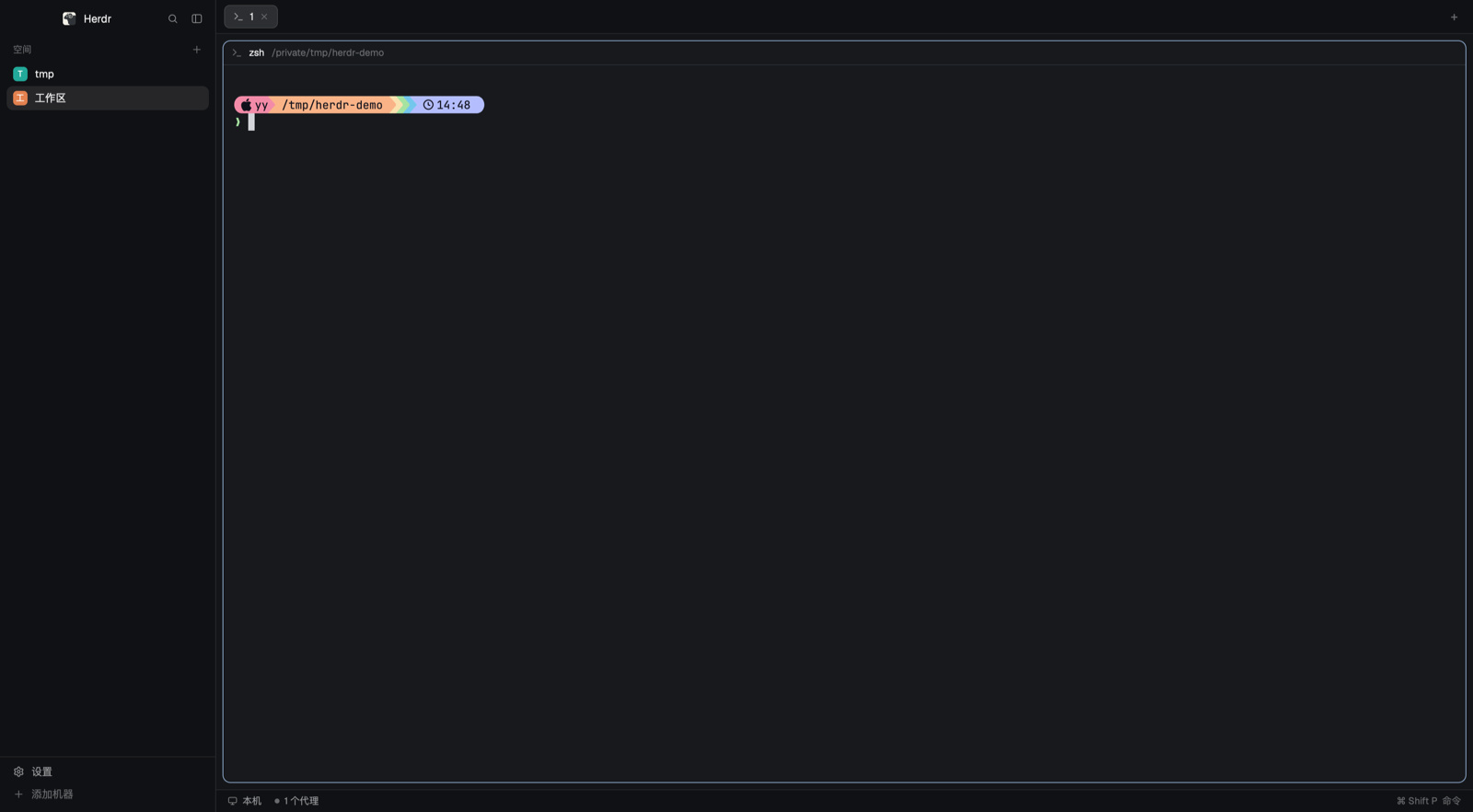






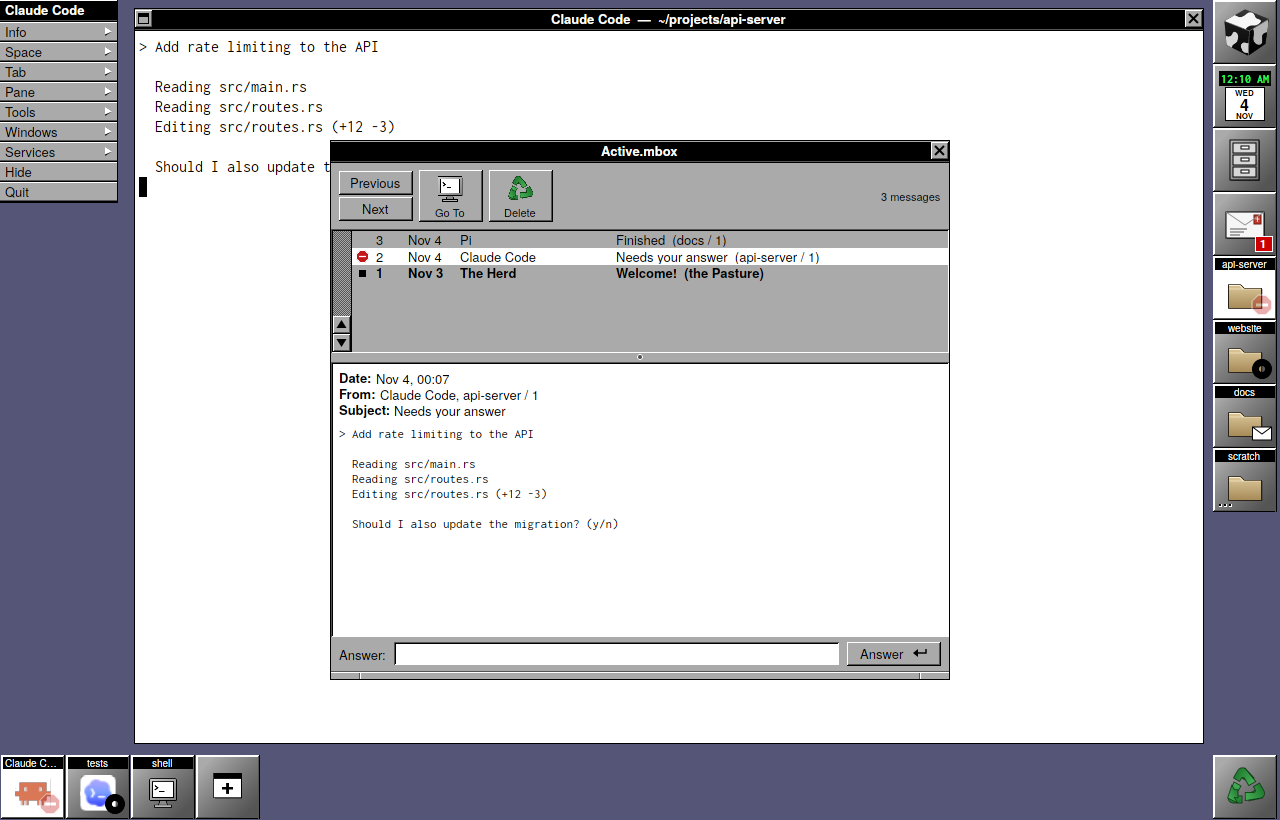

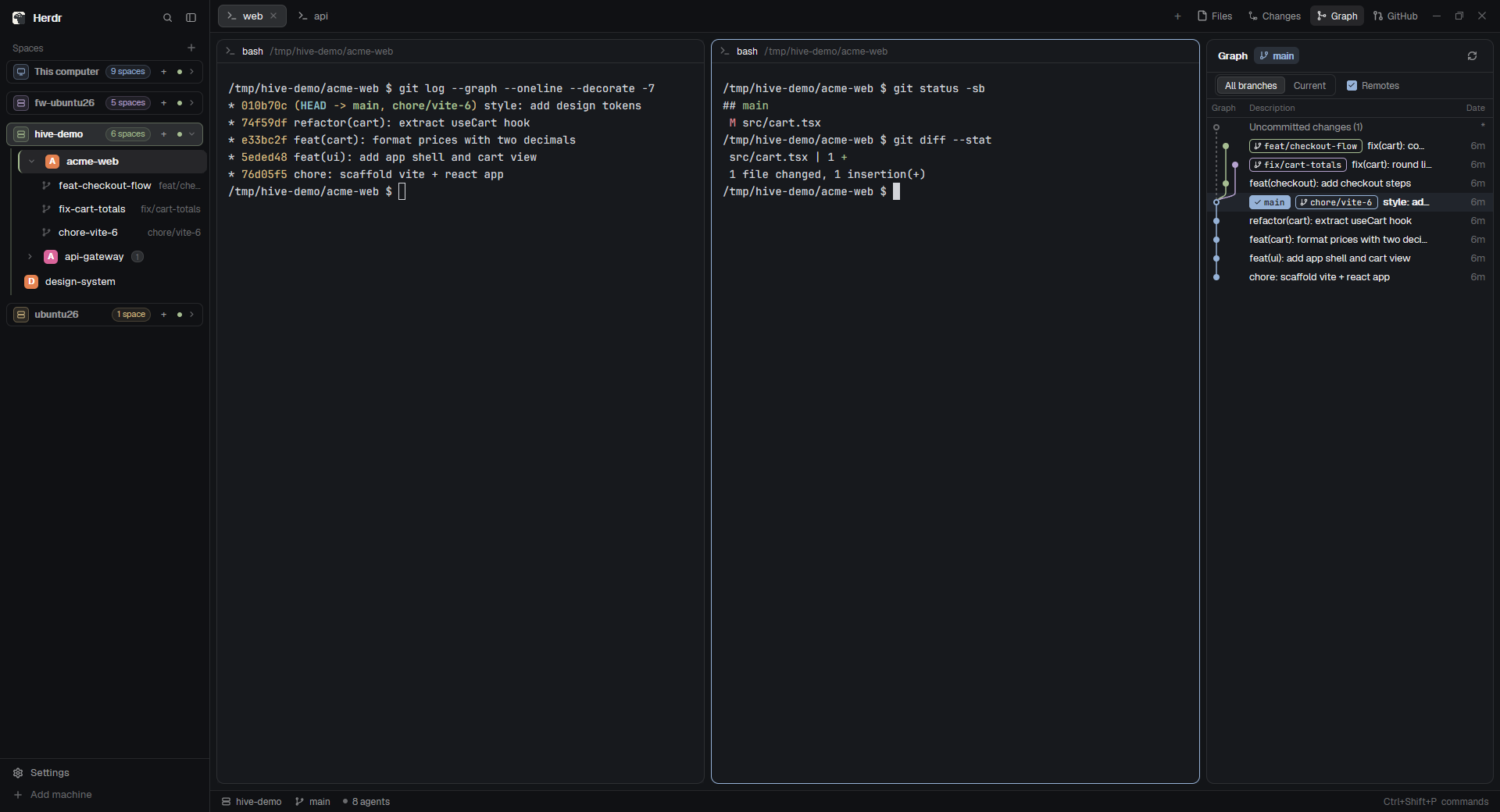

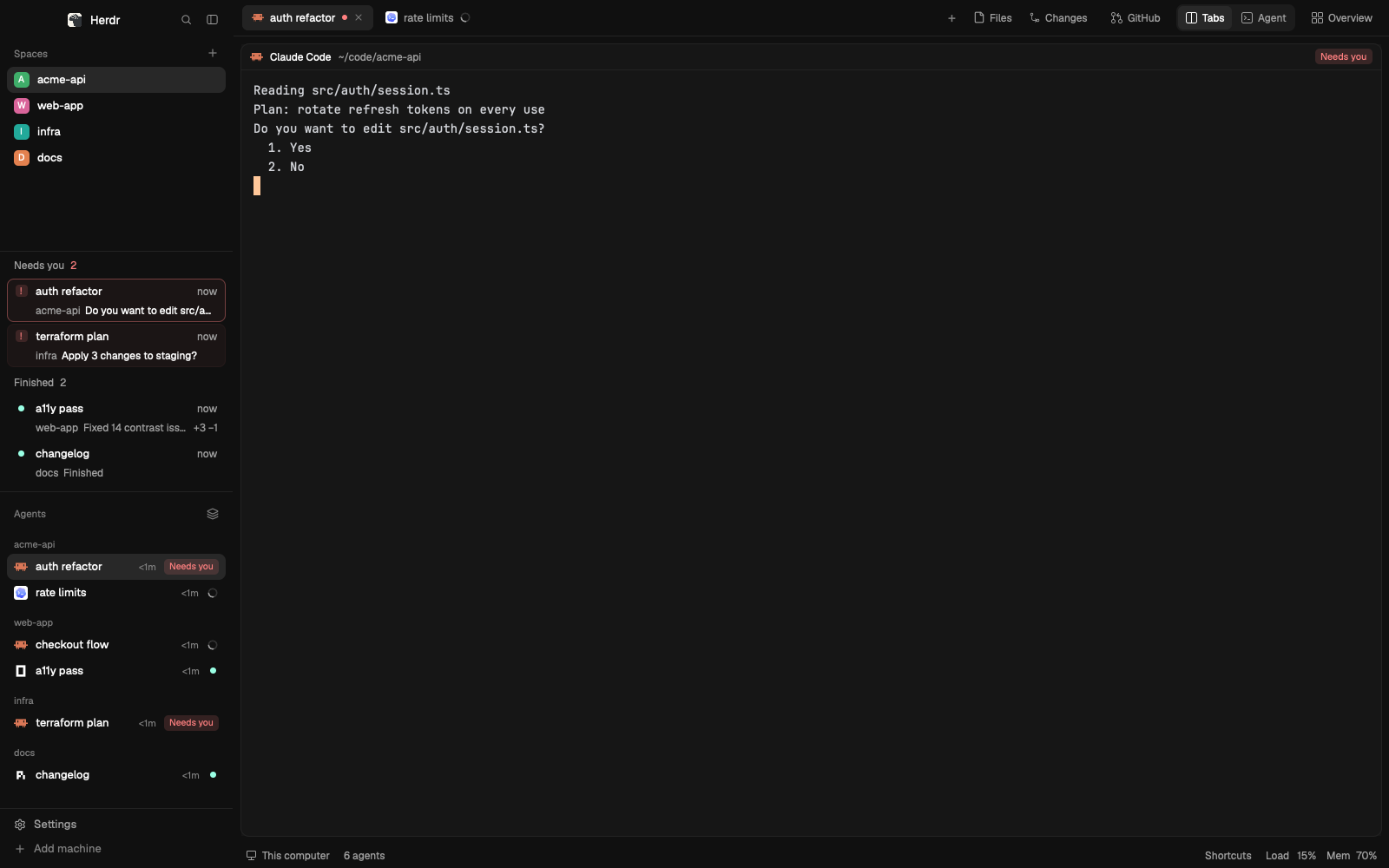

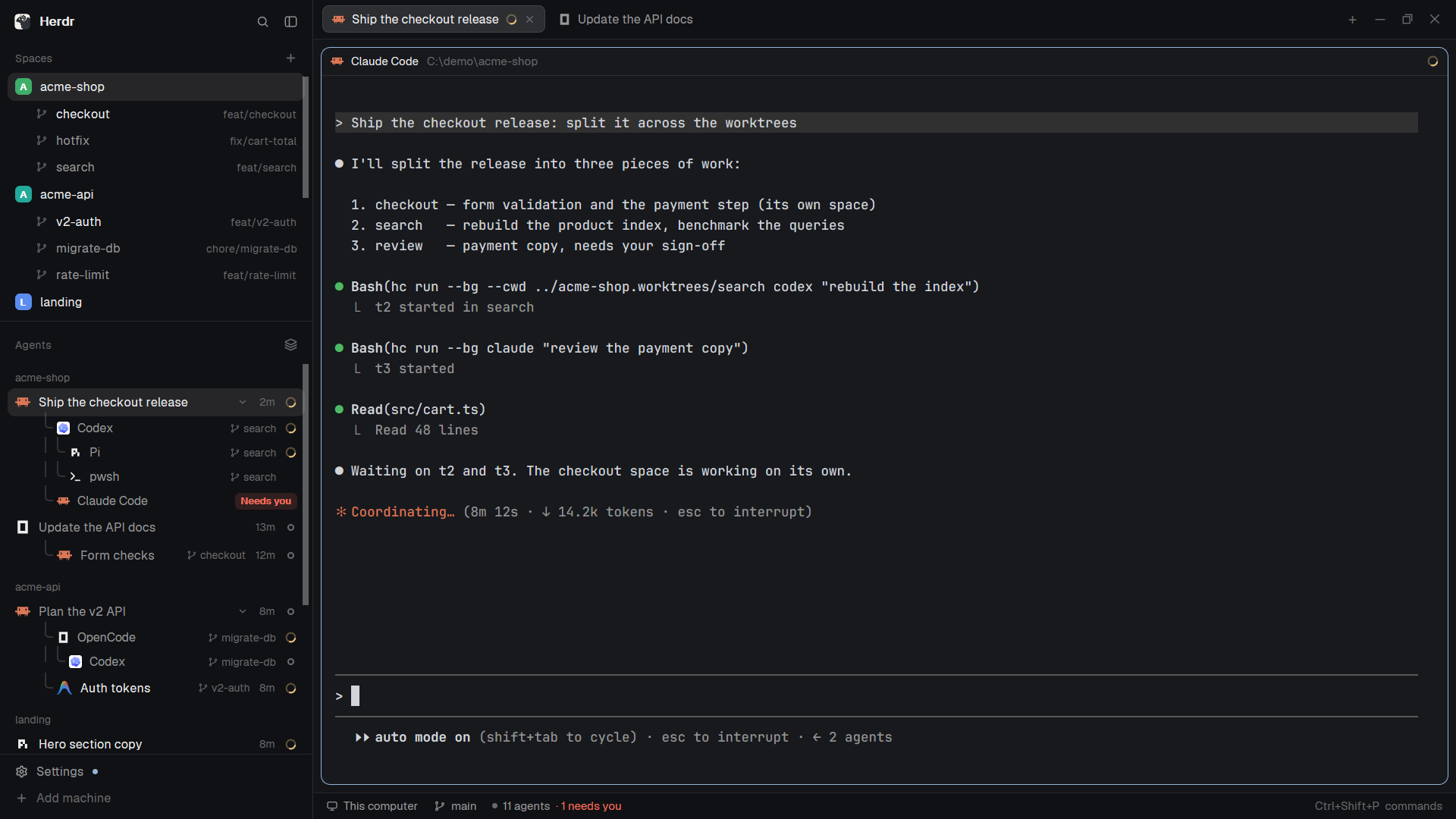

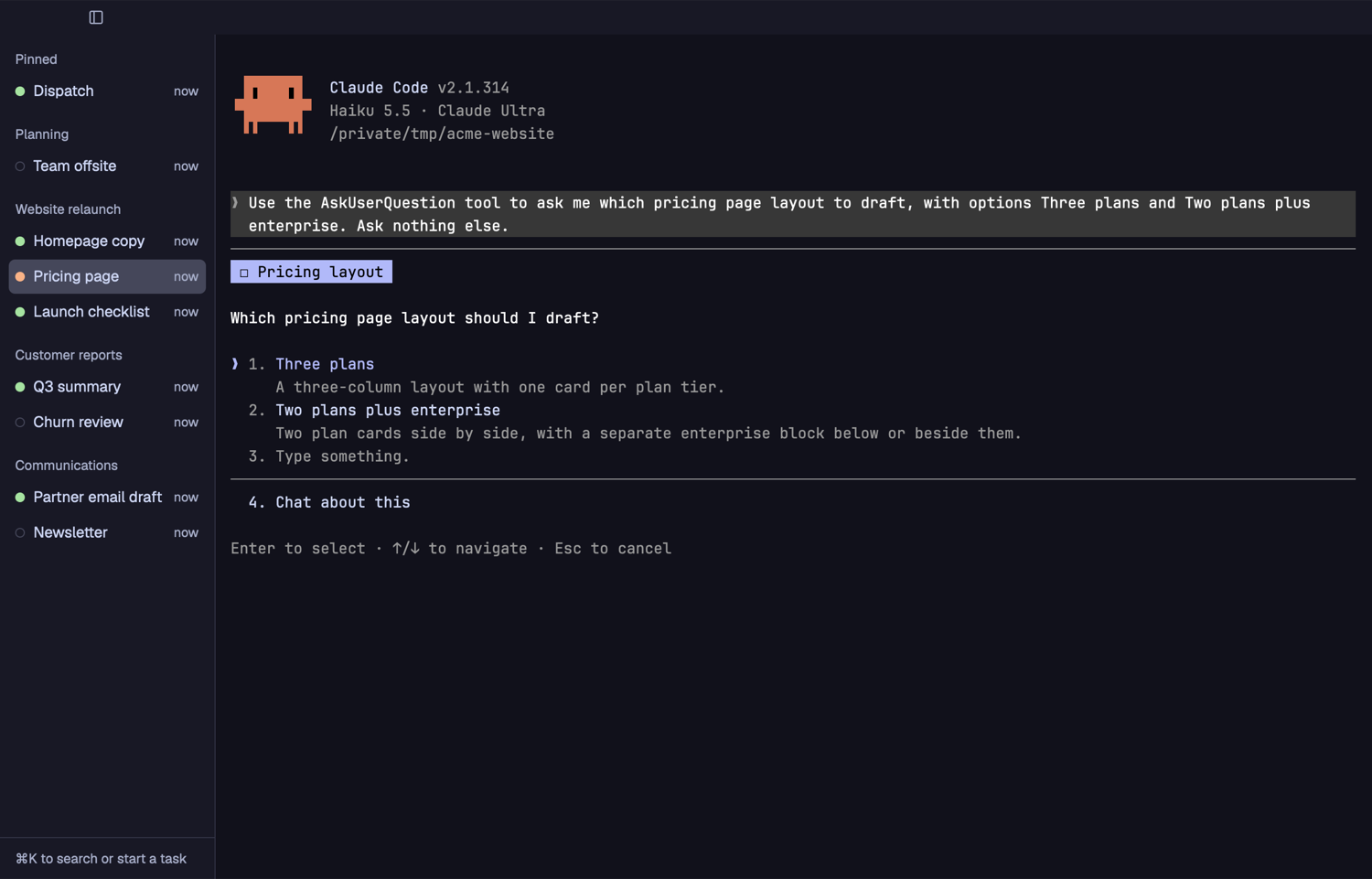

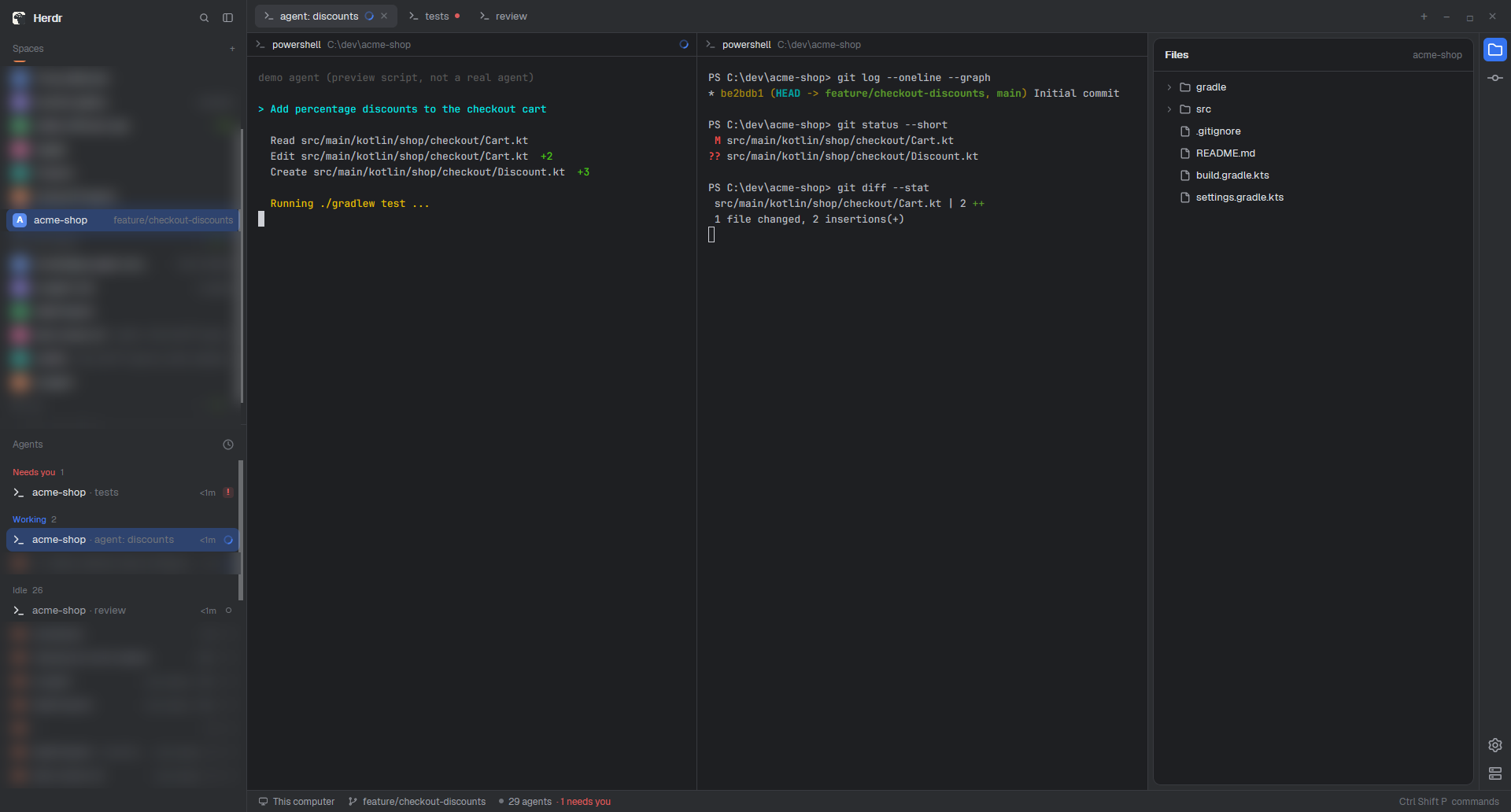

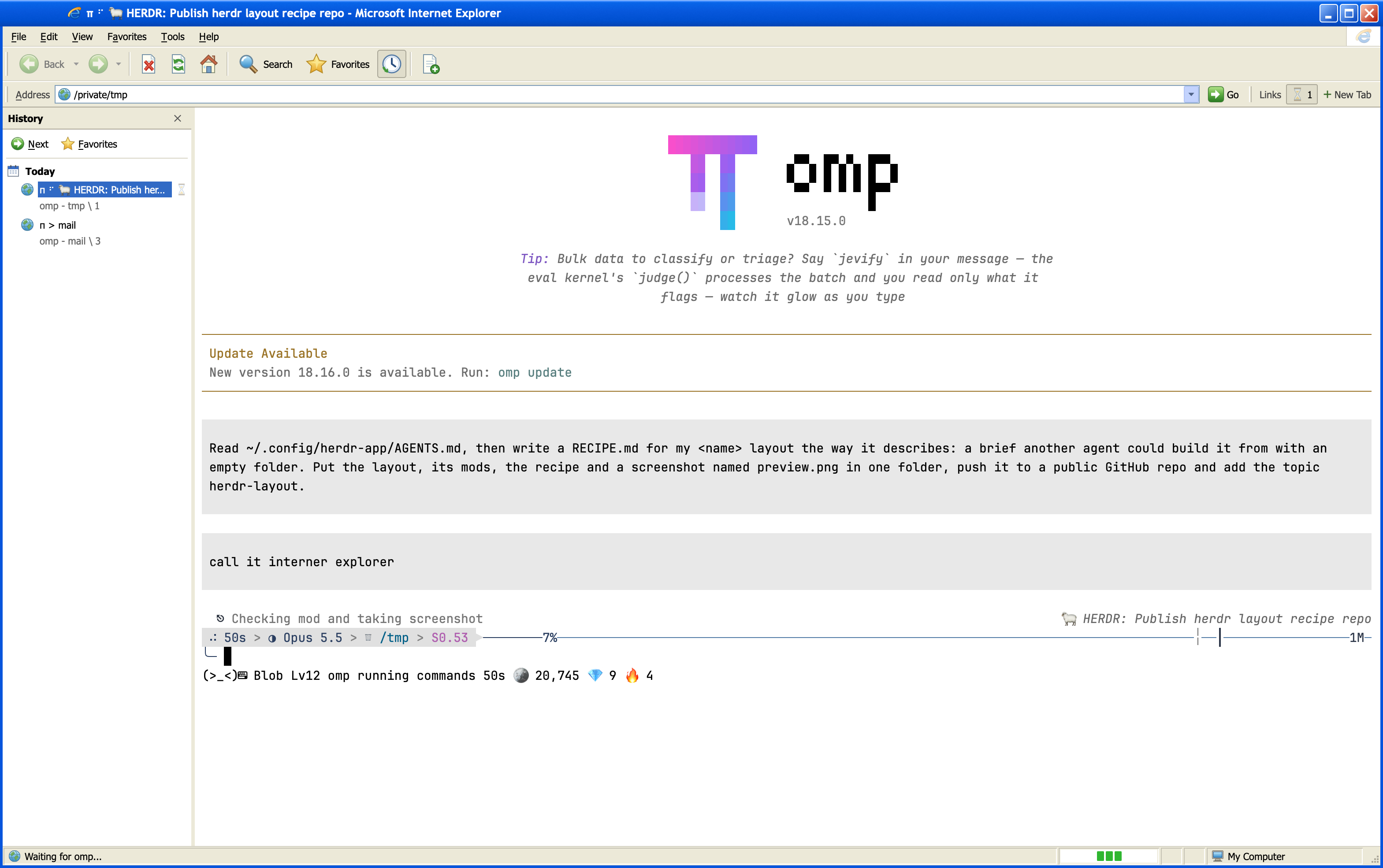

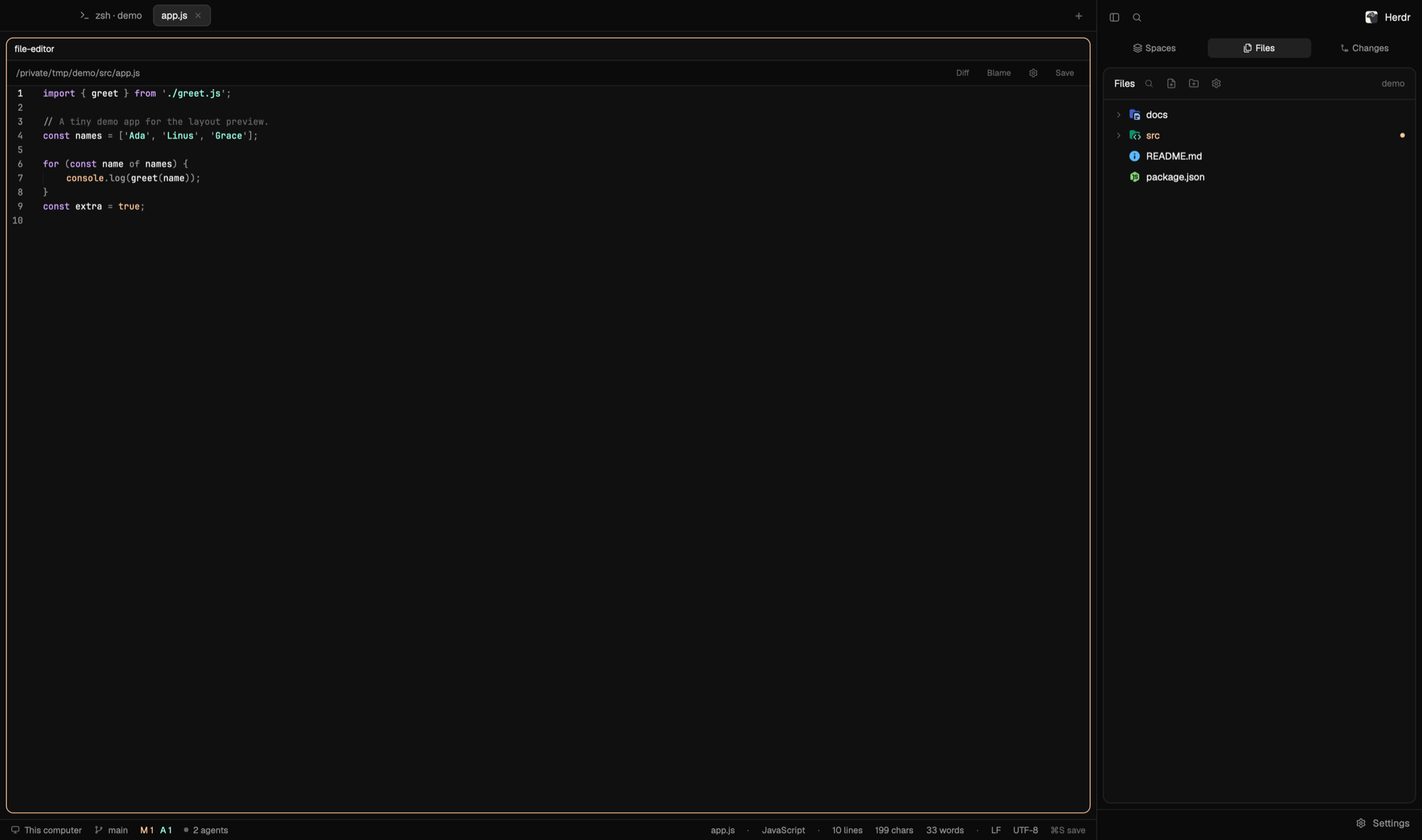


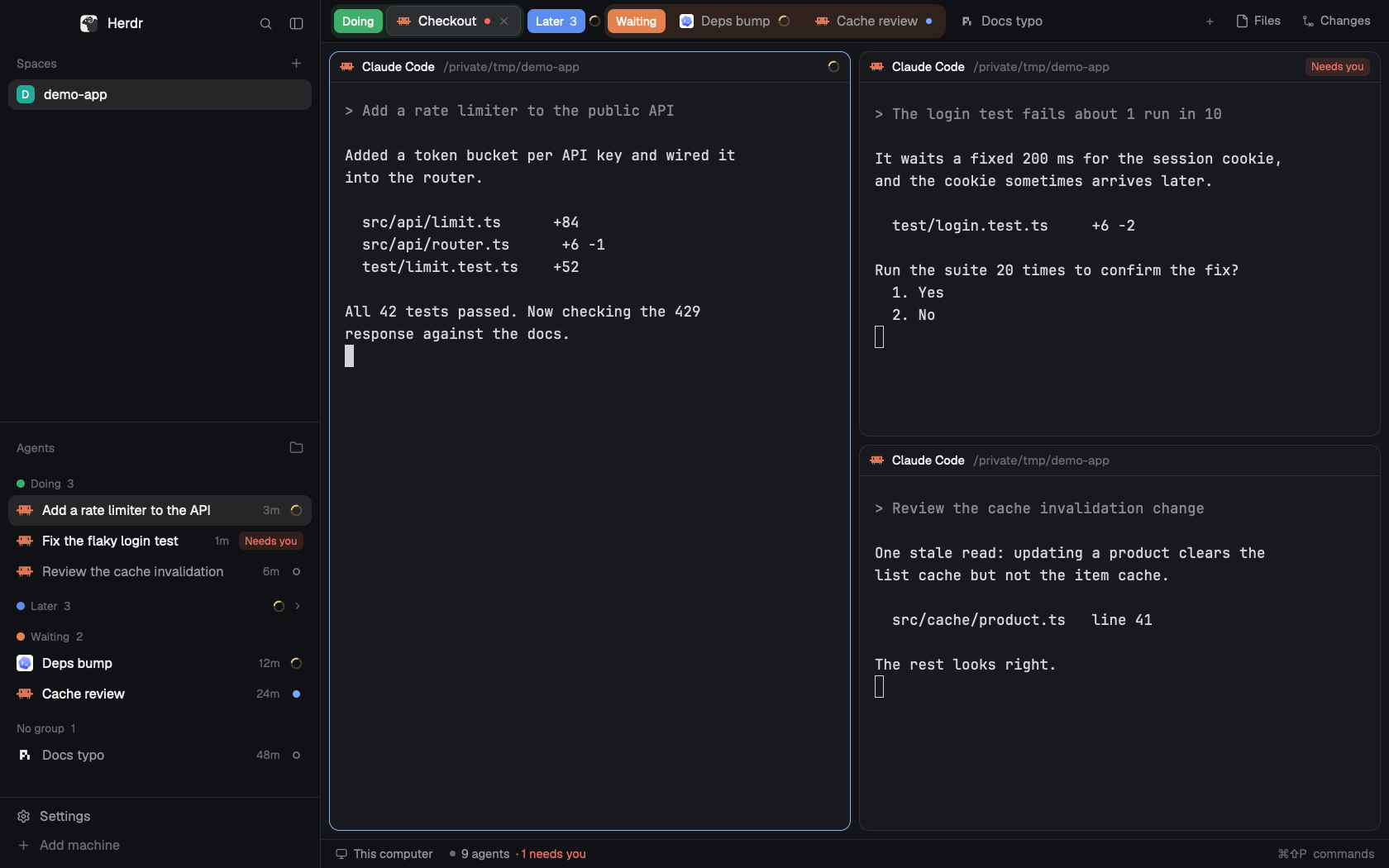
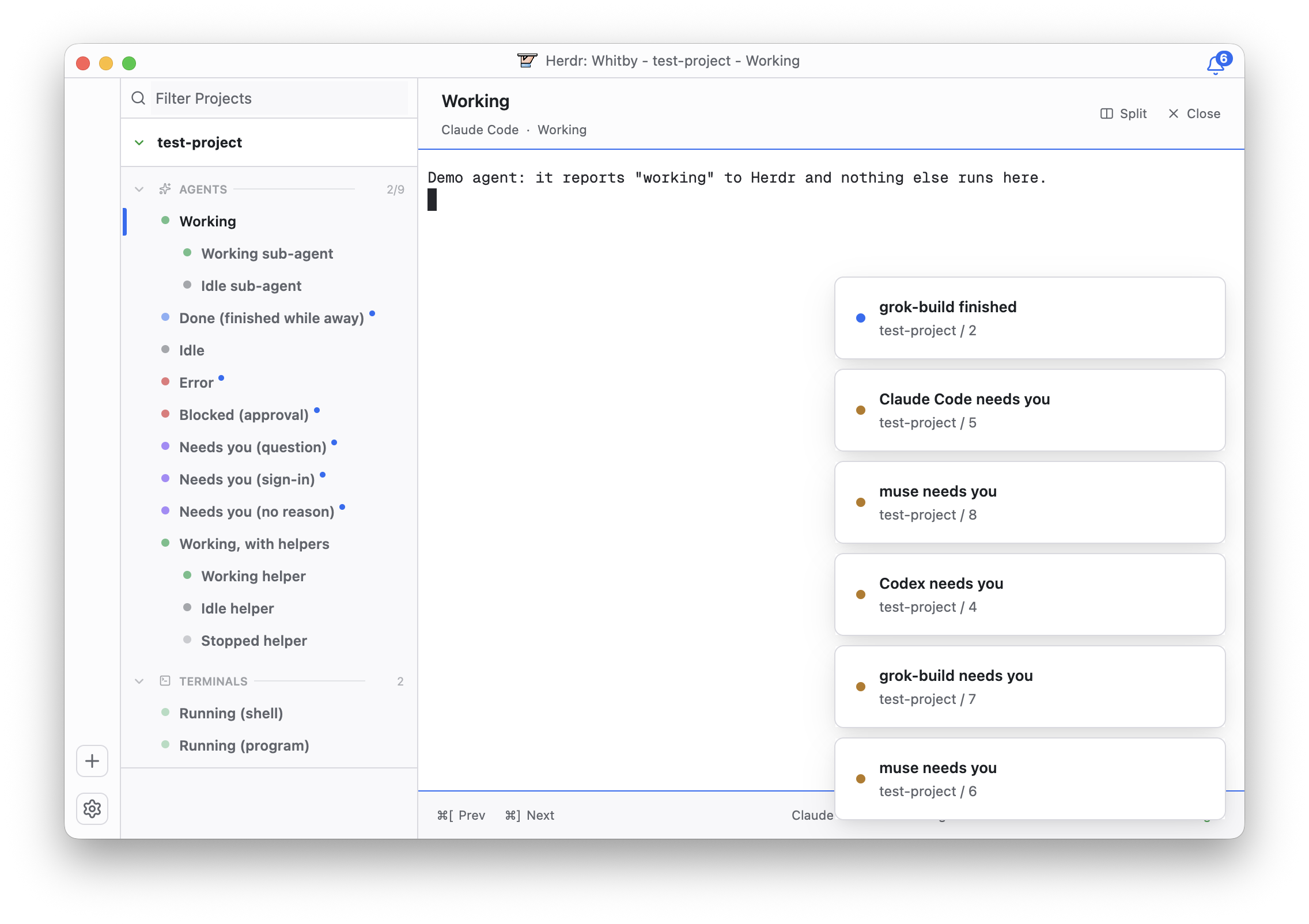
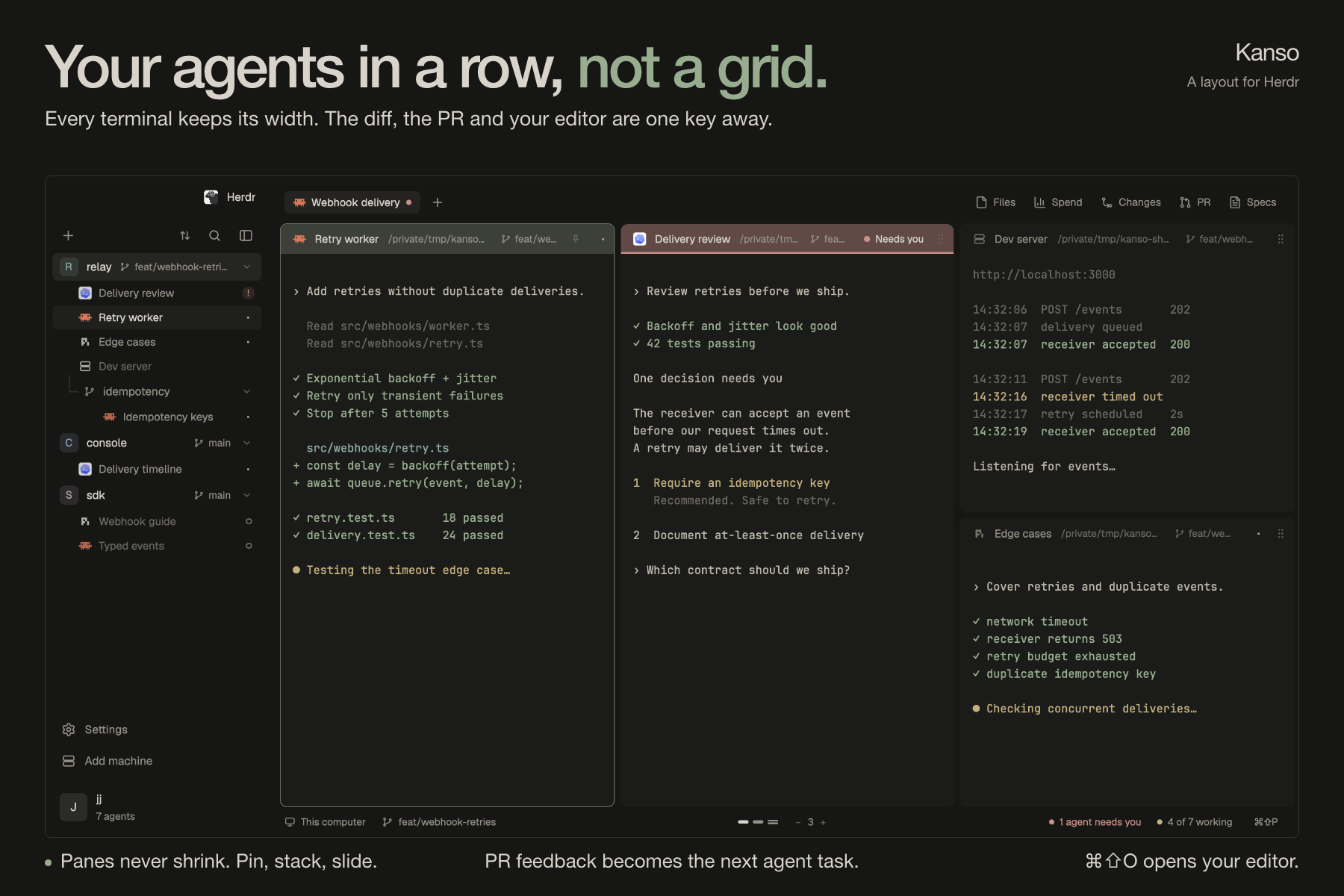
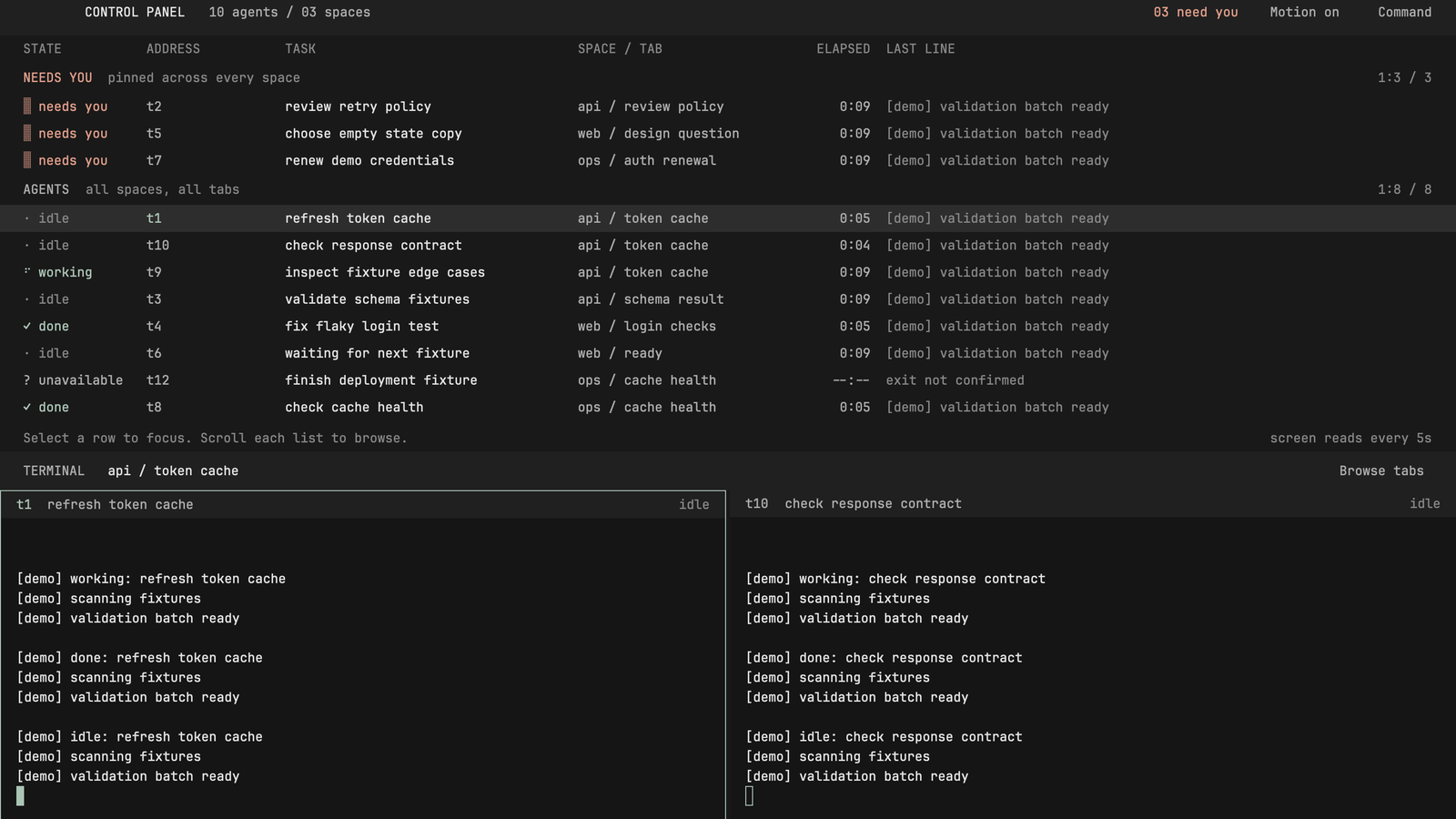
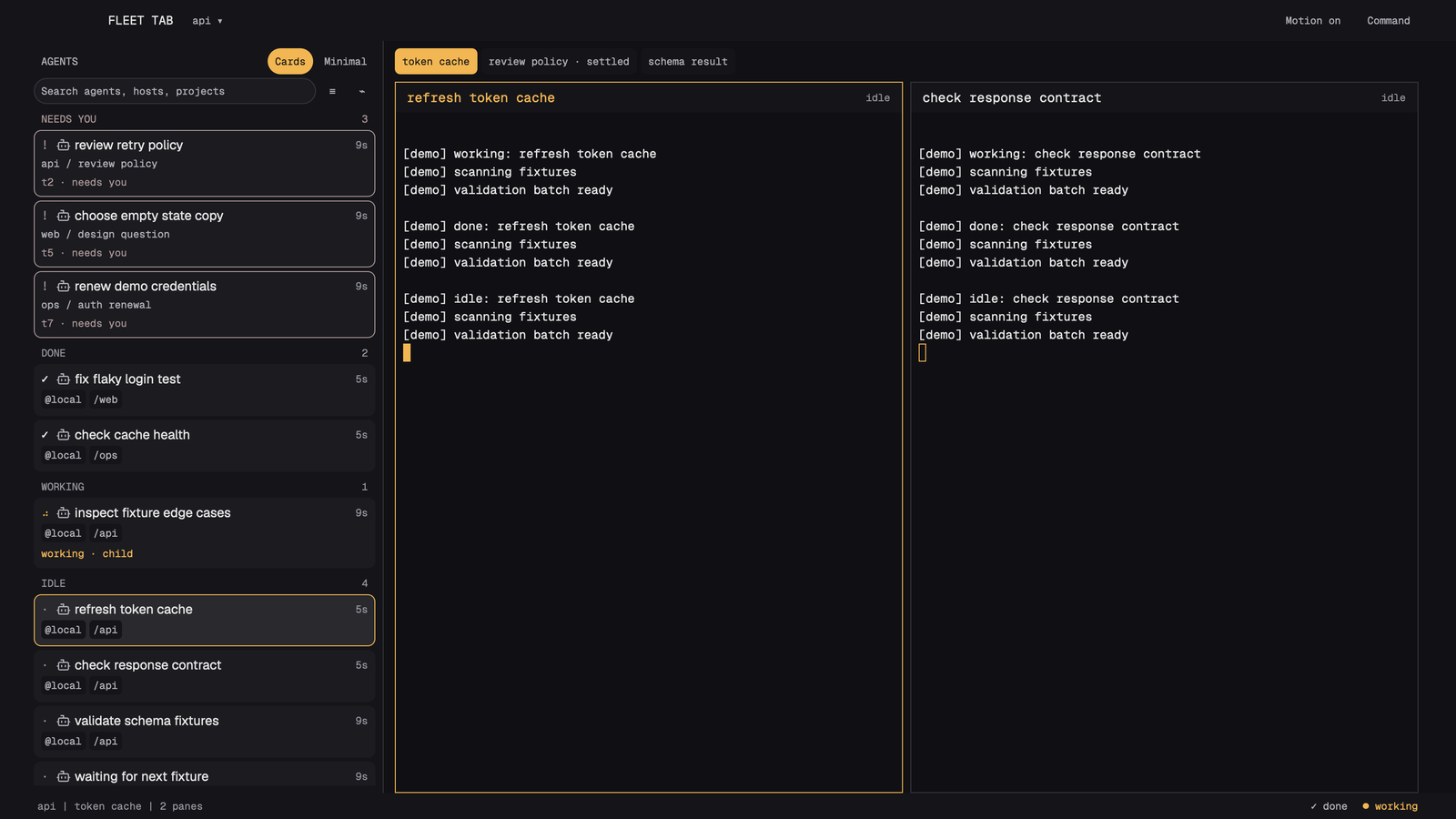
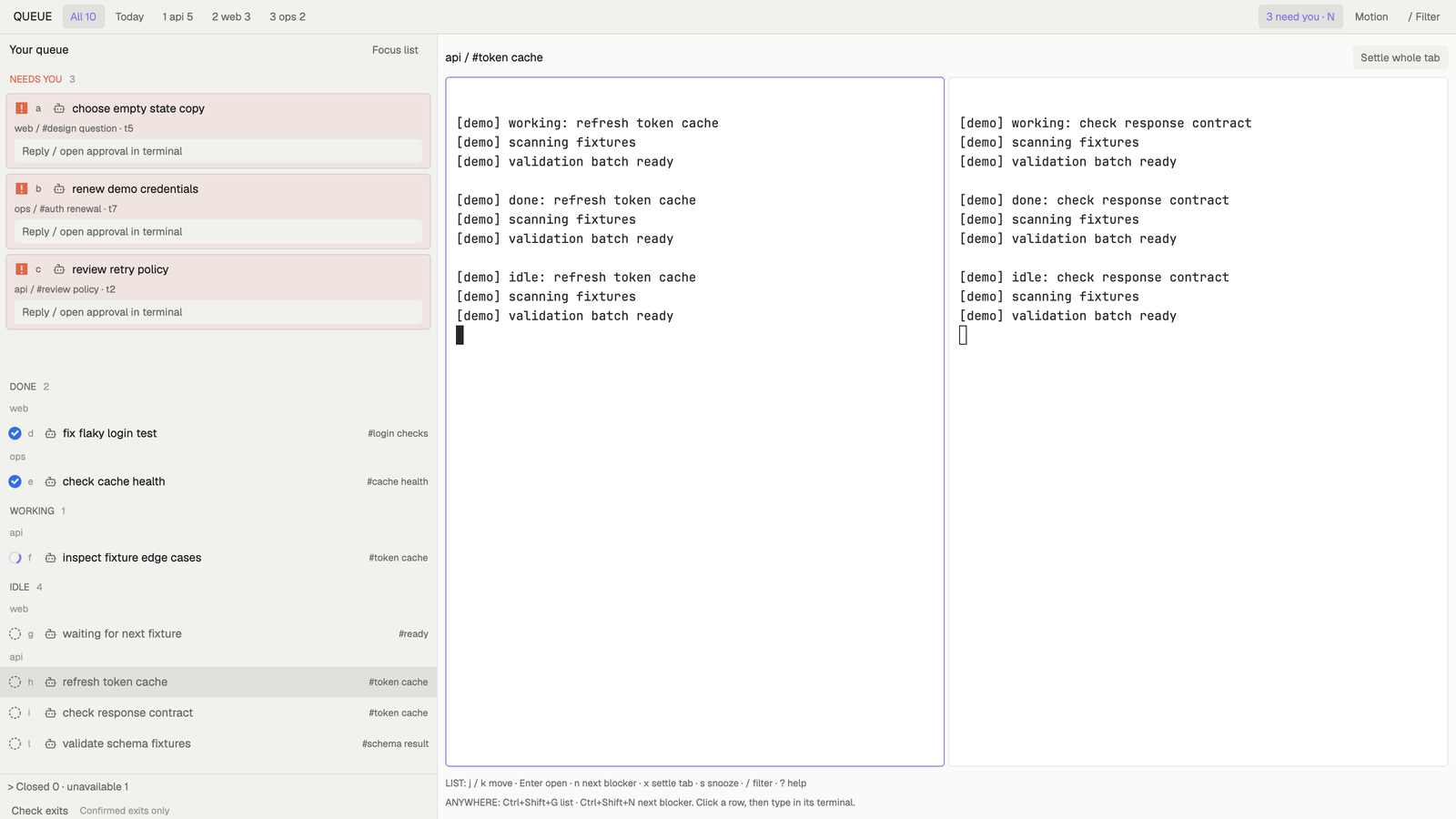
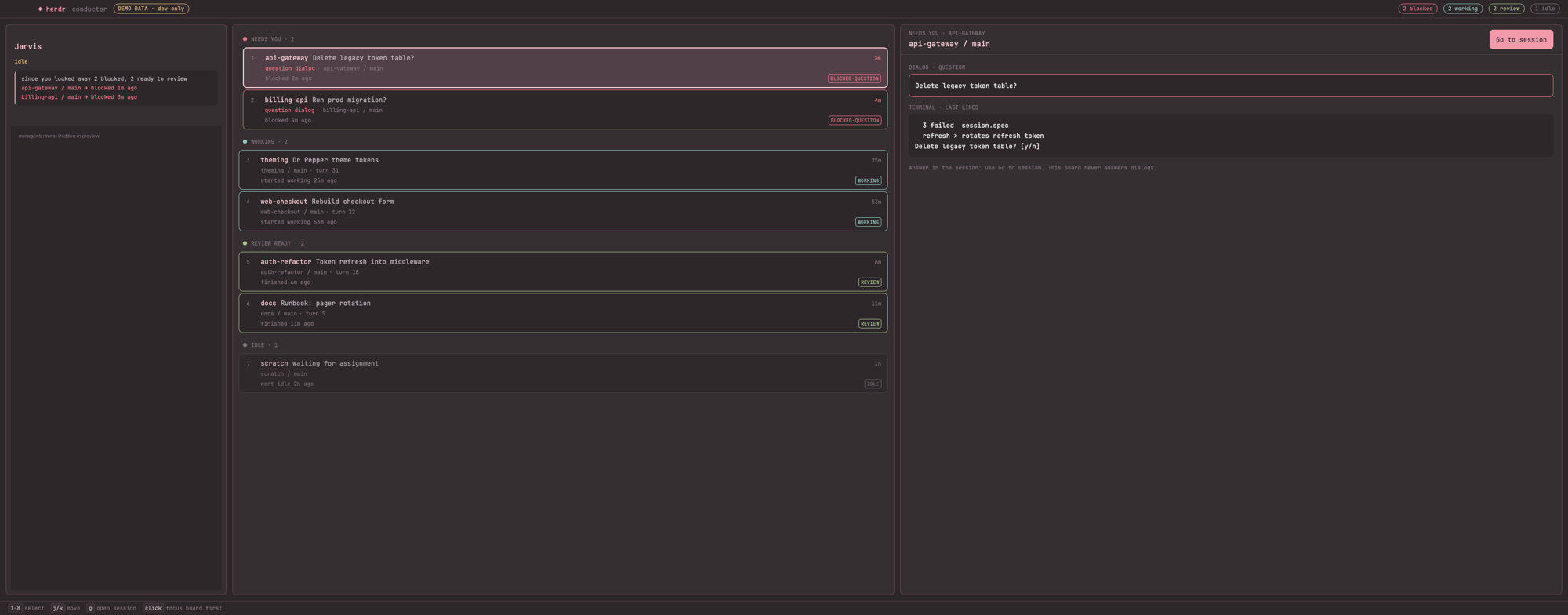
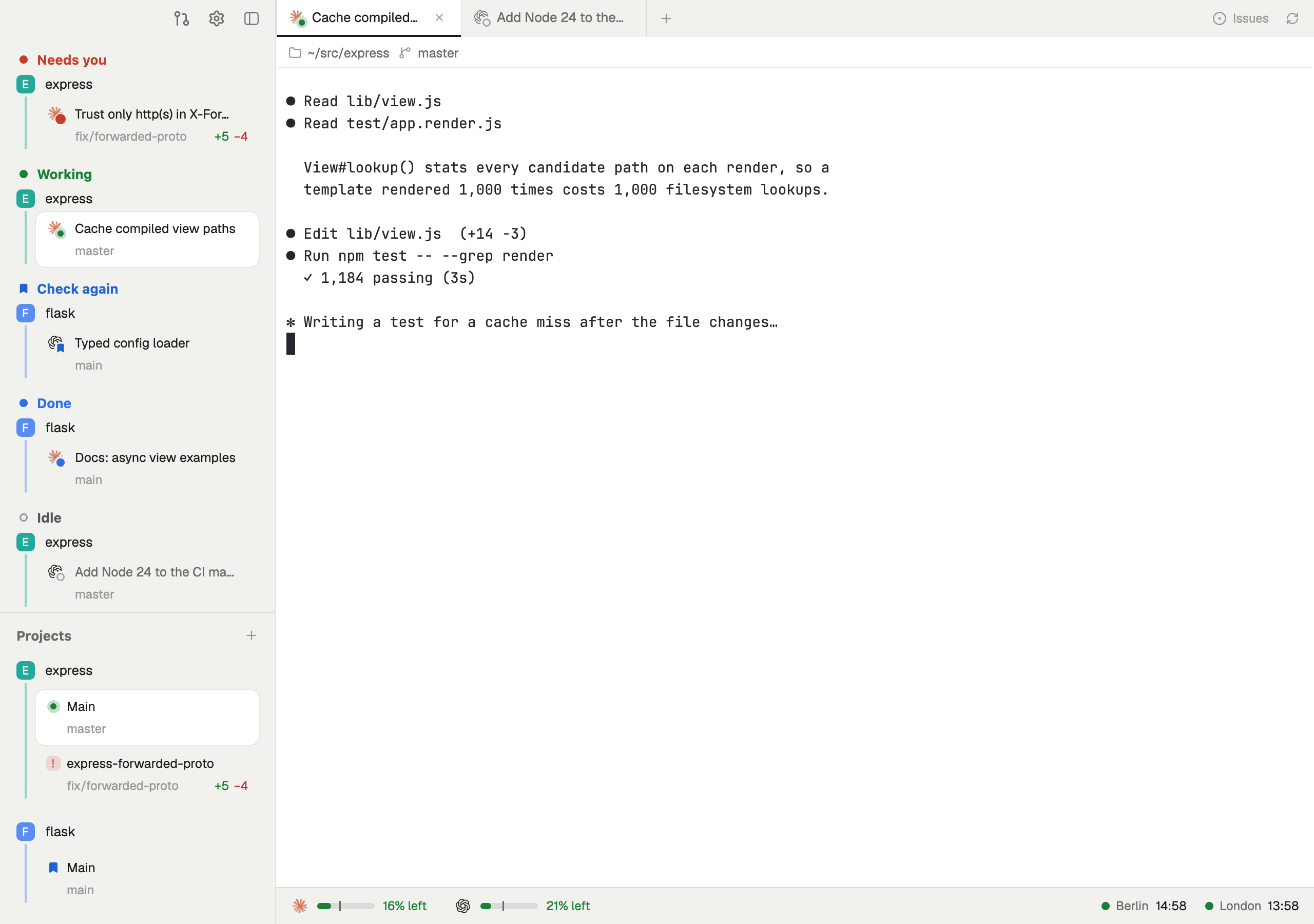
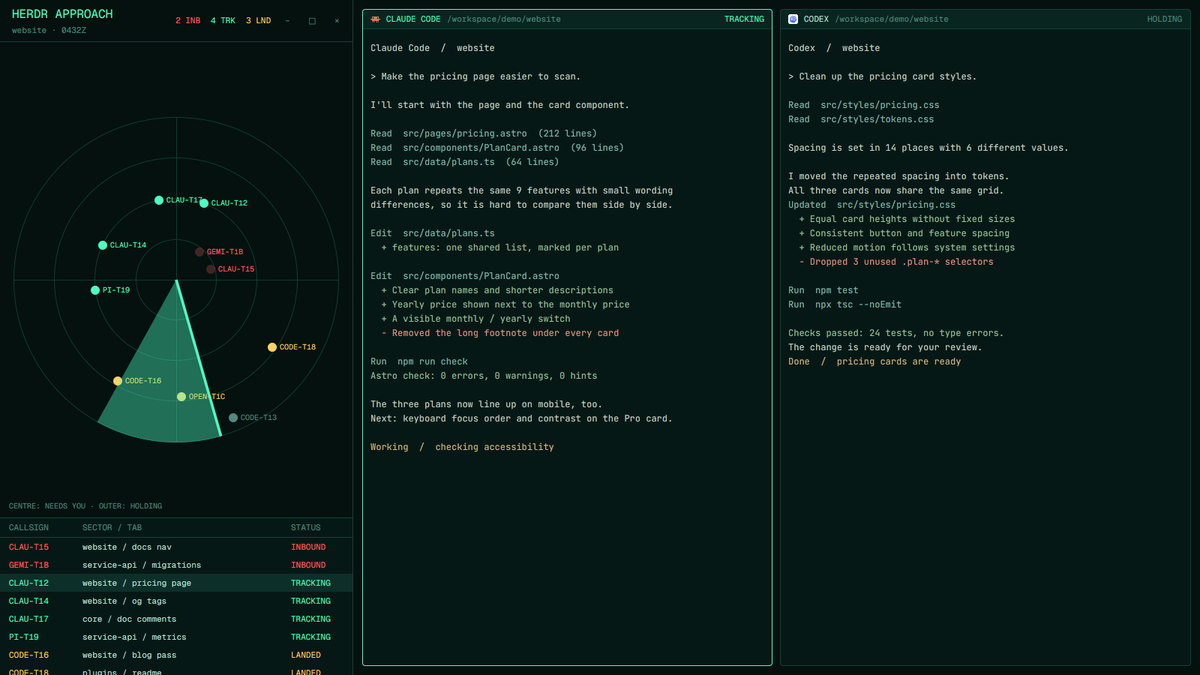
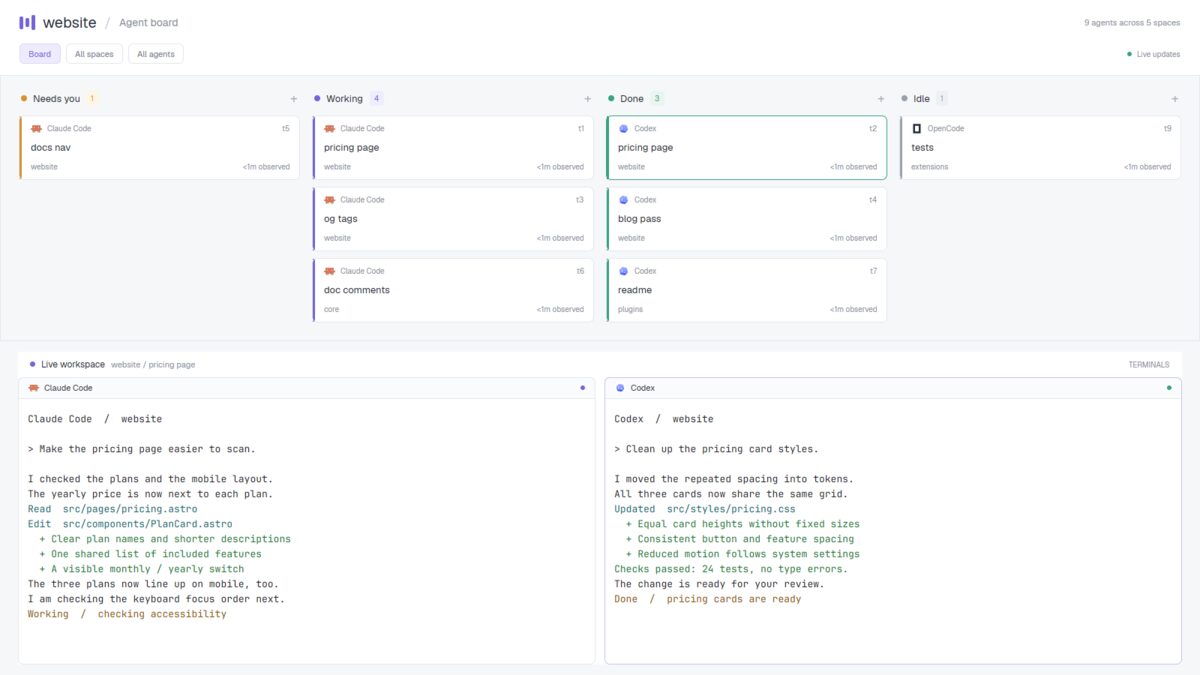
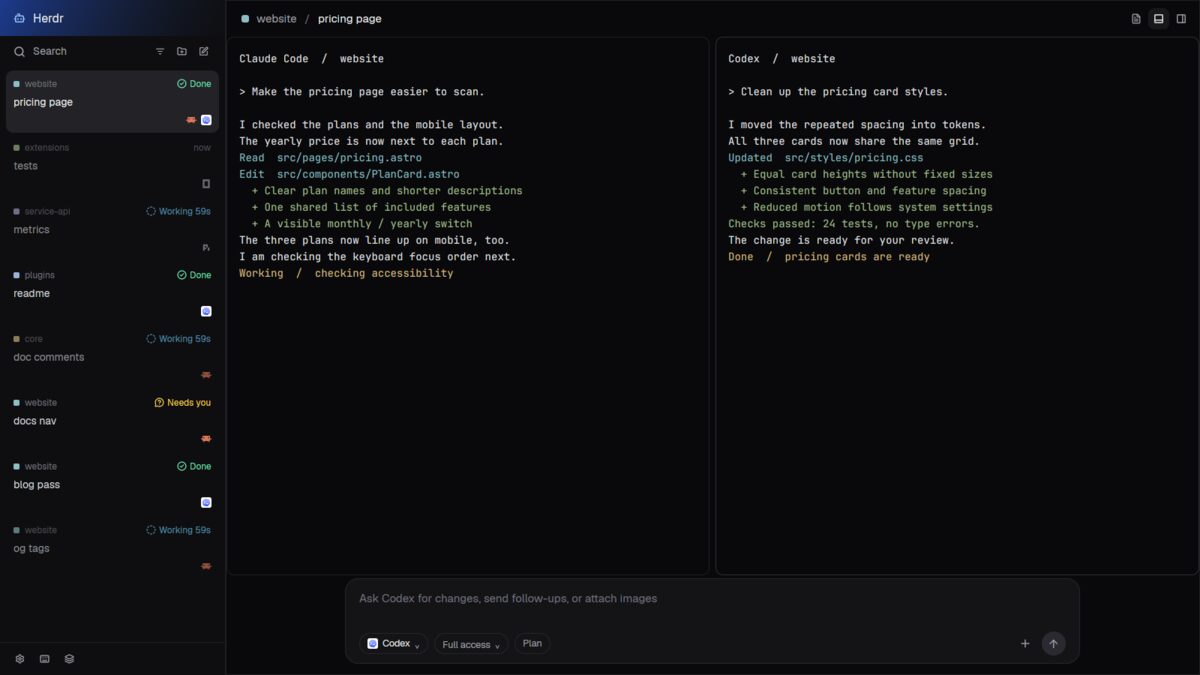
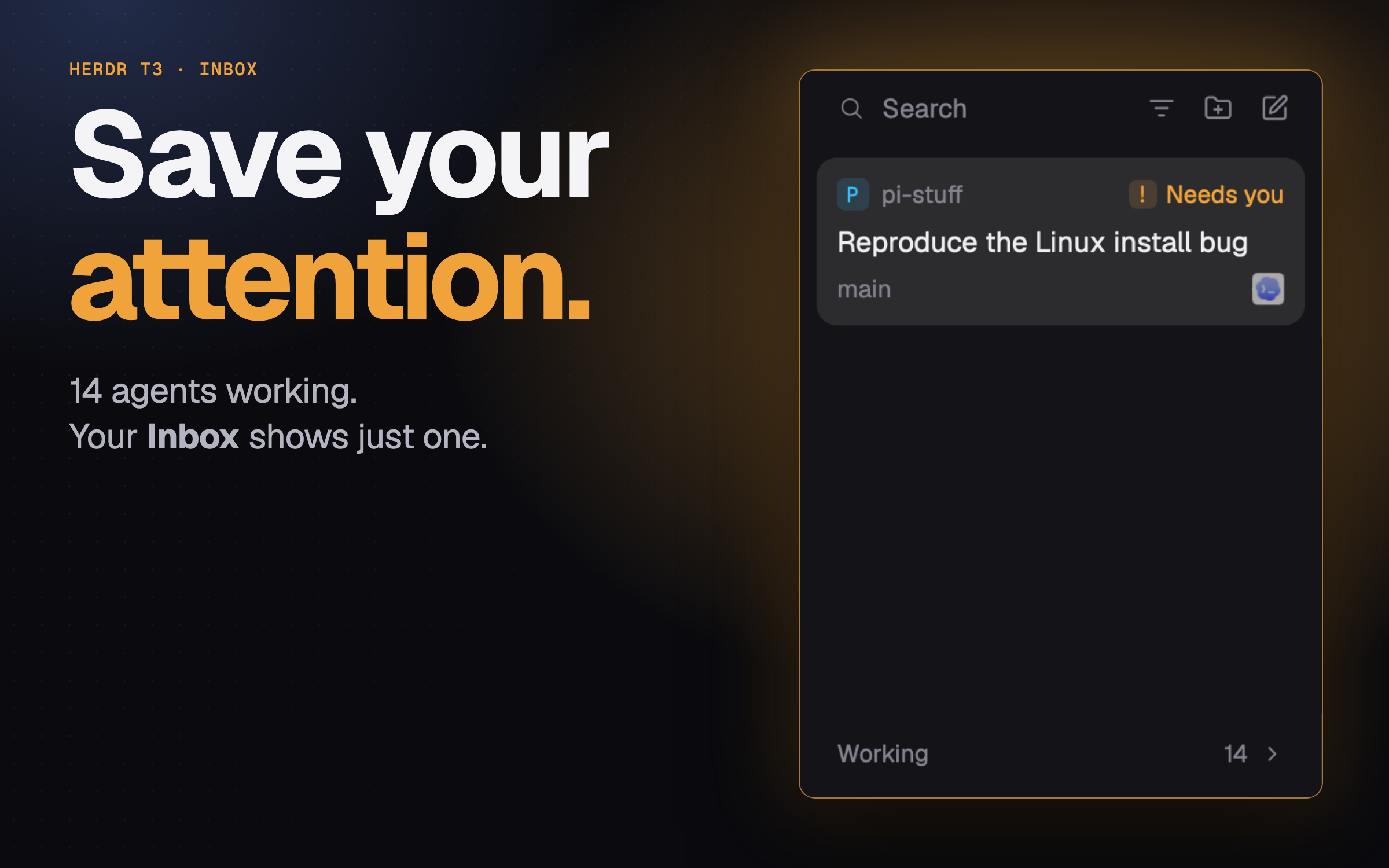
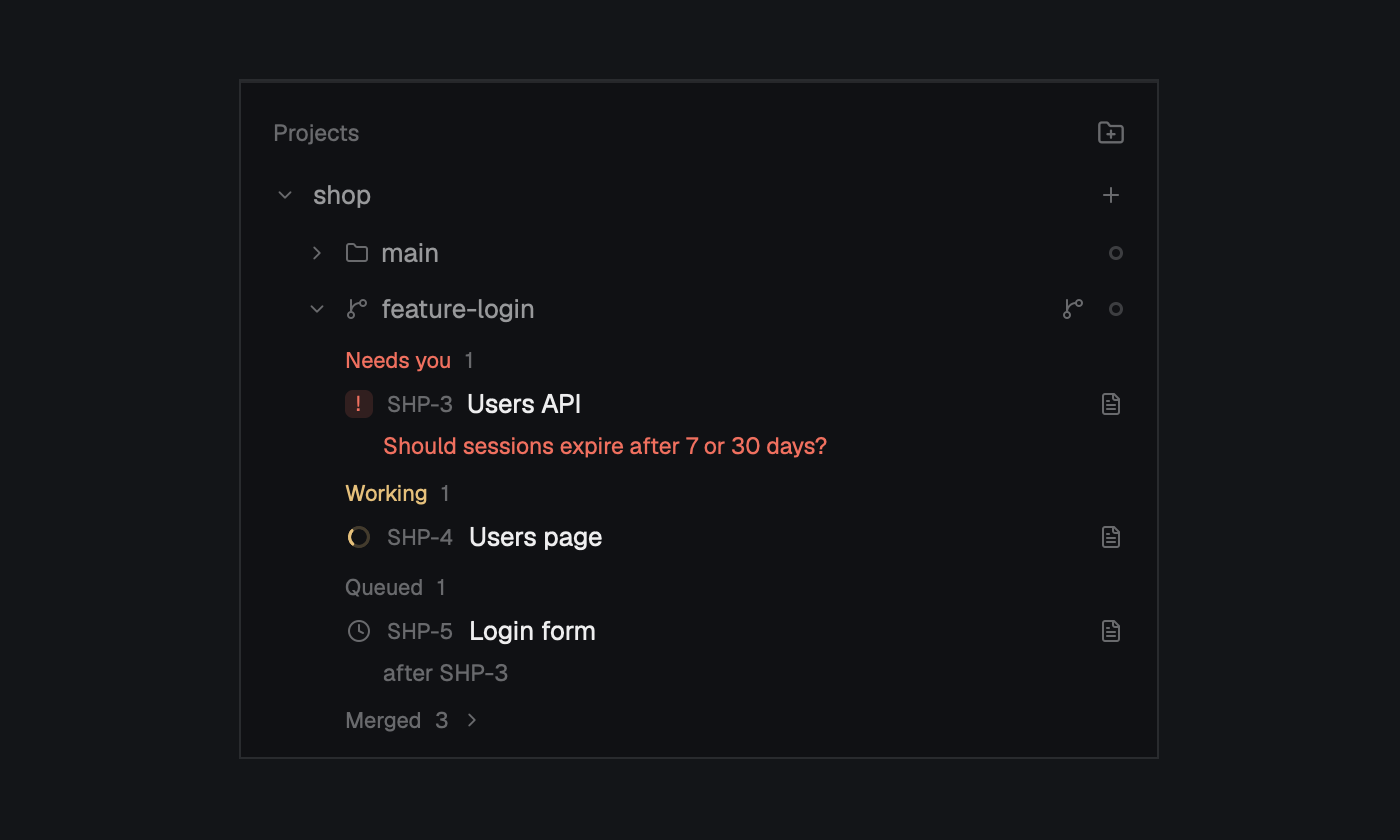
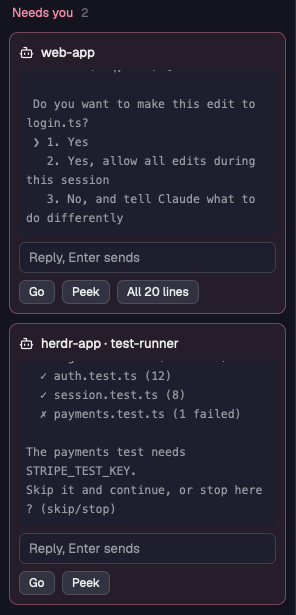
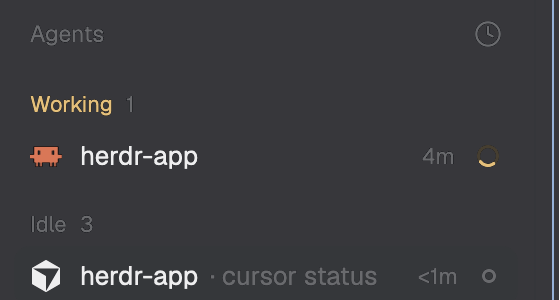
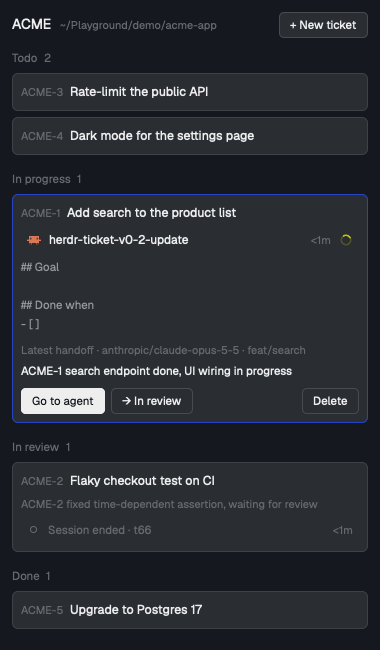
A Herdr app layout where each agent is a card in a status column: Needs you, Working, Waiting, Done, Idle. The person can hide any column and change the order of the columns. A panel at the right shows the terminal of the selected agent.

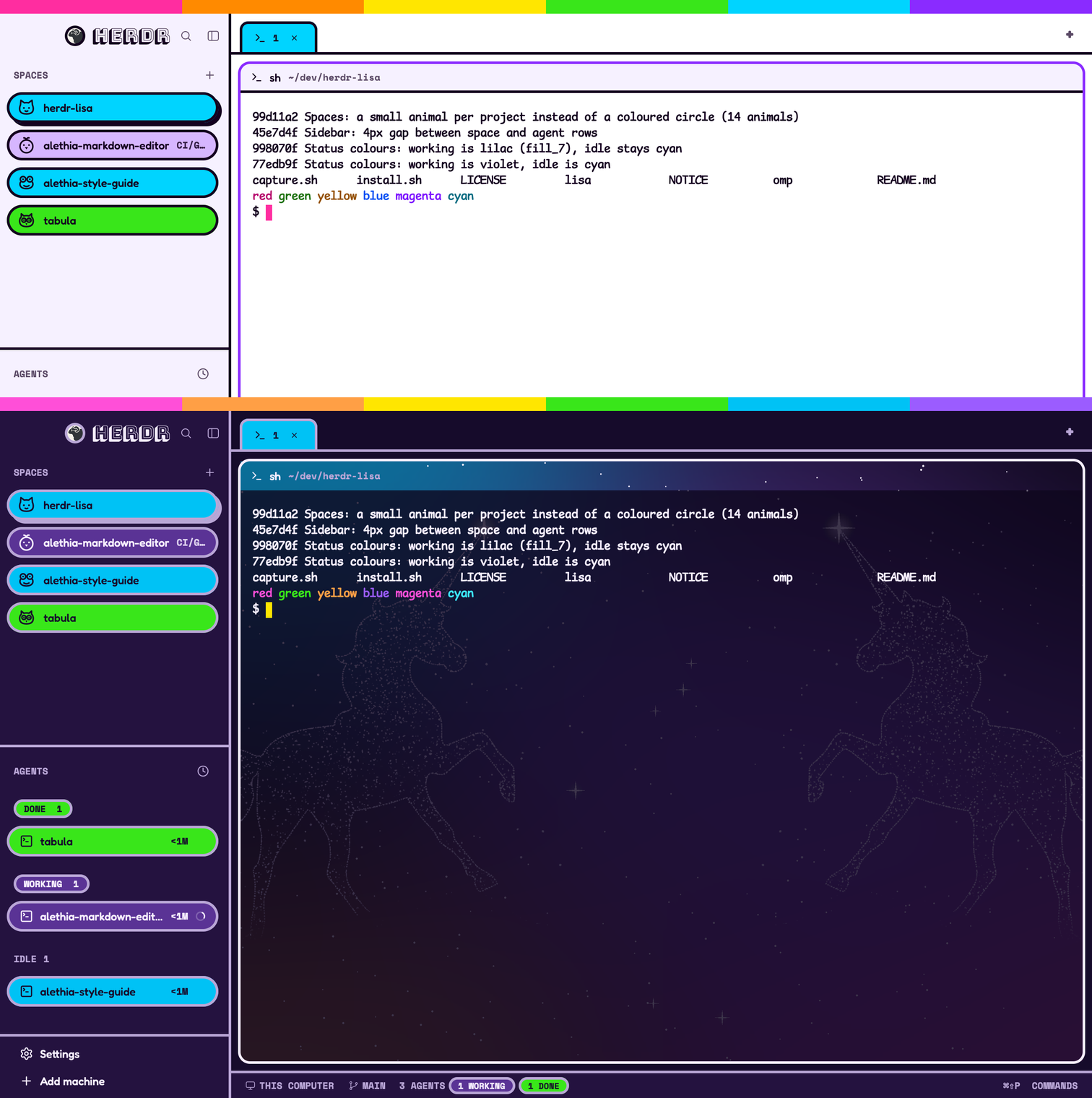

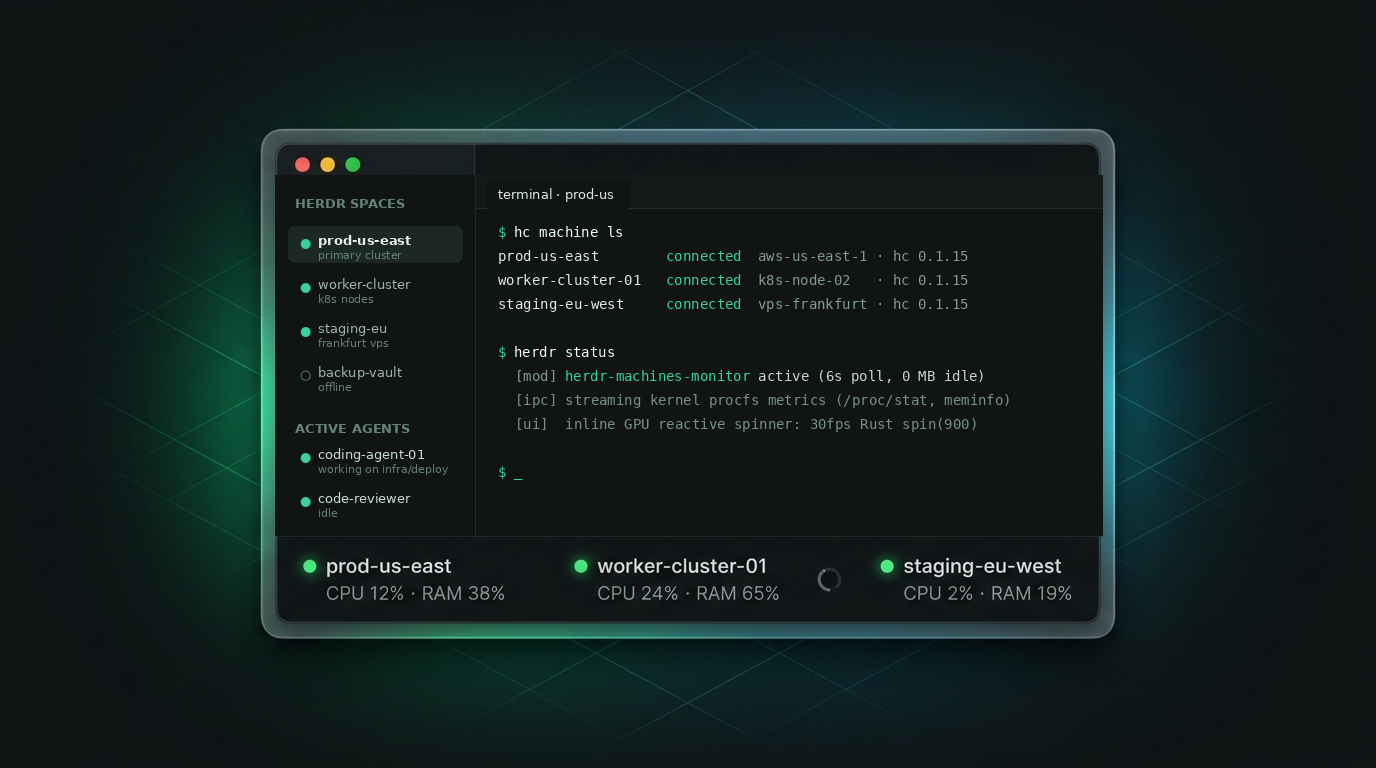

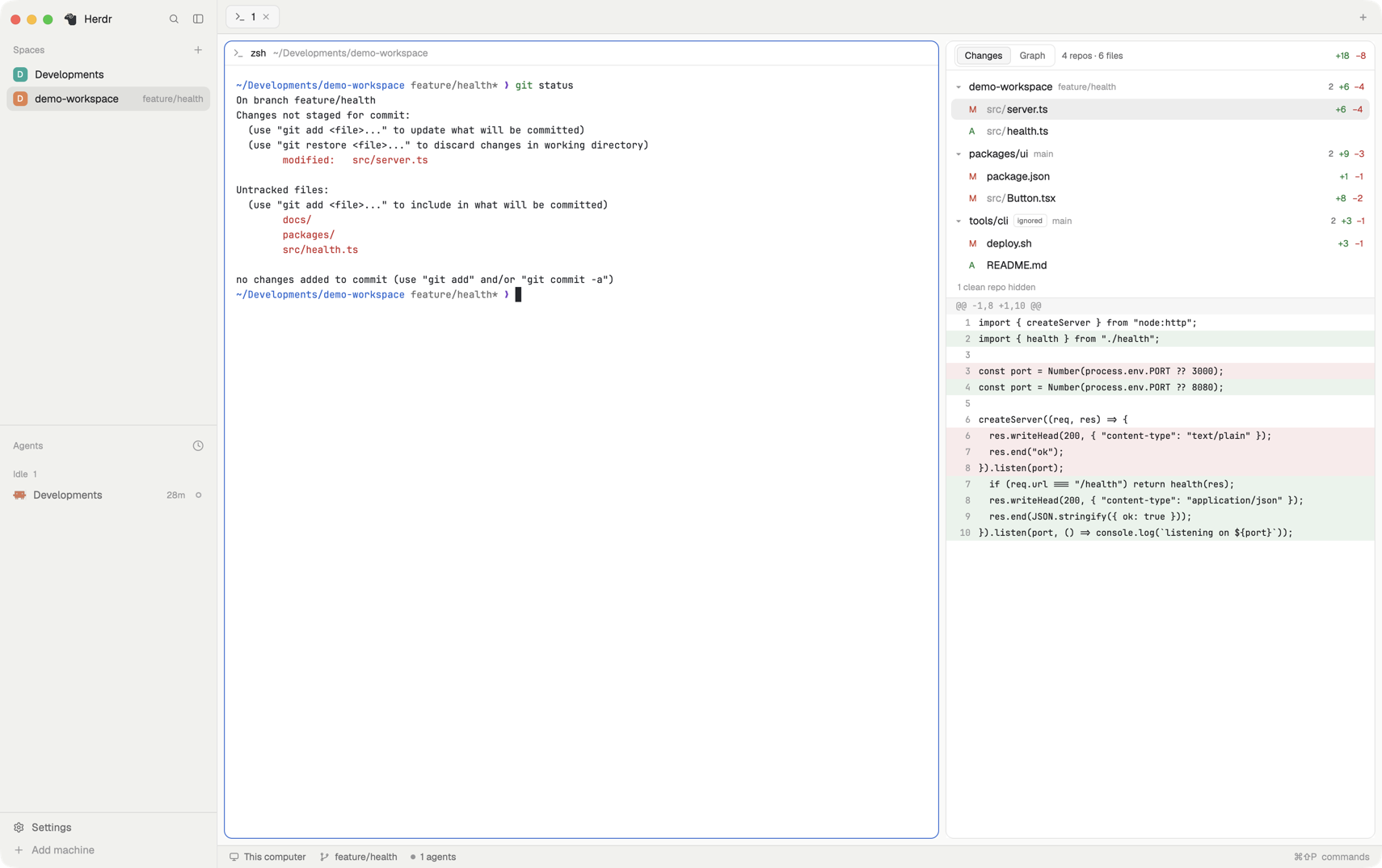

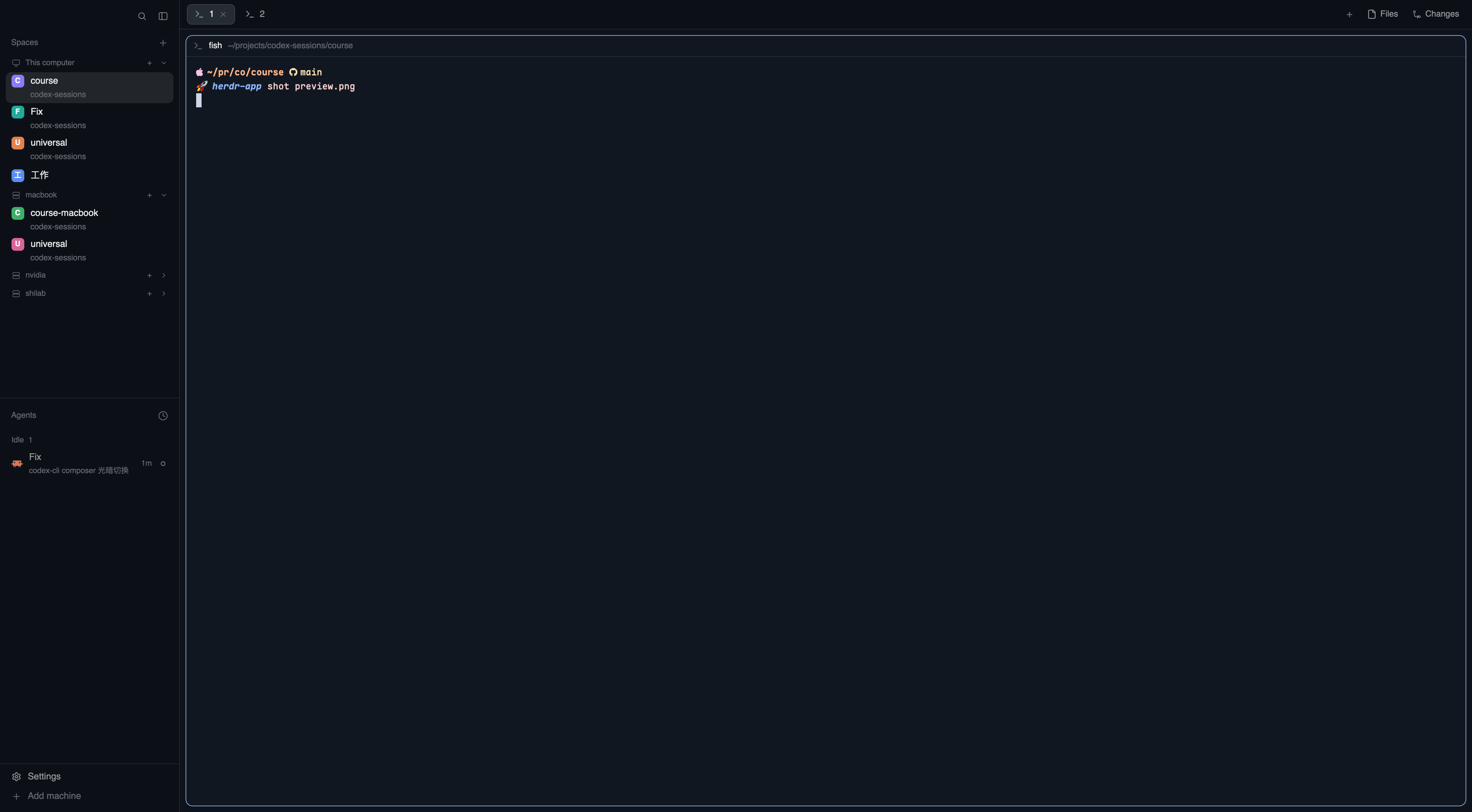





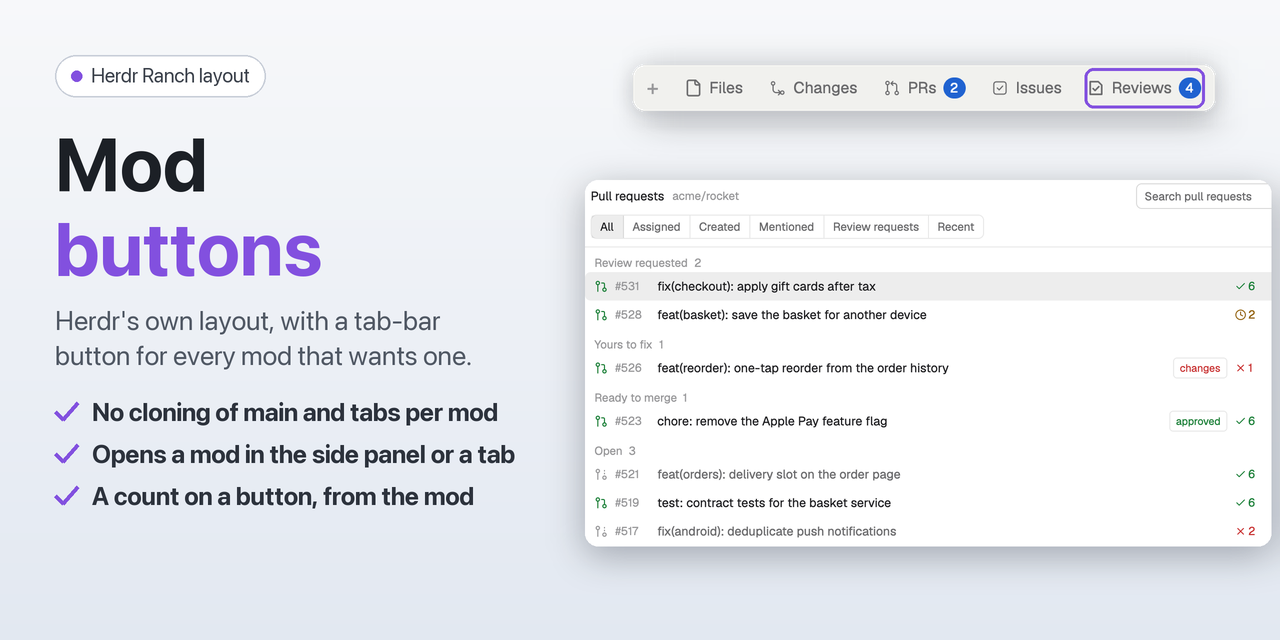

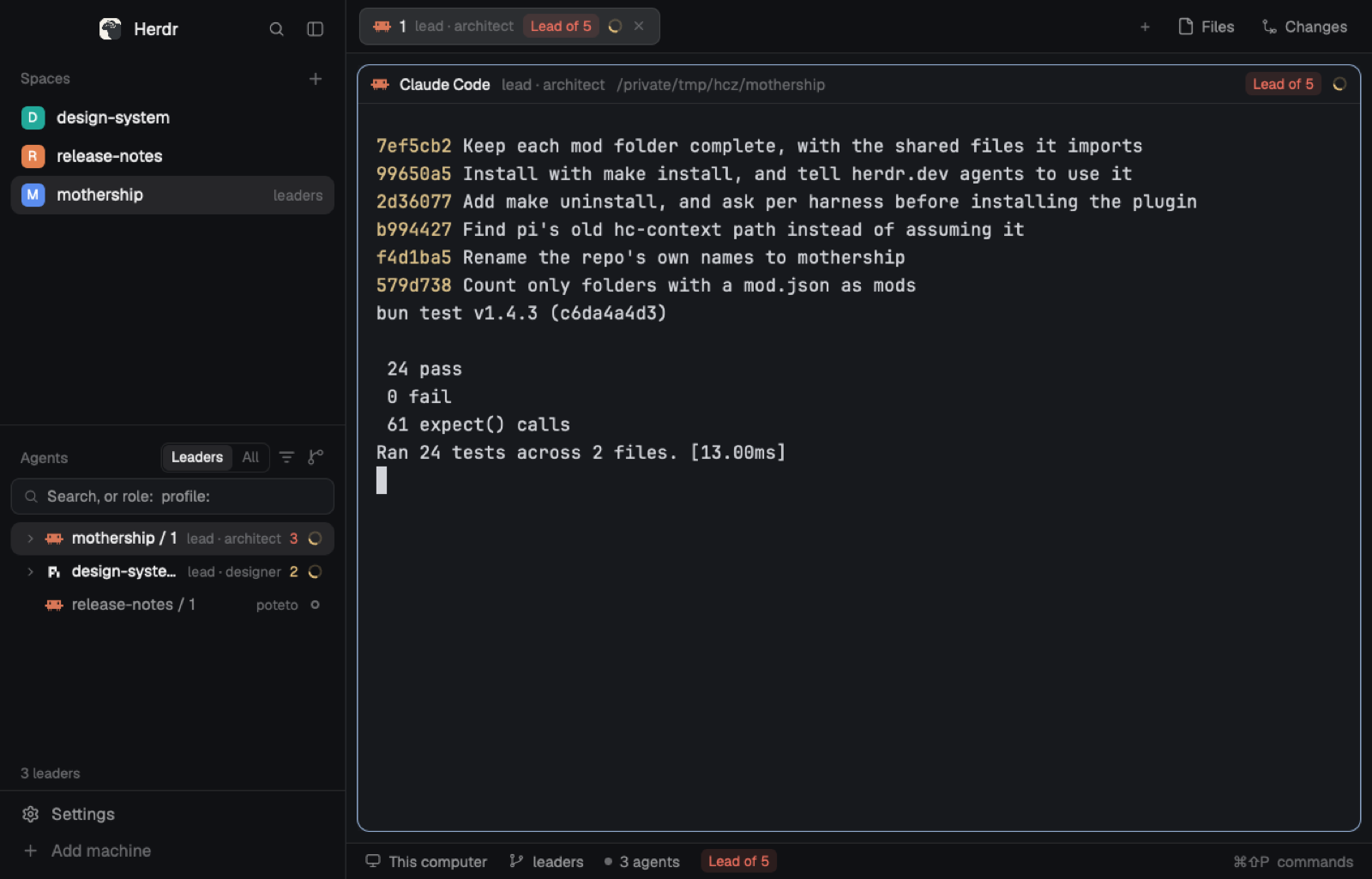

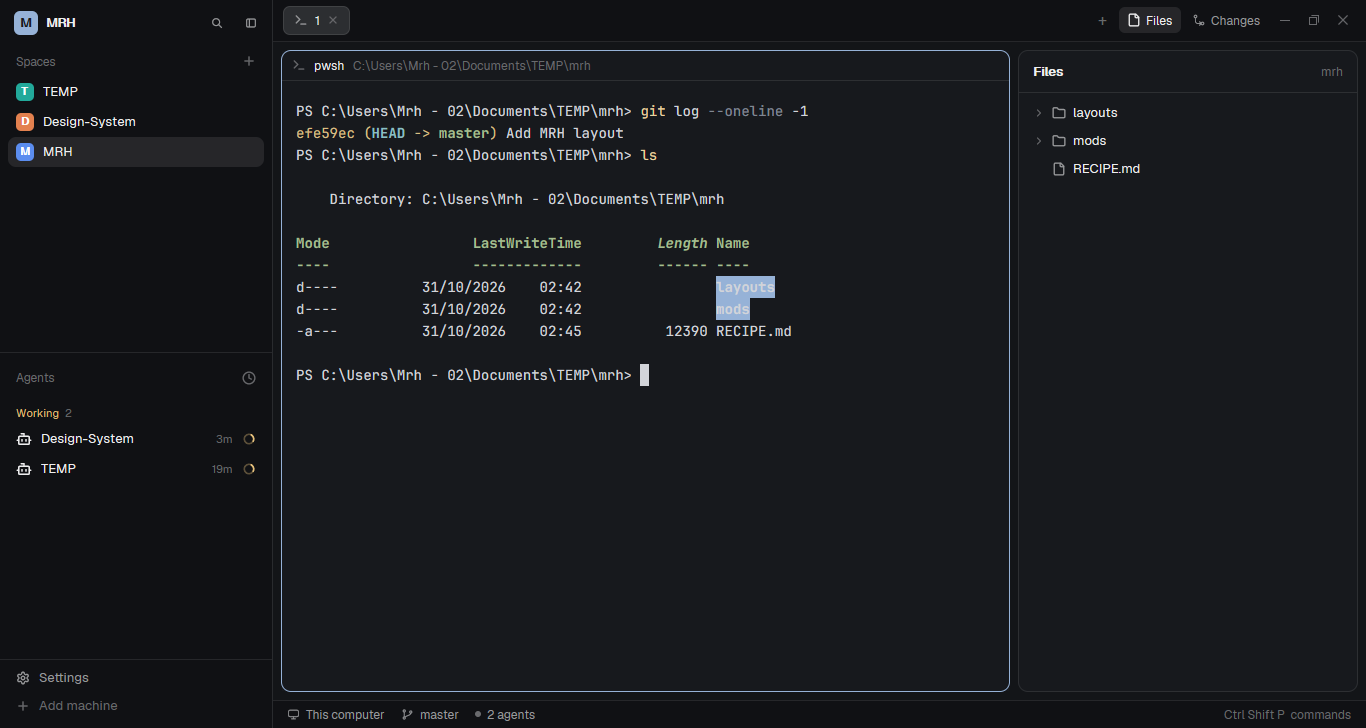

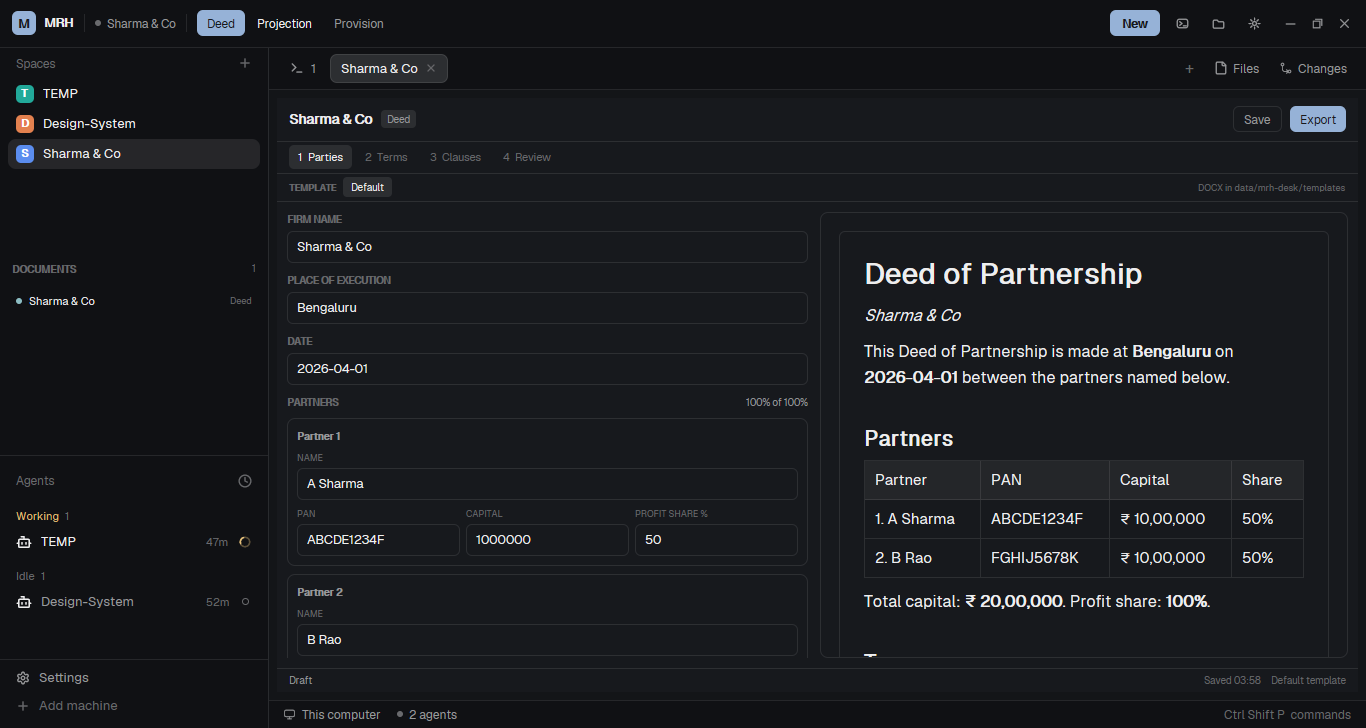
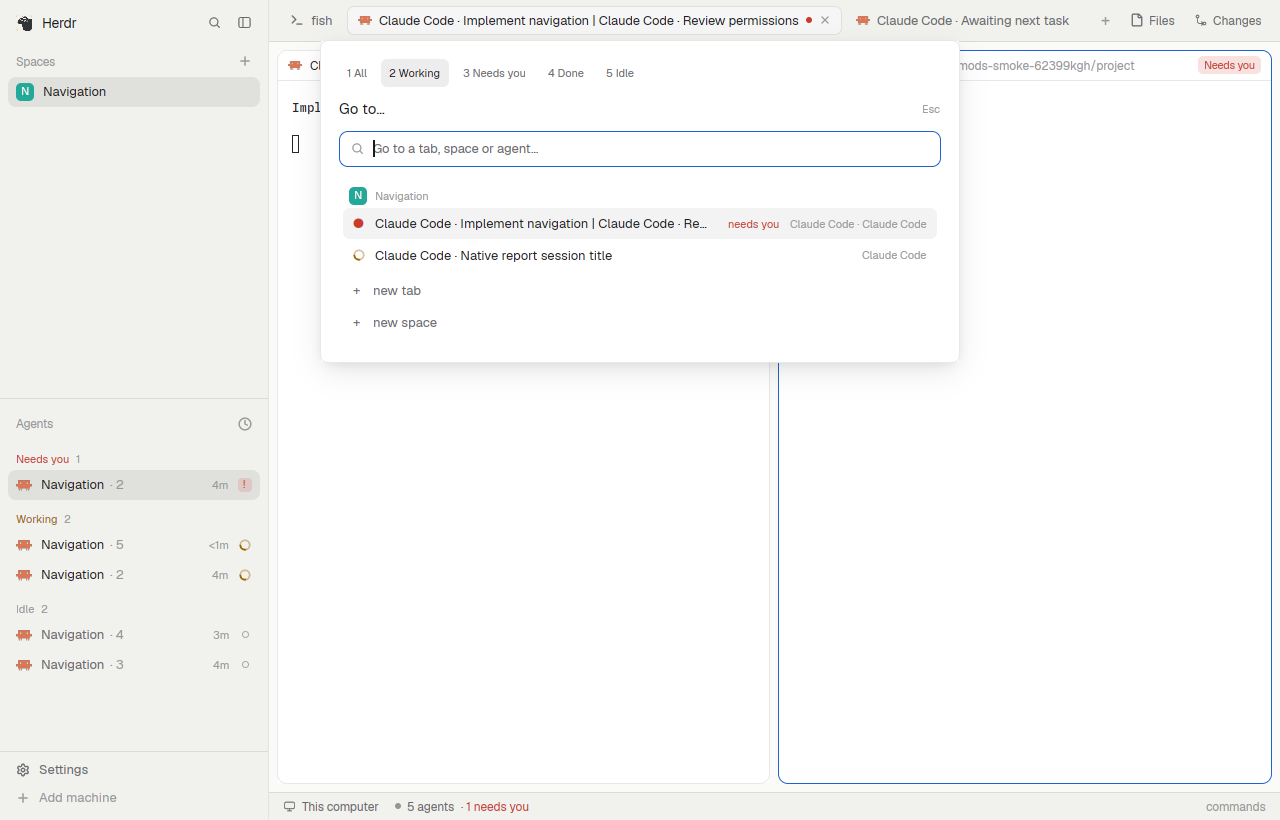

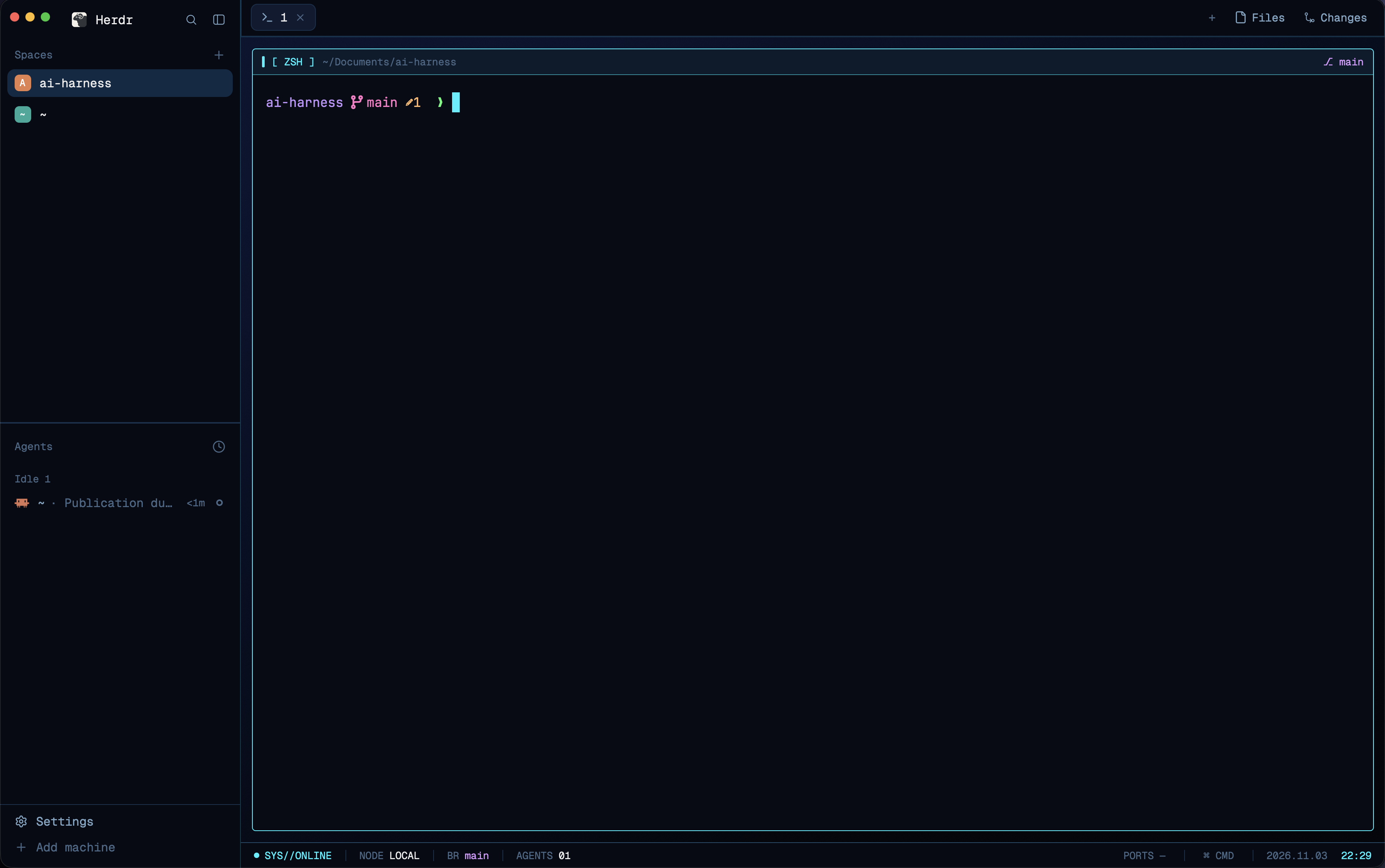
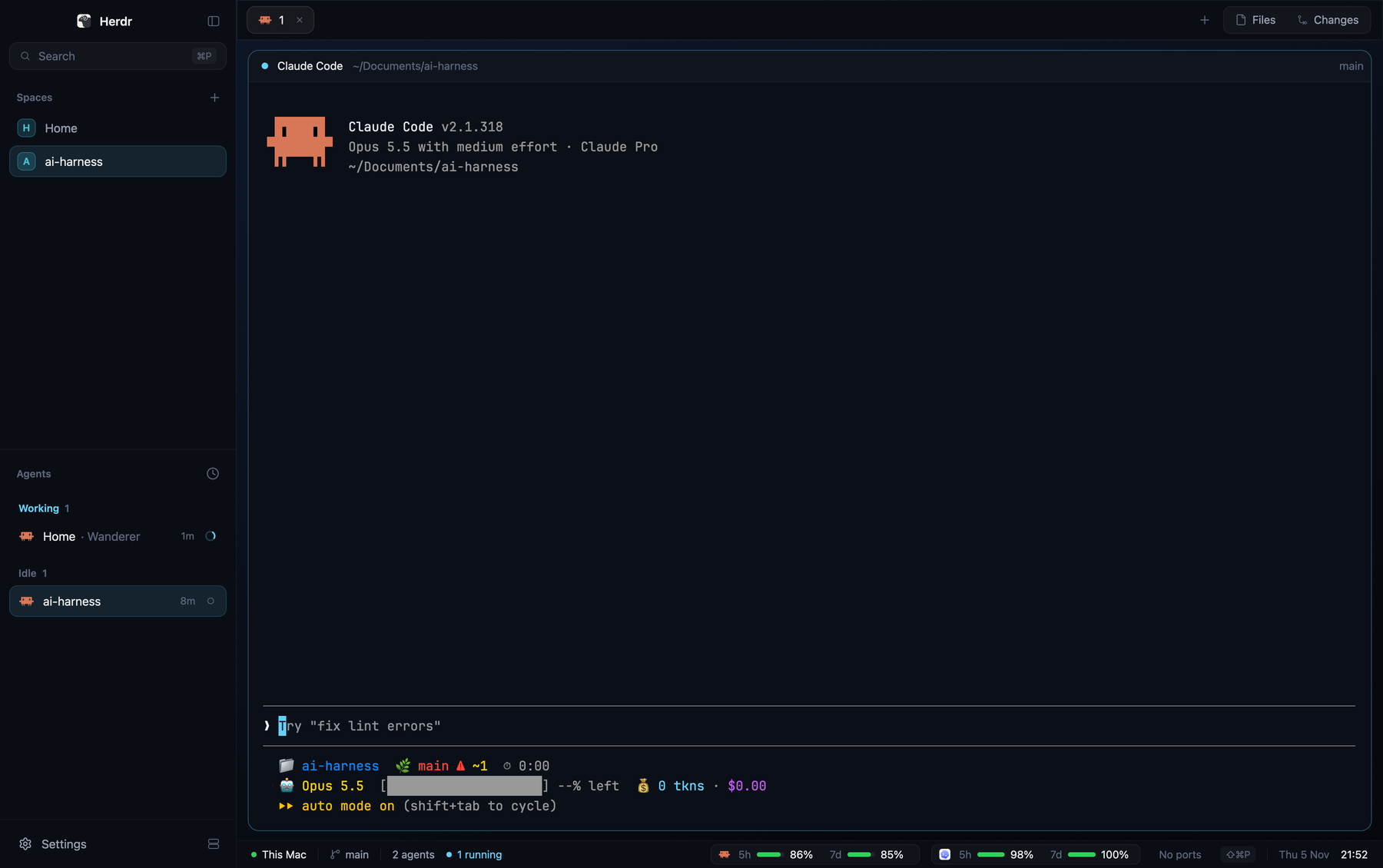
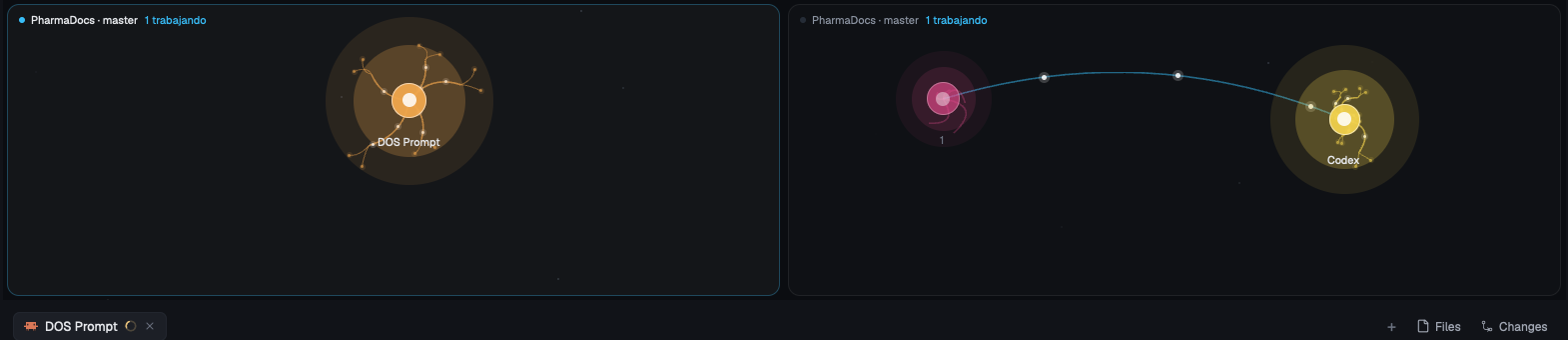



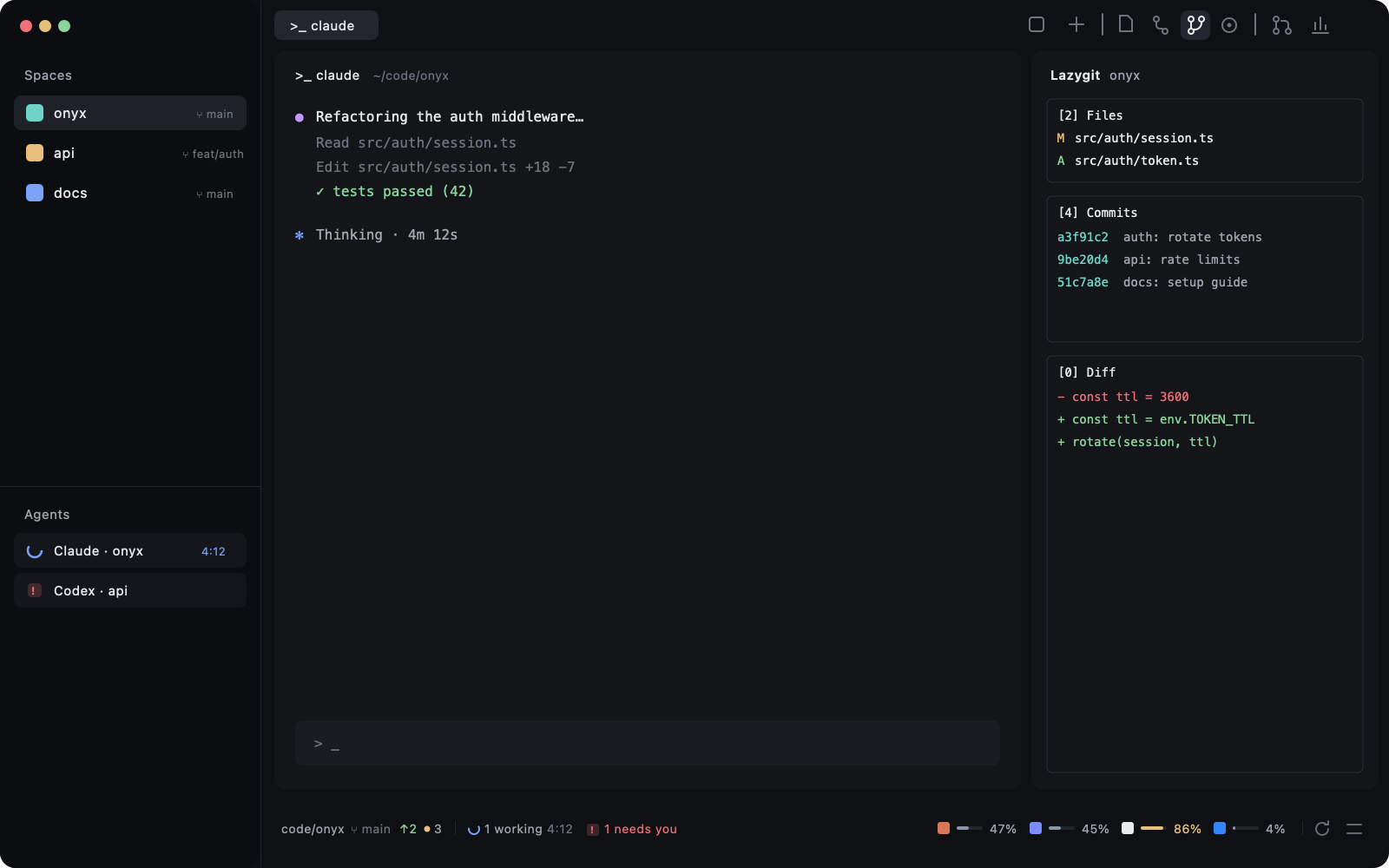

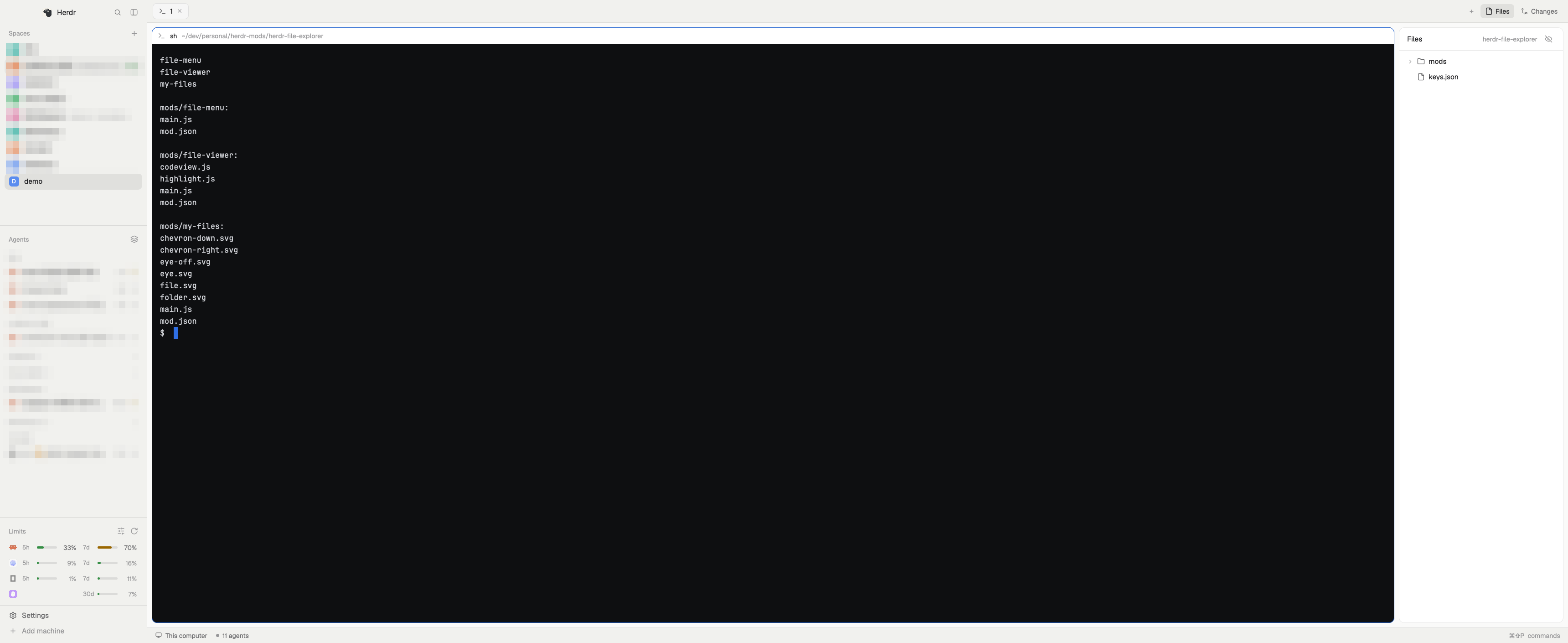

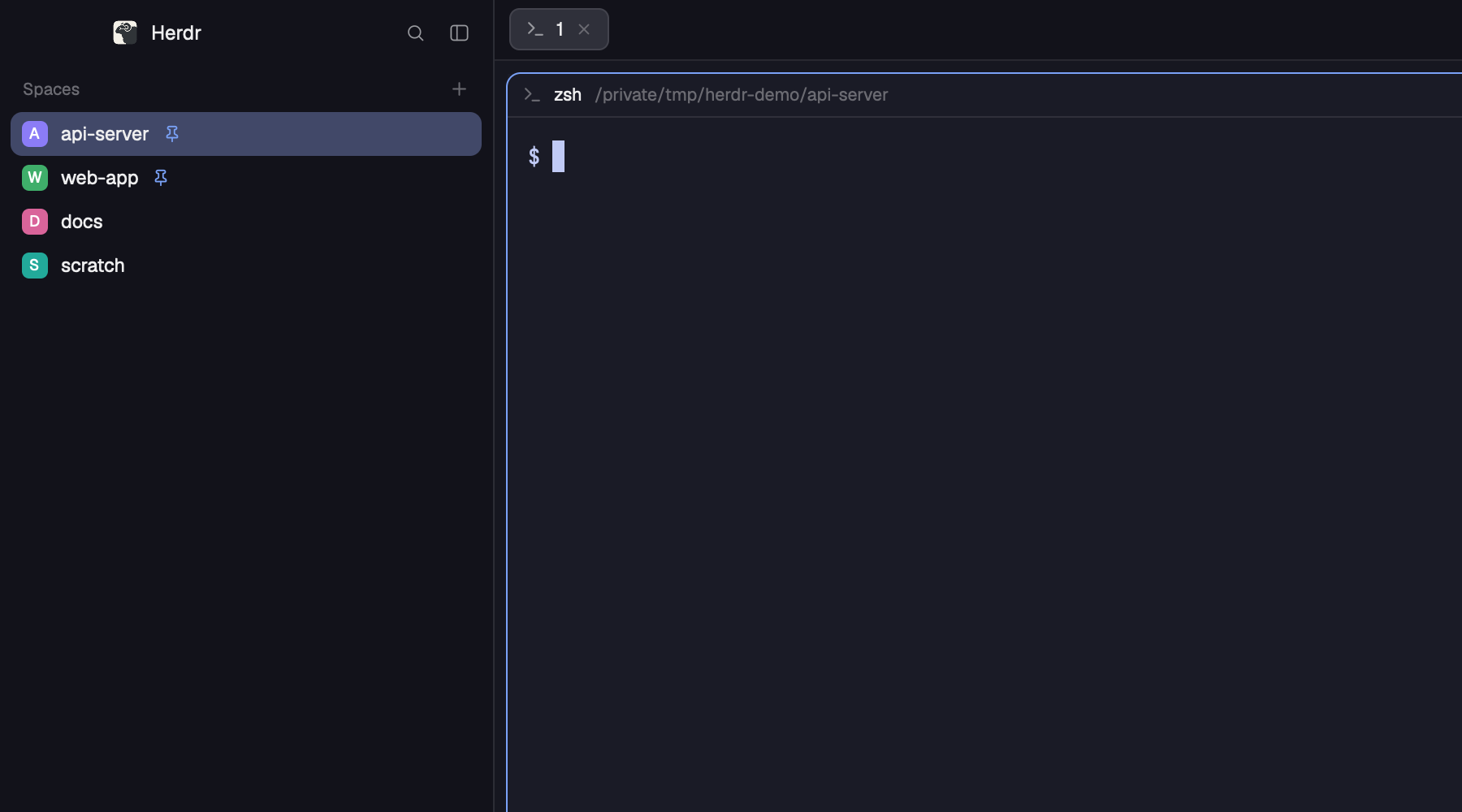

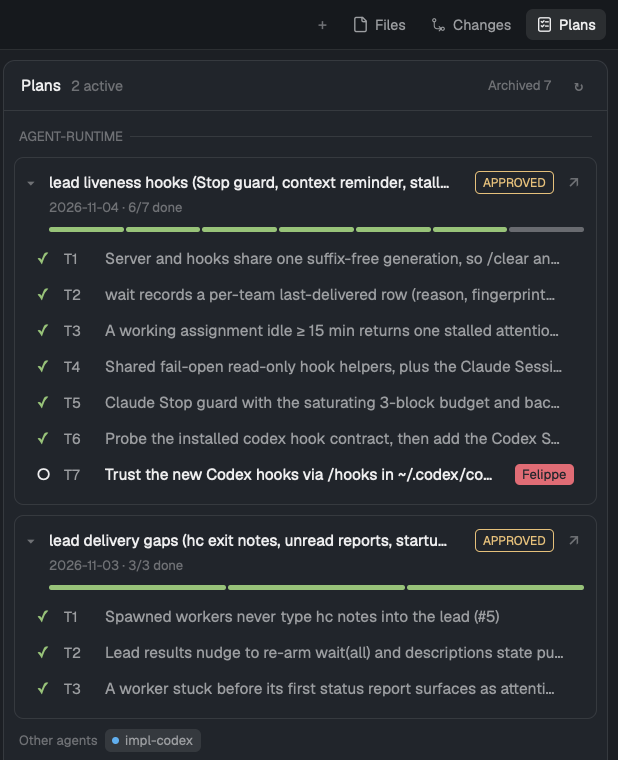




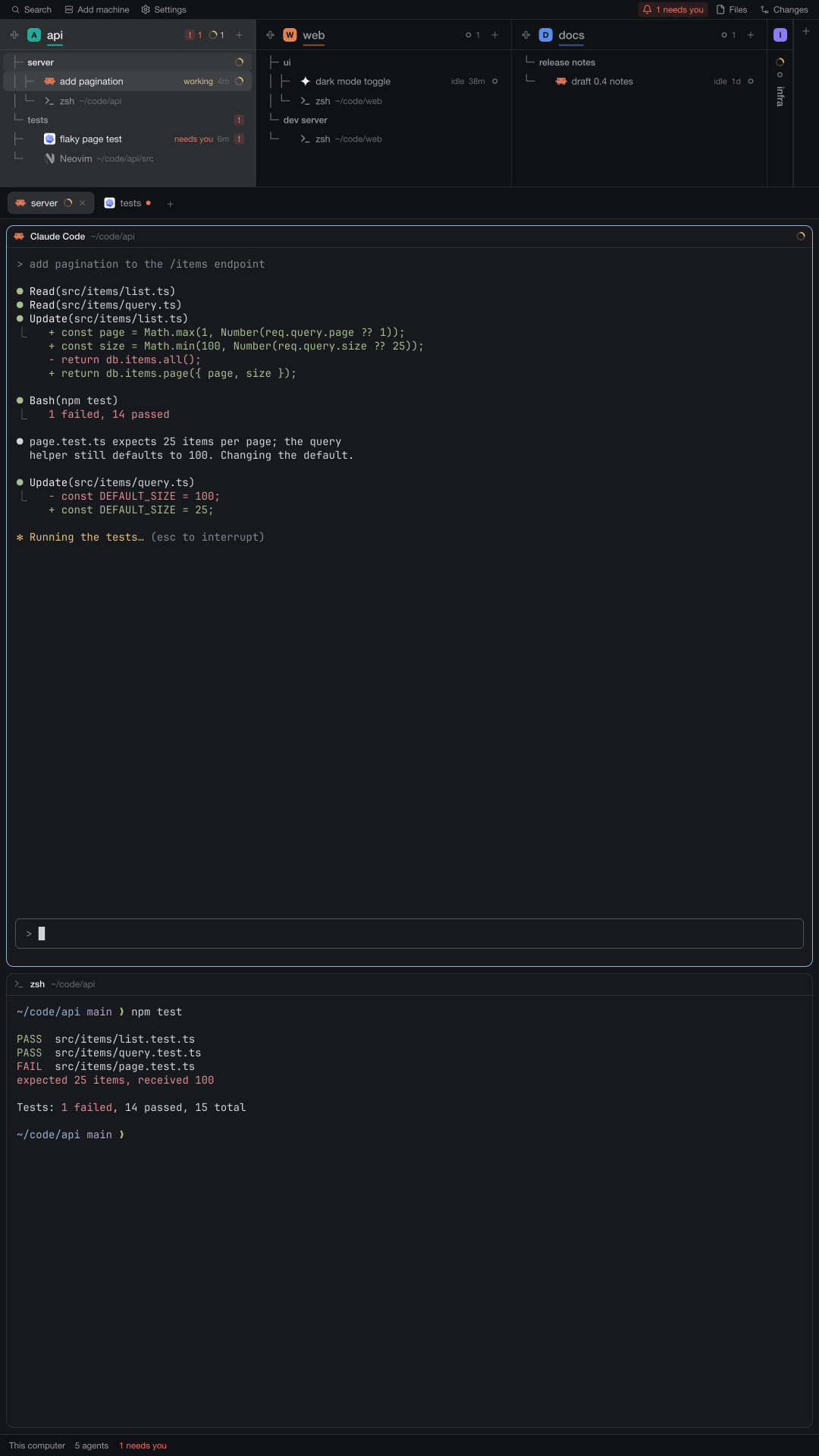

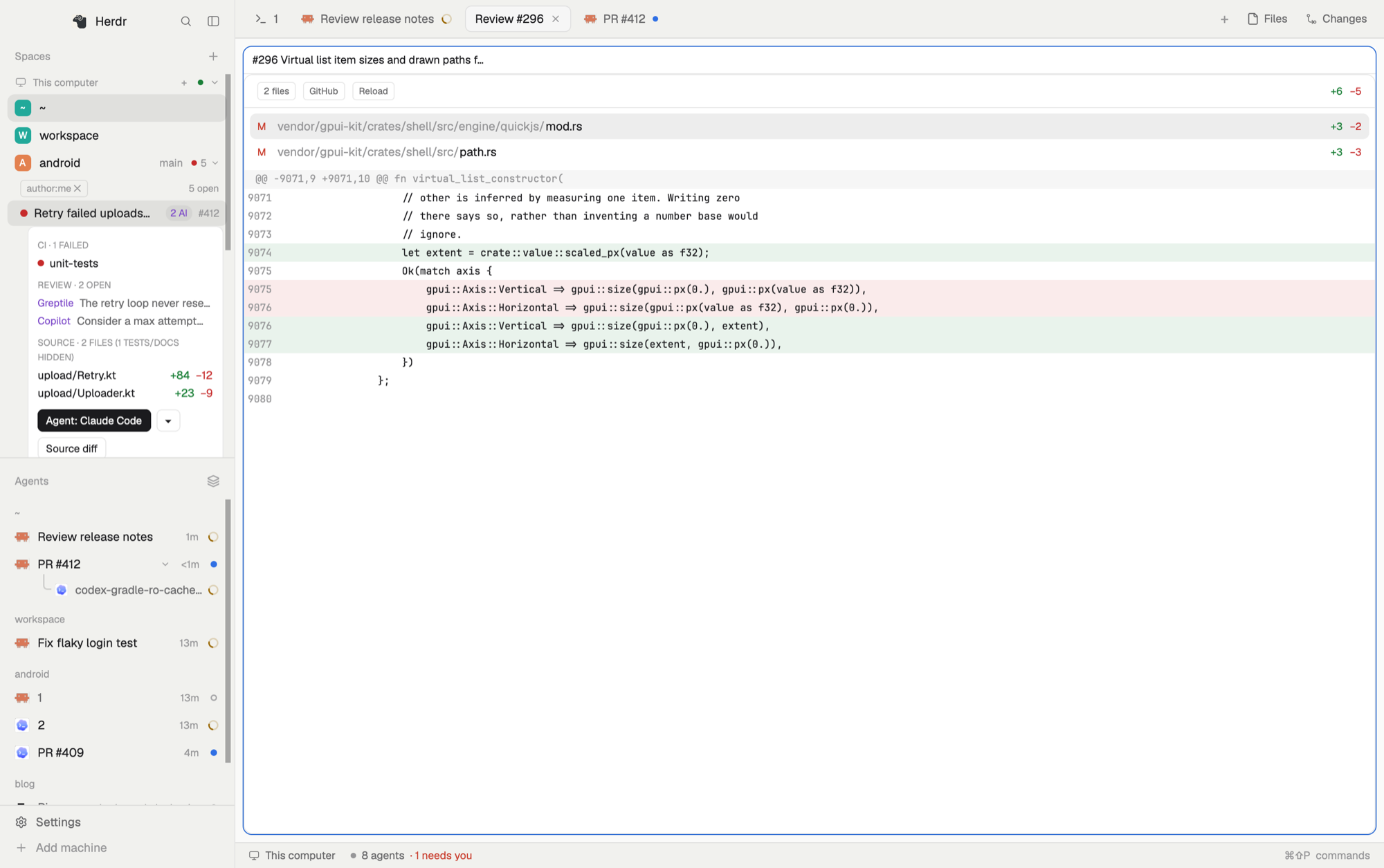


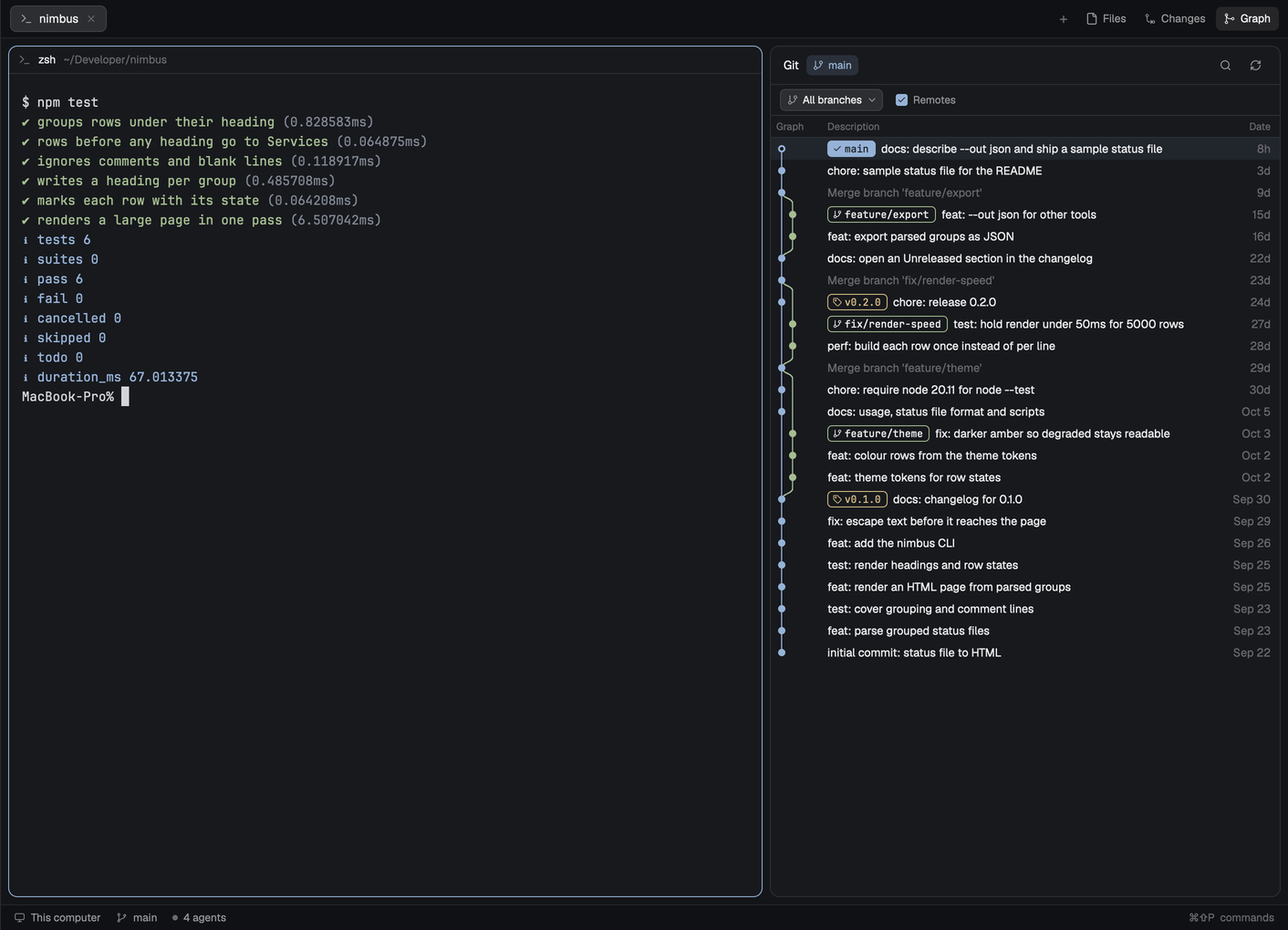

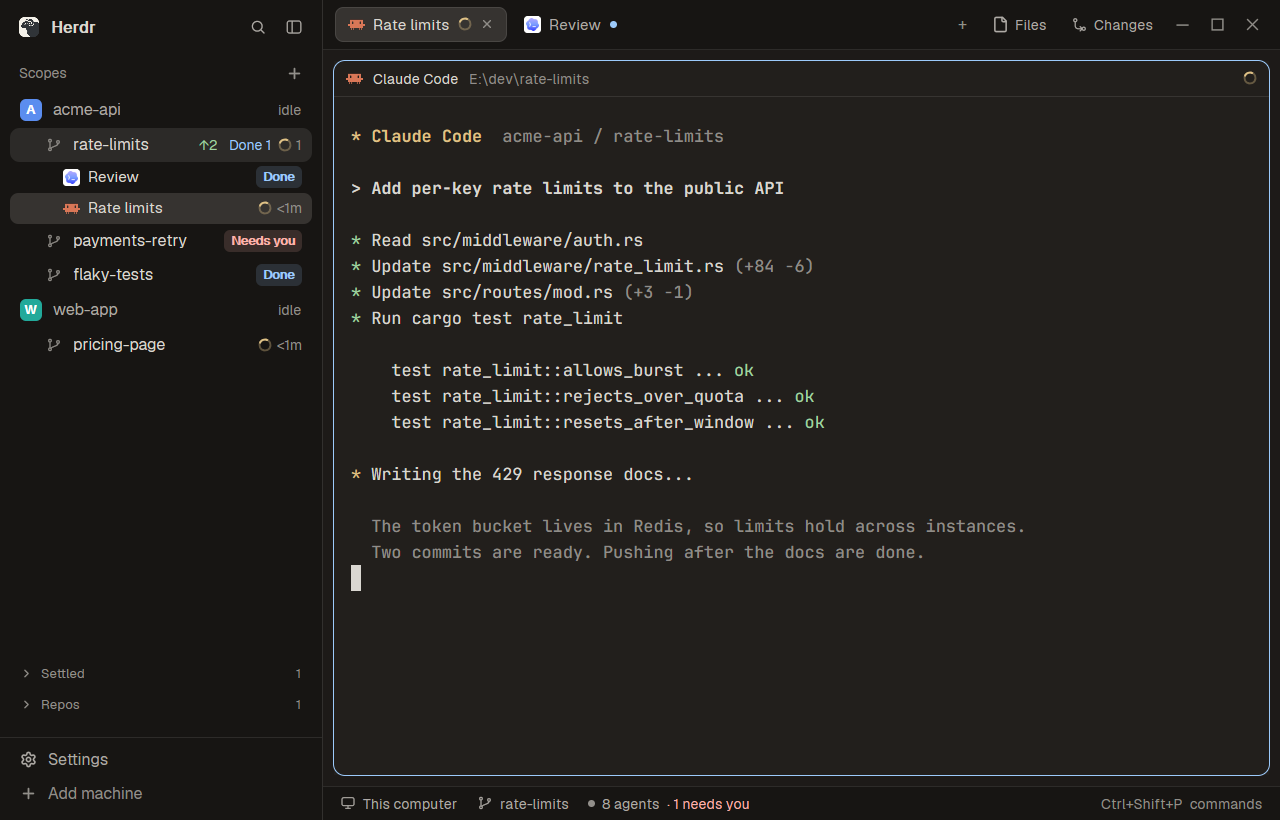

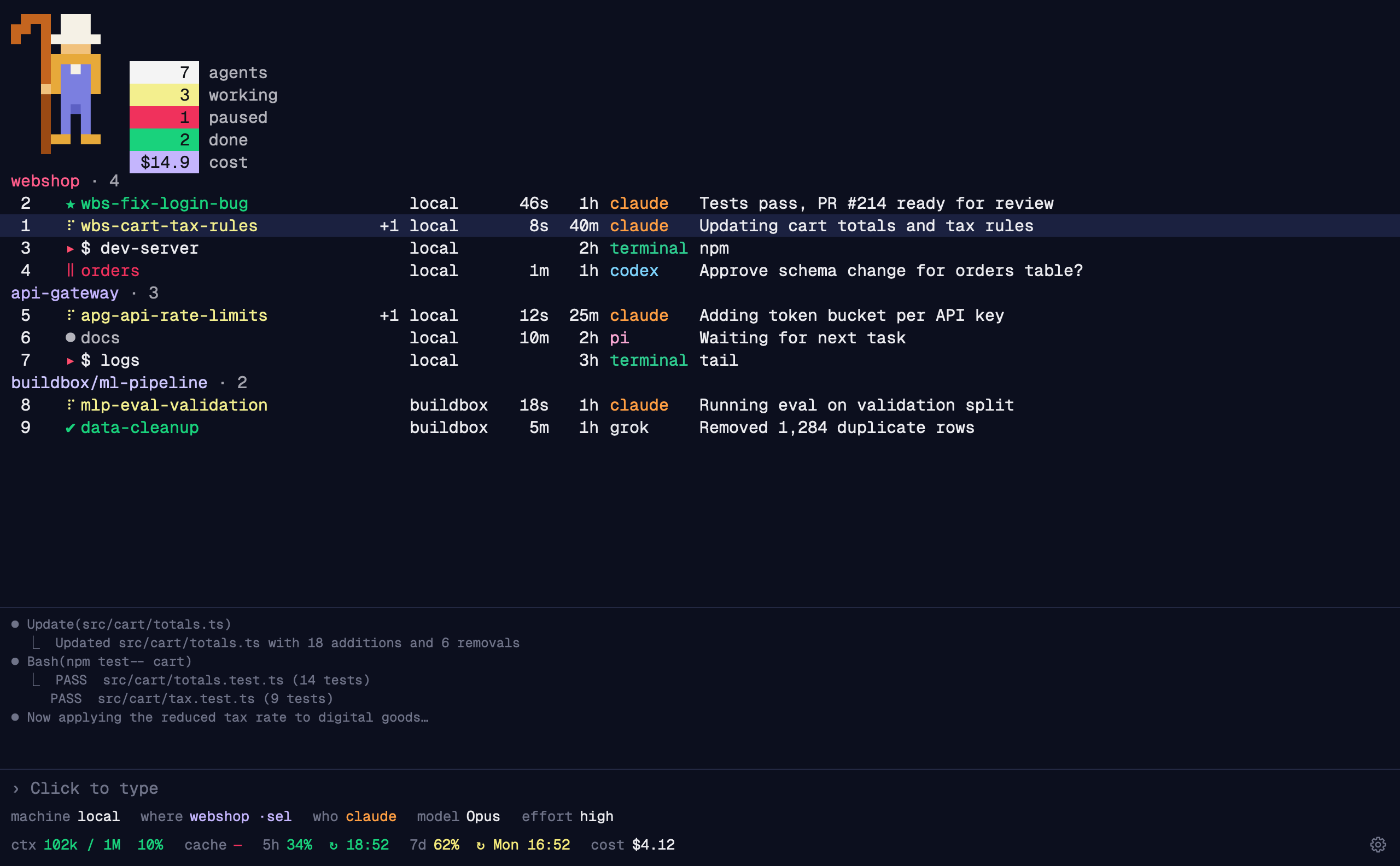

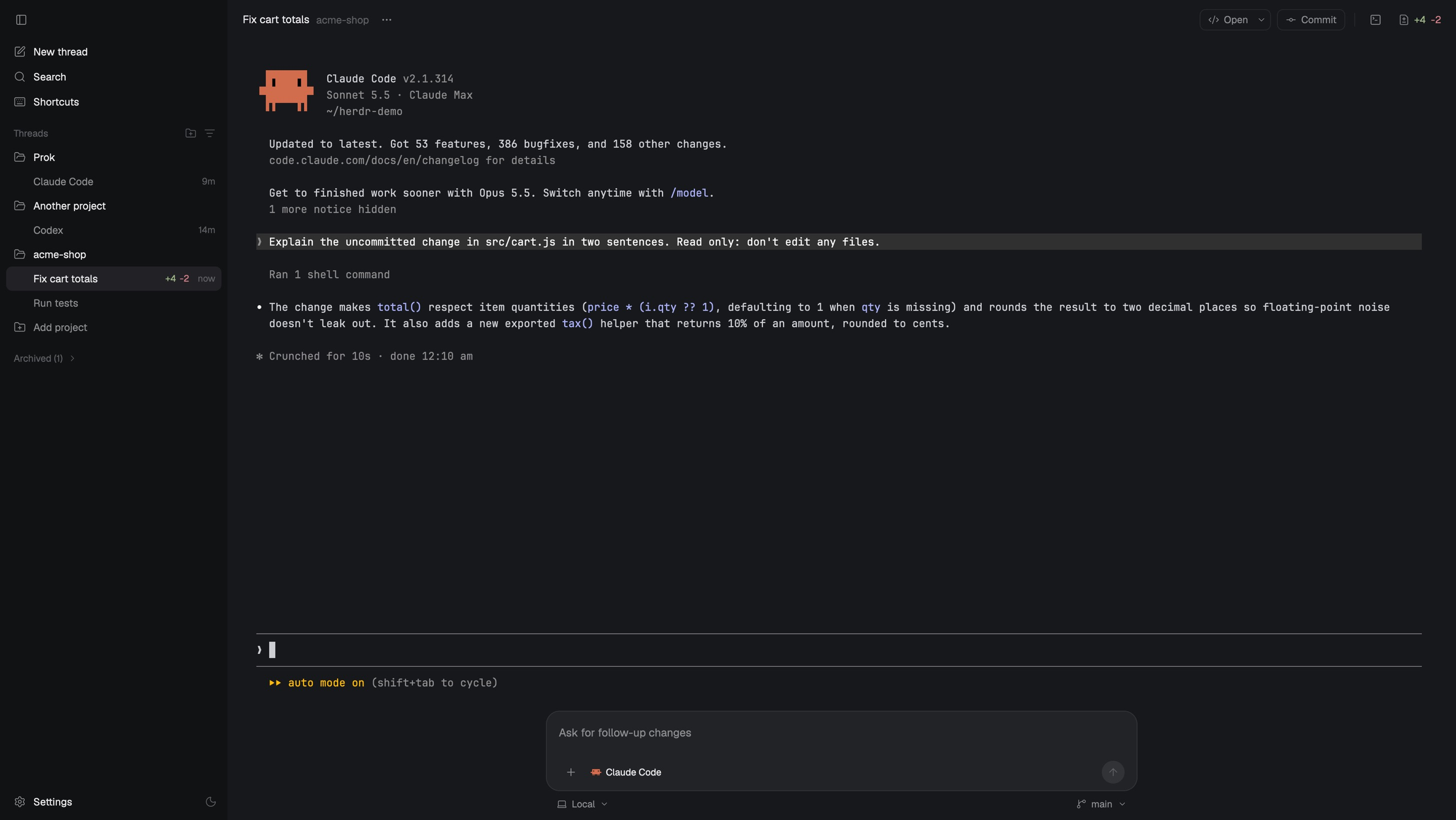

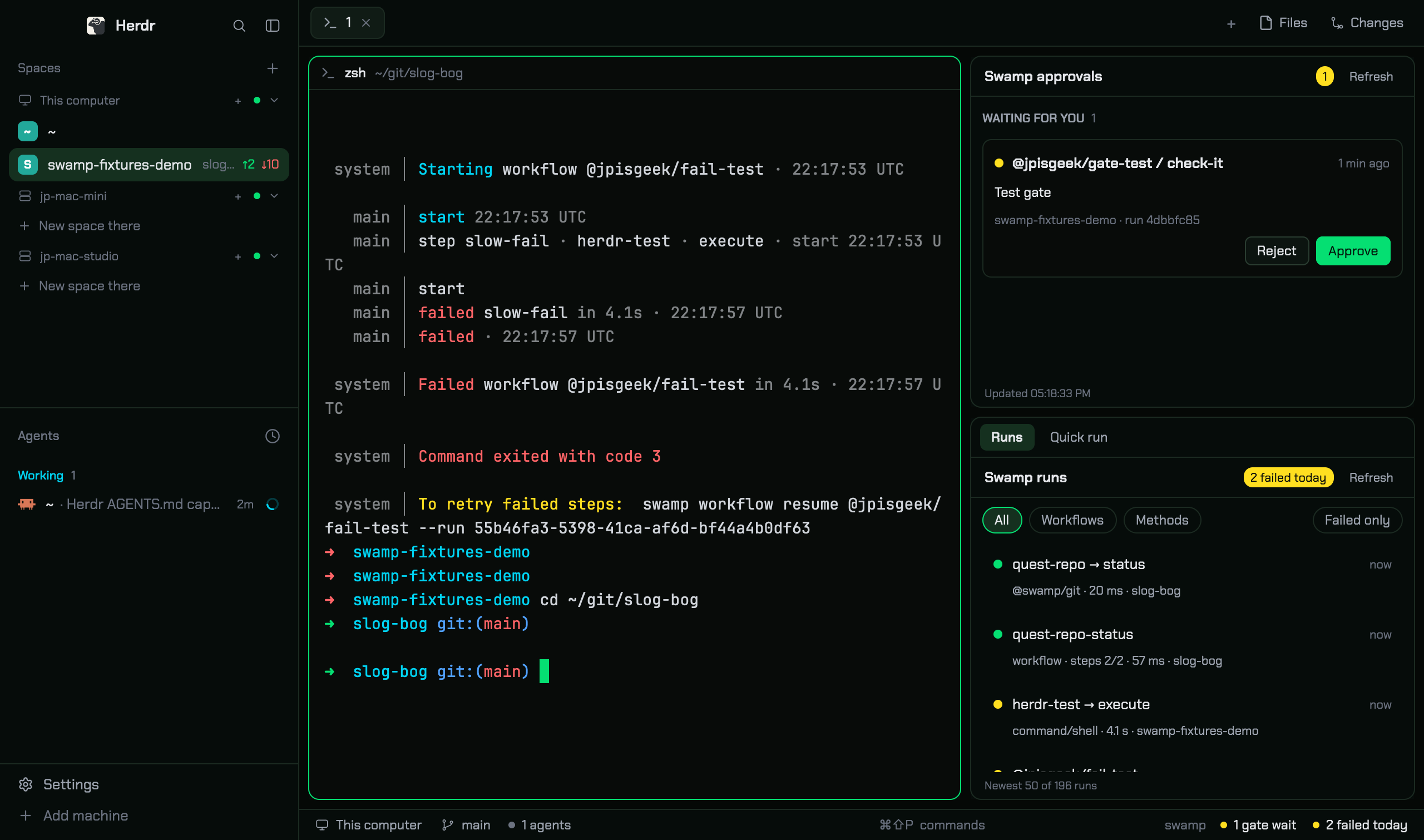

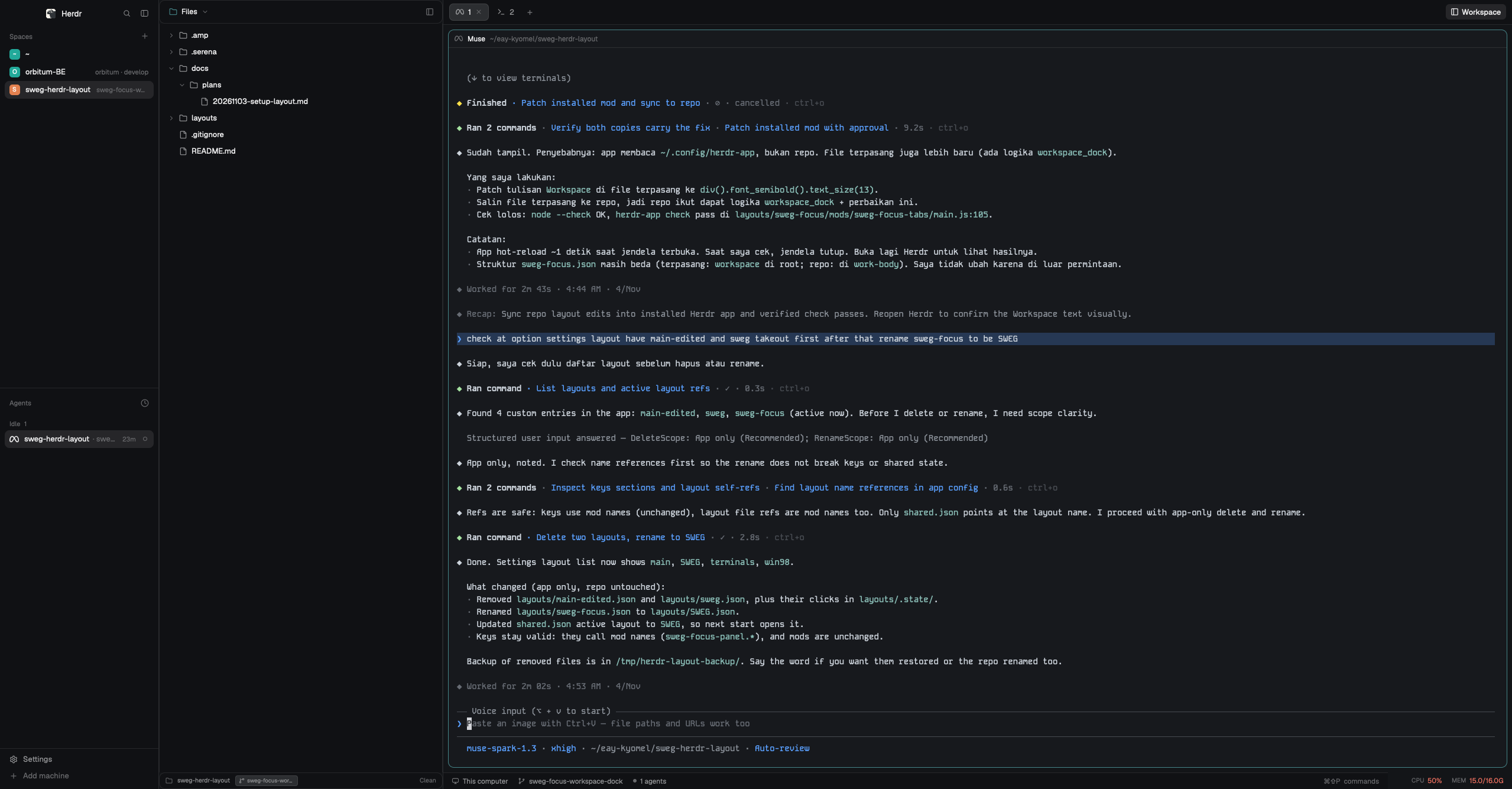

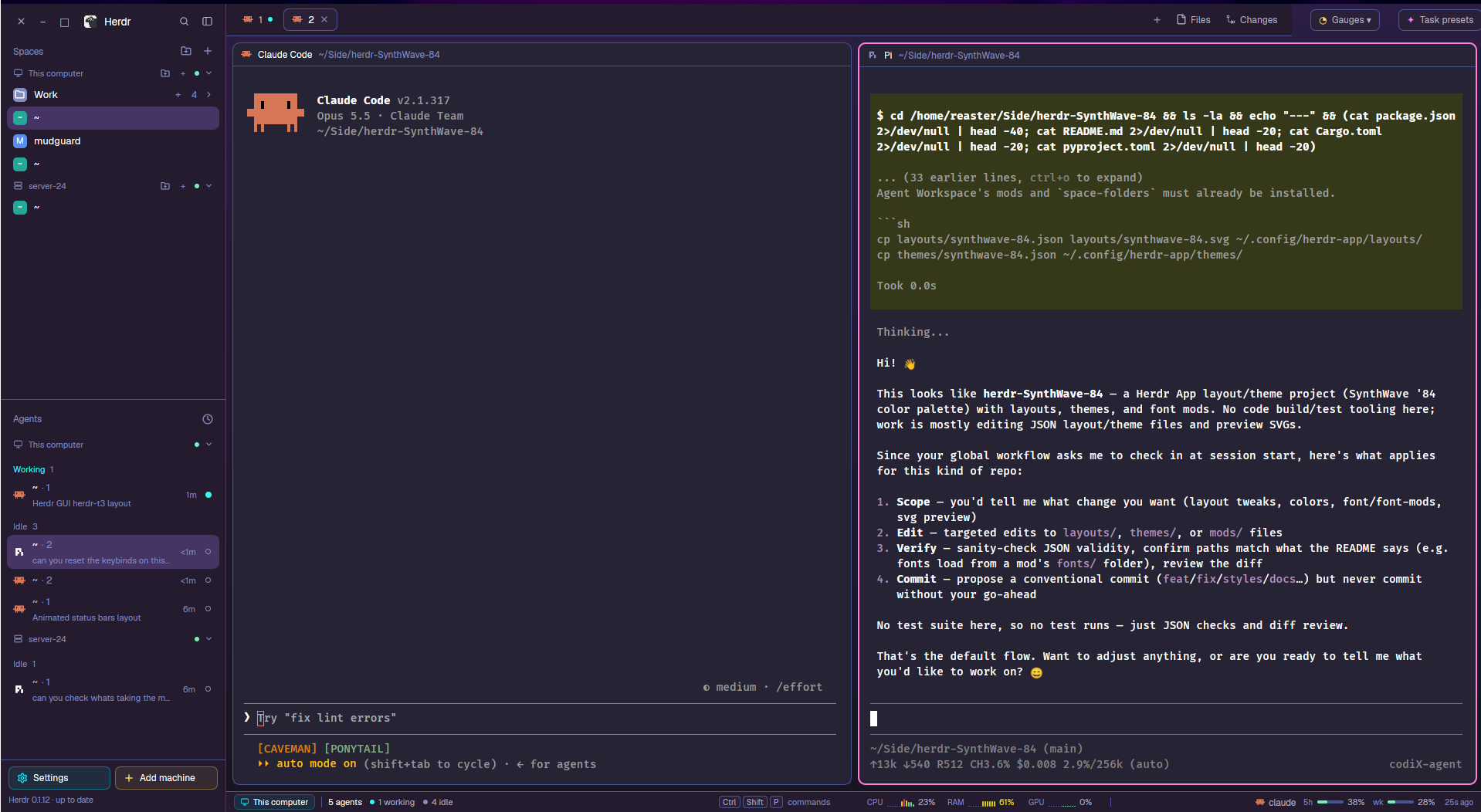

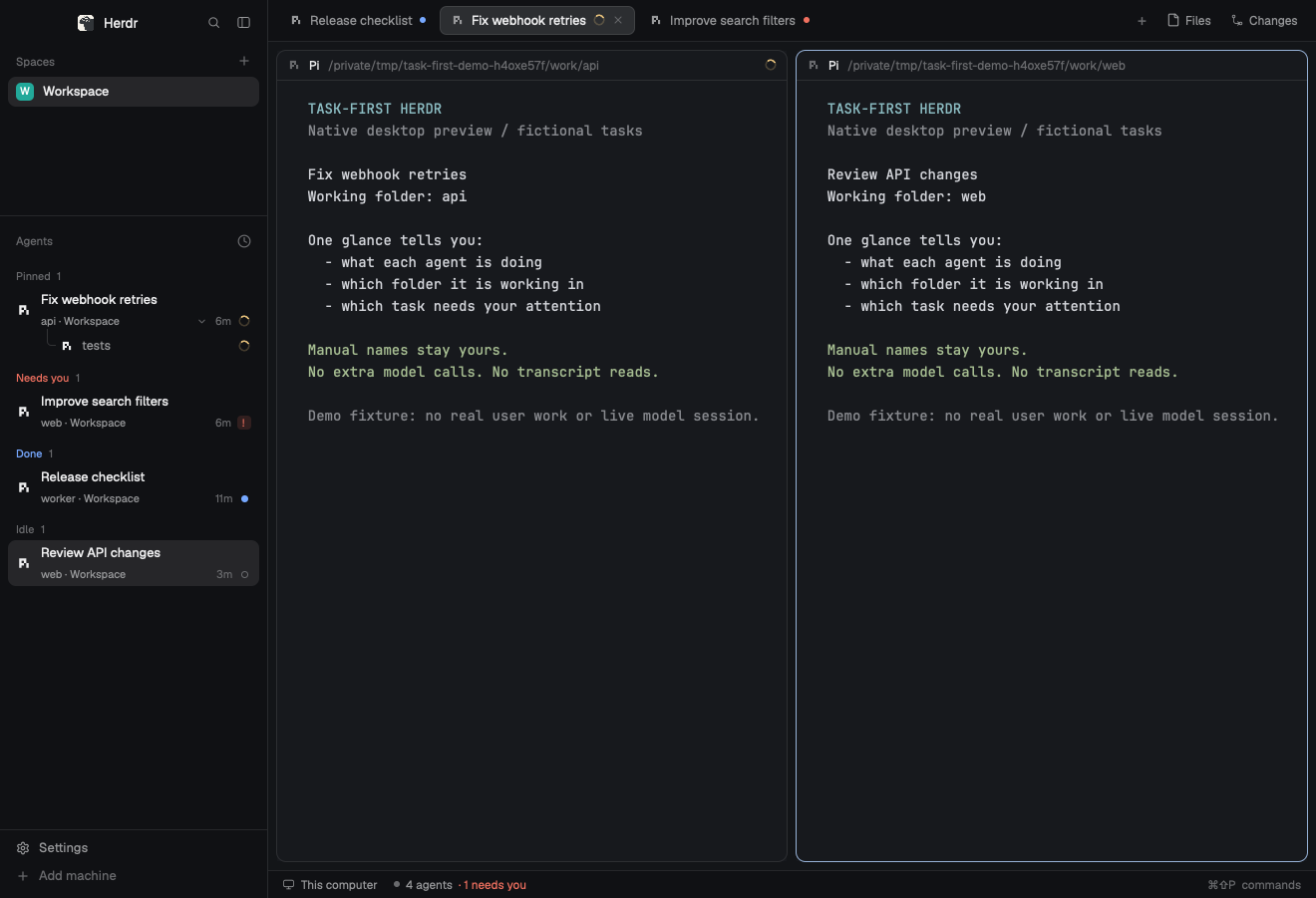


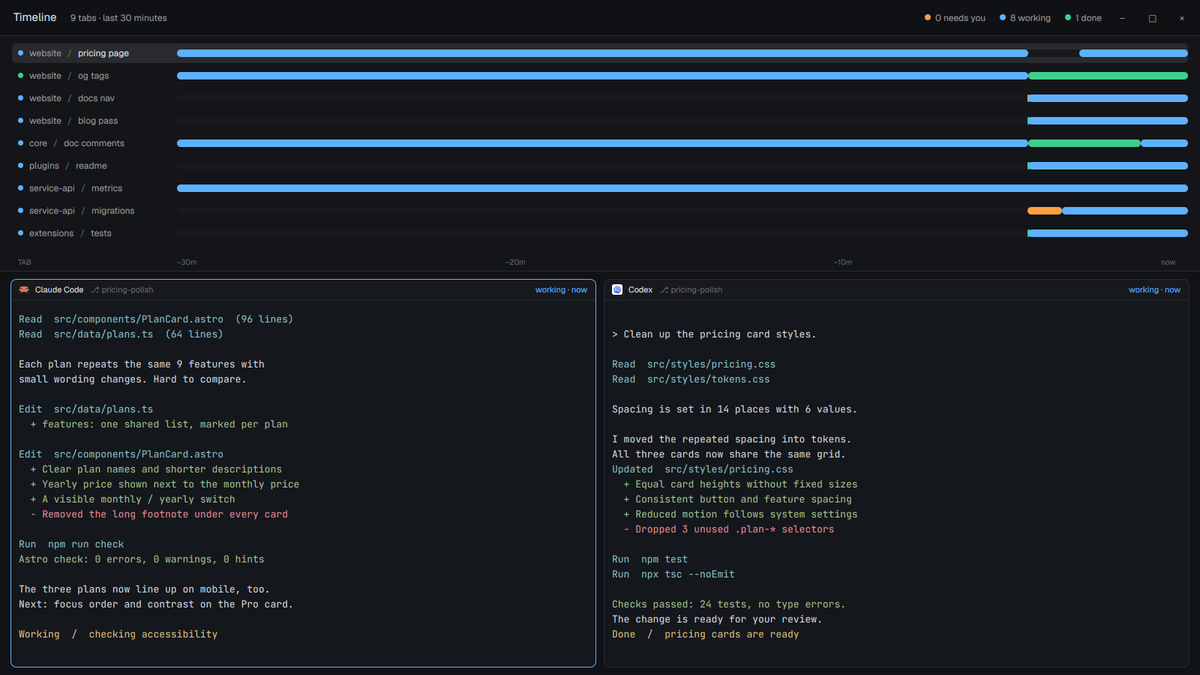


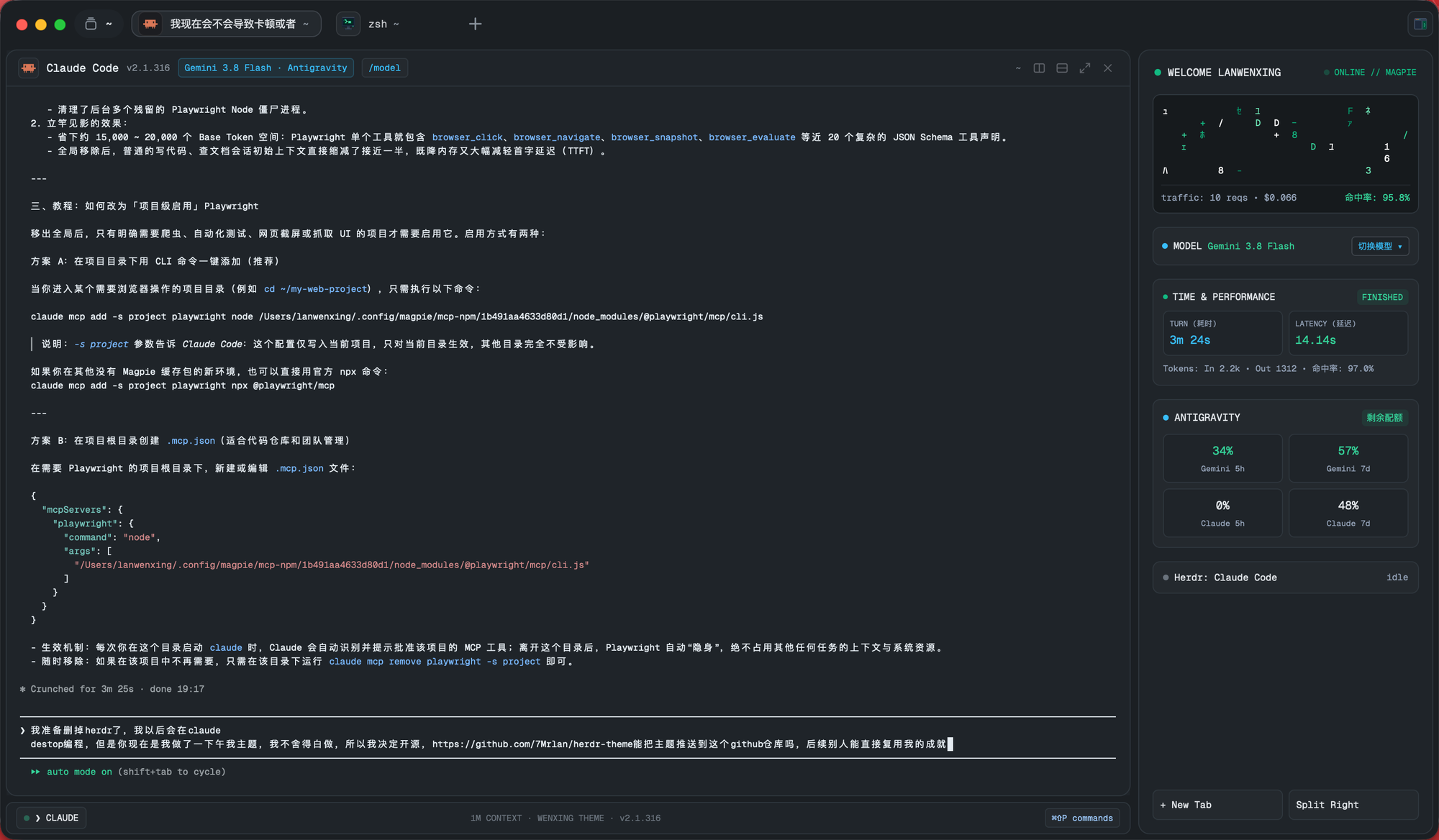

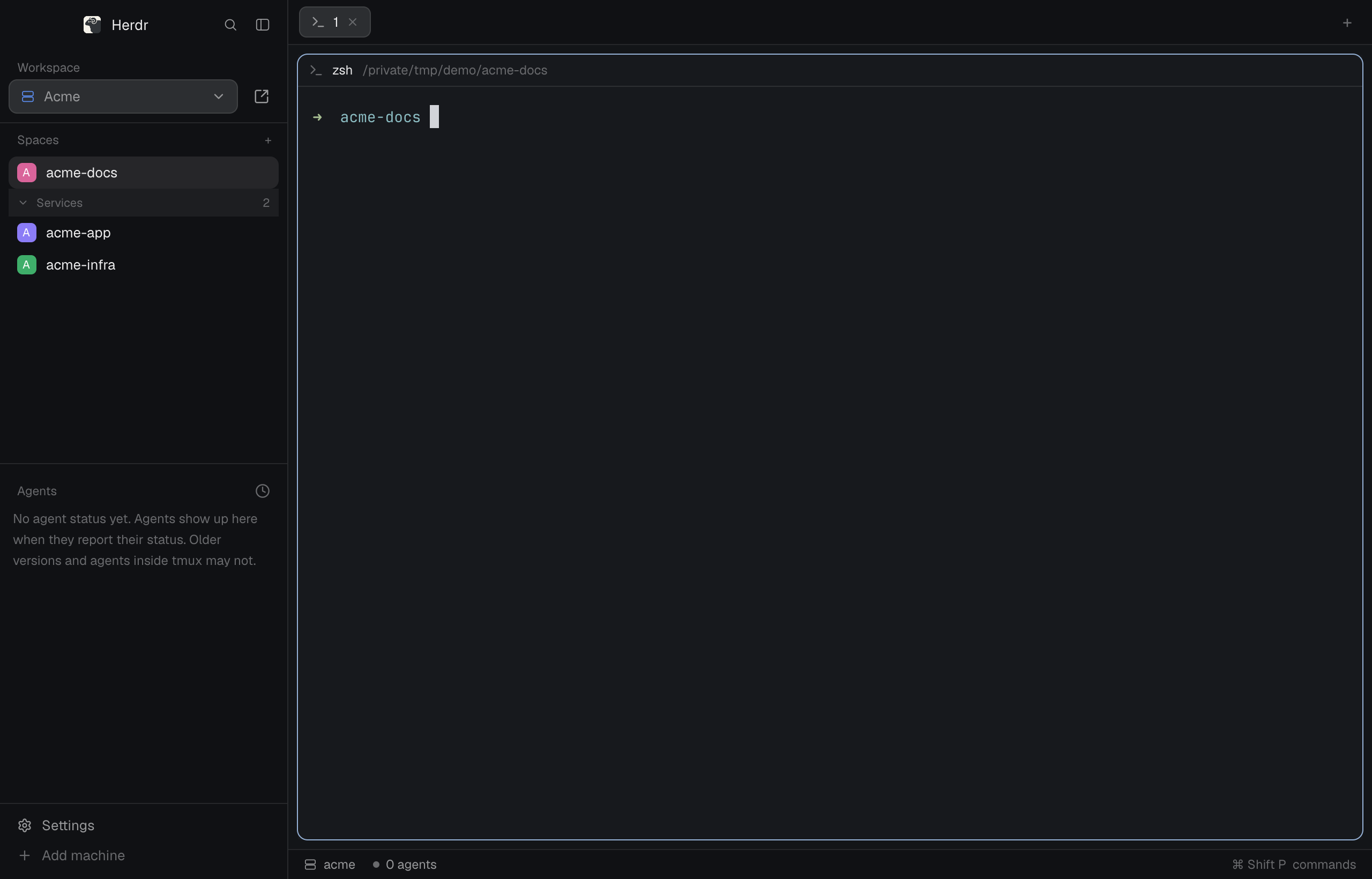

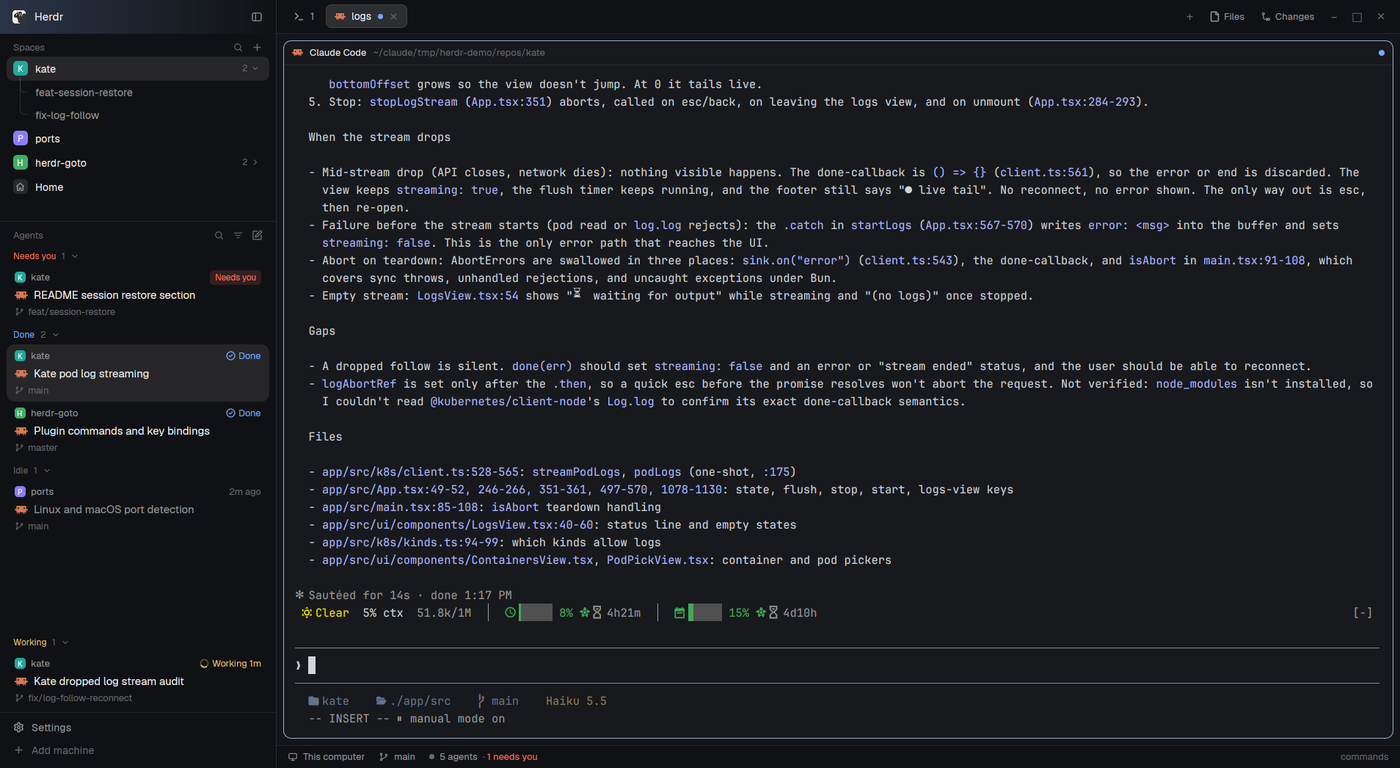

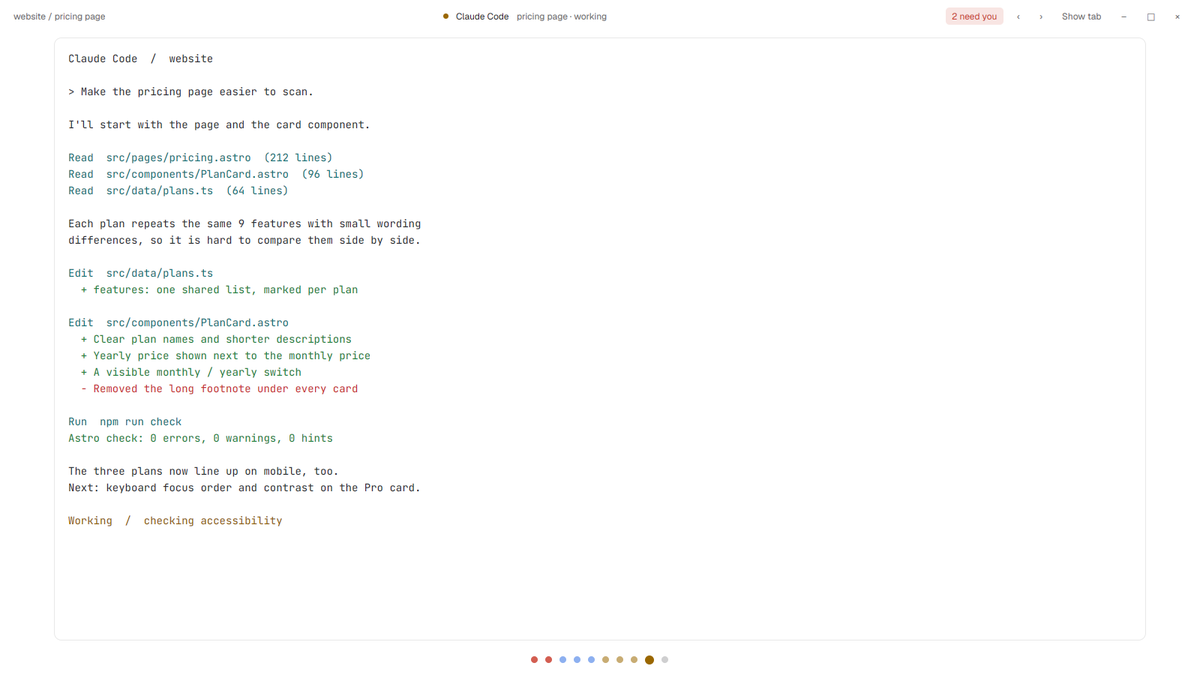


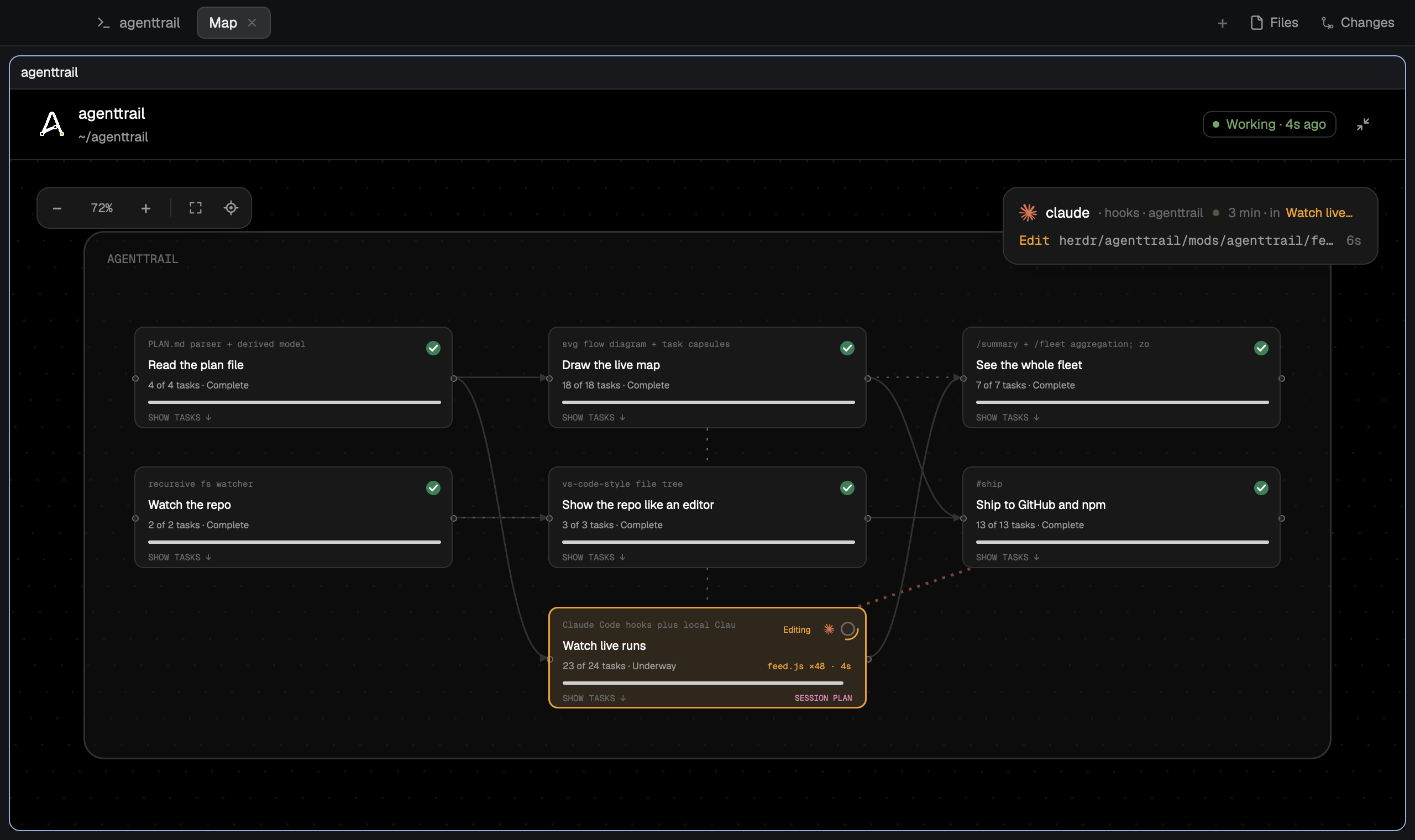

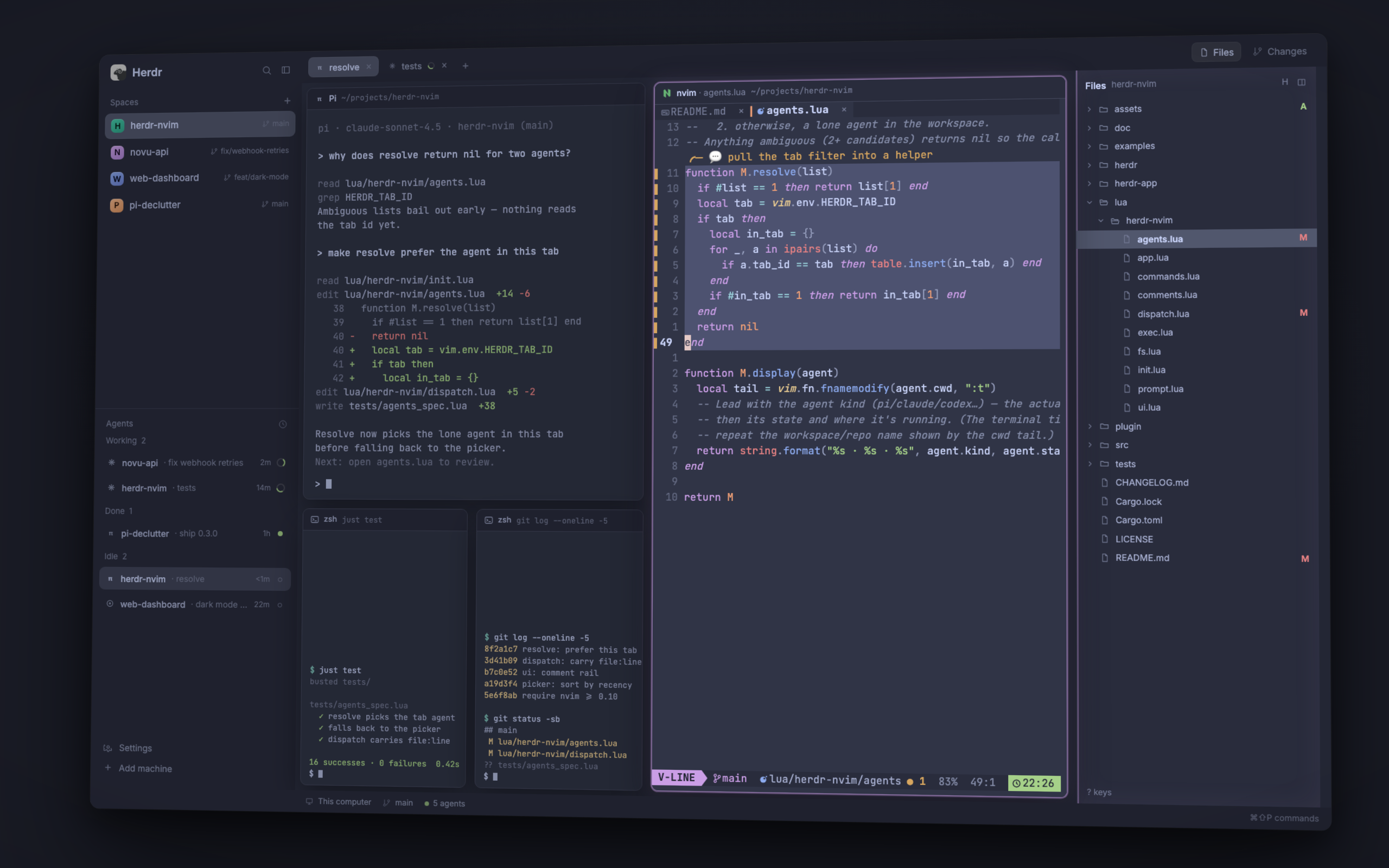

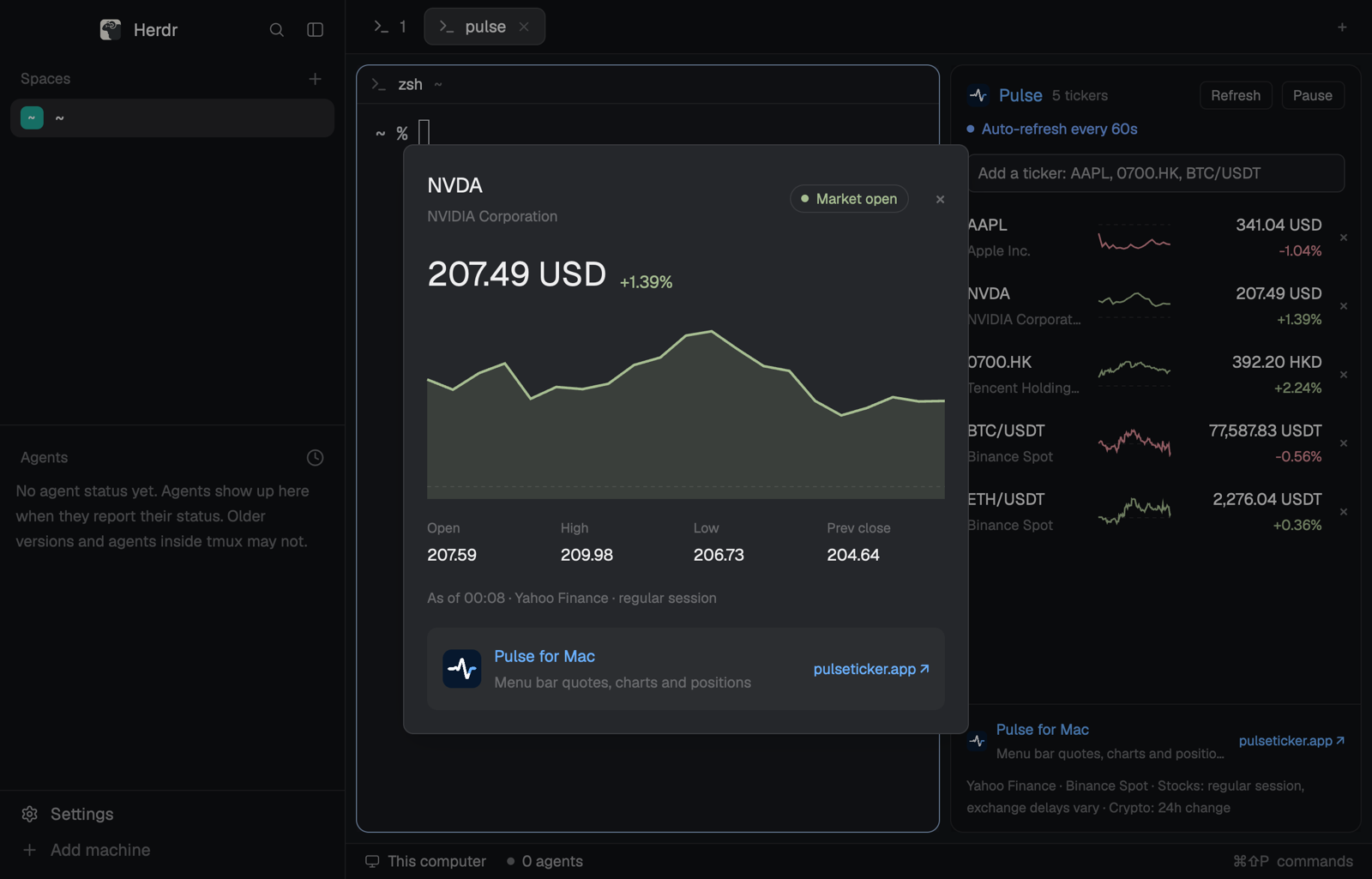
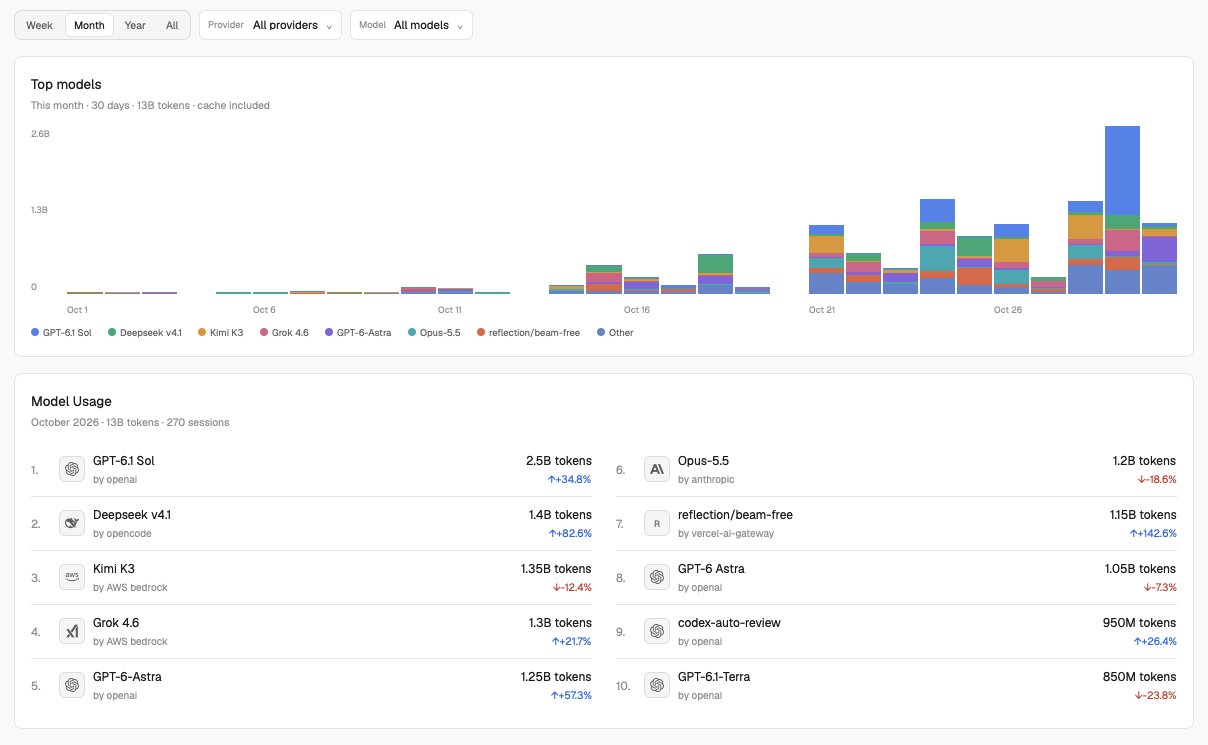

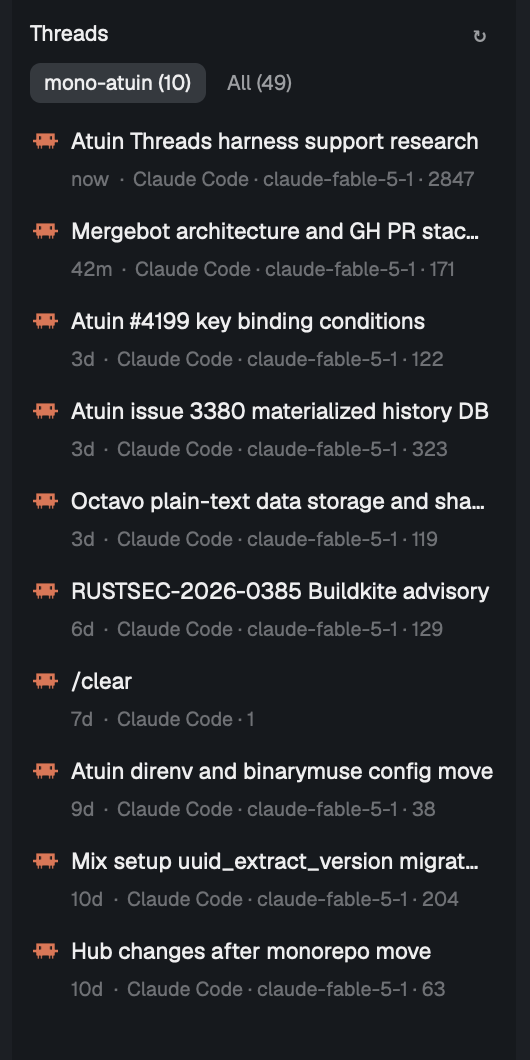


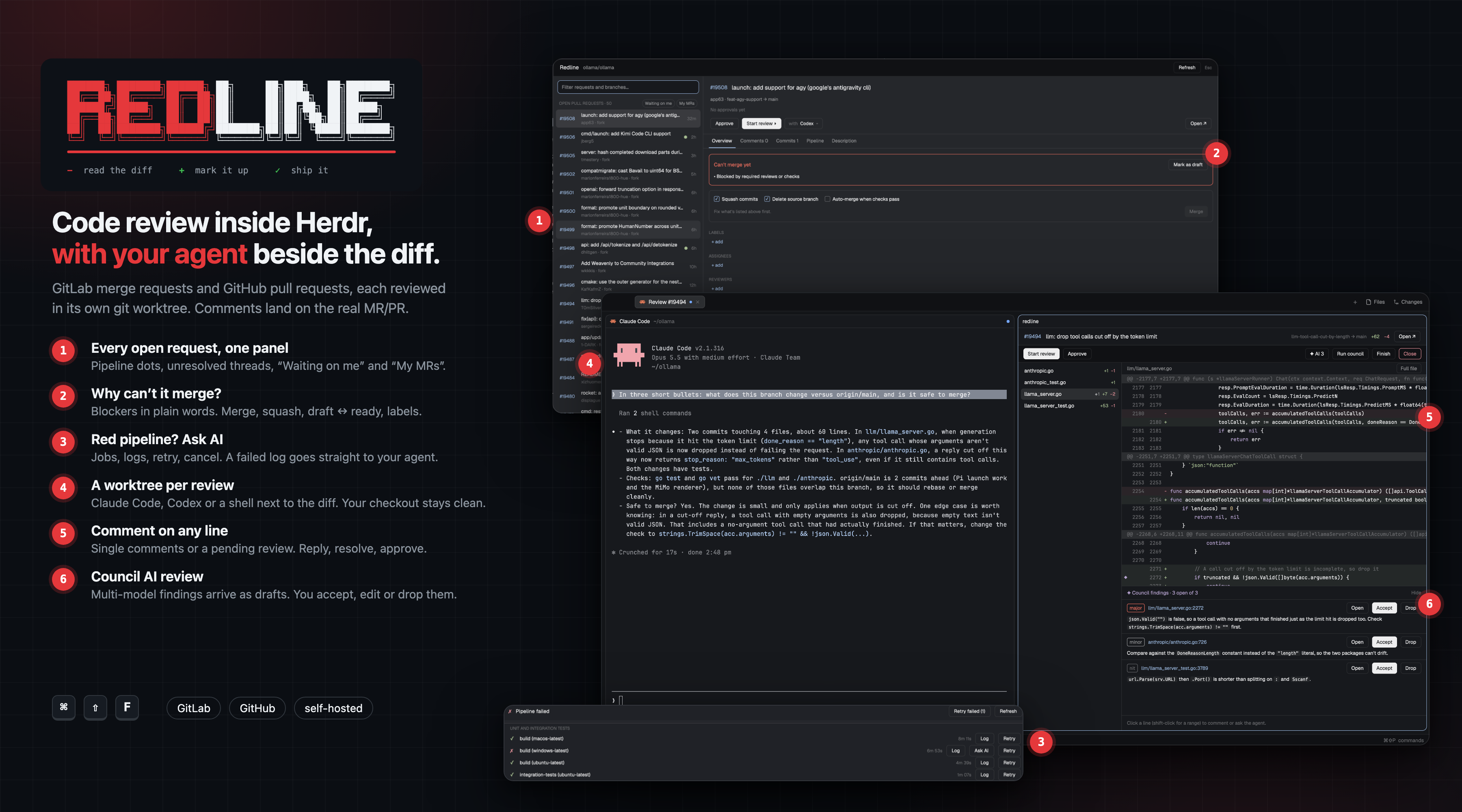

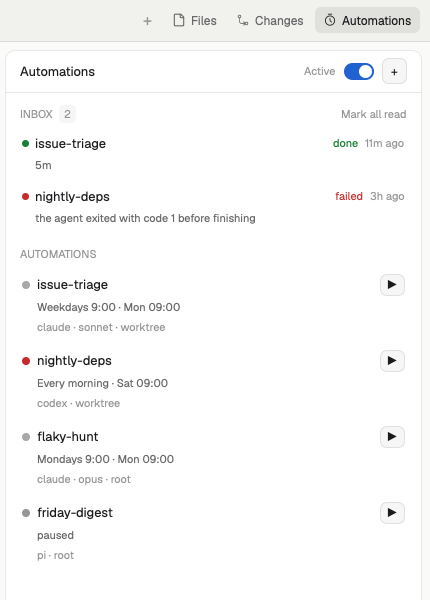






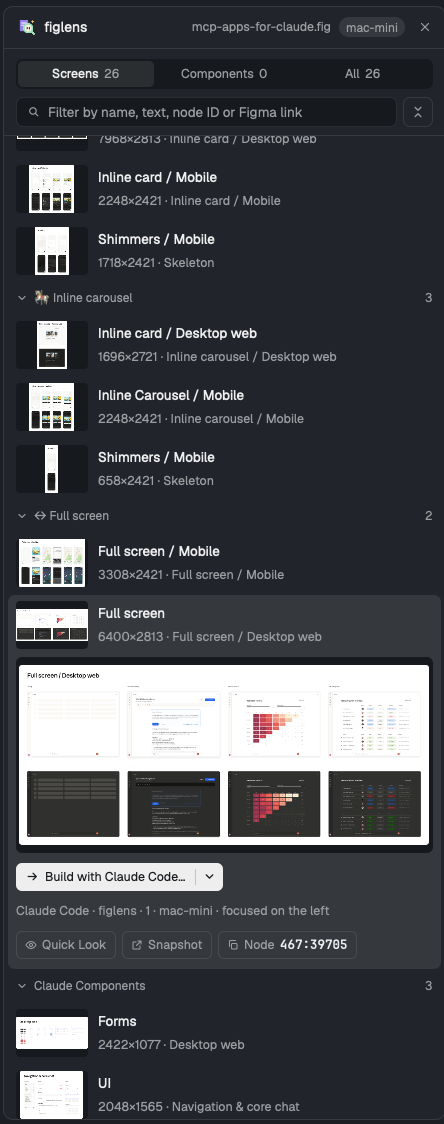
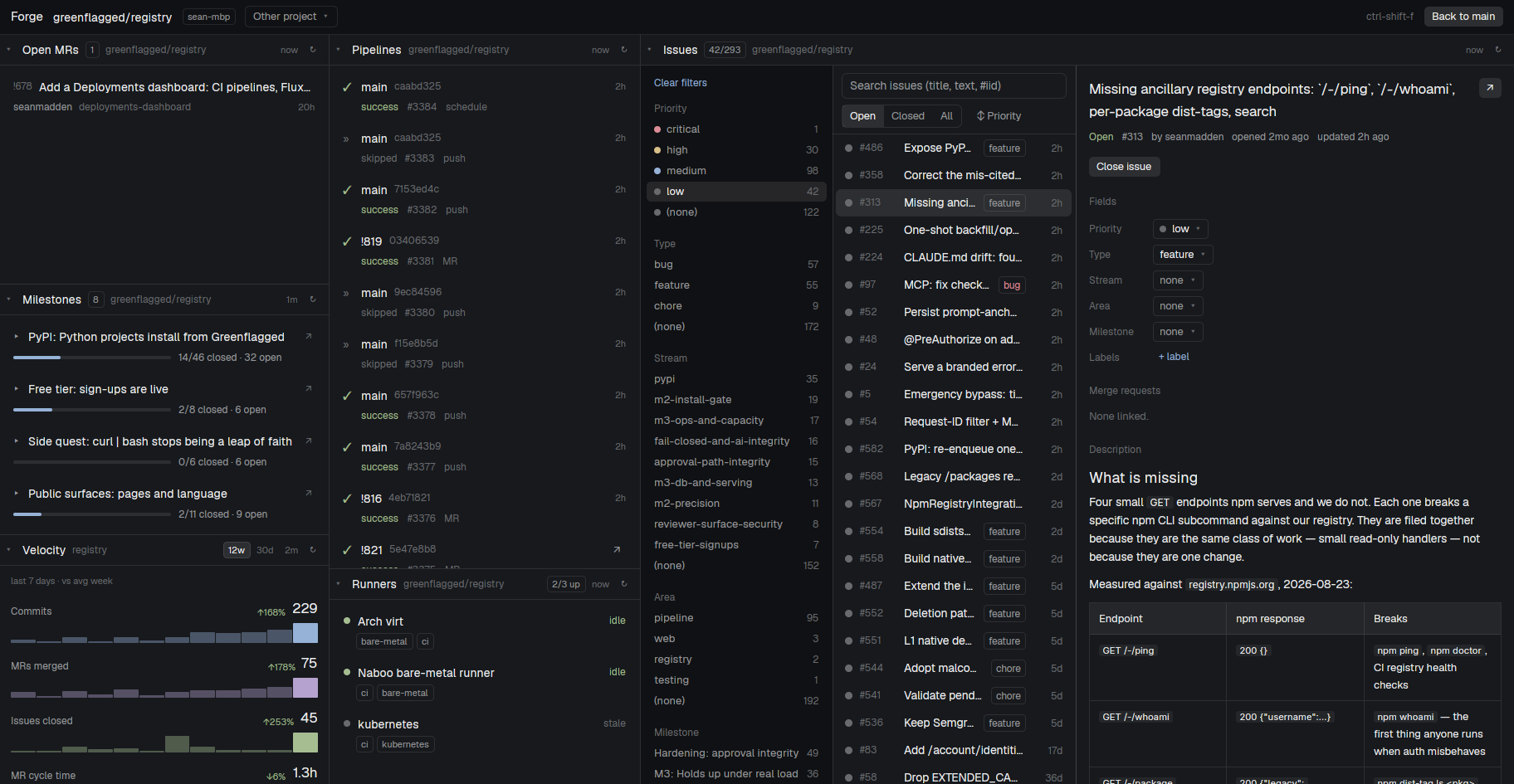

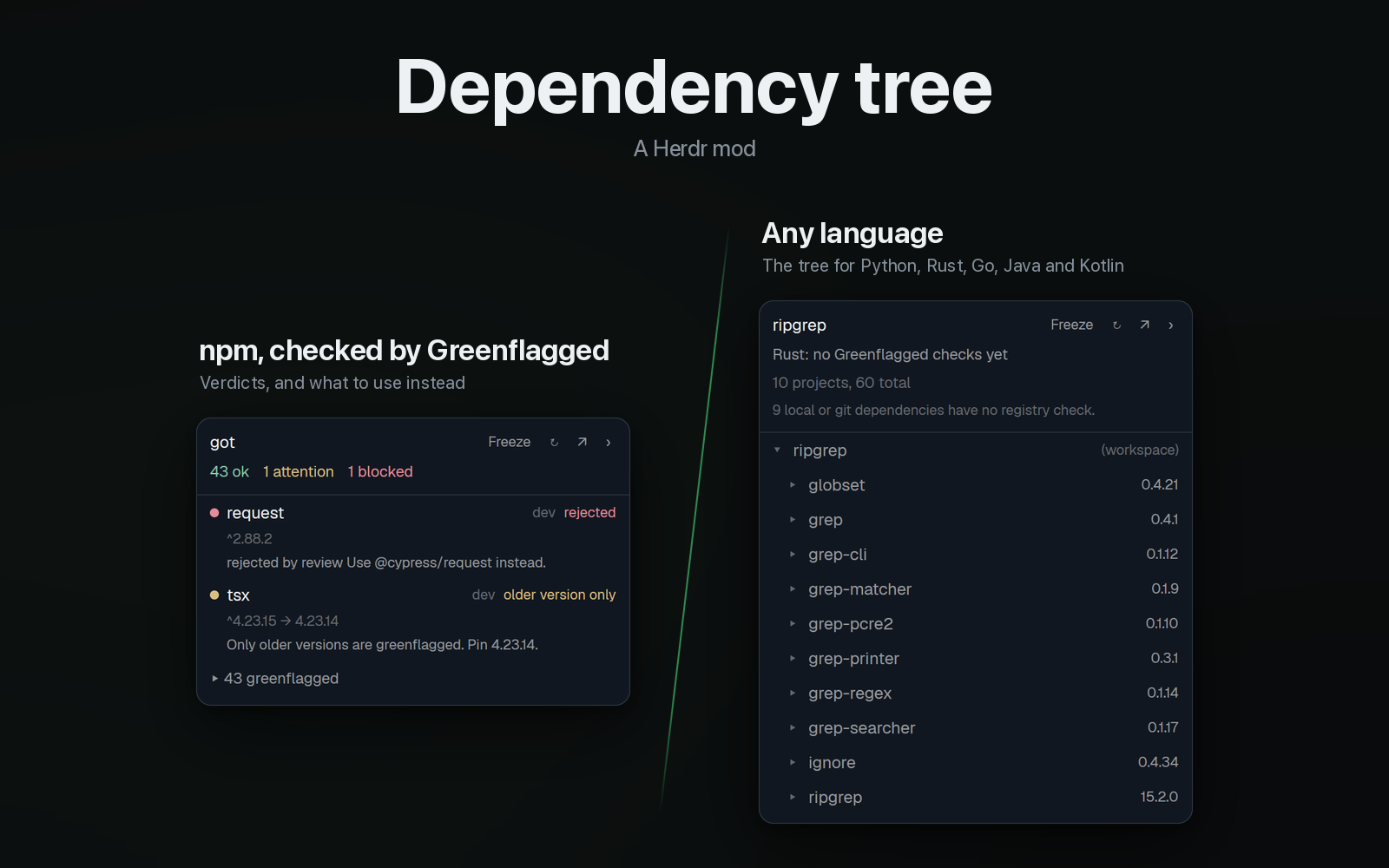
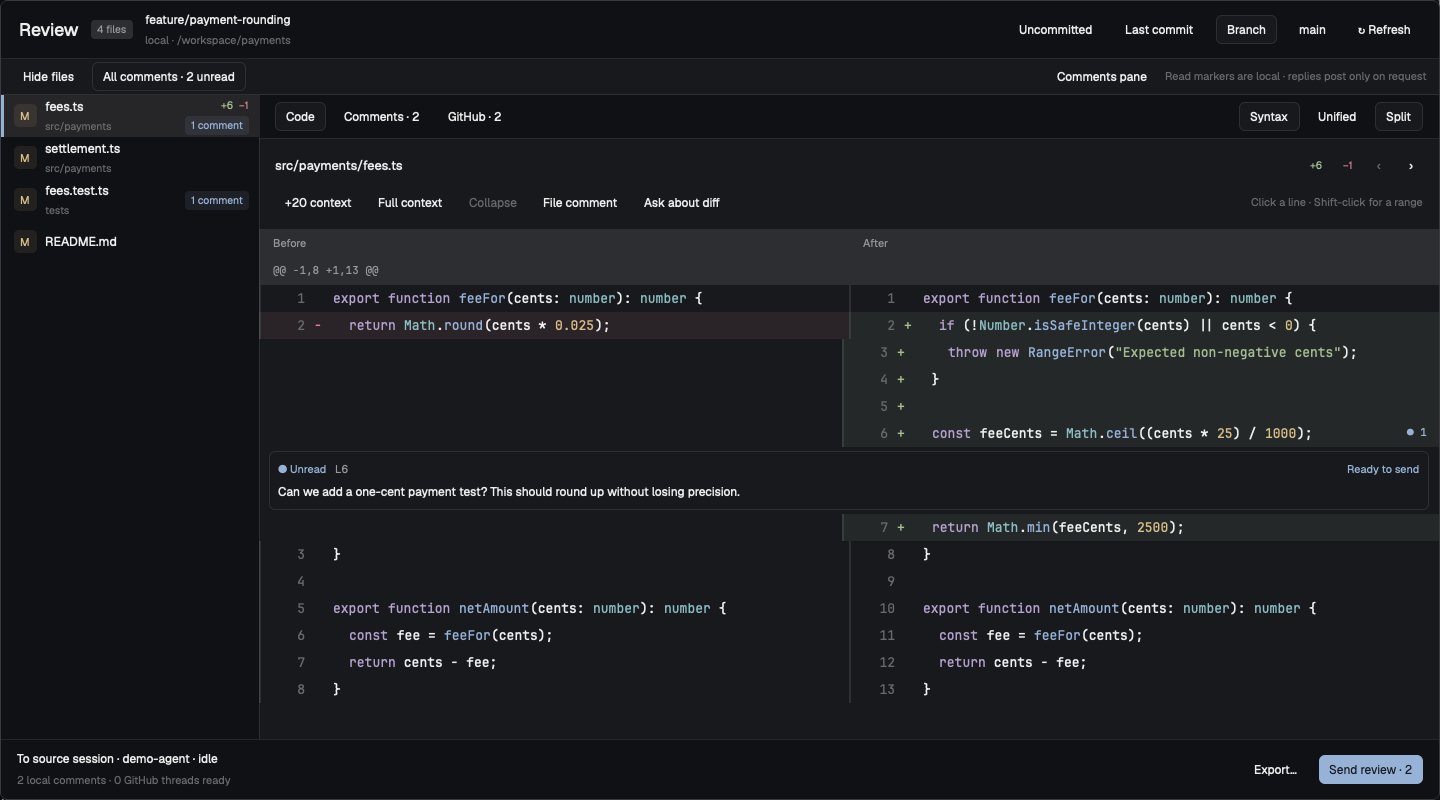


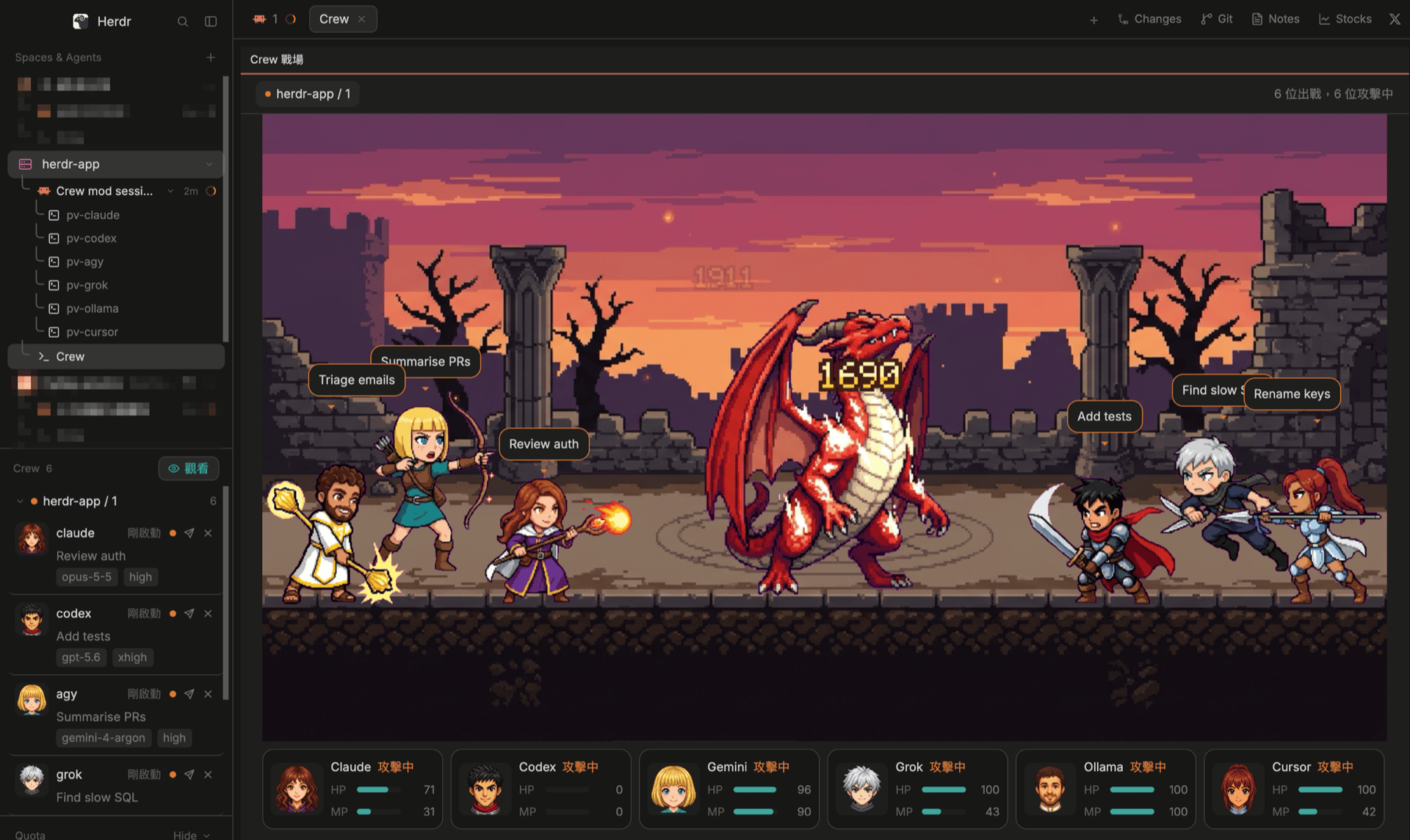

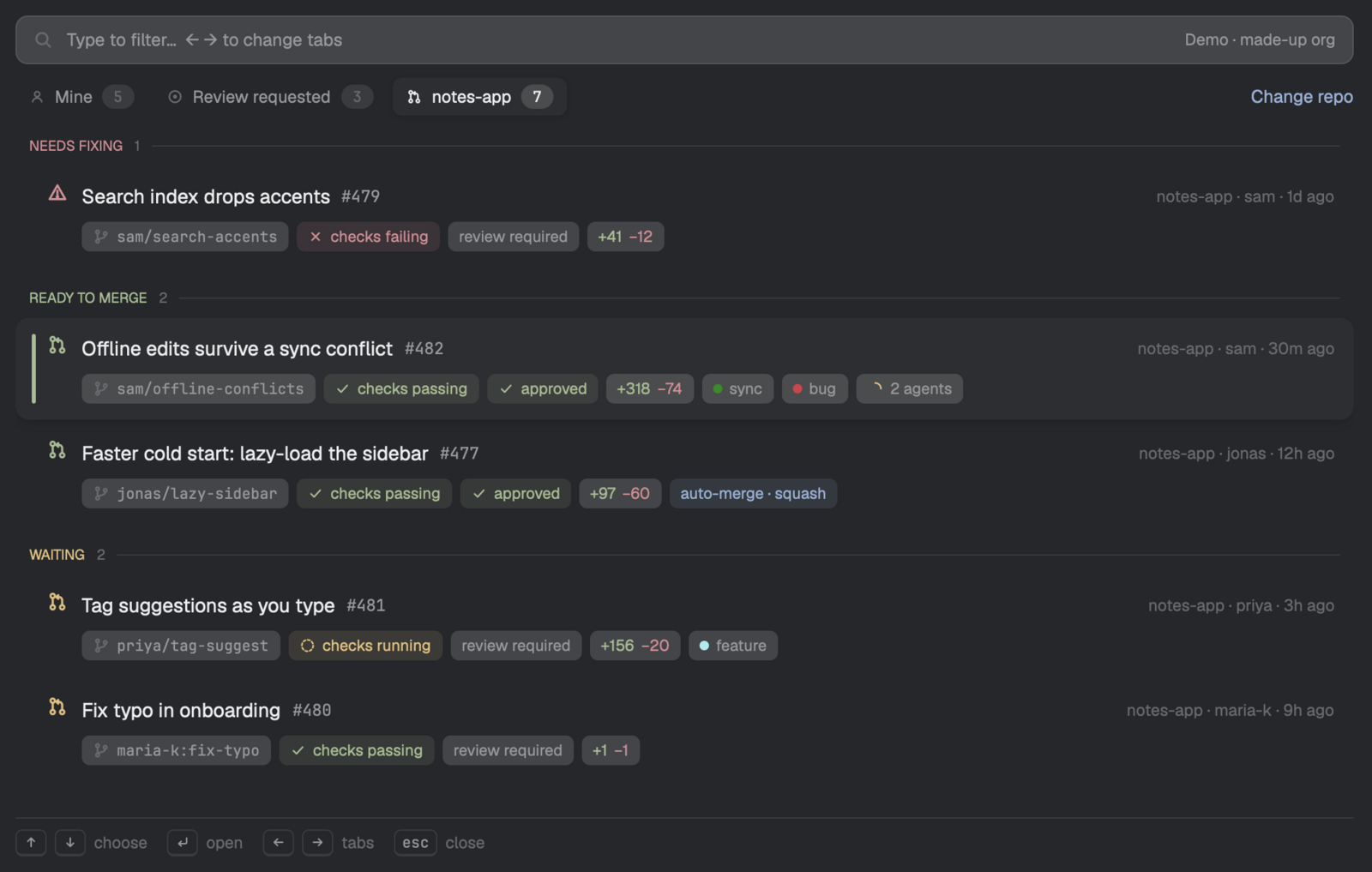
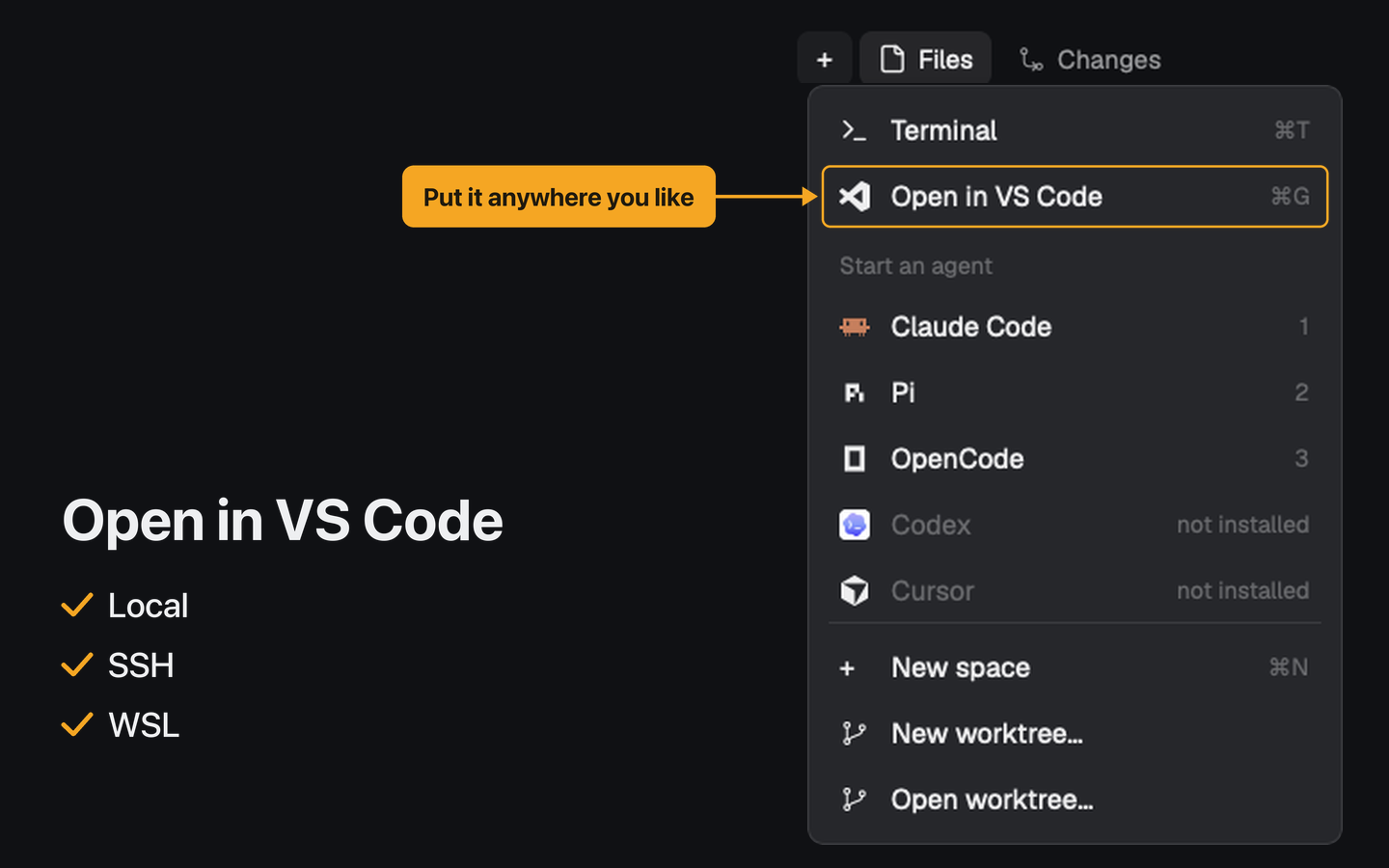

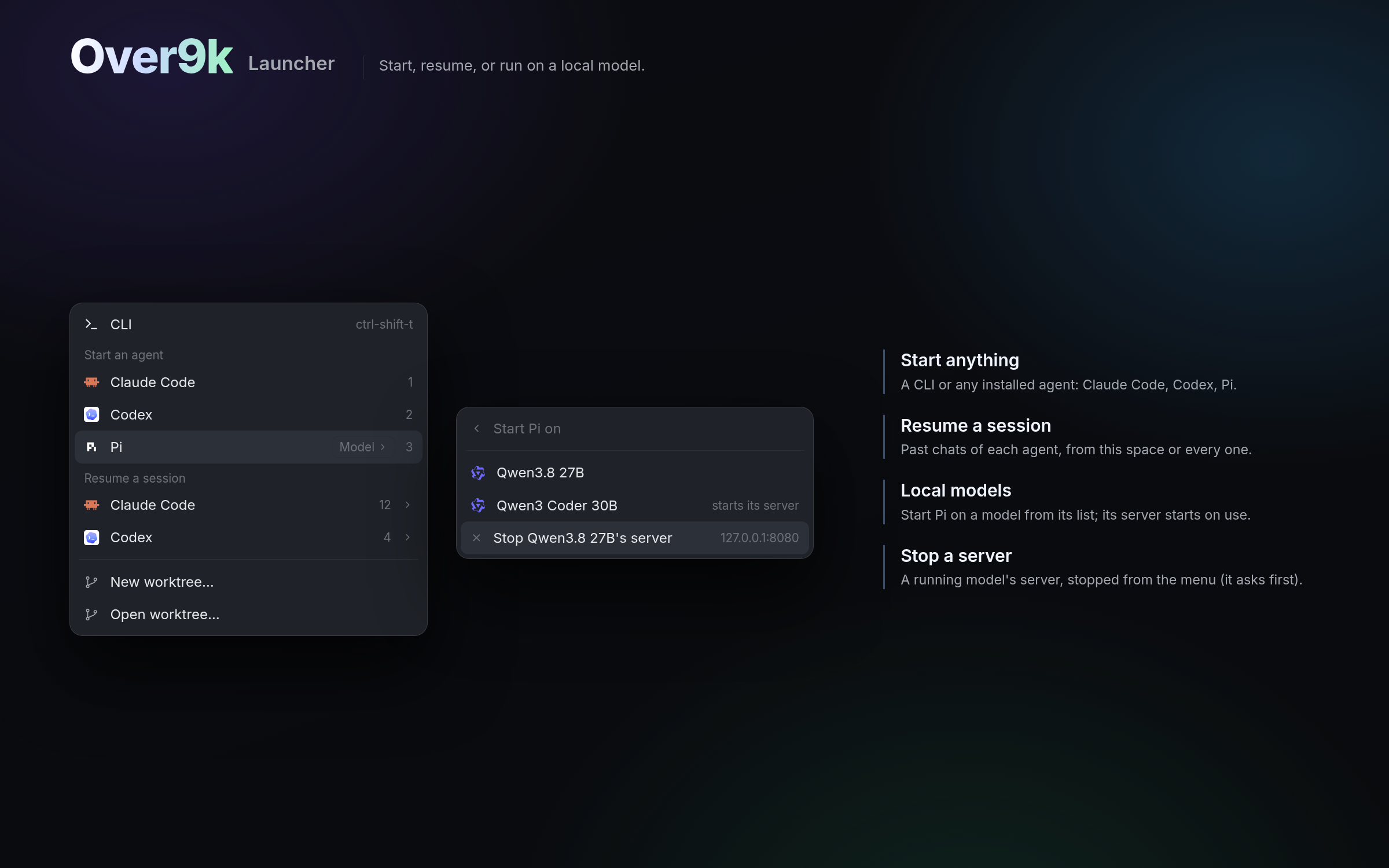

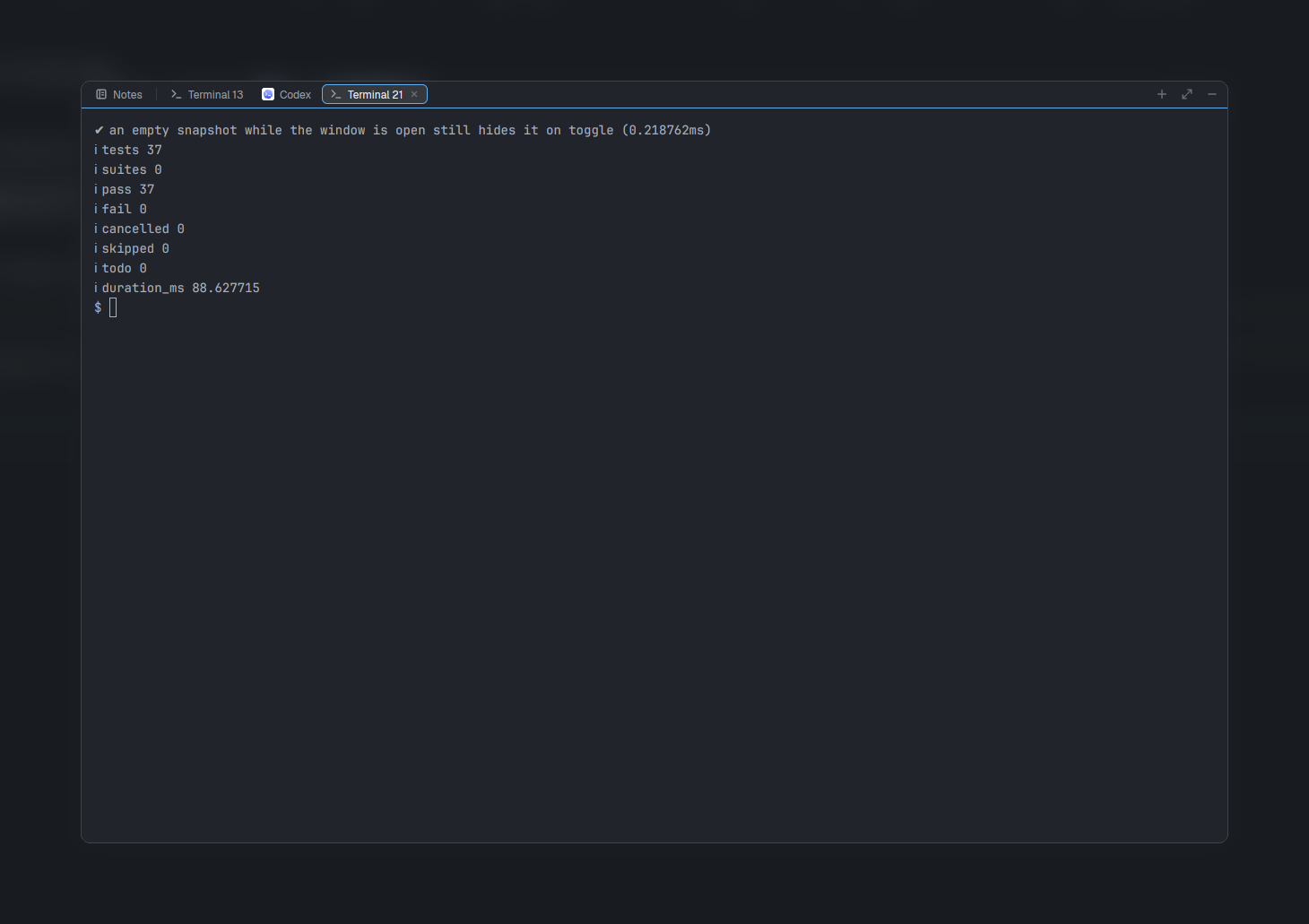

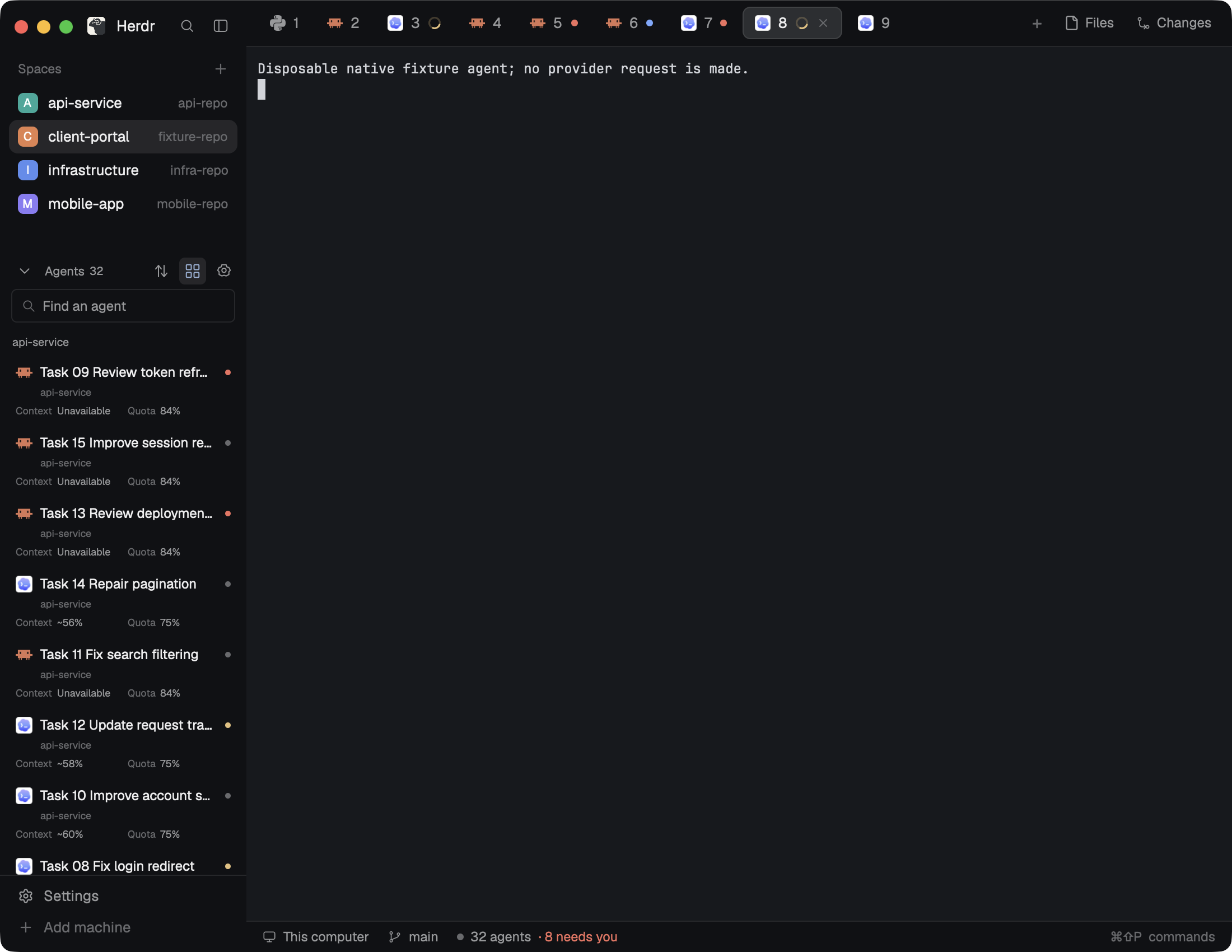
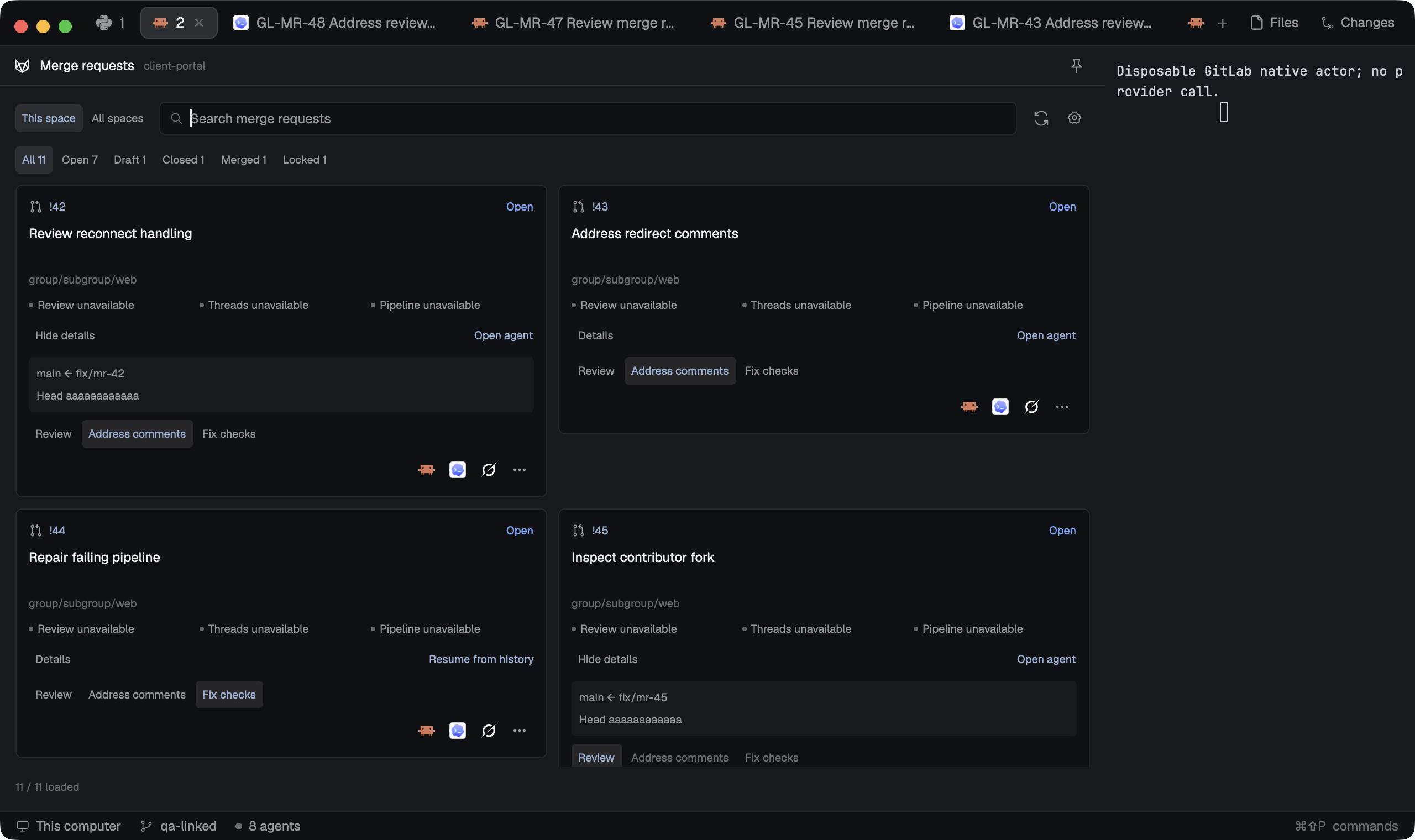
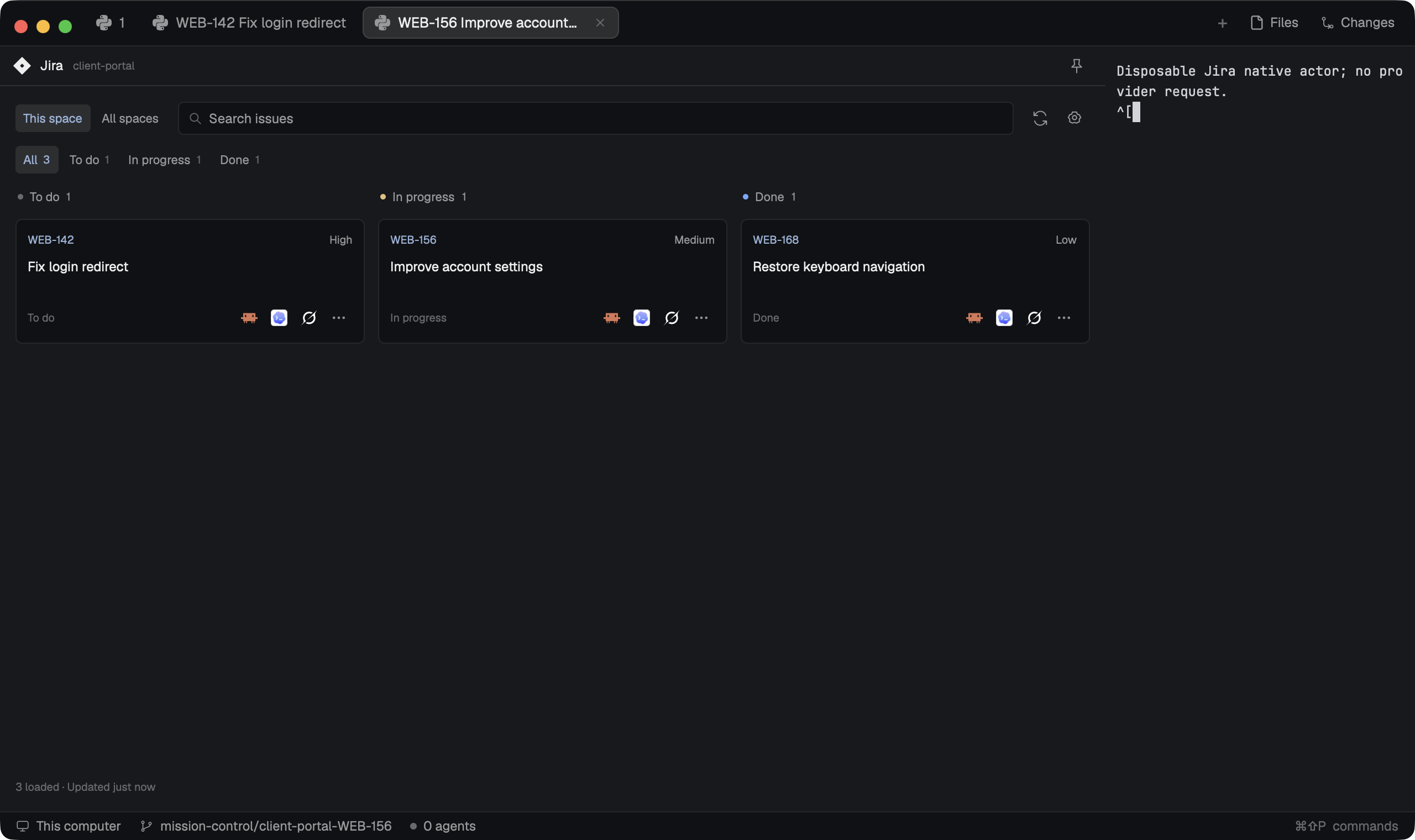
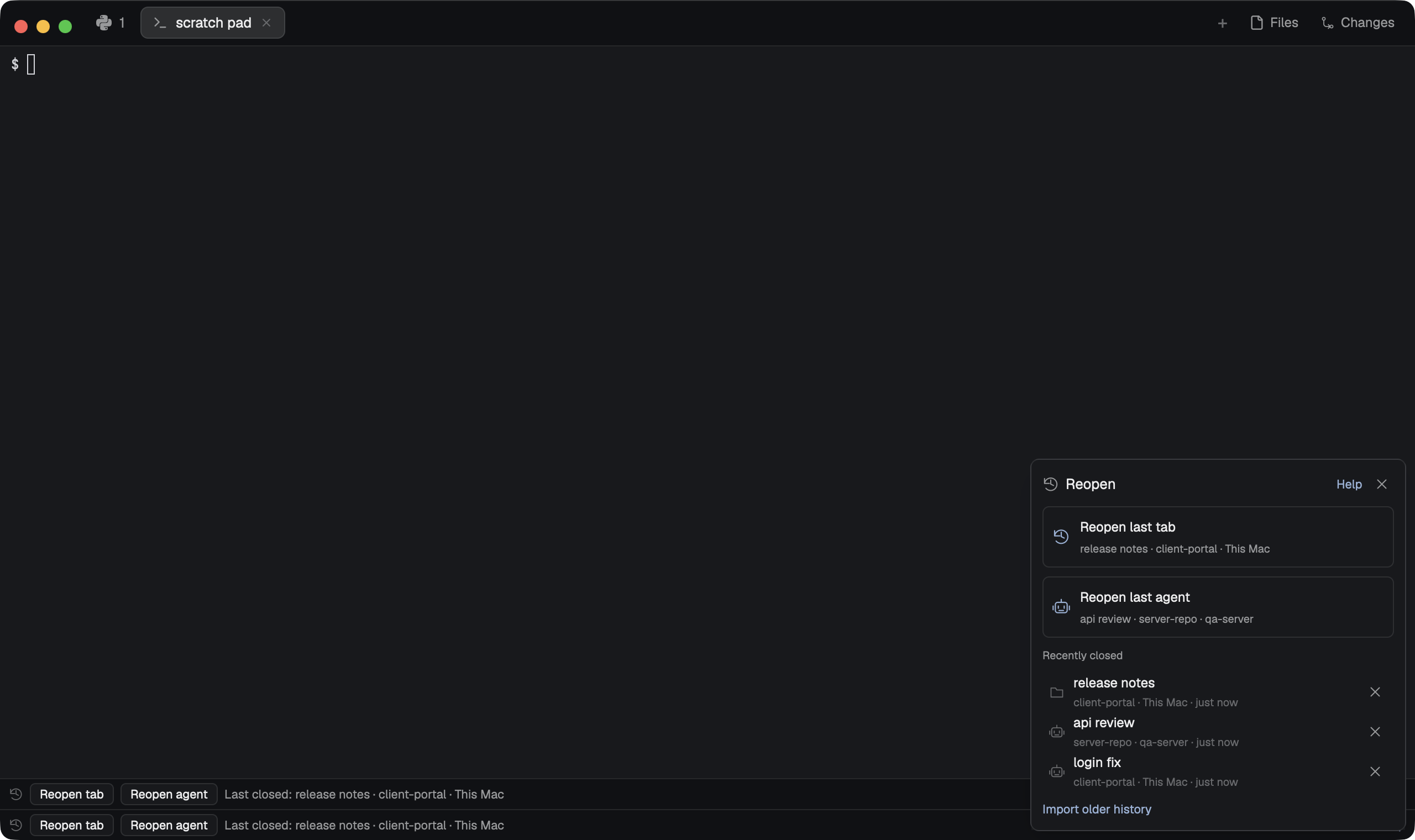
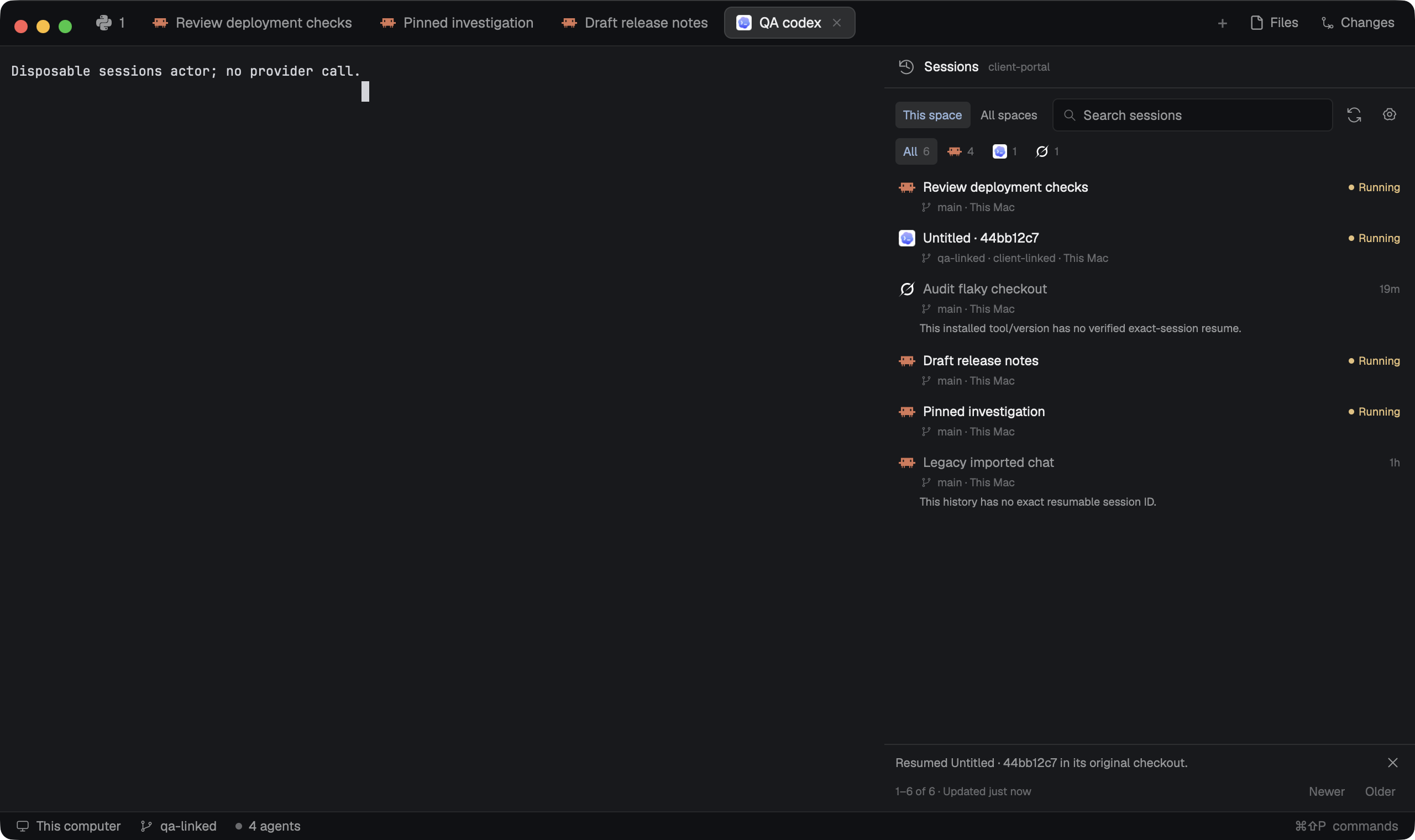
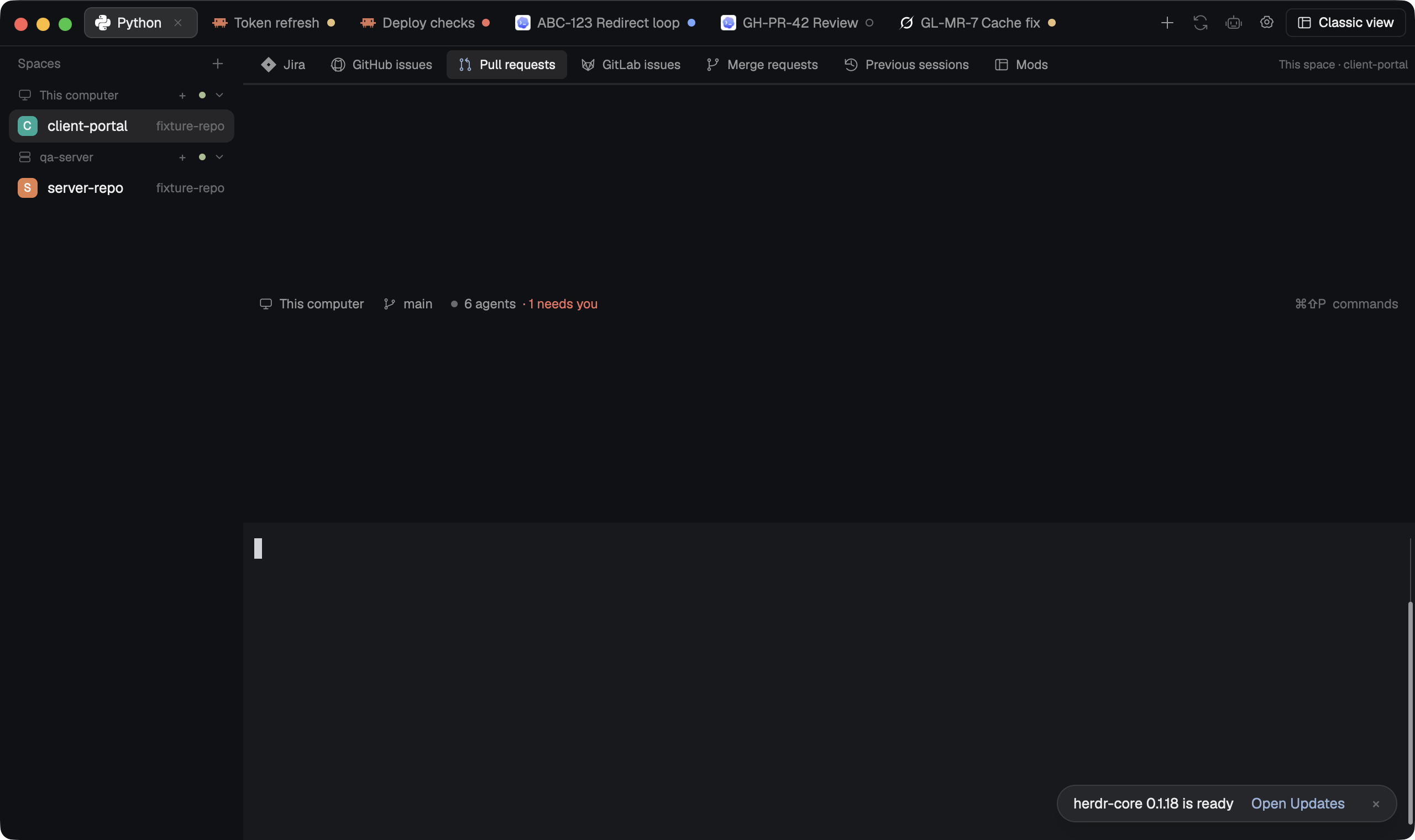



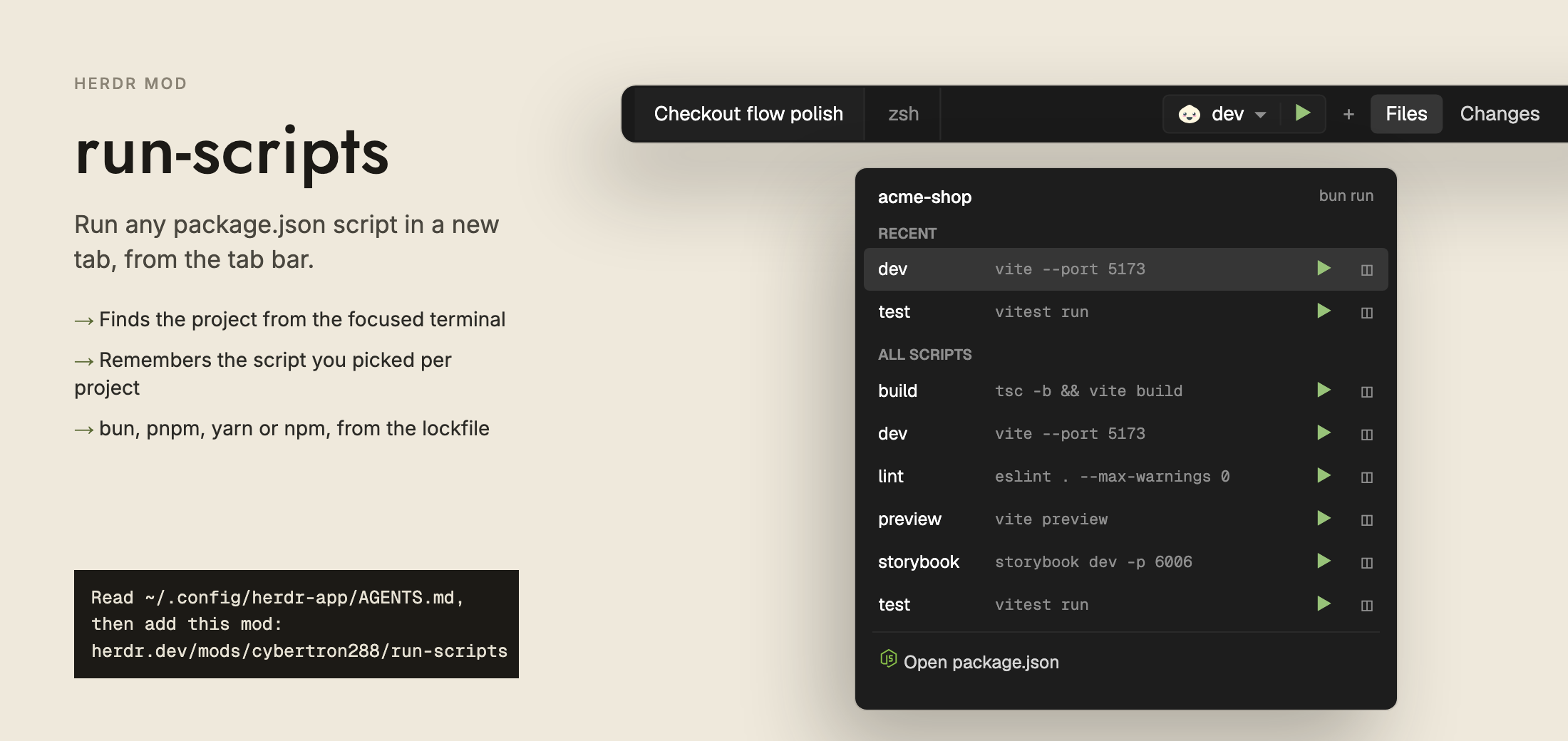
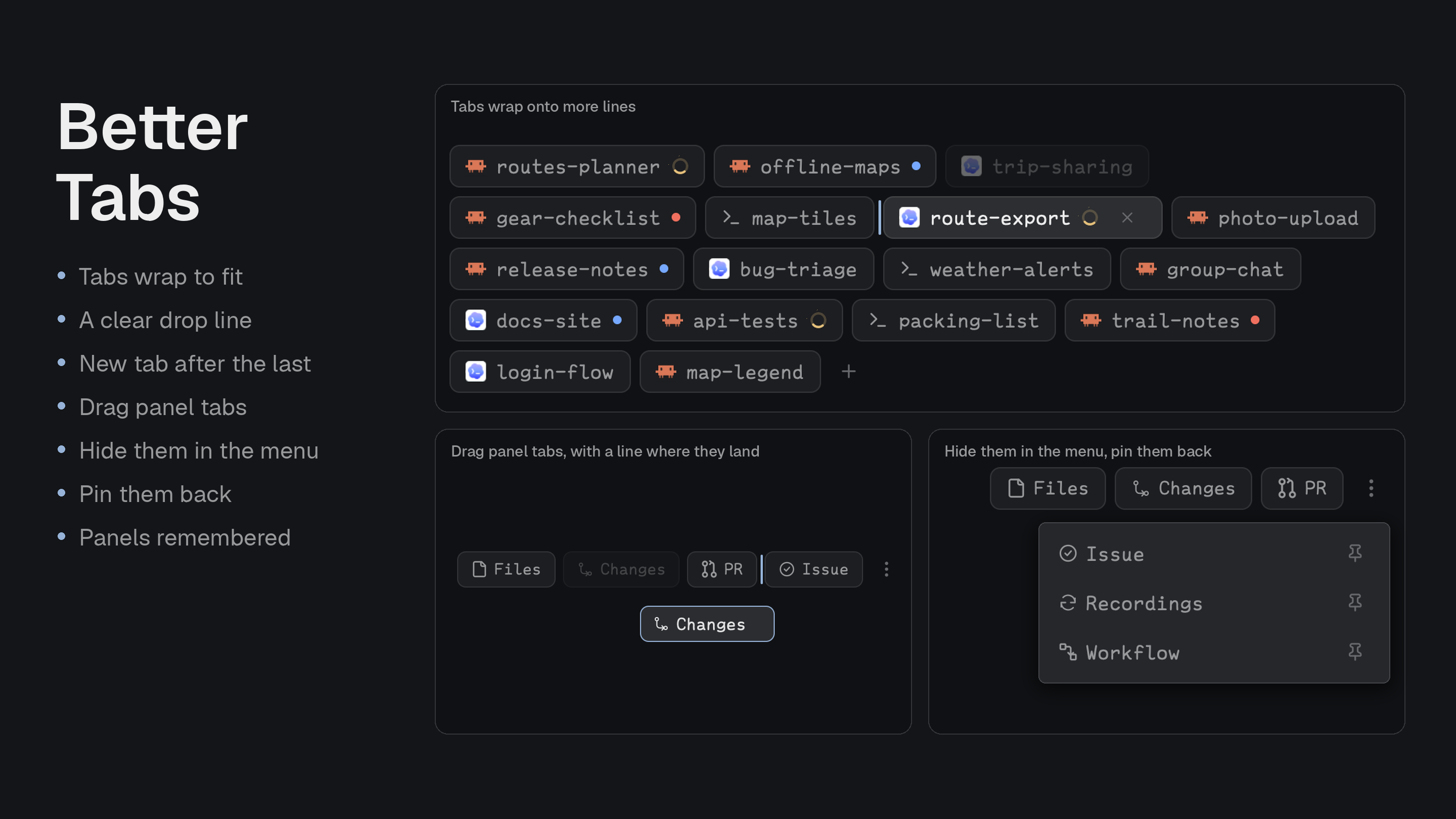

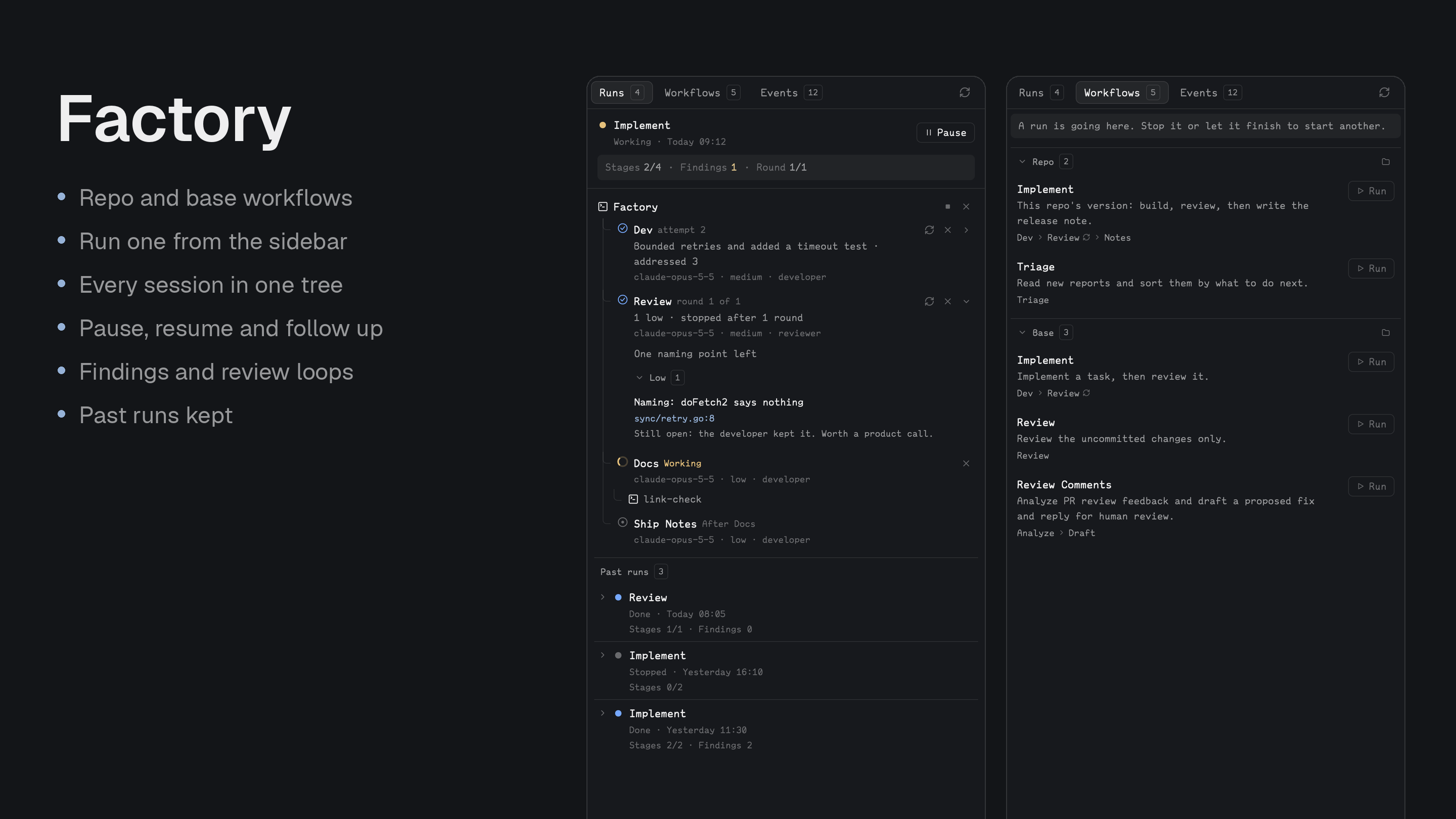
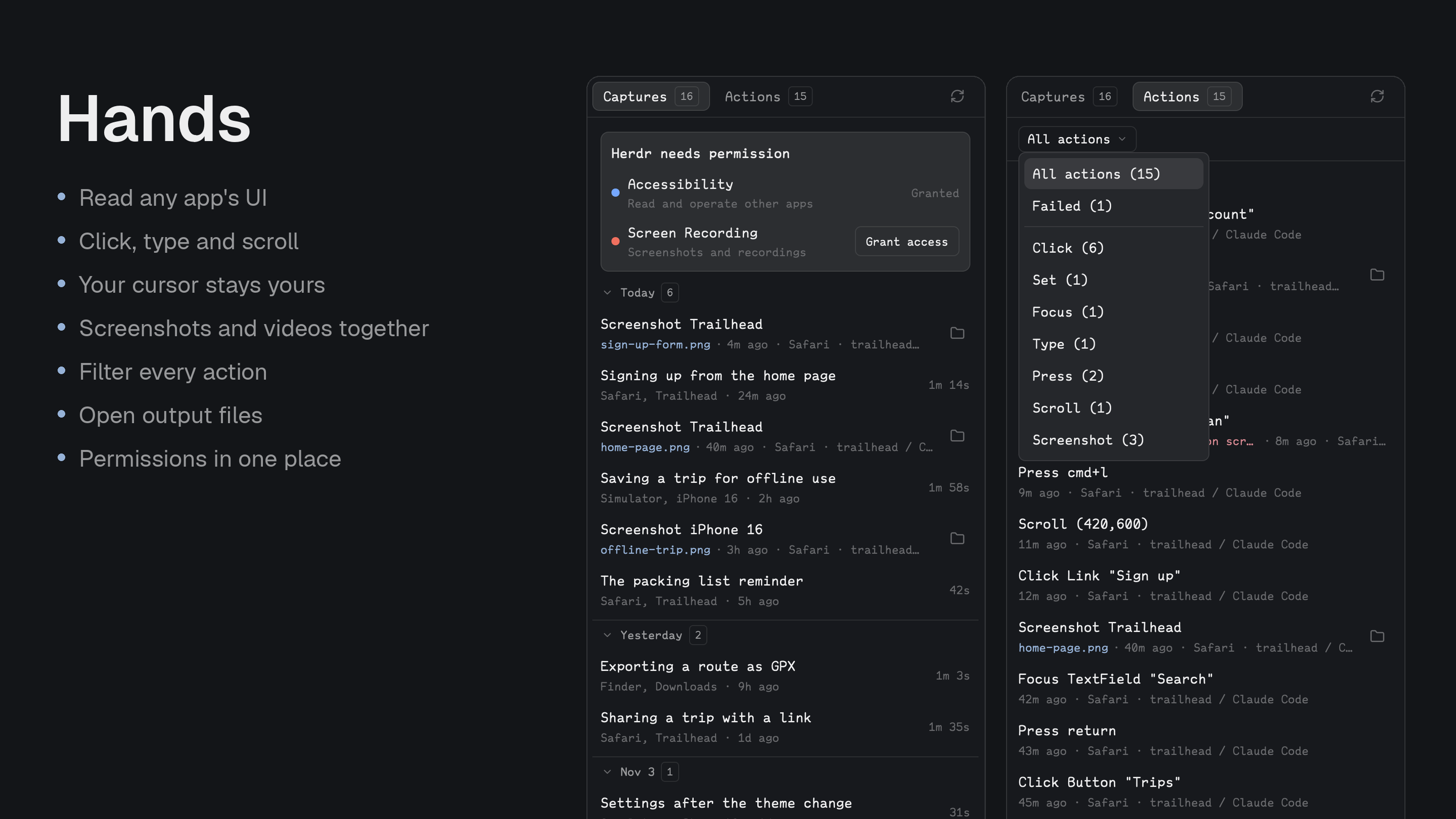
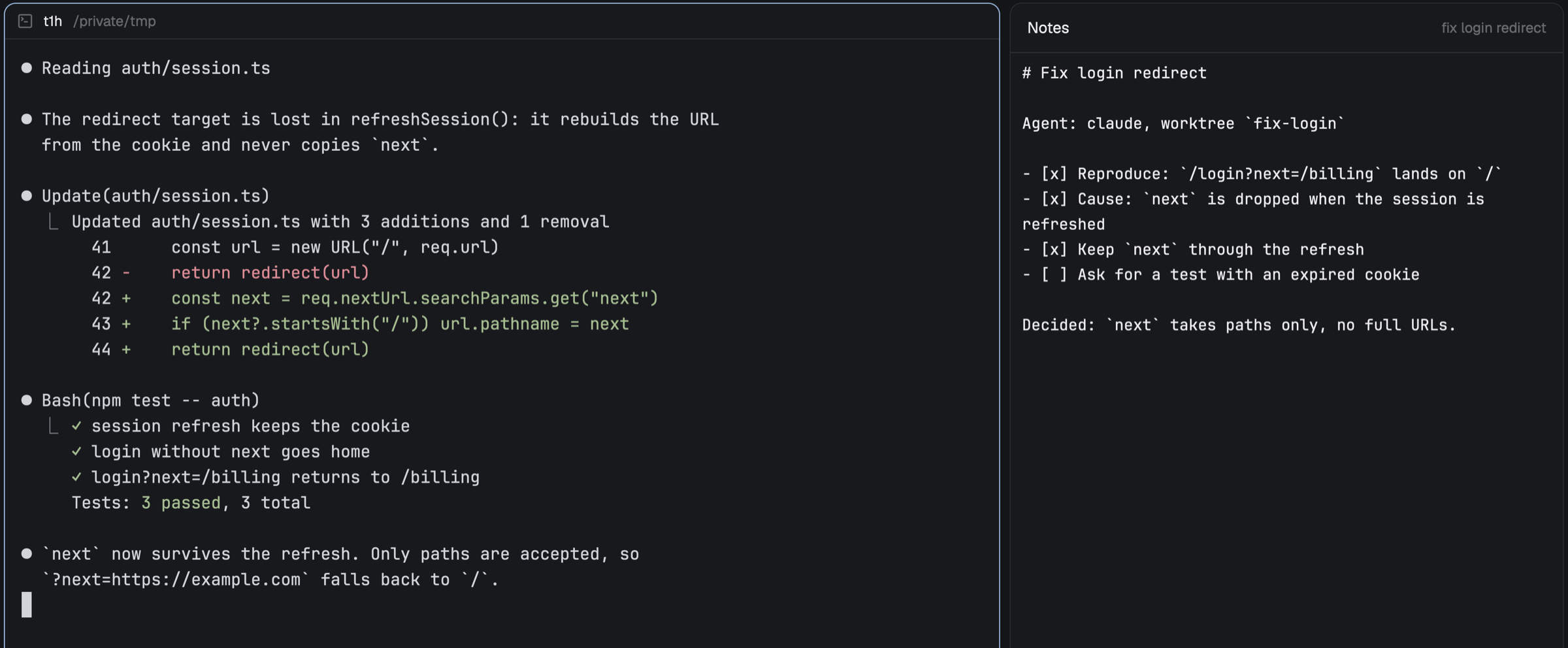
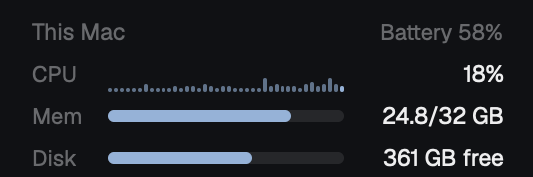





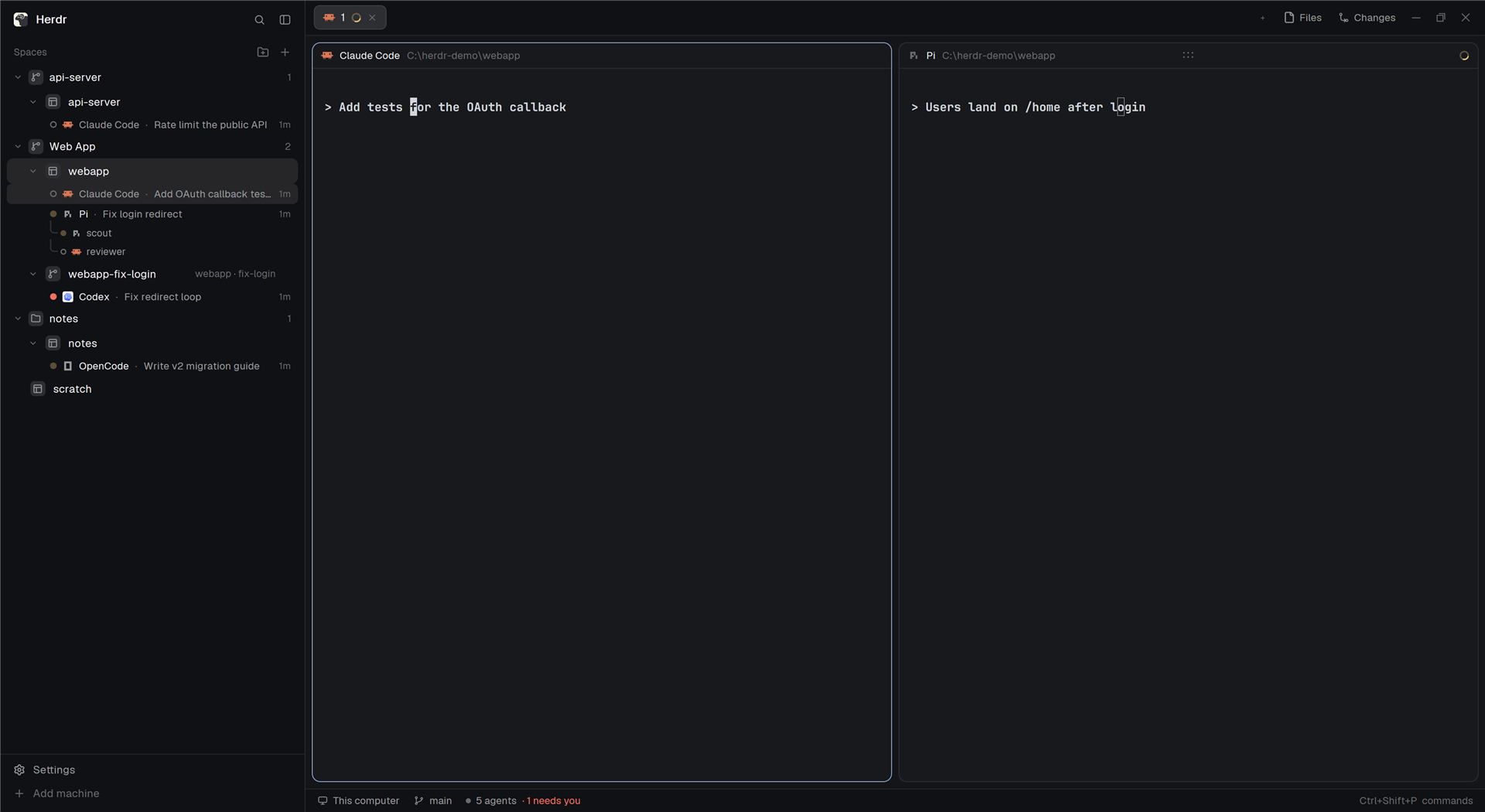





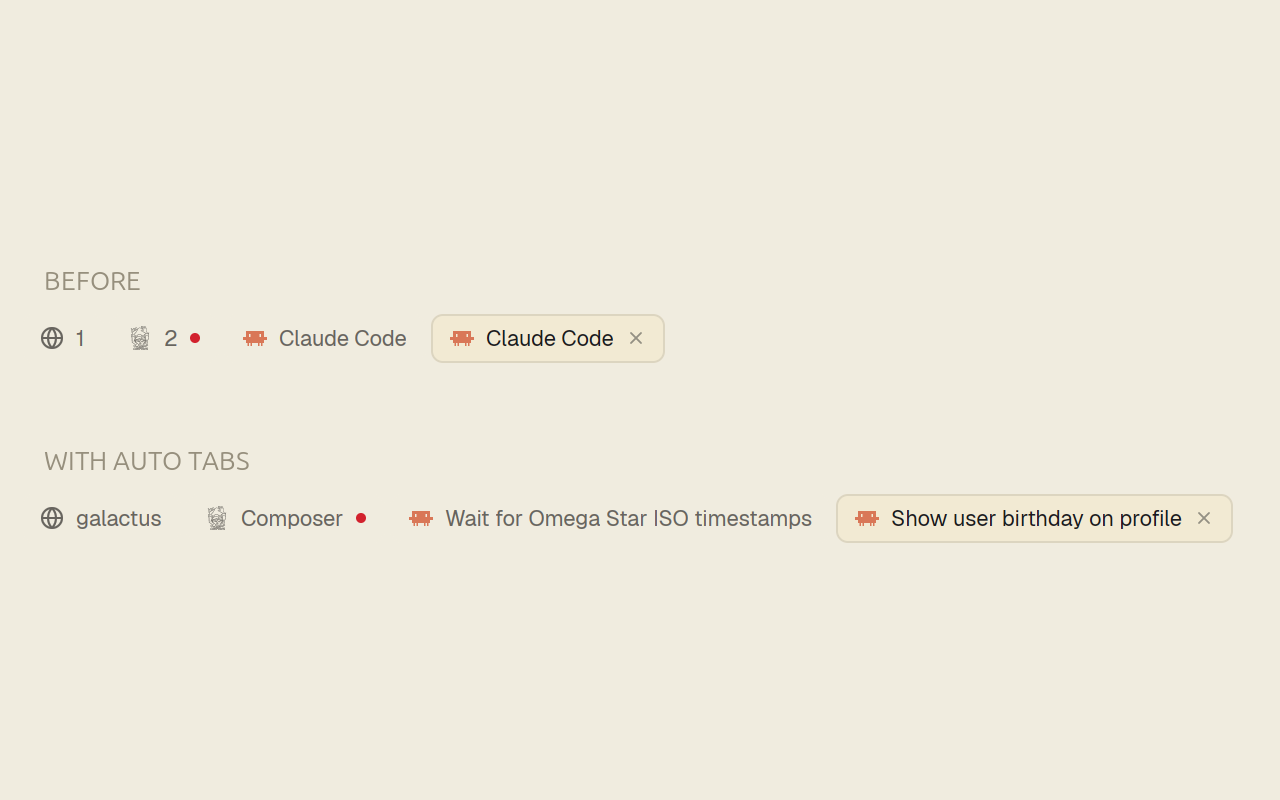














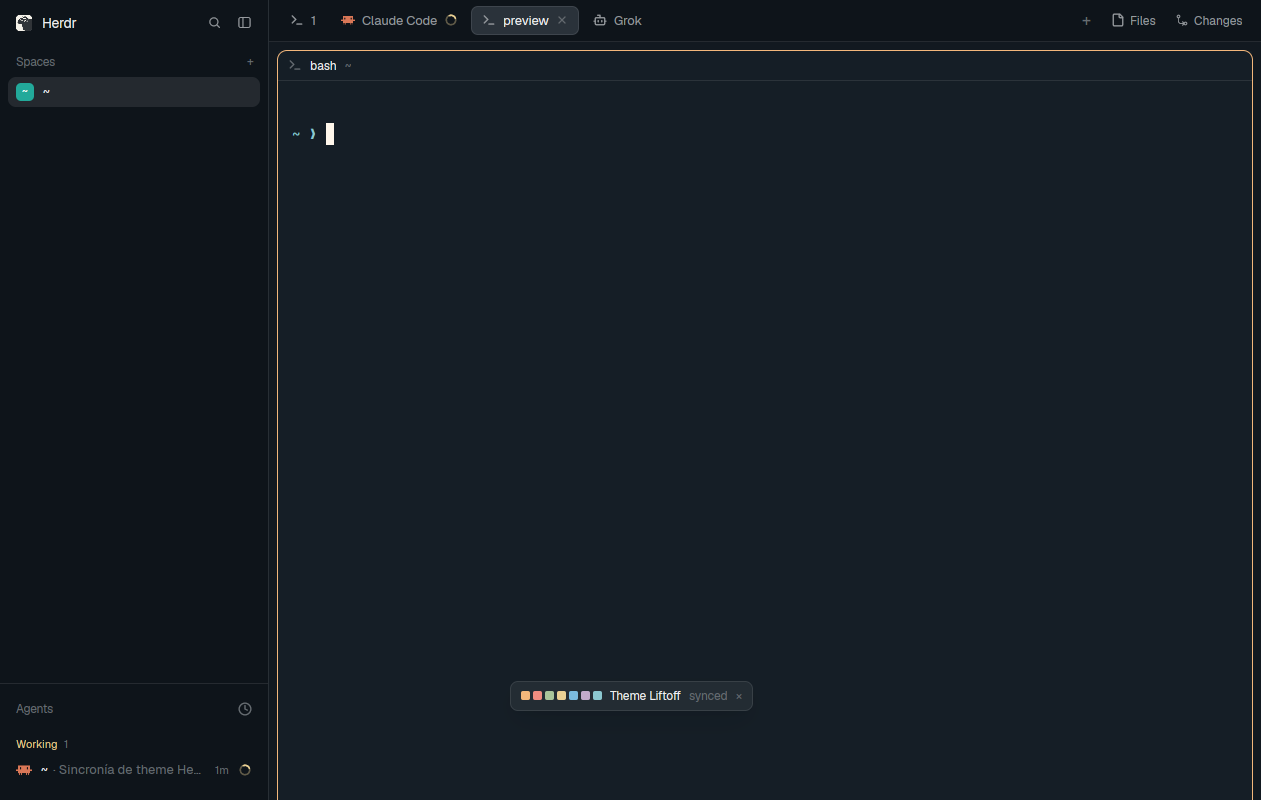








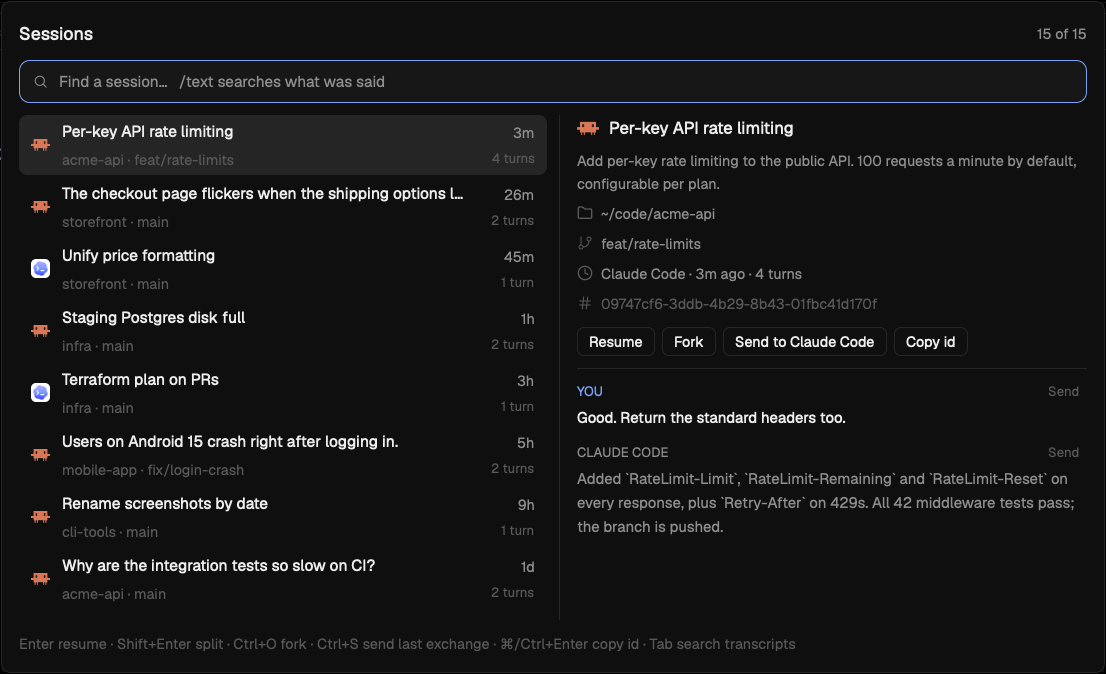
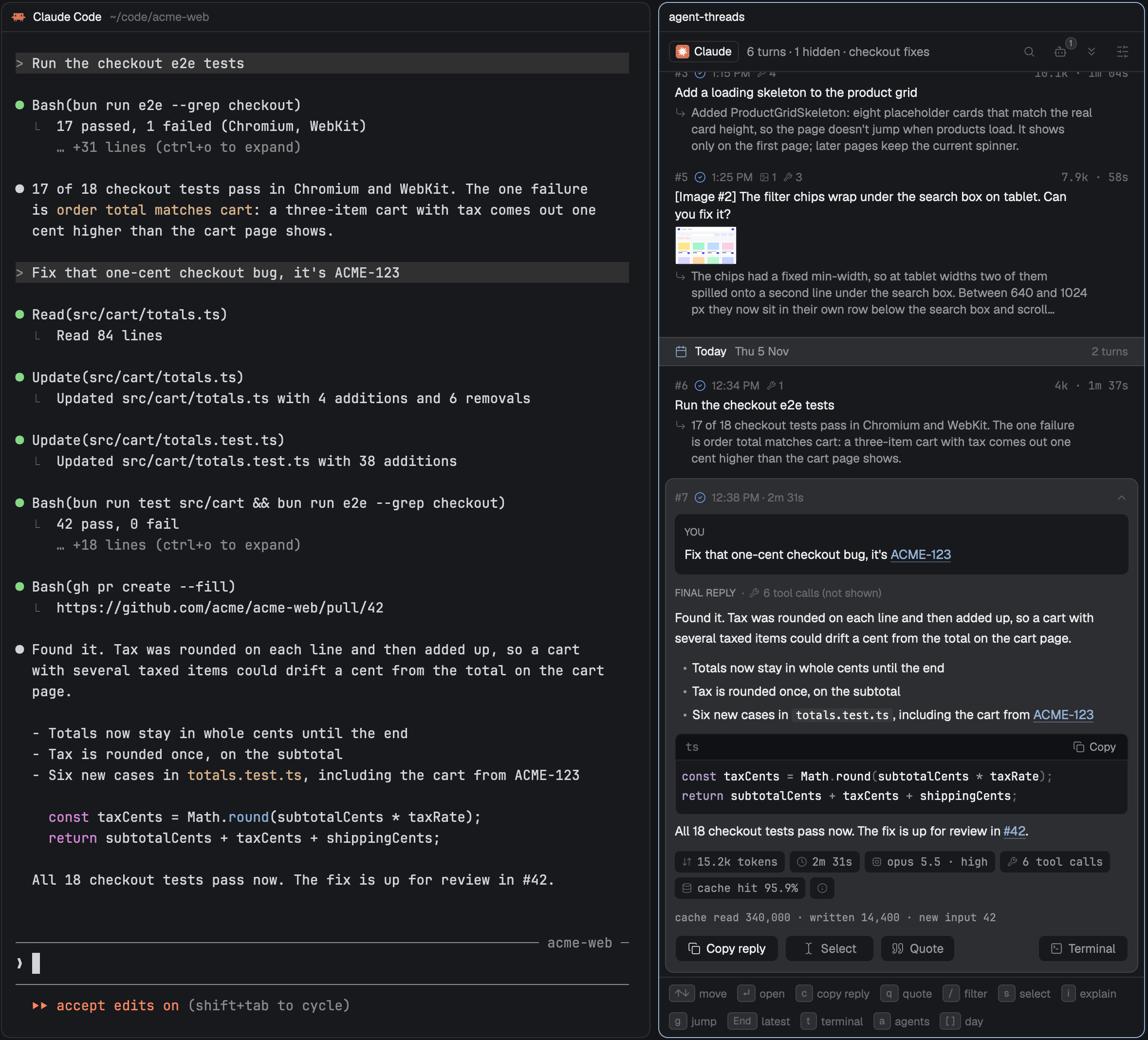

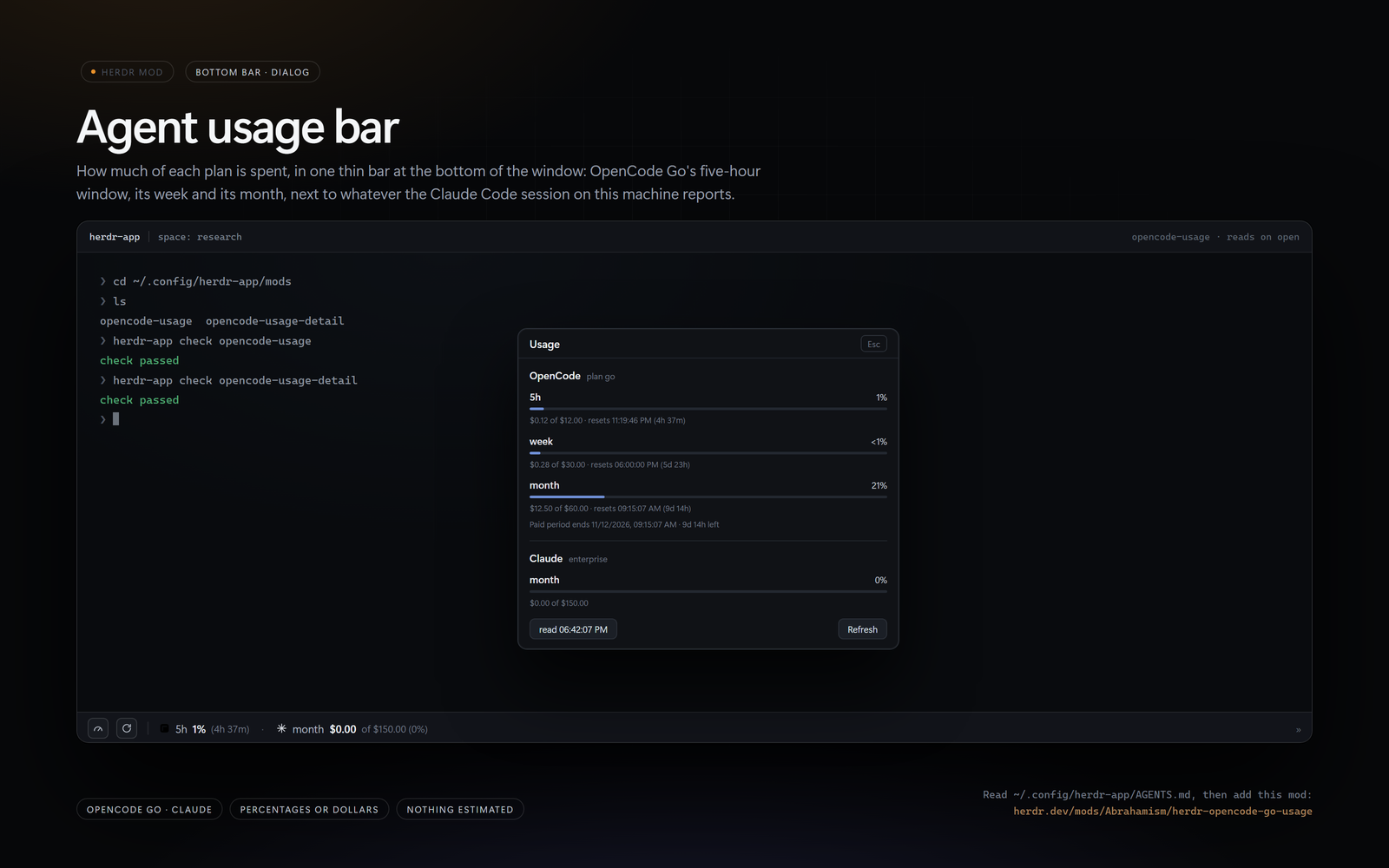
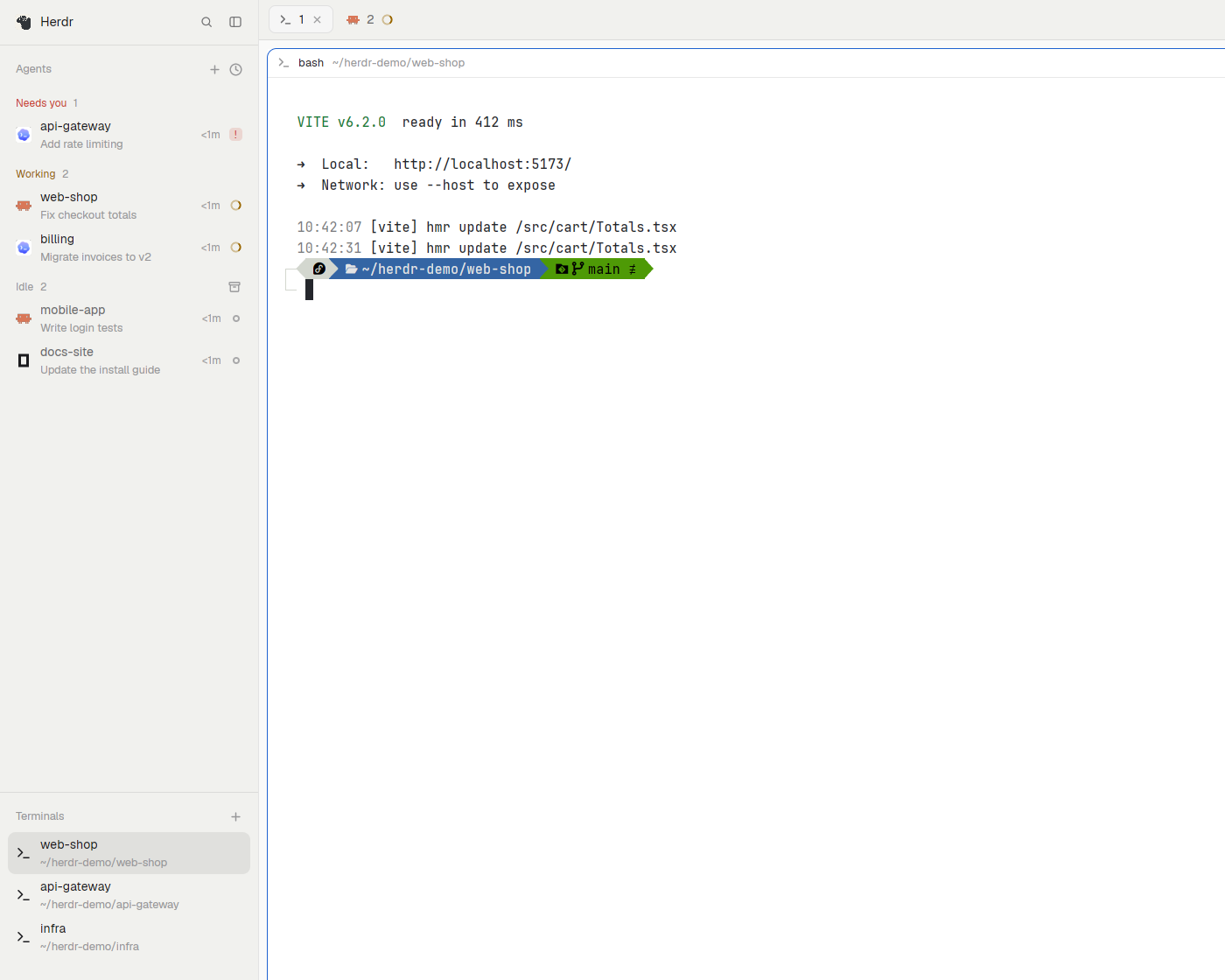








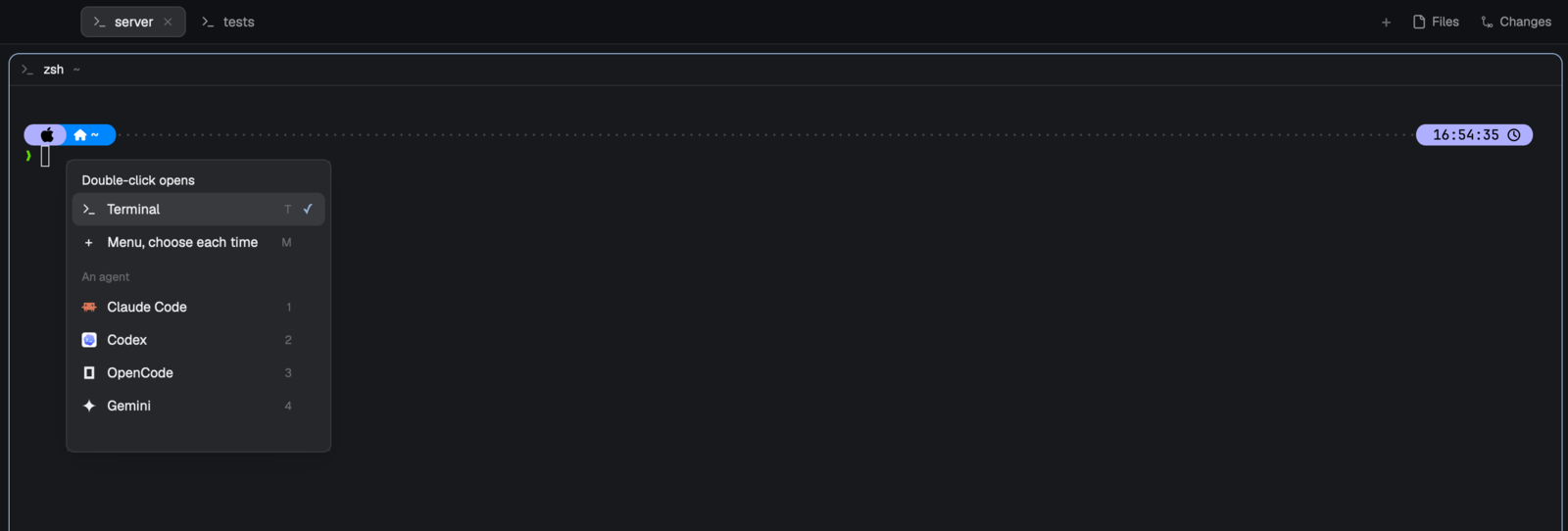
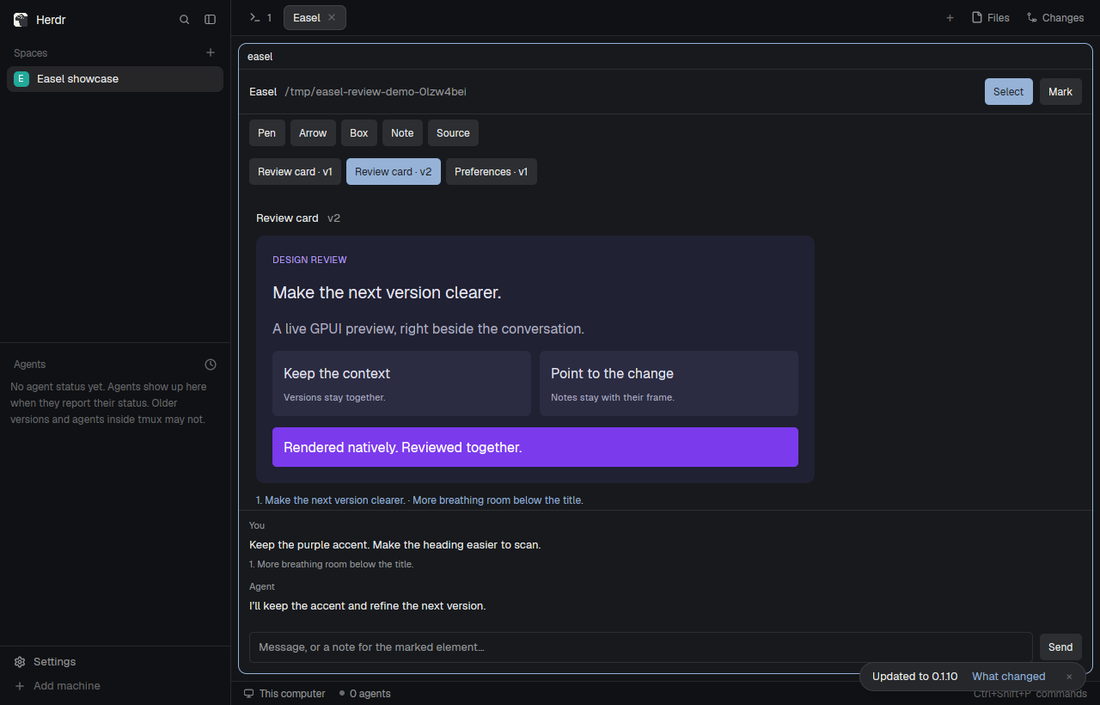

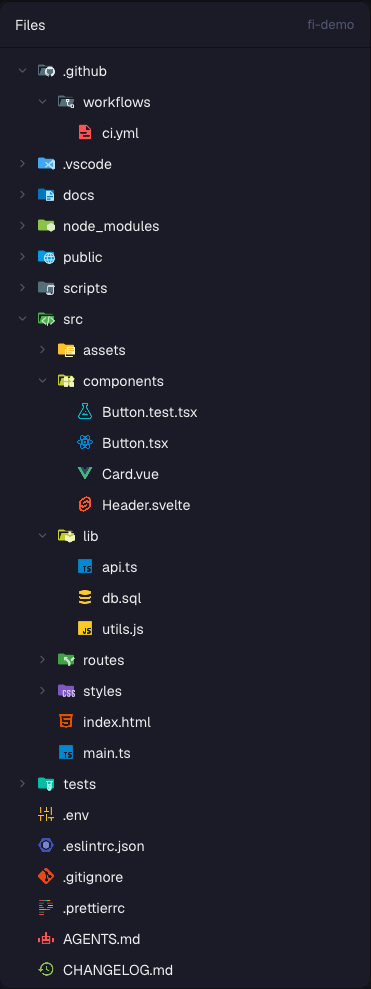

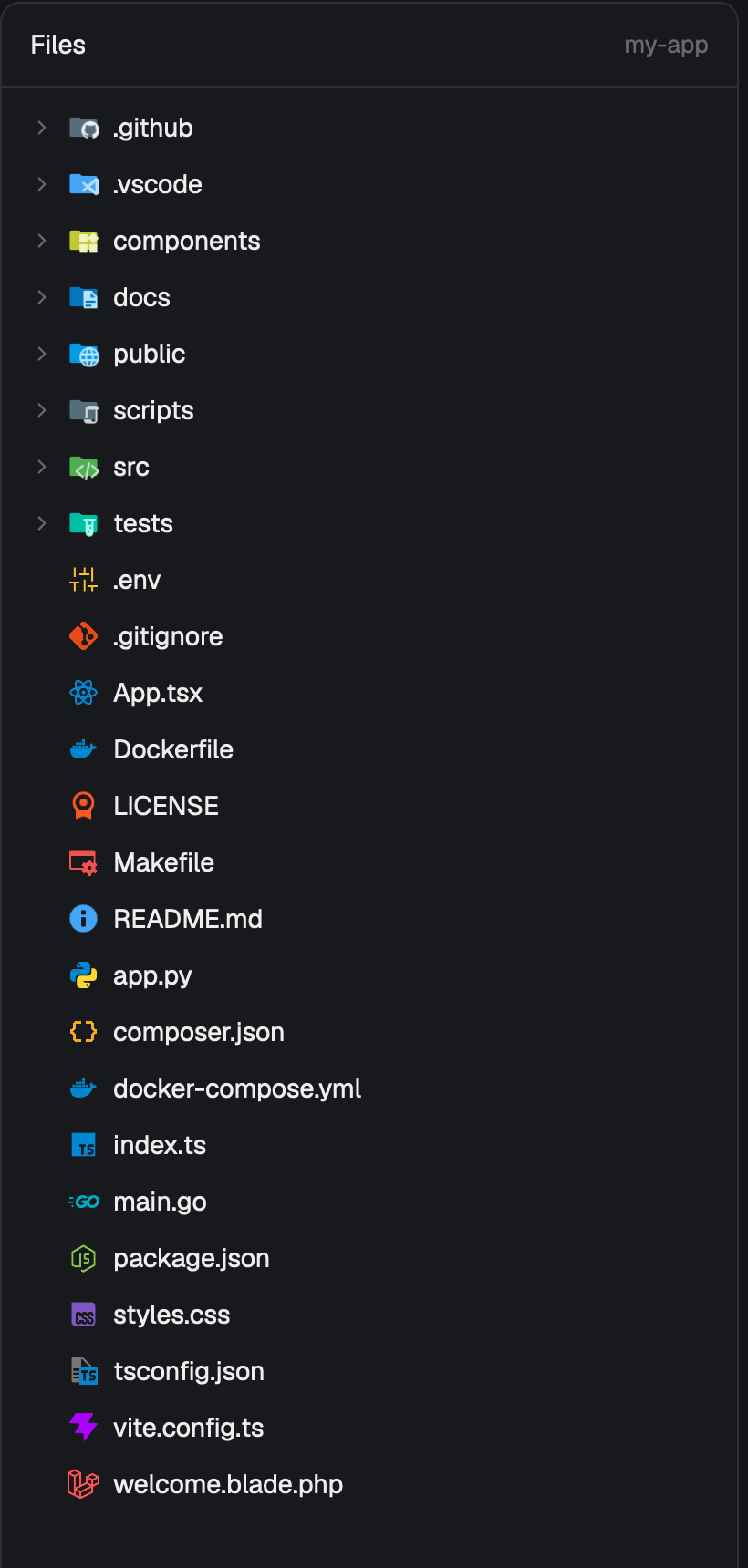

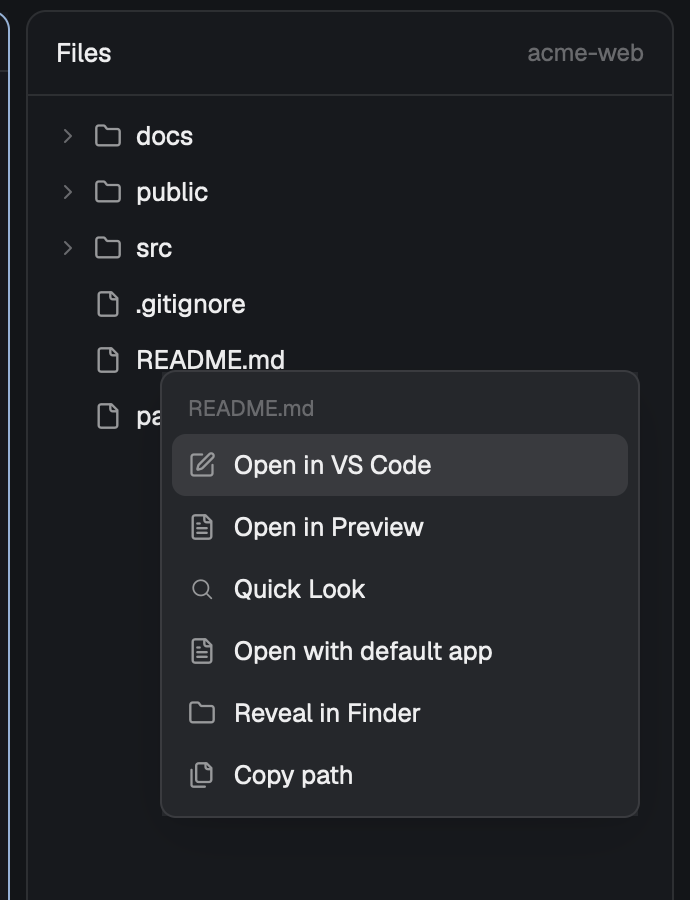














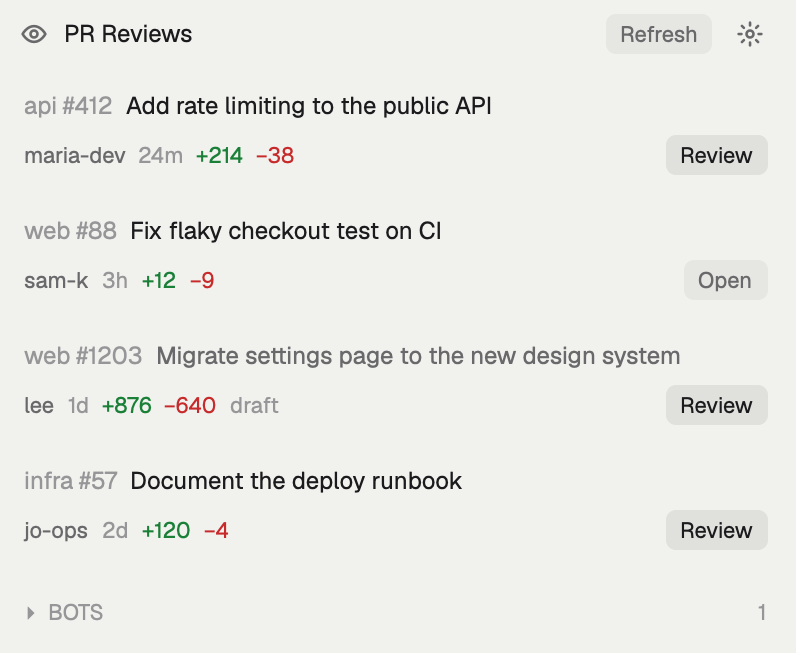

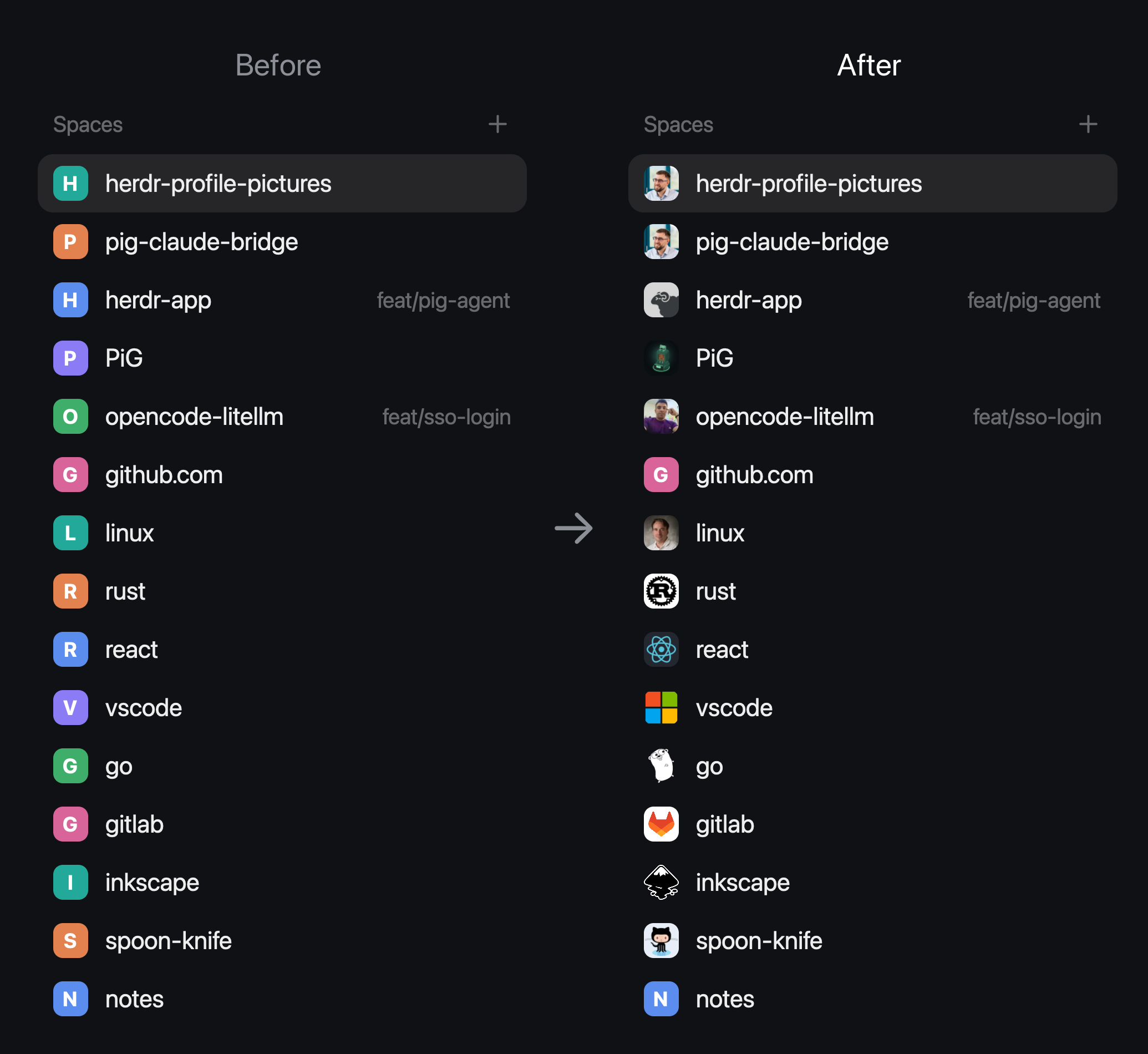

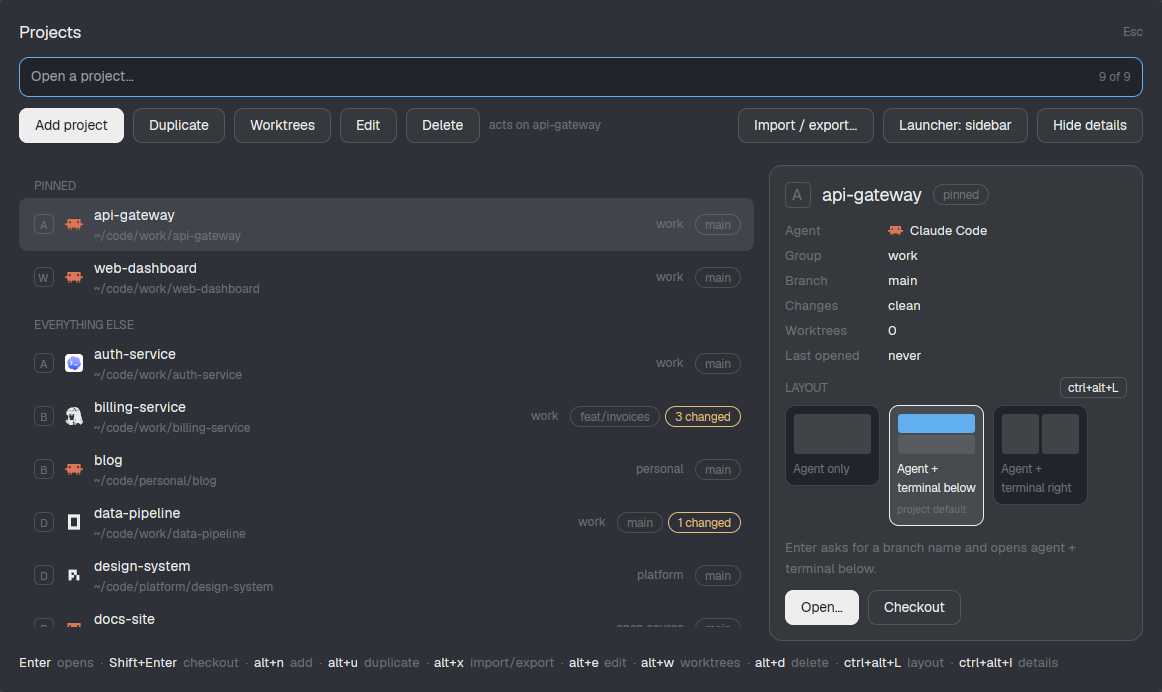

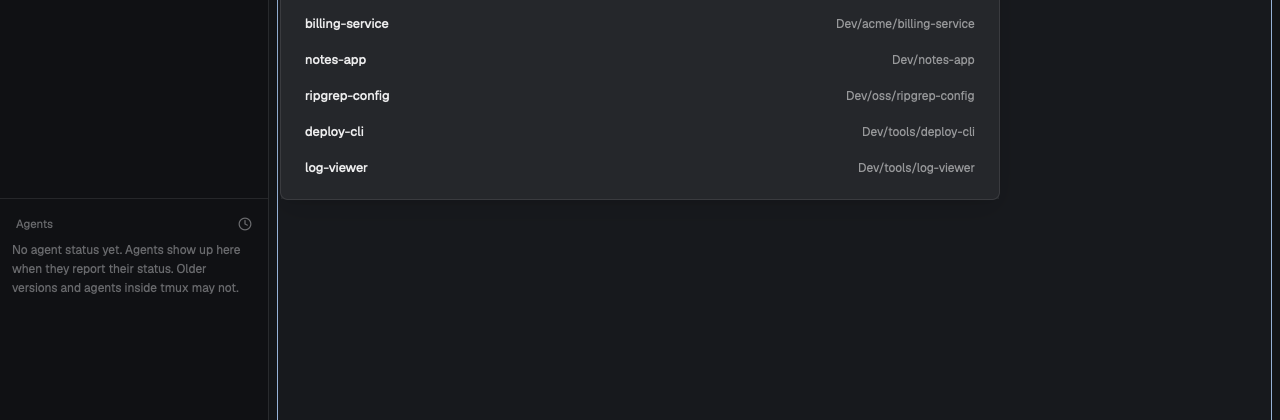


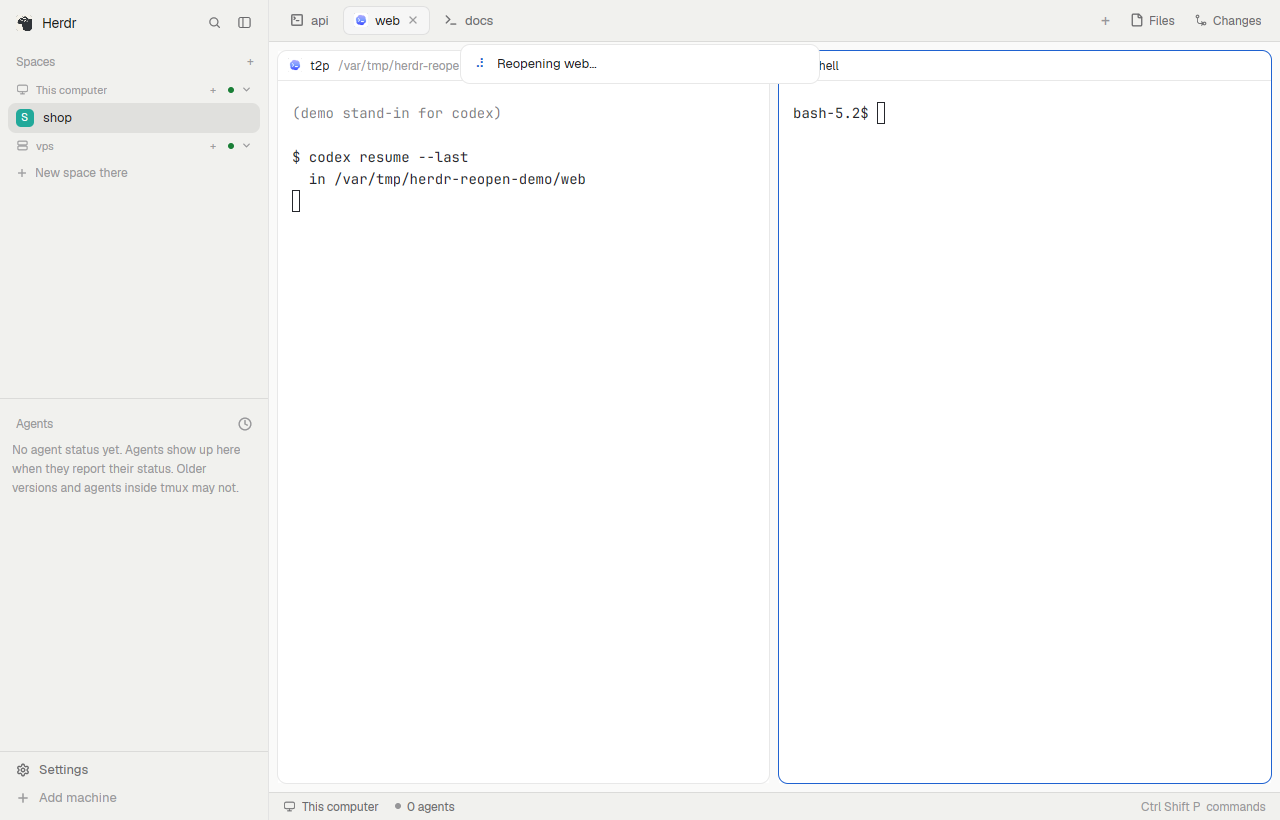




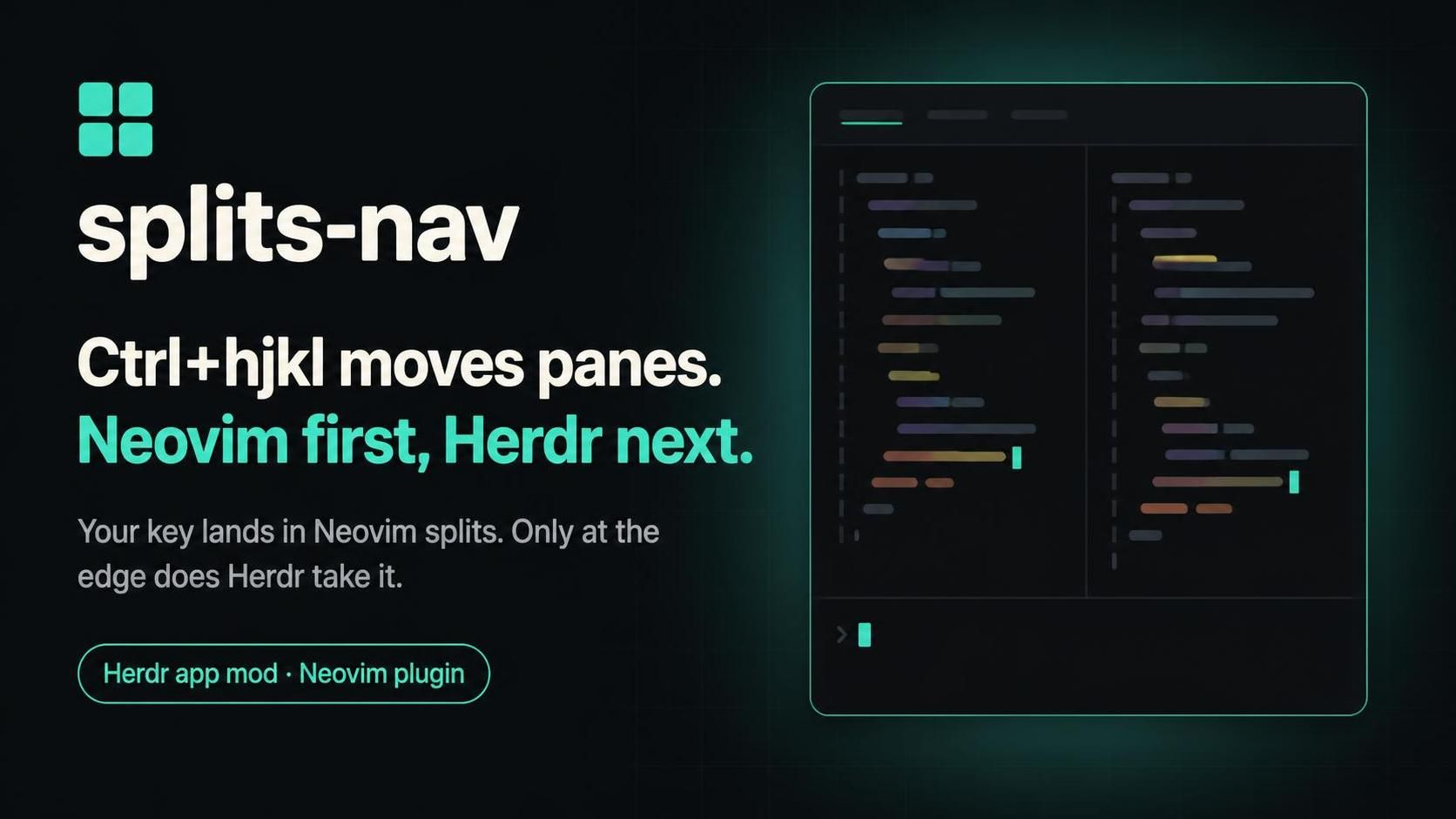


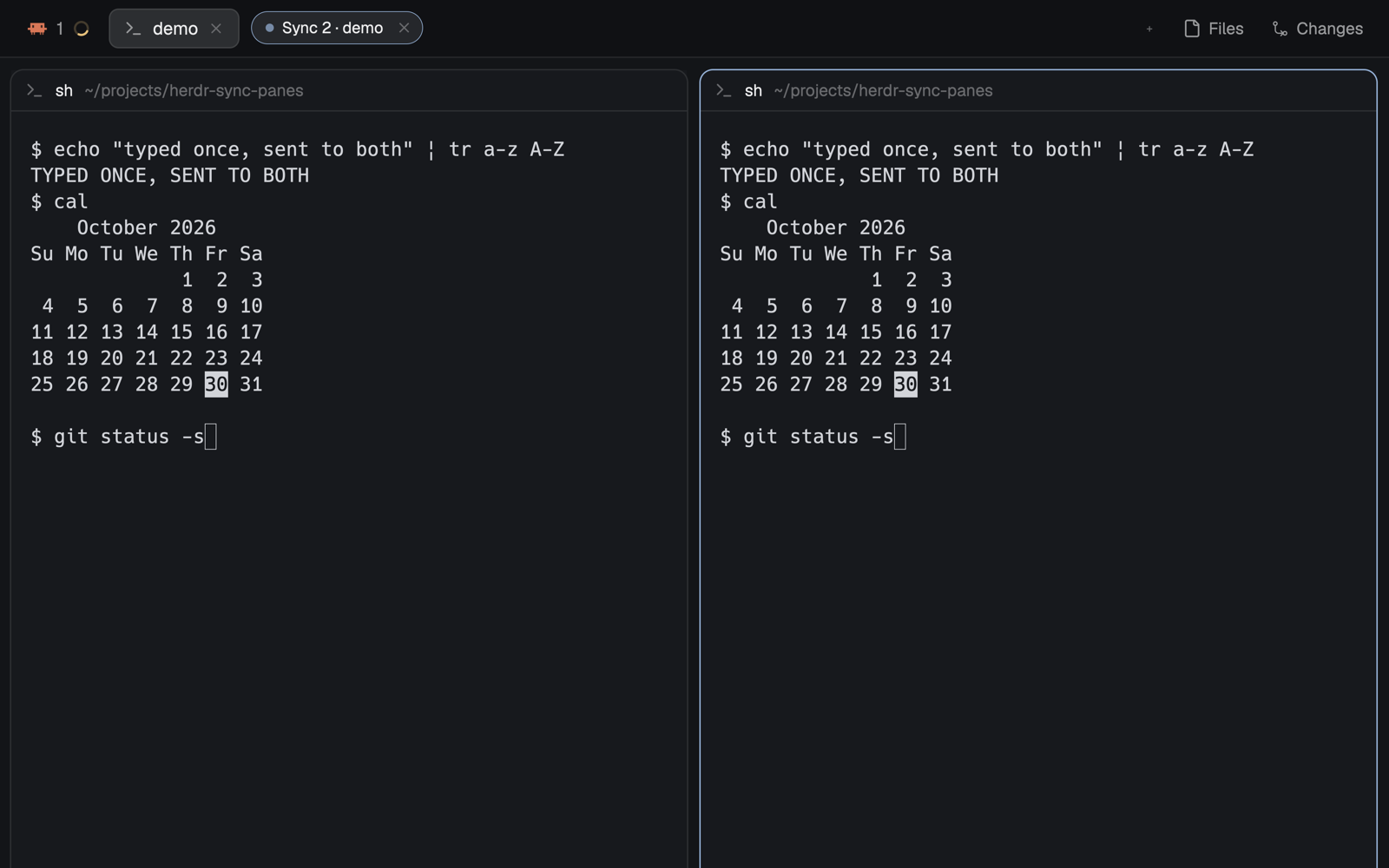
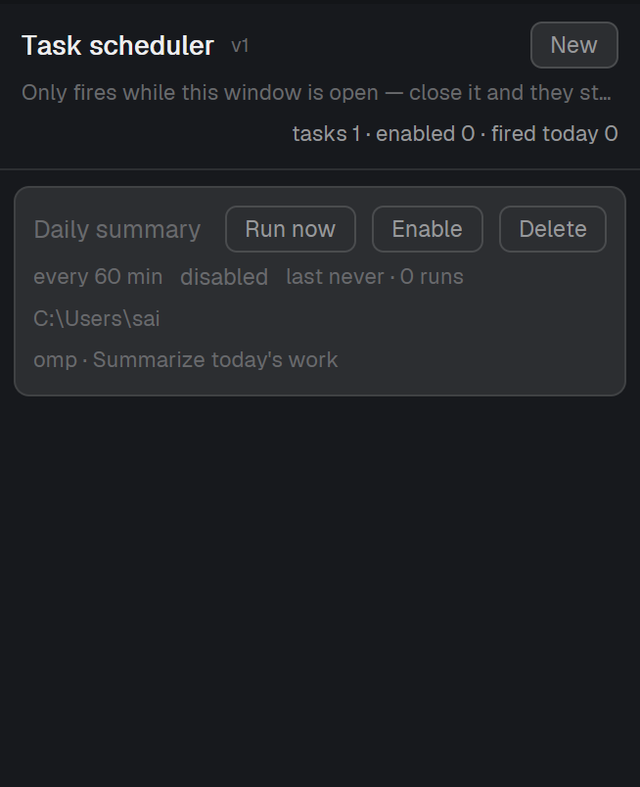


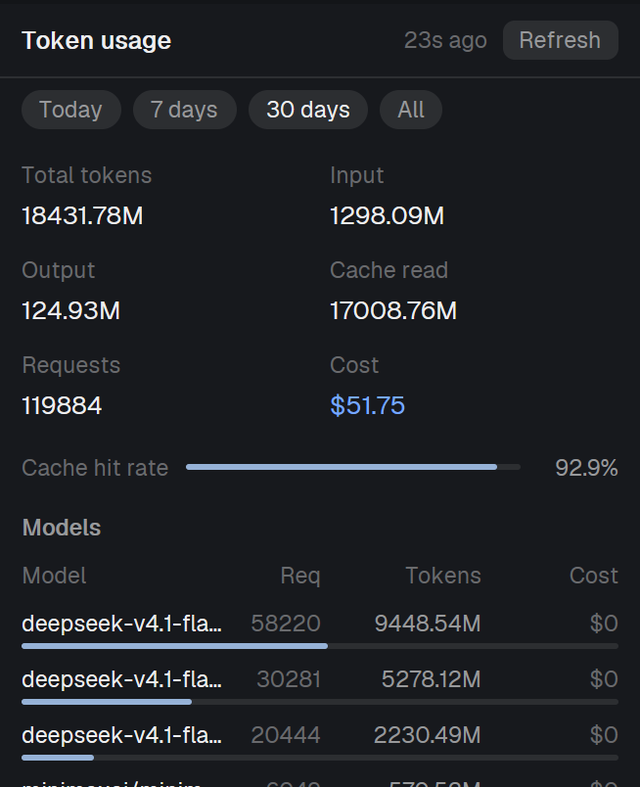
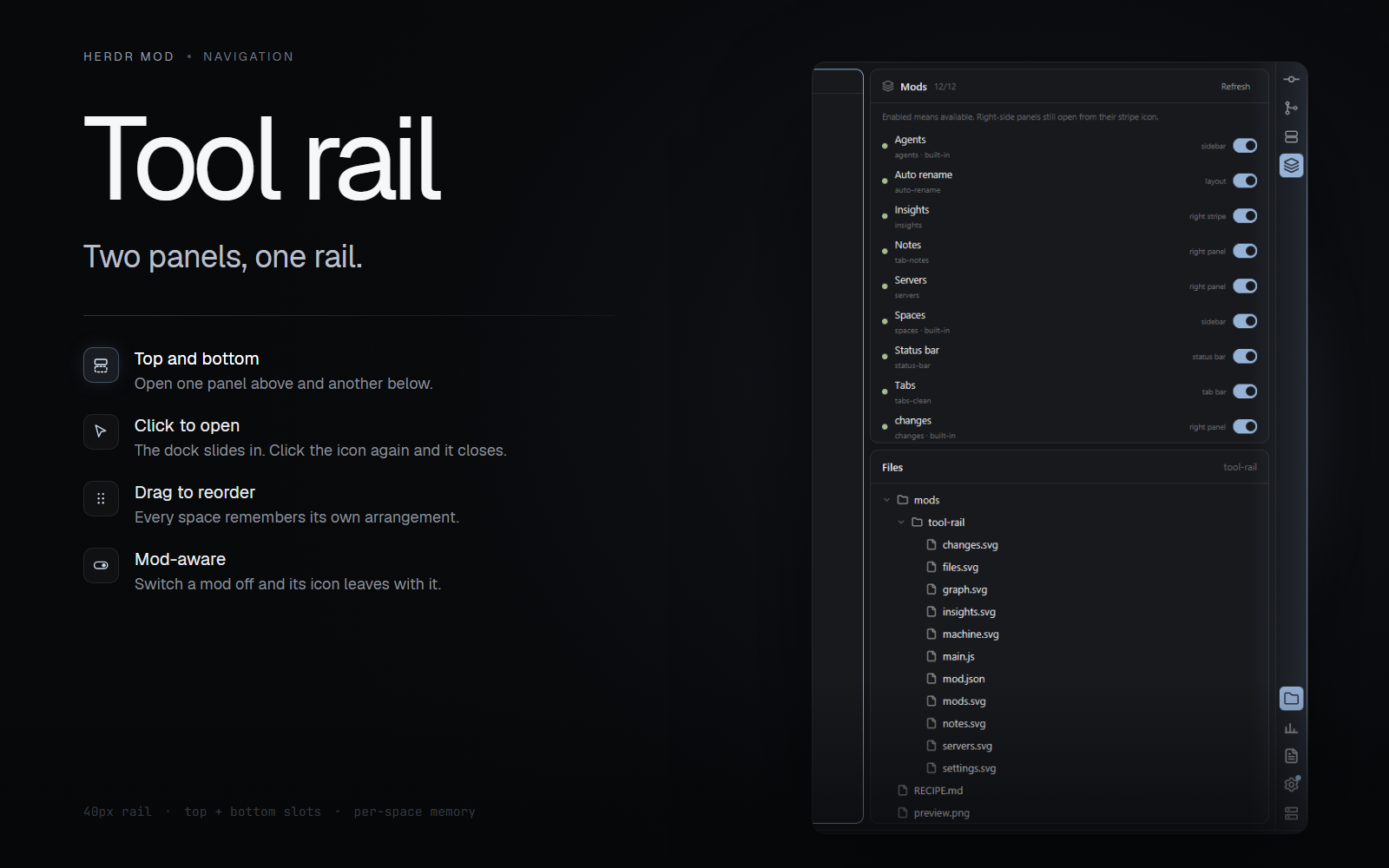
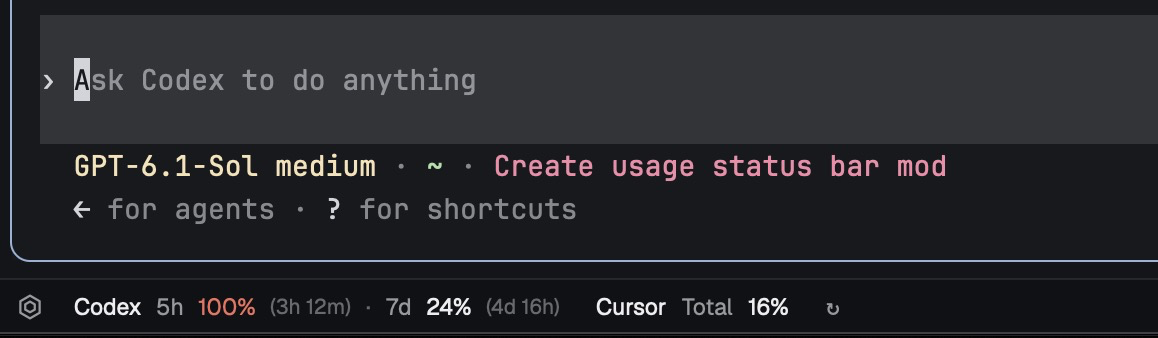



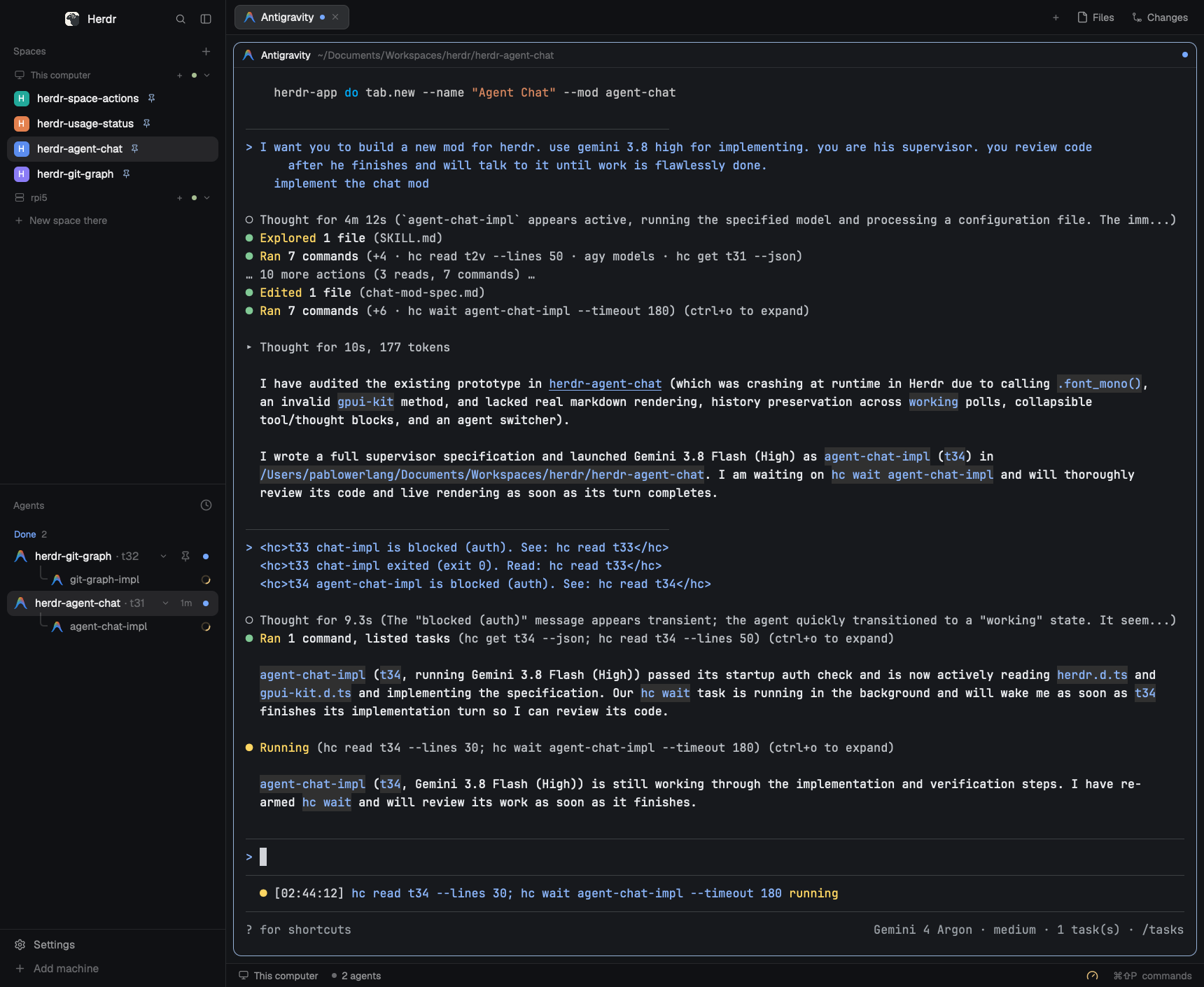
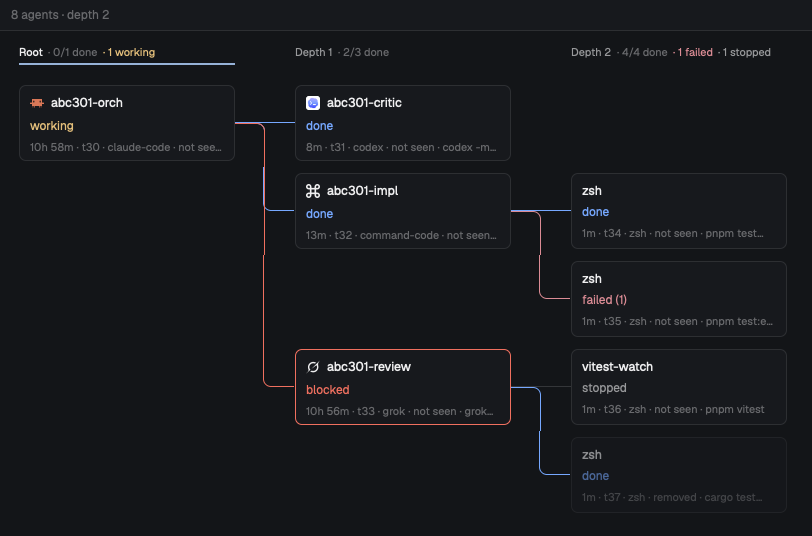

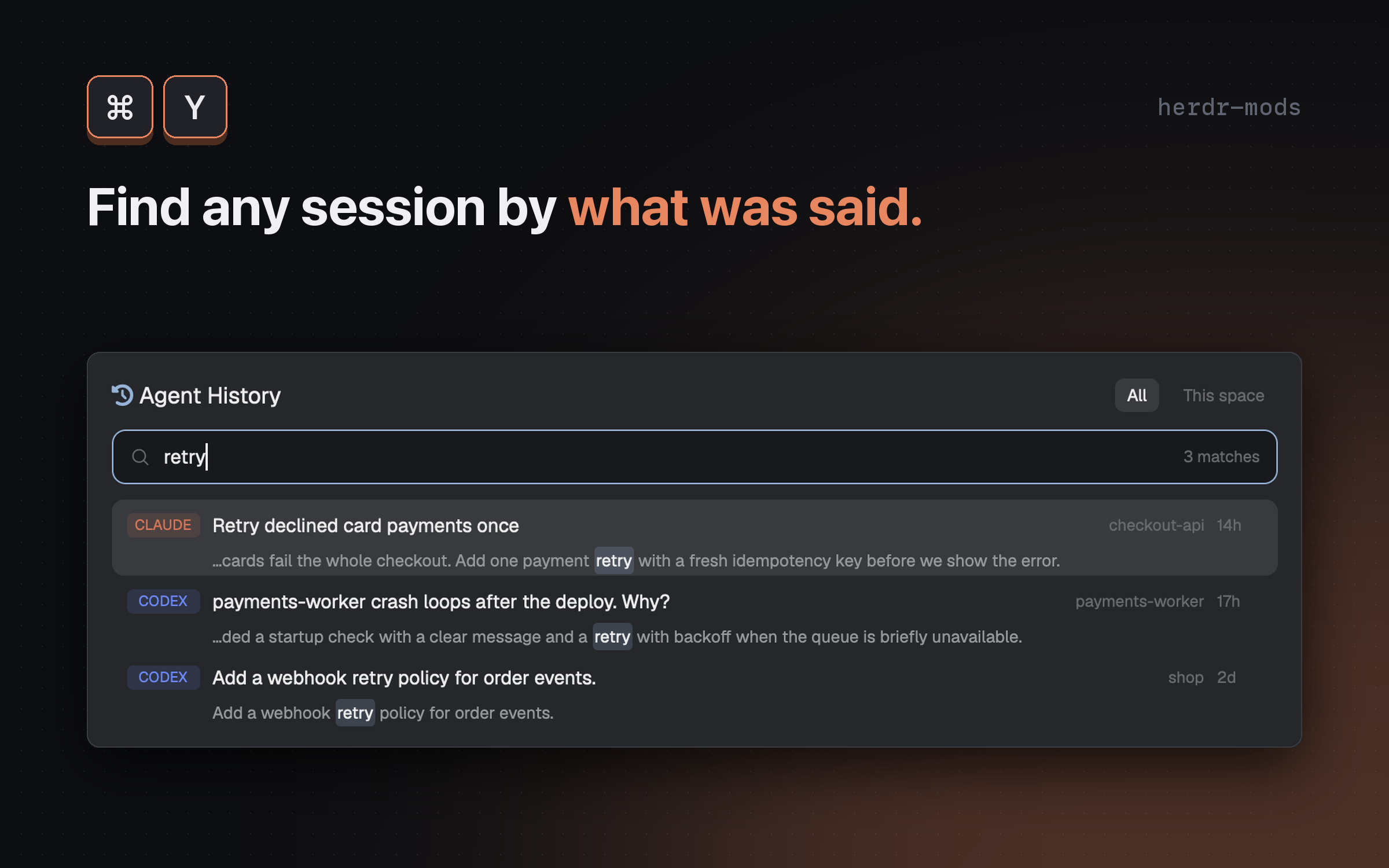
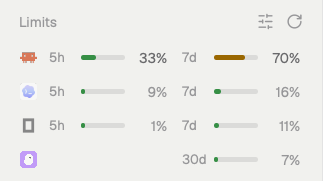





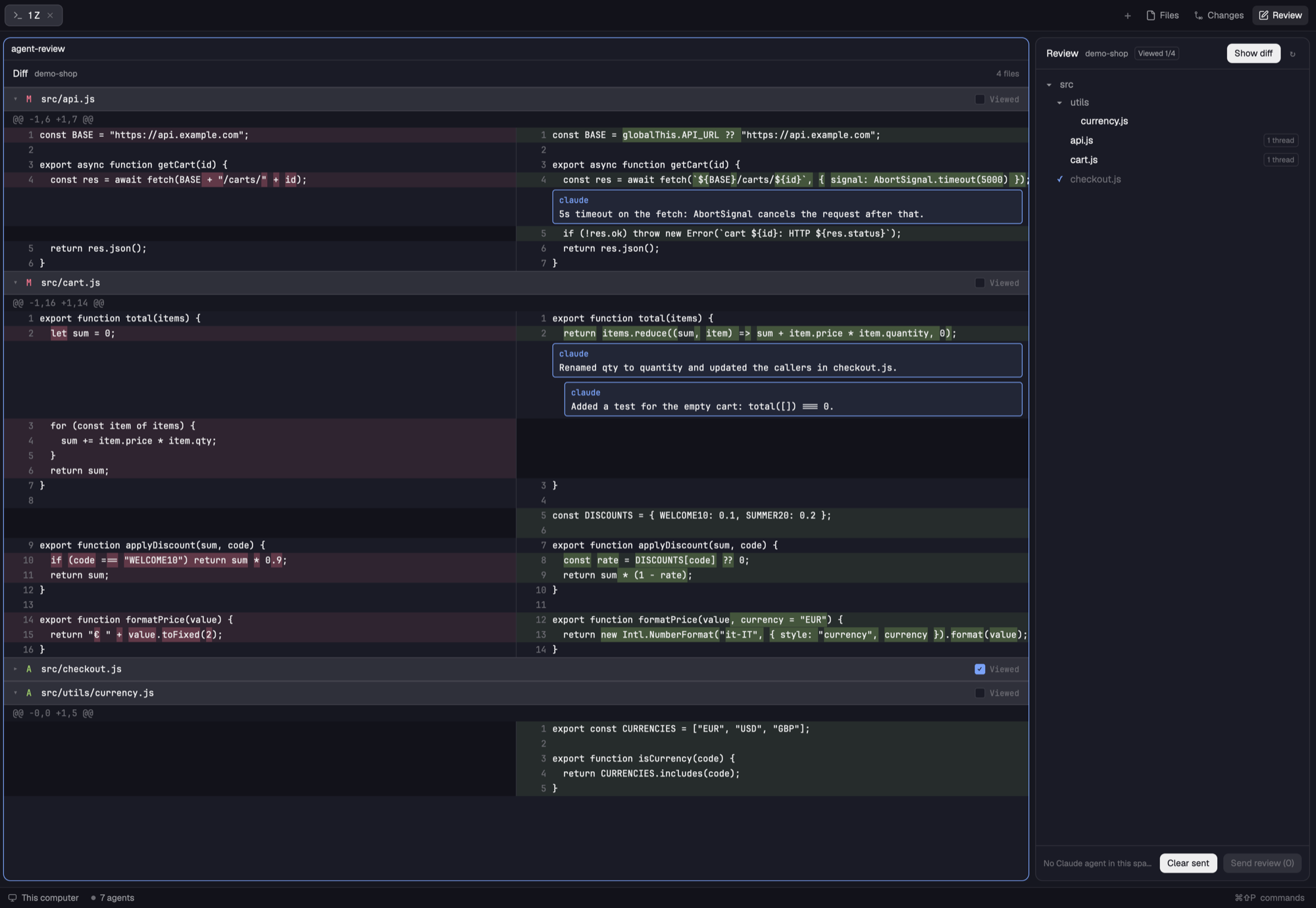

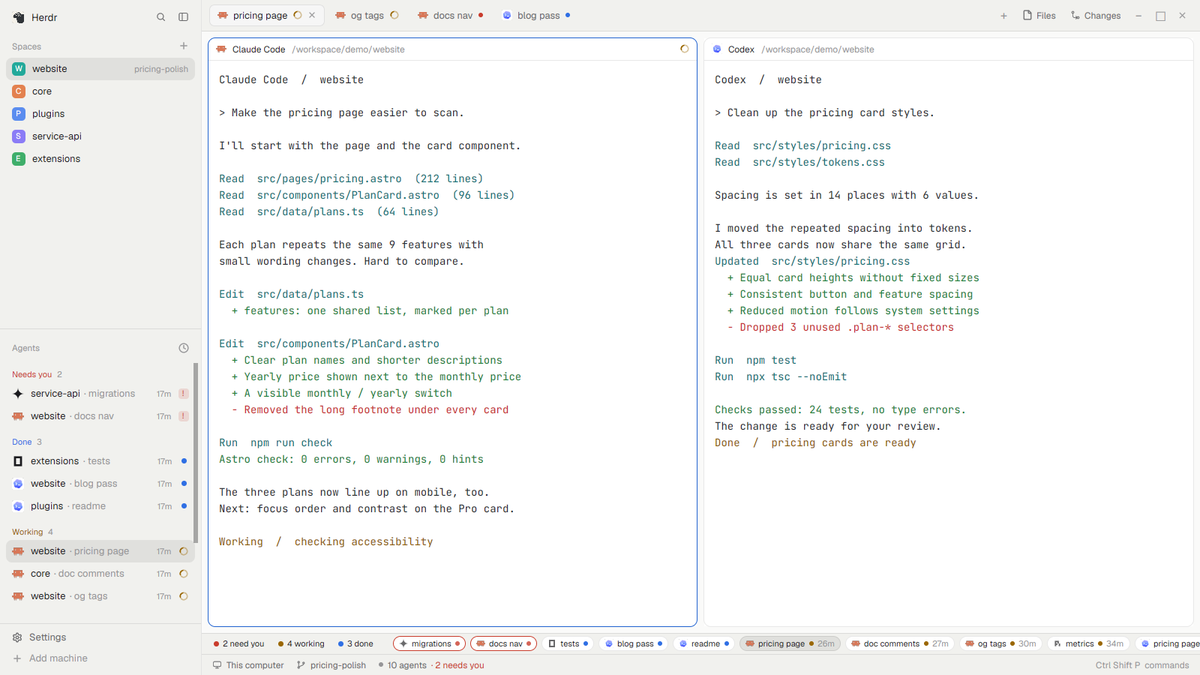
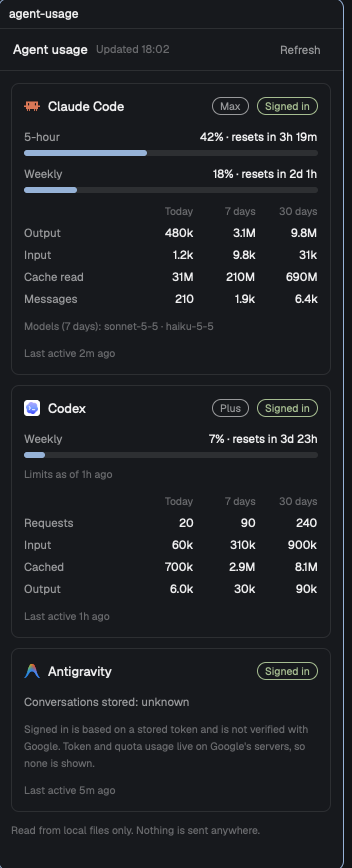

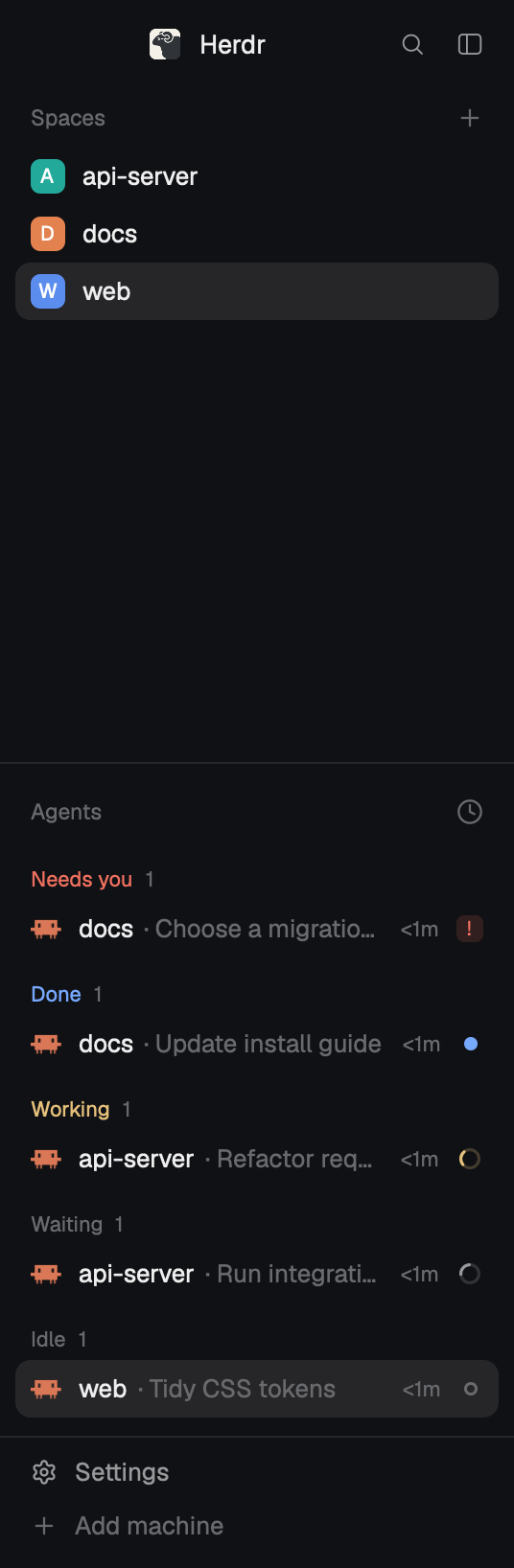
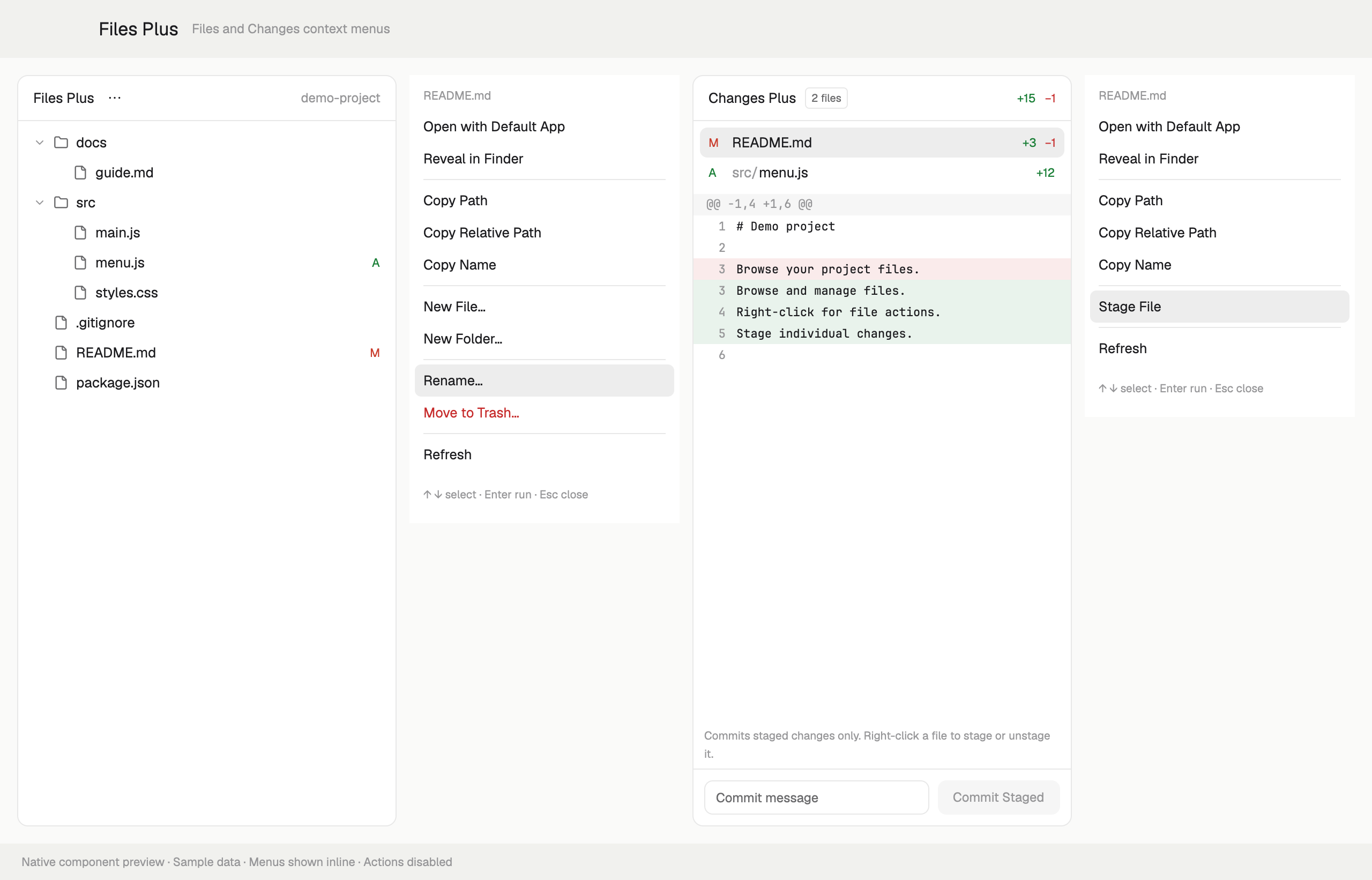

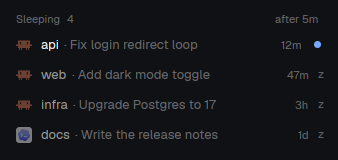

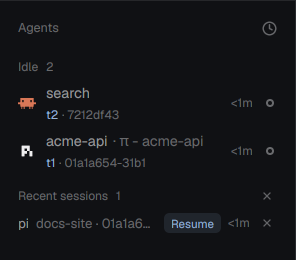

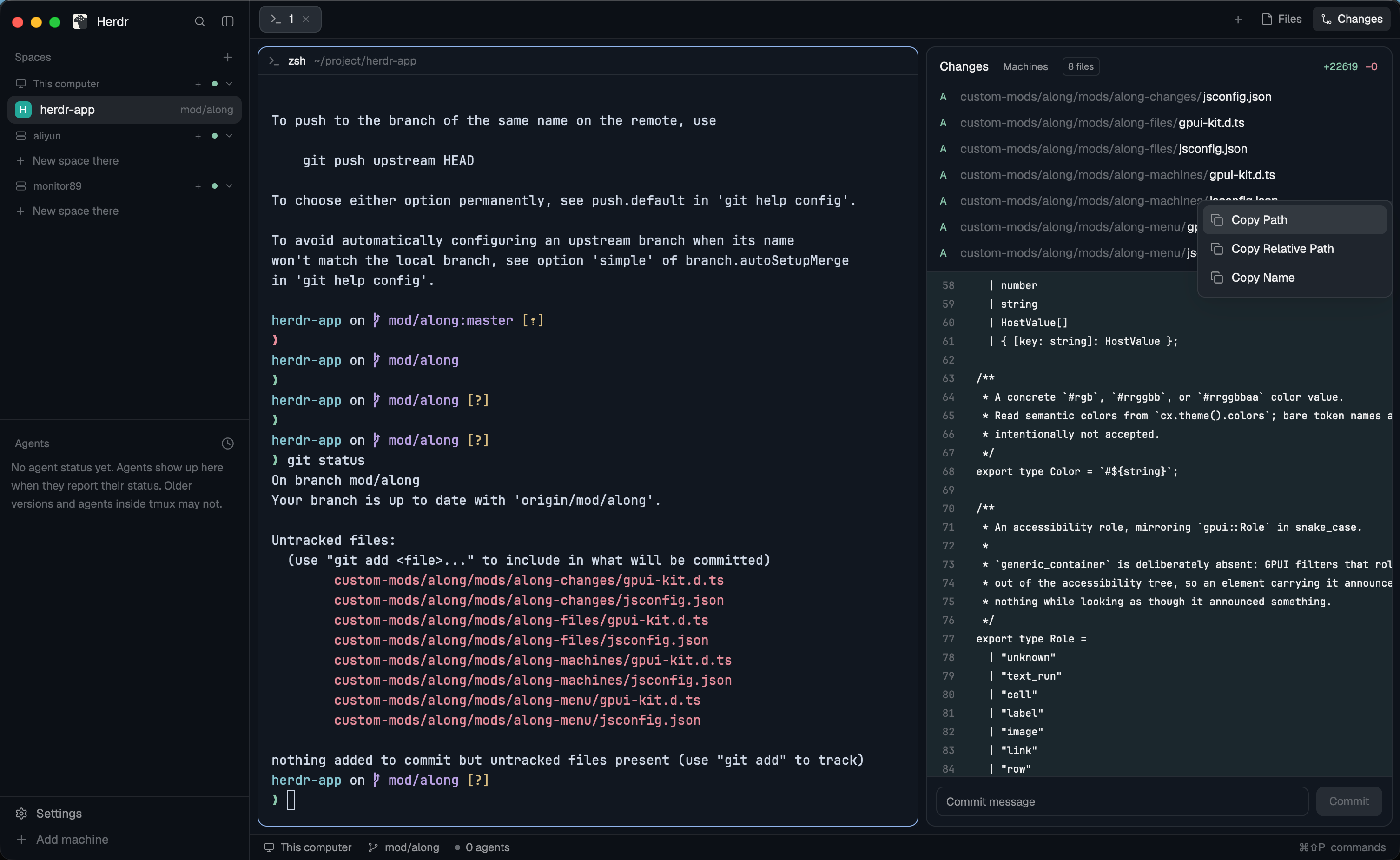


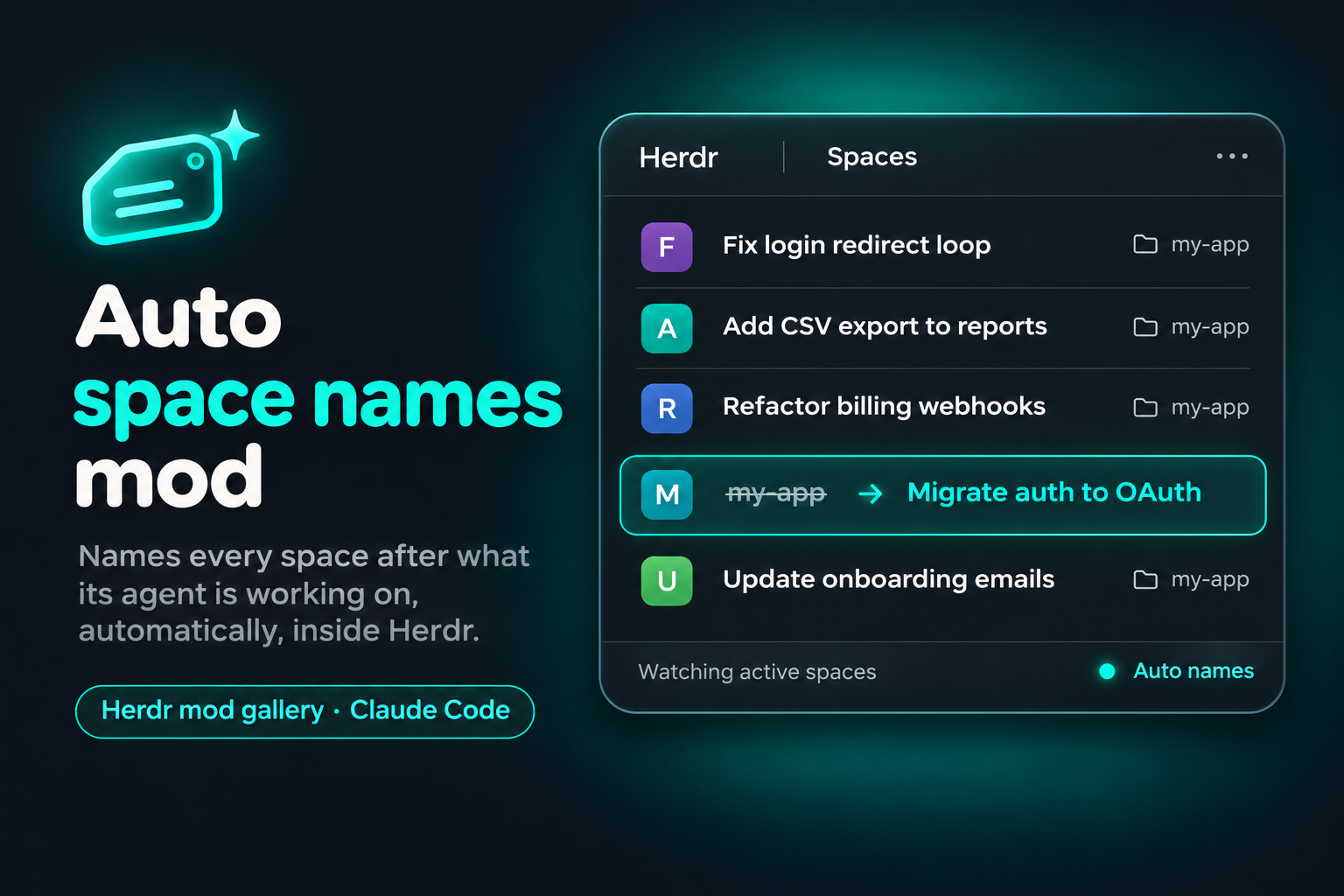


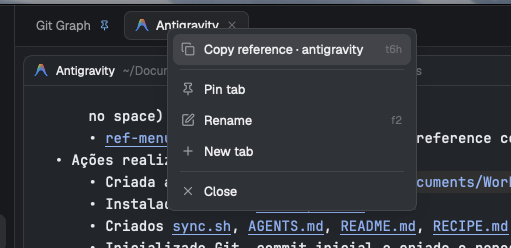
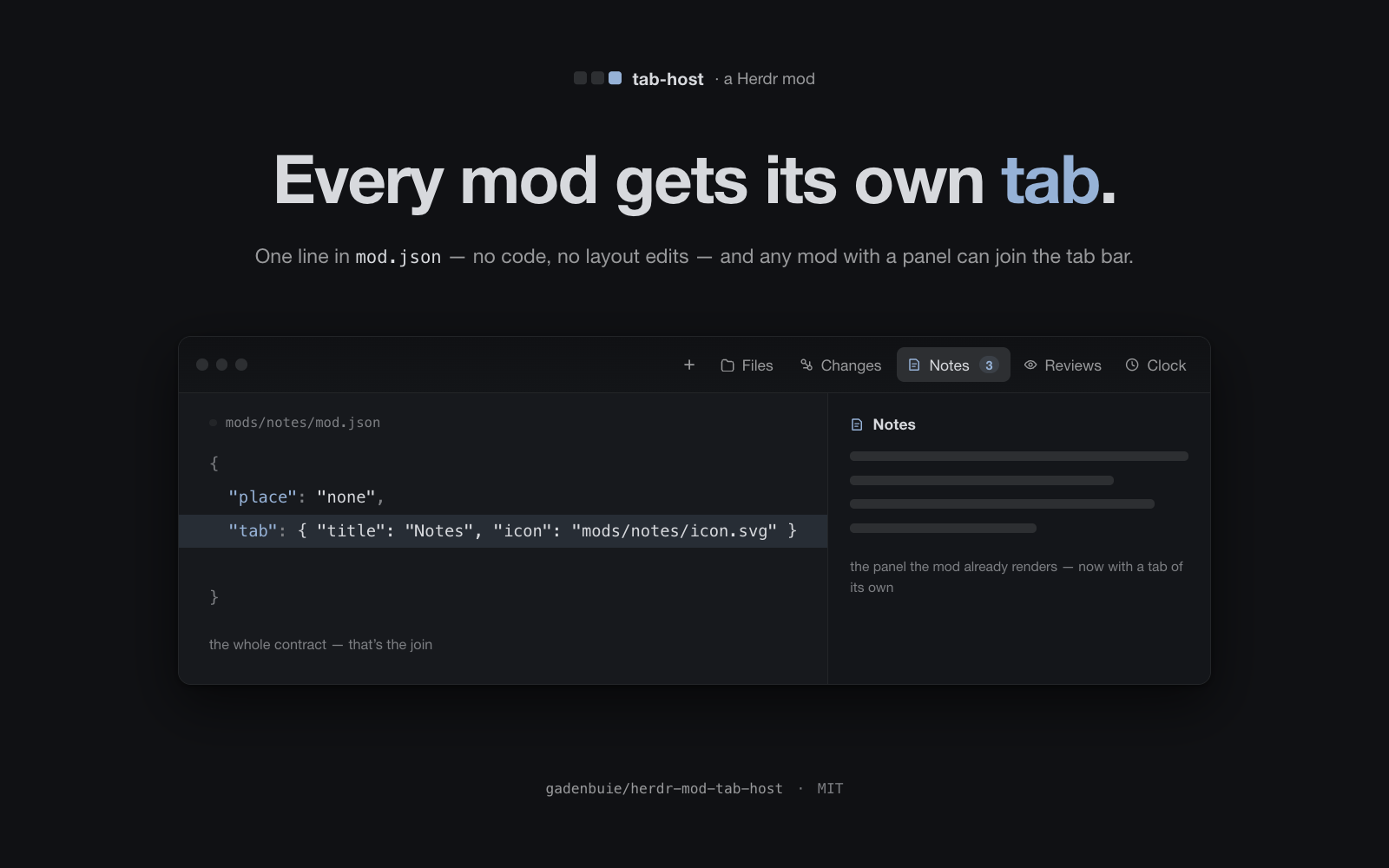
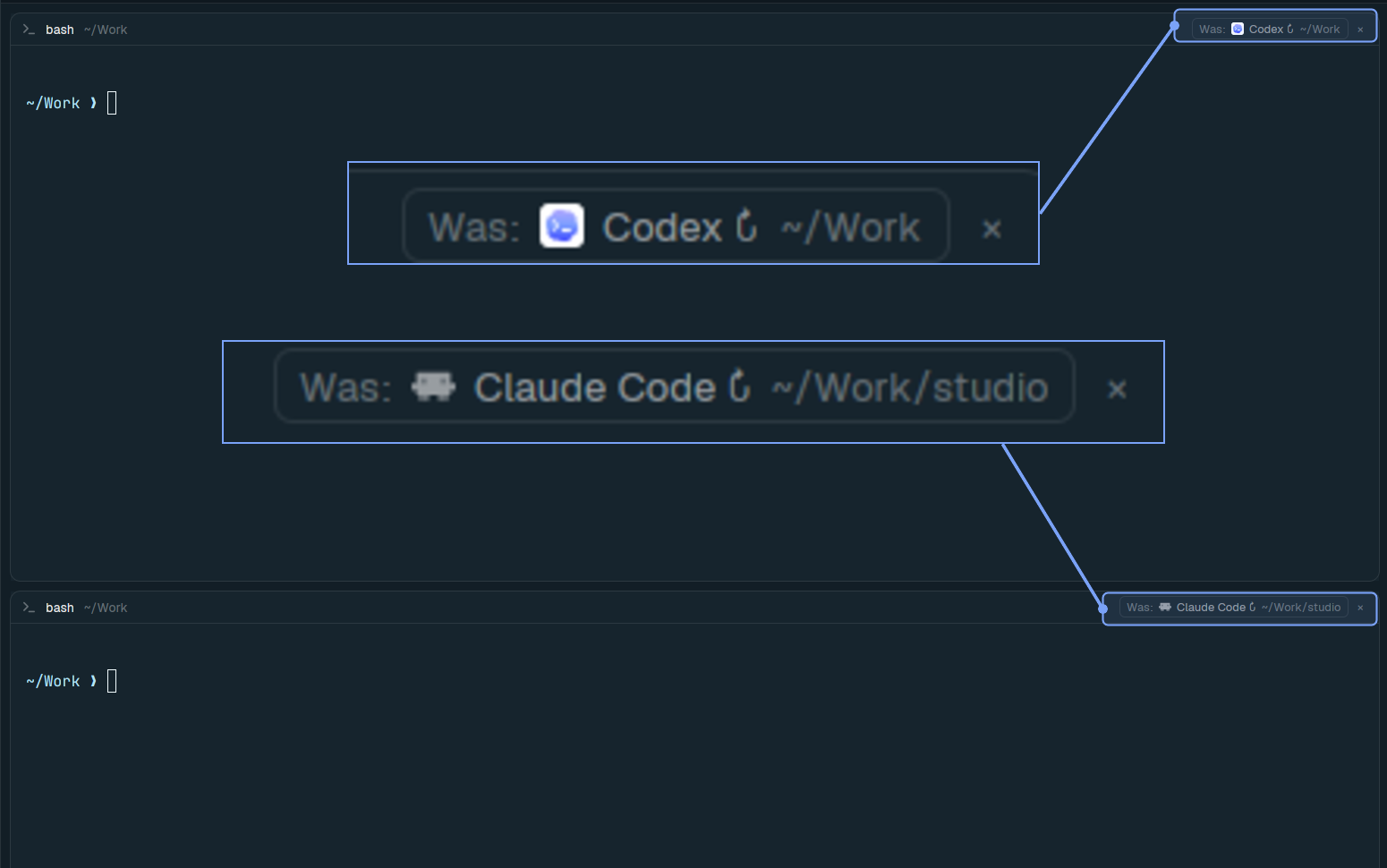
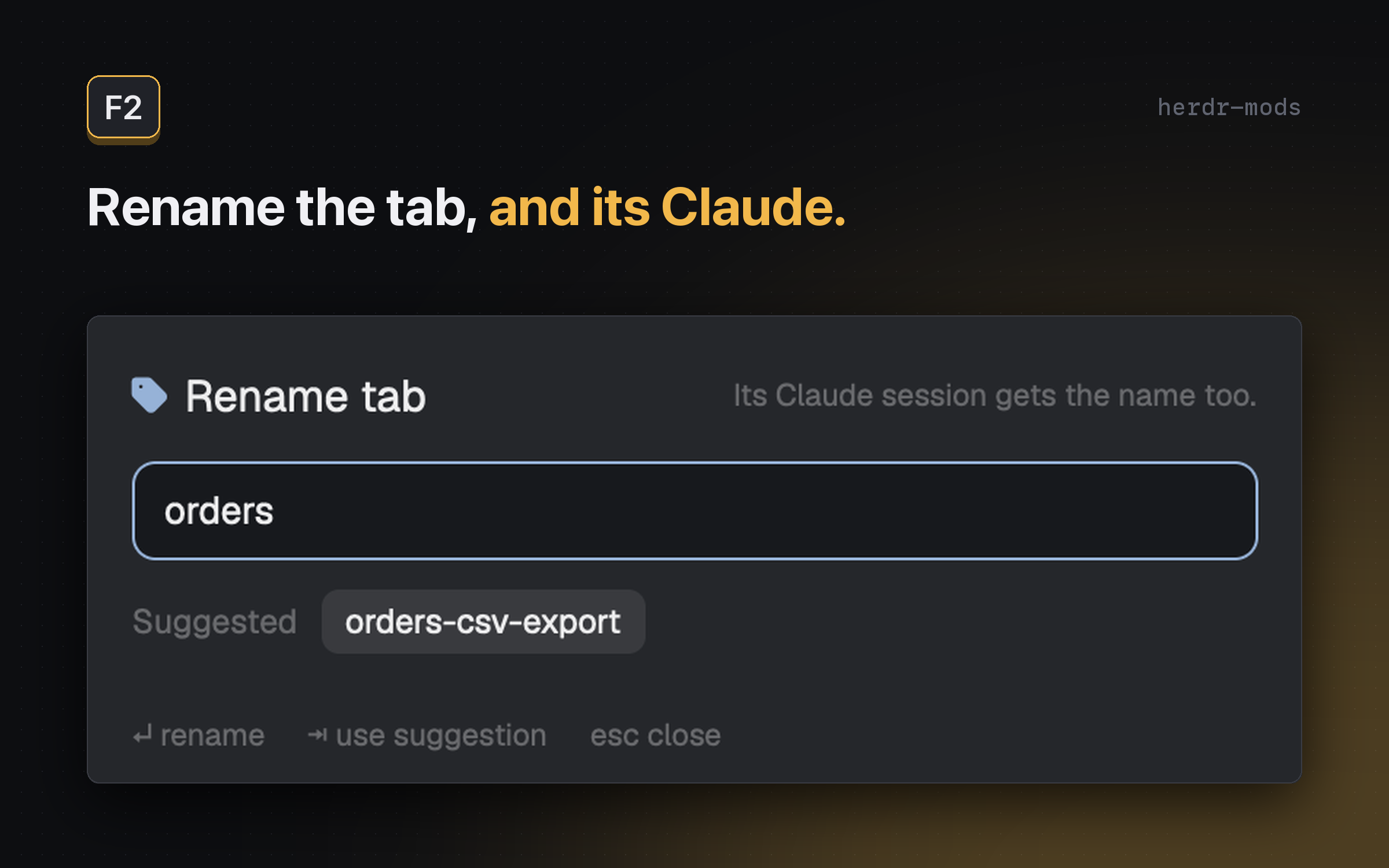
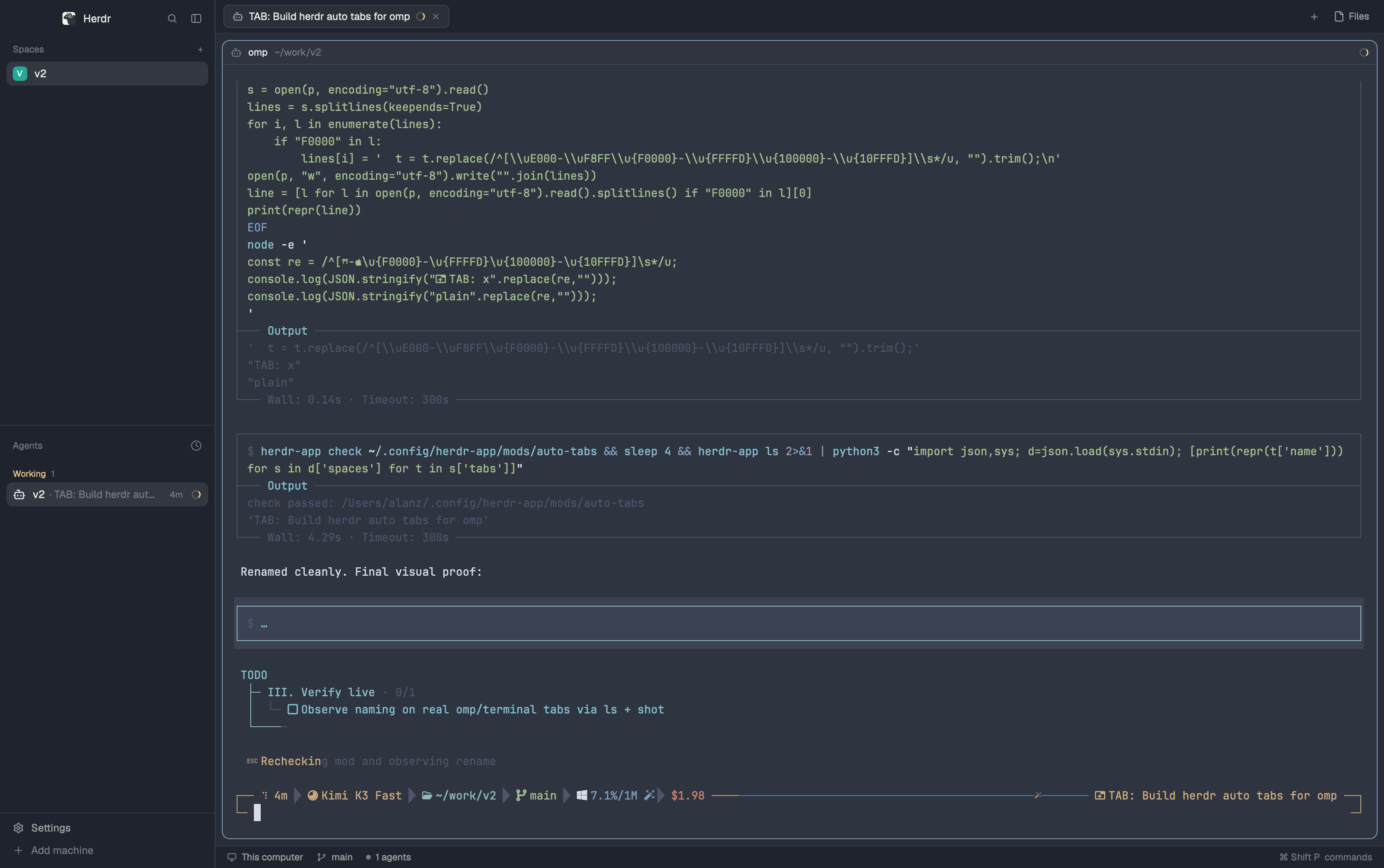
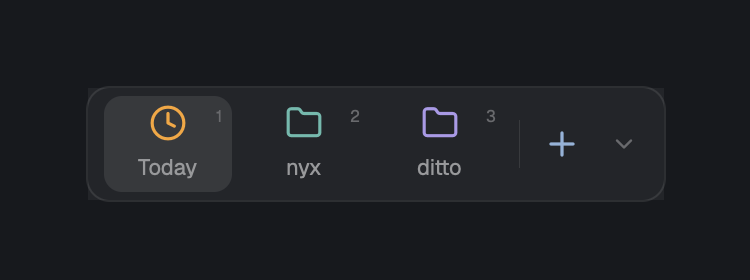
Herdr's tab bar, except that a tab nobody named is labeled with what its lead pane is doing — the live terminal title an agent sets (Claude Code's session title, for example) — instead of its position number. Named tabs keep their names.
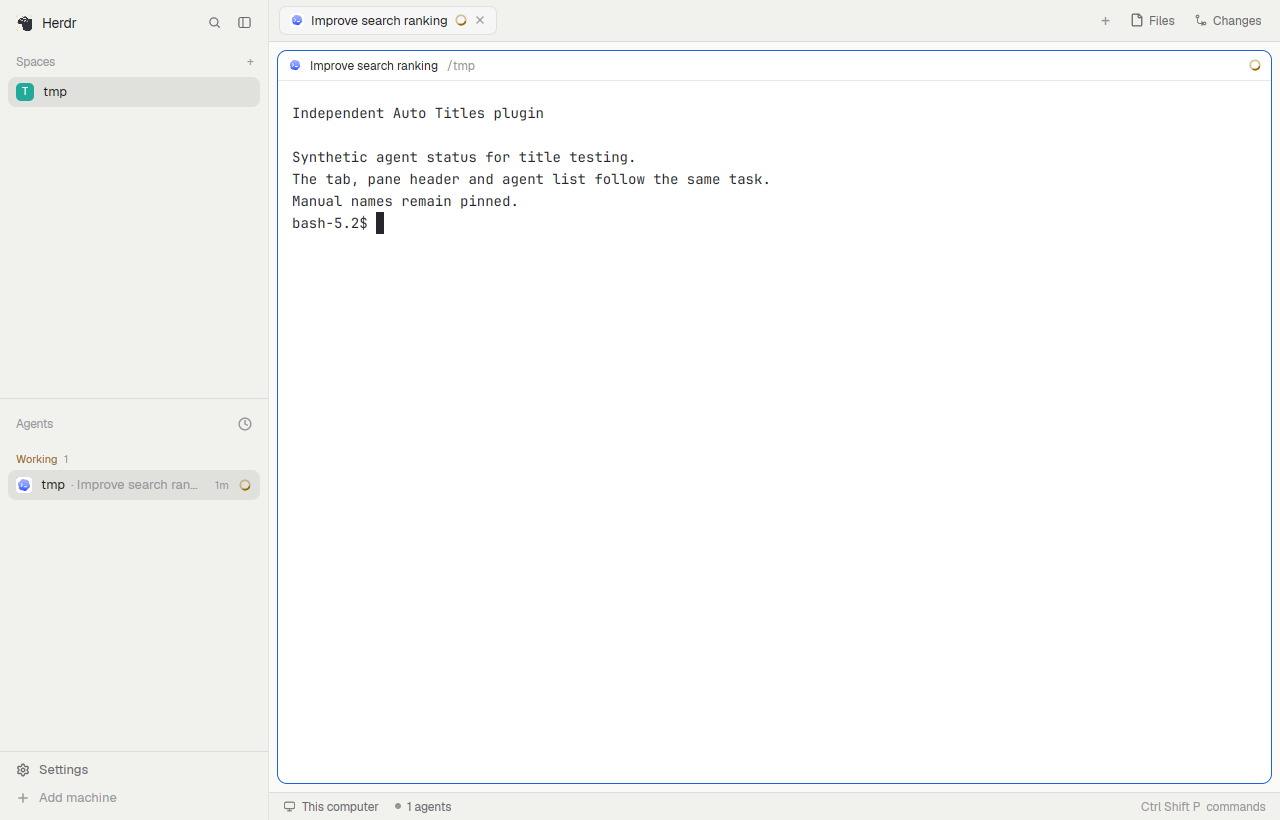
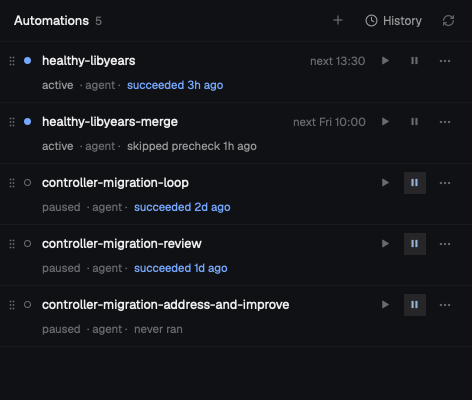

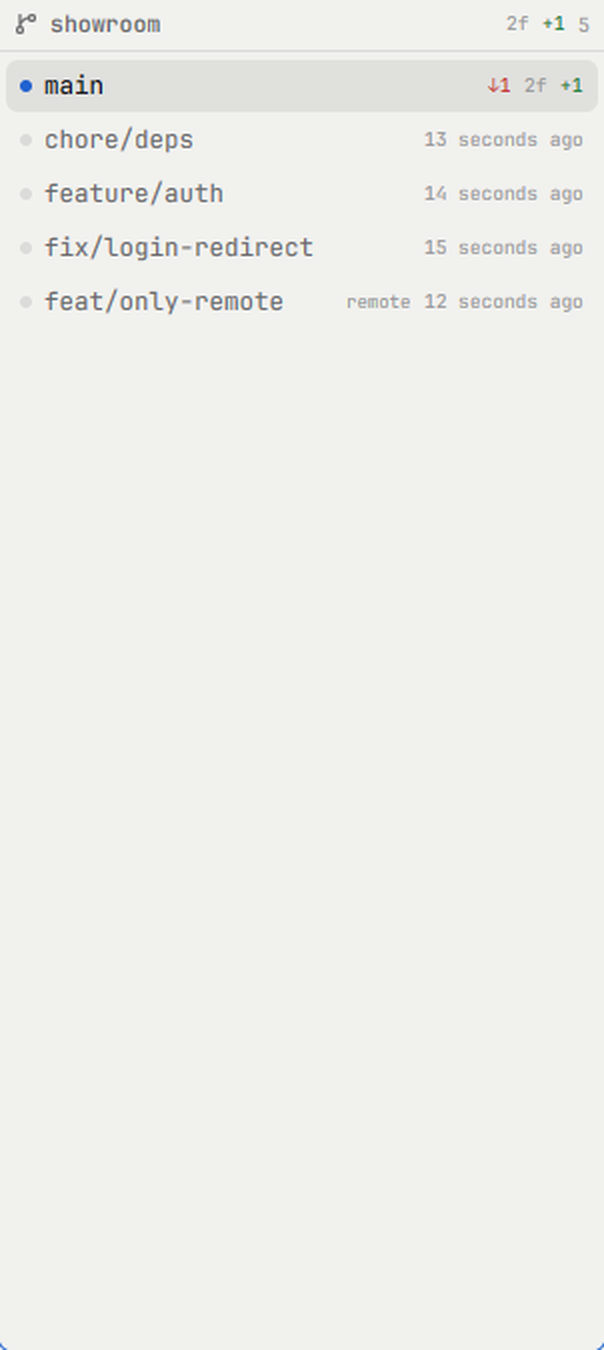

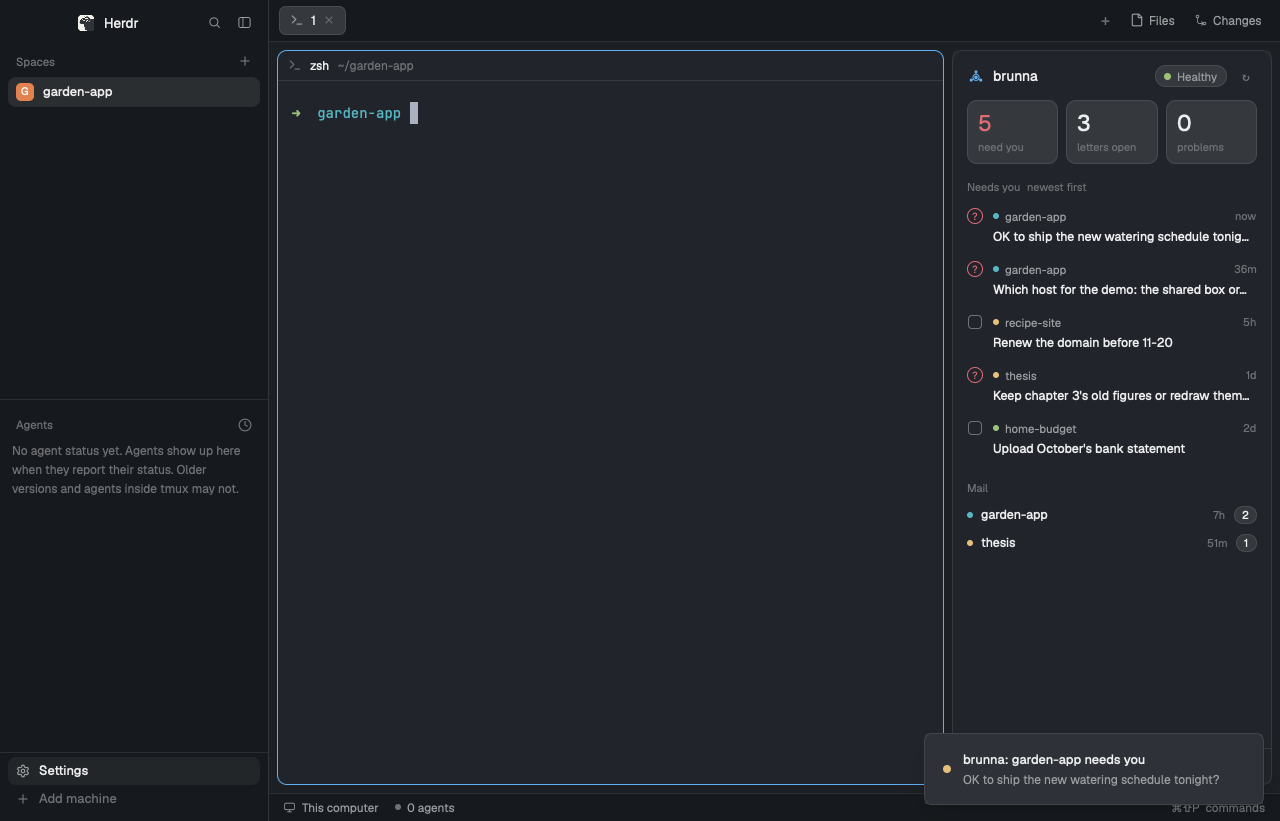

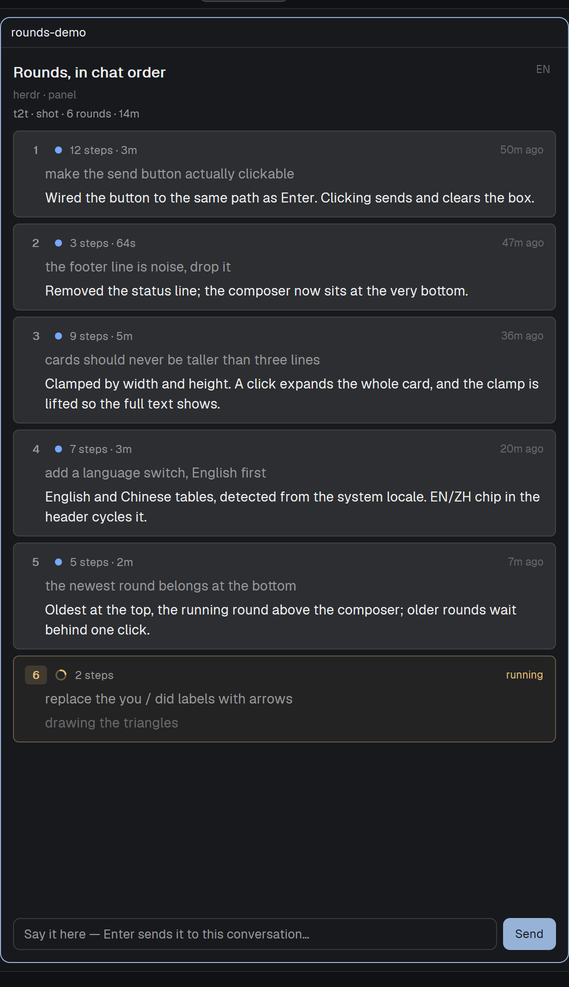
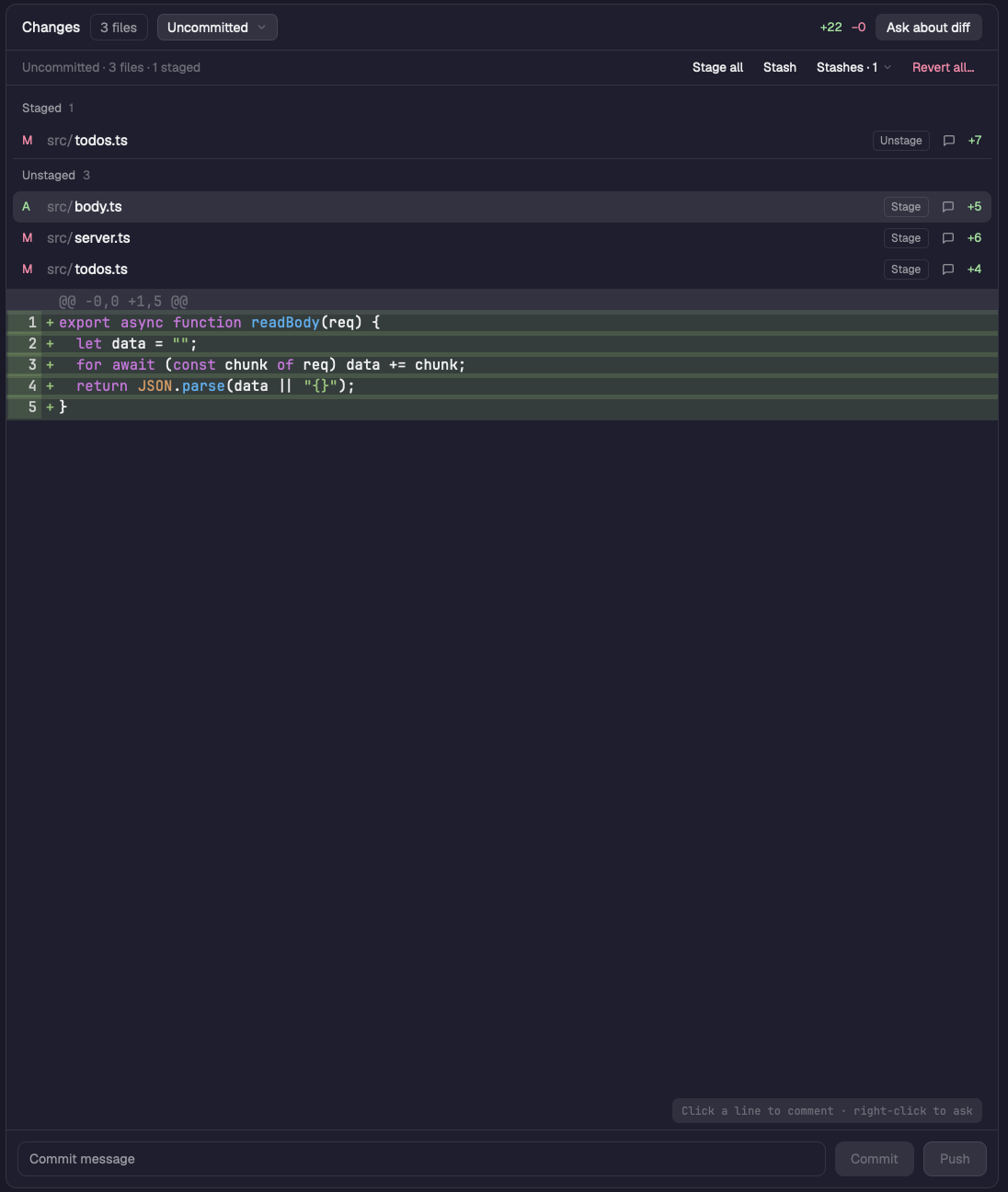

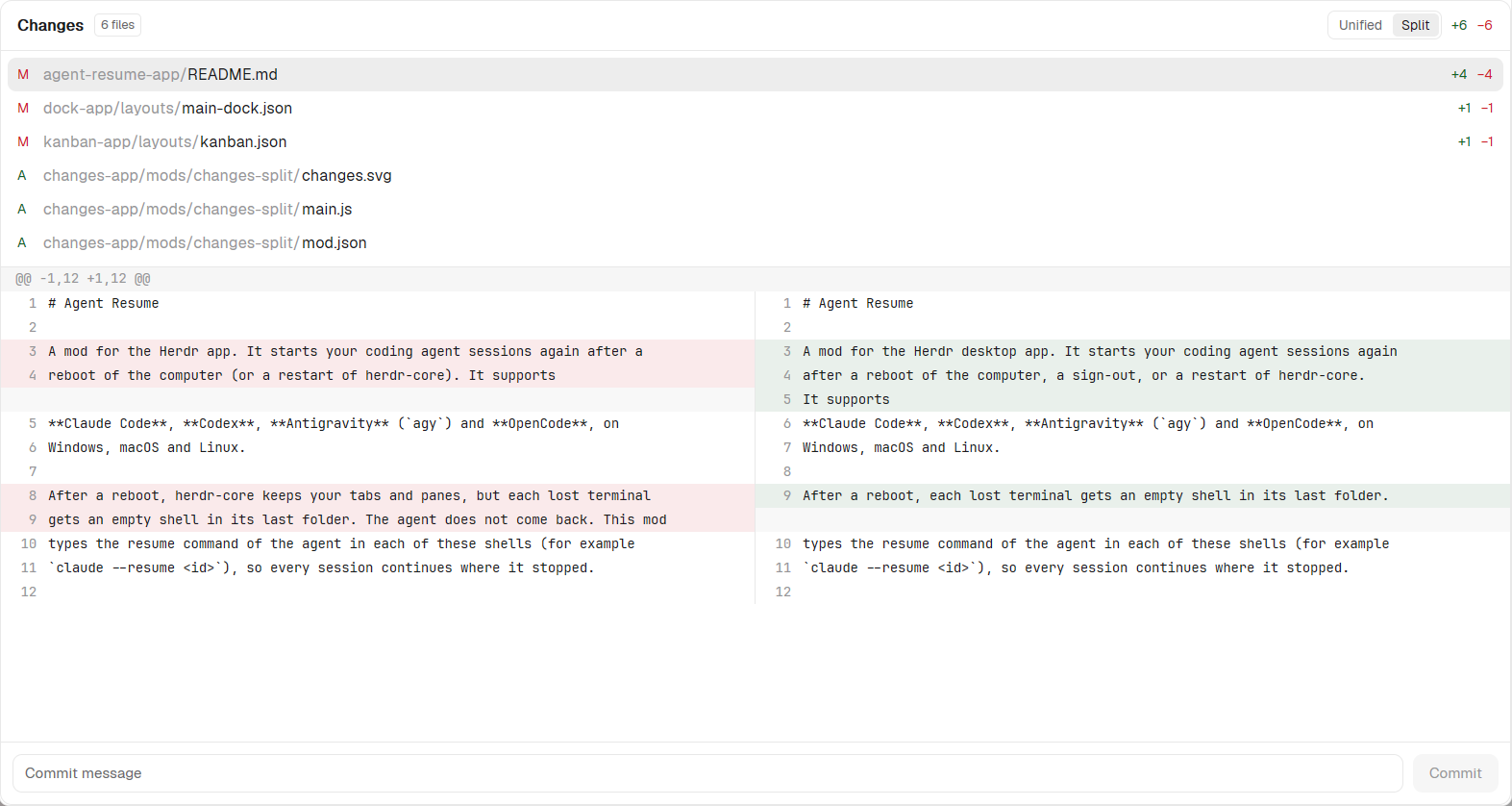























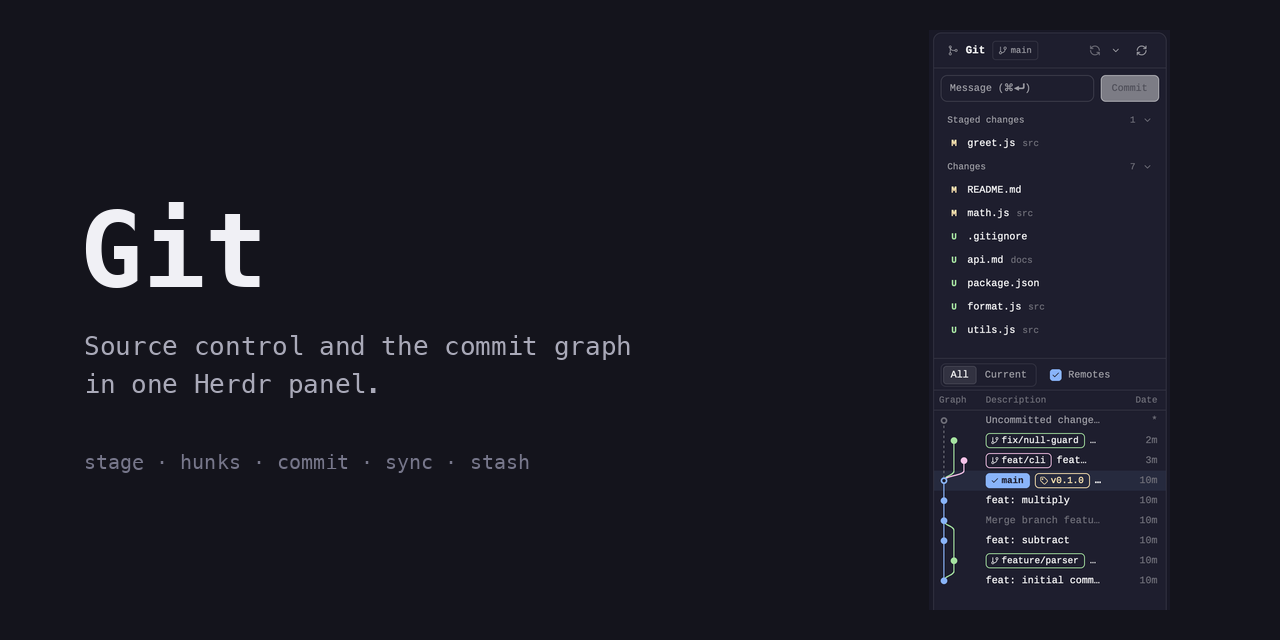
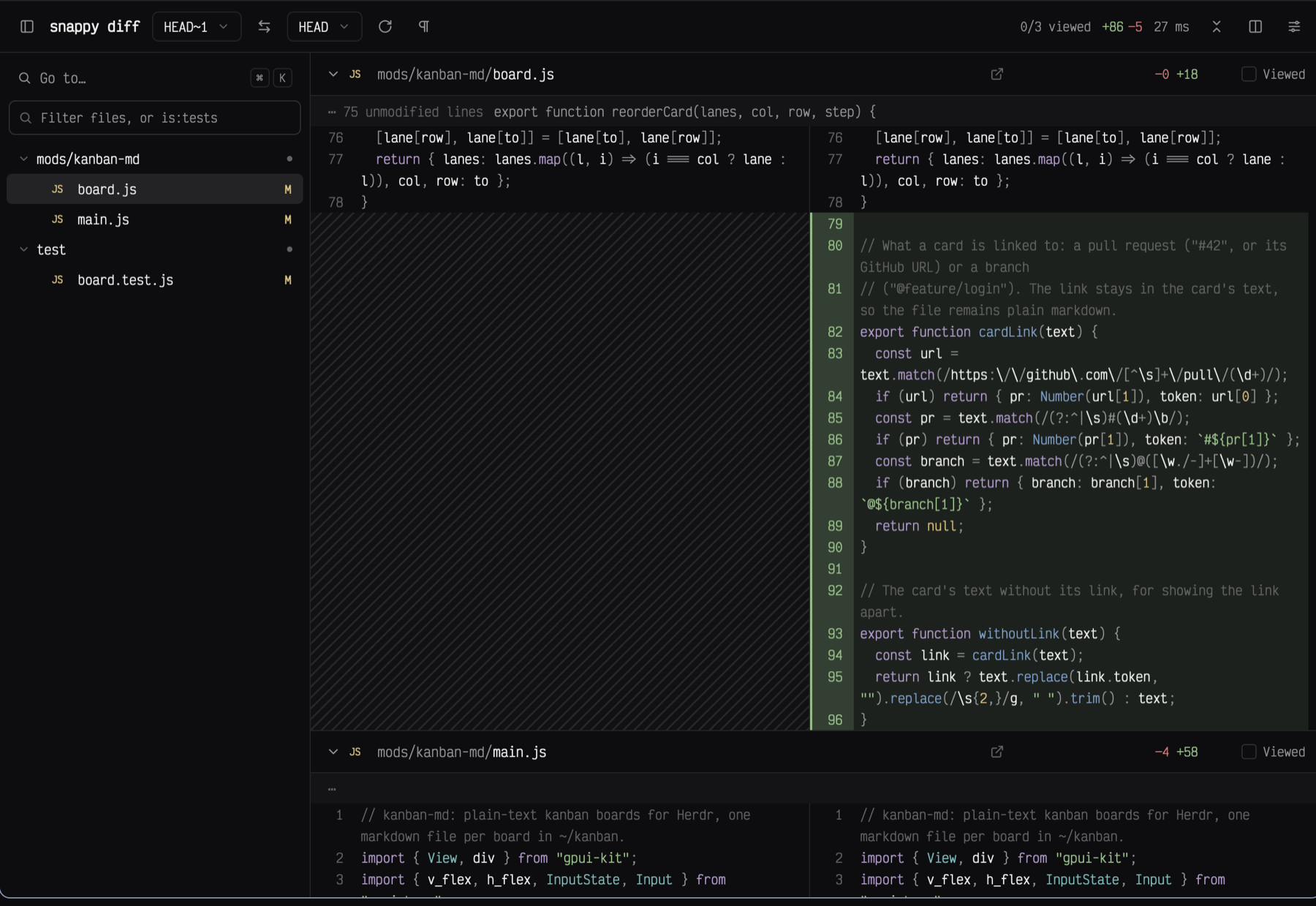
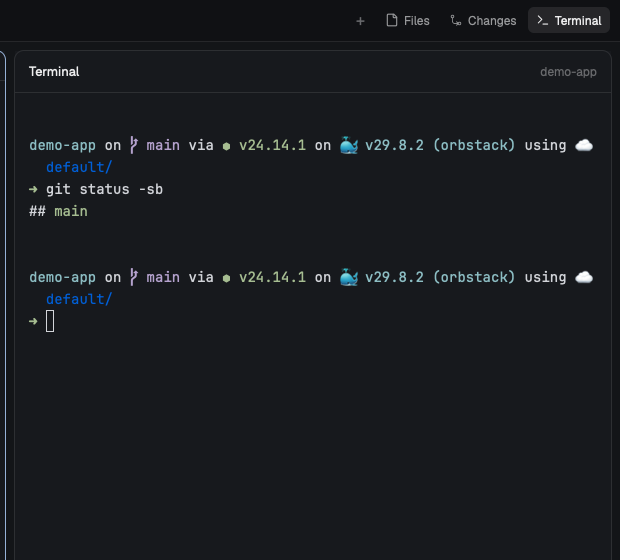
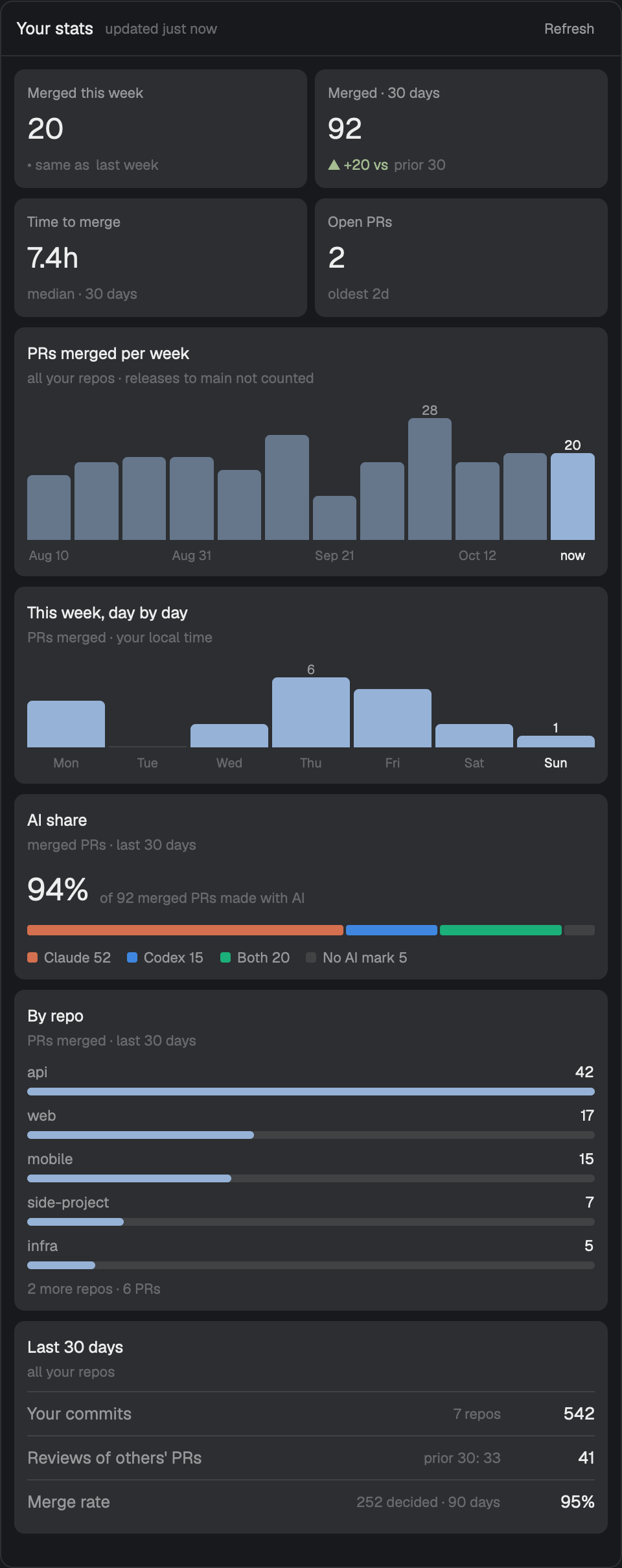
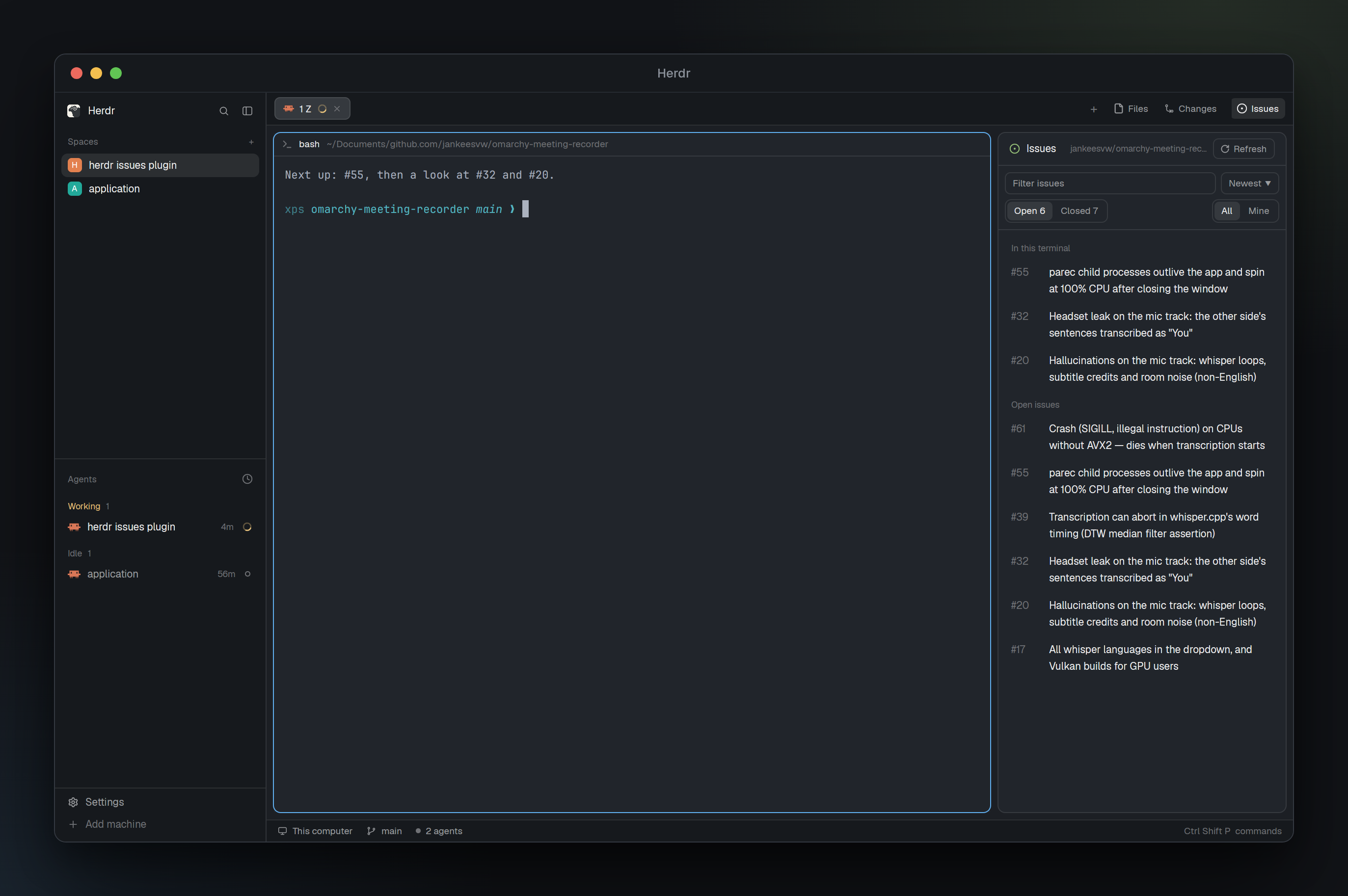
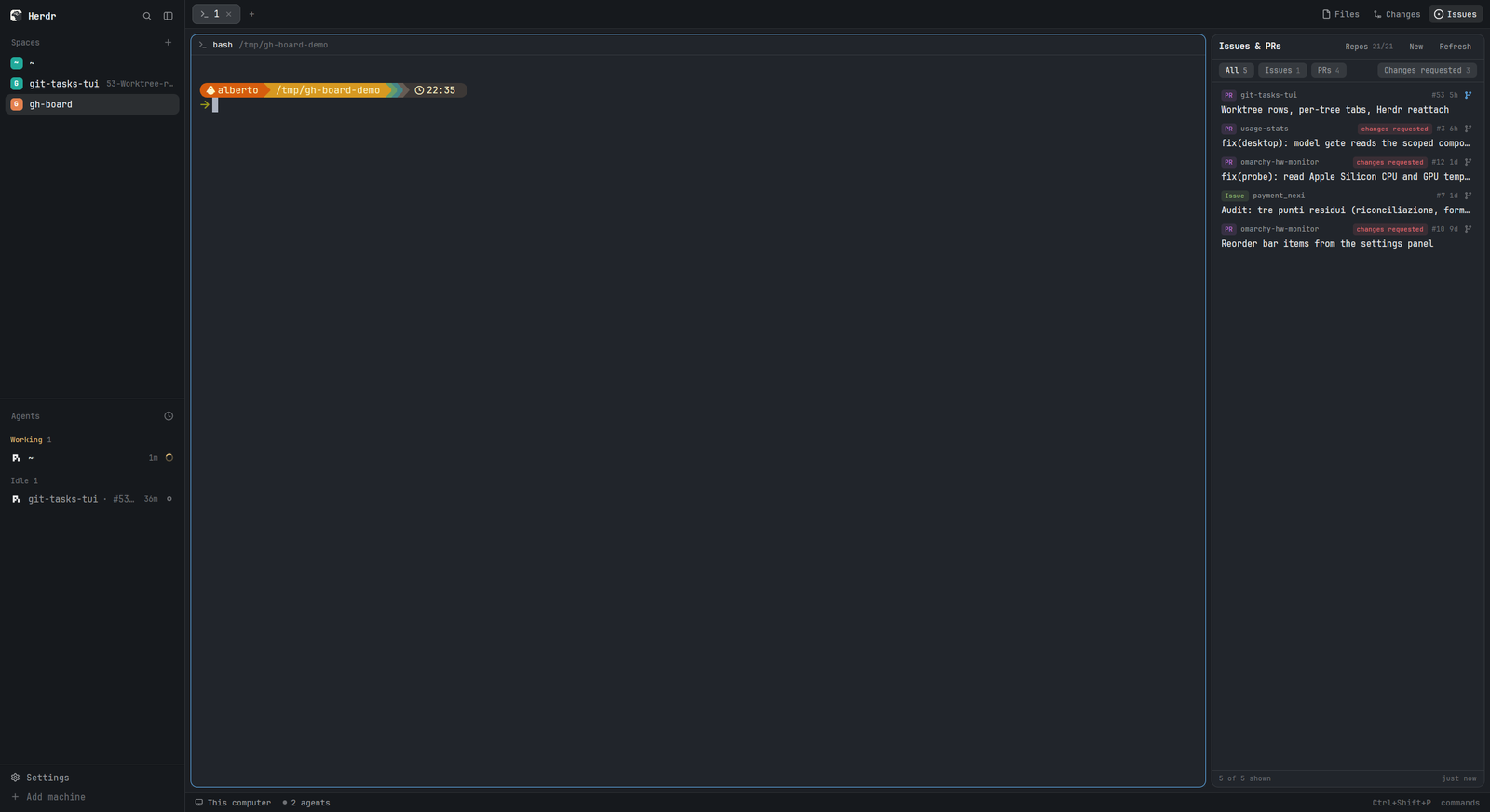
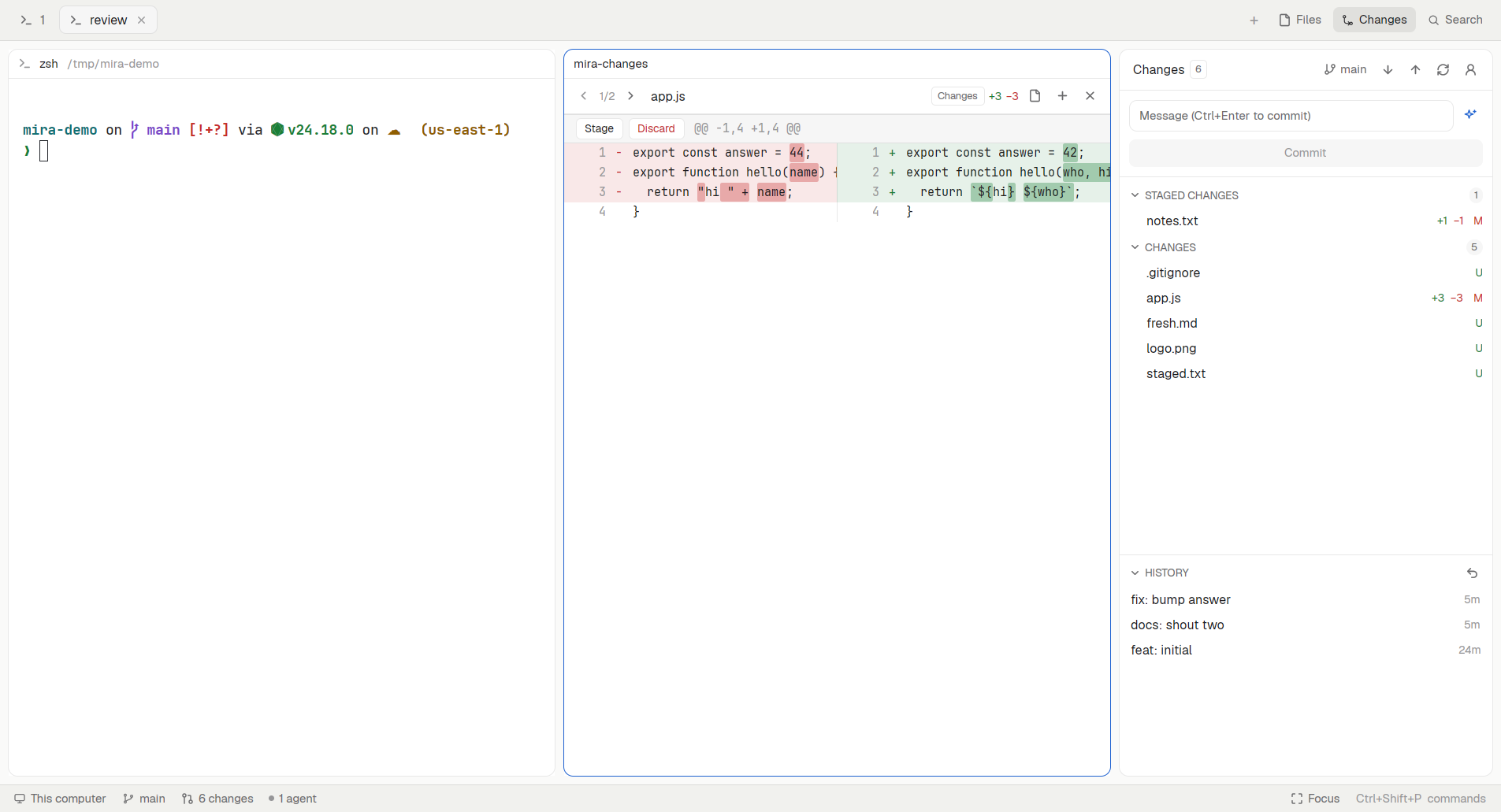
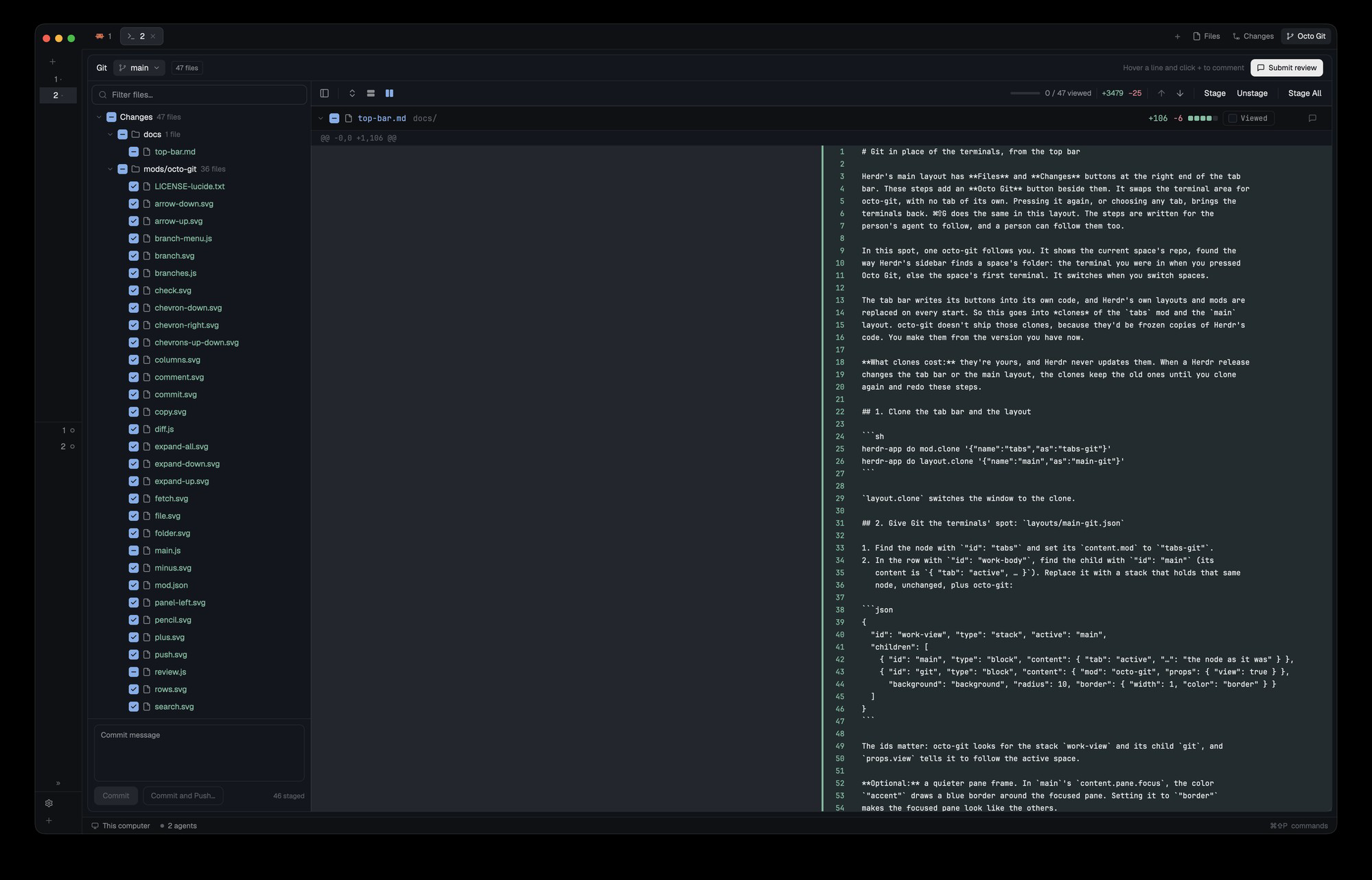
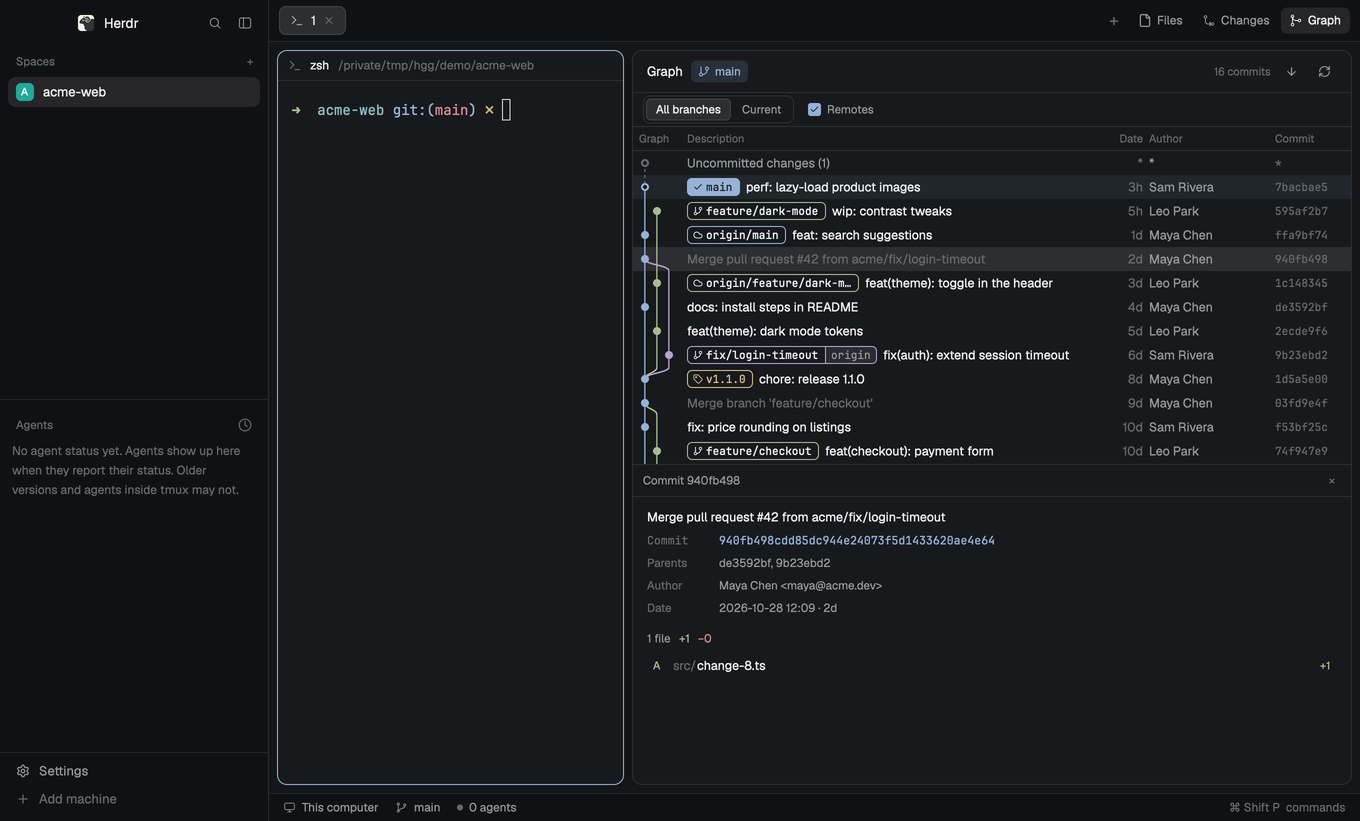
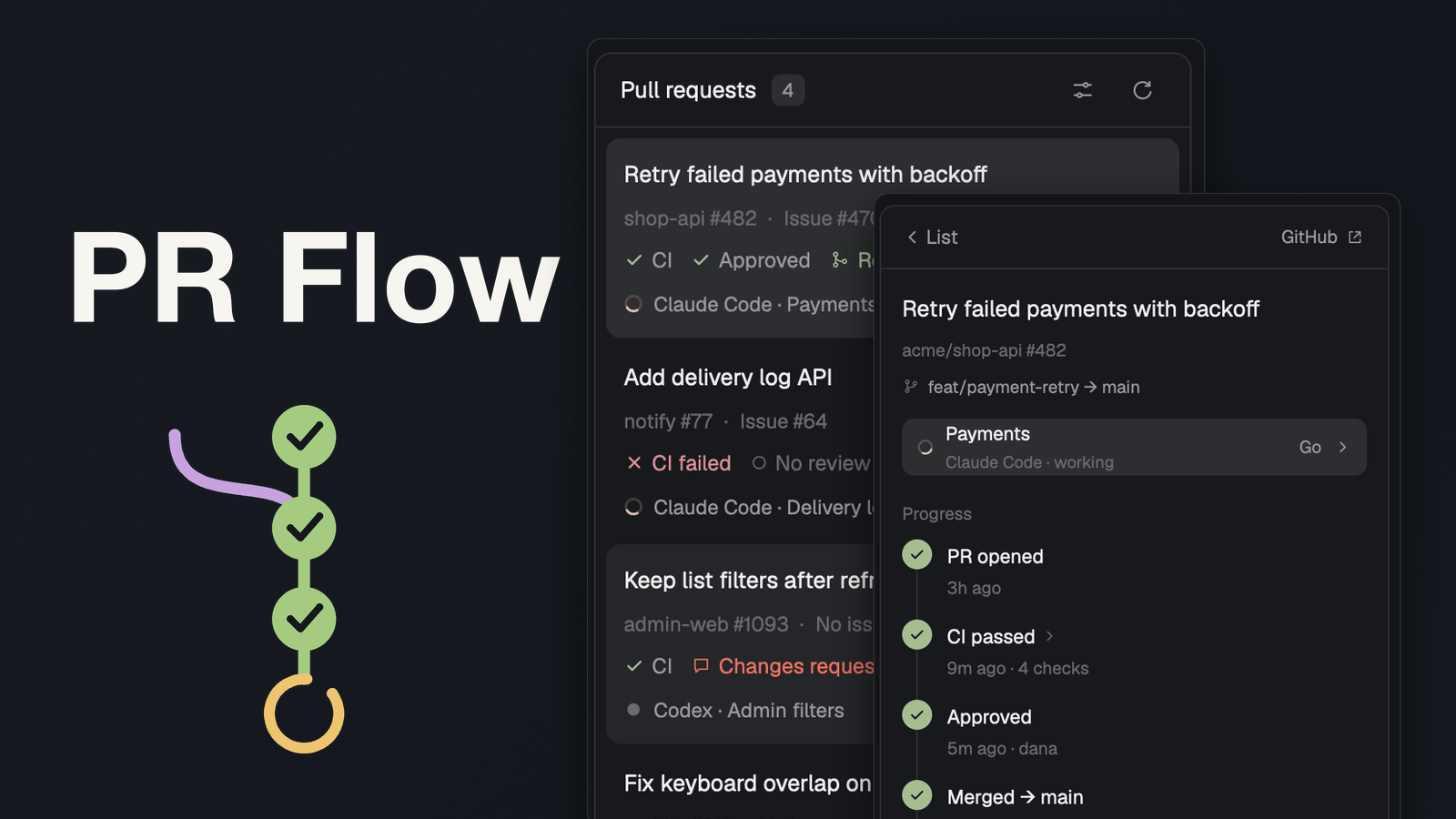
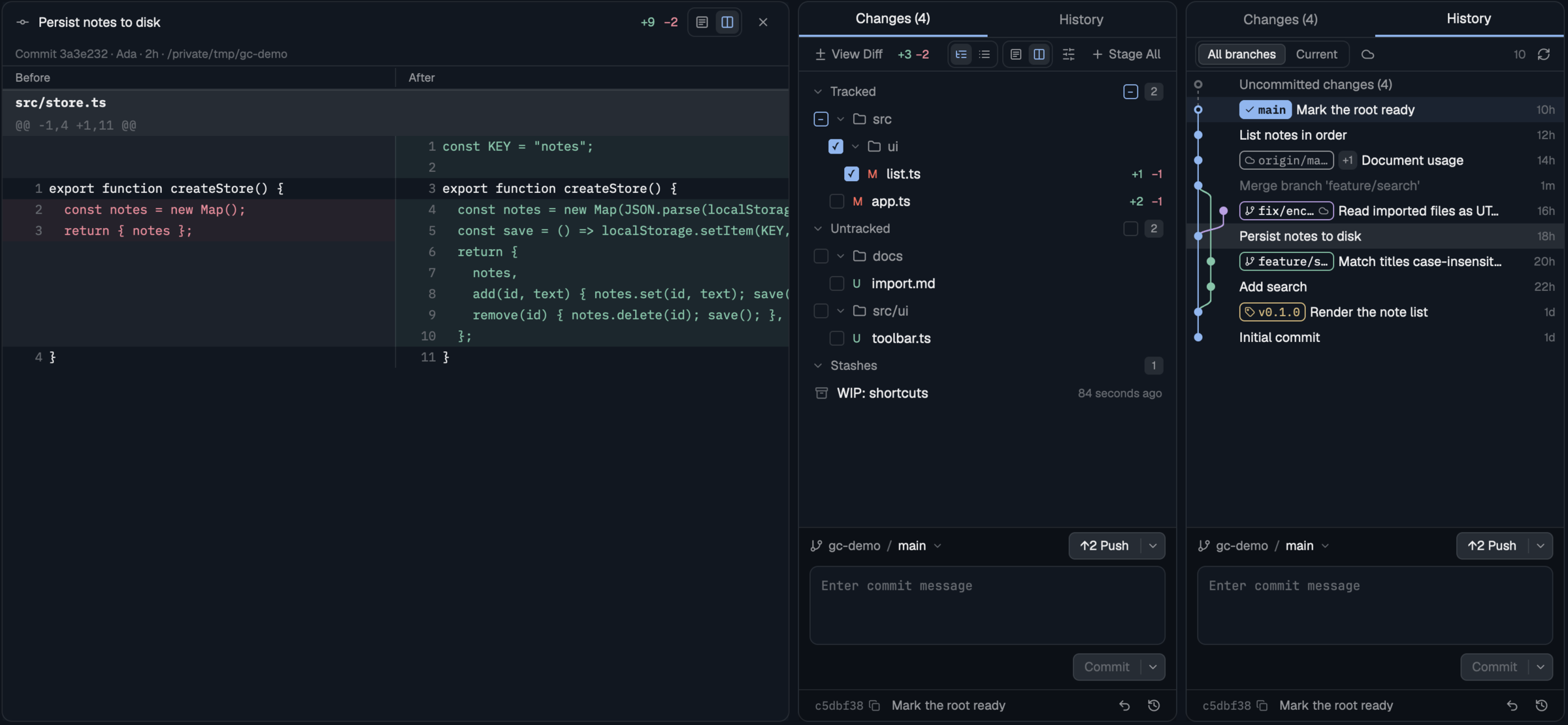
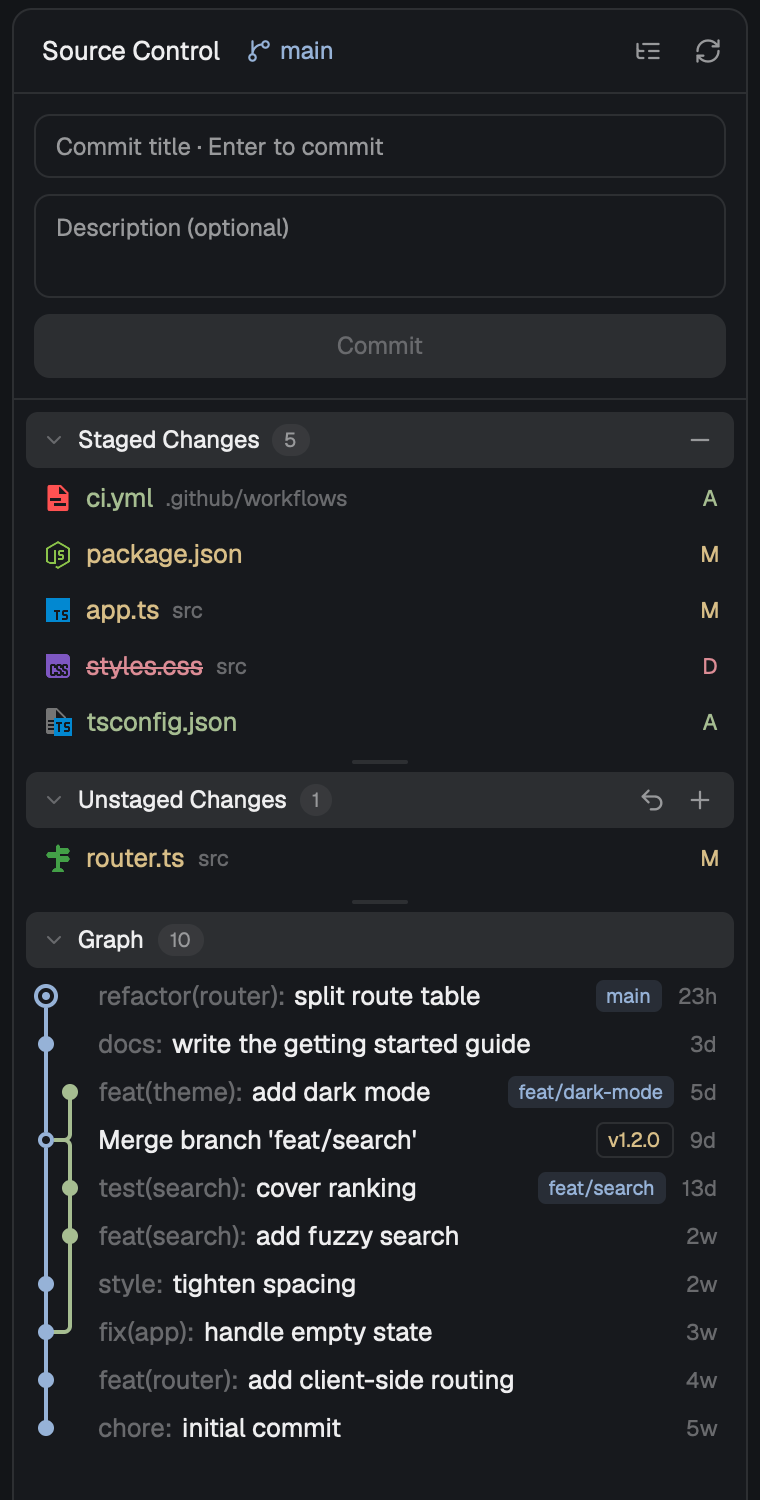
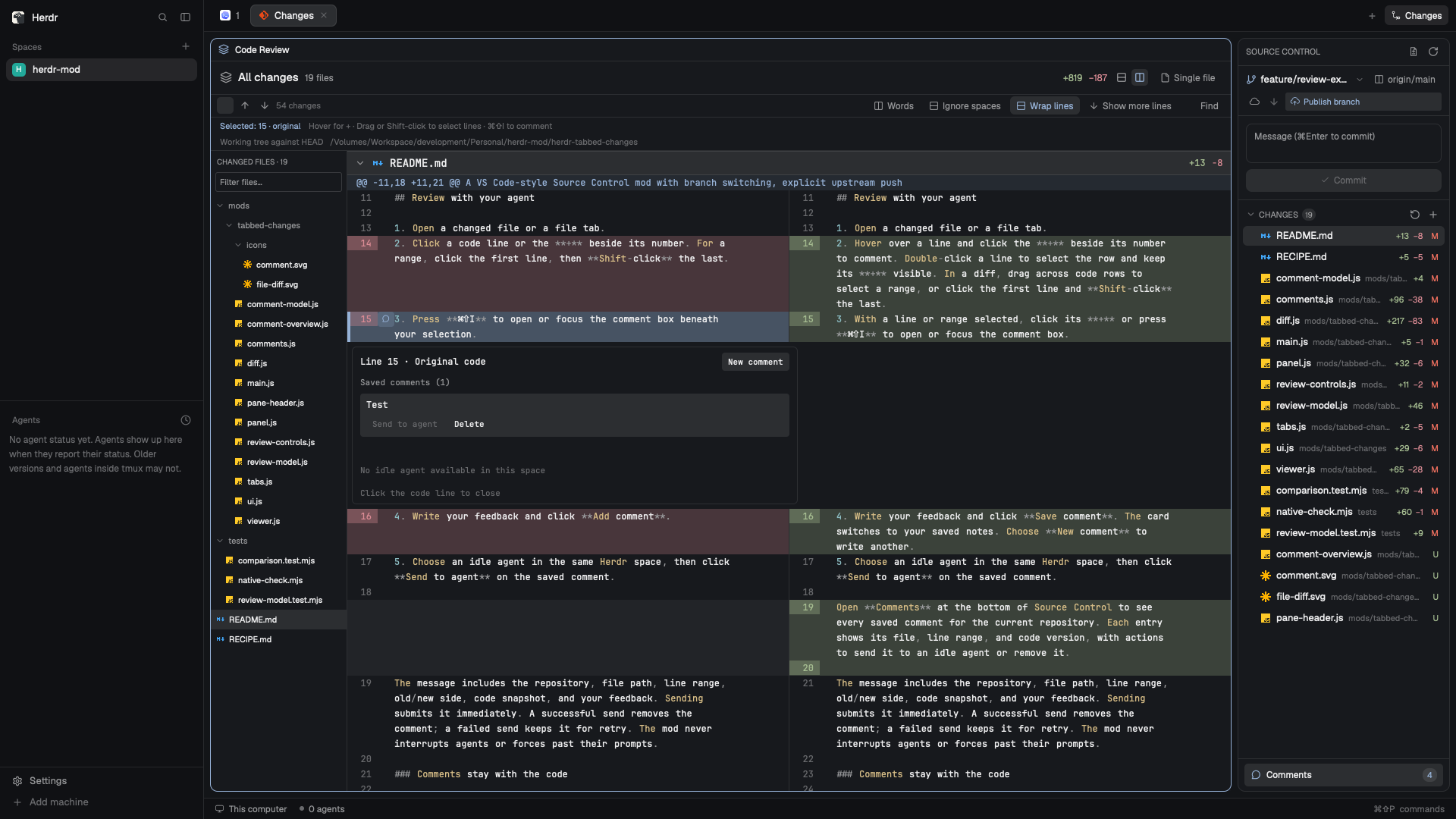
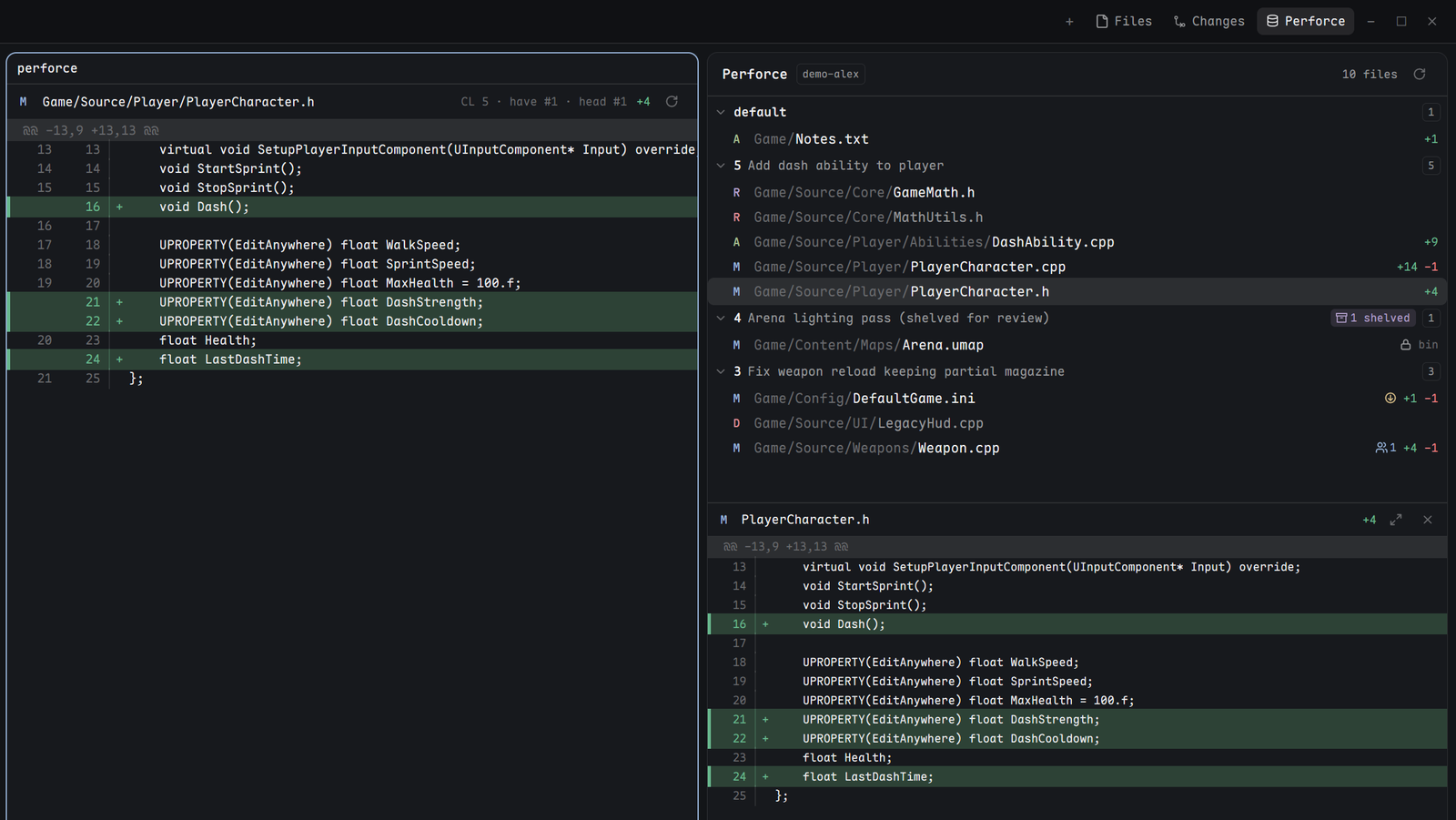
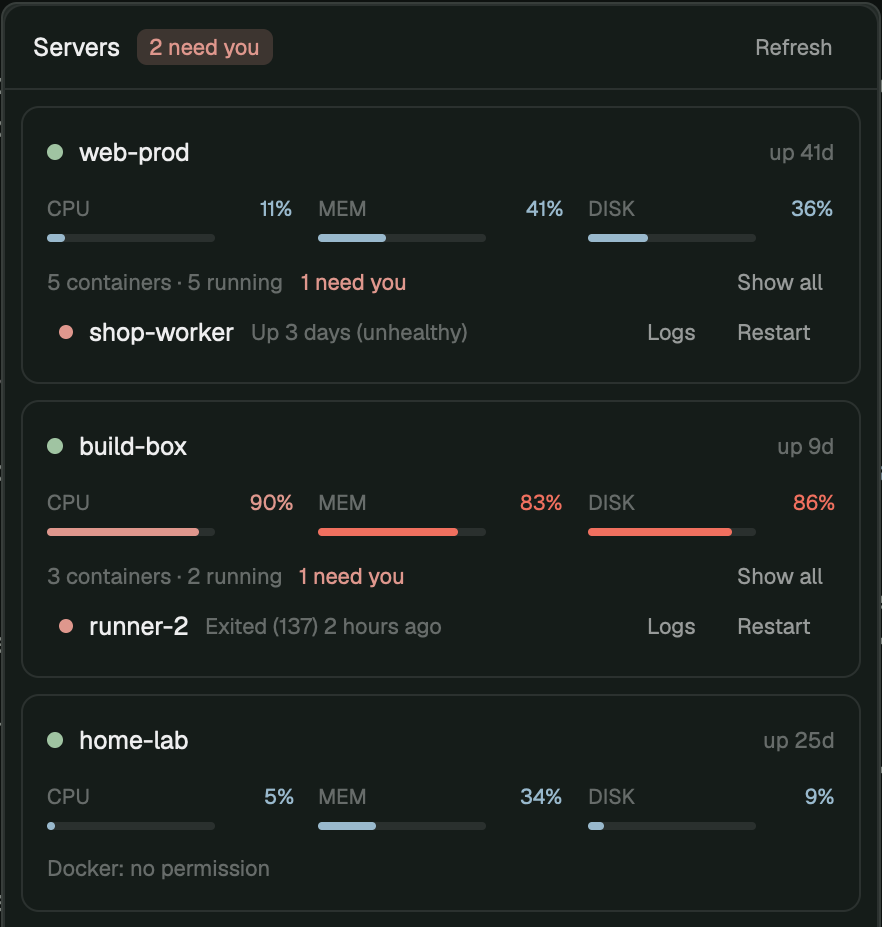
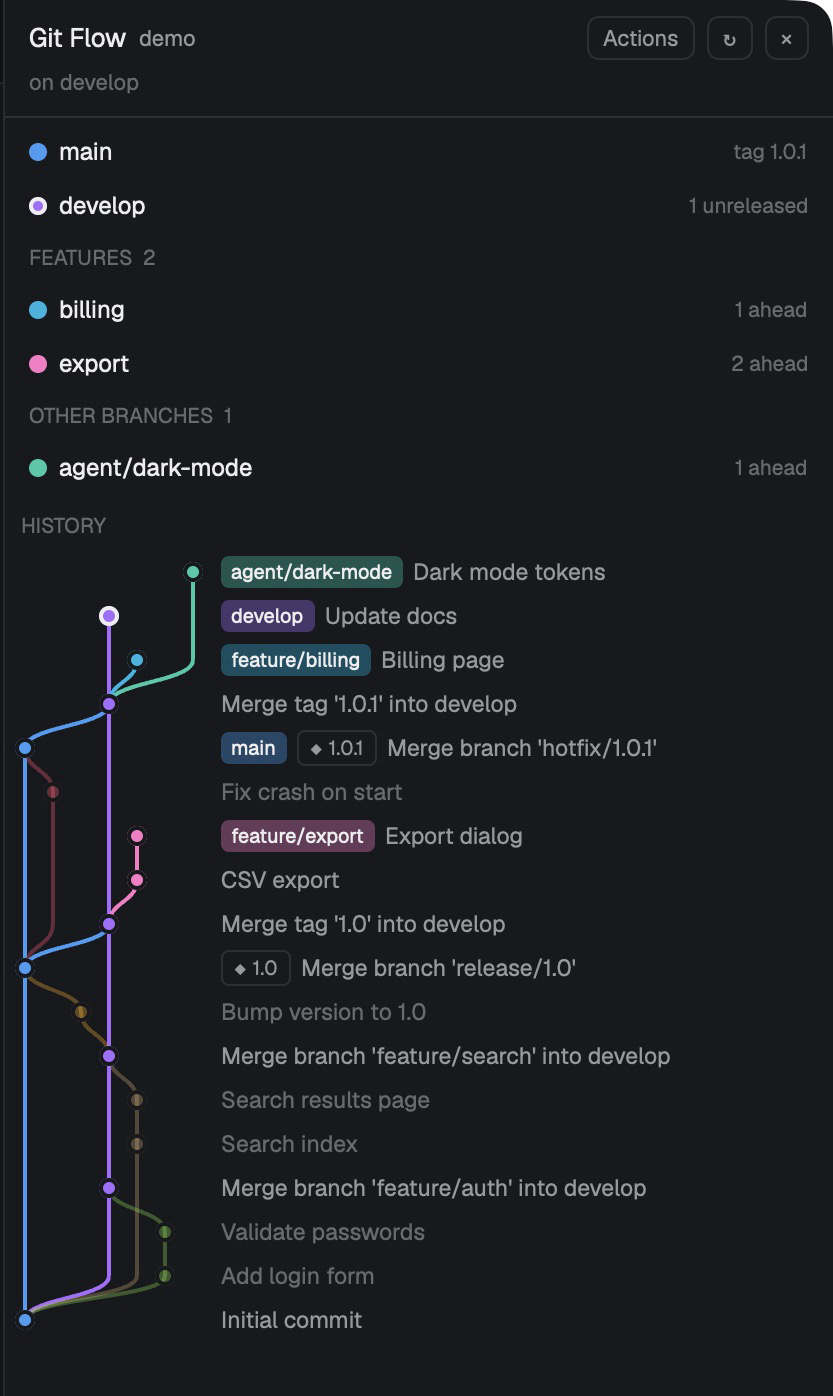
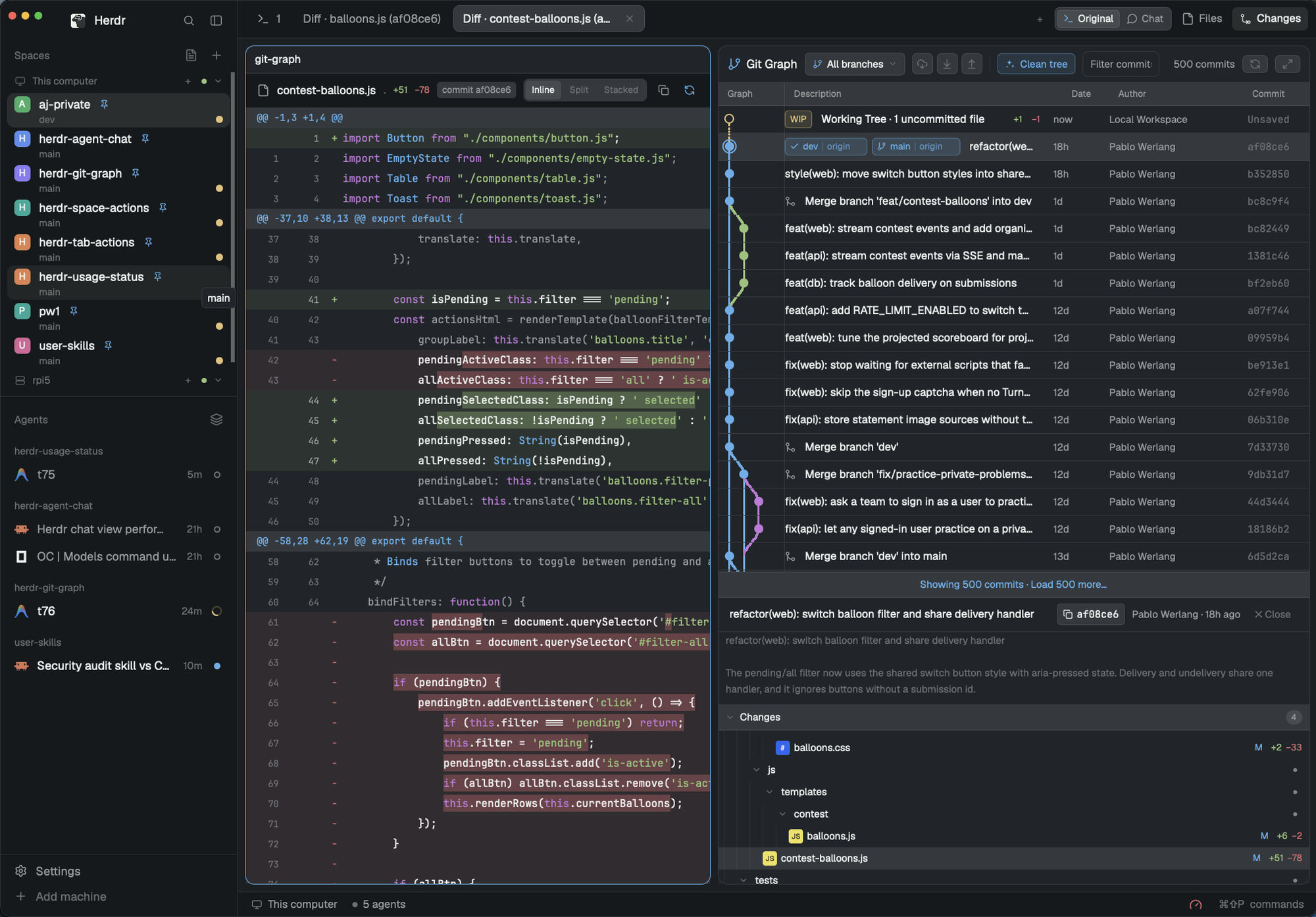
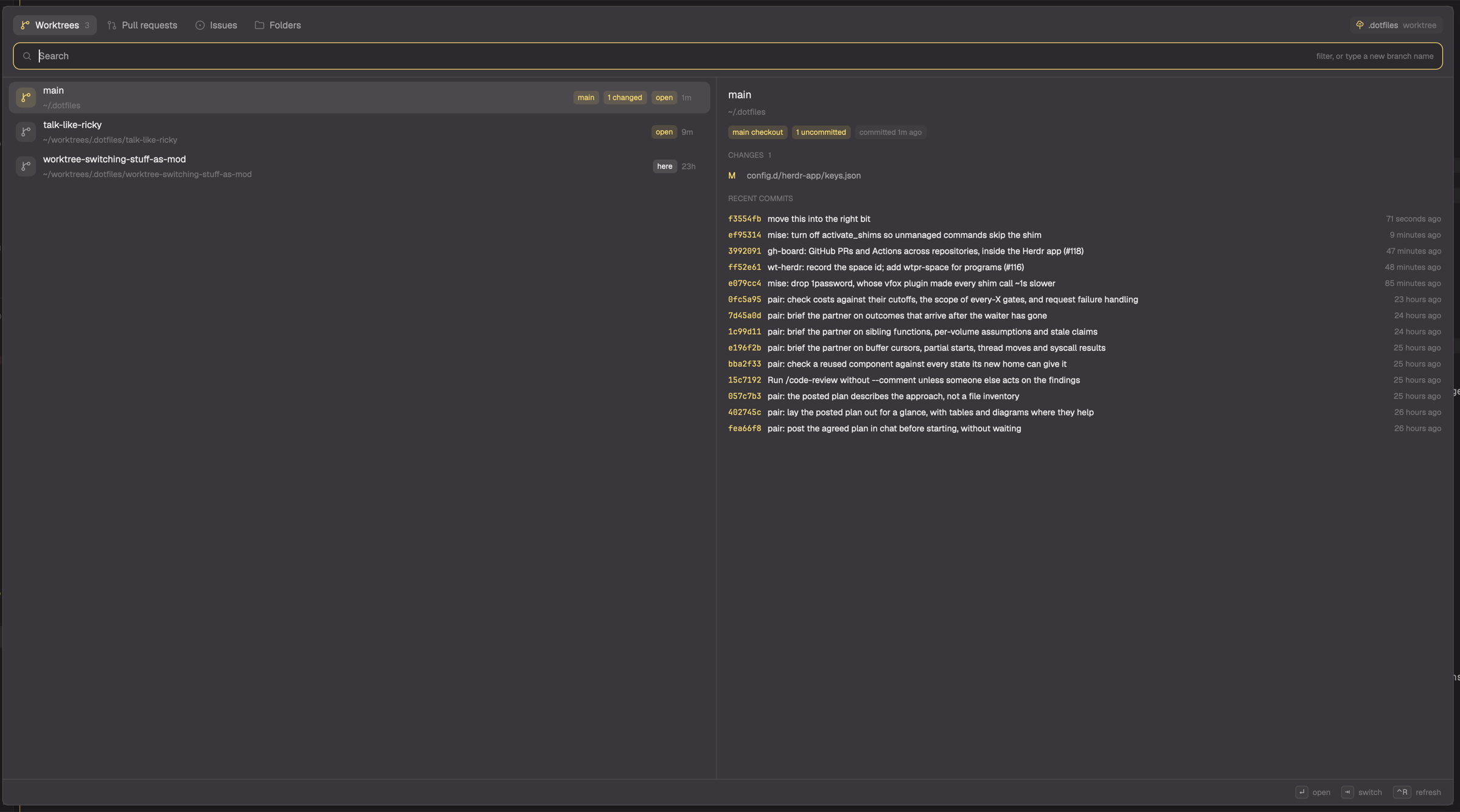
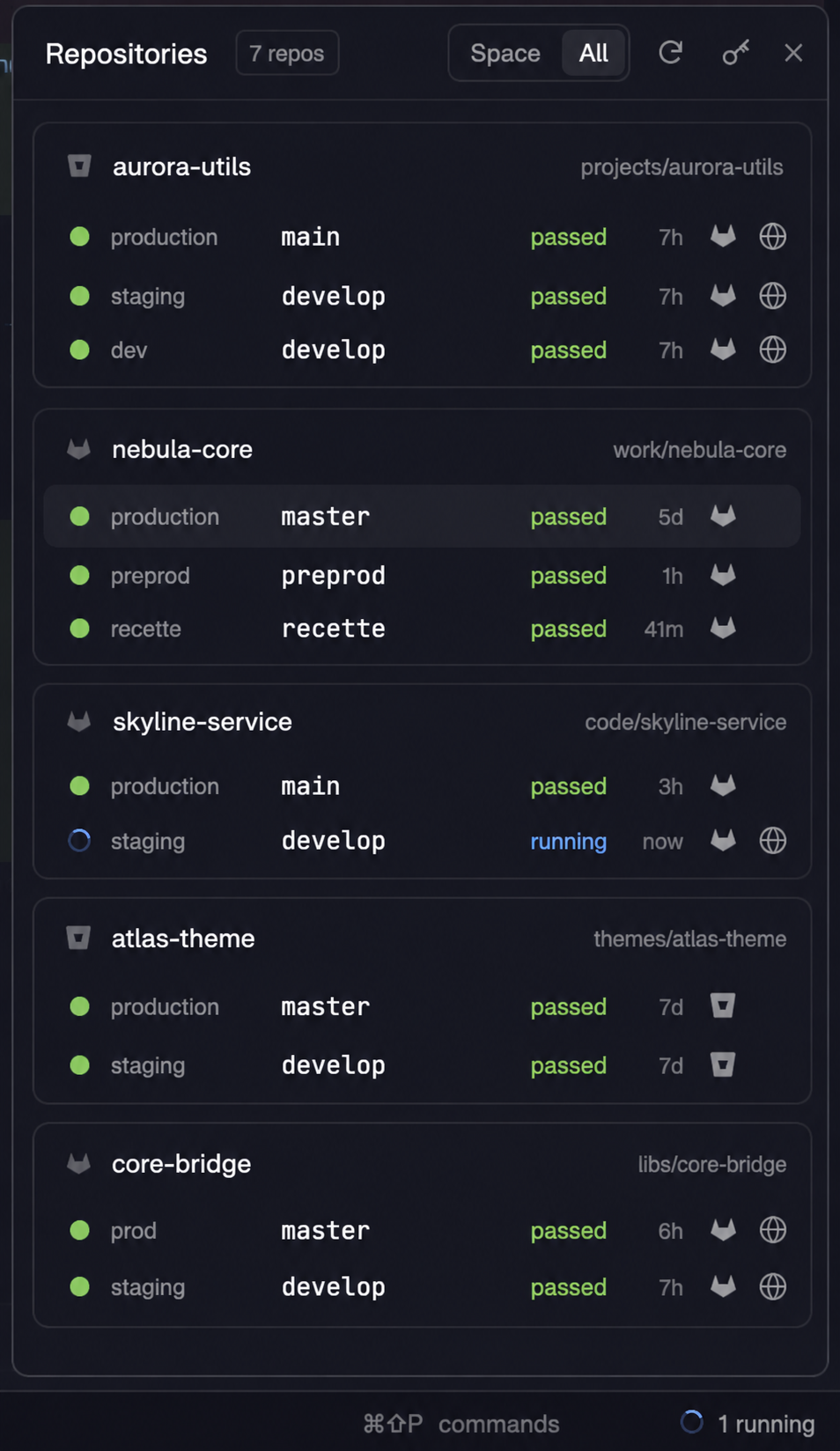
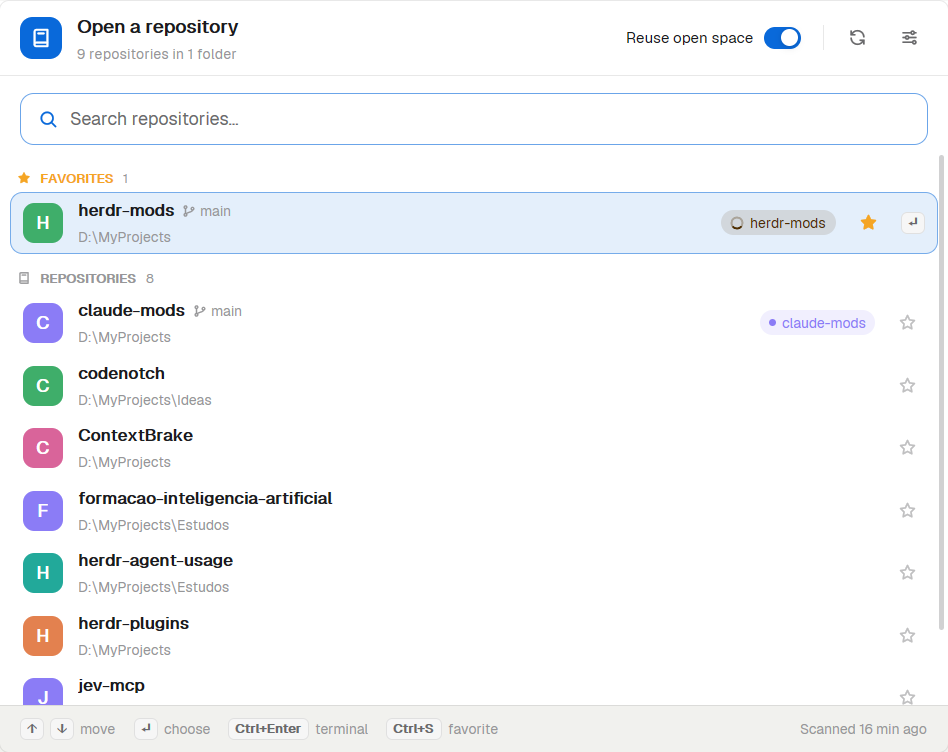
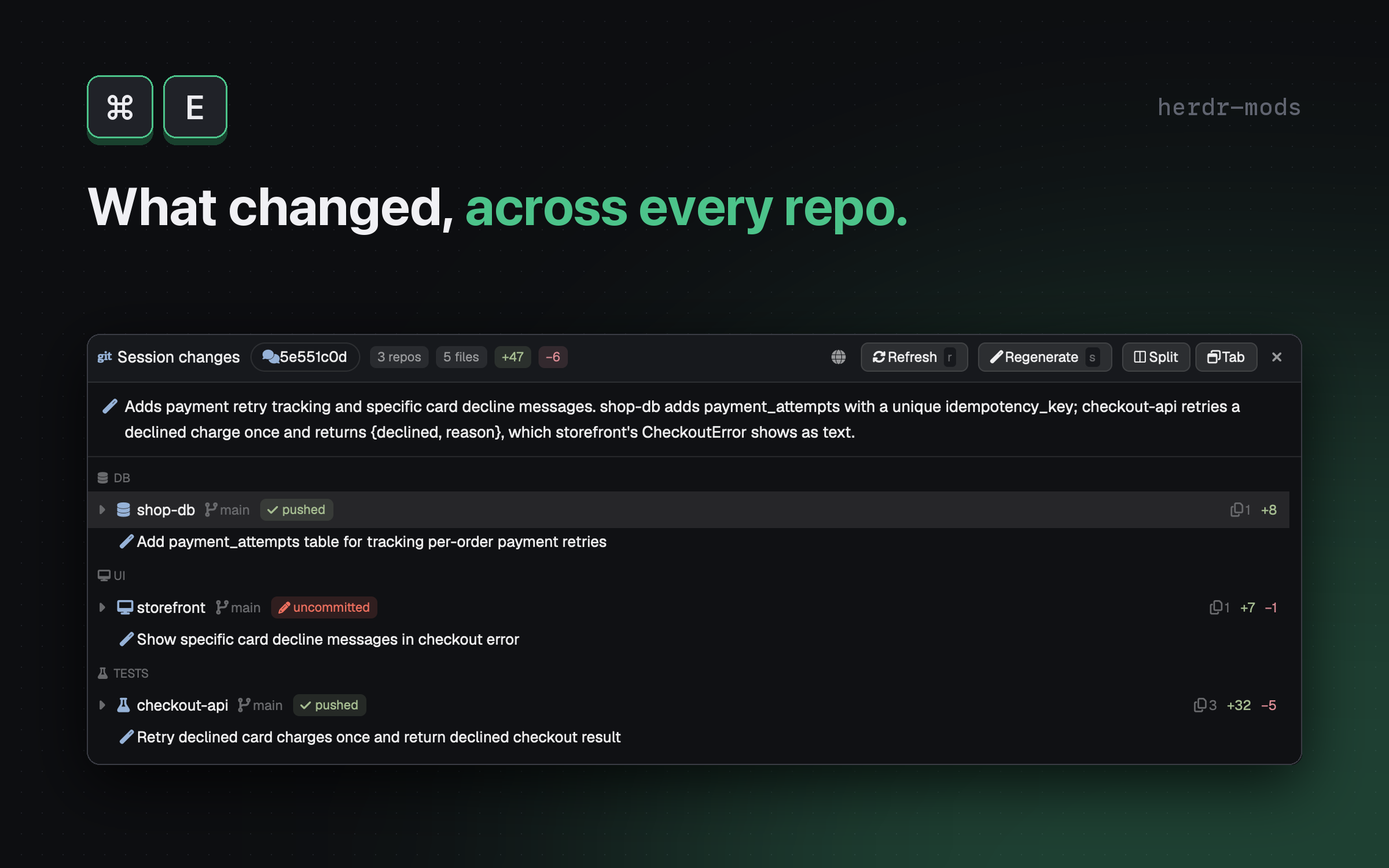
A Herdr app mod. It is a side panel (or a tab) that shows the pending work of every Git repository under one base folder: unpushed commits, staged, modified and new files, stash, conflicts, operations in progress and merged branches that were not deleted. It lists the repositories that need attention first.





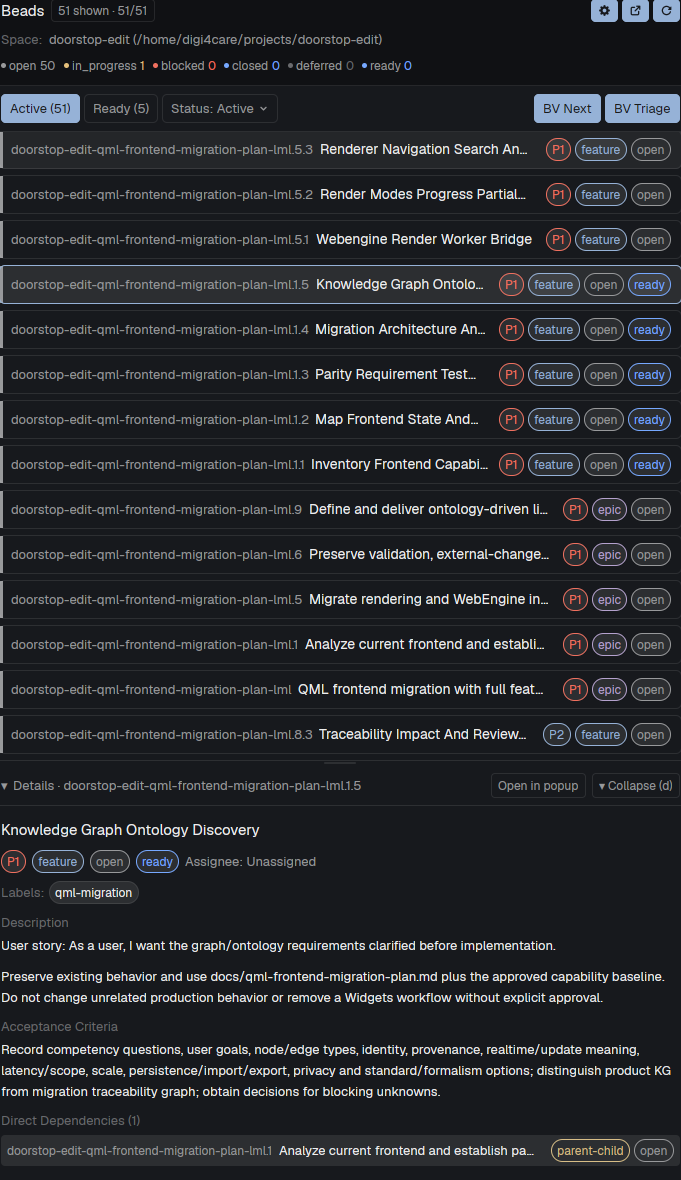

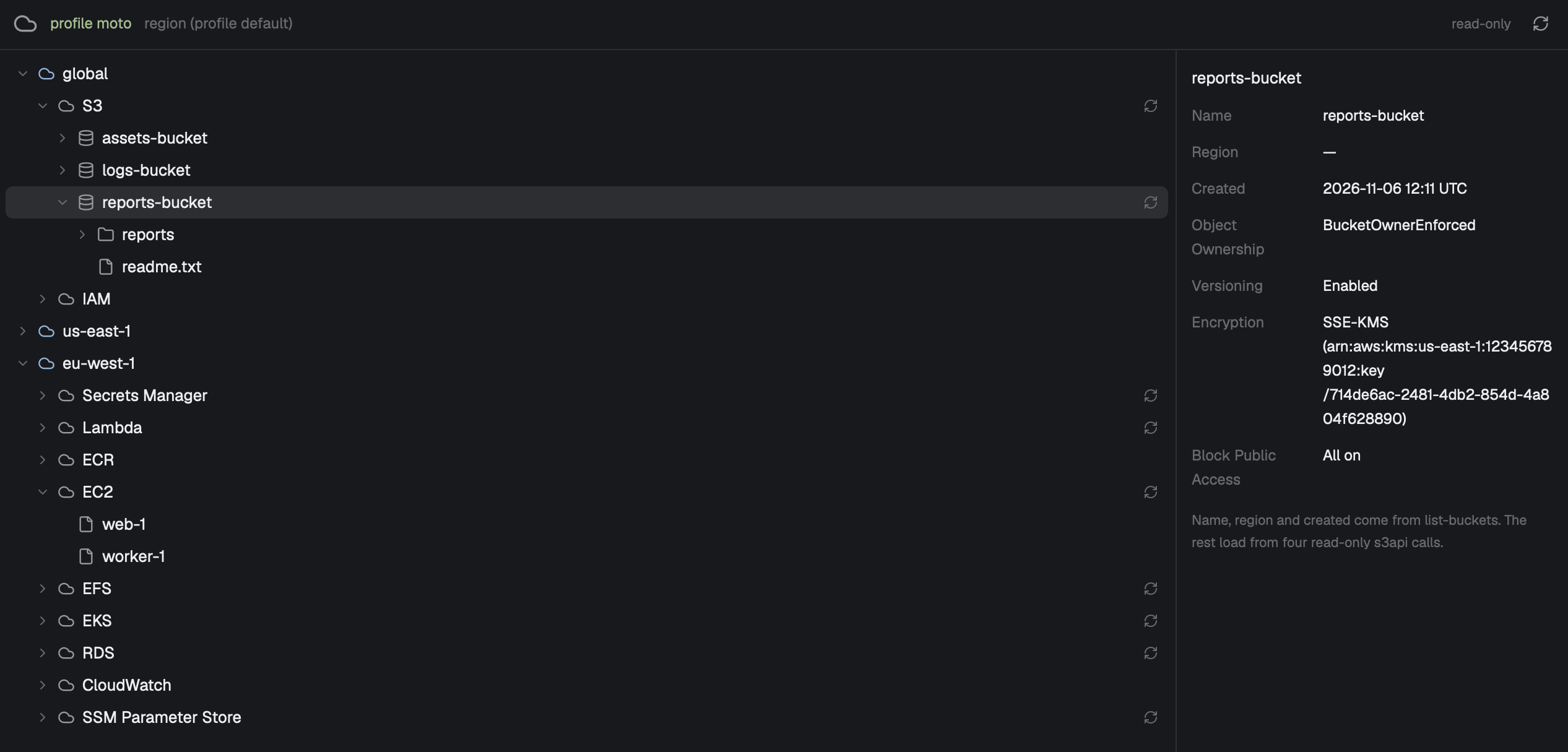

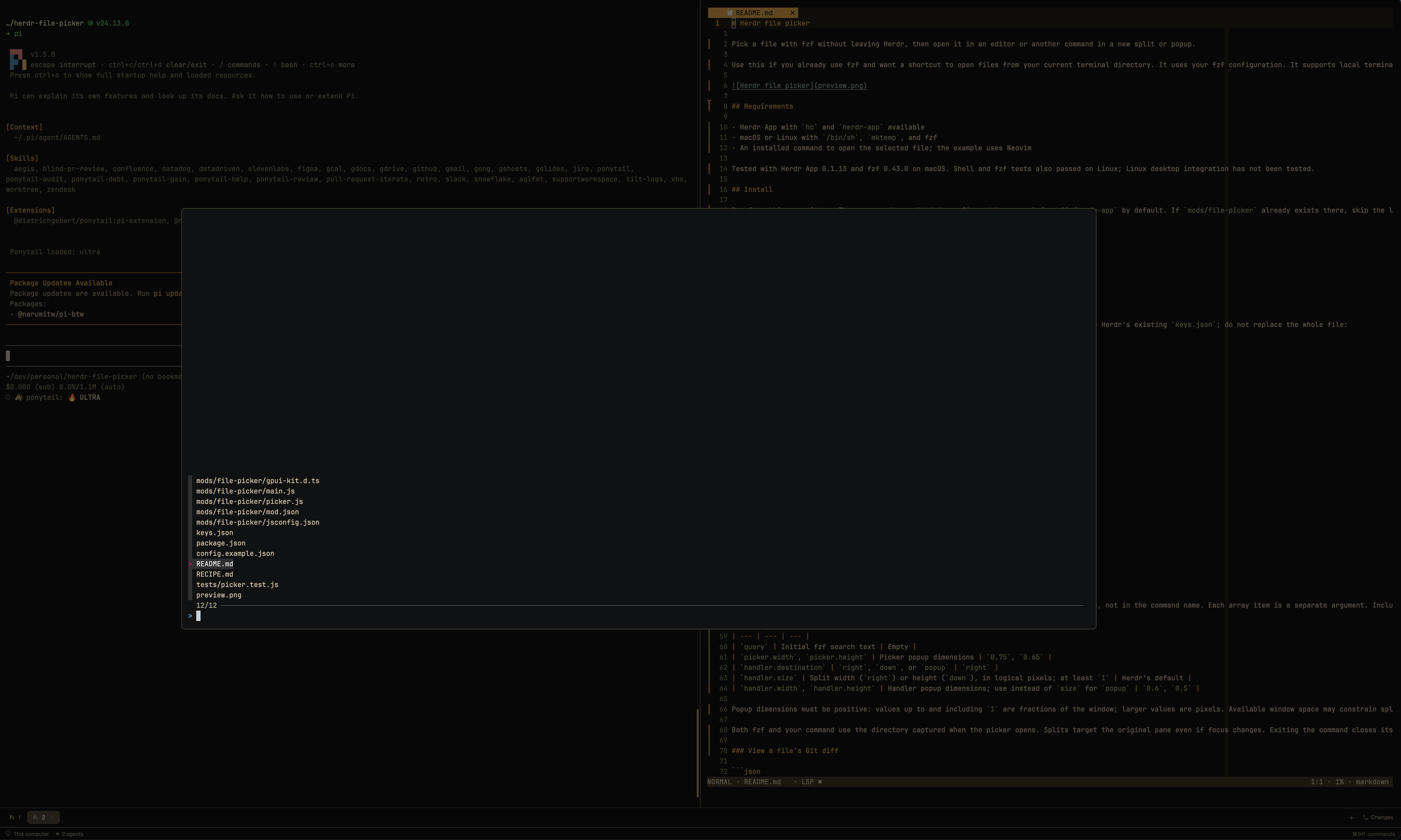

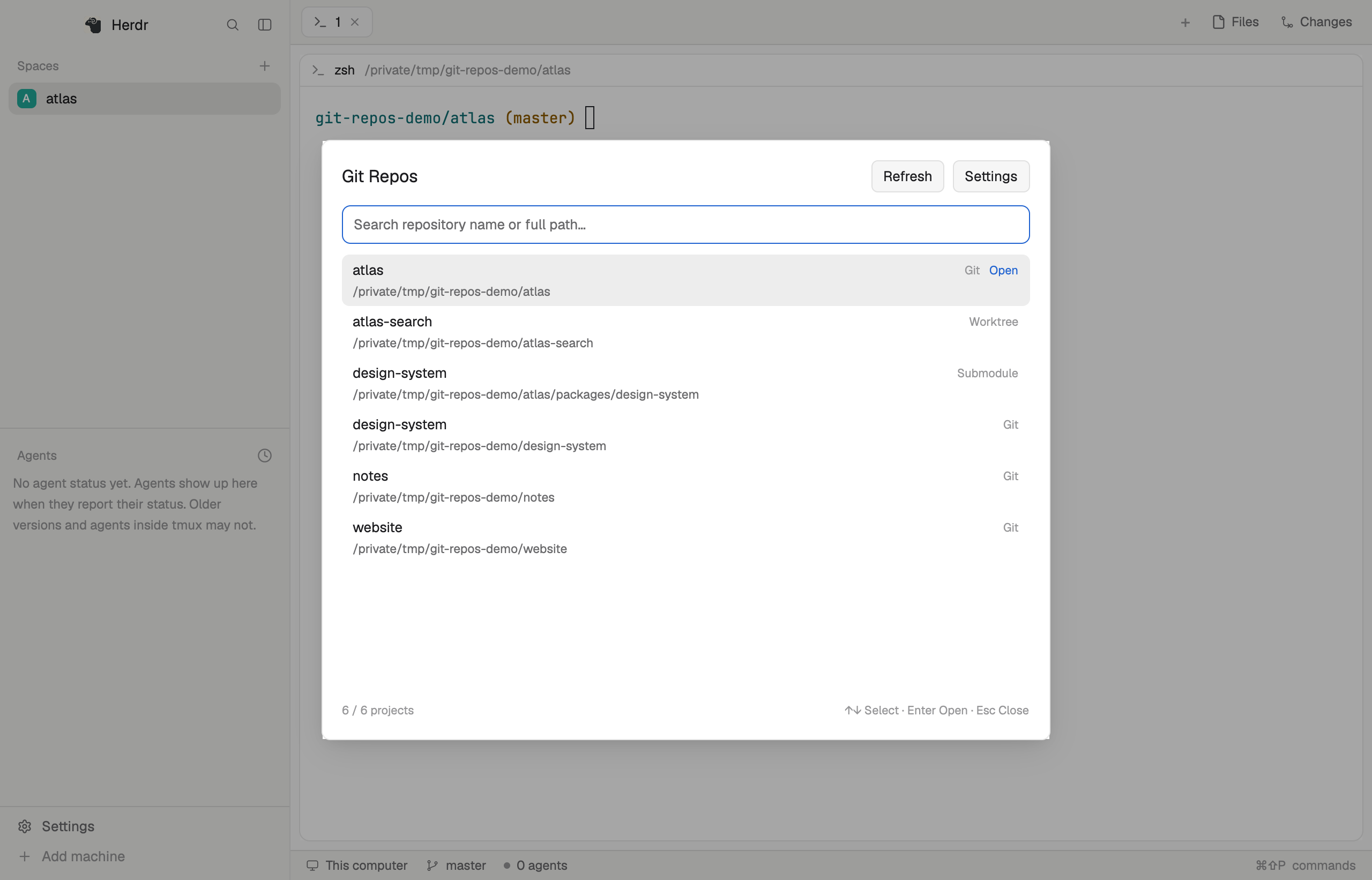

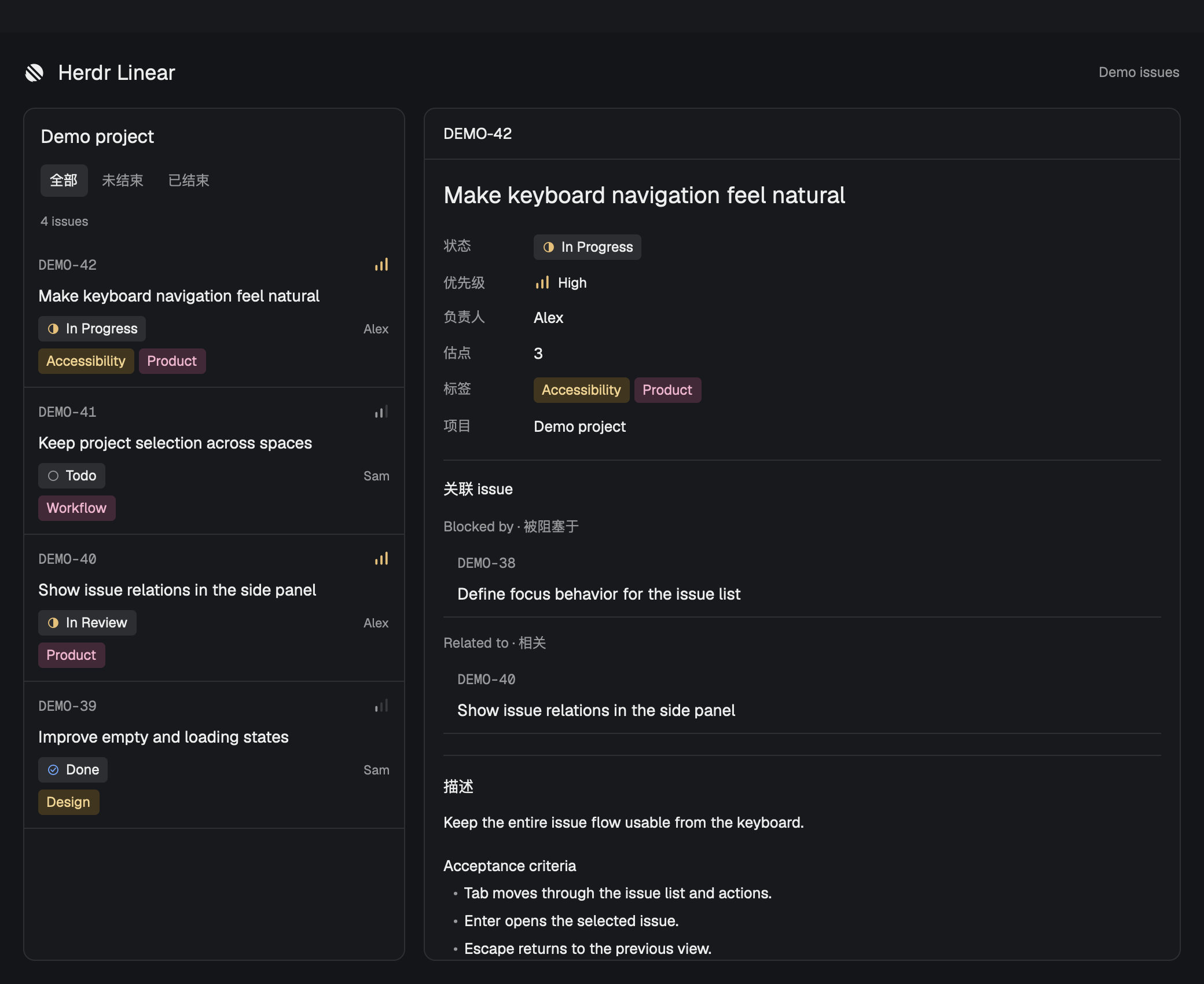

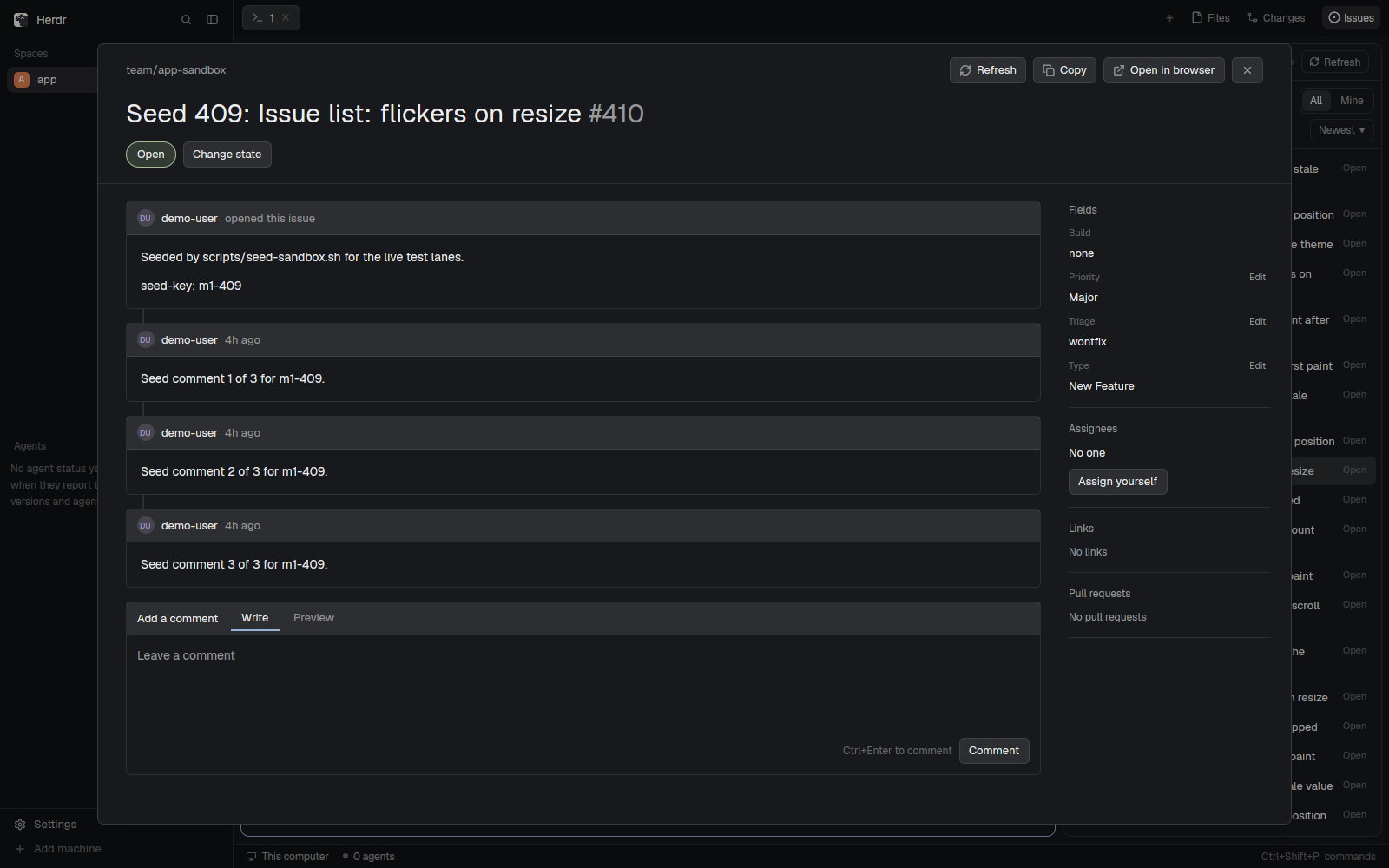











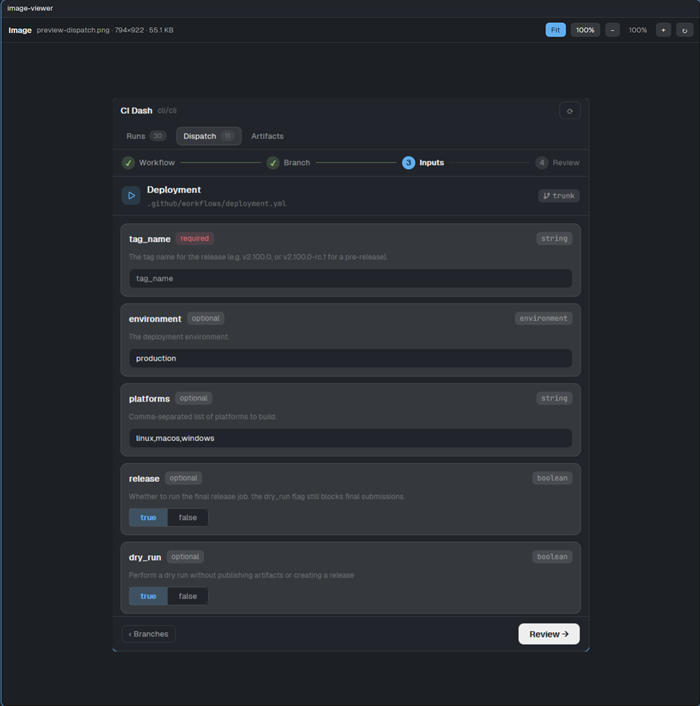
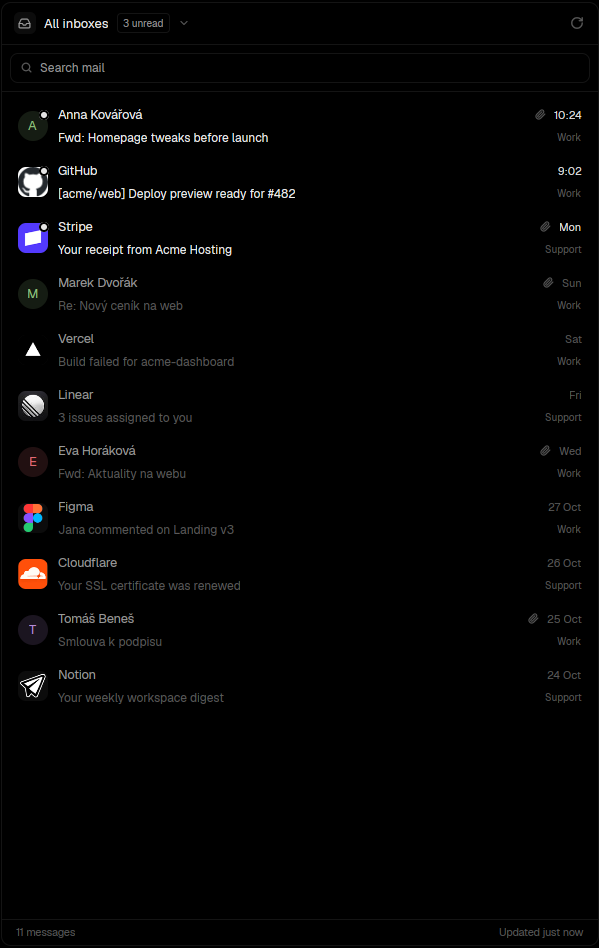


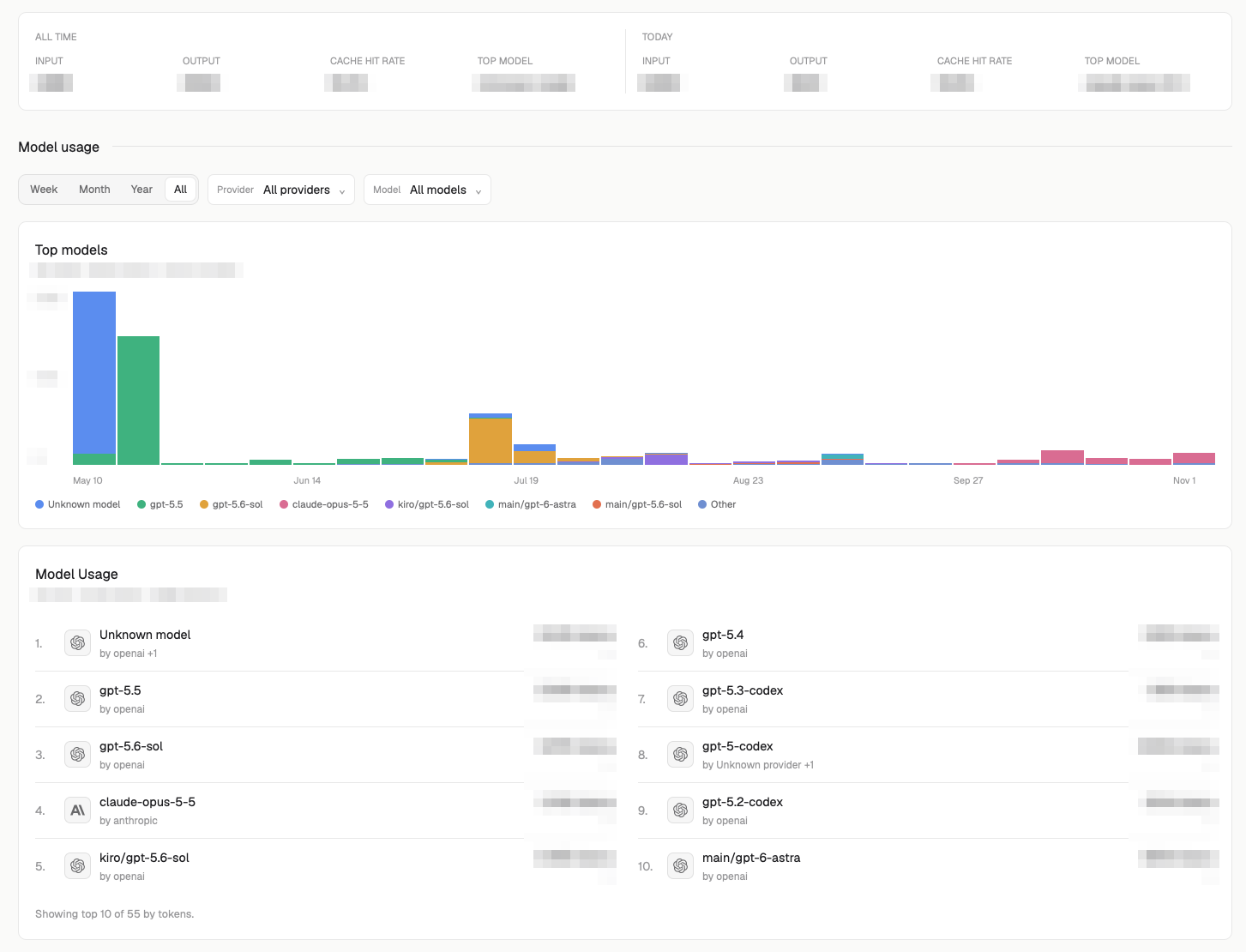
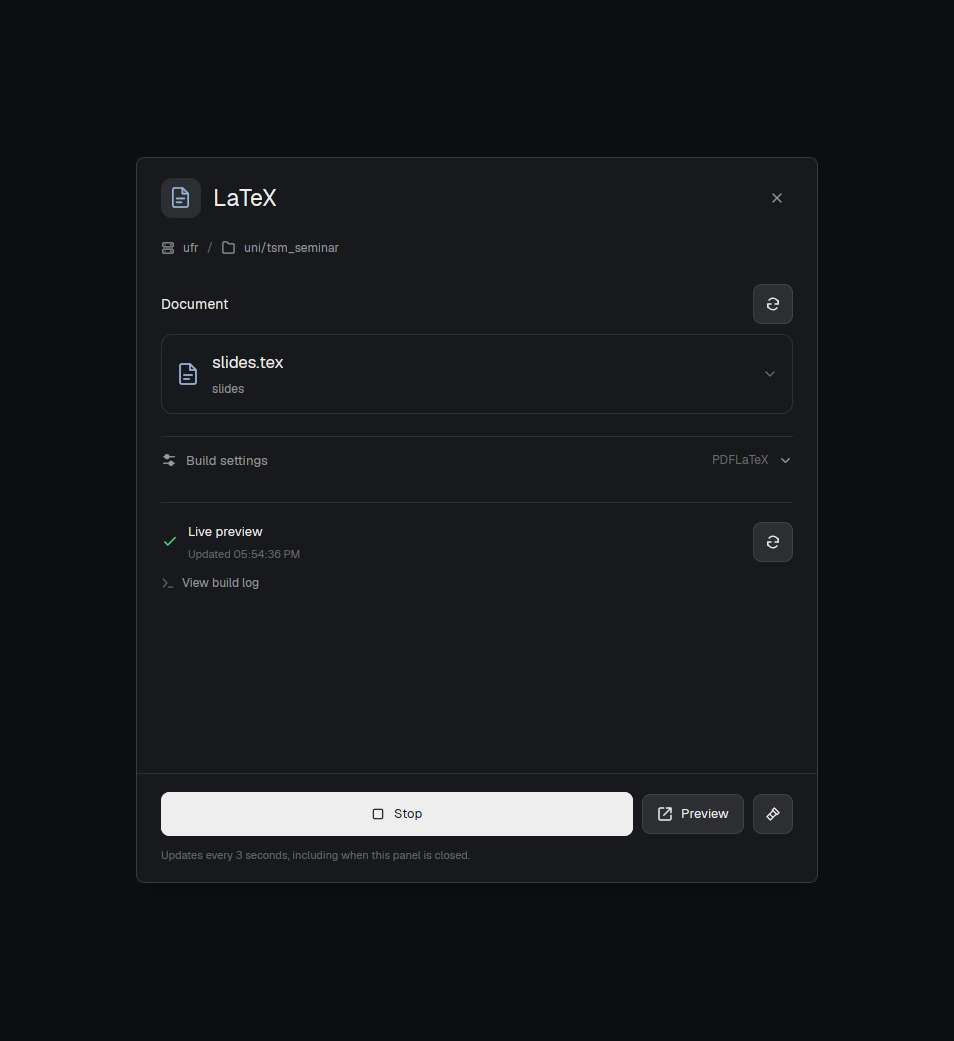

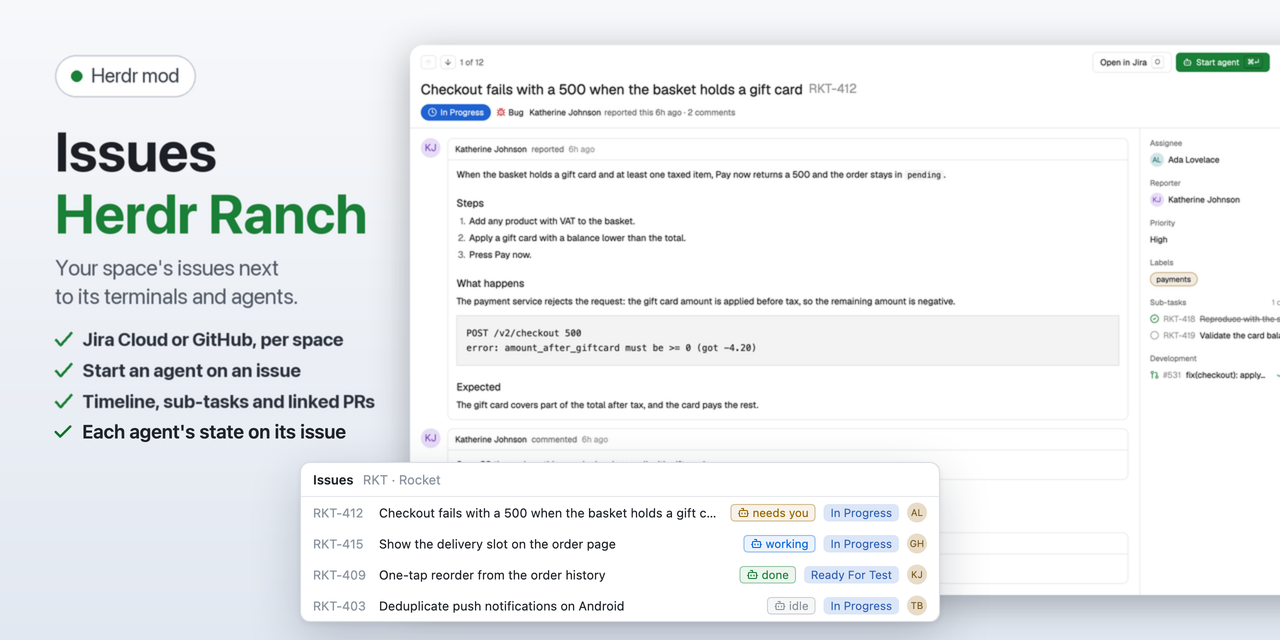
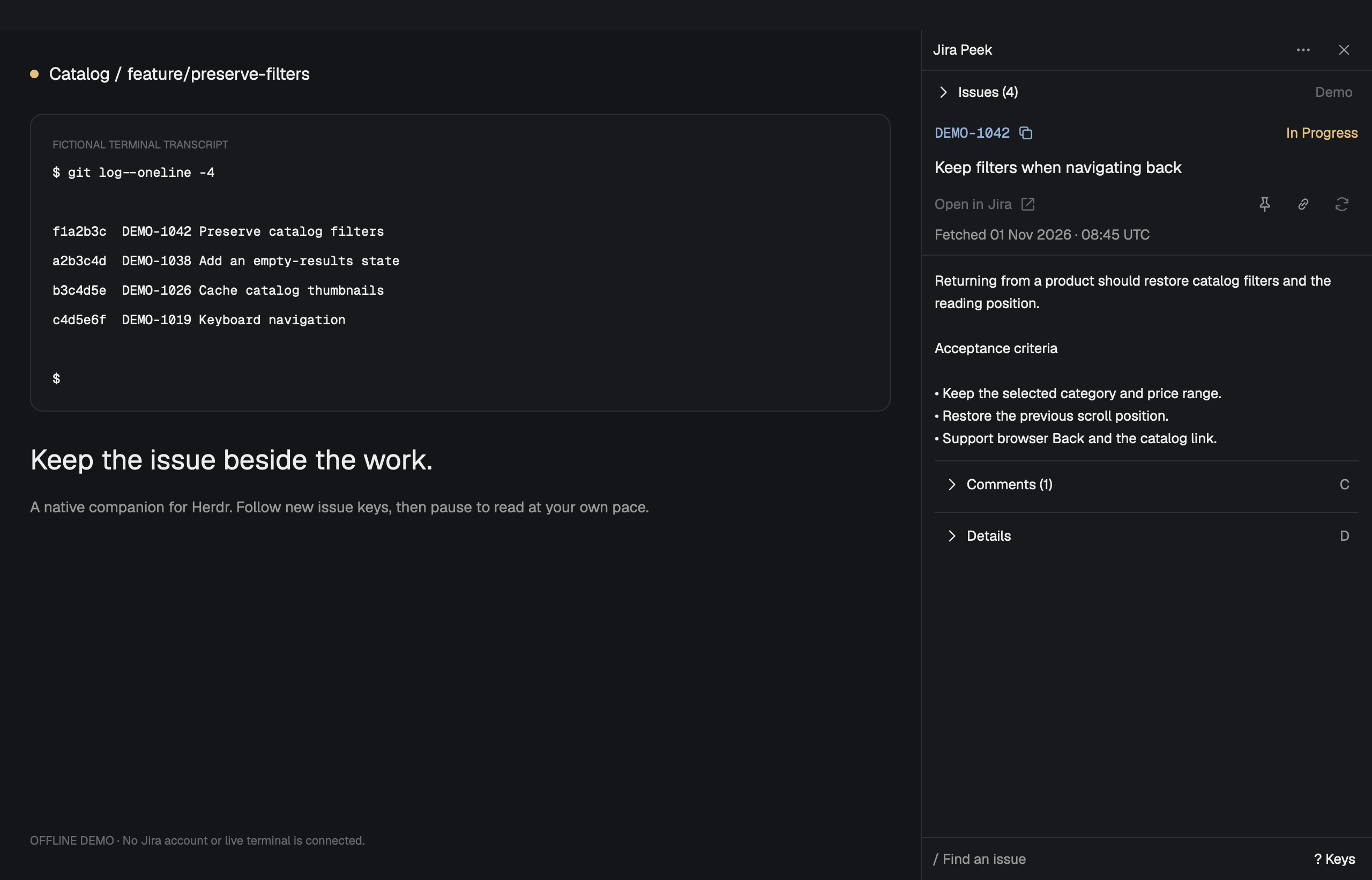


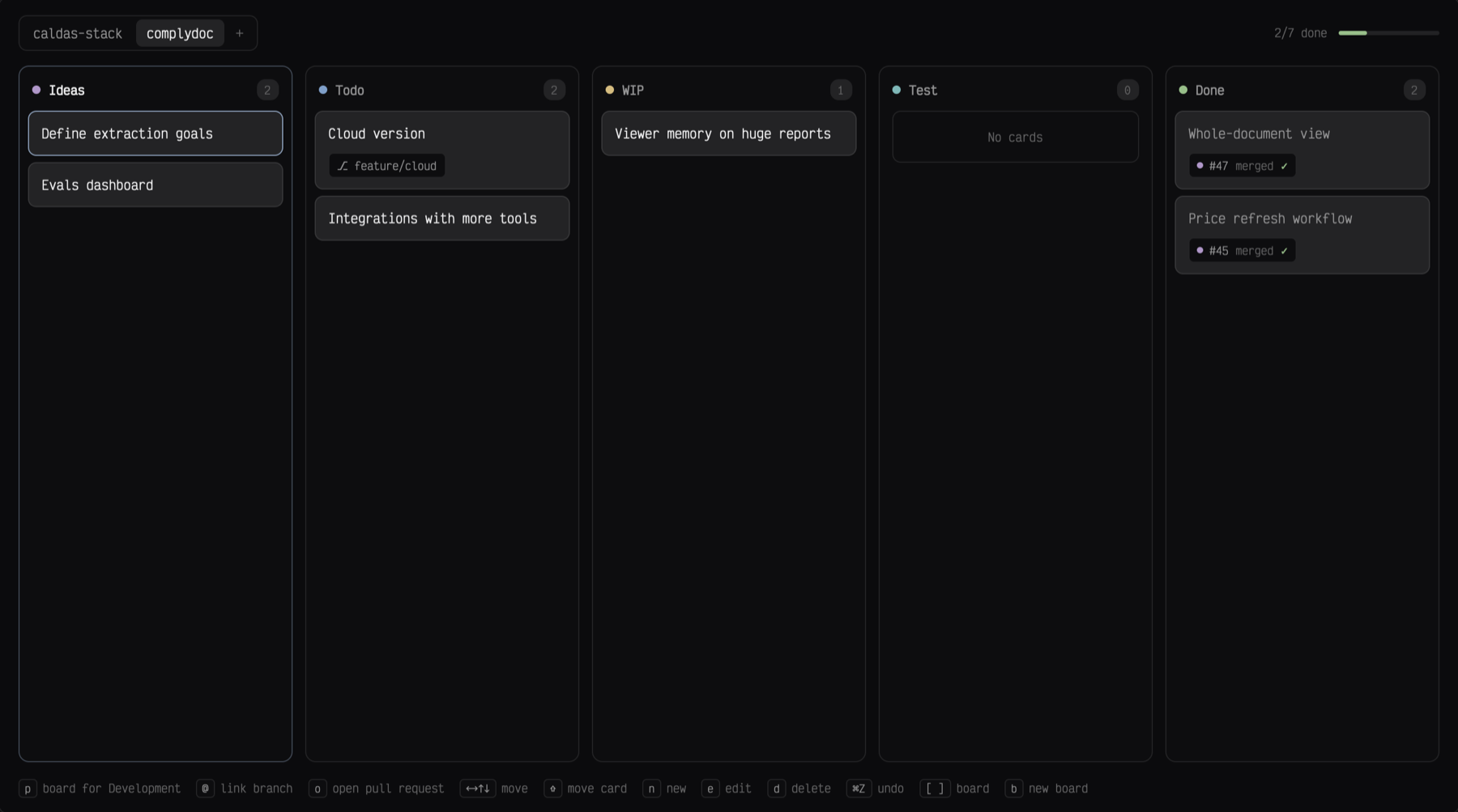

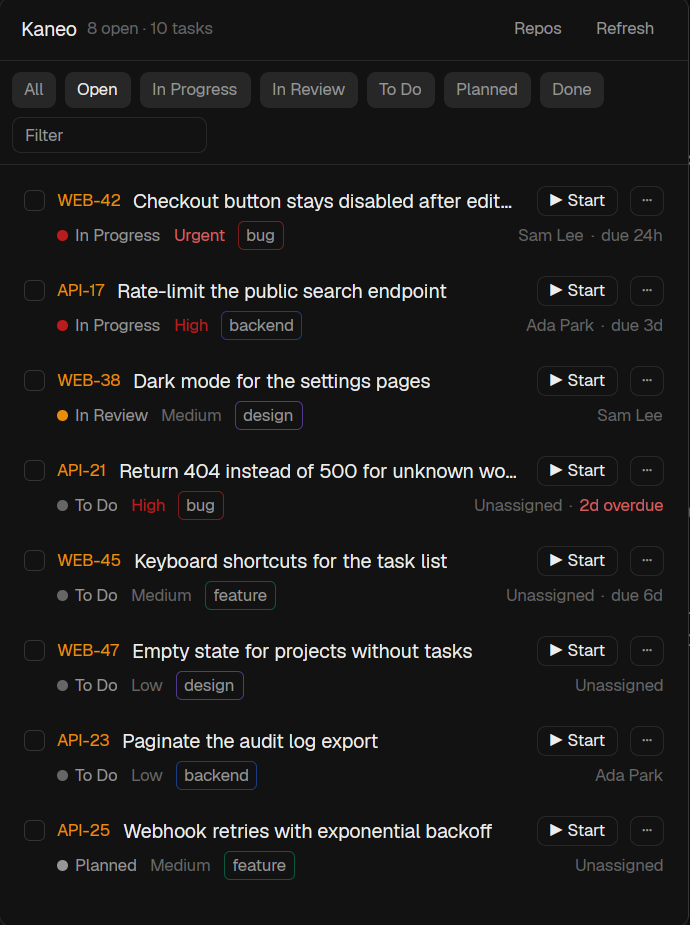
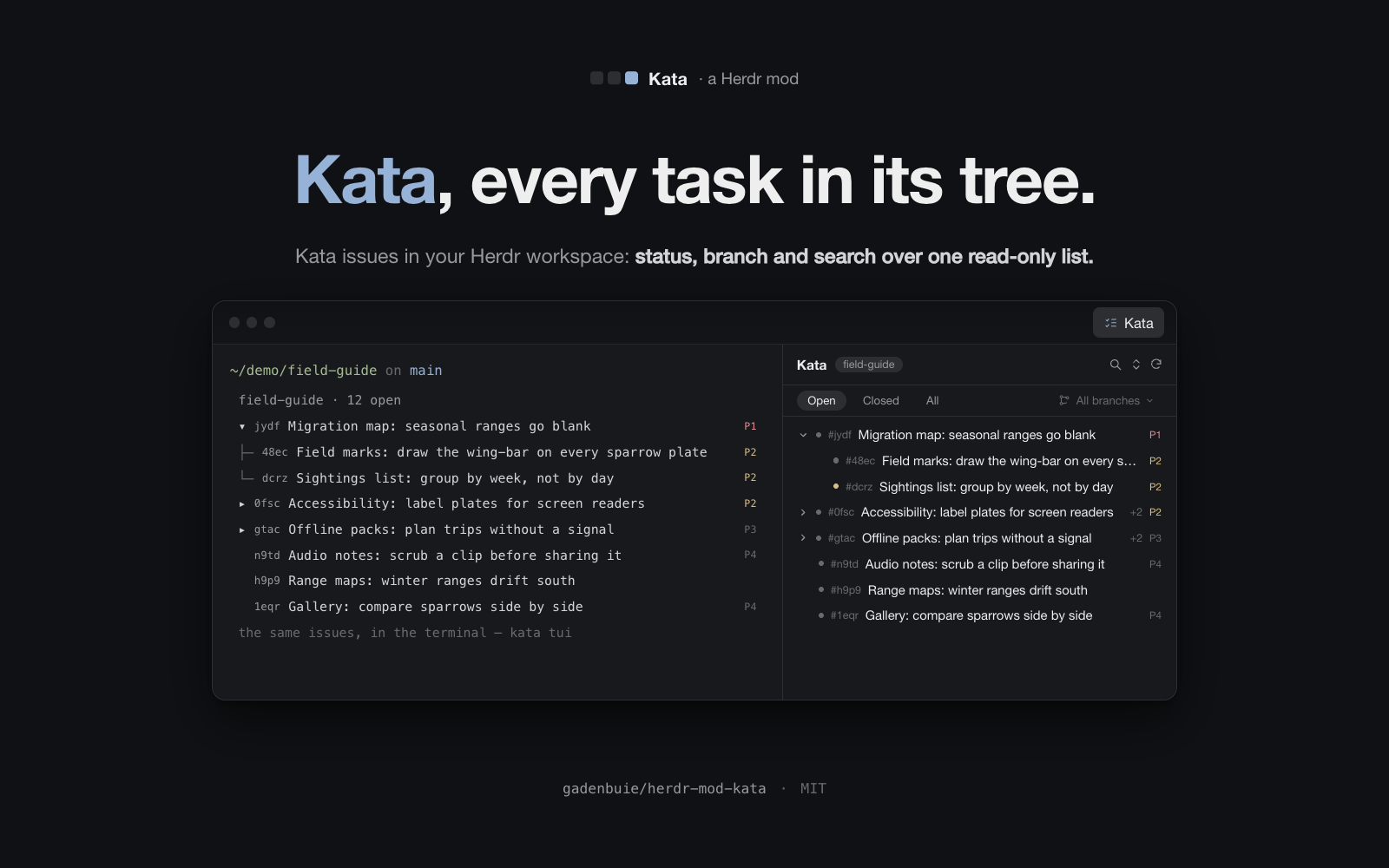

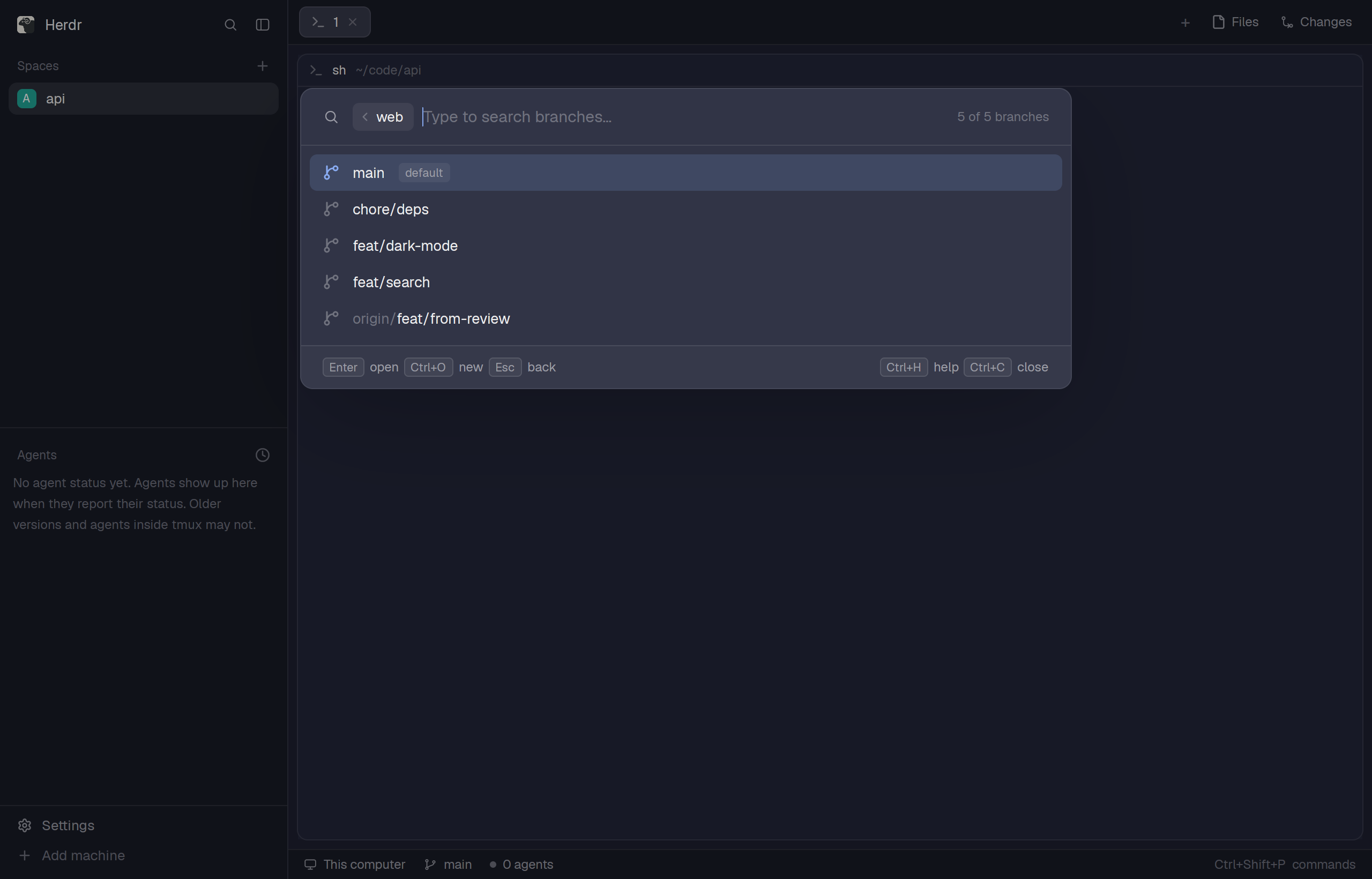

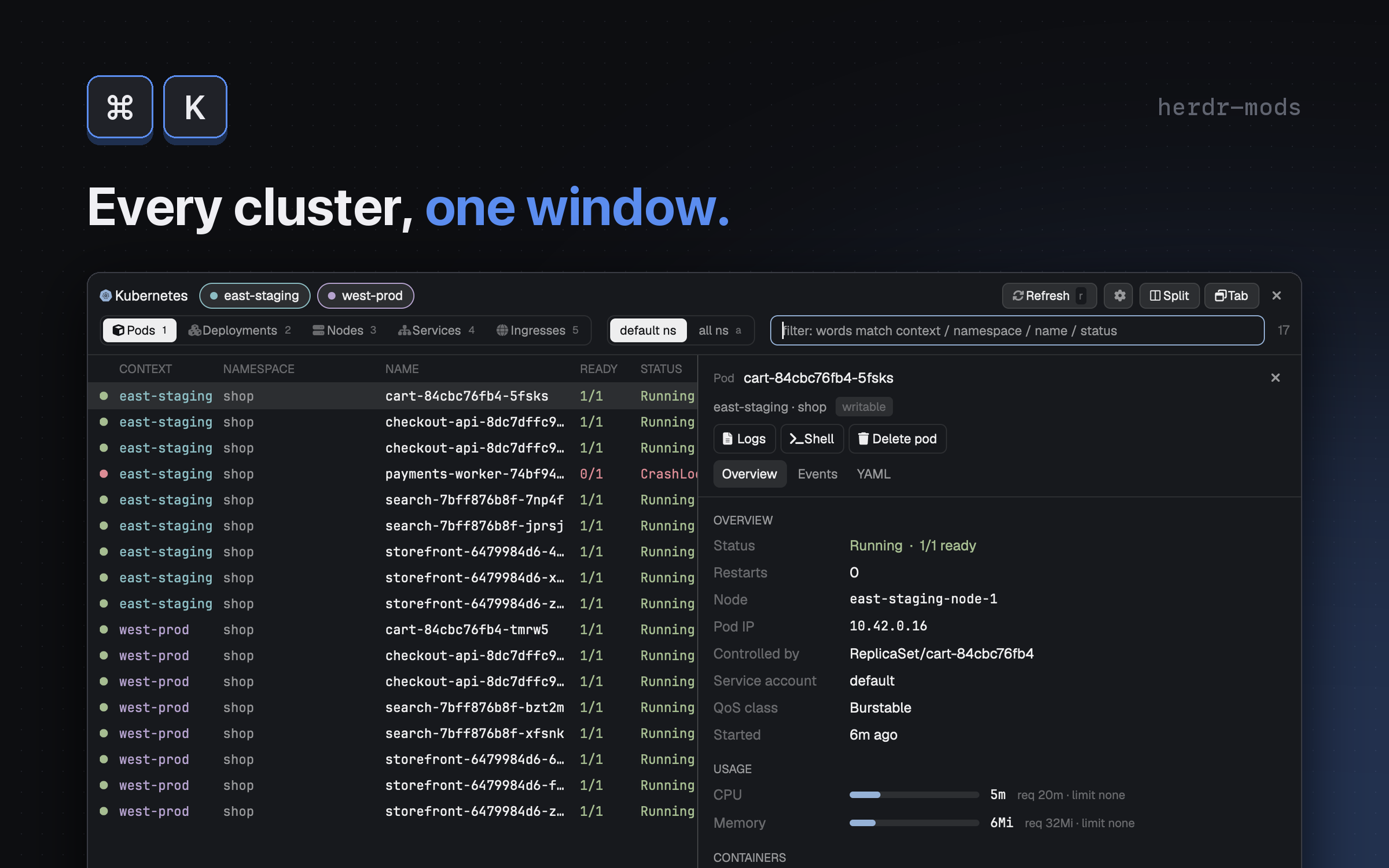

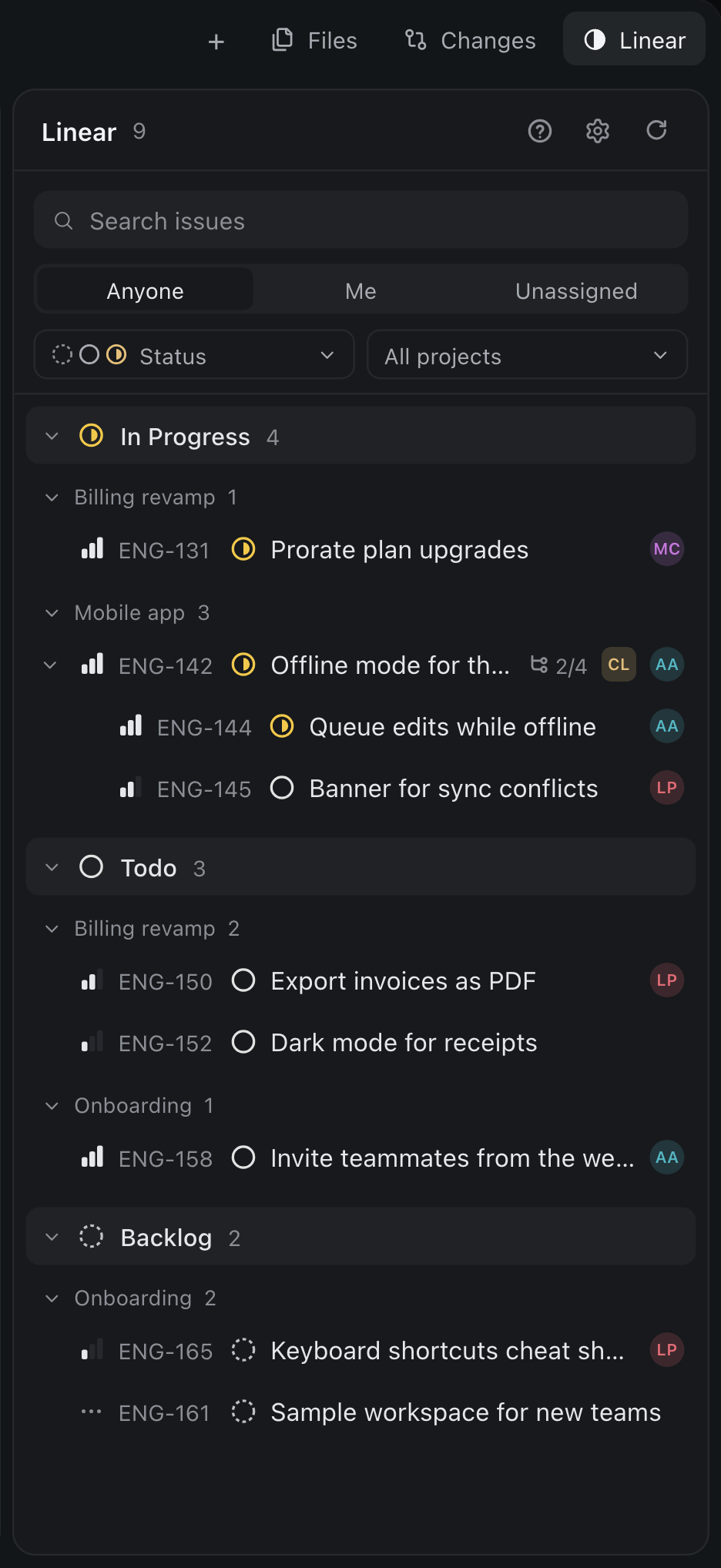

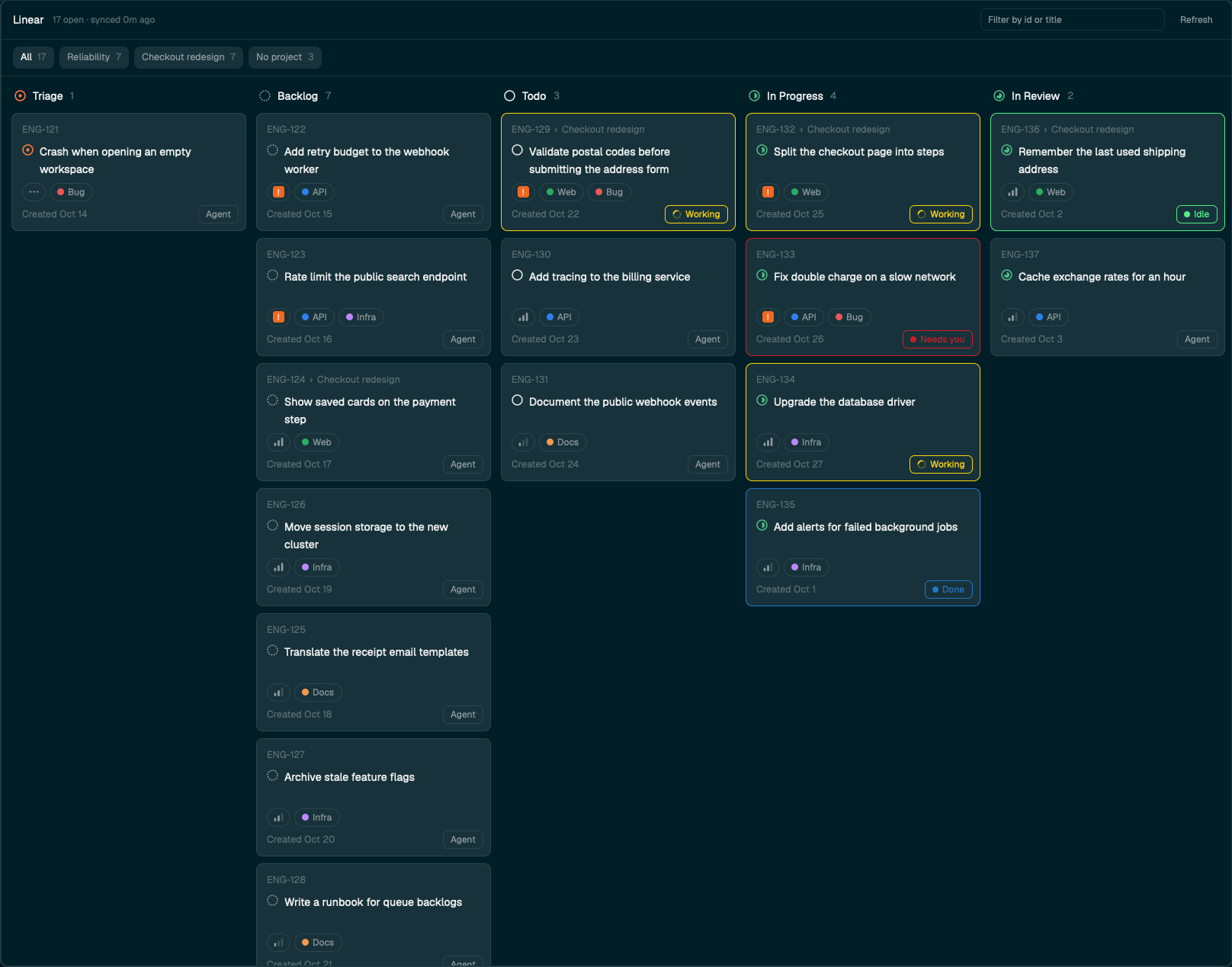

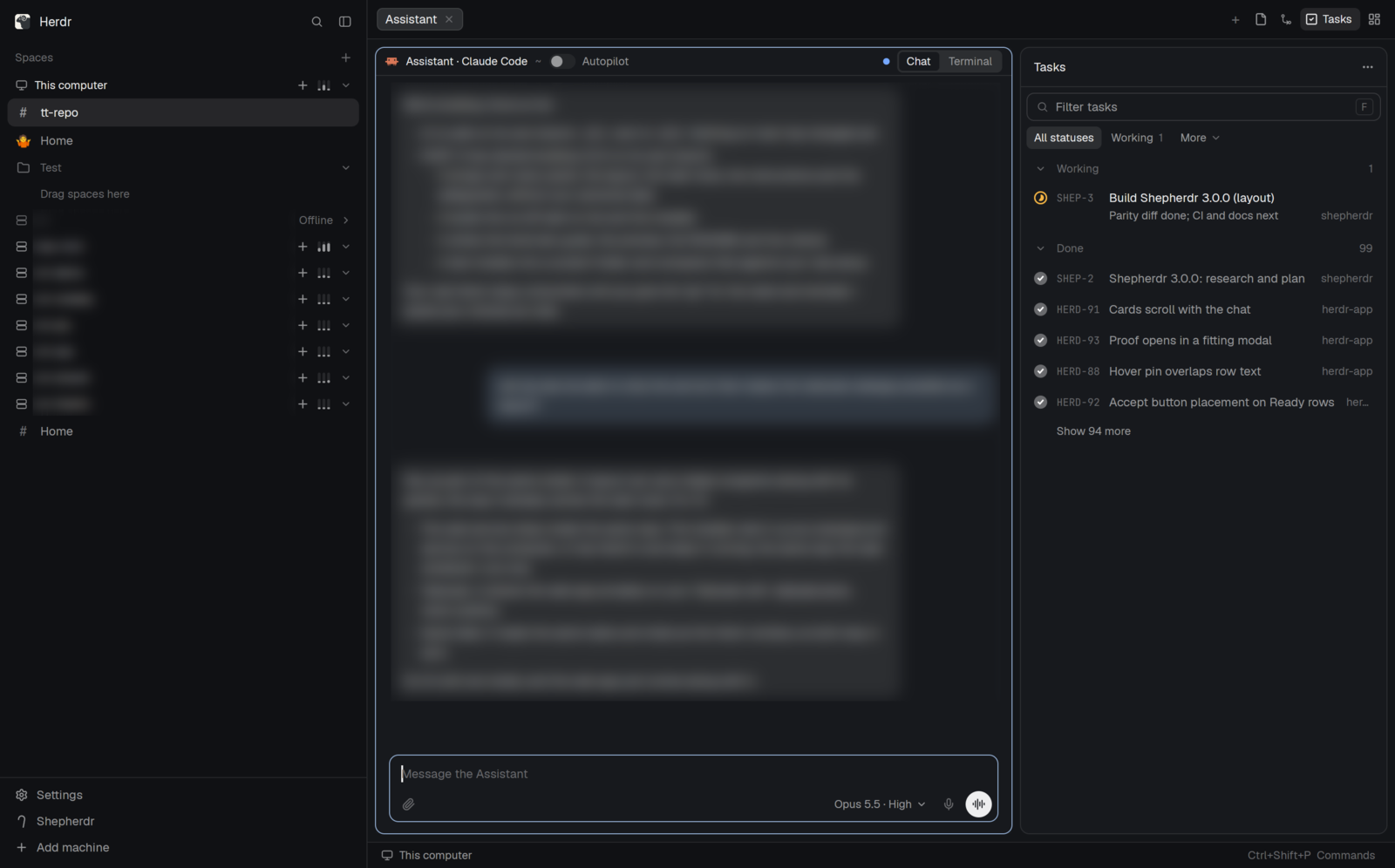
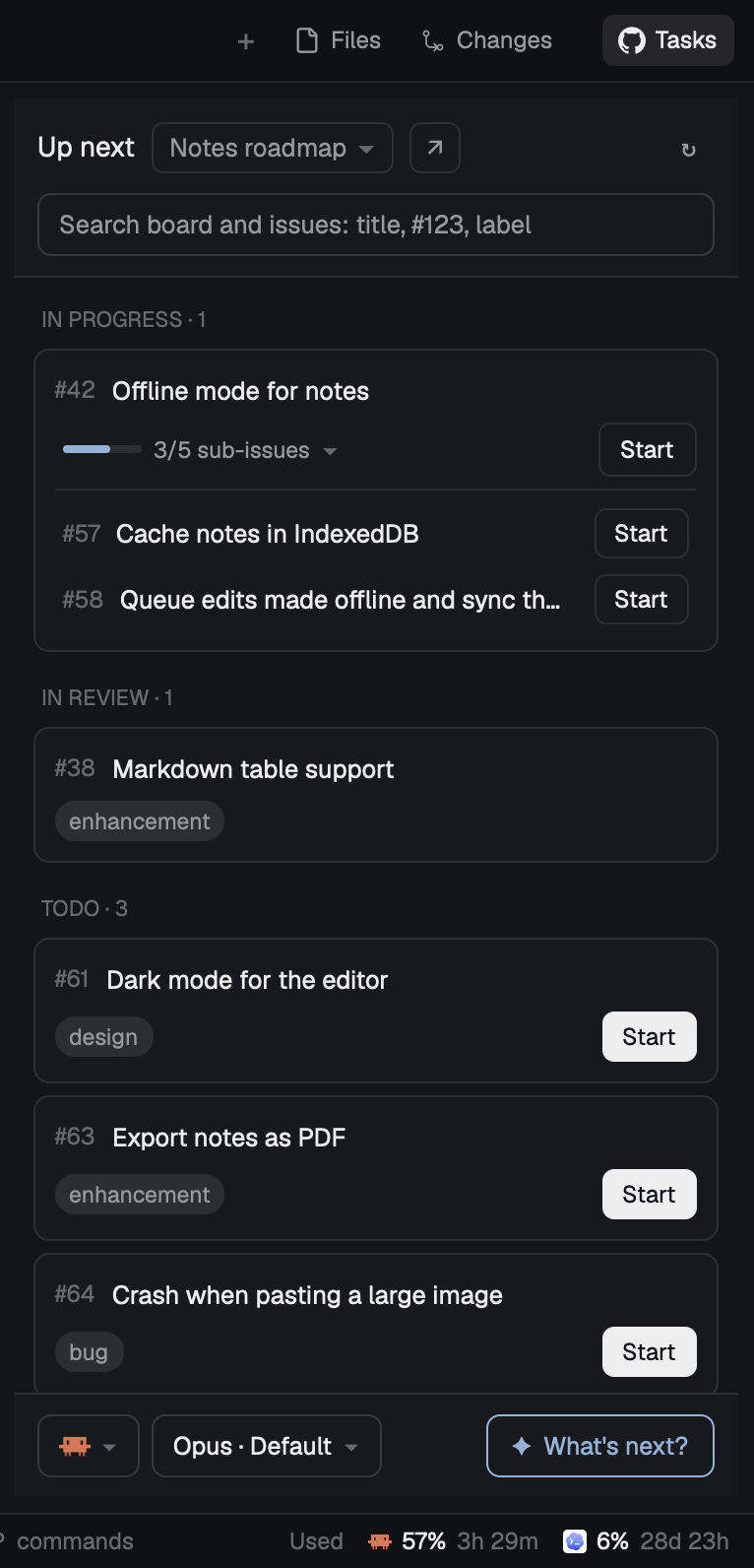
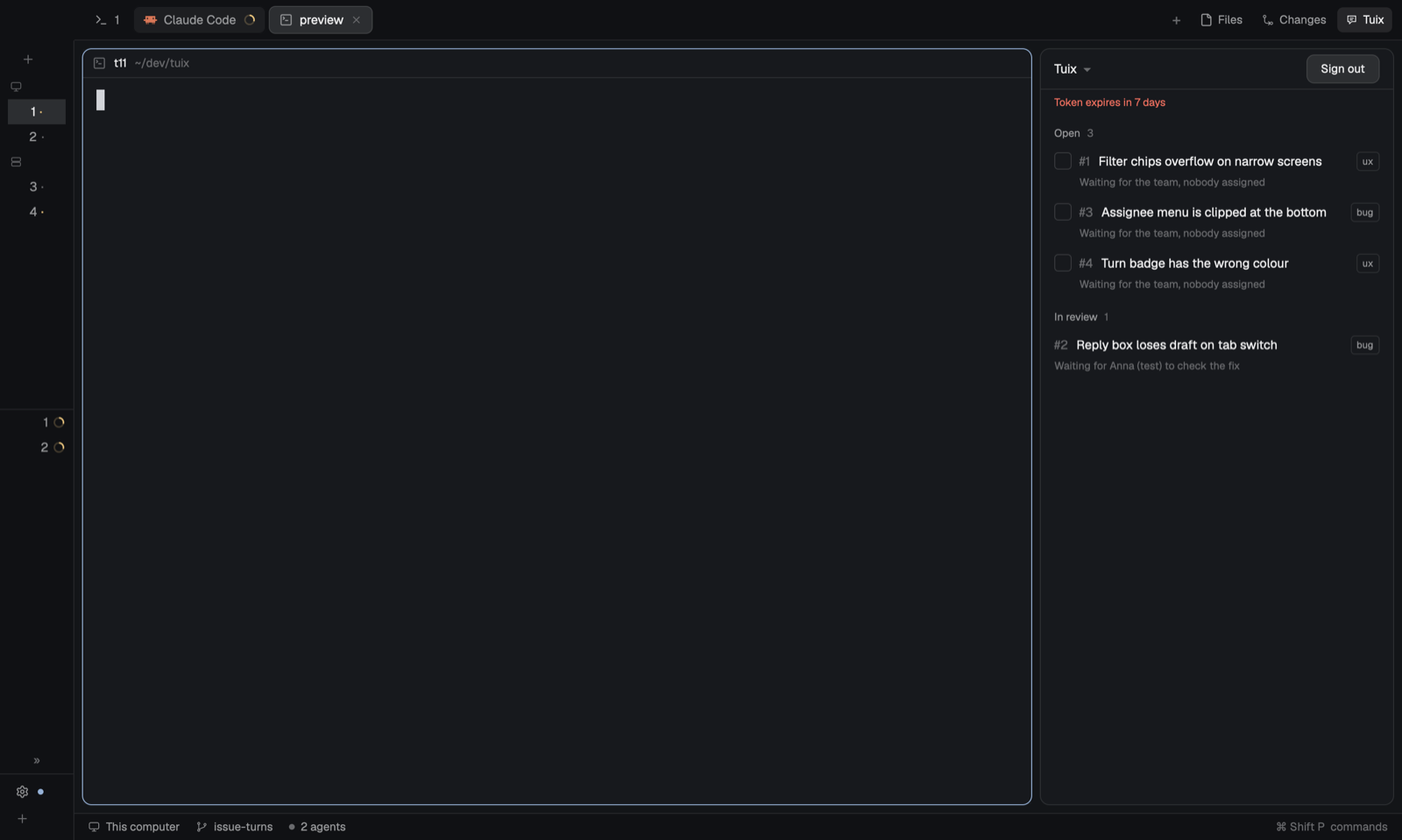
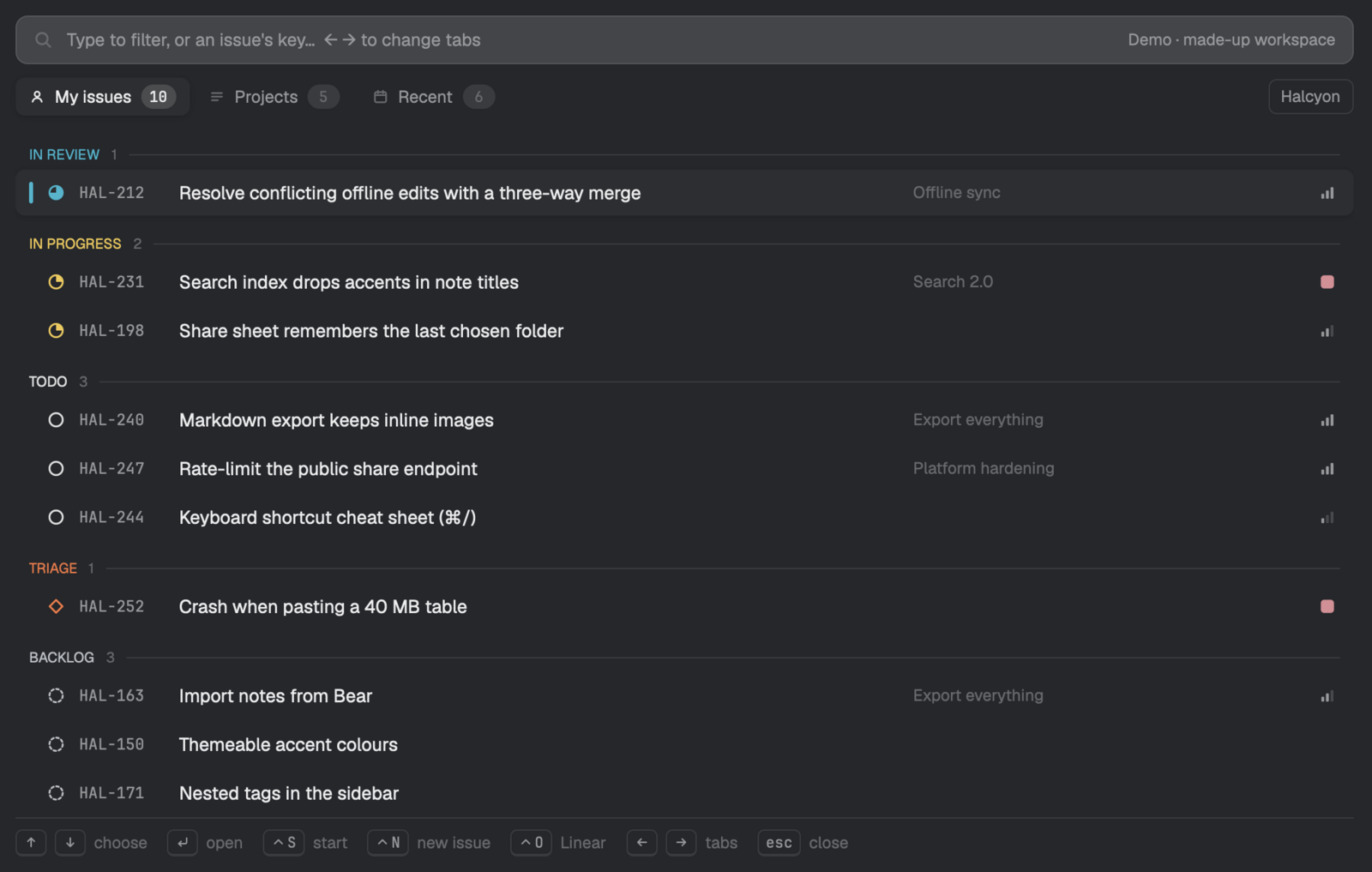
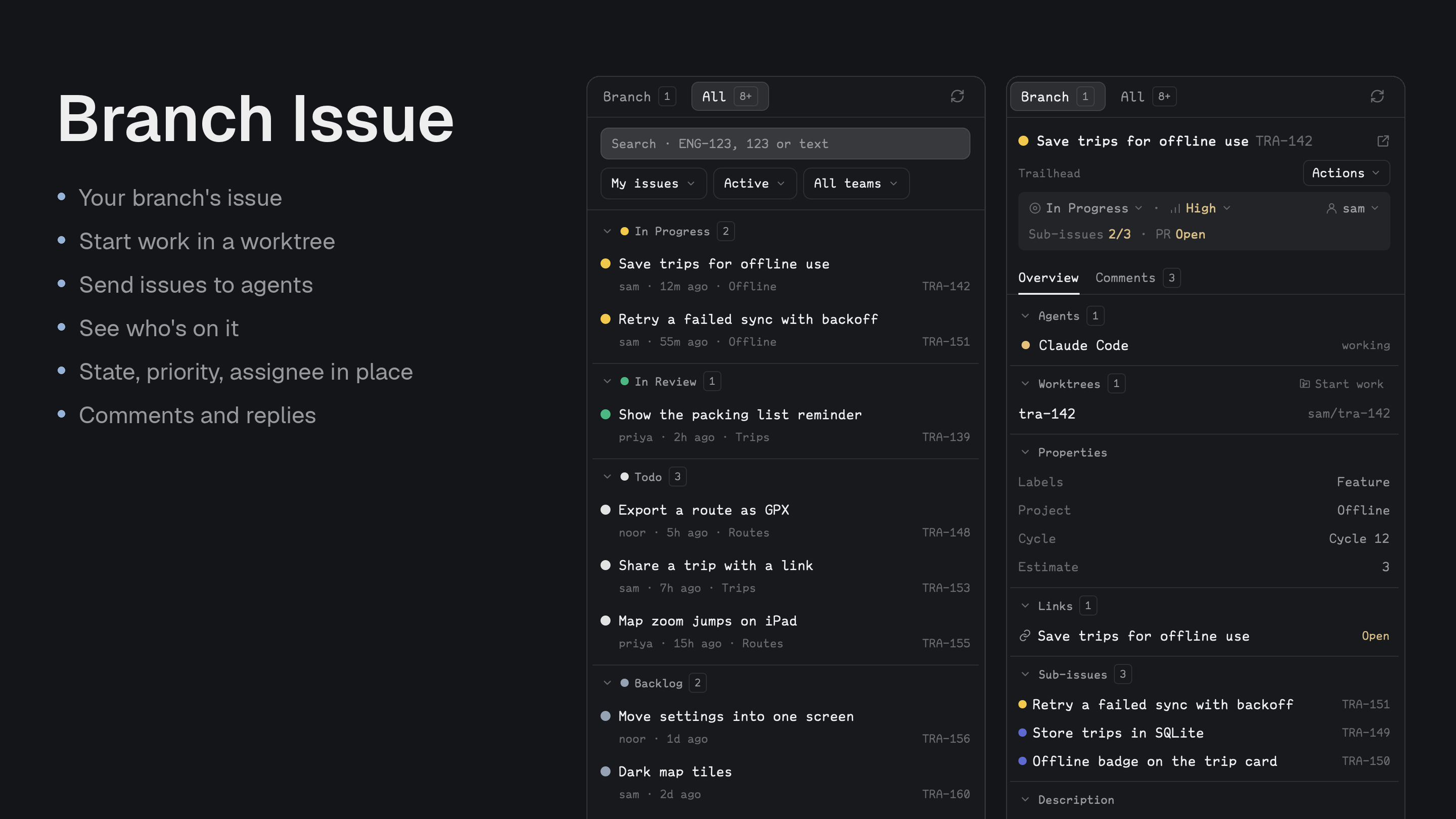
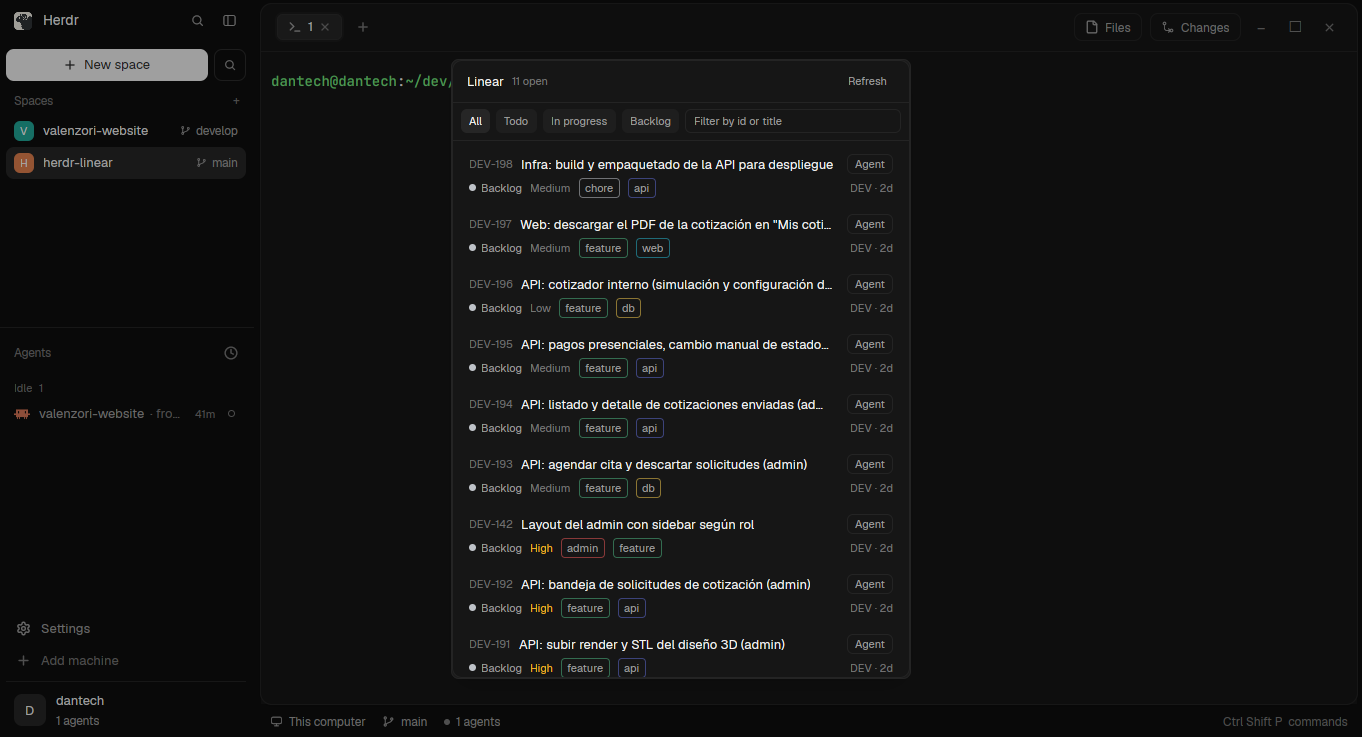
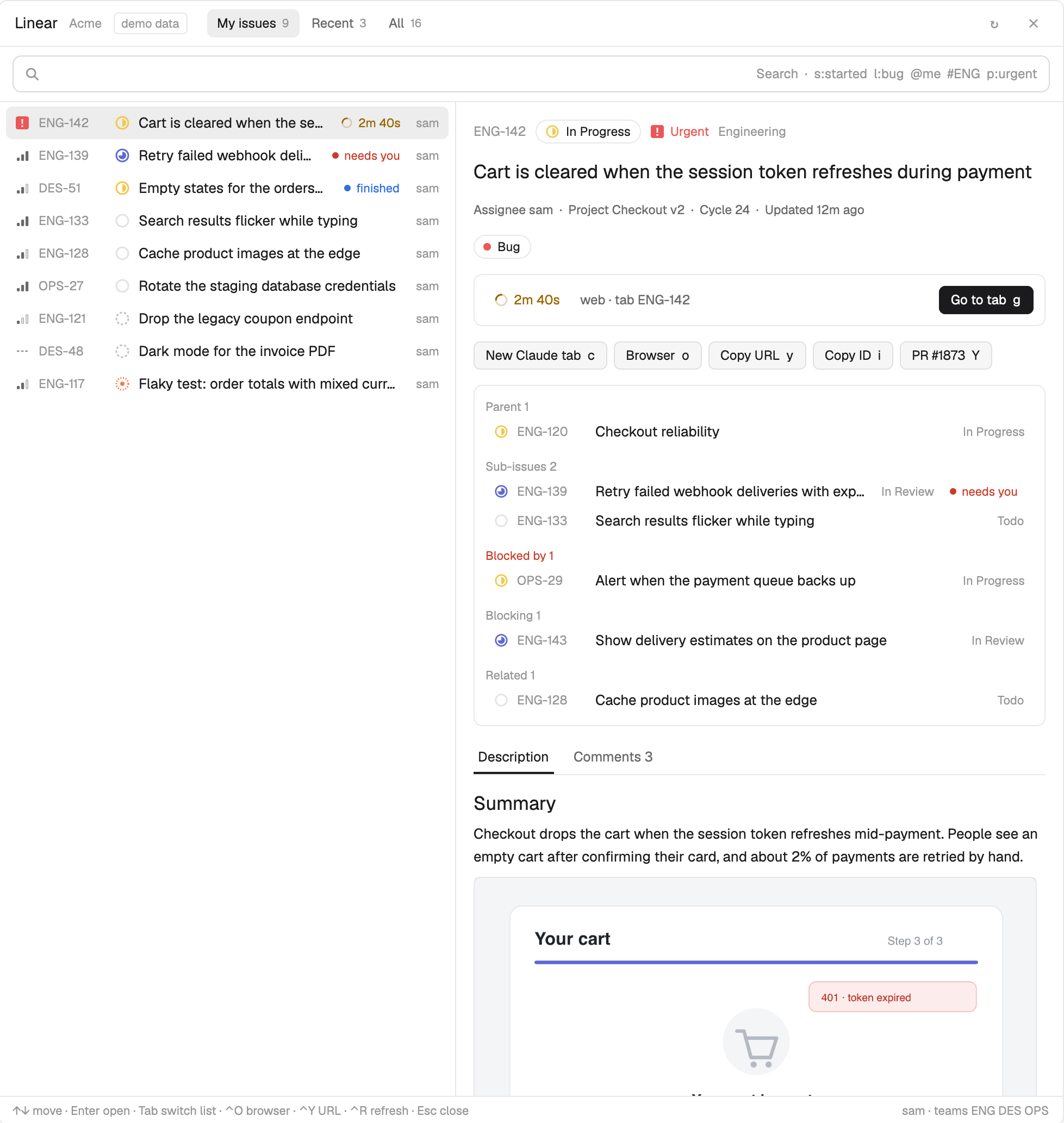
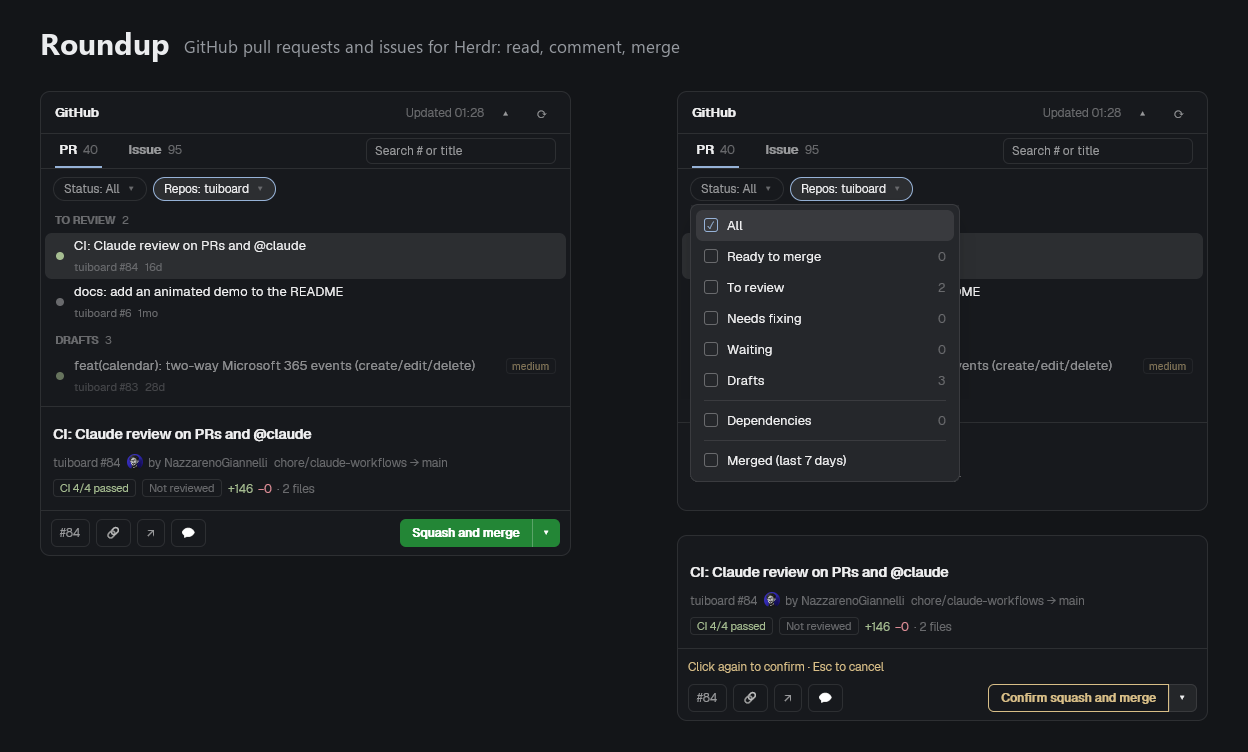
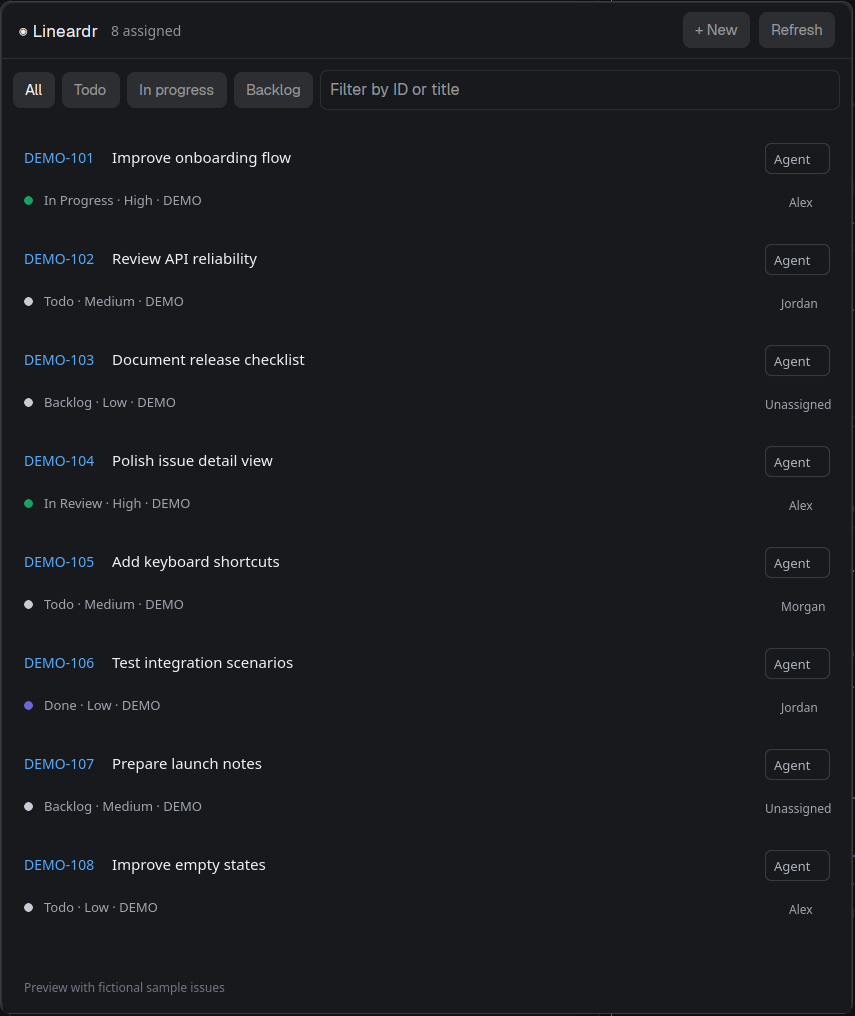
A side panel that lists Linear issues next to your terminals. The person picks a view from a row of tabs (each a saved query such as @me or s:triage, with its issue count), narrows it with a search box, a Status dropdown and a Sub-issues toggle, and sees the issues grouped by status, one line each: identifier, status icon, title and the assignee's avatar. Clicking an issue pushes its details page: status, priority, assignee, delegate, team, project, cycle, parent, labels, sub-issues and the…




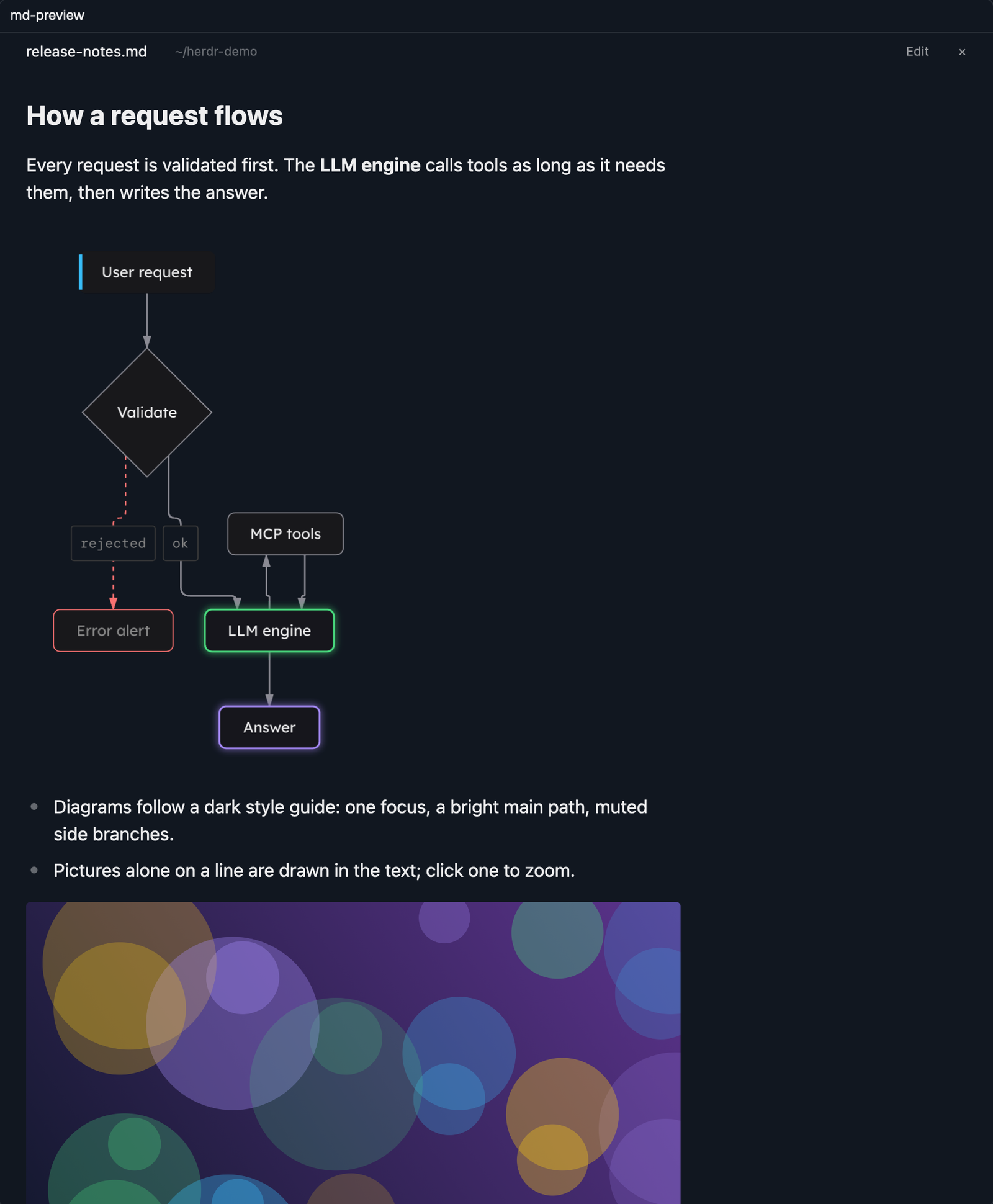

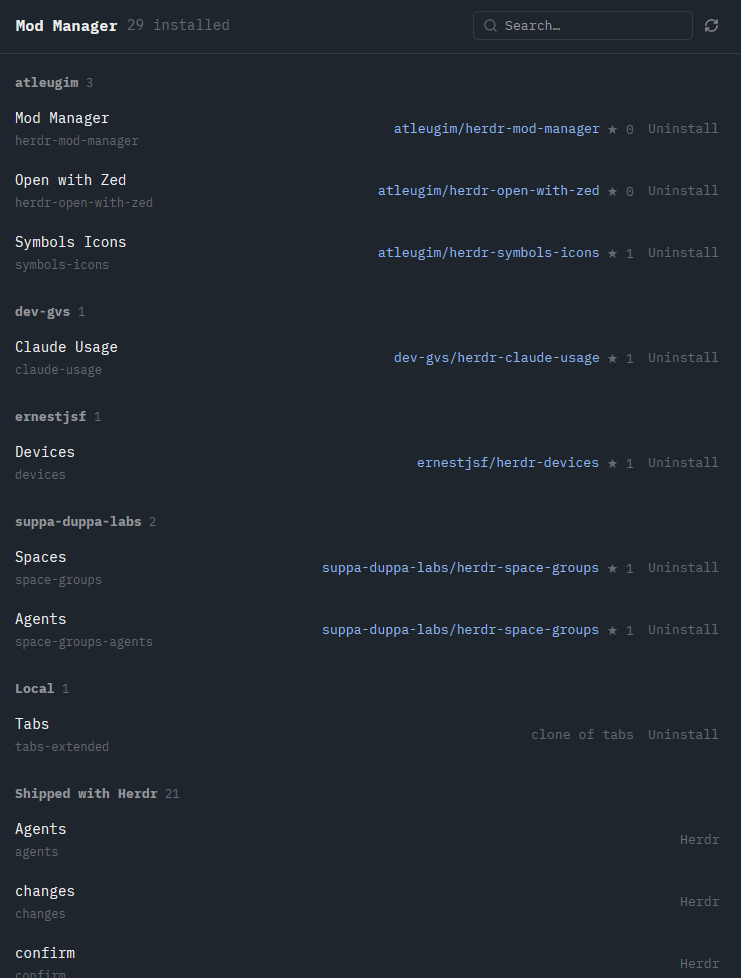
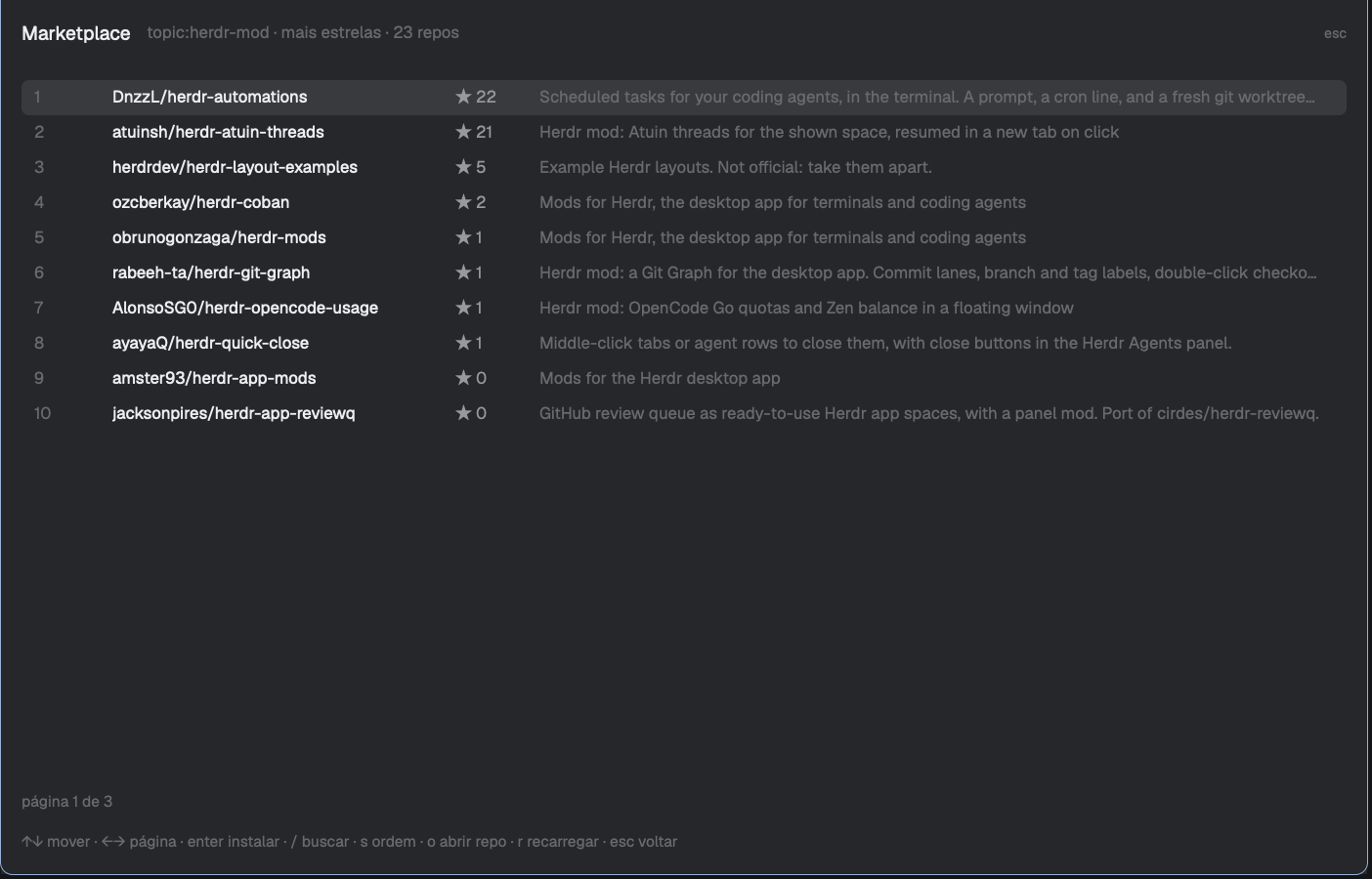






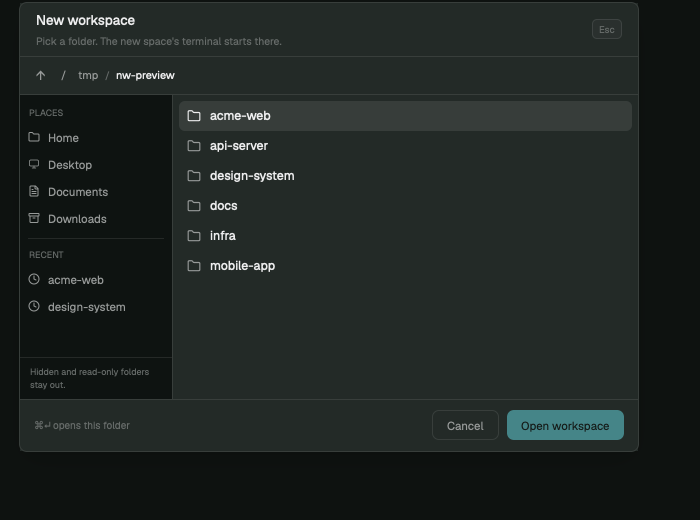
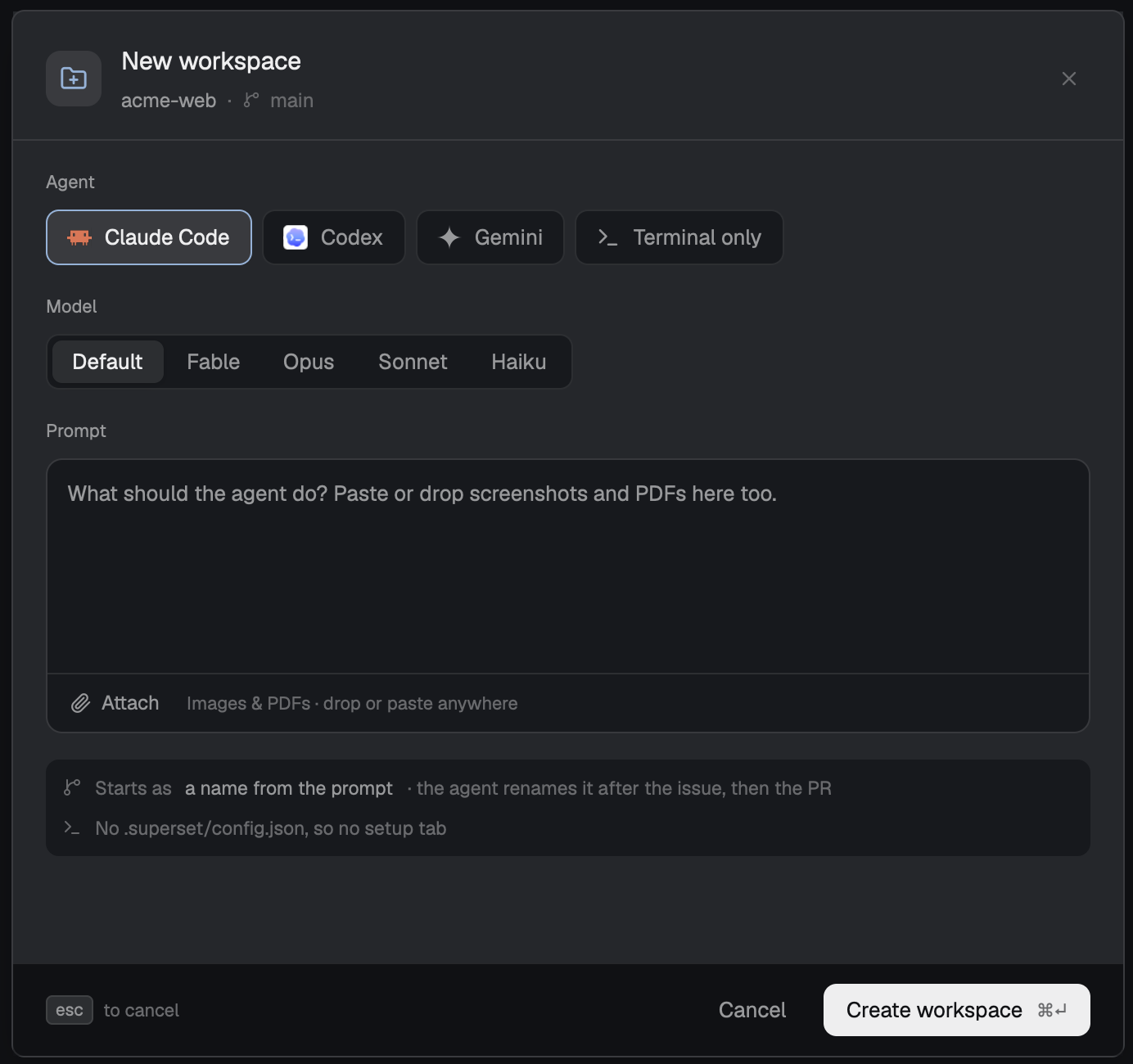

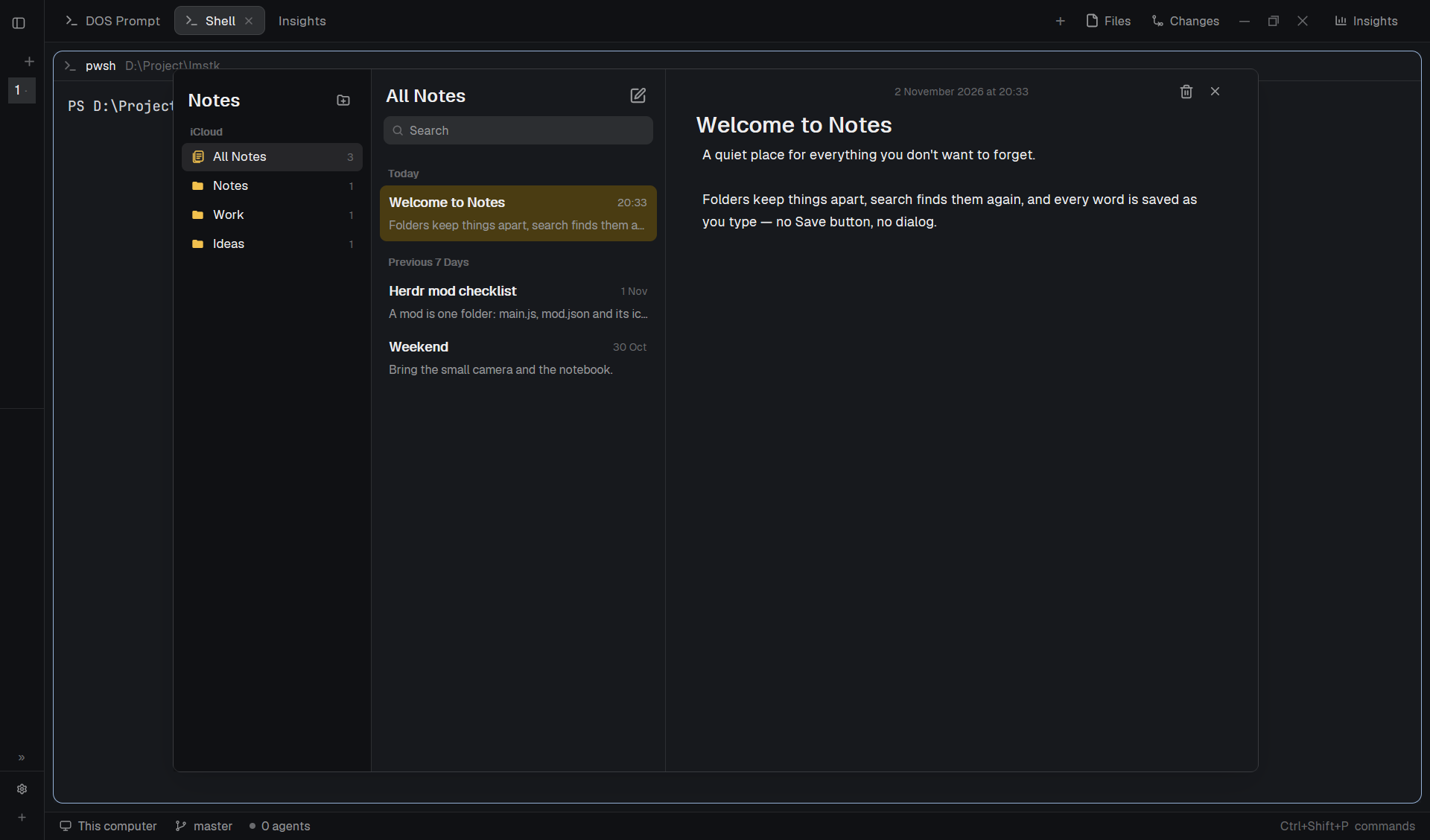
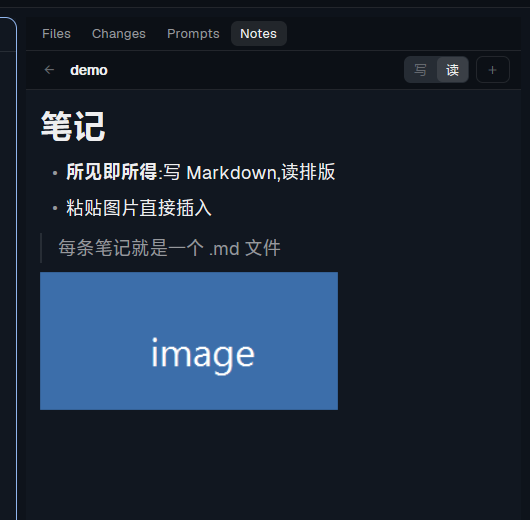


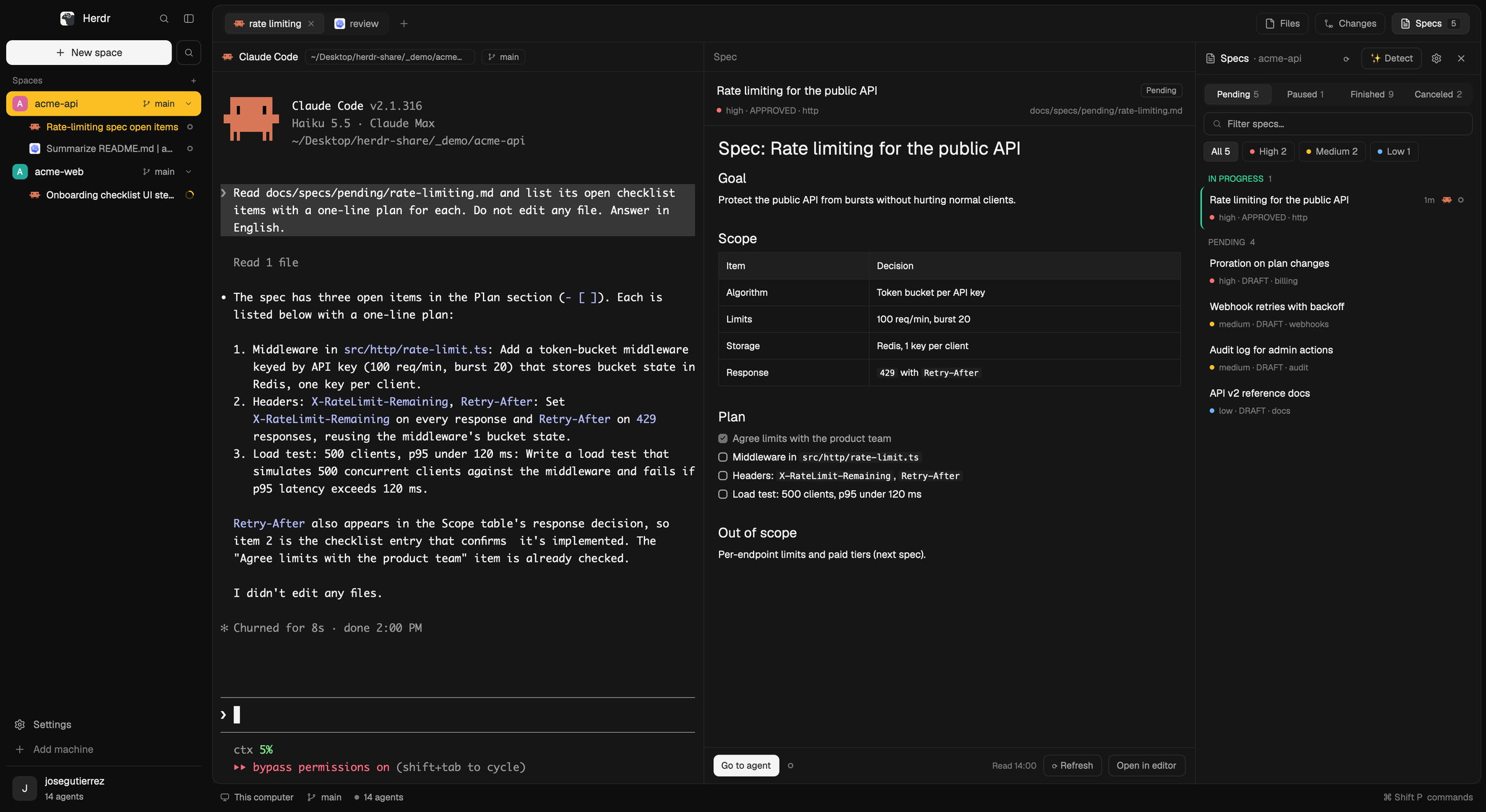
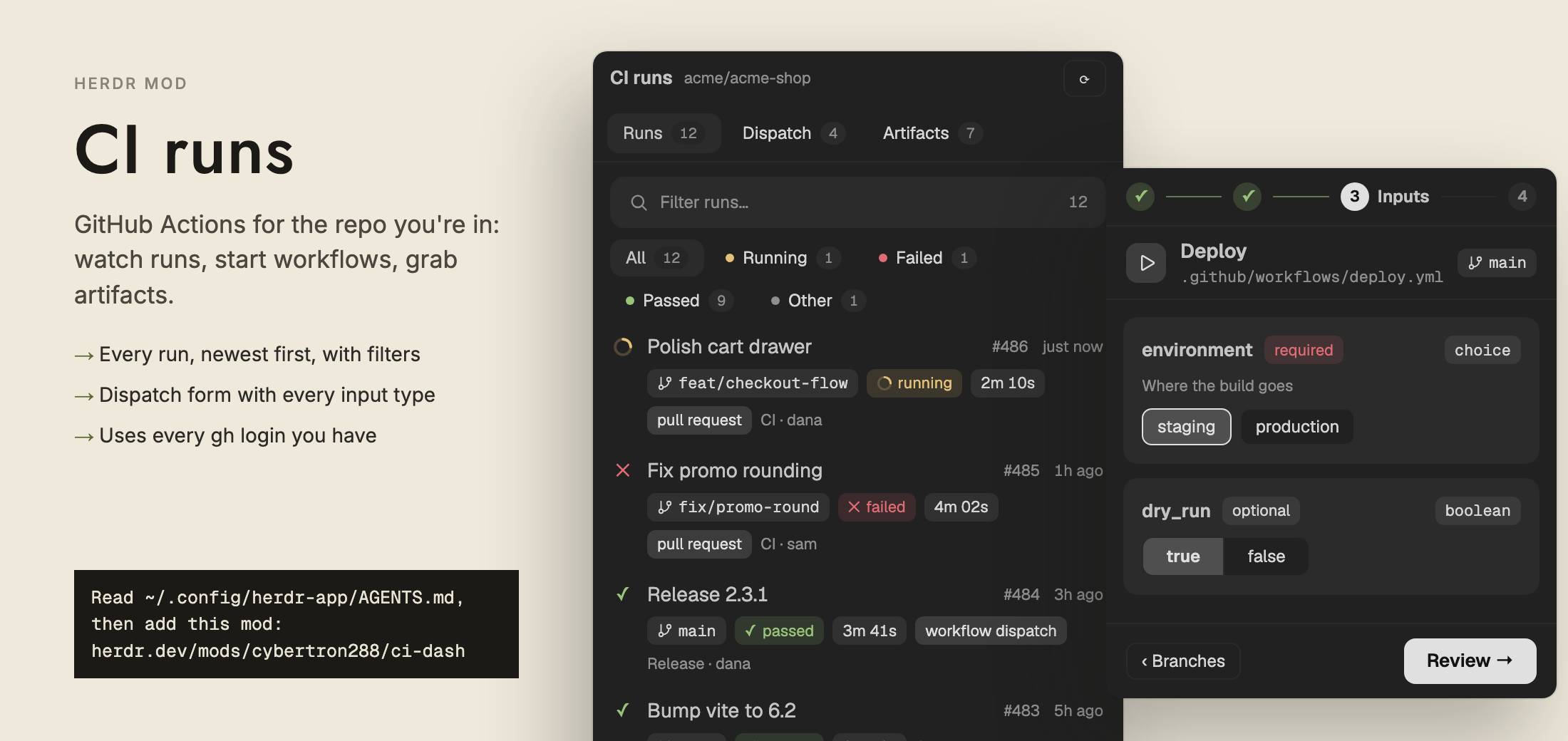
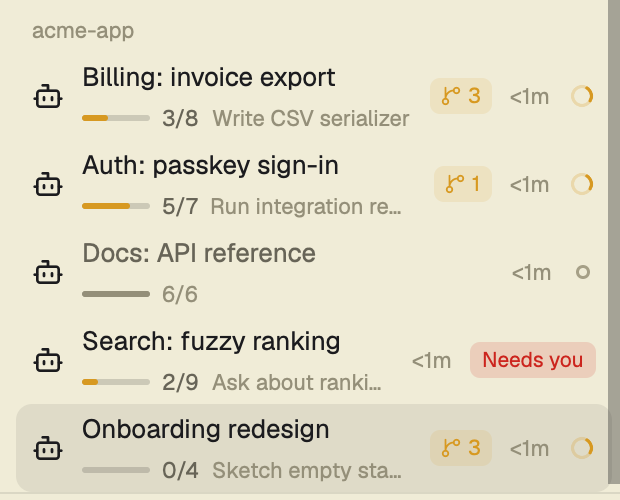
A live list of the focused terminal's OpenSpec changes for the Herdr desktop app: one row per active change (name, progress bar, done/total tasks, and its age), newest first, with header totals. A toolbar under the header has a filter box (change-name substring; Esc or × clears it) and a sort button cycling recent → A–Z → % done → state (remembered in the panel's localStorage under "sort"); the header totals follow the filtered set. Each row carries a state chip — ✓ complete, N left (at most 2…

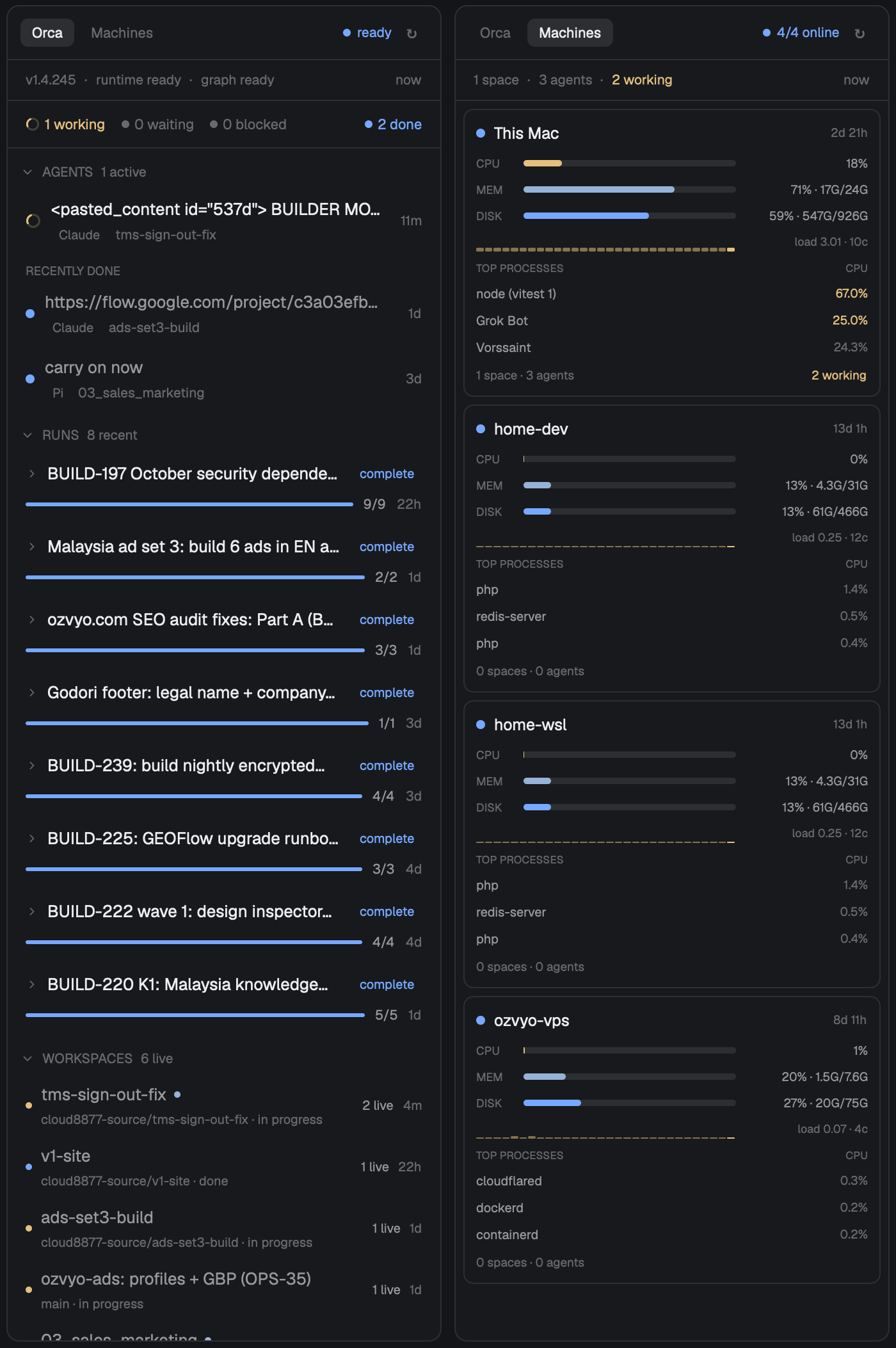

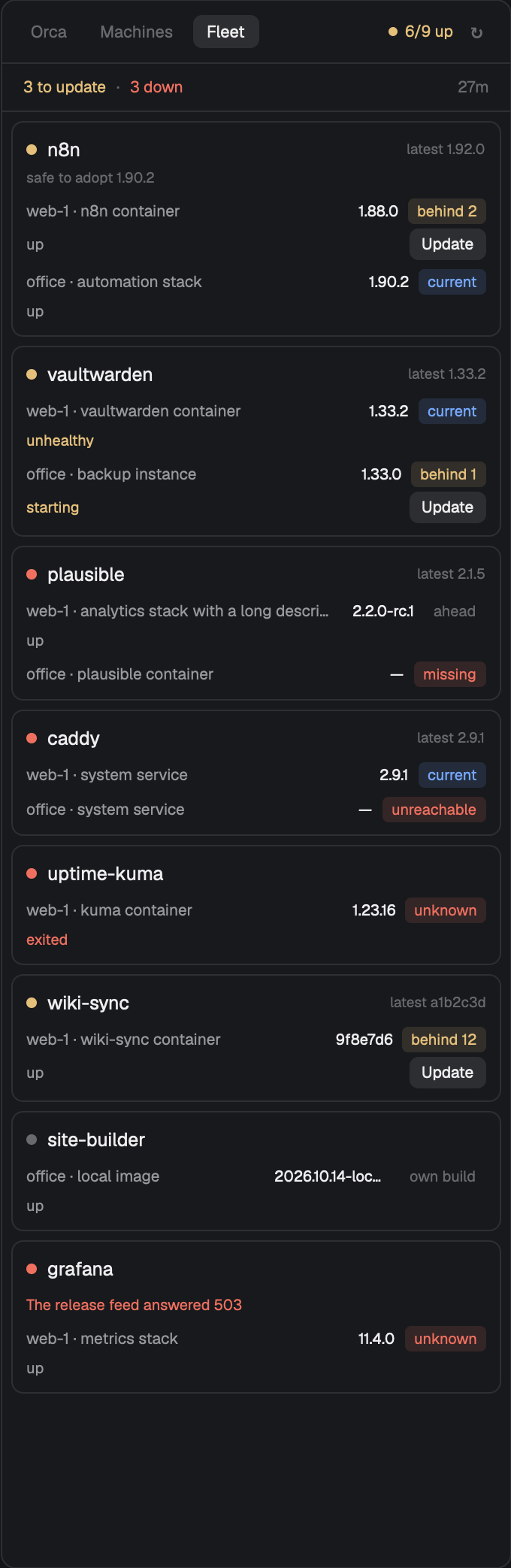


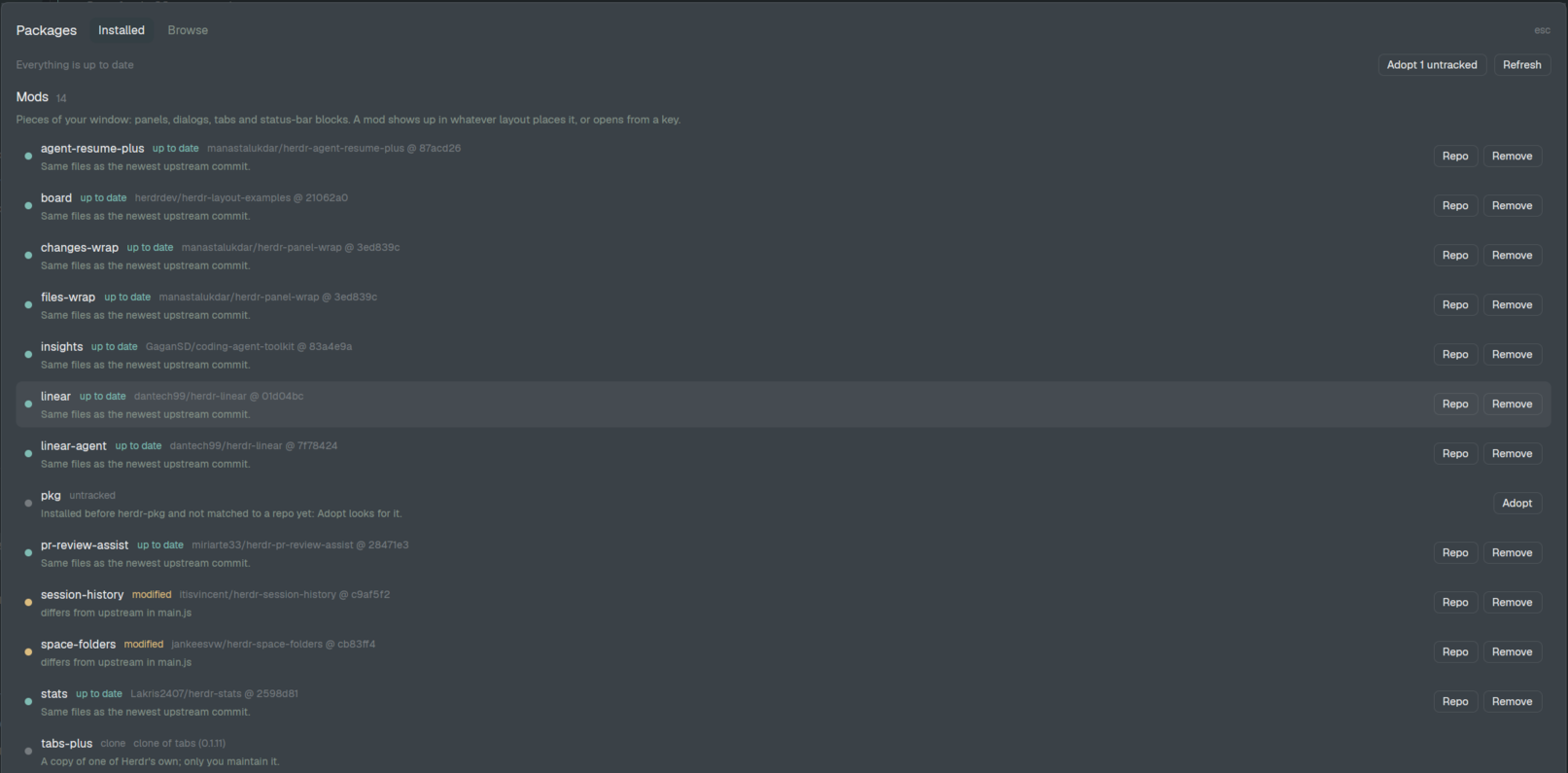
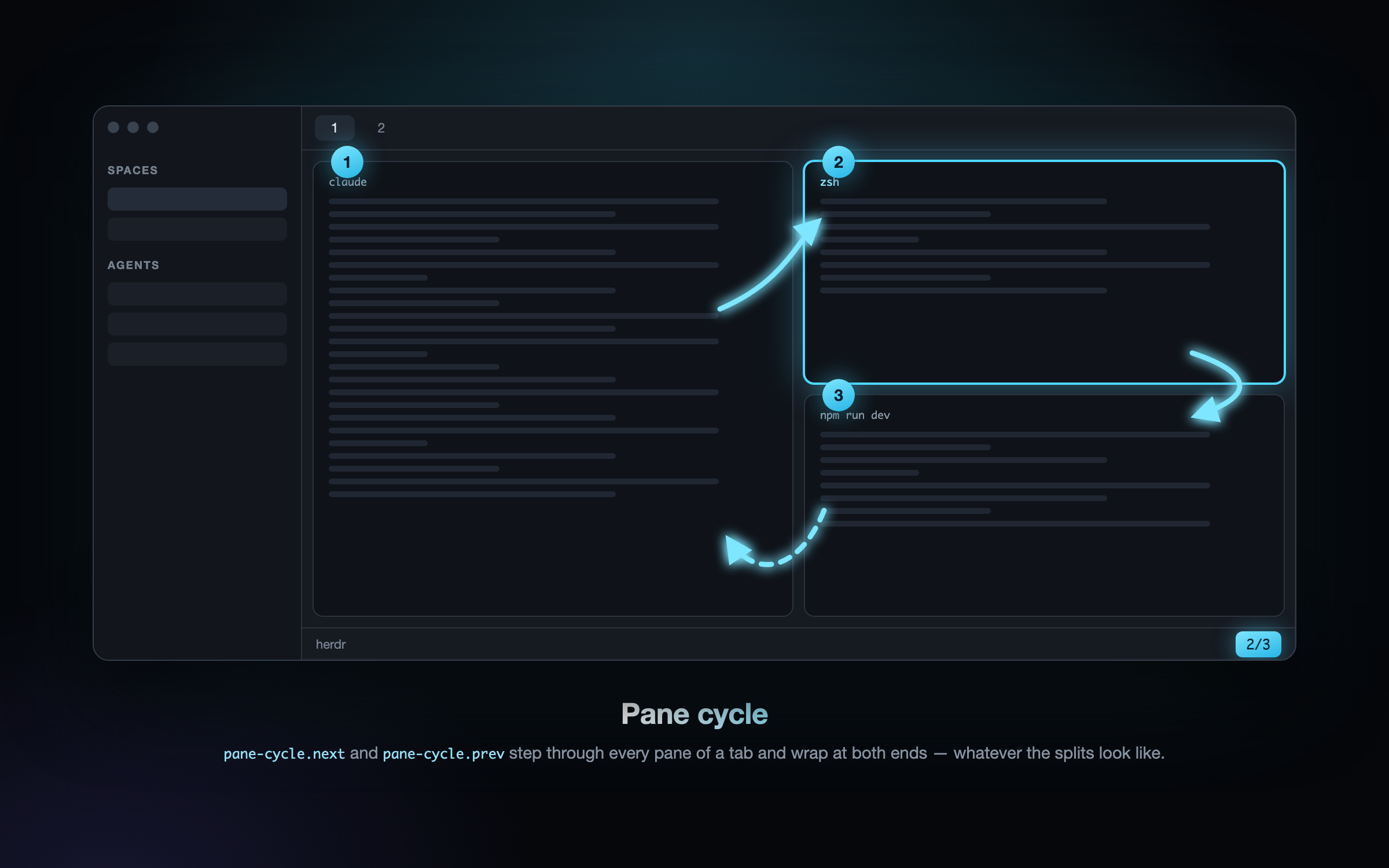




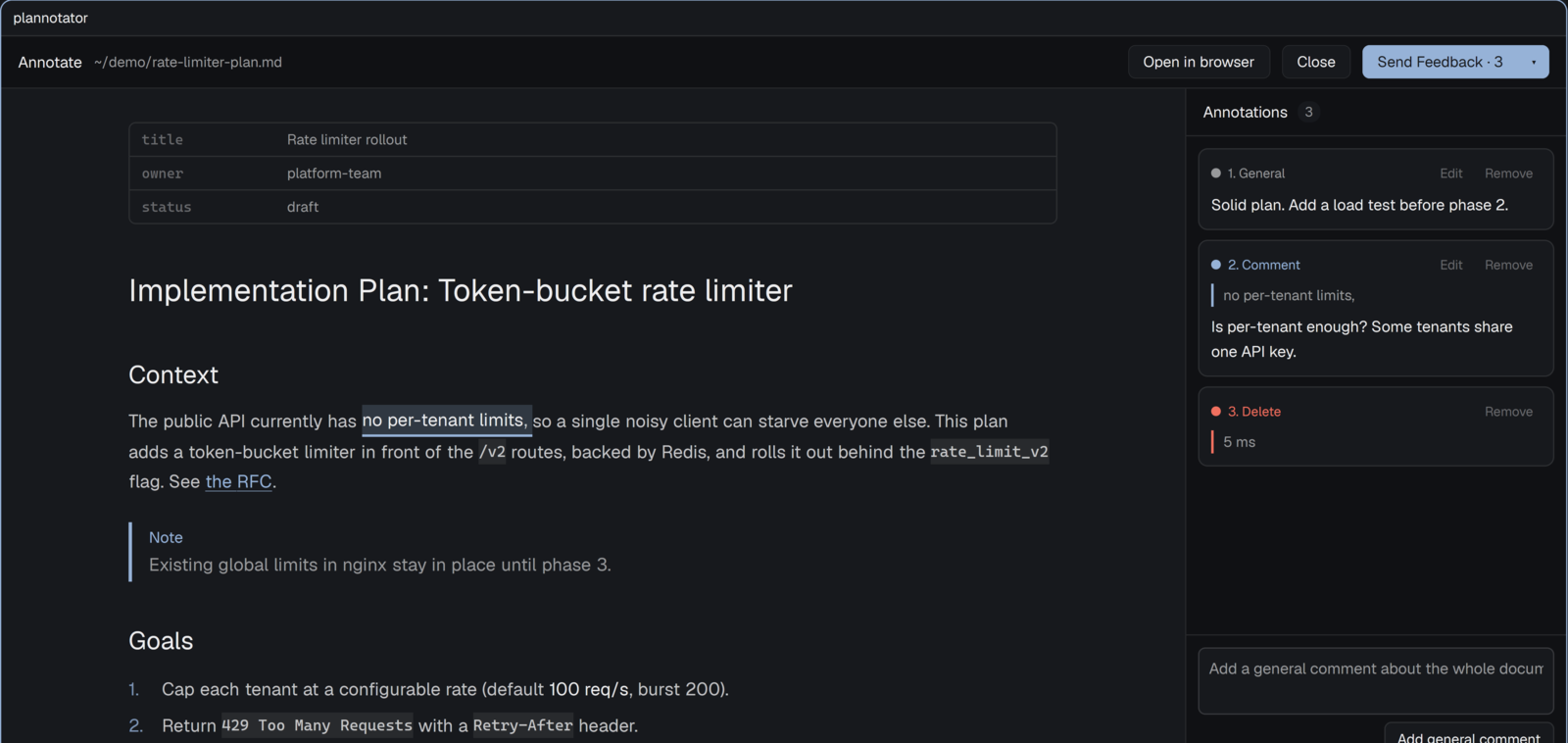

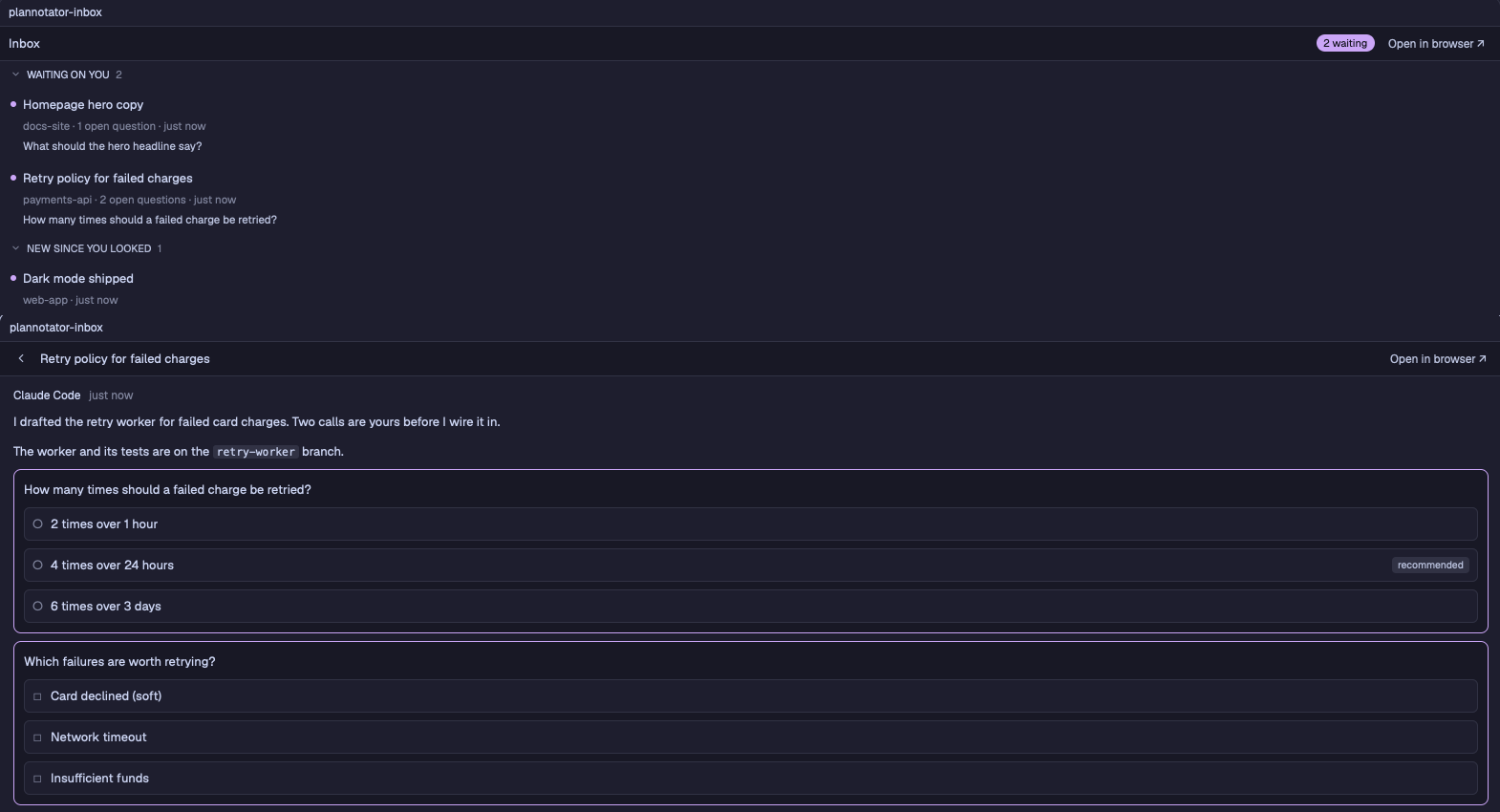

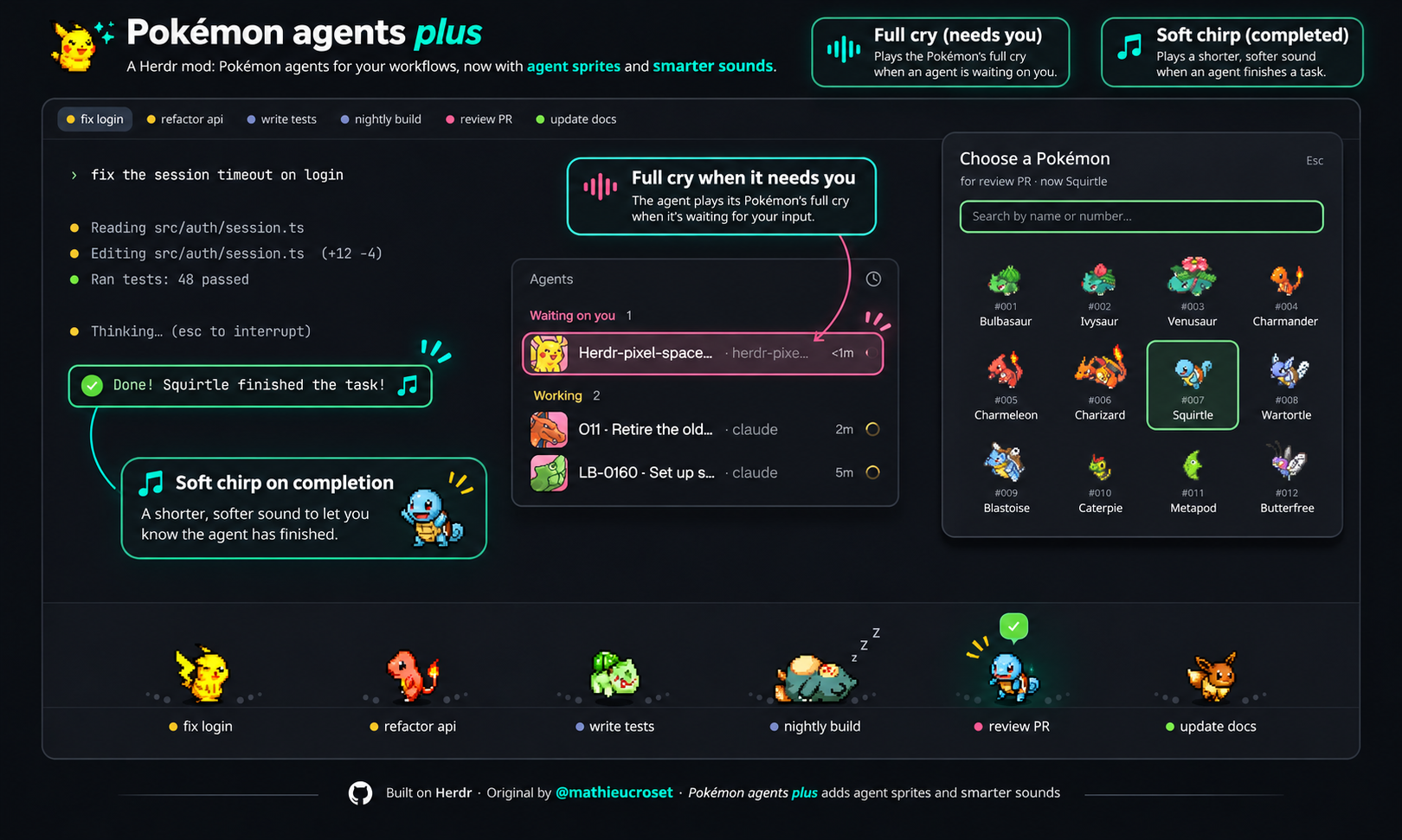
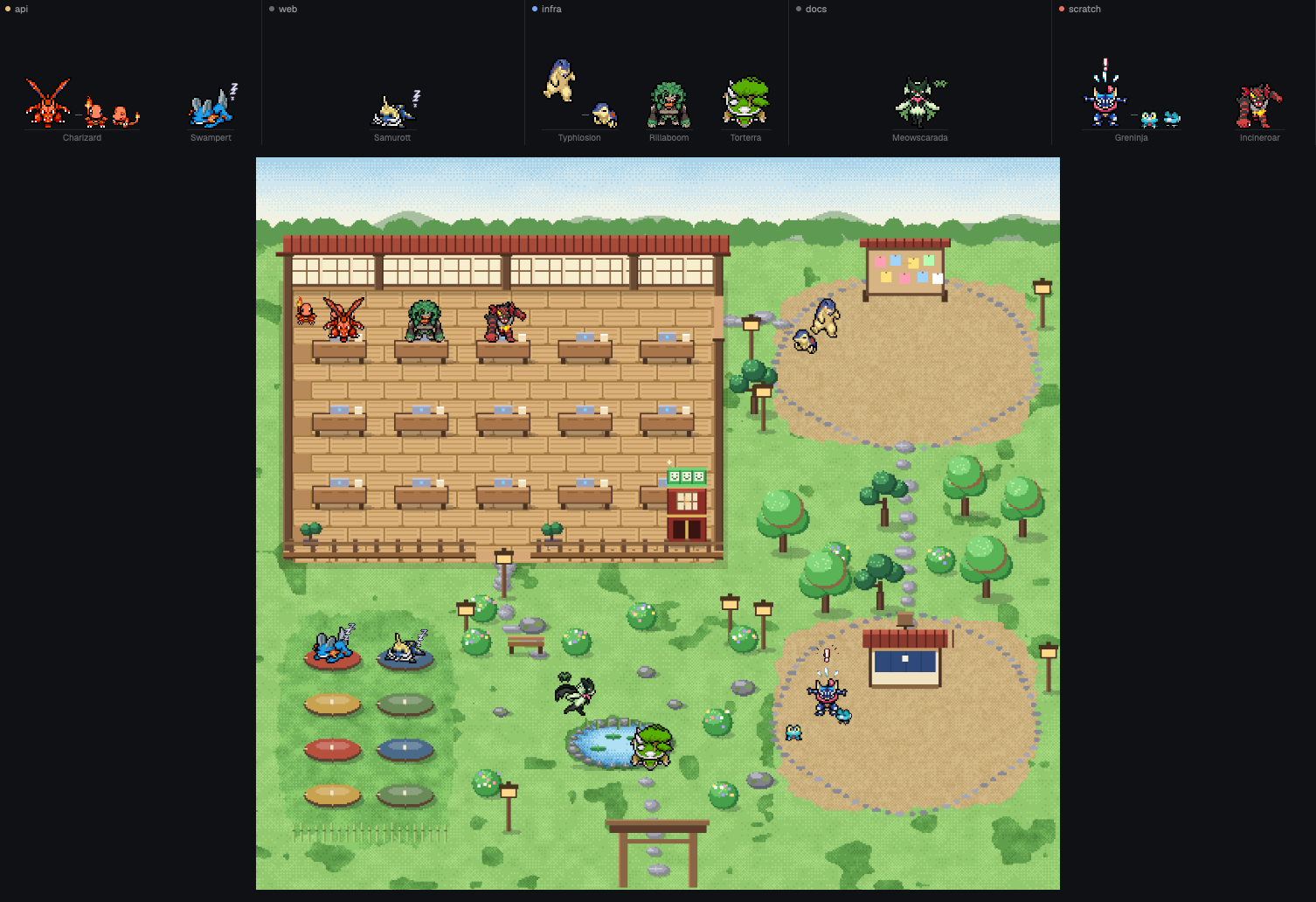




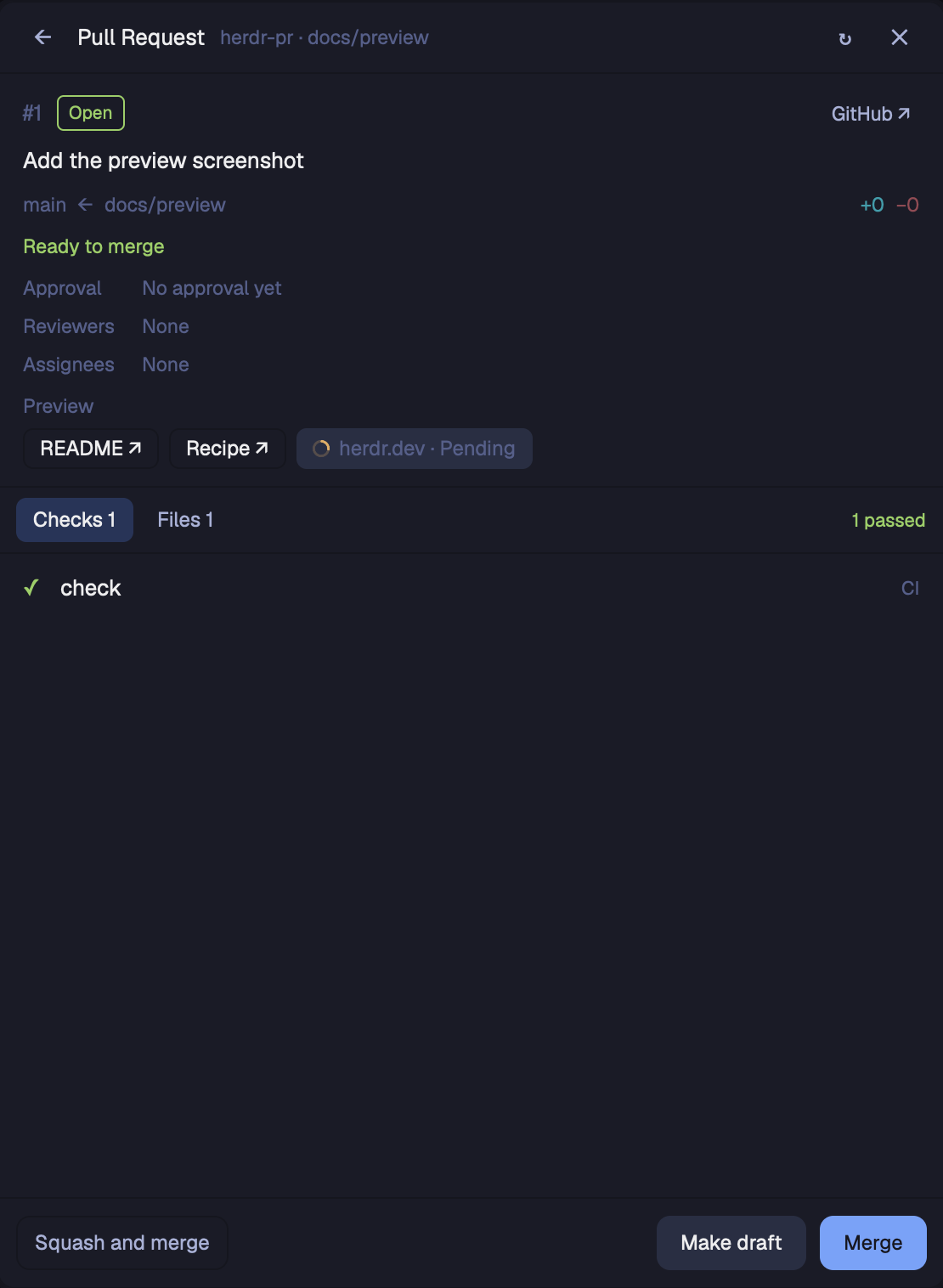

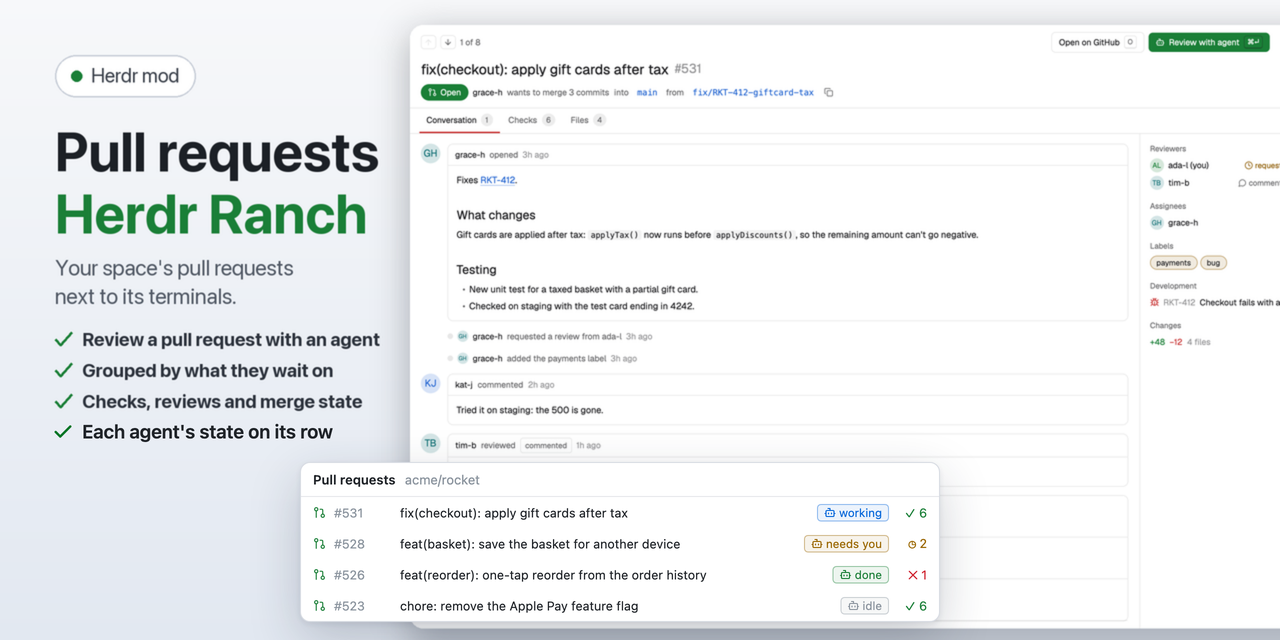
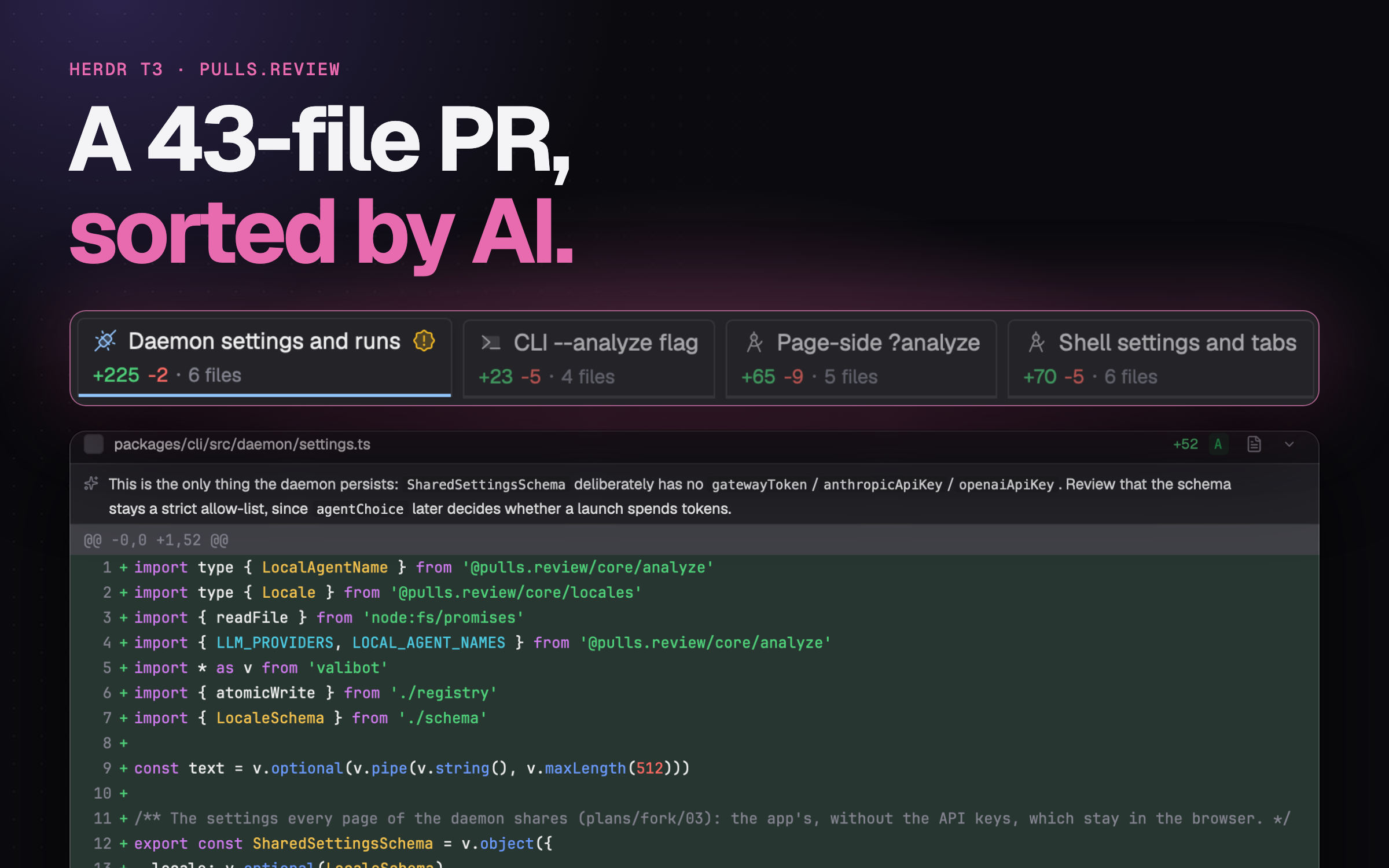
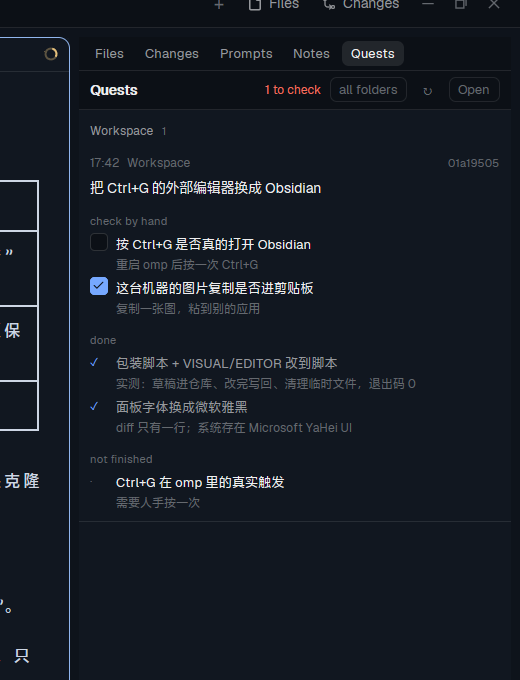




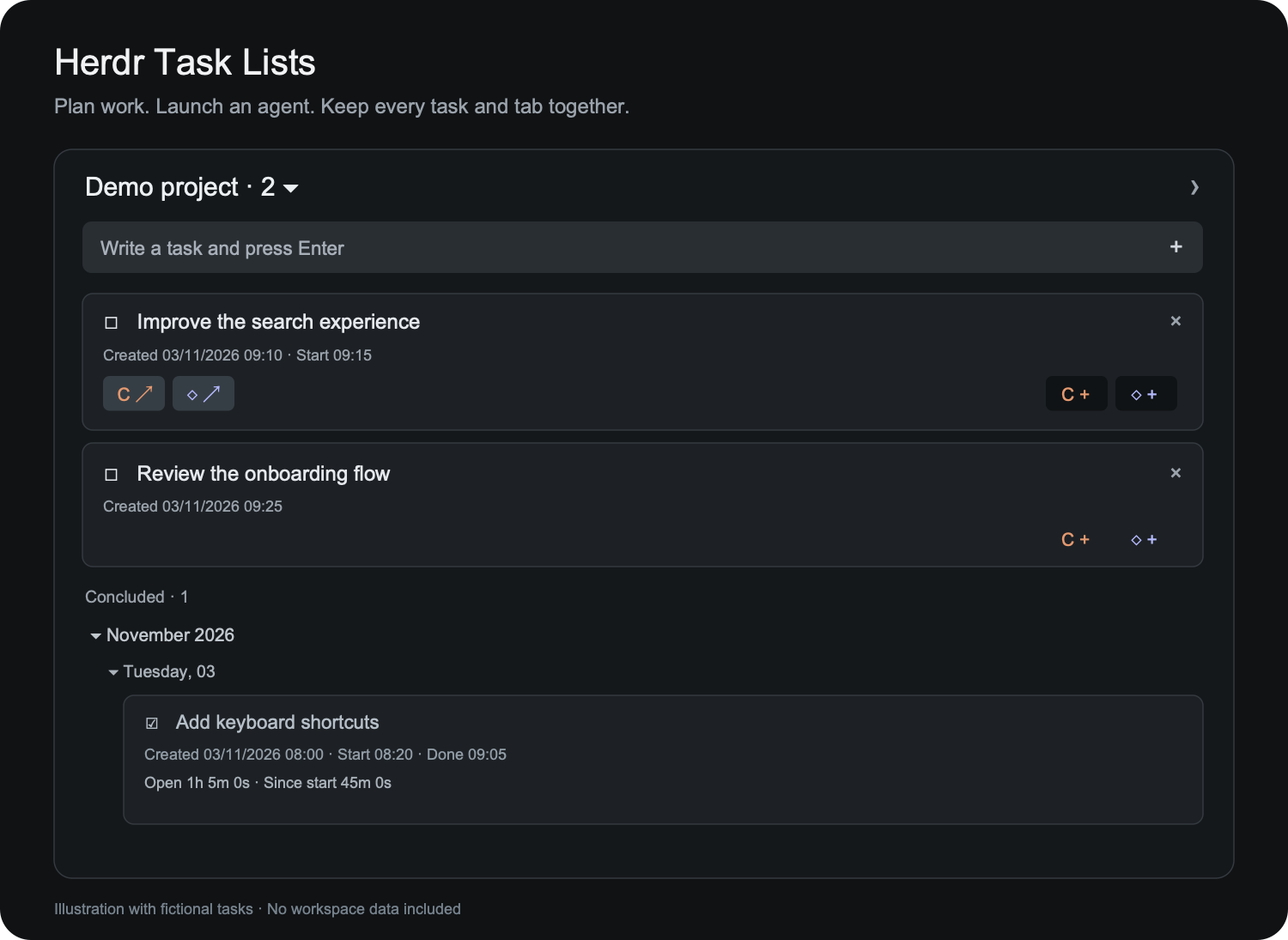

This file is enough to rebuild the mod. See README.md (Japanese) for usage; this file does not contradict it.




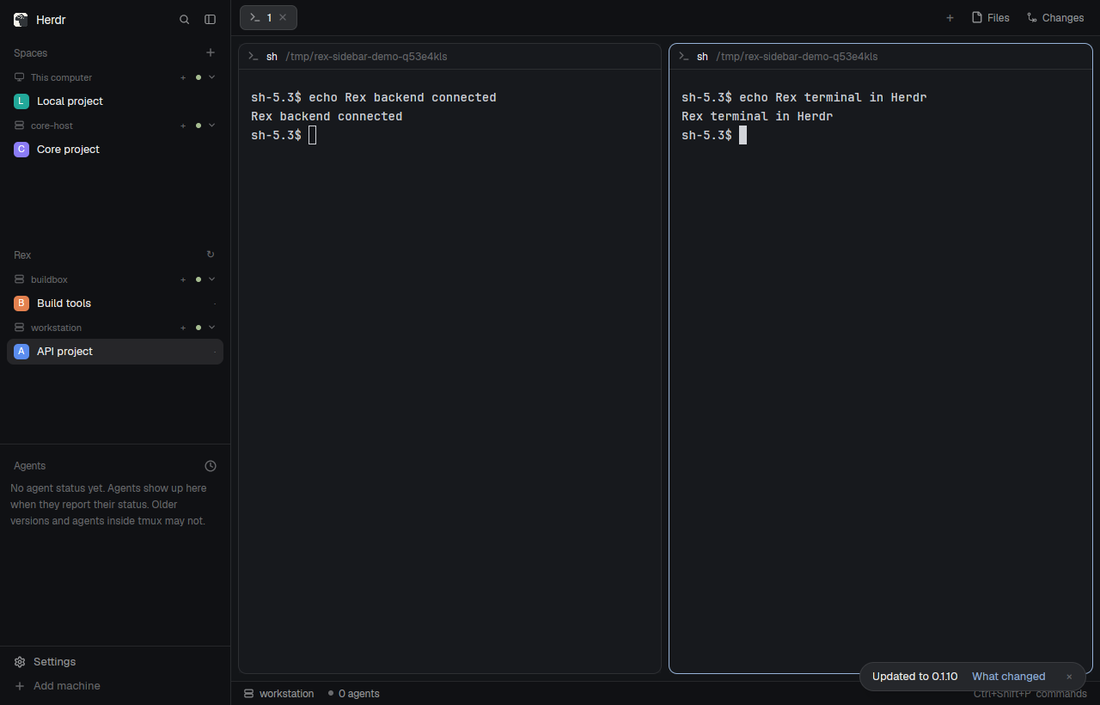
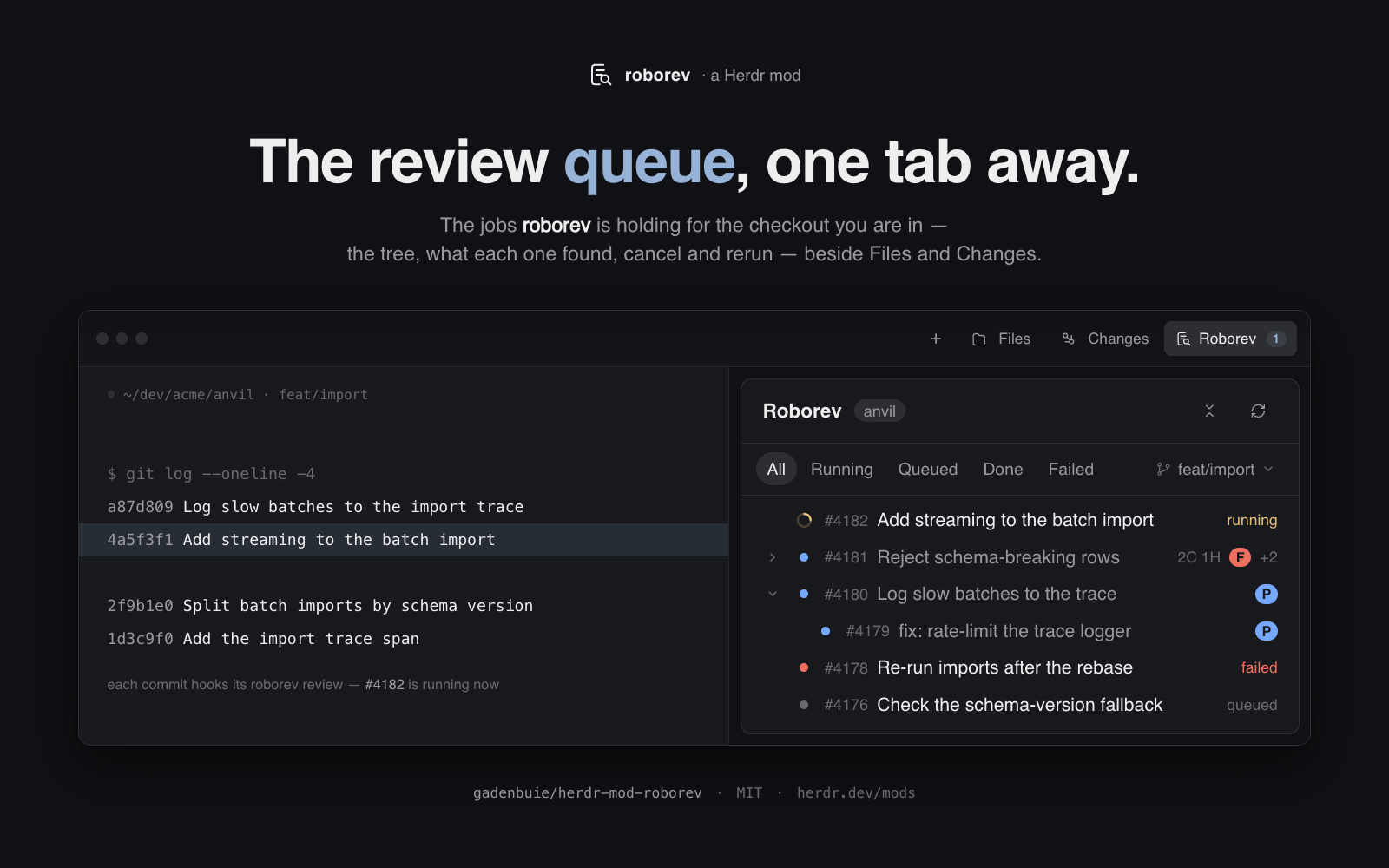
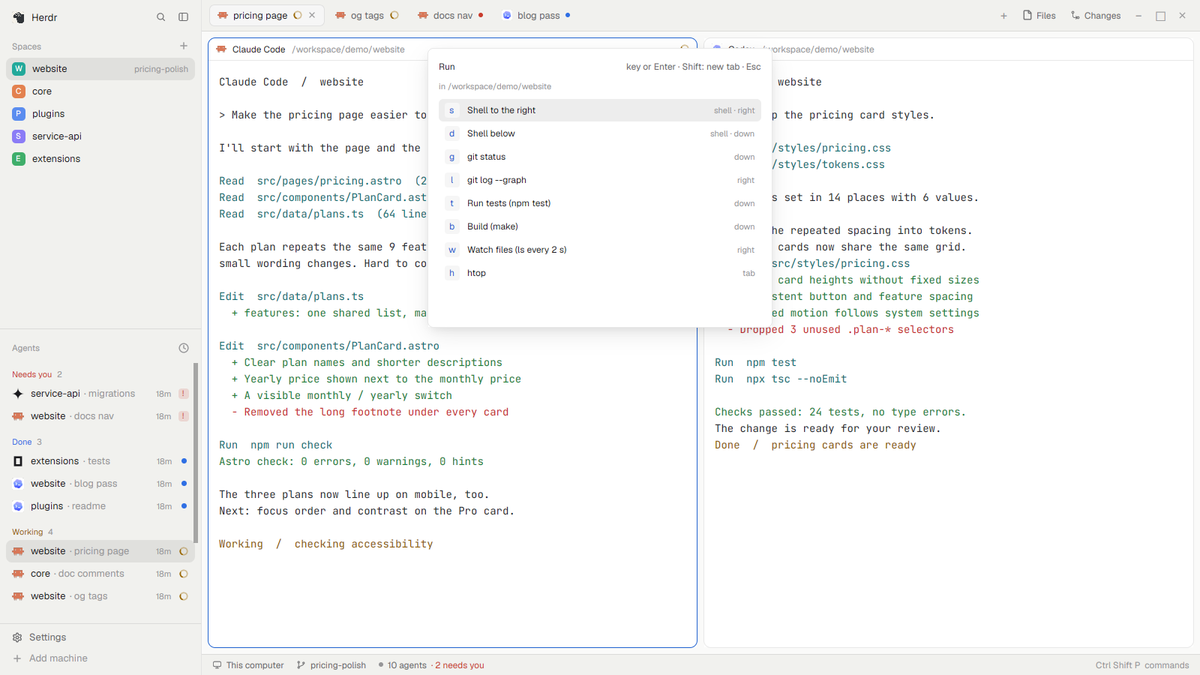
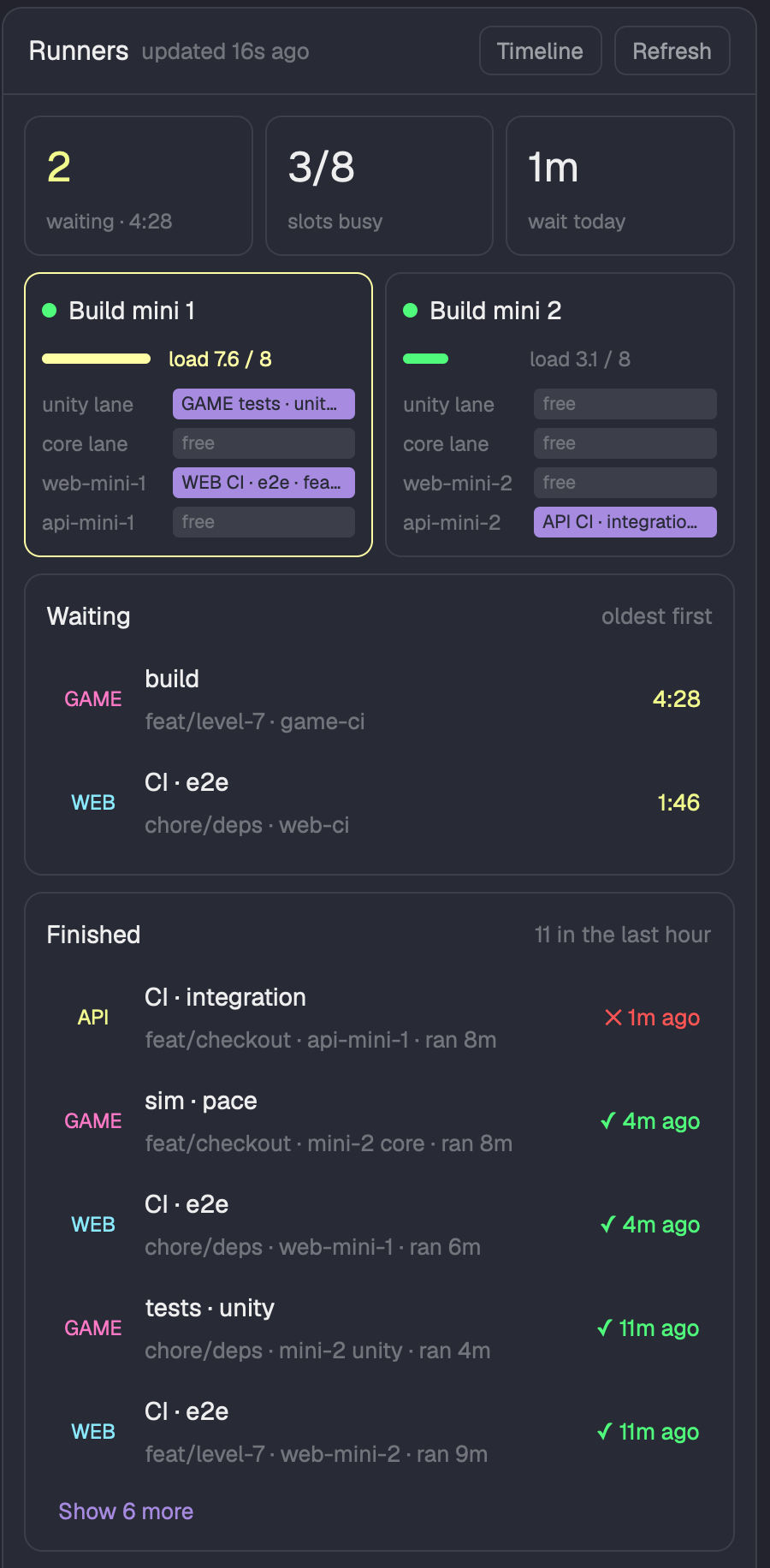
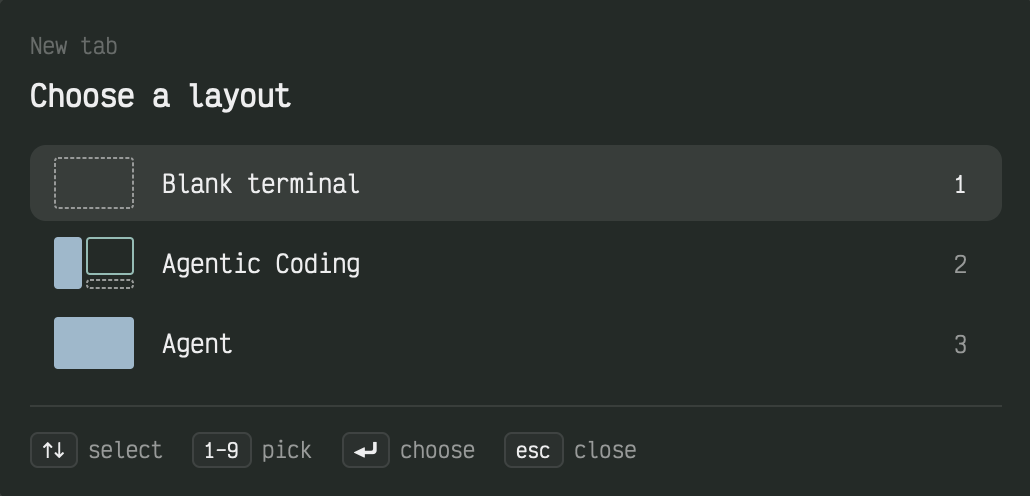
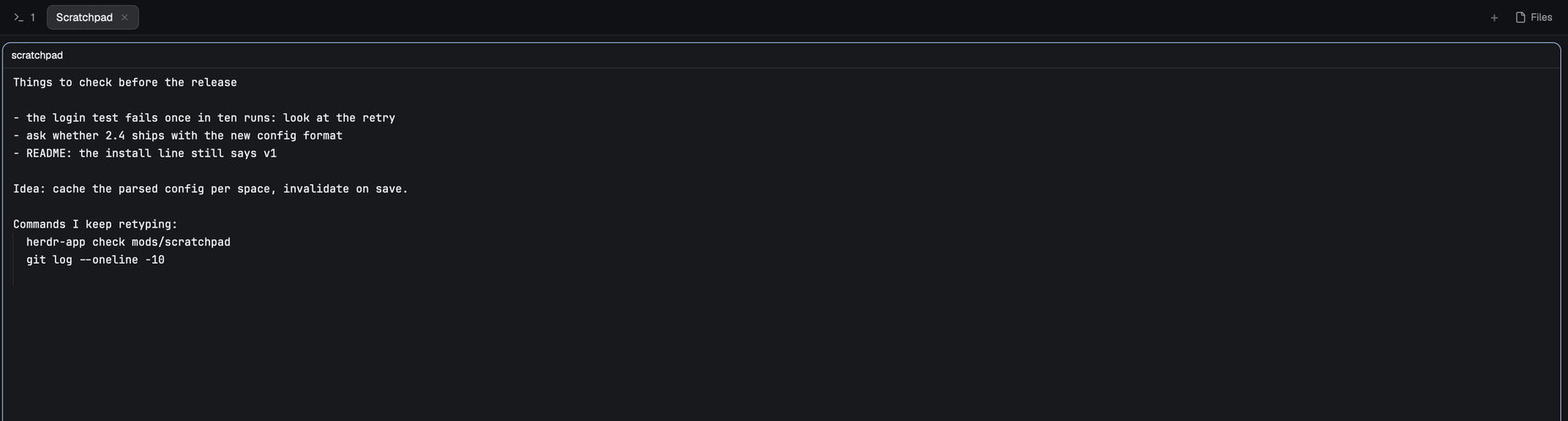
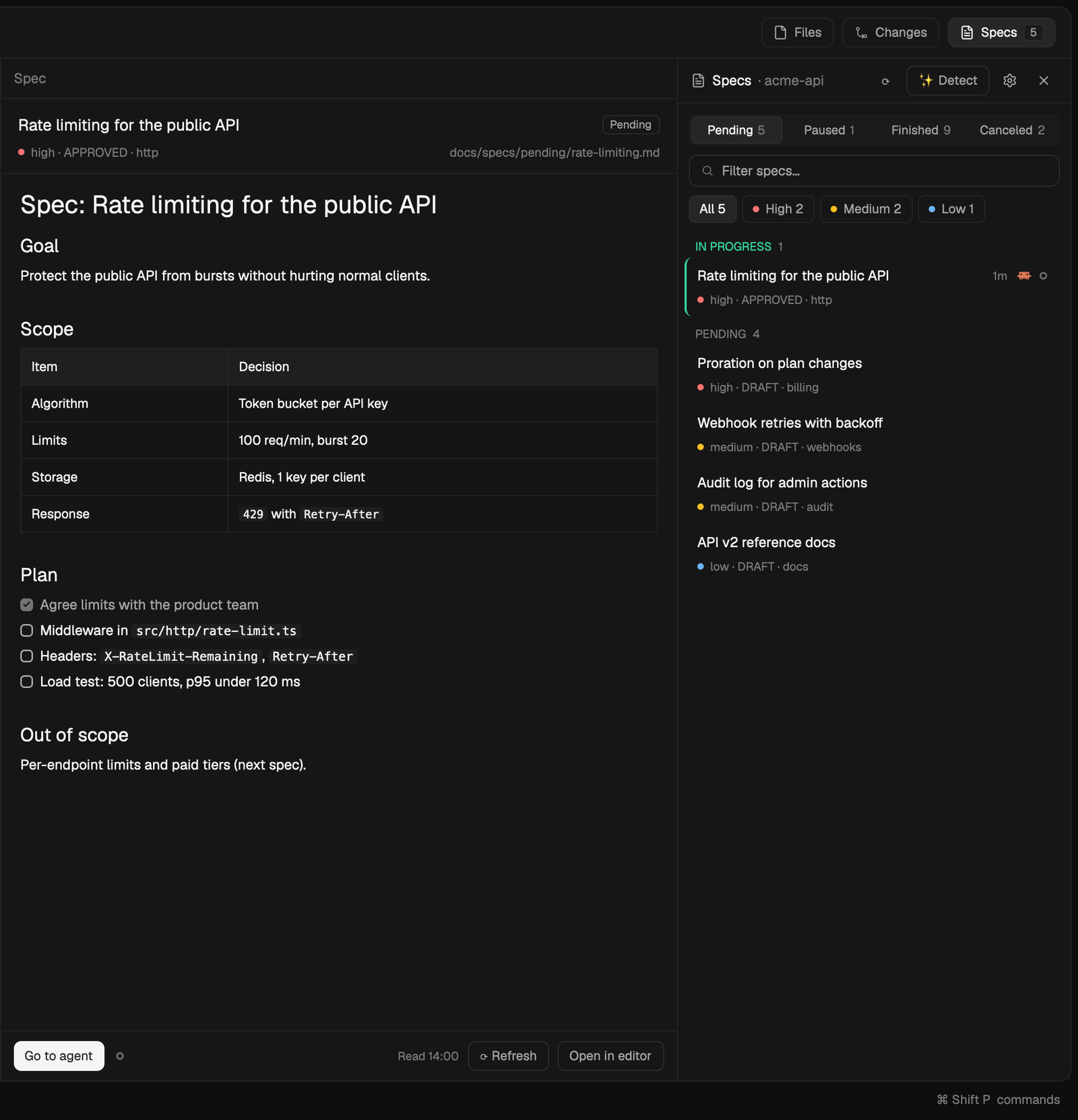





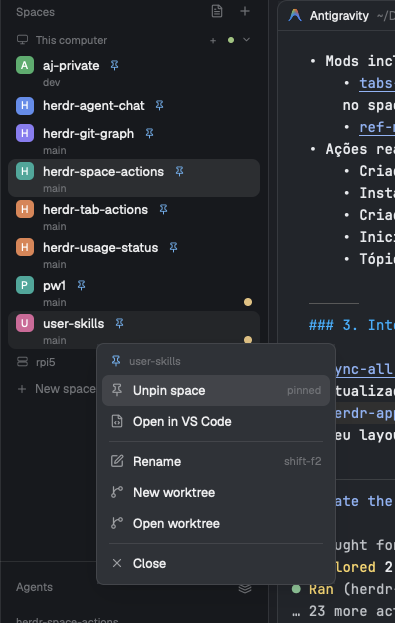
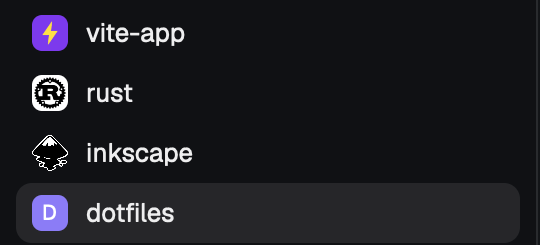
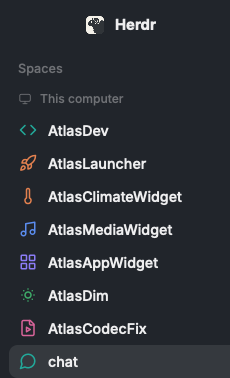
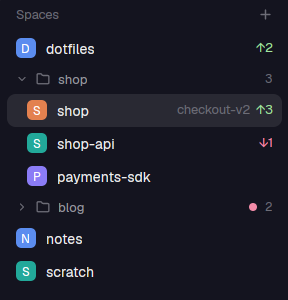
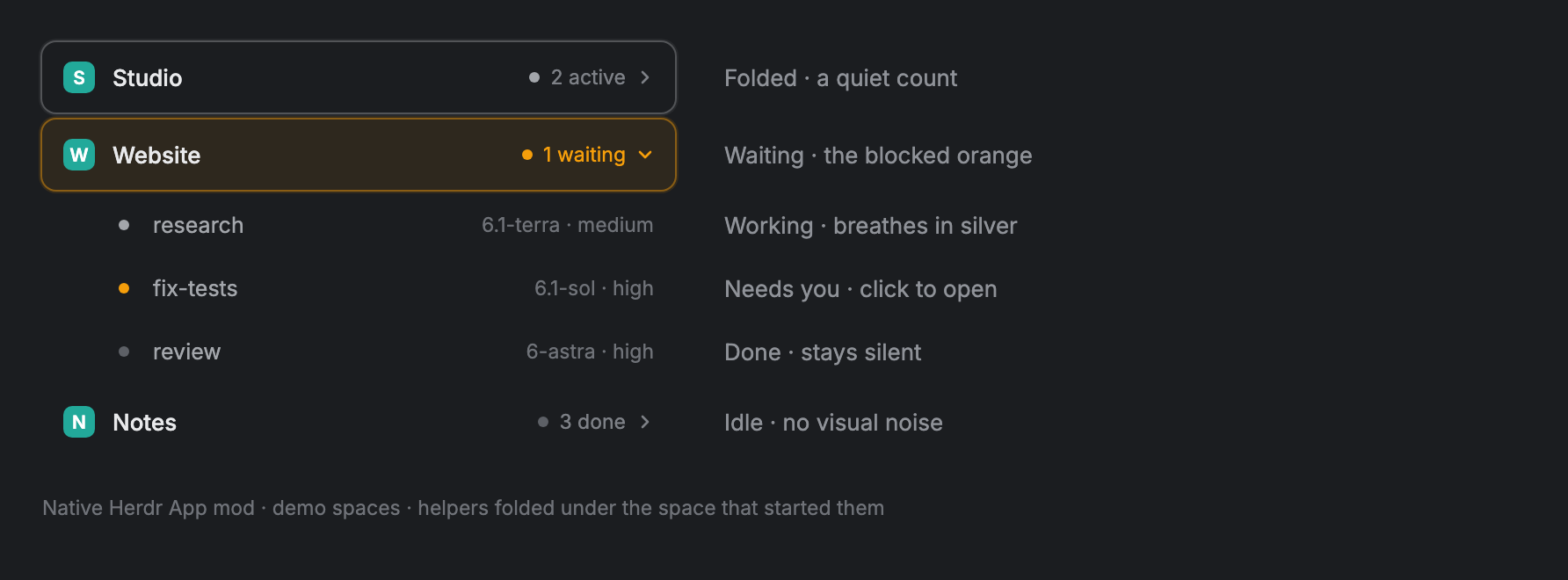
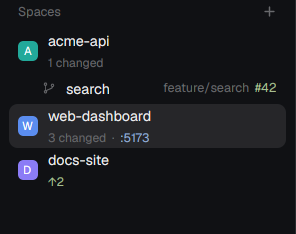
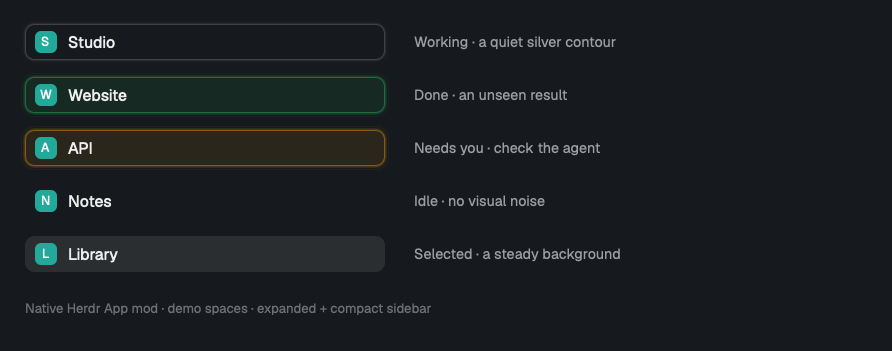
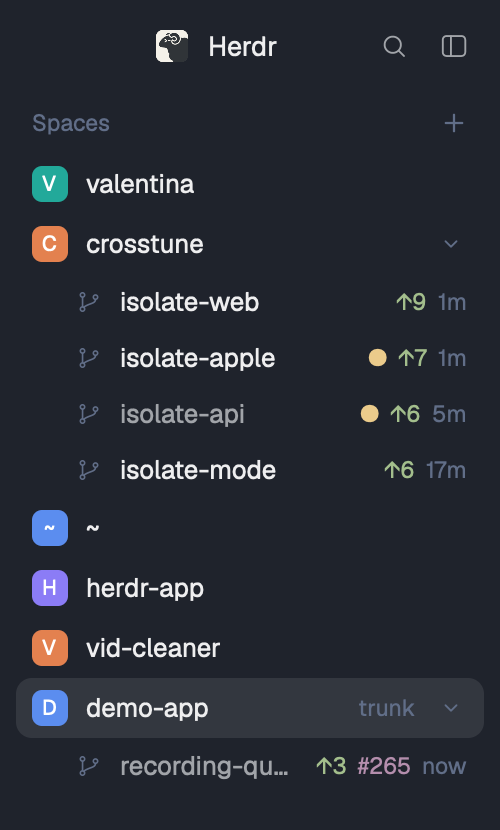
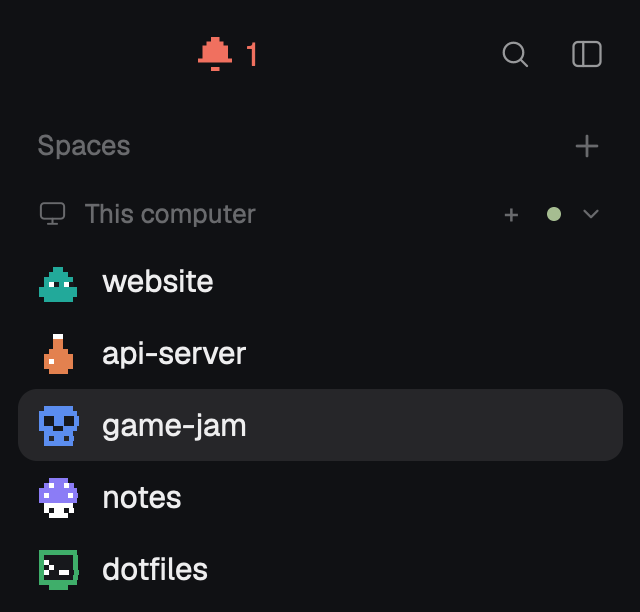
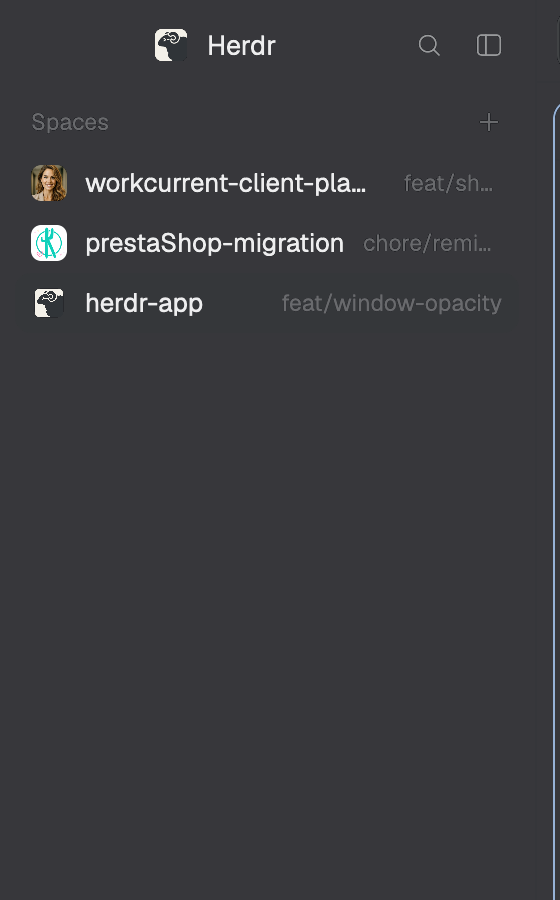
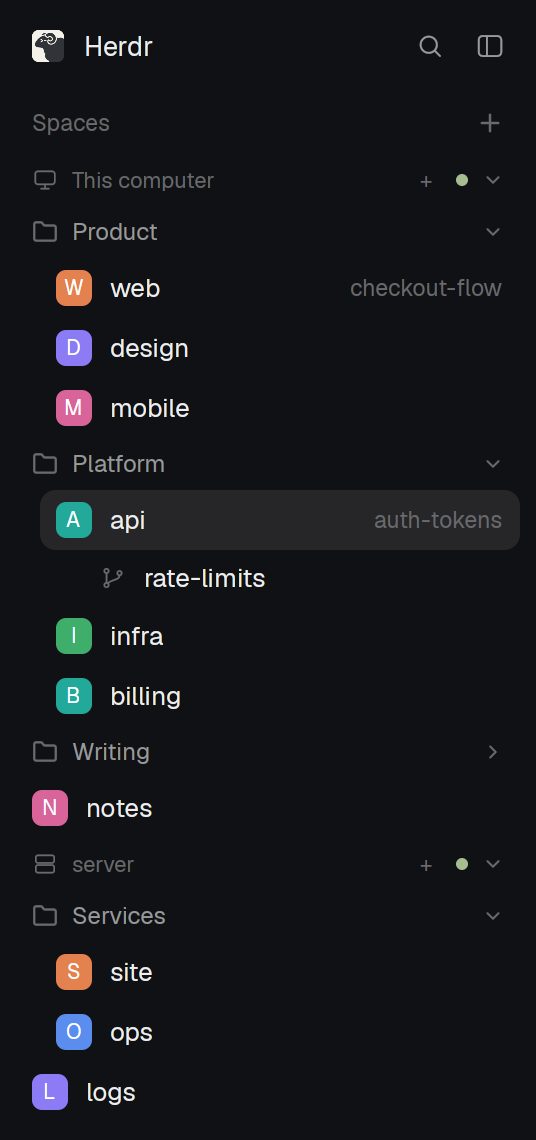
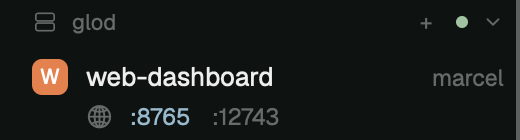
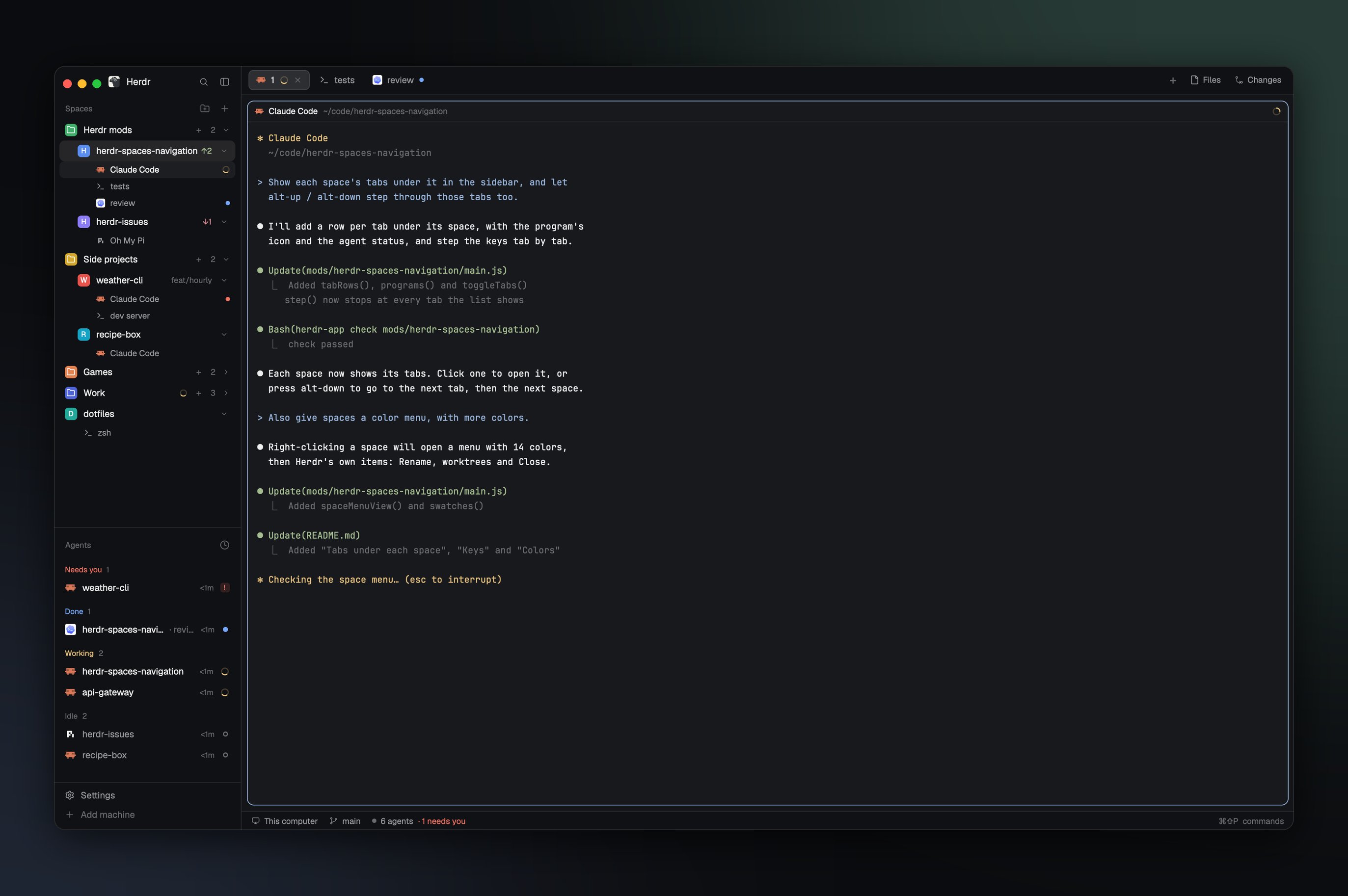
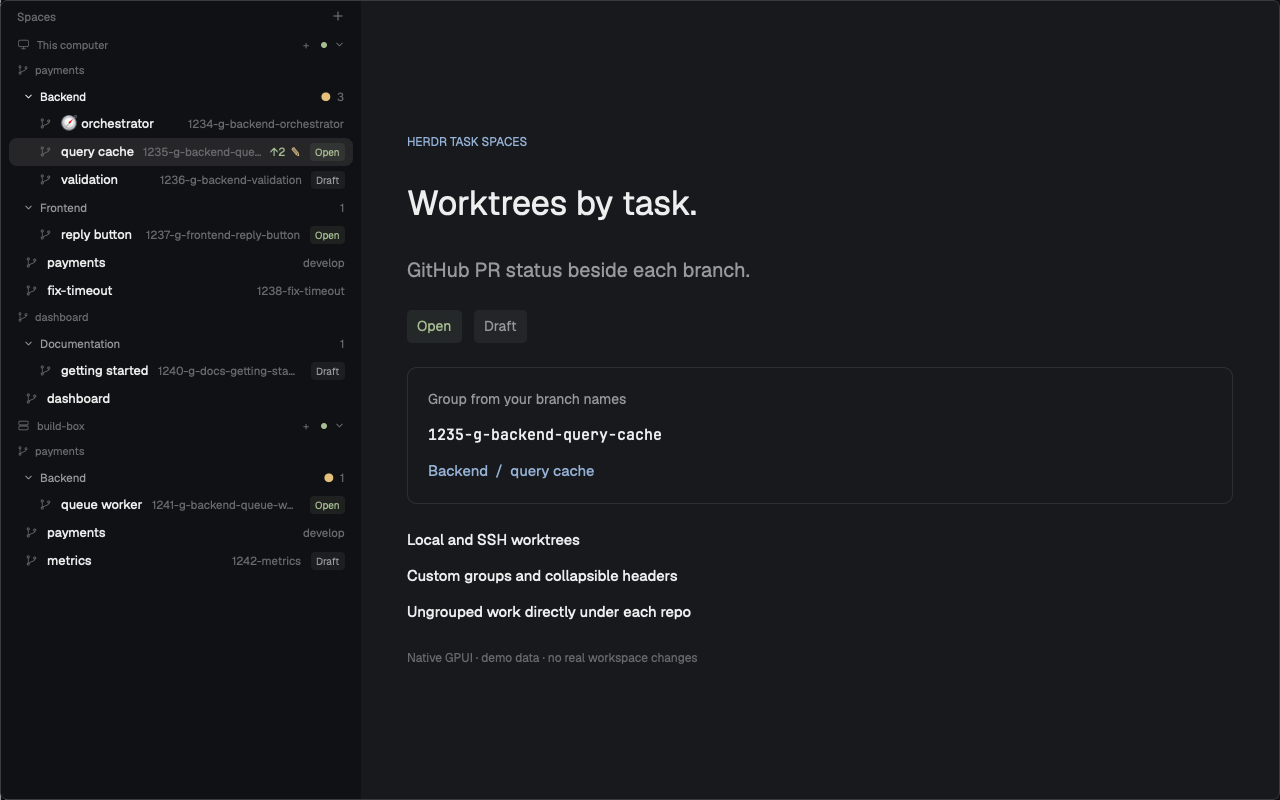
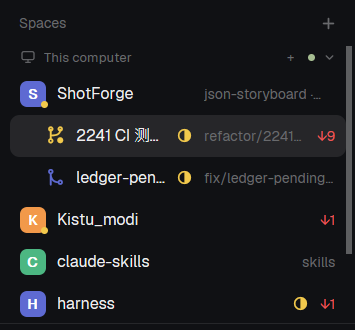
A spaces sidebar in place of Herdr's spaces: each row shows the space's agent state where the avatar was, its Linear issue as a chip when it's named after one, then its name and the git of its first terminal. A space has a color only when you give it one (right-click), drawn as a thin stripe. Next to the machine-switch mod it shows one session; without it, every machine's spaces under machine headers.